Categories
Health

For Latinas, the Super Bowl 2020 Was A Night Of Triumph—And Debate


But for Veralucia Mendoza, a 26-year-old university employee in Toledo, who is Afro-Latina and was formerly an undocumented immigrant, the supposed show of representation was a let down.

“I’m disappointed that Latinxs choose to ignore the call for boycotts by Black activists,” she says, pointing out that the show didn’t include a single Afro-Latinx performer. (Adams, who opened the game, isn’t Latina.) “Some of the worst colorism I’ve ever faced was back in South America, in my home country,” Mendoza says. She’s part of Mijente, a group that bills itself as “a political home for Latinx and Chicanx organizing,” and shared thoughtful criticism throughout the show. “I don’t know what Latinx pride means without collective liberation and solidarity across the board,” Mendoza says. “If that’s the price to pay for Latinx representation, then I don’t want it. I don’t want a white-washed version of us.” She chose not to watch the show in protest.

Luz Chavez, a 42-year-old Latina from Chicago, pointed out that critics like Mendoza aren’t being demanding—they’re just calling for authentic advocacy. Solidarity, in addition to sequins. “What kind of Latina you wanna be this year?” she asks. “One like Cardi B, who refused to perform for the Super Bowl halftime show in solidarity with Kaepernick and Black communities? Or one like J.Lo and Shakira?” She goes on, “The halftime show was being touted as ‘the most Hispanic Super Bowl ever.’ This was a moment powerhouse Latinxs had the world in their hands and the power to flip the script and show Black-Latinx solidarity, which would have been earth-shattering to Trump and his white supremacist base.”

But Carla Gonzalez, a 36-year-old in Phoenix, loved the halftime show. “I liked J.Lo’s attempt to bring a political message with the cages and the children,” she says, praising both women’s performances. But she adds, “I believe Black Lives Matter, and I think that they could have done a bigger push of bringing that narrative into their performance and exemplify Black and Brown solidarity.” Melissa Carmona, a 28-year-old Colombian-American mental health counselor who goes by “The Spanglish Therapist” on Instagram, wrote “part of what impacted the way I saw myself when I moved to the US was not seeing and hearing more people like me be represented on TV in ways that did not involve drugs (among many other stereotypes).” Seeing the women perform, as well as J. Balvin, whom she pointed out has been open about his mental health struggles, was “freakin’ cool.” The complexity of the performance is leading to “great and important conversations,” she says.


Source link

Categories
Health

Latinas Have the Last ‘Equal Pay Day’ of the Year. These Women Want to Do Something About That.


It’s not quite a cause for celebration, but November 20 is Latina Equal Pay Day, which marks the point in 2019 at which the average Latina’s wages at last equal what a white man earned in 2018.

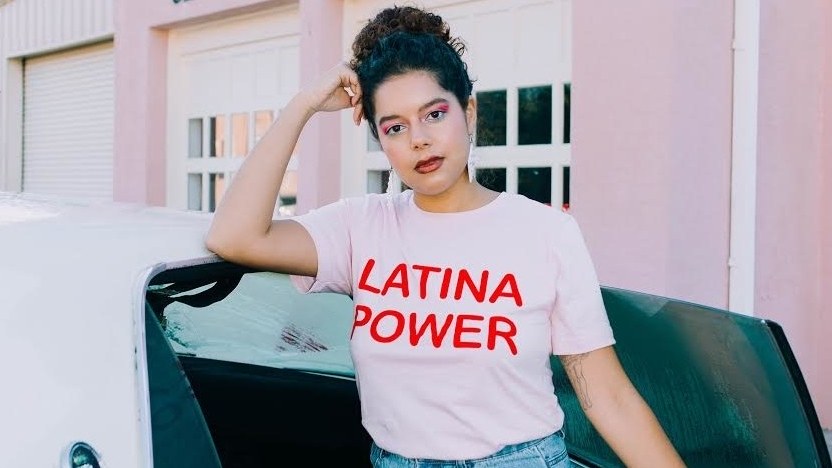
For women overall, it takes about 16 months to make what a white man makes in 12. But for Latina women—whose “Equal Pay Day” is the last observed of the year—that number is much higher. It takes nearly 23 months to even out, with Latina’s typically earning only 54 cents for every dollar a man makes. To mark this…inauspicious occasion, Phenomenal Woman Action Campaign founder Meena Harris—who spoke with Alicia Garza for Black Women’s Equal Pay Day—sat down with Jen Zeano, creator of the popular JZD Latina Power shirt line and founder of her own brand, Jen Zeano Designs. Here, Harris and Zeano chat about their new collaboration, Phenomenal x Latina Power, what it means to be a queer entrepreneur, and the strength she finds in her Latinx community.


Meena Harris: Latina Equal Pay Day is not a celebratory day. It’s about recognizing that we still have have a very long way to go in terms of pay equity. Latinas experience the widest gap. What does equal pay and equity mean to you?

Jen Zeano: It means being able to close those gaps. For so long we’ve kind of settled into the fact that we are never going to get paid equally to our white counterparts. But now that I’m a business owner, I’ve surrounded myself with more Latina business owners. Also people working in the field, like attorney or nurses, that are not getting paid what they should be getting paid. We have to do more. Growing awareness of [the gap] is one of the most important things. A lot of people don’t even know that we get paid so much less, and that it makes it so hard for us to create that generational wealth that everybody so deeply craves.

We have to work 10 times harder to try to get [generational wealth] and create these new normals for our families. One of my biggest goals in life is that I want to be one the last generations [in my family] that struggles to pay rent. We shouldn’t struggle to pay rent but unfortunately, so many in our community struggle to pay rent every month. Getting out of that, I feel, is one of the most important things that we have to do.

Harris: One thing that is really important to the Phenomenal Woman Action Campaign is intersectionality. Recognizing that for folks who have multiple identities, it can mean layered discrimination. In your case, you’re not just Latina, you are also LGBTQ. I think it’s amazing that you and your wife, Veronica Zeano, are building this company together. What is it like being a queer Latinx entrepreneur and building a business with your wife?

Zeano: It’s so much. I feel like being a queer Latina in itself has been a journey in a way. When I first came out to my parents, they weren’t super understanding. It took a couple of months for them to come around. And my wife hasn’t had a relationship with her parents in more than five years because they couldn’t come to terms with the fact that she’s married to a woman.

We have been so blessed that our community has been so supportive. We’ve been super open about it. People that follow us and are familiar with our brand know that it’s both of us running the business and they have been super super supportive and always amazing. I surround myself with people who are also queer Latinas. So that always creates a really empowering community. But it’s also been really difficult because when you have to meet potential business partners, or you have to meet people you want to collaborate with, it’s almost like you always have to “come out.” You never really know how they are going to take it.


Source link