Categories
Health

The Best Movies About Divorce


The beauty of film is that—when done right—a movie can so accurately reflect the human experience. Take divorce, for example—there are thousands of stories on the topic, but most of us keep coming back to a select few that vary in tone but each get to the core of what it’s like dealing with a broken marriage. Some are grim depictions (like 1979’s Oscars juggernaut Kramer vs. Kramer, which examines a custody battle ), while others are fizzy wish-fulfillment tales (like The Parent Trap and Under the Tuscan Sun). And a few are somewhere in between—like The First Wives Club, an unapologetically funny, feminist story that deals with very real themes. (Diane Keaton, Bette Midler, and Goldie Hawn can truly do no wrong.) Below, check out 11 movies about divorce that are essential viewing no matter what your relationship status, then check out our weeklong series on modern uncoupling.


Source link

Categories
Health

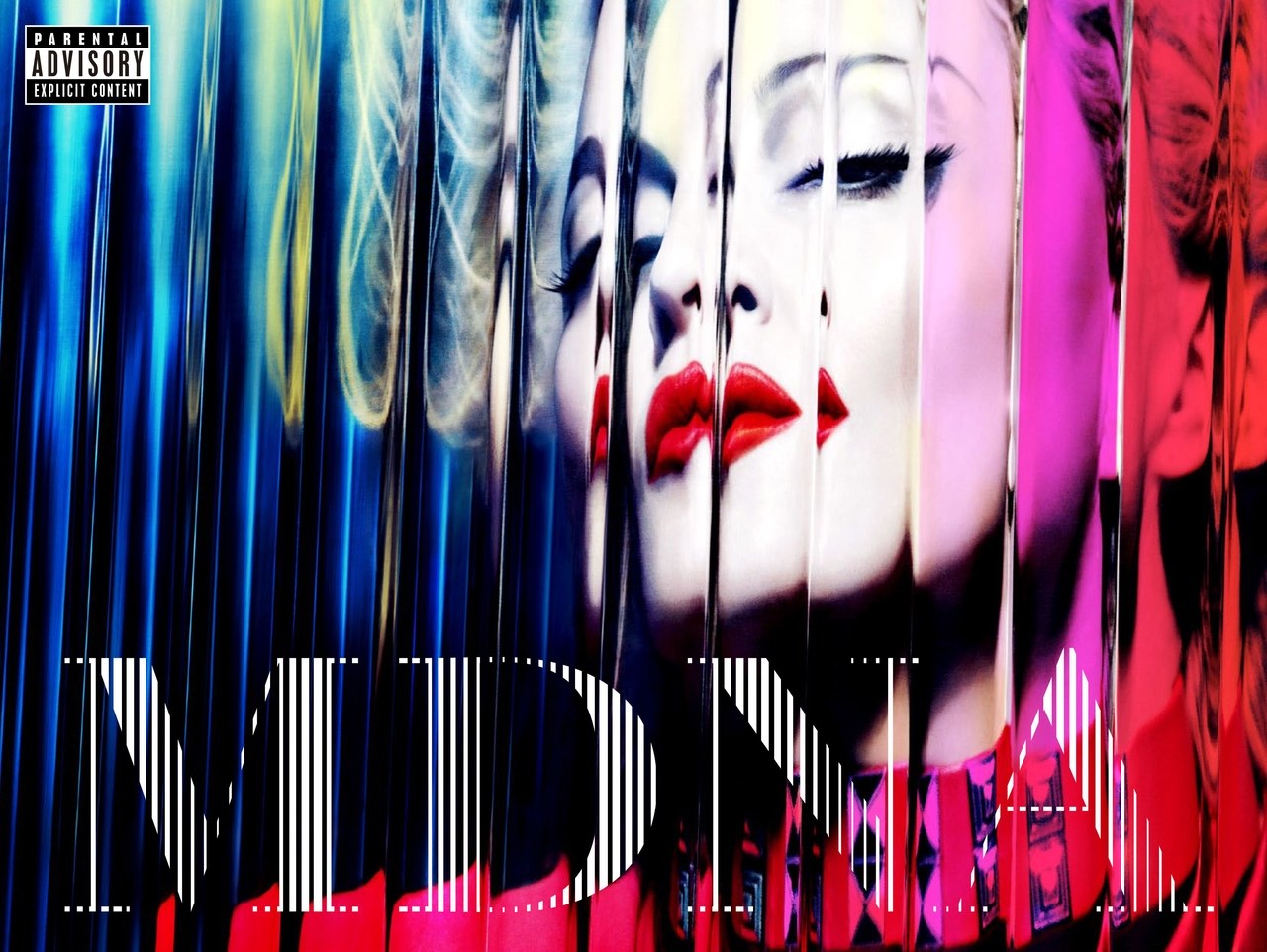
Madonna's MDNA Is the Ultimate Divorce Album


“It wasn’t always perfect, but it wasn’t always bad,” Madonna sings on “Best Friend,” a haunting slow-jam from her 2012 album MDNA. The song is technically only available on the “deluxe” version of the record, but that doesn’t make it any less potent. In fact, of all the tracks on MDNA presumably about Madonna’s divorce from Guy Ritchie—and there are several —”Best Friend” is the most devastating. Not since Ray of Light has Madonna been this transparent in her work. “Your picture’s off my wall, but I’m still waiting for your call,” she continues. “And every man that walks through that door will be compared to you forever more.”

These lyrics are simple, but they perfectly illustrate one of the stages of divorce: grief, mourning the loss of a relationship you thought would last forever. Full disclosure: I’ve never been divorced, but I imagine this is a key step in the healing process. It’s also probably the hardest, which gives “Best Friend” even more resonance.

Couple this with the fact that Madonna is notoriously closed-off. Any sign of vulnerability from her is novel, so for her to release a song like “Best Friend”—with lyrics like “I miss your brain, the way you think; but I don’t miss the way you used to drink”—is jarring, to say the least. It shows no one is immune to the pain of divorce, not even the Queen of Pop.

“Best Friend” is, in many ways, the pinnacle of MDNA, which Rolling Stone dubbed a “disco-fied divorce record” upon its release in March 2012. To be clear, the album makes no direct reference to Ritchie, but it’s obvious he’s the inspiration. It’s the first album Madonna released following her 2008 separation from the British filmmaker, and dozens of its lyrics explicitly discuss marriage.

“There are lyrics in here about custody and prenups and, ‘How’d you end up with all my jack?’ Did you get a lot off your chest there?” journalist Harry Smith asked Madonna in 2012 about MDNA. ” Her response? “Yes, I did.”

That’s certainly an understatement. MDNA is, without a doubt, one of the most poignant divorce albums in contemporary music. It’s EDM-oriented, sure, but Madonna’s always been her most profound in a throbbing nightclub at 3 A.M. Underneath the swirling beats of William Orbit, Benny Benassi, and the other techno maestros who helped craft MDNA is a woman trying to make sense of her marriage ending.

PHOTO: Interscope

On some songs, like “Best Friend,” that takes a somber form, but MDNA explores virtually all the emotional stages of divorce. “Girl Gone Wild,” for example, is a euphoric, four-on-the-floor ode to releasing your inhibitions after years of suppression. “I’ve got that burning hot desire; no one can put out my fire,” Madonna sings before the crashing, sledgehammer chorus kicks in. “I’m like a girl gone wild! A good girl gone wild,” she later exclaims as a pulsating bass-line fully envelopes her.

It’s an unapologetically self-indulgent anthem, filled to the brim with ecstasy, joy, and freedom. At first listen “GGW” may seem like a shallow dance track, but it absolutely reflects the relief in leaving a suffocating relationship. “There were times when I felt incarcerated,” Madonna said in 2015 about her marriage to Ritchie. “I wasn’t really allowed to be myself.” “Girl Gone Wild” is all about reclaiming that identity. “Turn Up the Radio” and “I’m Addicted,” two more exuberant songs on MDNA, evoke this same feeling.

[embedded content]

On the opposite end of the spectrum is “Gang Bang,” the album’s second track and perhaps Madonna’s most experimental since “Justify My Love.” Made on the tail-end of top 40’s dubstep craze, Madonna sing-talks here about shooting her lover in the head. “Bang-bang, shot ya dead,” she snarls against a grimy, thumping beat. This is Madonna’s Angry Divorce Song, and it goes there. “I thought it was you, and I loved you the most. But I was just keeping my enemies close,” she says. “Made a decision I will never look back, so how did you end up with all of my jack?” Her disdain is crystal-clear—even when it’s buried in synths.

“Jack” is most likely a reference to the $76 million settlement Ritchie received in his and Madonna’s divorce. They never signed a pre-nuptial agreement—something explored more directly on two other songs. “Gang Bang,” though, is five minutes and 26 seconds of pure rage, climaxing with a gun shot and this controversial statement: “If you’re ‘gonna act like a bitch, then you’re ‘gonna die like a bitch.” The violence is metaphorical, of course, but the anger is real. Madonna confirmed it in 2012 while promoting the song: “Je suis énervé,” she also told Harry Smith. Translation: I am angry.

But it’s a fleeting emotion. Anger is almost always just a shield for sadness—and that rings true on MDNA, too. Any aggression Madonna feels about her divorce—on this album, at least—is flushed out by melancholia. She’s grieving on “Best Friend”; realizing her mistakes on “I Fucked Up” (“Maybe I should’ve turned silver into gold, but in front of you I was cold”); and wishing for a different outcome on “Love Spent.” That last song uses money—most likely the money Ritchie walked away with in their settlement—as a metaphor for Madonna’s heartache. “I want you to hold me like you hold your money,” she sings. “Hold me in your arms until there’s nothing left.”

[embedded content]

Madonna eventually finds peace on “I Don’t Give A,” a song smack-dab in the middle of MDNA, in which she raps most of the words. Cringe factor aside, “I Don’t Give A” shows Madonna reconciling all those aforementioned emotions—rage, grief, relief—and emerging on the other side completely content. “Wake up ex-wife, this is your life,” she sings before lamenting about lawyers, custody agreements, and prenups. Ultimately, however, she decrees, “I’m ‘gonna be OK. I don’t care what the people say.” That’s a conclusion hopefully most people reach after a divorce—no matter how ugly it gets. The song is a kitschy send-off to Madonna’s haters—the ones who thought her split from Ritchie would somehow break her. “‘Gonna live fast and I’m gonna live right,” she says in the chorus. And she’s still doing that in 2018. She survived.

The DNA of MDNA is catharsis—that’s what makes it such a brilliant divorce record. Country albums like Willie Nelson’s Phases and Stages croon about heartbreak, yes, but they’re one-note. Divorce, however, is an amalgamation of feeling: elation, betrayal, depression, numbness, fury—the list goes on and on. Madonna hits all of those points on MDNA and then-some. Truthfully, you’ll finish the album with emotional whiplash—but isn’t that divorce? Isn’t that life? Thankfully, Madonna reached her happy place, and her harrowing journey from darkness to light is something many divorced people can relate to. Who knows? Maybe a few of them even found their salvation exactly where she did: on the dance floor.

Christopher Rosa is the staff entertainment writer for Glamour.


Source link

Categories
Health

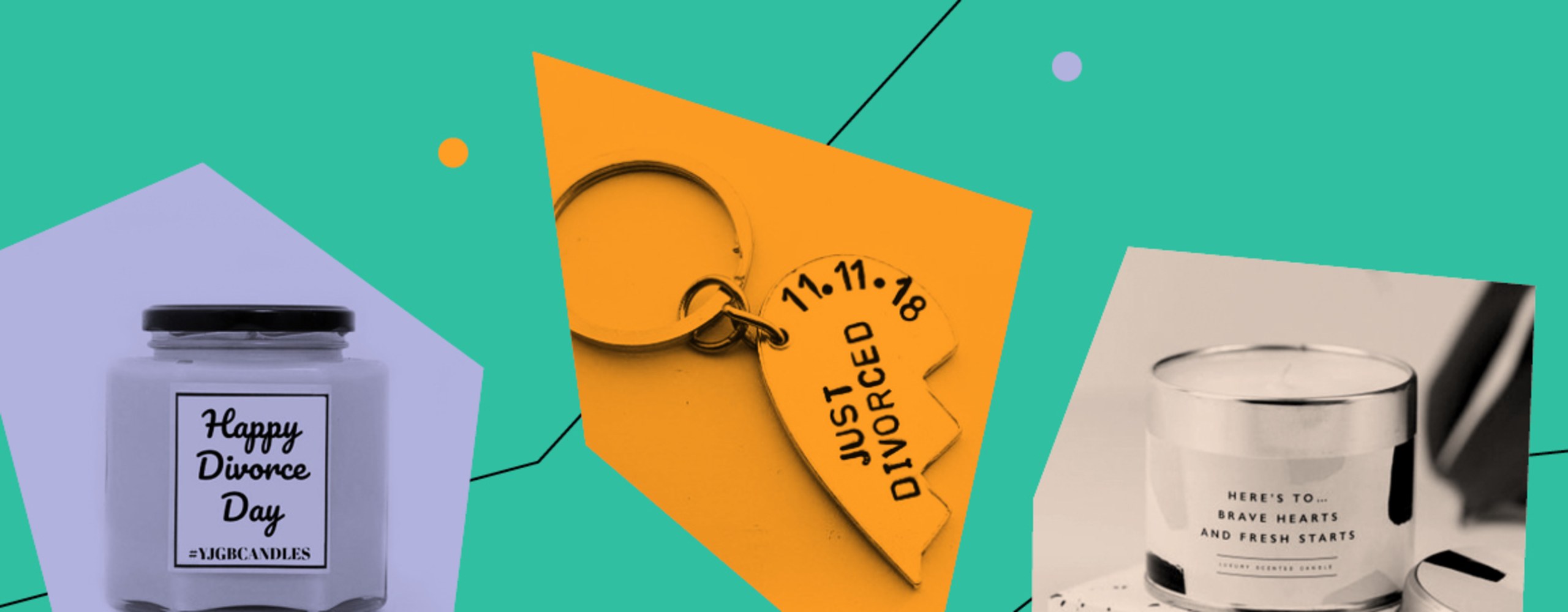
Best Divorce Gifts: 20 Presents To Give from Etsy


Earlier this month, Ariana Grande created the breakup anthem we all needed with “thank u, next“. The newly anointed ponytailed patron saint of taking the high road also offered sage advice to women looking to pick out the perfect engagement ring with a single Instagram comment: don’t. Some might say she’s bitter but it’s evident from the lyrics of “thank u, next” that, if anything, she’s the opposite. Just because her last engagement didn’t pan out doesn’t mean the next one won’t.

This is all very important because chances are you may currently know someone who is saying “thank u, next” to their last marriage. While most people have a combined dating history and engagement time that’s longer than the span of four months, but like Grande suggests, maybe the best thing to do after getting a divorce (or ending an engagement) isn’t to harp on the past or to fixate on getting even but to move on. And you know what makes moving on easier? Gifts! And what better place to find presents specifically tailored to separating than on Etsy.

From custom mugs to swill wine from to keychains engraved with the date of one’s divorce, we mined the craft Mecca for the wittiest gifts to buy a friend—or yourself—post-divorce. If your pal isn’t quite ready to laugh yet, we’ve also included some goodies that err on the side of empathy, like calming herbal bath salts and aura-cleansing sage.


Source link

Categories
Health

How Katie Sturino Turned Divorce Weight Gain Into a Thriving Business


When I was married, I was very concerned about my body. I was obsessed with maintaining a size 12, or staying close to it. Then, about three years ago, I got separated and I gained a bunch of weight. At first I didn’t even realize I was putting it on. I was working out, but it just kept happening. In total, I ended up gaining about 60 pounds. I became a size 16, which I still am, and a surprising thing happened—I really loved my body.

At first I felt vulnerable. Especially when I started dating. I’d been out of the game for a long time and I just kept thinking, “nobody is ever going to love me ever again.” But I forced myself to do it, and I remember meeting this one guy for a drink. We went to a bar and I only stayed for a half hour or so, but I’ll never forget him telling me how beautiful I was. It was like he couldn’t get over me. Now, I don’t think that your self-worth should come from men whatsoever, but this was an area of my life where I didn’t have much confidence. And to all of a sudden have that outward validation pushed me to think, “Oh, maybe I am good looking.”

So I started wearing clothes that I never felt comfortable enough to wear, like jean shorts. I never would’ve worn them before because I would’ve thought, “I look stupid,” or “I can’t pull them off.” Flash forward, and I’m literally wearing black jean shorts with a button down shirt tucked into them right now—and I look awesome. When I was married I don’t think I would’ve worn any of the things I do now, or at least with the same confidence, even though I was two sizes smaller then.

I channeled this love for my new look into The 12ish Style, my blog that’s all about being chic at any size. I’d launched it while I was still married, but I wasn’t really taking it seriously. Then as soon as I got divorced I had nothing but this panic energy, where I was waking up at 4:30 or 5 every morning ready to go. So I was like “we need to put some real work into this.” I signed a manager, an agent, I started writing more, and hired a real photographer.

Around this time former Real Housewives star Carole Radziwill, who lost her husband at a young age, said something to me at a Christmas party that always stuck with me. She told me, “ride the horse in the direction that it’s going.” To me it meant, you can find strength in these moments where you think your life is over. You can’t change what has happened to you, so just go where the energy is good.

So The 12ish became my escape. I put everything into it. I took all the pain, anxiety, and uncertainty and pushed it toward something I felt passionate about. It blew up really fast and each day I’d talk to women on the platform who had changed their opinion about themselves because of it. They’d tell me stories about learning to love their bodies in a bathing suit, or just finally being able to accept themselves. It felt amazing and I really credit it with helping me get through my divorce. It wasn’t that I was specifically addressing relationships or my marriage on there, but to just suddenly have such a positive online community felt fucking amazing.

It was like all of a sudden I hit a point where I just stopped caring so much. During my marriage I spent so much time worrying about everything, but then the relationship ended, and it didn’t matter. My fear of having something to lose was gone, and I kind of said, “fuck it.” I was gonna wear jean shorts if I wanted to, embrace my body, and open myself up to men who thought I was beautiful.

Now, when I look back at pictures of myself from five years ago I don’t think “I look so skinny,” or “I look so young.” I think, I look so unhappy. I look at my eyes and smile and everything feels strained and forced. When I see a picture of myself now I look at such a joyful person, and falling in love with my body gave me that happiness.

For me, if I can inspire one woman or one man who has gained weight during their divorce to look at themselves and think, “this will not make me hate my body,” then it will all have been worth it. I want people to know, this isn’t your body’s fault, and it’s not because you’re not in shape. We’re so quick to blame our bodies or our physical appearance, instead of celebrating ourselves in all forms.

And one day maybe I’ll lose the weight, or maybe I won’t. If I ever did, it wouldn’t be because I don’t like the way I look, it would only be if the doctors told me some shit in my body is breaking down. Then ok, I got it, cool. But aesthetically and image-wise? I’ve never felt better.

Katie Sturino is the founder of The 12ish Style and the beauty brand, Megababe.


Source link

Categories
Health

How to Prepare for Divorce


After divorce rates peaked during the 1970s and 1980s, much has been made of the fact that they are now on the decline, especially among millennials. Still, if you’re thinking about splitting with your spouse, or you’ve already been through a divorce, sunny statistics aren’t exactly useful. Throughout this weeklong series, Glamour.com explores what it means to uncouple in a modern world

・・・・・

If you’re a consumer of any kind of pop culture—or really, just a watcher of human existence—chances are you know a lot about divorce, even if you haven’t been through one yourself. In particular, you’re probably familiar with the bitter acrimony that can often accompany the fallout and the kind of drama that can make for riveting television or devastating real life.

What’s on display less often, though, are narratives around what people should do when figuring out how to prepare for a divorce: Before you call the marriage off, or maybe even before you decide to call the marriage off, it’s hard to know what kind of game plan to deploy. How should you be protecting yourself? Who should you tell? What’s the social media strategy? There’s a lot to consider before you ever walk into a lawyer’s office—if, in fact, a lawyer is the right person to handle your split at all.

There’s no blueprint that works for everyone, of course. But Glamour.com did get some go-to guidance from experts in the business of breakups, on both the emotional health front as well as the financial side. Here’s what they had to say about things that the soon-to-single should be thinking about before embarking on divorce proceedings.

Start paying closer attention to your money…

Often enough, when someone approaches New York City–based divorce attorney Jacqueline Newman about getting divorced, the first thing she tells them to do is start familiarizing themselves with financial assets. Even today, she says, “a lot of women still leave this stuff to their husbands, and they live in what I call the ‘financial dark.’” Start paying attention to bank statements, documenting account numbers, and looking at tax returns—and don’t sign anything without reading it first. What happens very soon after you file for divorce is that both parties will be required to fill out a statement of net worth, explains Newman, and you want to make sure that all of your assets and accounts are accounted for, which starts with knowing what those are.

…but don’t necessarily stop spending.

This advice can differ depending on financial circumstances and the couple themselves, says Newman, but if you’re someone who hopes to receive spousal support to maintain your lifestyle, it’s something to consider. Say that, during the good times of your marriage, you went out to dinner together often, took vacations, and generally got used to a certain kind of existence. But when things went south, or the process of divorce started, you might think that it’s time to tighten your financial belt. Newman says that sometimes maintaining your lifestyle is actually the best move in the lead-up to a divorce, because the court may create a budget that looks back on the lifestyle you maintained during the last year of your marriage. “Sometimes that’s not really reflective of what you lived on—it’s just reflective of the status at the point the family wasn’t doing well,” says Newman. “So I say to people: Live your lifestyle.”

Start opening credit cards.

“A lot of women, and people in general, do not have credit cards under their own names,” says Newman. That’s because they share the card account with their spouse. They have access to a card, but the card might not belong to them, which can get tricky depending on the circumstances. “God forbid [you] get cut off, but you want to be in a situation where you have access to money,” she adds. She also adds that it can be helpful to “start filling your mattress” a lit bit, pocketing some cash just in case.

Start writing everything down.

If you haven’t journaled in years—now might be the time to pick it up again, says Newman. “I tell people to keep a diary: when who is going away, who is going to what, like parent-teacher conferences or play dates; if there are certain fights or occurrences that you want to document.” The idea is, if you ever have to draft motion papers and tell the court your story, it can be tough to remember the details during such a stressful, emotional time, and it’ll help to have documentation.

Consider going to see a marriage counselor.

While Newman says that her first question to potential clients is whether or not they really are sure they want to get divorced, Chicago-based clinical psychologist Rebecca Bergen, Ph.D., says that even if you are sure, you might want to consider therapy à deux. It can help prep the lines of communication, she explains, which will help you later on. “It’s going to be a process of grieving, and that grieving can start prior to the actual separation or the actual divorce,” says Bergen.

Settle on a social media game plan.

Hopefully, you and your partner have an arrangement in place for how you’re going to share the news—a little like coming up with a PR approach, says Bergen. But when it comes to social, the important questions to answer, alone or together, are how much information you want to share and whether or not you feel like you’ve already told everyone you think you should in a more personal format. Of course, adds Bergen, “this totally depends on how the relationship is ending.” But a plan of action for how you’ll approach it with your in-laws, how to take the news to your shared friends, and, of course, what you’re going to say to your kids can make things go more smoothly.

Reflect on how you want to be seen.

Bergen is a big fan of using visualization and imagery to decide how you want to behave, and be perceived, and then use that to keep your emotions in control. “Maybe it’s a mantra or a phrase you go back to when you want to go off at your partner but you don’t want it to get to that point,” she says. She also encourages visualizing what your life will look like, in the home where you live or more generally, once your partner no longer occupies that space. “Imagining what that will be like is a way of prepping your emotions.”


Source link

Categories
Health

The First Time I Had Sex After Divorce


After peaking during the 1970s and ’80s, much has been made of the fact that divorce rates are now on the decline, especially among millennials. Still, if you’re thinking about splitting with your spouse, or you’ve already been through a divorce, sunny statistics aren’t exactly useful. Throughout this weeklong series, Glamour.com explores what it means to uncouple in a modern world. Below, a straight woman, mid-thirties, on what it was like sleeping with a new man after being in a monogamous marriage for almost five years.

●●●

I got married in my early thirties and it lasted less than five years, some of which I’d classify as happy. As time went on, I felt he became emotionally abusive in many ways, and through it all I would definitely say sex was an important part of the relationship. Especially to my husband. But over the years, the sex fell off because I realized it had become transactional. If I gave into what he wanted in bed, I could get something in return, if I wanted it: a vacation or a pair of shoes, for example. He was putty in my hands and that made me feel increasingly terrible so I pulled back in bed. Eventually, we divorced for many reasons.

I didn’t plan to start dating right away, I told myself I’d see what happens. I was kind of convinced after my marriage, nobody would want me. I decided to move to a vibrant neighborhood that had a lot of young singles. I was optimistic but I didn’t know a single person. Right away, I started doing things to meet other people—not necessarily men, but friends, too: eating dinner out alone and stopping to talk to others in my building. When I saw someone in the elevator, I’d strike up the conversation; ask them if they were going to any happy hours nearby. I joined a sports league.

Eventually, I started tagging along with people I casually met who I knew weren’t going to be my forever friends, but who seemed cool and were willing to introduce me to their friends, so my network naturally grew because I allowed it to.

I’ve always been a social person, but I made it a point to let go of any anger and resentment I felt toward my ex when I was out. I felt like I had a lot to give, and found that people were receptive to my totally open energy.

About three weeks after moving into my own place, some neighbors had a party and invited me. I started talking to a guy there—we were both drunk, but hit it off in a way that felt exciting. I felt at the time he was so different than my ex because he was easy and relaxed and I definitely was interested. Nothing happened, but we planned to meet up a few days later at a local fundraiser with some mutual friends. Afterwards, we were tipsy but not drunk and went back to my house where we had sex. I was a thirtysomething on birth control and felt totally OK with it.

The sex was good, [though] I’d say it was a little weird sleeping with someone new after being in a committed marriage, but mostly because I didn’t realize how much of what I did during sex was for my ex-husband and not for myself. It wasn’t as if I never enjoyed it when I was married, but as I was sleeping with this new guy, I noticed I did things that my ex-husband liked, as if I was trained by him. I quickly realized not everybody wants or enjoys the same things in bed.

I had casual sex with three or four guys over the span of a few months. I met them all within the spaces I was used to—local bars, friends’ parties, stuff like that. I never used dating apps

The new guy slept over, but it was a weeknight so he left early to go to work the next morning. If he didn’t, I think I would have wanted him around for coffee or a bagel but not an all-day hang.

It ended up actually not being a one-night stand, and we hooked up for a few months, though he was seeing other people too, which I later found out. I didn’t care that much—I knew from the beginning I wasn’t going to be with him long-term and it was fun for the time being.

After that relationship ran its course, I had casual sex with three or four guys over the span of a few months. I met them all within the spaces I was used to—local bars, friends’ parties, stuff like that. I never used dating apps, and none of the guys I slept with were that different from one another—or, on paper, from my ex—but I still felt like I always made an effort to get conversations started, which is really hard.

You have to do the work if you want to connect with people who didn’t go out with the expectation of meeting you, and you have to be comfortable being alone at dinner; the movies, wherever. I didn’t feel like it was enough to just look cute and perch at the bar. I talked to fucking everyone. And while not everyone always wanted to engage, I found a lot did. I also listened to everything people were saying, I made conversation around what others wanted to talk about about and they opened up. I met other women that way who became friends, and guys too.

When you move to a place where you don’t know anybody, you kind of have to force yourself to be social, even if you don’t always want to. I’m remarried now, and met my husband at a party I didn’t even want to attend, but figured I’d meet some nice people there. He wasn’t the type of guy I usually ended up attracting and that was exciting.

We had–and continue to have—great chemistry, but also a relationship and sex life that’s rooted in reality. I’m glad I got myself out there after my divorce and had some new experiences, but I’m also glad I settled down with a guy who feels like someone I could have been friends with if dating didn’t work out.


Source link