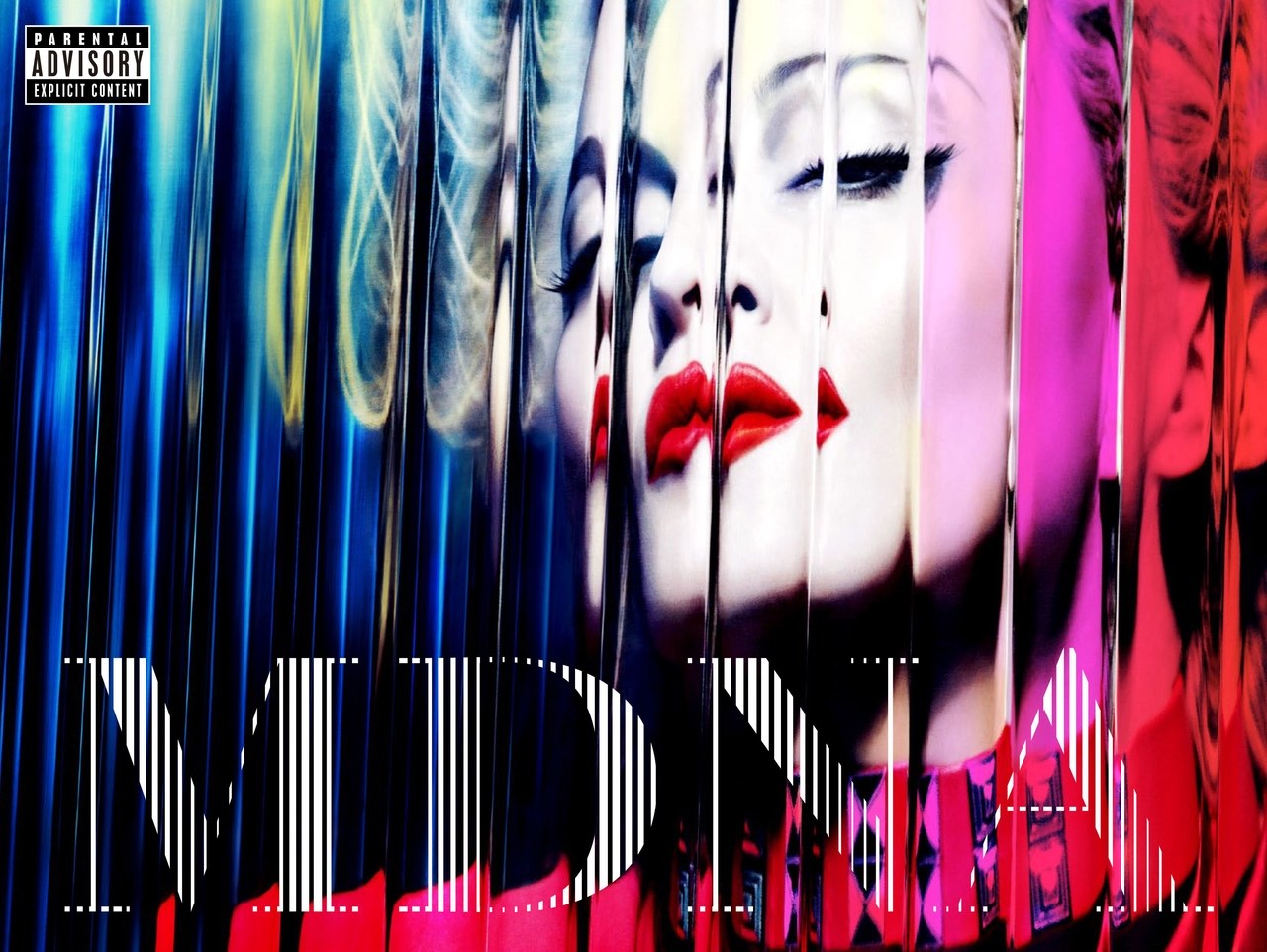
“It wasn’t always perfect, but it wasn’t always bad,” Madonna sings on “Best Friend,” a haunting slow-jam from her 2012 album MDNA. The song is technically only available on the “deluxe” version of the record, but that doesn’t make it any less potent. In fact, of all the tracks on MDNA presumably about Madonna’s divorce from Guy Ritchie—and there are several —”Best Friend” is the most devastating. Not since Ray of Light has Madonna been this transparent in her work. “Your picture’s off my wall, but I’m still waiting for your call,” she continues. “And every man that walks through that door will be compared to you forever more.”
These lyrics are simple, but they perfectly illustrate one of the stages of divorce: grief, mourning the loss of a relationship you thought would last forever. Full disclosure: I’ve never been divorced, but I imagine this is a key step in the healing process. It’s also probably the hardest, which gives “Best Friend” even more resonance.
Couple this with the fact that Madonna is notoriously closed-off. Any sign of vulnerability from her is novel, so for her to release a song like “Best Friend”—with lyrics like “I miss your brain, the way you think; but I don’t miss the way you used to drink”—is jarring, to say the least. It shows no one is immune to the pain of divorce, not even the Queen of Pop.
“Best Friend” is, in many ways, the pinnacle of MDNA, which Rolling Stone dubbed a “disco-fied divorce record” upon its release in March 2012. To be clear, the album makes no direct reference to Ritchie, but it’s obvious he’s the inspiration. It’s the first album Madonna released following her 2008 separation from the British filmmaker, and dozens of its lyrics explicitly discuss marriage.
“There are lyrics in here about custody and prenups and, ‘How’d you end up with all my jack?’ Did you get a lot off your chest there?” journalist Harry Smith asked Madonna in 2012 about MDNA. ” Her response? “Yes, I did.”
That’s certainly an understatement. MDNA is, without a doubt, one of the most poignant divorce albums in contemporary music. It’s EDM-oriented, sure, but Madonna’s always been her most profound in a throbbing nightclub at 3 A.M. Underneath the swirling beats of William Orbit, Benny Benassi, and the other techno maestros who helped craft MDNA is a woman trying to make sense of her marriage ending.
PHOTO: Interscope
On some songs, like “Best Friend,” that takes a somber form, but MDNA explores virtually all the emotional stages of divorce. “Girl Gone Wild,” for example, is a euphoric, four-on-the-floor ode to releasing your inhibitions after years of suppression. “I’ve got that burning hot desire; no one can put out my fire,” Madonna sings before the crashing, sledgehammer chorus kicks in. “I’m like a girl gone wild! A good girl gone wild,” she later exclaims as a pulsating bass-line fully envelopes her.
It’s an unapologetically self-indulgent anthem, filled to the brim with ecstasy, joy, and freedom. At first listen “GGW” may seem like a shallow dance track, but it absolutely reflects the relief in leaving a suffocating relationship. “There were times when I felt incarcerated,” Madonna said in 2015 about her marriage to Ritchie. “I wasn’t really allowed to be myself.” “Girl Gone Wild” is all about reclaiming that identity. “Turn Up the Radio” and “I’m Addicted,” two more exuberant songs on MDNA, evoke this same feeling.
On the opposite end of the spectrum is “Gang Bang,” the album’s second track and perhaps Madonna’s most experimental since “Justify My Love.” Made on the tail-end of top 40’s dubstep craze, Madonna sing-talks here about shooting her lover in the head. “Bang-bang, shot ya dead,” she snarls against a grimy, thumping beat. This is Madonna’s Angry Divorce Song, and it goes there. “I thought it was you, and I loved you the most. But I was just keeping my enemies close,” she says. “Made a decision I will never look back, so how did you end up with all of my jack?” Her disdain is crystal-clear—even when it’s buried in synths.
“Jack” is most likely a reference to the $76 million settlement Ritchie received in his and Madonna’s divorce. They never signed a pre-nuptial agreement—something explored more directly on two other songs. “Gang Bang,” though, is five minutes and 26 seconds of pure rage, climaxing with a gun shot and this controversial statement: “If you’re ‘gonna act like a bitch, then you’re ‘gonna die like a bitch.” The violence is metaphorical, of course, but the anger is real. Madonna confirmed it in 2012 while promoting the song: “Je suis énervé,” she also told Harry Smith. Translation: I am angry.
But it’s a fleeting emotion. Anger is almost always just a shield for sadness—and that rings true on MDNA, too. Any aggression Madonna feels about her divorce—on this album, at least—is flushed out by melancholia. She’s grieving on “Best Friend”; realizing her mistakes on “I Fucked Up” (“Maybe I should’ve turned silver into gold, but in front of you I was cold”); and wishing for a different outcome on “Love Spent.” That last song uses money—most likely the money Ritchie walked away with in their settlement—as a metaphor for Madonna’s heartache. “I want you to hold me like you hold your money,” she sings. “Hold me in your arms until there’s nothing left.”
Madonna eventually finds peace on “I Don’t Give A,” a song smack-dab in the middle of MDNA, in which she raps most of the words. Cringe factor aside, “I Don’t Give A” shows Madonna reconciling all those aforementioned emotions—rage, grief, relief—and emerging on the other side completely content. “Wake up ex-wife, this is your life,” she sings before lamenting about lawyers, custody agreements, and prenups. Ultimately, however, she decrees, “I’m ‘gonna be OK. I don’t care what the people say.” That’s a conclusion hopefully most people reach after a divorce—no matter how ugly it gets. The song is a kitschy send-off to Madonna’s haters—the ones who thought her split from Ritchie would somehow break her. “‘Gonna live fast and I’m gonna live right,” she says in the chorus. And she’s still doing that in 2018. She survived.
The DNA of MDNA is catharsis—that’s what makes it such a brilliant divorce record. Country albums like Willie Nelson’s Phases and Stages croon about heartbreak, yes, but they’re one-note. Divorce, however, is an amalgamation of feeling: elation, betrayal, depression, numbness, fury—the list goes on and on. Madonna hits all of those points on MDNA and then-some. Truthfully, you’ll finish the album with emotional whiplash—but isn’t that divorce? Isn’t that life? Thankfully, Madonna reached her happy place, and her harrowing journey from darkness to light is something many divorced people can relate to. Who knows? Maybe a few of them even found their salvation exactly where she did: on the dance floor.
Christopher Rosa is the staff entertainment writer for Glamour.