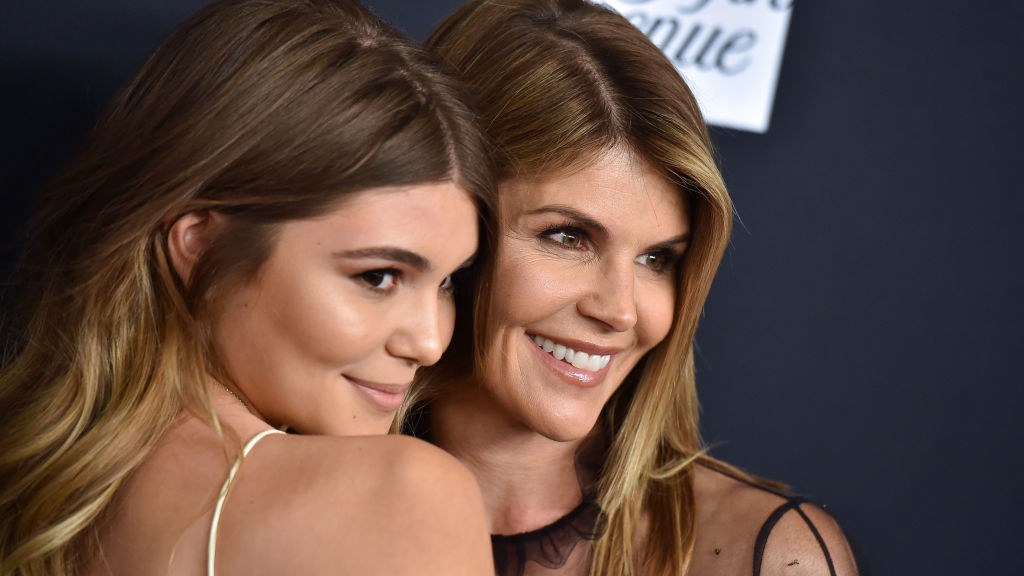
One of the people embroiled in the recent college admissions scandal is Olivia Jade Giannulli, beauty influencer and daughter of Lori Loughlin. As her mother faces federal charges, Olivia Jade is also dealing with the fallout, as brands like Sephora have decided to end their partnerships with her.
Back in December 2018, Olivia Jade had released the six-color Olivia Jade x Sephora Collection Bronze & Illuminate Palette, which retailed for $28. However, early on Thursday, the palette was no longer available online. Sephora later issued a statement explaining that it was no longer working with the celebrity offspring. “After careful review of recent developments, we have made the decision to end the Sephora Collection partnership with Olivia Jade, effective immediately,” the statement read.
Sephora’s decision comes after Olivia Jade’s social media accounts had been flooded with angry comments. Many people said that the college admissions scheme showed the way in which she and her family abused their privileges, and they urged the beauty retailer to drop her.
According to Buzzfeed News, Olivia Jade’s other partnerships include Smashbox Beauty Cosmetics, Clinique, Too Faced Cosmetics, Amazon, Dolce & Gabbana, Lulus, Marc Jacobs Beauty, among many others. She had also teamed up with the printing company HP, which distanced itself from both her and Loughlin yesterday.
“HP worked with Lori Loughlin and Olivia Jade in 2017 for a one-time product campaign. HP has removed the content from its properties,” the company wrote in a statement.
Meanwhile, Loughlin—best known for her role as Aunt Becky on Full House—turned herself into federal authorities this week and appeared in court on Wednesday. She was released after posting $1 million in bail. Loughlin is accused of spending approximately $500,000 in bribes to get both of her daughters into the University of Southern California, where Olivia Jade is a freshman. On Thursday, the Hallmark Channel said it was cutting ties with Loughlin. She’s been charged with conspiracy to commit mail fraud and honest services mail fraud, according to the BBC.
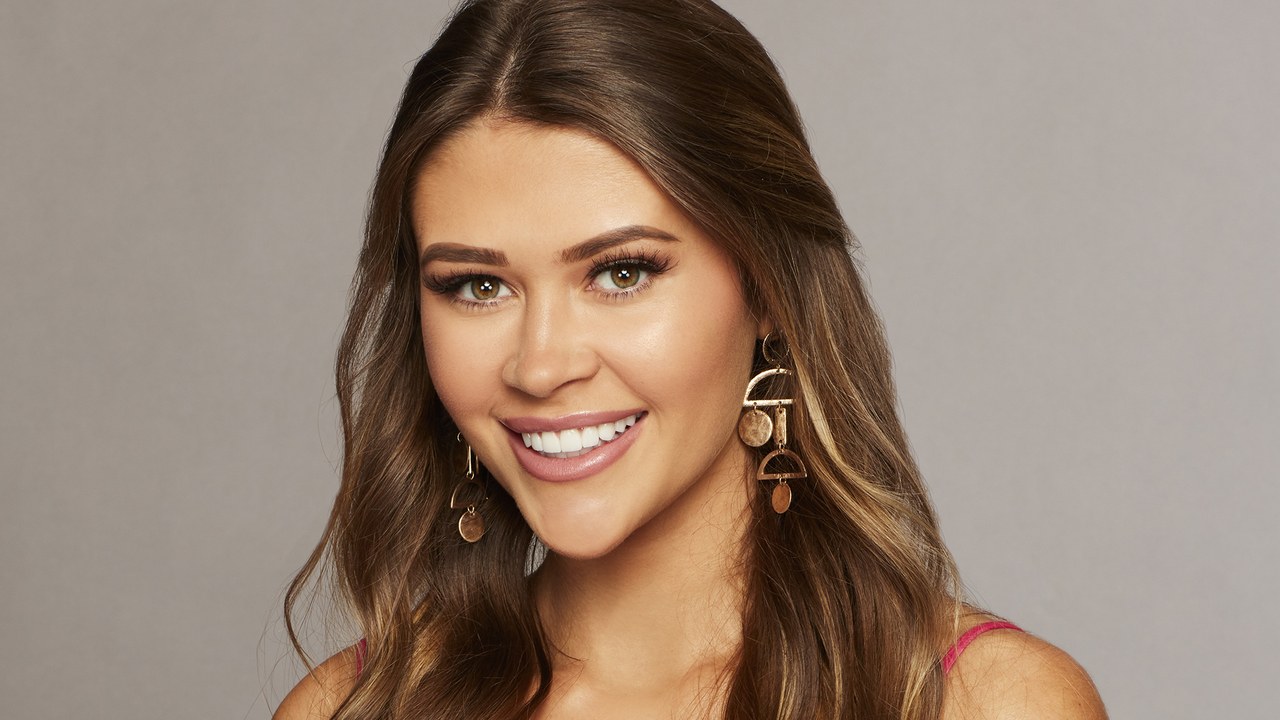
During her first solo date with Colton Underwood on tonight’s episode of The Bachelor, Caelynn Miller-Keyes opens up about being sexually assaulted in college. “It’s the most difficult thing in the world,” she tells him during their conversation. “It’s affected every single person in my life. It’s so painful.”
In an interview with People published before the episode aired, Caelynn said, “My life was flipped upside down. And even though I’ve moved on, it is something I will struggle with forever.”
The incident, Caelynn tells People, happened at a party during her sophomore year of college after her wine glass was drugged. “I woke up the next morning, and I was completely naked in my bed, and I knew that something bad had happened,” she says. A friend at the party alleged that one of the men there assaulted Caelynn. A second male, according to Caelynn’s other friend, lifted her dress in front of his fraternity brothers. “They watched and laughed and took photos and Snapchats. It was horrible,” Caelynn tells Colton on tonight’s episode.
“These situations happen when you’re safe,” she tells People. “They don’t necessarily happen when you’re walking down a dark alley. It’s when you’re comfortable and when you let your guard down.”
According to Caelynn, a hospital initially told her they wouldn’t do a rape kit unless she filed a police report. “At that point, these were friends of mine and I wasn’t entirely sure what had happened, so I wasn’t positive I wanted to file a police report. But later that night, I did, once I figured out what had really happened,” Caelynn says. “The reporting process is a lot more difficult than people realize. I had no idea what to do. I was completely stranded, I was completely alone. I didn’t even think it was possible to be turned away from a hospital. Thankfully, I had a good support system and people went to a second hospital with me and I was able to get a rape kit and speak to authorities and go through that process. But it’s a lot more difficult than it seems.”
By the time she visited the hospital again, Caelynn says enough time had elapsed that the results were inconclusive. Only one man from the situation was expelled from Caelynn’s college. The others faced no repercussions.
“Even though they got away with it, I’m happy that I still fought,” Caelynn says. “I can live with myself and know that at least I tried and I pushed and I went after justice.”
Bachelor fans—as well as Colton—quickly took to Twitter to commend Caelynn for speaking out. Below, just a few reactions:
Caelynn isn’t revealing the names of the men involved. “I’ve detached myself in a way from the perpetrators because I felt like that was the healthiest thing to do. I don’t want to have to keep reliving it. I was able to forgive the men,” she tells People. “And once you’re able to do that, you’re able to take that power back. I hope they’ve learned from that experience and that they never do it again.”
The Bachelor airs Monday nights at 8 P.M. ET on ABC.
If you’d like to speak to someone about sexual assault, don’t hesitate to reach out to RAINN’s hotline at 800.656.HOPE (4673).
For six decades Glamour has honored its College Women of the Year, or CWOTY, an award that focuses on young honorees who are already changemakers in their communities. But CWOTY is also our stake in the ground. These women are ones to watch, not just for the headlines they make but for the work they do behind the scenes to make an impact.
And in June, as the nation received word that President Donald Trump was commuting the life sentence of a great-grandmother who was in prison for a first-time, nonviolent drug charge, it was a CWOTY who was part of the machine that had worked to get the woman’s story on headlines across the Internet.
Kendall Ciesemier, a 2014 CWOTY who is now a producer on the Opinion team at Mic, was instrumental in telling Alice Johnson’s story, but the road to freedom started long before this summer. In October 2017 Kim Kardashian West commented on a viral video that Mic produced to illuminate the incredible inequities at work in the case of Johnson. In the months since, Kardashian West tapped her own legal team to work on Johnson’s case and went on to appeal to President Trump directly to intervene on Johnson’s behalf.
What’s unique about Johnson’s story is its staying power. Despite this political moment of endless news and constant distraction, Johnson remained in the public discourse for months, thanks to Mic’s determined coverage, Kardashian West’s involvement, and the work of many other unsung activists and organizers who have long taken on the criminal justice system to fight for her release.
Ciesemier talks to Glamour about what it was like being a part of one of the biggest stories of the year, and a moment that not only changed Johnson’s life but set precedent for the future of criminal justice reform.
Glamour: Tell us a little bit about how you went from a Glamour College Woman of the Year to working on one of the year’s most talked about stories.
Kendall Ciesemier: I actually won the [Glamour College Woman of the Year] grand prize, which was really exciting—and that was largely for my work in starting a nonprofit when I was 11 to help provide basic human needs to children living in Sub-Saharan Africa. Some of the money that Glamour contributed went to building a high school that we were working on at the time. And so it’s different than what I do now in my day job, but I think that the threads are the same. I have always been really passionate about storytelling. And whether that takes the form of telling people about something that they’ve never heard of going on an ocean away, as I did pretty much growing up, or telling stories today at Mic, it’s always been about elevating people’s experiences and people’s voices.
I hate when people say “being a voice for the voiceless,” because everyone has a voice—it’s just who we choose to amplify. And so that, really, I think has been very consistent in my life. What inspired me to start Kids Caring 4 Kids, the nonprofit that I started back when I was 11, was watching a story that Oprah told on her show. And it was that story that inspired me to do a lot for children who were in that circumstance, children who were living without parents because of the AIDS epidemic, who couldn’t go to school because they didn’t have a uniform. It was something so simple and so tangible for me to understand.
And I knew, basically from that moment forward, that I wanted to do that for other people. I wanted to inspire them and create a change in them to do something for someone else. And I still see that as my role today. And I think that’s really what you see in this Alice [Johnson] story, which is so exciting for me as a journalist. I think we always dream of our stories having impact and inspiring other people to rethink the world. And I think that that’s what we saw in Kim seeing Alice’s story—it inspired her to act, like Oprah had inspired me to act.
Glamour: So how did the Alice Johnson story come to you initially and how did you start working on it?
KC: Topeka Sam, who is a formally incarcerated woman, actually connected us to Alice’s story, after our cofounder Jake Horowitz (who I work really closely with) had attended an event at Google. He actually saw Alice Skype into this event and was just really struck by her story and thought that, at Mic, we needed to elevate it. And so, around six months later, we worked with Topeka to set up a time to Skype with Alice. And this was around my third week at Mic. I joined the [Opinion] team as a producer. And I had the opportunity, at that time, to interview Alice and to connect with her and to produce that piece. So that was how it originally entered into my world—and Mic’s world.
Glamour: When you first interviewed Alice, what made an impact on you about her story? What drew you in?
KC: For me, it was very clear that this was a woman who had endured a lot of hardship. Obviously, she did something wrong and she really owns up to that, but [she] had been hit with this draconian sentence in the nineties, when she was charged and sentenced in 1996, that were really reflective of old sentencing processes. And that she had this kind of spirit about her and hope and faith that was far above her circumstance. Alice told her own story, and I think that is really what ended up impacting people. And it was just about how do we pass the microphone to Alice? And how do we amplify what she had to say? But what really personally struck me was just her unwavering hope and her unwavering faith.
And all the good that she has done under the circumstance that she had. Once she was in prison, she became this model citizen and really worked to be a light for other people. And we heard that. After we told this story, we got just this outpouring of messages on Facebook from other people who had been in prison with Alice, over the years, over the 21 years that she served. And they were really impacted by her. And so it just really became clear to us that this person, she was on all of the criminal justice lists. She was widely known as someone who deserved clemency. And I think, in our interview, we were able to really allow Alice to share her story and just home in on what we felt in that interview, which was that she just had this captivating spirit about her. And that was really what we were hoping to convey.
PHOTO: Getty Images
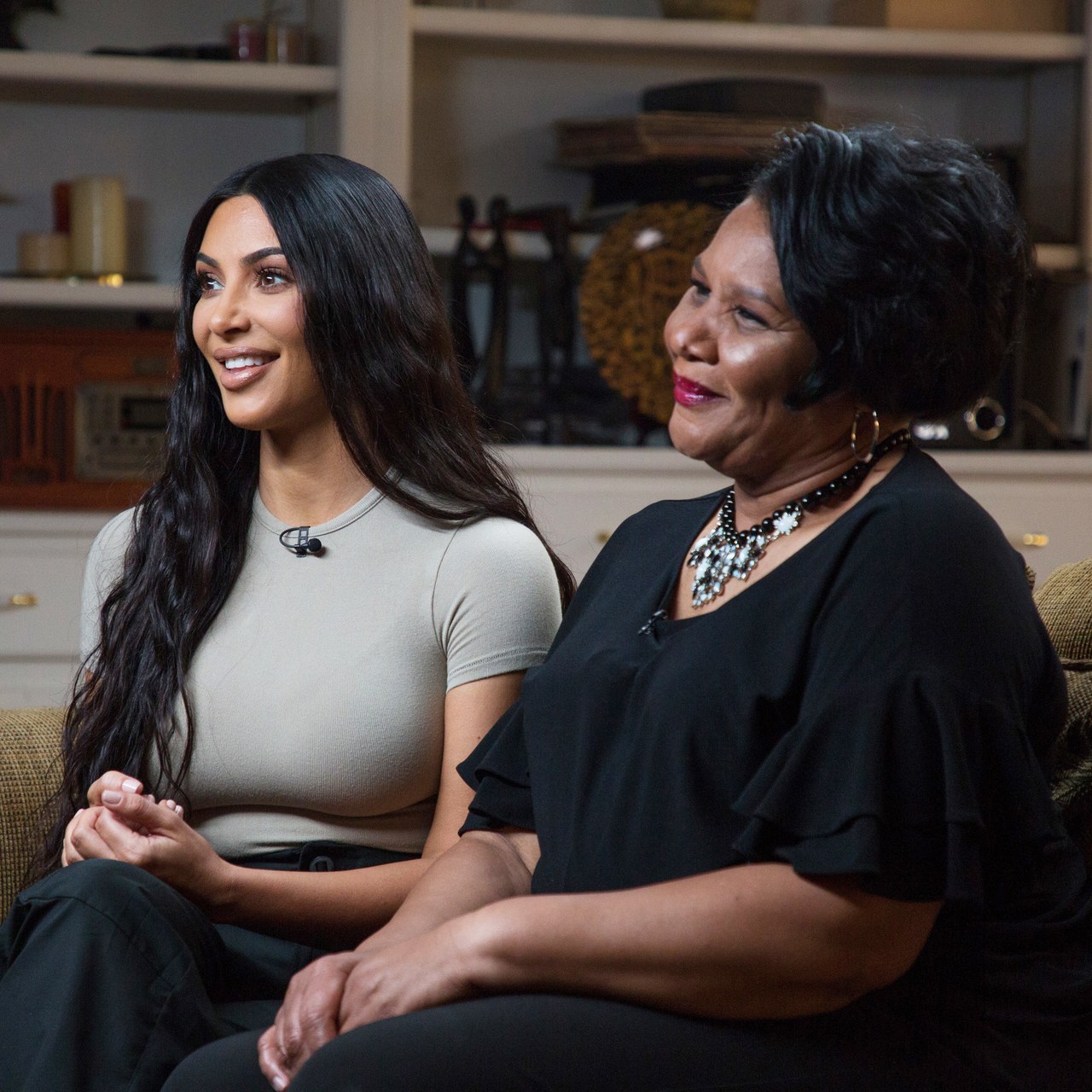
Kim Kardashian West and Alice Johnson sit down for an interview after Johnson’s release from prison.
Glamour: So you guys put the package together, the story, the video, and publish it. And then obviously at some point Kim [Kardashian West] sees it and tweets it out? So did it just blow up from there?
KC: Yes. So, from what Kim has told us, she saw it after someone that she followed had shared it. It was being shared by a lot of celebrities, within the first 24 hours, I’d say including Sara Silverman and some others. We have just a good group of support. And then I think when it came across her feed, she watched it, and even in one of interviews with Kim, said “I’m not on Twitter all the time. I’m not always scrolling through my feed, but I came across this story and I…” She just believed that she was meant to see it. And so she retweeted it, and that also drove a lot of views and engagement on the story itself. But, at that point, we did not know that she was going to actively get involved in the case.
I think the video was our most-watched Twitter video we’ve ever had.
And then it came out in November, through another article from another news outlet, that Kim was looking into the case of Cyntoia Brown and Alice Johnson. And we read that. We were like wait, what? So that was a big surprise to us. And then, obviously, we wanted to follow up with her and see what kind of stuff that she was planning to do around Alice’s case, and eventually got connected with her and we were able to tell that part of the story too.
Glamour: And then you followed it through the process of the work that Kim and the legal team she had working on the case, and the meeting with the President, and then finally meeting Alice as well. So how was that, to see that story all the way through? You don’t always get to do that as a journalist.
KC: Rarely, I assume. I’m relatively young and so grateful I was able to be a part of this. We were really committed to seeing the story out and following the story through. And so that included traveling really all across the country for about two months I would say, almost nonstop, doing interviews with Alice’s family, her children, her grandchildren. With Kim. Again, following her [Kardashian West] to the White House. And then we were actually with the family as we found out that she had been granted clemency. And so that was also very cool, to be there in the moment, and to be able to share that with this family that we’ve gotten to know, through traveling and documenting their experience.
I think it was such a meaningful thing to witness that, personally and professionally, and to really be able to see…. It wasn’t just a change for Alice; it was a change for her whole family. And she’s got a really big family, like 80 people strong. It was clear that she played a very important role in a lot of people’s lives. So it was certainly impactful in that regard, to be on the ground, and see that, witness that. I think they were in total and utter disbelief that it had happened. We actually drove down alongside the family, three hours from Memphis to Alabama. We were racing to get there in time to pick up Alice.
Watching her walk across the street and see her family across from the prison was pretty powerful. I think, as a journalist, you’re taught to just do your job—but you’re also a human being. I don’t think I processed all of that experience until a good four days after. But you’re just trying to do your job and document and amplify the story as much as possible. Mic was on the story for a really long time. And, obviously, it became a national story. So it’s one of those things that was really exciting to see. But Mic has been reporting on criminal justice issues far before Alice, and we’re going to continue far beyond Alice.
Glamour: What’s next for you on that topic of criminal justice reform? Because, of course, this is a case that became very famous, but it is one person.
KC: It is one person, exactly. I think, yes, Alice is a symbol, but we are certainly not under the misconception that she’s the only one with this story. There are around 3,500 other people in the federal system serving a life-without-parole sentence, for first-time, nonviolent drug offenses, which is just a crazy amount of people for something that could be so minor as the possession of marijuana.
And so I think we’re looking forward. There are so many stories and there are so many people with such deserving stories. As we continue to cover these issues, we’re really looking at how can we take the story that people nationally have been interested in, which is the Alice Johnson story, and how can we explain other things about the criminal justice system. Like bail or sentencing reform. Things that are systemic and affect a large swath of people in the system. And how can we break down these complex topics.
We’re really thinking about how do we elevate and understand, break these larger issues down for people now that they’re listening in this way. We’re always committed to using human stories, and that’s always the best way to communicate the impact of policies. So we’re just going to continue to find people who can really shine a light on what’s happening. We always say at Mic that we cover change, the movements, and the makers. And so I think we’re in the process of figuring out what our next criminal justice [project] is going to be. We’re in active research and having conversations around that now.
Glamour: What other issues are you working on and passionate about right now?
KC: On our team specifically, we’re going to continue doing criminal justice stories. We’re going talk about mental health. We’re looking into gender identity and sexuality. And then, also, we’re going to look at the midterms. We’re also looking at how we tell the stories that are bubbling up ahead of the midterms, because I do think that we could see some really interesting things.
For me personally, the focus is always about those who are suffering from some kind of injustice or oppression. I think my own personal background, and my own personal story, has always led me to be innately interested in people who are struggling with something.
That’s what I identify with and what I think can unite people and create understanding. And so, to me, it’s not tied to a specific issue because there’s struggle everywhere, and it’s more about finding that unique story that people can really relate to and understand.
This interview has been shortened and edited for clarity.
Gina Rodriguez is an absolute pro at making us cry, from her beautiful speech at the 2015 Golden Globes to countless heartwarming moments on Jane the Virgin. And on Tuesday, she picked up the mantle again when she announced a very special scholarship for an undocumented Latinx student.
Funds for the scholarship come from an unusual place: the budget for Jane the Virgin‘s Emmy promotion. Instead of spending what Rodriguez calls “an insane amount of money” to do a “bizarre dance” to be in the running for an award this year (including putting on campaigning events and providing branded promotional swag), she convinced the show’s network, The CW, to set up a four-year college tuition scholarship for an undocumented Latinx student, The Hollywood Reporterreports.
“Our show has always jumped at any opportunity to help me do something for the Latinx community,” the star tells THR. “So I asked my showrunner, Jennie [Snyder Urman], if we could do something different with the money this year.”
“It’s taboo to talk about the money being spent, but it’s the reality,” Rodriguez continued on the culture of campaigning that goes on in Hollywood. “I think sharing this might inspire other people to do something similar. You can desire recognition and, at the same time, decide to not play in the confines of the game as it’s set up.”
Rodriguez partnered with Big Brothers Big Sisters of Los Angeles to find the student for the award. THR notes the young woman will be attending Princeton University in the fall.
The decision to make the scholarship go to an undocumented student is consistent with the show’s history of shining a light on the Latinx experience of living in the United States. Since its first season, Jane the Virgin has addressed how immigration issues impact the show’s central family, most notably a storyline about Jane’s grandmother Alba, who seeks citizenship after being in the country for 40 years without documentation.
Paying off student debt is a problem Rodriguez has been public about facing herself. In 2017, she revealed it took her 11 years after graduating to pay off the college loans she’d taken out to attend New York University’s Tisch School of the Arts. (She posted her final payment the day she was nominated for her second Golden Globe Award, according to People.)
And while she’s not following the traditional route of campaigning for an Emmy, Rodriguez is still in the running for the award in September. Jane the Virgin‘s fifth season will premiere on The CW in January 2019.
What were you doing in college? Trying to solve hunger? Researching the effects of the 2010 BP Oil Spill? Trying to rewrite the narrative around revenge porn? I know I wasn’t doing any of that. But I know a few people under 23 who are.
I’ve worked on Glamour’s College Women of the Year competition for three years—in which for over six decades we’ve honored students across the country making a difference on their campuses and beyond. Alums of CWOTY, as we call it, have gone on to become renowned businesswomen (ahem, Martha Stewart, class of 1961), championship-winning athletes, and elected officials. But what’s amazing about these students is that they don’t wait for anyone to give them permission to make change; they’re getting things done now, and on their terms. You might think that with each passing year, I’d feel more depressed about what I haven’t yet accomplished compared to these trailblazers. But really, I feel unbelievably hopeful and excited knowing that the future is in their hands.
This year’s class of winners is no different. Read their inspiring stories ahead and what motivates them to keep going.
College students discuss money—or the lack thereof, the plight of being a “broke college kid”—constantly. I hear my classmates at George Washington University bond over their disdain for the campus “dining hall” (Whole Foods). I see fellow students “like” posts on Facebook mocking the $50,000-a-year tuition. And I feel the economic disparities firsthand at Friday night pre-games: some students live in run-down dormitory rooms, while others rent lavish apartments with floor-to-ceiling windows and rooftop pools.
There’s a popular meme of an iced Starbucks drink, the SoulCycle and Uber app logos, and a man sporting a Canada Goose winter coat. It reads “The ‘I’m soooo broke’ starter pack.” When the photo was posted in the public Facebook group GW Memes for the 10th Most Politically Active Teens, it garnered likes from more than 600 students. Many joked that they felt “personally attacked” or “sooo victimized.” But, for others, this was just another reminder of how being “broke” in a community of wealthy students is more than just a silly meme.
Due to the high price of college, many students receive funding from their families. But for the majority, significant financial support is not an option. About 10 percent of college graduates reported their families paid about half of their tuition, and fewer than one in ten people had the majority of their college finances supported by their parents, according to a 2017 LendEdu study that interviewed more than 1,400 college graduates between the ages of 25 and 54.
Phoebe Frank, a 21-year old senior at Texas Christian University, says that although many of her classmates are supported by their parents, some are kept within a tight allowance while others are free to swipe their platinum AMEX as they please. Many students who identify as “broke,” she says, are not referring to their own financial standing but rather the money given to them by their families. “There is clearly a difference between being ‘broke’ and being broke for the month,” she says.
For Kaylee Cowart, a 22-year-old who spent her first two year of college at Savannah Tech and has since transferred to Georgia Southern, being a “broke college kid” is more than an overused trope. Unlike many of her peers, Cowart supports herself without any financial help.
“I think the majority of college kids look at broke as ‘My mom told me I couldn’t use the credit card anymore,’” she says. “For me, broke means that I just overdrafted my bank account from filling up gas.”
Cowart says that for many students the persona is a way to joke around and get attention from peers—a trend only further bolstered by social media and articles that list “11 Signs of Being A Broke College Student.”
Gabby Sorina, a 19-year-old sophomore at GW, has been financially independent since she was 14. Like Cowart, she acknowledges a discrepancy in the economic struggle between herself and her peers. “I am quite poor—the poorest of poor—so hearing my very affluent roommate complain about money is undeniably annoying,” she says.
Sorina purposefully stops herself from saying “I’m so broke.” This is partially a tactic to avoid pity from friends, but also a way for her to stop contributing to a stereotype that is offensive to so many. “I grew up in the ghetto in New Orleans, so I’ve seen struggle. I’m hesitant when I refer to myself as disadvantaged in any way,” she says. “But [college students] say it no matter what their financial situation is.”
“I’m hesitant when I refer to myself as disadvantaged in any way,” but [college students] say it no matter what their financial situation is.”
The rhetoric shifts from campus to campus and between social scenes within universities. Dani Frese, a 21-year-old GW senior on the women’s soccer team, says that as a college athlete in a Division I program, this kind of language constantly comes up in conversation. Because many student-athletes receive partial-to-full scholarships, Frese notices a divide between her teammates and those “outside” the athletic scene—many of whom pay full tuition. During the annual spring celebratory dinner for the team’s juniors, one of the girls explained she couldn’t attend because she was “broke.” Frese says this is less likely to happen with her non-athlete friends. “When they joke about being ‘broke,’ I take it less seriously. It holds less weight,” she says.
Although it may sound obvious if not completely insensitive, the ramifications of college students exaggerating their economic situation remains somewhat unclear. Students are lacking fundamental knowledge and confidence on personal finance basics, according to a 2016 LendEdu study. When asked about their current financial situation, 51 percent of students said “I’m barely keeping up” and 49 percent said “I’m doing just fine.” Call it naïveté or an extreme disconnect, but many students seem to be somewhat desensitized to the financial realities of their peers and themselves.
Like “blacked out” or “darty,” being “broke” is just another phrase in the college lexicon. As far as Sorina is concerned, claiming you’re “broke” is just a way to fit in. “There’s always going to be someone richer than you,” she says, “so in some way, I guess everyone is a broke college kid.”
The new Black-ish spinoff, Grown-ish offers a fresh take on what it means to be a college student in 2018: characters span from the overly ambitious protagonist to the “woke” social activist to a newly-identified bisexual. But even as it offers insight into a more diverse, inclusive body politic, it holds tight to some of the age-old clichés of campus culture. While these millennials navigate their first year of school, each one carefully cultivates and curates his or her own narrative. We watch as they try to find their place in the world and we wonder, Who do these young people think they are? Who do they want to be? And what stories will they tell about themselves to get there?
Jenna Berman is a junior majoring in journalism and women’s studies at George Washington University in Washington, D.C.
.jpg)