Categories
Health

The Bishop Who Appeared to Grope Ariana Grande at Aretha Franklin's Funeral Has Apologized


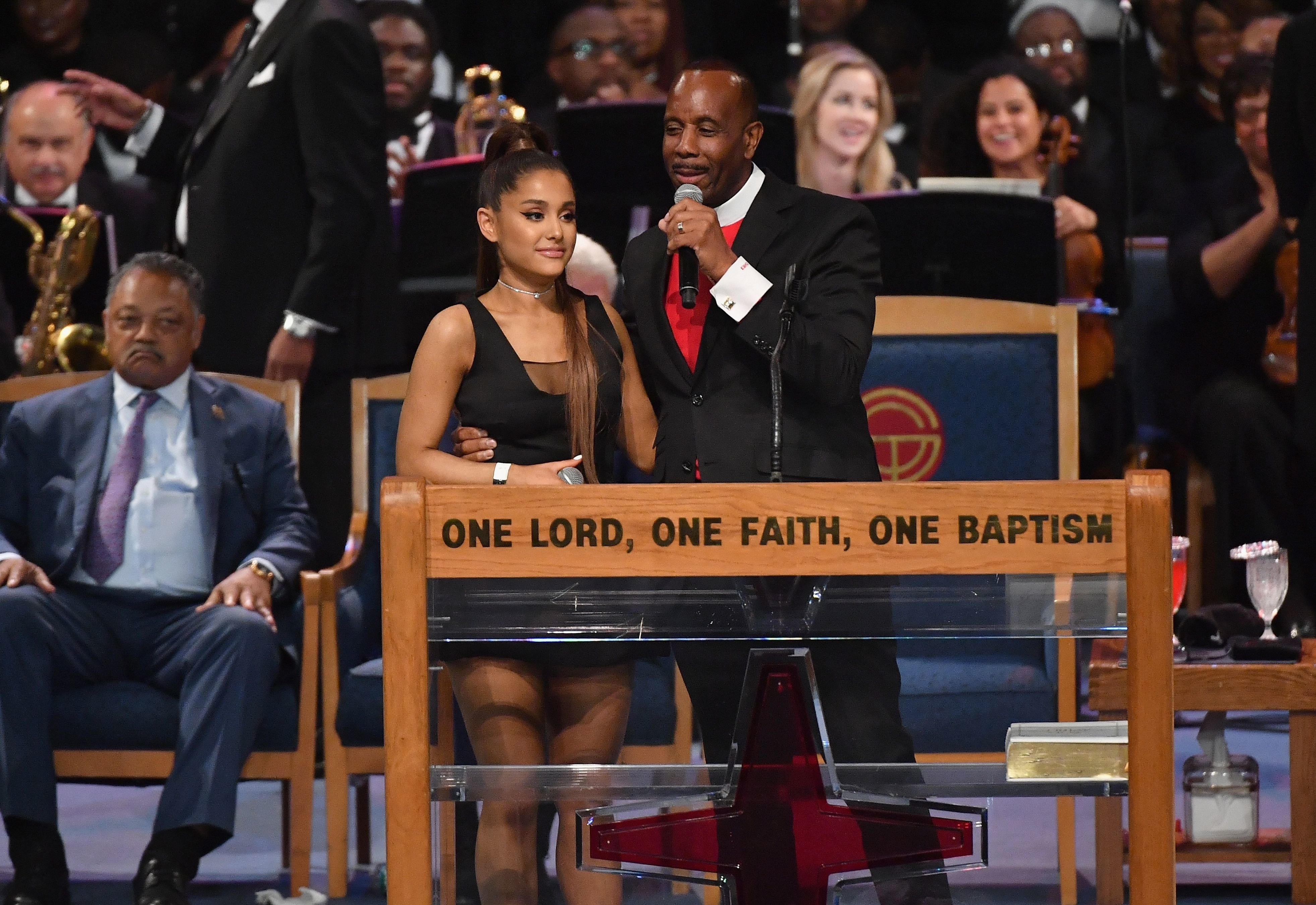
Aretha Franklin‘s eight-hour funeral in Detroit on Friday celebrated the life of the soul legend in A-list style, complete with a parade of pink Cadillacs and musical tributes from stars like Ariana Grande and Stevie Wonder. However, controversy erupted when Bishop Charles H. Ellis III, who was officiating the service, brought Grande onstage to perform in honor of the soul pioneer. As he introduced her, viewers watched in horror as he tightened a hand well above her waist—placing it instead around the side of her breast—and held her for an uncomfortably long time. After intense backlash from people shocked that they’d just apparently witnessed a woman groped in public, Bishop Ellis has now apologized, saying he didn’t intend to touch Grande inappropriately.

“It would never be my intention to touch any woman’s breast. … I don’t know I guess I put my arm around her,” Ellis said in an interview with the Associated Press. “Maybe I crossed the border, maybe I was too friendly or familiar but again, I apologize.”

Ellis went on to say that he had embraced all of the performers: “I hug all the female artists and the male artists. Everybody that was up, I shook their hands and hugged them. That’s what we are all about in the church. We are all about love.”

Grande appeared uneasy as the bishop kept his arm on her and made a crack about her last name sounding like an item from a Taco Bell menu, a comment for which he’s also apologized.

“I personally and sincerely apologize to Ariana and to her fans and to the whole Hispanic community,” Ellis told the AP. “When you’re doing a program for nine hours you try to keep it lively, you try to insert some jokes here and there.”

Online, Twitter users were outraged: They launched a #RespectAriana hashtag and retweeted videos that captured the incident.

After the alarming introduction, Grande launched into a stunning cover of “Natural Woman,” reprising her performance on Jimmy Fallon’s show just after Franklin’s death. However, that moment was sadly overshadowed, too, as many people noted former President Bill Clinton watching her intently from behind. Grande had drawn attention for wearing a short dress to the event, and Twitter users quickly defended her, reminding the world that a woman’s outfit is never an invitation from men.

That these events unfolded at a funeral, of all places, is even more outrageous—especially because it was a service paying homage a woman who always lifted up women in her music. Ellis recognized that his behavior and joke had eclipsed what should have been a respectful memorial to Franklin, adding in his interview with the AP that “the last thing I want to do is to be a distraction to this day. This is all about Aretha Franklin.” Sadly, that wasn’t the case.

Related Stories:

Pete Davidson Shares How He Proposed to Ariana Grande, Says It Was ‘Dope’

All the Lyrics on Ariana Grande’s New Album That Are (Probably) About Pete Davidson

Ariana Grande Reveals How Writing ‘Get Well Soon’ Helped With Her Mental Health


Source link

Categories
Health

Here's the Moment Meghan Markle and Prince Harry's Bishop Knew They Were in Love


Meghan Markle and Prince Harry have had no shortage of adorable moments—either before or after their royal wedding for the ages. Case in point: That time recently when Harry, ever so gallantly, stepped in in the nick of time to save Markle from a topple. It’s honestly all a bit much sometimes, but just to compound the cute, the Most Reverend Bishop Michael Curry has spoken out in an interview with Us Weekly about the moment he knew that the two were really, truly in love (as if there were a doubt!).

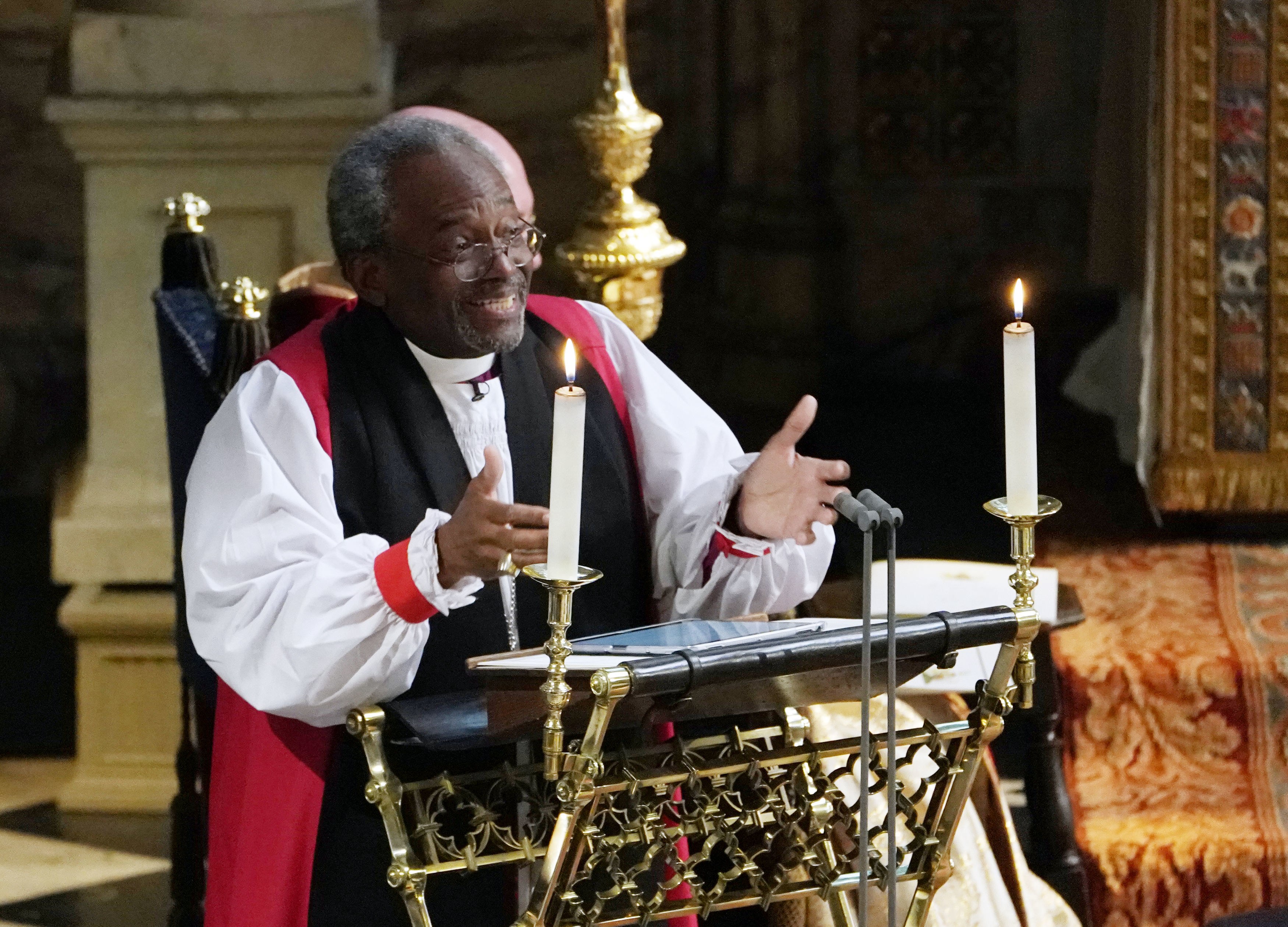
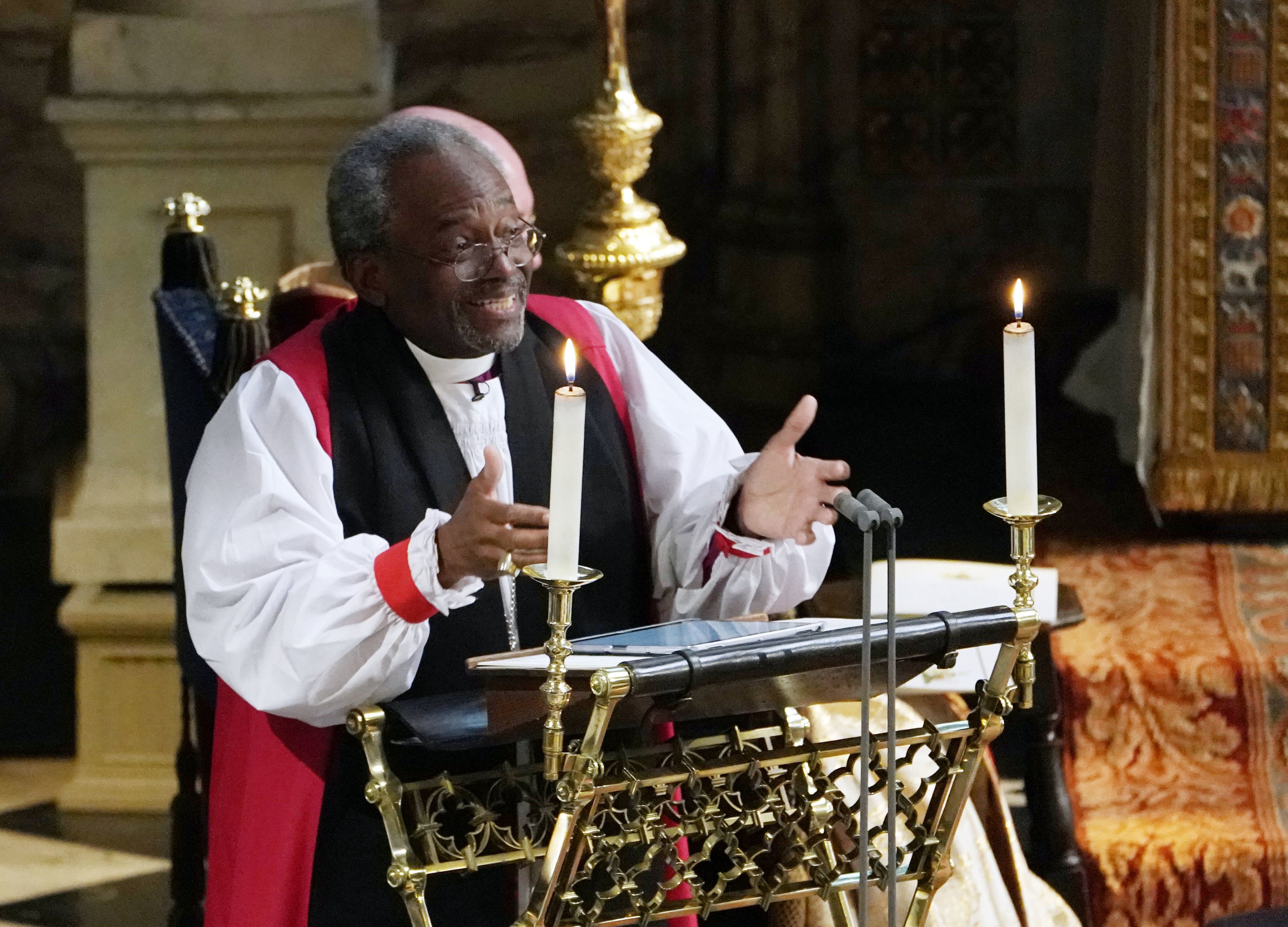
If you remember, Bishop Curry was the real star of the royal wedding (the couple getting married excluded, obviously). He gave a rousing sermon, the likes of which many in the audience had never heard before, aptly named The Power of Love. Given that he’s pretty much an expert on it, of course he was the right person to talk about the moment he knew the two were 100-percent smitten.

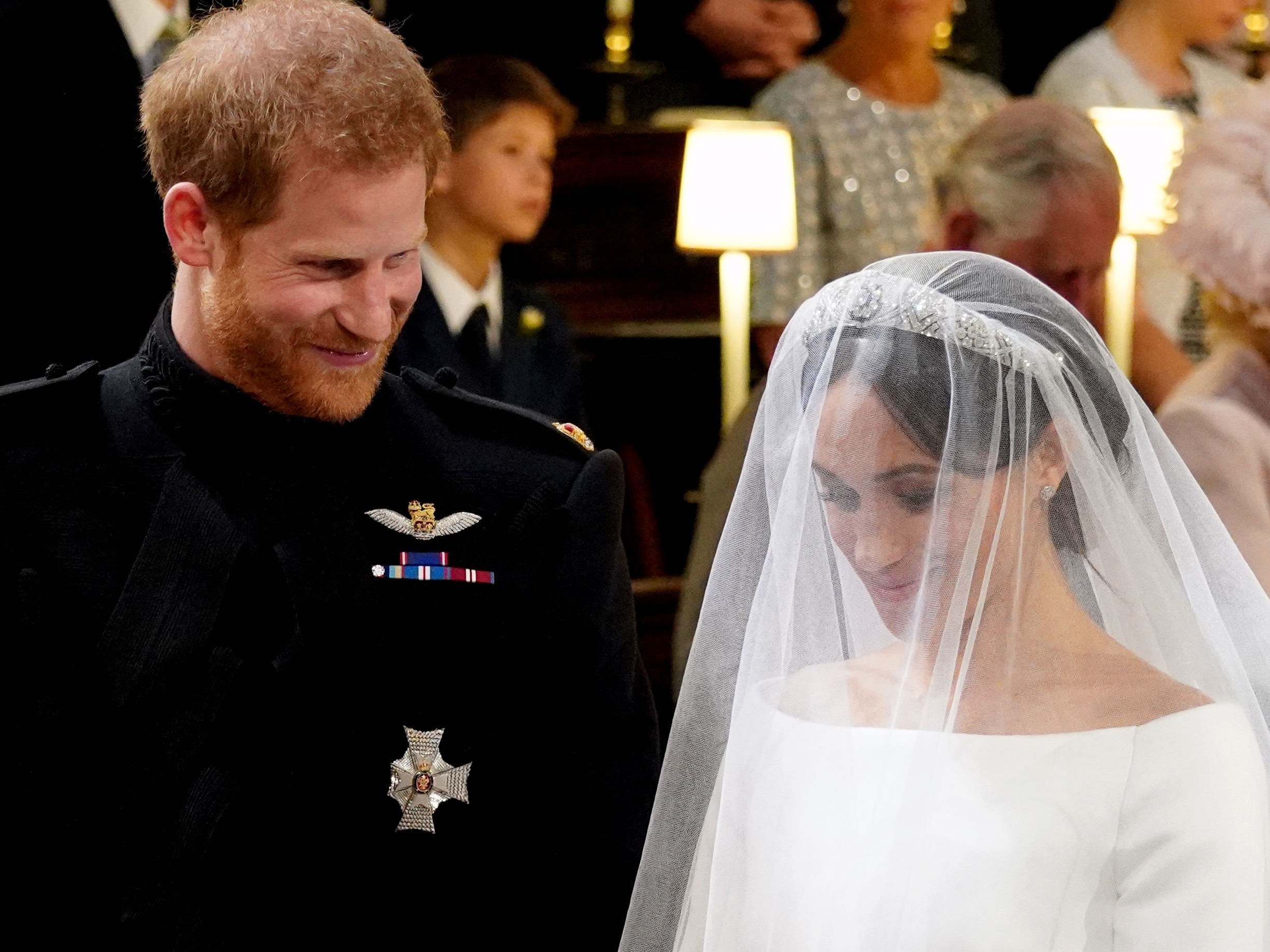
“They look at each other like they love each other. I remember thinking after the sermon, once I preached the sermon, I said, ‘These two people love each other,'” he told Us Weekly. “They look at each other, and their love brought the rest of us together.”

But he wasn’t done yet—he had something even more poignant to say about the couple who once stood before him.

“Their love, even if it was just for a few moments, showed us the power of what unselfish love that gives itself to another can actually do,” he told the magazine.

Well, if that isn’t #couplegoals, we don’t know what is.

Related Stories

Bishop Michael Curry Was the Real Star of the Royal Wedding

Bishop Michael Curry Says the Palace Approved His Powerful Sermon Before the Royal Wedding

A Gospel Choir and a Fiery Sermon: How the Royal Wedding Celebrated Meghan Markle’s Identity


Source link

Categories
Health

Bishop Michael Curry Says the Palace Approved His Powerful Sermon Before the Royal Wedding


After the Most Reverend Michael Curry, the first black bishop of the Episcopal Church, shook up the otherwise pretty traditional royal wedding with his 14-minute sermon last Saturday, many wondered how the majority British guest list—not to mention the buttoned-up royal family—felt about it. According to Curry himself, however, not only was his sermon approved by the newlyweds and the palace beforehand, but he could also sense the agreement of many wedding attendees throughout his address.

“That whole service had all of the permissions. Nothing would’ve happened in there without, in some sense, the blessings and permissions,” the bishop said on the Today show on Tuesday morning (May 22), when British anchor Keir Simmons jokingly thanked Curry for making the royal family “uncomfortable.”

“So I was aware of that, but I’ve gotta tell you, I’ve been doing this for a long time, and I’ve been in the Episcopal church for a long time, and Episcopalians aren’t known for being loud and raucous in church,” Curry continued. “But I’ve learned to be able to hear an ‘amen’ by looking in their eyes. And I was looking in the eyes of people who were there, and they were doing quiet, British ‘amens.'”

Beforehand, though, Curry admitted that he “really didn’t know” how his preaching style would go over in St. George’s Chapel. “But I knew that they had asked me to come, and that’s me. So I showed up,” he said, adding that he was “a little nervous” when he first took his spot in front of the congregation. “But then after that, it turned into a church, and I was speaking to a young couple who were in love. I mean, they are so passionately in love with each other, you can see it,” he said. “And I was really aware that their love for each other, that you could actually see that, when they looked at each other, that their love was actually, even in that moment, reorienting the world around that love. I mean, all of the divisions and all of the differences were being crossed, and worlds were coming together, and a new world was being created. That’s the power.”

Watch Curry’s interview for yourself, below:

At Saturday’s service, Curry centered his sermon on the “redemptive power of love.” “There’s power in love. Don’t underestimate it. Don’t even over-sentimentalize it. There’s power, power in love,” he said at St. George’s Chapel. “Imagine this tired old world where love is the way. When love is the way—unselfish, sacrificial, redemptive. When love is the way, then no child will go to bed hungry in this world ever again. When love is the way, we will let justice roll down like a mighty stream and righteousness like an ever-flowing brook. When love is the way, poverty will become history. When love is the way, the earth will be a sanctuary. When love is the way, we will lay down our swords and shields, down by the riverside, to study war no more.”

And while the Brits in the crowd kept their reactions to Curry’s sermon largely hidden, the rest of the world didn’t hold back. Of the almost 7 million Facebook and Twitter interactions about the royal wedding, Curry’s portion of the big day sparked the most buzz: Nearly 40,000 tweets per minute were reportedly sent while he was addressing the crowd. His sermon also landed him on that night’s episode of Saturday Night Live, in which he was portrayed on Weekend Update by Kenan Thompson; Curry, who couldn’t stop cracking up at a clip from the show, called Thompson’s portrayal “brilliant.”

Watch the skit, below:

[embedded content]

Related Stories:

My Bishop, Most Rev. Michael Curry, Just Changed the History of Royal Weddings—Here’s Why His Sermon Matters


Source link

Categories
Health

My Bishop, Most Rev. Michael Curry, Just Changed the History of Royal Weddings—Here's Why His Sermon Matters


Months of anticipation culminated with the royal wedding of Prince Harry and Meghan Markle in Windsor on Saturday. There was much discussion regarding whether Meghan, an American-born biracial actress, would honor her African-American heritage during the festivities. It was impossible to escape conversations about race and the royal family as Prince Harry and Meghan’s marriage signaled a new day for the monarchy.

Speculation would prove futile: The couple ensured the introduction of Blackness into the royal family would not go unnoticed. Participating in the wedding ceremony were Rev. Rose Hudson-Wilkin, the first Black woman to hold the office of Chaplain to the Queen; Bishop Anba Angaelos, the Egyptian-born first Coptic Orthodox Archbishop of London; and Sheku Kanneh-Mason, the first Black cellist to win BBC’s Young Musician of the Year. A gospel choir sang “Stand By Me” and ended the ceremony with a medley of “This Little Light of Mine” and the Black church benedictory staple “Amen.”

Yet, one of the most poignant moments came during the wedding homily. When it was announced that the Most Right Rev. Bishop Michael Curry, presiding Bishop of the American Episcopal Church, would deliver the sermon, sheer joy was expressed by members of my church and those of us who love him. Bishop Curry began his ministry in my hometown of Winston-Salem, North Carolina, at St. Stephen’s Episcopal Church and has been a powerful presence in my life. I am among many he has mentored and guided as we navigate finding our voices and place in the fight for justice. He continues to push one of the nation’s oldest and largest denominations to be even more progressive on issues such as gender equity in leadership, full LGBTQ inclusion, prison reform, and gun control. A strong proponent of human rights and social justice, he continues to be one of the leading progressive theological voices in America.

For a little more than 13 minutes, Bishop Curry reminded those in St. George’s Chapel and around the world of the radical and transformative power of love. He movingly stated that “there is power in love,” and “our lives are meant to live in that love.” One day after school shootings in the American cities of Santa Fe, Texas and Atlanta, Georgia—and days after the killing of many Palestinian protesters in Gaza—the world’s lack of love is palpable. Before one of the world’s great superpowers (two if you count how many Americans watched alongside Brits), Bishop Curry prophetically spoke to the truth that justice is rooted in love. When he reminded us of Jesus’s words, we were challenged to acknowledge that we cannot fully celebrate the love between Meghan and Prince Harry if we cannot commit to loving our neighbors as ourselves.

But this is what Bishop Curry does: He lovingly challenges us to remember our interdependence and responsibility to create just worlds that will enable us, as he said, to “treat each other like we are actually family.”

In a moment where Bishop Curry represented the boldness of progressive theology, he also brought the best of the Black preaching tradition. Though Presiding Bishop of the Episcopal Church, he often recalls attending Baptist services with his grandparents as a child. It was in those spaces where Bishop Curry learned the mechanics of Black preaching. While many in attendance and watching might have found it unorthodox, his cadence and delivery was reminiscent of what most Black people experience every Sunday morning. In fact, had Bishop Curry preached that same sermon the next day in a Black church with a Hammond B3 organ, hands would be raised, shouts would fill the air, and more than a few would be in the aisles dancing. In short, he preached.

Black preaching is never without emotion: It leans into the depths of African Americans’ relationship with a God who has sustained and continues to sustain them throughout turbulent social times. Black faith is rooted in the belief that love ultimately triumphs over all forms of hatred, and when African American preachers stand within that trajectory, they shine. In fact, I would argue that it is Bishop Curry’s roots in the Black church that ground his social justice ministry—much like someone else we know.

Bishop Curry stands in the lineage of Black prophetic preachers like the Rev. Dr. Martin Luther King, Jr. Bookending his homily with Dr. King’s words, Bishop Curry reminded us that Black preachers have always challenged the world to be better. In December 1964, in St. Paul’s Cathedral in London, Dr. King himself preached that a love for humanity is one of “the three dimensions of a complete life.” In the 50th year since his assassination, the world has sought to remember and honor Dr. King. Much has included a revisionist history of America’s relationship with him. While Dr. King remained steadfast in his belief that love could change the world, it was not well received and, ultimately, led to his death.

Yet Bishop Curry reminded that the revolutionary call for us to love remains clear. And in his invocation of Black America’s ancestors, those who were enslaved in the antebellum South, he reminded us that this call to love, to confront bigotry and hatred, has always come most clearly from those whose voices are often stifled and silenced by many of the empirical powers represented in that sanctuary.

The excitement of celebrating the love between the royal couple is magnified by the delight in what it means for a revolution in the British monarchy and, quite possibly, the world. The wedding that introduced the world to the first Black Duchess of Sussex also prominently reminded that same world of the healing and prophetic power that comes from lifting Black voices. It was an intentional centering that the royal family—and all who witnessed this beautiful day—will not soon forget.


Source link