Categories
Health

Bishop Michael Curry Says the Palace Approved His Powerful Sermon Before the Royal Wedding


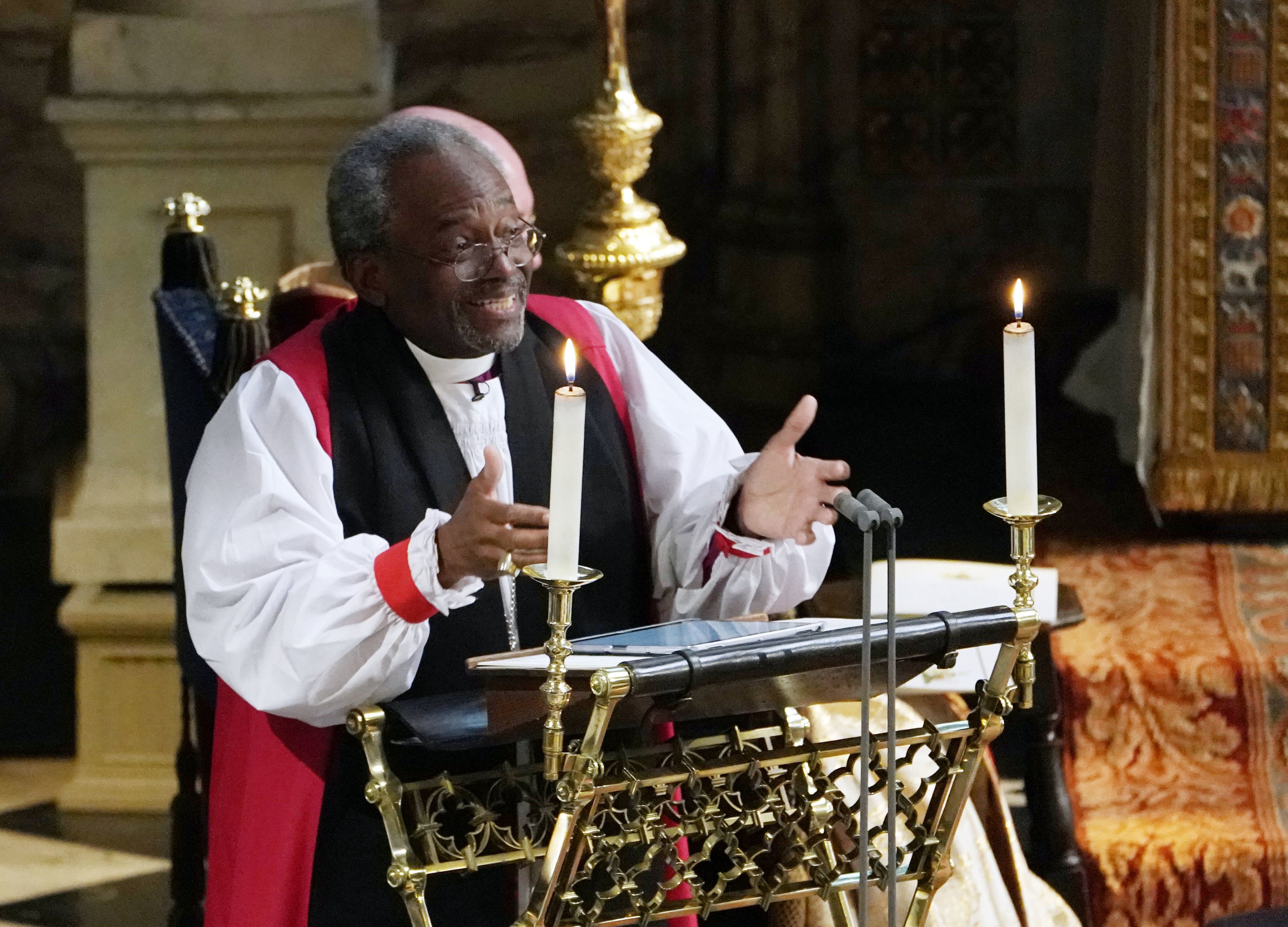
After the Most Reverend Michael Curry, the first black bishop of the Episcopal Church, shook up the otherwise pretty traditional royal wedding with his 14-minute sermon last Saturday, many wondered how the majority British guest list—not to mention the buttoned-up royal family—felt about it. According to Curry himself, however, not only was his sermon approved by the newlyweds and the palace beforehand, but he could also sense the agreement of many wedding attendees throughout his address.

“That whole service had all of the permissions. Nothing would’ve happened in there without, in some sense, the blessings and permissions,” the bishop said on the Today show on Tuesday morning (May 22), when British anchor Keir Simmons jokingly thanked Curry for making the royal family “uncomfortable.”

“So I was aware of that, but I’ve gotta tell you, I’ve been doing this for a long time, and I’ve been in the Episcopal church for a long time, and Episcopalians aren’t known for being loud and raucous in church,” Curry continued. “But I’ve learned to be able to hear an ‘amen’ by looking in their eyes. And I was looking in the eyes of people who were there, and they were doing quiet, British ‘amens.'”

Beforehand, though, Curry admitted that he “really didn’t know” how his preaching style would go over in St. George’s Chapel. “But I knew that they had asked me to come, and that’s me. So I showed up,” he said, adding that he was “a little nervous” when he first took his spot in front of the congregation. “But then after that, it turned into a church, and I was speaking to a young couple who were in love. I mean, they are so passionately in love with each other, you can see it,” he said. “And I was really aware that their love for each other, that you could actually see that, when they looked at each other, that their love was actually, even in that moment, reorienting the world around that love. I mean, all of the divisions and all of the differences were being crossed, and worlds were coming together, and a new world was being created. That’s the power.”

Watch Curry’s interview for yourself, below:

At Saturday’s service, Curry centered his sermon on the “redemptive power of love.” “There’s power in love. Don’t underestimate it. Don’t even over-sentimentalize it. There’s power, power in love,” he said at St. George’s Chapel. “Imagine this tired old world where love is the way. When love is the way—unselfish, sacrificial, redemptive. When love is the way, then no child will go to bed hungry in this world ever again. When love is the way, we will let justice roll down like a mighty stream and righteousness like an ever-flowing brook. When love is the way, poverty will become history. When love is the way, the earth will be a sanctuary. When love is the way, we will lay down our swords and shields, down by the riverside, to study war no more.”

And while the Brits in the crowd kept their reactions to Curry’s sermon largely hidden, the rest of the world didn’t hold back. Of the almost 7 million Facebook and Twitter interactions about the royal wedding, Curry’s portion of the big day sparked the most buzz: Nearly 40,000 tweets per minute were reportedly sent while he was addressing the crowd. His sermon also landed him on that night’s episode of Saturday Night Live, in which he was portrayed on Weekend Update by Kenan Thompson; Curry, who couldn’t stop cracking up at a clip from the show, called Thompson’s portrayal “brilliant.”

Watch the skit, below:

[embedded content]

Related Stories:

My Bishop, Most Rev. Michael Curry, Just Changed the History of Royal Weddings—Here’s Why His Sermon Matters


Source link

Categories
Health

My Bishop, Most Rev. Michael Curry, Just Changed the History of Royal Weddings—Here's Why His Sermon Matters


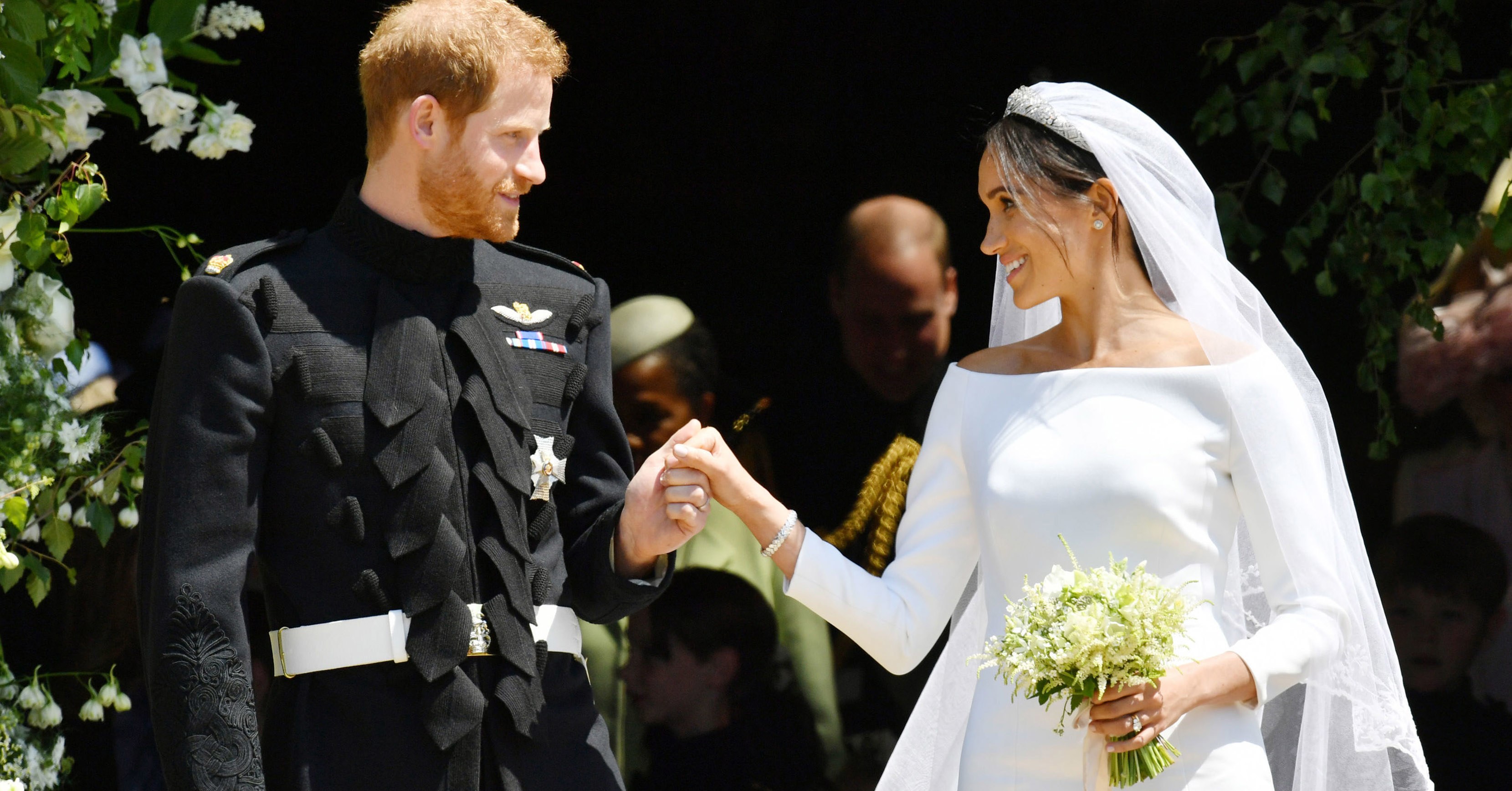
Months of anticipation culminated with the royal wedding of Prince Harry and Meghan Markle in Windsor on Saturday. There was much discussion regarding whether Meghan, an American-born biracial actress, would honor her African-American heritage during the festivities. It was impossible to escape conversations about race and the royal family as Prince Harry and Meghan’s marriage signaled a new day for the monarchy.

Speculation would prove futile: The couple ensured the introduction of Blackness into the royal family would not go unnoticed. Participating in the wedding ceremony were Rev. Rose Hudson-Wilkin, the first Black woman to hold the office of Chaplain to the Queen; Bishop Anba Angaelos, the Egyptian-born first Coptic Orthodox Archbishop of London; and Sheku Kanneh-Mason, the first Black cellist to win BBC’s Young Musician of the Year. A gospel choir sang “Stand By Me” and ended the ceremony with a medley of “This Little Light of Mine” and the Black church benedictory staple “Amen.”

Yet, one of the most poignant moments came during the wedding homily. When it was announced that the Most Right Rev. Bishop Michael Curry, presiding Bishop of the American Episcopal Church, would deliver the sermon, sheer joy was expressed by members of my church and those of us who love him. Bishop Curry began his ministry in my hometown of Winston-Salem, North Carolina, at St. Stephen’s Episcopal Church and has been a powerful presence in my life. I am among many he has mentored and guided as we navigate finding our voices and place in the fight for justice. He continues to push one of the nation’s oldest and largest denominations to be even more progressive on issues such as gender equity in leadership, full LGBTQ inclusion, prison reform, and gun control. A strong proponent of human rights and social justice, he continues to be one of the leading progressive theological voices in America.

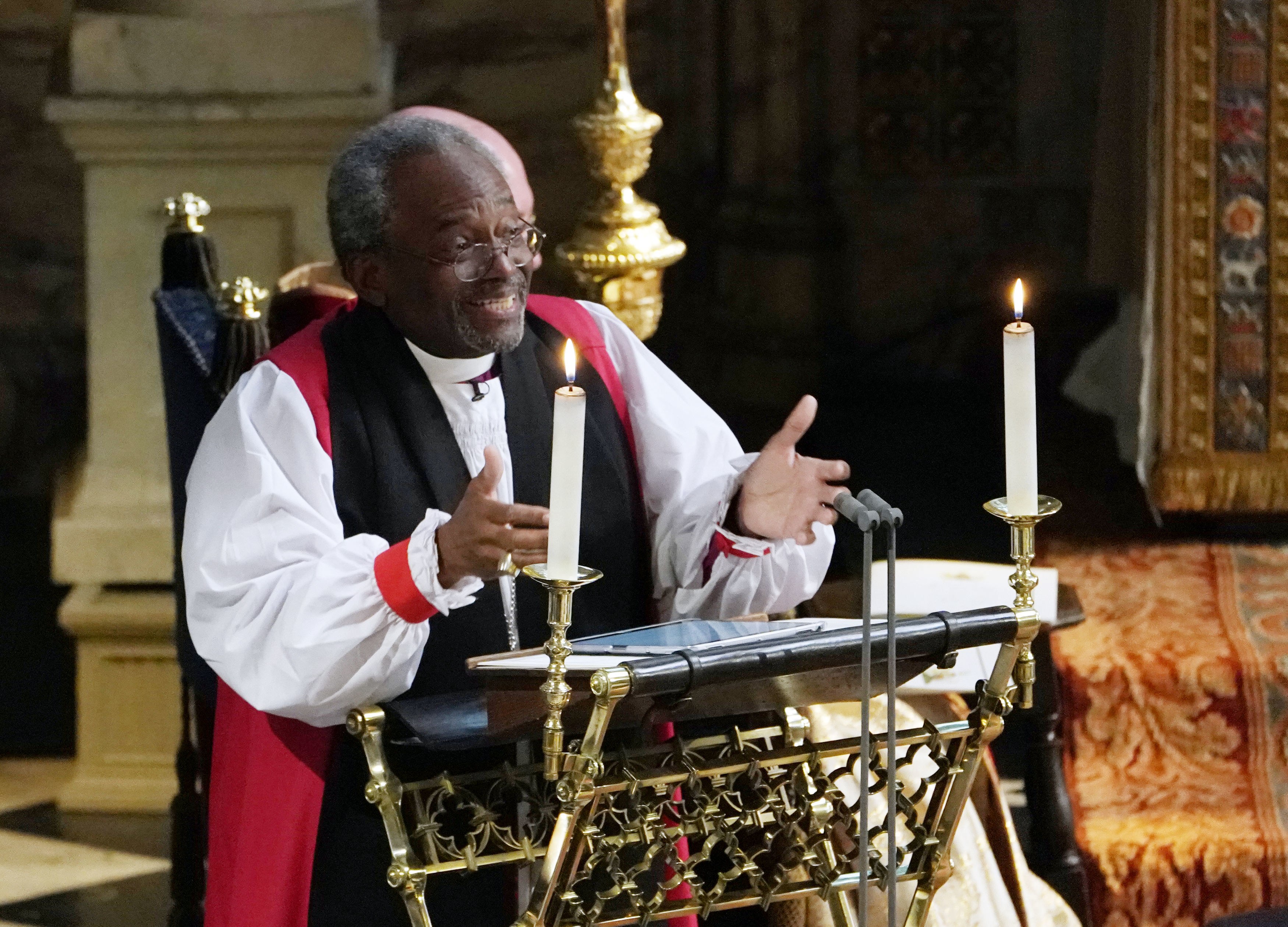
For a little more than 13 minutes, Bishop Curry reminded those in St. George’s Chapel and around the world of the radical and transformative power of love. He movingly stated that “there is power in love,” and “our lives are meant to live in that love.” One day after school shootings in the American cities of Santa Fe, Texas and Atlanta, Georgia—and days after the killing of many Palestinian protesters in Gaza—the world’s lack of love is palpable. Before one of the world’s great superpowers (two if you count how many Americans watched alongside Brits), Bishop Curry prophetically spoke to the truth that justice is rooted in love. When he reminded us of Jesus’s words, we were challenged to acknowledge that we cannot fully celebrate the love between Meghan and Prince Harry if we cannot commit to loving our neighbors as ourselves.

But this is what Bishop Curry does: He lovingly challenges us to remember our interdependence and responsibility to create just worlds that will enable us, as he said, to “treat each other like we are actually family.”

In a moment where Bishop Curry represented the boldness of progressive theology, he also brought the best of the Black preaching tradition. Though Presiding Bishop of the Episcopal Church, he often recalls attending Baptist services with his grandparents as a child. It was in those spaces where Bishop Curry learned the mechanics of Black preaching. While many in attendance and watching might have found it unorthodox, his cadence and delivery was reminiscent of what most Black people experience every Sunday morning. In fact, had Bishop Curry preached that same sermon the next day in a Black church with a Hammond B3 organ, hands would be raised, shouts would fill the air, and more than a few would be in the aisles dancing. In short, he preached.

Black preaching is never without emotion: It leans into the depths of African Americans’ relationship with a God who has sustained and continues to sustain them throughout turbulent social times. Black faith is rooted in the belief that love ultimately triumphs over all forms of hatred, and when African American preachers stand within that trajectory, they shine. In fact, I would argue that it is Bishop Curry’s roots in the Black church that ground his social justice ministry—much like someone else we know.

Bishop Curry stands in the lineage of Black prophetic preachers like the Rev. Dr. Martin Luther King, Jr. Bookending his homily with Dr. King’s words, Bishop Curry reminded us that Black preachers have always challenged the world to be better. In December 1964, in St. Paul’s Cathedral in London, Dr. King himself preached that a love for humanity is one of “the three dimensions of a complete life.” In the 50th year since his assassination, the world has sought to remember and honor Dr. King. Much has included a revisionist history of America’s relationship with him. While Dr. King remained steadfast in his belief that love could change the world, it was not well received and, ultimately, led to his death.

Yet Bishop Curry reminded that the revolutionary call for us to love remains clear. And in his invocation of Black America’s ancestors, those who were enslaved in the antebellum South, he reminded us that this call to love, to confront bigotry and hatred, has always come most clearly from those whose voices are often stifled and silenced by many of the empirical powers represented in that sanctuary.

The excitement of celebrating the love between the royal couple is magnified by the delight in what it means for a revolution in the British monarchy and, quite possibly, the world. The wedding that introduced the world to the first Black Duchess of Sussex also prominently reminded that same world of the healing and prophetic power that comes from lifting Black voices. It was an intentional centering that the royal family—and all who witnessed this beautiful day—will not soon forget.


Source link

Categories
Health

A Gospel Choir and a Fiery Sermon: How the Royal Wedding Celebrated Meghan Markle's Identity


The world has yet another reason to stan Meghan Markle, the brand-new Royal Highness the Duchess of Sussex, following her Saturday nuptials to Prince Harry.

Being the first American, biracial divorcee was an obvious way to break tradition in the British Monarchy, but the couple’s finalized wedding details—from the speakers to the music—rocked the world (and the Church of England.)

Prince Harry and Meghan Markle made it clear: Royal tradition is important, but this wedding was theirs alone. And they chose to make it a moment full of messages that represent their union, but also the world at large. The idea of inclusivity within a centuries-old institution is clearly shifting, and that was reflected throughout the ceremony.

The Sermon:

First up: the couple’s choice of Bishop Michael Curry of Chicago, the first African American head of the Episcopal Church in the U.S., to speak at their wedding. What appeared to be an intentional move to ground Markle’s identity in her marriage became even more clear in the rousing sermon. Curry shook the Royal Wedding address by not merely his American presence (it’s customary that speeches are given by British priests), but also by shifting the mood from rigidly exclusive to engaging and inviting.

Invoking Martin Luther King Jr. with words on the revolutionary act of love, humanity and even slavery, Curry’s address was a departure from a typical Church Of England speech and an introduction of a new and nuanced narrative that will now be a part of the monarchy’s history—one that speaks to Markle’s Protestant upbringing and her ties to Black culture. And obviously, Twitter lost their minds:

“Dr. King was right: ‘We must discover the power of love, the redemptive power of love,’” Curry preached in the call-and-response cadence of Black pastors. “‘And when we discover that, we will be able to make of this old world a new world. Love is the only way.’”

The Choir:

The Duke and Duchess of Sussex continued the tradition of Black church by inviting Karen Gibson and The Kingdom Choir to sing during the ceremony. Not only was this a first for the Church of England, but the swaying sea of Black women and men in pastel pinks, purples and champagne was a visual reminder of Markle’s identity and Prince Harry’s commitment to affirming it—an intentional practice the groom has enacted since he and Markle began dating.

Amplifying that message, the gospel choir broke out into a cover of “Stand By Me,” the 1961 hit by American singer-songwriter Ben E. King.

This also was too much for Twitter to handle:

Later, as the newly married couple descended the steps of St. George’s Chapel, the choir sang “This Little Light Of Mine” and “Amen,” staples of the Civil Rights movement and a visceral reminder to attendees and viewers of the African American spirit threaded throughout.

The Cellist:

Twitter nearly broke when a young, black cellist masterfully plucked away at the end of the ceremony, a first in Royal Wedding history.

Turns out, 19-year-old British musician Sheku Kanneh-Mason is a favorite of the couple’s and indicates yet another way the newlyweds made sure the ceremony felt like a representation of their relationship.

According to the LA Times, Prince Harry and Markle caught Kanneh-Mason performing in London last year. They were so impressed, they personally requested him for Saturday’s wedding.

“I was bowled over when Ms. Markle called me to ask if I would play during the ceremony, and of course I immediately said yes,” the Royal Academy of Music student said in a statement released by Kensington Palace. “What a privilege to be able to play the cello at such a wonderful event. I can’t wait!”

This isn’t the first time Kanneh-Mason has made history. In 2016, the young cellist won the BBC Young Musician of the Year Award, making him the first black musician to do so.

A Solo Walk:

With much speculation about who would walk Markle down the aisle amid familial drama that caught her father in a paparazzo scandal, the bride leaned on her feminist roots (she’s an outspoken advocate of gender equality) and took most of the journey down by herself. Prince Charles then joined her, stepping back as she approached Prince Harry, who remarked “Thanks Pa.”

The move wasn’t a surprising one, but it was bold. Markle’s numerous declarative statements about feminism and equality trumped tradition in this way and quite possibly set the tone for her role as a new member of the British Monarchy.

And in a fashion-forward nod to that equality, the bride wore British designer Clare Waight Keller, who last year became the first female Artistic Director of Givenchy.


Source link