Categories
Health

Lena Waithe: 'Why We Can't Keep Telling Stories About a Singular Black Experience'


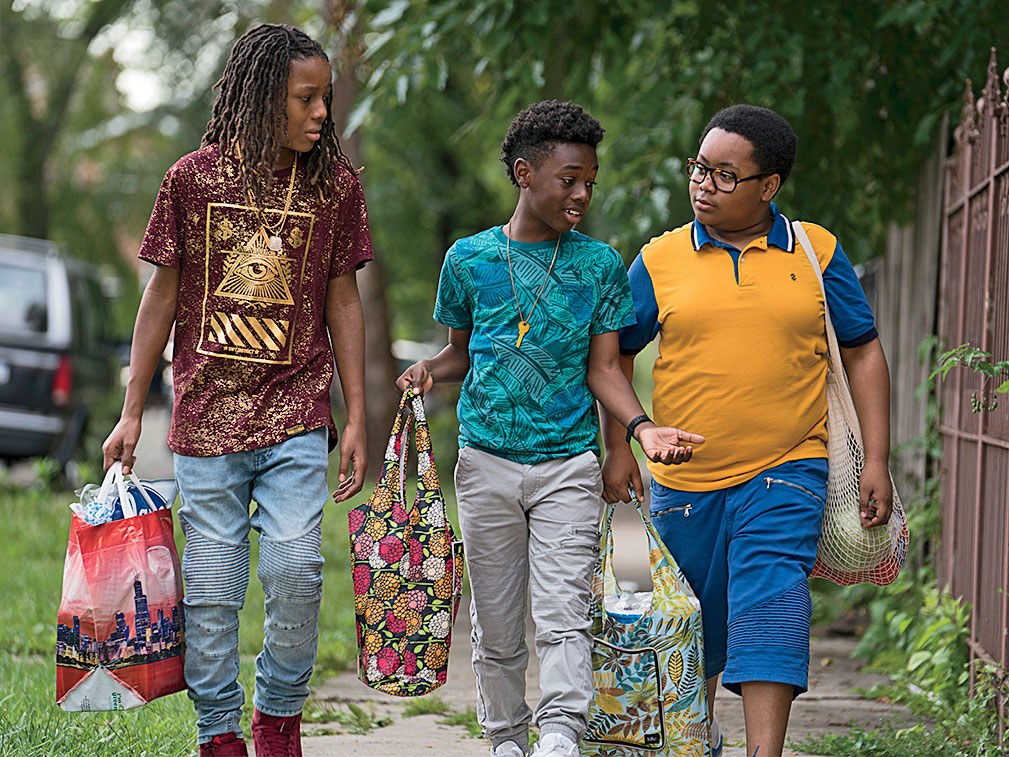
Writer and actor Lena Waithe believes in honest storytelling. (See her deeply personal coming out episode on Netflix’s Master of None—yeah, she won an Emmy for it). Now, with The Chi she’s turning the camera towards her hometown, Chicago.

Back in 2015 I was seeing all these news reports and profiles coming out about the gun violence and the shootings in my city, Chicago—and many were by journalists who have never broken bread with the people who live there. I remember thinking, I know these stories, and not all black people in Chicago are a monolith. We don’t all walk the same, talk the same, or think the same. We have different dreams and goals and hopes. I’m a black writer who was born in Chicago.

If it’s not my responsibility to tell our story, whose is it? I felt the same way about the “Thanksgiving” episode of Master of None, which was based on my own personal coming-out experience. I wanted to be honest to my memory of what happened: the humor and the missteps. For people to embrace a queer black girl’s story the way they did says a lot about where we are in society. We’re a lot further than we think. But for that reason, we can’t keep telling stories about a single black experience.

PHOTO: Parrish Lewis

The Chi, my new series for Showtime, is about being black and human and trying to survive on the South Side of Chicago. For me, growing up was all about hustle, grind, and fighting for what you want. There weren’t drive-by shootings and sirens every night. I know that might have been some people’s experience, but that wasn’t my perception at all. My grandmother was part of the Great Migration. She left the South and came to this city looking for a better way of life. I have that history in my blood and in my bones. My sister and I grew up in the same house that my mother grew up in. Mom always had two jobs. We earned everything we had. These are the people I had in mind when I created my characters. I named them after people in my family and kids I grew up with.

I wanted these characters to be three-dimensional and shown in an honest light—sometimes negative, sometimes positive. I wanted to explore why people, particularly young black people, make the decisions they make and what their lives look like before they step out the door and onto the street corner. I’m from Chicago, but so are Chance the Rapper, Sam Cooke, Donny Hathaway, Kanye West, and Jennifer Hudson. It’s where Oprah found her voice and where Barack Obama decided to start his political career. Where I’m from is something I never want to forget—whether that means wearing Jordans or my Bulls T-shirt or sticking my chest out and holding my head high like my grandmother taught me. It’s a legacy I carry with me like a backpack. —as told to Simone Kitchens

Lena Waithe, 33, is an Emmy-winning writer and actor. Her new series The Chi premieres on Showtime this month.


Source link

Categories
Health

Plus-Size Model Tess Holliday Just Clapped Back at Trolls Telling Her How to Work Out


She’s shot some seriously gorgeous pics for high-profile brands, but model Tess Holliday has also unfortunately had to deal with an unfair share of trolls in this Twitter age. She’s clapped back at online haters who accuse her of living an unhealthy lifestyle, and she’s even boycotted Uber because of an incident where a driver fat-shamed her. Now she’s an author and an advocate for size inclusivity in fashion—so when people start commenting on her body and telling her how to live her life, she’s not afraid to call them out.

Holliday posted a series of videos of herself at the gym on Friday and the comments blew up thanks to rude Internet lurkers. She reposted a few choice comments in a new Instagram post with a cutting caption, “Y’all just can’t handle seeing someone in a plus size body that isn’t deemed desirable by societies standards THRIVING & it kills y’all. Worry about your own life?? #FUCKYOURBEAUTYSTANDARDS #thenotsosubtleartofbeingafatgirl”

Unless you’re Holliday (or her trainer), it’s no one’s place to tell her—or anyone else—how to work out and what to do with her body. She posted videos of herself working out and was met with criticism and hate rather than love and support. That’s no way to talk to anyone, but thankfully she’s strong enough to call her haters out.

Related Stories:


Source link

Categories
Health

I F*cking Love Crying, So Stop Telling Me Not to Do It


One afternoon, when I must have been about eight, my mom told me to stop crying. I don’t remember what I was crying about, but I do remember that I responded: “But I’m already trying so hard not to!” By that young age, I’d already learned that I should hold back my tears. That when I was upset, I had to first and foremost consider the people around me so that I didn’t make them upset.

That’s how it’s been ever since. Personally? I love crying. Whether it’s out of happiness or sadness or the impact of a big realization hitting me or something else I can’t describe, I feel more in touch with whatever I am feeling when I cry. Crying allows me to process that emotion and learn from it. If I don’t, the feeling gets trapped in me and just won’t go away. But some people do not appreciate that I cry so often, so I constantly feel pressured to keep my tears in for their comfort.

I was probably in my teens when it hit me that I cried more than most people. As a six-year-old, I stayed up crying for several consecutive nights because my former babysitter had taken another job. At nine, I cried because I realized that one day, my stuffed animals wouldn’t mean so much to me. I probably cry at least once a week now. Last month, I cried because I read that Chloe Grace Moretz’s dog died, (her second deceased pet in a month!). A few weeks before that, I stopped in the middle of sex to cry because “Don’t Look Down” by Martin Garrix came on and it was just pulling at my heartstrings.

In all these instances, I wanted to cry. I know how to hold back tears if I’m in a professional setting or can’t for some other reason, but I enjoy the release. Sometimes, when I’m in a bad mood, I even search for touching articles or videos because I know I’ll feel better once I cry.

Not everyone feels that way. I always wish my boyfriend, who says he hasn’t cried since he was in the single digits, would cry in front of me. Meanwhile, he wishes I wouldn’t do it so much. Once, when I said I was just trying to connect with him, he said, “then you shouldn’t cry.” Where did we get the idea that crying in front of people blocks them off? In my experience, it brings them closer together.

The more people take issue with my crying in front of them, the less comfortable and in touch they seem to be with their own emotions. Maybe they’re afraid that engaging with me while I’m crying would force them to face feelings they don’t want to face. And that’s fine. They don’t have to.

But I’m tired of them projecting that discomfort onto me. People who tell me to stop crying aren’t actually trying to make me feel better. They know the feelings will be there whether I cry or not. They just want me to help them avoid emotions because emotions make them uncomfortable. But for me, not crying is too big a sacrifice to make for other people’s comfort.

I’m also sick of reassuring people that I’m crying out of happiness, not sadness. Because a lot of my tears can’t really be attributed to either. Often, I’m just moved. Sometimes, I’m having a breakthrough. And when I am crying out of sadness or anger, that’s not a bad thing. Feeling these feelings is not going to lead to anything disastrous! In fact, it’ll probably only lead me to greater healing and self-understanding. But not if I pretend to be happy for someone else’s sake.


Source link