Categories
Health

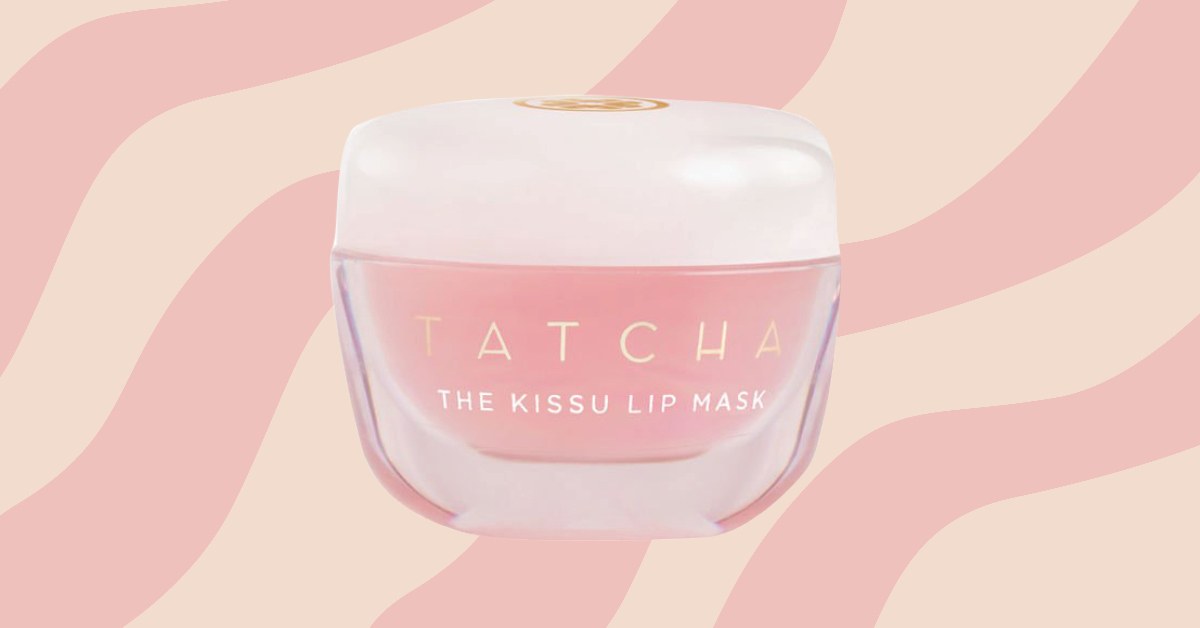
Tatcha The Kissu Lip Mask Review: How It Saved My Lips


“Dude, your lips are really chapped,” my younger brother said to me a little more than a week ago, his voice a mix of disgust and concern. If he can be counted on for anything, it’s his brutally honest, unfiltered, and sometimes unnecessary commentary.

I was immediately embarrassed. But more than that, I was frustrated because I had just slathered on lip balm and sealed it in with a coat of Vaseline. It didn’t work. Nothing ever worked.

Eight years ago, when I was a burgeoning beauty editor, I tasked myself with the impossible—and now in hindsight, stupid—mission to test all the new lipsticks, stains, and glosses I had received for that month. In one sitting. I swiped one on, and then wiped it off. Swiped another, and wiped it off. There must have been at least 20. And by the end, I had peeled an entire layer of skin off my lips. They were swollen, red, and just really, really angry. I attempted to soothe them with lip balm and then waited with the hope—oh, the naivete!— that they would quickly calm down.

The next day, the swelling had subsided somewhat, but in its place was a hardened, chapped mess that itched and burned at the touch of anything. My toothpaste made them hurt. So did water. I soon discovered smiling was out of the question; anything larger than a slight smirk led to them cracking and then bleeding. Crying for help, I turned to my roommate who swore by A&D, the diaper rash ointment, for healing cuts and softening dry skin. Desperate, I took her tube (I bought her a new one) and carried it with me everywhere, surreptitiously applying (because, diaper rash ointment) a layer before any activity that involved my mouth. My then-boyfriend, now-husband, will forever associate kissing me with A&D, which is both very weird and very unfortunate.

I didn’t realize what I had done was given myself lip dermatitis or a form of eczema called eczematous cheilitis. A&D helped rescue my lips, but they were never quite the same after that—they’ve been chronically chapped since. I quietly dealt with it by having a mini vessel of Vaseline with me at all times, avoiding irritants (I couldn’t eat spicy food, my favorite, for years), and all other lip products.

I slowly began trying new balms and formulas again, cautiously one-by-one. But it wasn’t until after my brother’s comment, when I tried Tatcha’s Kissu Lip Mask—the first product that wasn’t (1) designed for a baby’s butt and (2) formulated with petroleum jelly—that my lips didn’t completely rebel against.

Tatcha’s founder Victoria Tsai had once also given herself dermatitis from overzealously experimenting with beauty products, which ultimately led to the creation of a clean beauty brand that was free of all bad-for-you properties, like parabens, synthetic fragrances, sulfates, and phthalates. But what makes the lip mask so unique is its texture: It goes on like a jelly but it melts into a non-sticky liquid sheet mask.

What convinced me to try it was when Victoria Tsai, Tatcha’s founder, told me that she’d once also given herself dermatitis from experimenting with beauty products, which ultimately led to the creation of her clean beauty brand. The Kissu lip mask was born in much the same way as all of Tatcha’s offerings: It’s free of parabens, synthetic fragrances, sulfates, and phthalates. But what really makes it interesting is its texture: It goes on like a jelly but it melts into a non-sticky liquid sheet mask. (The formula, I’m told, took a team of scientists more than a year to perfect.)

The mask looks like light pink Jell-O, and it’s contained in the cutest little tub that comes with a tiny gold spatula, which makes the whole experience feel like you’re a fancy giant scooping out dessert.

It’s meant to be used as an overnight treatment, so I applied it at night right before bed. And in the morning, when I saw that it didn’t make my lips worse, I patted on some more. And a few more times in the afternoon. Three days later, after regular use, my lips—for the first time in eight years—were chap-, scale-, and itch-free. This must be what a normal human with functioning lips feels like, I marveled. This must be what my husband, who never uses chapstick or balm or any type of lip salve and never has had to suffer the agony of having chapped lips in his life, feels like.

So why does it work so well? “It’s a combination of the active ingredients and the form,” Tsai explains. “The jelly formula absorbs more easily than waxes, delivering active ingredients like Japanese peach seed extract, three Japanese rose extracts, and Japanese Camellia Oil, which nourish, repair, and protect the lips.”

And with that, my eight-year-long lip saga has come to an end. So suck on that, little brother.

Tatcha The Kissu Lip Mask, $30, tatcha.com

Related Stories:
Nars Has a New Orgasm Lip Balm—and Oh, It’s Good
This Lip Plumper Is Literally Like Filler in a Tube
The Best Lip Balms to Get You Through This Winter



Source link

Categories
Health

Beyoncé's Backup Dancers Saved Her From a Concertgoer Who Rushed the Stage


Beyoncé concerts are usually pretty eventful: her incredible vocal range, complex choreography, and amazing costumes make her performances something you’re likely to remember the rest of your days. That hasn’t changed with her and Jay Z’s On the Run II tour, where the husband-and-wife couple blend their repertoire—and celebrate their relationship. But on Saturday night, their concert was eventful for a different reason: At the end of the show, when the two turn around to walk offstage together, one fan had a different idea of how the concert would end.

Said fan, wearing a white shit, rushed the stage, jumped easily onto it, and tried to follow the Carters backstage—and surprisingly, for how tight Bey keeps her security detail, he got pretty far, heading across and deep into the stage. Luckily, the couple’s backup dancers noticed something definitely wasn’t right and wound up breaking formation to swarm the interloper. Her security guard also seems like he was promptly on the scene, thank goodness.

The whole thing captured in video from the concert, below:

Here’s a closer look:

And the ensuing swarm:

While we’re glad that Bey and Jay are safe, we’re sure it shook them up. The couple’s publicist, Yvette Noel-Schure, confirmed via Instagram that the two were OK. “@beyonce and JAY-Z on stage tonight in Atlanta. Thank you to all the fans for your concern. They are fine and looking forward to the show tomorrow,” she captioned an Instagram post of the two.

It was definitely a pretty terrifying incident. Luckily, the show seems set to go on.

Related Stories:

Beyoncé Stopped Herself From Falling Down the Stairs in Concert Like a Pro

Beyonce’s Historic September Vogue Cover Is Here

Beyoncé and Jay-Z Just Shared Some Very Naked, Very Intimate Photos


Source link

Categories
Health

Anna Akana: How Comedy Saved My Life


In a world short on joy, humor can be a unifier and a survival tool. In that spirit, we bring you our Comedy Issue, a month-long celebration of funny (and fearless) women and the enduring power of a good laugh.

Until the age of 17, I was a hyper-Driven student: 4.1 GPA, high SAT scores, and way too many extracurriculars. I had a plan to go into the Marine Corps, like my father, and become a veterinarian, which I’d been diligently working toward as long as I could remember. Anyone who knew me could see: I was going places.

But by 19 I hadn’t laughed for two years, and my free time read like a DARE program’s worst-case scenario. I was drinking myself into blackouts every night, regularly dropping acid or taking Molly (often alone), smoking up to eight joints a day, and refusing to go to college. I was depressed and dragging myself through a hopeless existence with drugs and alcohol to pass the time.

That shift from ambitious student to desperate escape artist happened after I lost my little sister to suicide during my senior year of high school. My family will never know why she made that decision, and it certainly left us with a plethora of mindfucks to sort through.

[embedded content]

To deal, we mainly cohabited in denial. Though we have a family history of both addiction and depression, mental health was not something we talked about. (Years later, when I first went on Lexapro at 26, my parents handed me a bag of vitamin B3 and said, “Depression goes away with old age.” Oh. OK.) My point: I had the odds stacked against me and zero coping skills.

But I needed a sense of purpose, bad, and I went looking for it on Comedy Central. I was high (as usual), and ­Margaret Cho came on my TV. For the next 30 minutes, I forgot my sister was dead. I forgot that my family was fucked up. I forgot who I was, how sad I was, and how painfully hopeless life felt. For that half hour, I laughed and escaped in a way that felt a million times better than any high I’d been chasing. It changed everything.

And so I decided I wanted to do that. I pursued stand-up with the same tenacity I’d previously tackled academics: performing and watching several open mics a night; inhaling special after special, from Whitney Cummings to Rodney Dangerfield; scouring Comedy Central and Netflix archives for more. I dug into obscure routines posted on YouTube and spent hours writing jokes, rewriting jokes, and rewriting them some more. As I dived headlong into comedy, one thing became clear: Many of the people around me were depressed and struggling too. The stories of my fellow comedians blew me away. Some had cancer; some were orphans—some were orphans who had cancer! We each had a sob story, and we were trying to turn our tears into other people’s laughter. Because nothing felt as good as those laughs from the darkness. That was hope. That was love.

Photo by Cat Calico

Some might say it was also a drug. Sure, I may have replaced one high with another, but this one makes the pain in my life seem manageable. To write punch lines about your darkest moments means you have to find what’s funny about them. You have to find a new perspective, a unique angle; you have to take an honest look at the worst seconds you’ve ever seen. Writing jokes about my sister’s suicide (yeah, I go there) forced me to have a new relationship to it. It made me laugh about it, something I never thought I could do, and look at it head-on and explore it with an open, curious mind. Whereas I once cringed whenever someone casually said, “Ugh, I wanna kill myself,” I was now trying to make others comfortable enough to laugh at that exact pain.

Instead of running away from my sister’s death, comedy asked me to walk slowly, to look around and take notes. It asked me to work through what I was going through and find—not necessarily a bright side—but a side that, when looked at in the right light, could make you shrug and laugh. And I did.

Onstage I’ve joked openly about my depression, losing my sister, and the aftermath of our shattered family. I’ve relayed the story of when I told my best friend that my sister had died and he blurted out: “Oh no! Is she OK?!” Well, no. She wasn’t. Nine years of exploring that loss in front of an audience has finally made me OK with it.

[embedded content]

Comedy also let me internalize my struggle with depression as a part of my identity in a positive way: I’m no longer a victim. I no longer see my life as a tragedy. Labels like “clinical depression” or “suicidal” no longer scare me. They are simply part of my story. All of this makes me who I am, which I finally understand is someone worthy. The hard stuff? I now have the emotional endurance to poke fun at it, to look it right in the face.

More important, I’m able to tilt my head to see it in just the right light—and laugh.

Anna Akana is a comedian, author, and executive producer and star of the YouTube Red series Youth & Consequences.


Source link

Categories
Health

Prince Harry Saved Meghan Markle From a Potential Fall Like, Well, a Prince


Meghan Markle and Prince Harry have been in full couple mode following their Royal Wedding, making appearance after stunning appearance together all over the U.K. This weekend, they turned up in Lincolnshire to watch Prince Harry’s cousin, Celia McCorquodale, tie the knot and of course they looked as adorably in love as always. Even a moment when Meghan tripped for about a half-second became a sweet gesture, as Prince Harry quickly turned to her to make sure she was okay.

As they were walking into the wedding hand-in-hand, Markle’s white heel looked like it got stuck in the lawn—and she stumbled so briefly, you’d miss it if you blinked. Prince Harry seemed to grip her hand a little tighter, like the prince he is. Meghan, meanwhile, regained her balance, flashed a smile, and continued being flawless in a blue paisley wrap dress and classy white fascinator. The Mirror caught the itty-bitty, totally human snafu—click over to their website to see it below.

Let’s be honest, though: Even if Meghan had fully tripped and fallen, we have no doubt it would have been the most graceful fall in princess history. Still, we’re glad Prince Harry was there to give her a literal hand.

The two continued making their way to the St. Andrew and St. Mary’s Church in the small village of Stoke Rochford, where the wedding was being held. The bride, Celia, was the daughter of Princess Diana’s sister Lady Sarah McCorquodale, and she’s an absolute dead ringer for the late Princess of Wales. She even paid her own little homage to Harry’s mother by wearing the same gorgeous diamond tiara Diana wore at her wedding in 1981. The piece seems to have become an important heirloom and, according to the Mirror, several women in the family have worn it on their wedding, including both of Diana’s sisters.

McCorquodale attended Harry and Megan’s royal wedding back in May, so we’re sure the Duke and Duchess of Sussex were happy to return the favor—and they’re probably glad they get to rest easy now that their big day is over and happily entered into the history books.

Related Stories

Is the Cult of Meghan Markle Alive and Well in the U.K.?

The Stars of Lifetime’s Prince Harry and Meghan Markle Movie Look Just Like the Real Thing

For Fashion Brands, the ‘Meghan Markle Effect’ Is Already Very Real


Source link

Categories
Health

Jamaican Black Castor Oil Saved My Hair After Years of Relaxing It


I was 11 when I started relaxing my hair. My family had just moved to Houston and knowing that the humidity levels would be outrageous, my mom thought it’d make my hair easier to style. Like most black girls, I hated perm days. I sat there patiently, lying to the beautician when she’d ask if my scalp was burning, because I wanted my hair to be straight as possible. Not long after, the irritation and my lack of maintenance knowledge caused my hair to start falling out.

My mom and I wanted to stop, but after several hairstylists told her it’d get better, the cycle continued. Looking back on it, this led to years of some probably not-so-great hair experiments. I’d take a break to wear sew-ins, let my hair grow back, then get a haircut I hated and once again become reliant on weaves until my hair grew back. In college, I once even decided I was well-equipped enough to start doing perms myself (inside my dorm room, might I add). Of course that too went terribly wrong. My edges began coming out in clumps in the shower, and it became clear to me that I could no longer continue abusing my hair. It was time to go natural.

Being at Howard University—a historically black school—I was already surrounded by beautiful black women who were no strangers to embracing their natural hair. I began looking to them for advice not only on how to properly transition, but also on how to grow my hair back. The one suggestion that kept popping up? Jamaican Black Castor Oil—a product that’s been a staple in black households for centuries, thanks to its moisturizing and healing properties that help stimulate hair growth. It comes in a variety of brands, but everyone swore by Tropic Isle Living.

Real beauty goes beyond the surface—and so do we. Sign up for Glamour’s newsletter to get honest reviews, personal essays, and more every day.

As I resorted back to weaves to conceal my hair loss, I would drench my scalp in JBCO before having my hair braided for a sew-in. Disclaimer: it’s not for the faint of heart. I don’t even think the word “thick” is an adequate way to describe it. It’s heavy (almost tar-like) and leaves your hair somewhat greasy. But desperate times called for desperate measures. Within weeks, I began to notice my edges gradually grow back, and after every weave install the “new growth” I saw was insane.

After two years of transitioning, I had finally gotten rid of my relaxed hair. But my mom and I couldn’t stay away from our kitchen beautician ways, and in celebration of my now perfectly transitioned hair, I wanted to go lighter. So we dyed it during one of my breaks at home—two times in one week, to be exact. My finally healthy, curly hair had gone limp in certain parts and once again I felt like I was at square one.

Since I couldn’t wear it in its natural state anymore, I began trying different styles (like perm-rod sets, braid-outs, and the occasional silk-out) and testing new ways to integrate JBCO into those routines. After several greasy fails, I finally landed on my now go-to way to use it: as a pre-shampoo treatment. I apply a generous amount of Jamaican Black Castor Oil throughout my wet hair, massaging into the scalp, and let it sit for 30 minutes in a plastic hair cap. Although it serves as a pre-‘poo, my hair absorbs the moisture of the JBCO more effectively when wet. I then shampoo my hair and condition as normal.

This once-a-week routine has served my hair well since then. In typical Blake fashion, I can never keep it one way for long, but the years of hair abuse has led me to a deep appreciation and love of my hair no matter what state it’s in. Right now? I type this with a U-part wig on and with heavily saturated cornrows underneath. At least now I know they’re protected.

Tropic Isle Living Jamaican Black Castor Oil, $15 for an 8-oz. bottle, amazon.com

Related Stories:
20 Protective Styles You’ll Want to Wear Through Spring
The Top 10 Natural Hairstyles Blowing Up on Pinterest Right Now
Fake Hair, Don’t Care: Your Guide to Extensions, Weaves, and Wigs


Source link

Categories
Health

Skin Care Saved Me From Years of Cystic Acne


The beauty—and absurdity—of the internet lies in its ability to rile people up in such a way that the drama of the day can be reduced to one tweet with no context. One I saw last night: “Black Mirror: Skin Care” and I knew exactly what the author was referring to. A story published on The Outline Tuesday called The Skin Care Con, in which writer Krithika Varagur took a guns-blazing yet remarkably unresearched approach to tearing down what she calls “New Skincare,” a hobby seemingly adopted by desperate millennial women who will do anything because it’s cool and self-satiating, not because it’s helpful or useful. “A scam,” is what Varagur calls it.

I’m not here to refute the core of her argument—Cheryl Wischhover over at Racked.com did that, and did it very well—but I feel compelled to insert myself into this conversation not only because of my experience covering beauty at various points in my career, but also because skin care, in many ways, has changed the way I present myself to the world, which wasn’t always easy.

After reading The Outline story a few times, I’ll admit I don’t disagree with every point Varagur makes, though I think her frustration is misguided. I have certainly rolled my eyes at the It-girl mentality that surrounds skin care as it stands in 2018, and have felt disappointed when a roster of frequently regurgitated products by girls with cool clothes, cool hair, and cool jobs do nothing for me. I’ve also gotten angry at natural skin care brands who make irresponsible claims backed up by nothing but earnest testimony—such as the promise that garden-variety oils and esters can cure cystic acne. It cannot. Some oils might help keep chronic breakouts at bay, but cystic acne is the beast unto which my own obsession with skin care was born.

After having regular adolescent skin—smatterings of red pimples and an oily T-zone—I found myself at age 15 faced with a rapid, violent outbreak of cystic acne that included quarter-sized nodules under-the-skin, and red, inflamed lesions on both cheeks that hurt to the touch. After several rounds of Tetracyclines, I was placed on Isotretinoin—a.k.a. Accutane. Two pills daily for six months. I’ll spare you the details of the peeling skin, the bone-dry lip and eyes, and what it was like being a teenager having to sign paperwork pledging she won’t get pregnant because of the severe birth defects the drug can cause—all while her male doctor looks on. This was before iPledge.

I was grateful to be on Accutane—painful acne was a misery—but at that age, outward appearance dictates a lot, and I wasn’t comfortable with mine.

I was deeply distraught. I was grateful to be on Accutane—painful acne was a misery—but at that age, outward appearance dictates a lot, and I wasn’t comfortable with mine. I decided my best recourse was to start wearing makeup—dense, matte, full-coverage foundation to mask what wasn’t really able to be masked. But, at 15, I had no idea how to buy or use makeup so, traumatized, I made a trip to the drugstore and grabbed the first bottle of Revlon ColorStay foundation I saw, not bothering to check the shade. It looked white, and I was white. That’s how it works, right? I also quickly realized that if you wear as much makeup as I was, you have to remove this makeup at night; my first experience with routine daily washing. My cleanser of choice back then was bar soap, Cetaphil or Yardley, and—because Accutane sucks all the moisture out of your skin—I also leaned on attainable moisturizers like Lubriderm, often mixed with SPF 30, because light is not your friend on Accutane. Voila, cocktailing.


In six months, my cysts had mostly subsided and I’d familiarized myself with the nightly routine of washing my face to remove my makeup, though I never strayed from Cetaphil for fear of my acne returning; never mind it was knocked out of me by high doses of Vitamin A.

In college, my face looked better, but not great—I still habitually wore a ton of makeup to cover the indents and light scarring my acne had left behind. It was there, though, in the dorm bathroom, that I discovered a gateway rainbow of drugstore face wash, each claiming they did different things; each I’d never tried thanks to an adolescence filled with caution. The gold of Neutrogena Oil Free Acne Wash, the sky-blue gel of Clean & Clear, the peach of St. Ives Apricot scrub. I’d try whatever my friends had in their shower caddies, while staring into the mirror and talking—mostly about parties and our bitchy RA, but I remember those communal nights and mornings well.


After college—early 2000s—my acne was mostly gone but I was faced with a new affliction—circular dry facial patches that would flare up whenever they felt like it, and were resistant to derm-prescribed hydrocortisone, to Vaseline, to straight-up olive oil. Patches that were so flaky, I couldn’t wear foundation without looking like a had a polka-dotted face. It was then I discovered the beauty of a website called Makeup Alley, a gen-one digital community of impassioned beauty fanatics who swapped reviews, tips, and stories. It was on that site, practically still in beta, that I discovered some people swear that two uncoated Aspirin melted by lukewarm water with a little honey can help heal dry, inflamed patches, and you know what? That worked for me. It was also around this time I starting gently dipping my makeup sponges into iced coffee before applying foundation, swearing that the caffeine woke up my skin. I believe we now call these hacks.


In the decade-plus I’ve been covering women’s lifestyle, I’ve tried thousands of products and over the years have graduated from hoarding lipsticks and bronzers to hoarding serums, moisturizers, exfoliants, and balms. It’s become a passion because I see results. In this space, I find I’m able to think analytically and critically about what actually works for me, not just what looks good or is flattering. There’s some work involved, and I find that satisfying—especially now that my skin and my hormones have settled into a place that allows me to experiment with different formulas according to problems I’m trying to fix.

There’s also an abundance of science as far as skin care goes—despite Varagur’s opinion that it’s “chiefly about buying things, and displaying them for others to see.” The trick, of course, is doing your science homework, which I know—based on some conversations I’ve had with women around the Glamour office—isn’t always easy.

Chemical violence is not seeking out things that have been proven effective to look and feel better. Chemical violence is slathering deodorant on your face as a primer because you saw it on YouTube.

“If I’m being honest, I really don’t know the science behind half of the products I use and why they’re ‘good for me,’ our social media director Madeline said, adding that she’s often as guilty as the people mentioned in The Outline story who know little about the powerful ingredients they’re using but slather them on anyway. Usually because a certain product is permeating their feed. “It’s not clear how those ingredients will interact with each other or how they’ll impact my skin,” she said.

It took me a long time to resist the urge to buy whatever cream I felt like at Sephora or to rip open every expensive treatment I see in the beauty closet at work. During the last year or so, I’ve been much more attuned to what I’m putting in—and on—my body for many reasons, and I’ve committed to taking the time to learn. I have a steady dermatologist, which I hadn’t had since my Accutane days, and I email her questions if I have them. I Google. I ask friends who are beauty editors. I read packaging, not just look at it. For my own health, I’ve chosen to educate myself about why products are able make the promises they do.

I now know exactly what acids—AHA, BHA, glycolic, lactic, malic, citric, salicylic—do, and which ones work for me. I know humectants and Hyaluronic acid are essential for my lifelong dry skin. I know how to apply retinols responsibly. I know the rejuvenating power of a vitamin C serum, because—feeling overwhelmed by the bottles on my bedside table—I asked my dermatologist to suggest one non-negotiable product during my last visit.

Varagur mentions a few of the above ingredients, but assigns them blame, writing, “At the core of the New Skincare is chemical violence.” Nope. Chemical violence is not seeking out things that have been proven effective to look and feel better. It is not being curious about Biologique p50—which comes with a mass of printed instructions—or wanting to try out Glossier’s new chemical exfoliator. Chemical violence is slathering deodorant on your face as a primer because you saw it on YouTube. It’s dousing your face with Pepto Bismol because a supermodel thinks it works. It’s ordering Juvederm online and injecting it at home.


I do not find self worth in the “enormous quantity” of products I use, despite Varagur’s argument. In fact, it’s just the opposite. There’s nothing better than finding a core few that work in tandem to produce results. Today, my routine is face wash (Skinceuticals Gentle Cleanser), toner (Bioderma Sensibio), a morning serum (Skinceuticals CE Ferulic), moisturizer (I swap between M61’s Hydraboost Cream and Desert Essence’s Revitalizing Oils), an eye cream (Red Earth), and a twice-weekly retinol (A60, which my sister brought me from Paris). I also have a weekly rotation of treatments to target different areas of concern (Dr. Brandt’s Oxygen Facial Flash Recovery Mask for dullness, Drunk Elephant’s T.L.C. Sukari BabyFacial for clogged pores and sandpaper texture are two I keep coming back to).

Avoiding your gaze, hiding behind my hair, and being a slave to pan stick are things I’d like to avoid, if possible. I like to look good, too.

But considering the volume of innovative brands and breakthroughs, I’ll always want to try new things, so I might switch or eliminate as I go—and that might mean spending a little more money sometimes. For example, I recently swapped my Holy Grail Clarisonic—which my skin was becoming resistant to—for the NuSkin Lumispa, and I unequivocally noticed a difference in tone, hydration, and clarity in literal days. Buying a new tool wasn’t the equivalent of eating my feelings, so to speak, but rather an actionable thing I did to fix my enlarged pores and dull skin after a good amount of research.

“Before you start a militant skincare regimen, it’s instructive to think about why you want one,” Varagur instructs.

Probably because I hid from the world in high school, and I have important things to accomplish daily that need my full confidence. Avoiding your gaze, hiding behind my hair, and being a slave to pan stick are things I’d like to avoid, if possible. I like to look good, too.

I’m in my mid-to-late 30s and look younger than I am—much younger, I’ve been told. Yes, that could be because of my 5’1″ frame, but I like to think it’s because of my skin’s tone and elasticity. I’m not saying this to boast—I was not blessed with good skin at birth. I treated it with one of the heaviest medications you can find, and ever since I’ve tended to it, and not because anyone told me to, or because I’m chasing some bullshit ideal dictated by Instagram.

“Real, flawed women have real, flawed skin—it’s fine,” Varagur writes. Yeah, we know. I don’t think any skin care-obsessed women I’ve met flips out over a blemish or a breakout. If anything, they’re able to identify the cause—a new ingredient, a bad-eating week, PMS. And that ability to understand and take action, to me, is the definition of perfect skin.

Perrie Samotin is Glamour‘s Digital Deputy Editor


Source link