Categories
Health

Can Stress Cause a Late Period?


A late period is no laughing matter—a trigger for a flood of emotions whether you’re very much wishing you are pregnant or hoping you’re not. While the reasons for a late period are many, the wrench in your regular schedule is always inconvenient: how are you meant to plan around your cramps, bloating and PMS? No one likes to get caught without a cup, tampon, or pad once the red tide sets in.

We know that health issues like PCOS, low body weight, thyroid issues, and chronic illness can delay or prevent periods from arriving regularly. But is it possible that the main culprit behind a late period is simply stress?

The answer is a resounding yes.

How Stress Affects Your Period

Stress affects our bodies in the same way it did our distant ancestors who frequently had to escape life-threatening situations, says Stephanie McClellan, M.D., an OB/GYN and chief medical officer at Tia. It puts our bodies on “high alert” disrupting everything from digestion to our normal experience of pain.

The reasons behind these systemic shifts are prehistoric. “When the stress pathway is activated, there are very specific commands coordinated by the brain, stress hormones, and the immune system intended to improve the chances of survival,” explains Dr. McClellan.

Among those to get temporarily shut down? You reproductive system. Stress causes a surge in cortisol, which sets off a chain reaction in your body: contact between the brain and ovaries is disrupted, and your period is late or might even disappear altogether. “High cortisol surges can make the uterine lining less receptive to the healthy implantation of the fertilized egg,” says Dr. McClellan, adding that this can also influence your fertility.

You may also notice period cramps feel worse when you’re stressed. “Pain perception is often increased when one is stressed, anxious, or depressed, so period cramps that are usually manageable may feel worse,” says Jennifer Braverman, M.D., an assistant professor at the University of Colorado’s department of obstetrics and gynecology division of maternal-fetal medicine. “Stress also makes it harder to cope with the mood changes many women feel around their periods.”

How to Get Your Cycle Back On Track

If you’re experiencing late or missing periods, it’s important to figure out the root cause of the situation.

“There can be many causes of late or irregular periods, including anovulation (where a woman doesn’t produce an egg each month) or oligoovulation (where a woman produces an egg some months and not others),” says Dr. Braverman. Benign brain tumors (called prolactinomas), obesity (due to the production of estrogen), and being underweight or exercising too much can also affect your cycle in this way.

If chronic stress is behind your temperamental periods, the fix is simple: work on minimizing your stress.

This can of course be easier said than done but Dr. Braverman recommends moderate exercise, warm baths or showers, and plenty of rest. You can also try things like meditation, eating foods thought to help lower cortisol, and practicing yoga to help get your period back on schedule. And that’s one less thing to be stressed about.
Source link

Categories
Health

I Threw a Blood Party to Celebrate Getting My Period for the First Time in Seven Years


My dad cried and said “I’m so happy for you” as if I had actually accomplished something.

My mom was also so happy for me for thirty seconds, before panicking that my period might disappear again.

I texted my ex-boyfriend who lives in a different city and he responded with three popping champagne bottles, which to my knowledge is the first time he’s ever used an emoji.

My 77-year-old boss clutched his chest with joy, and, eager to convey how deeply comfortable the conversation was for him, added some thoughtful follow-up questions about cramps.

The stranger my friend tried to set me up with at his birthday bought me a celebratory drink and insisted: “It’s 2019, only lame men are grossed out by periods.” (I experienced newfound hope in woke masculinity.)

Another guy I went on a blind date with that week listened to the whole triumphant story compassionately, even offering some related experience of a health mystery solved through diet. We’re all just souls trapped in these weird malfunctioning vessels, I thought.

A third date got squirmy and asked if I was telling everyone about this. I decided to take a break from dating but that was okay because my social calendar was already full: I was planning a blood party.

A blood party is the party you have to celebrate getting your period for the first time in seven years. At least, it’s the party I throw to celebrate getting my period for the first time in seven years. I had been fantasizing about this day for a long time, so I already knew the essential elements: Bloody Mary’s, blood orange bellinis, some sort of fertility ritual. I also wanted it to involve dancing naked around a campfire deep in the wilderness under the aurora borealis, but I live in Los Angeles and don’t own a car so I settled for Elysian Park at dusk with some streamers.

I invited many people, all of whom had experience with menstruation. I encouraged friends to fly in from distant cities, threatening that I may never get married or have a child and so this may be their only chance to prove their love by celebrating a significant life milestone with me.

The response was overwhelming. Everyone wanted to toast to my bleeding. They had lots to say about periods in general and their place in society. They were eager to inaugurate a ceremony that honored womanhood. Someone asked my underwear size. Someone offered to bake me a red velvet cake. Some people actually did travel from distant cities to come to my blood party.

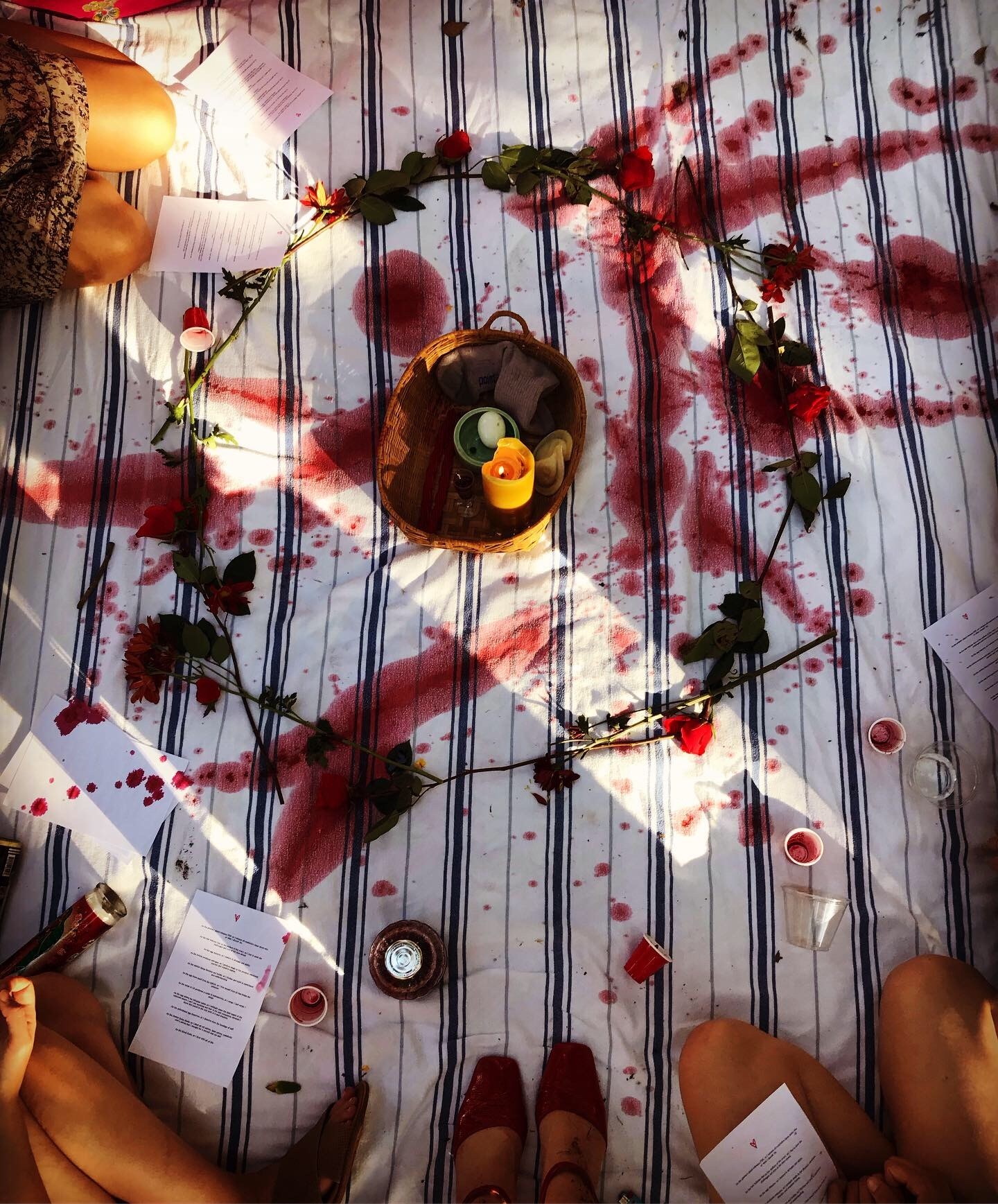
The ceremony was beautiful. Partially inspired by a friend’s transcendent Passover Seder, we blessed objects from a centerpiece representing each of the organs in the reproductive system: a pea for the pituitary gland, a candle for the hypothalamus, two Twizzlers for the fallopian tubes, frozen perogies for ovaries, an egg for eggs, a cozy sweat sock for the uterus, and of course, beet juice for blood.

Then we said some affirmations:

“As the hair follicles rise on the surface of the ovary, so I rise to meet the challenges and joys of the days ahead.”

“As the uterine lining thickens and builds, so I thicken and build in experience and understanding.”

“As the egg enters the fallopian tubes, so I willingly enter the dark tunnel of the unknown where I can’t see anything and fear is my only companion, because I know this tunnel is the only path to a new freedom.”

My beet juice altar.

Courtesy of author


Source link

Categories
Health

Why Does It Always Feel Like I Get My Period While Traveling?


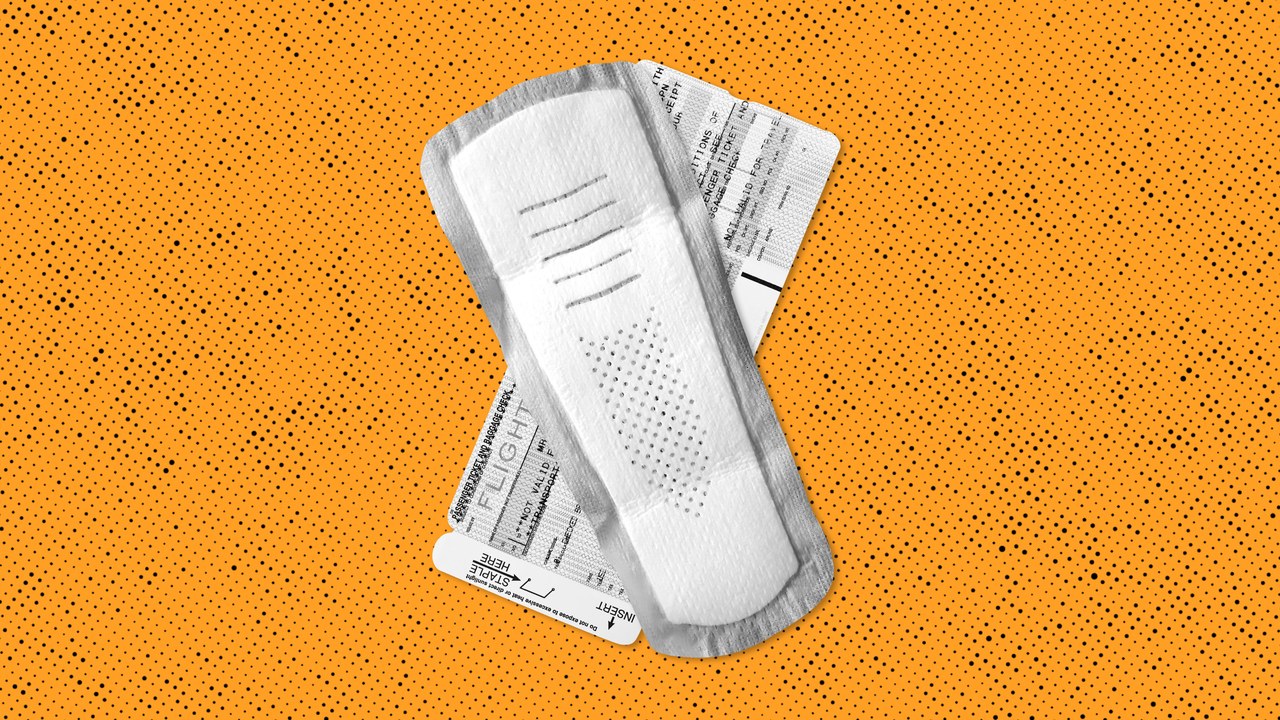
Every. Damn. Time, I think as I barricade myself in a bathroom stall and root around in my bag for—fingers crossed—an emergency tampon. Back at the gate, the plane’s beginning to board, and it’s getting to be desperate times: I’m about to get on a 12-hour budget flight from Berlin to Singapore, and my period has decided to surprise me—again.

It seems like I always unexpectedly get my period when I travel. After getting a hormonal IUD (love her) and dealing with a year of heavier-than-usual flows fading to intermittent spotting, I’ve gone largely, blissfully, without a period for nearly two years. But the random occasions my period does show up always seem to be the worst days possible, like this one when I’m rushing to catch a longhaul flight. It happens on around two-thirds of my trips.

It doesn’t help that I’m a travel writer, so, you know, traveling is sort of my job. On one trip-turned-horror-show, I was caught off guard yet again and had to spend a 10-hour transatlantic flight with toilet paper balled up in my underwear, afraid to get up and walk around in case my flow decided to truly burst forth. At one point, I realized I had tampons from no fewer than five different countries in my bathroom in Berlin, thanks to all the spontaneous flows that struck me while on a trip.

The travel period, it turns out, isn’t that unusual. “When anything is stressful, we know that can get in the way of having a regular period or someone ovulating,” says Lauren Streicher, M.D., a clinical professor of obstetrics and gynecology at Northwestern University’s Feinberg School of Medicine. Traveling, even to the most magical of destinations, can be a minefield of stressors—weird sleep schedules, questionable foods, mad dashes to the airport—which can cause a spike in cortisol that can really throw off your body and the regularity of your period, says Leah Millheiser, M.D., director of the Female Sexual Medicine Program at Stanford University School of Medicine. This irregularity isn’t universal: “It certainly doesn’t happen to every woman every time they travel, but it may happen occasionally,” Dr. Millheiser says.

That makes it insanely hard to plan. Depending on where you are in the world, getting the supplies you need to cope can be a challenge. In some parts of Asia, for example, tampons are still a cultural taboo and can be difficult to find. But it’s not just there: I’m continually surprised by how many airport bathrooms aren’t prepared for women who find themselves beset with a surprise visit from their cycle. And the ones that are equipped with a tampon vending machine seem to have been designed by someone who’s never had a period. “There’s nothing worse than running for the plane and saying, ‘Where the hell am I getting two quarters or two dimes to get a crappy tampon?’” says Claire Coder, founder of Aunt Flow. “Toilet paper is offered for free—why aren’t tampons and pads?”

Coder’s mission is to make sanitary products a basic right for people with periods just like toilet paper is for the rest of the population. Aunt Flow is in talks with a dozen major airports and airlines to get them to offer gratis supplies in their bathrooms—and they’re finalizing a partnership with RSA Roomservice Amenities, a company that supplies hotels with toiletries, to get Aunt Flow’s company-made organic tampons and products into hotel rooms, which guests would be able to use for free. Personally I’d be OK with any free setup that doesn’t make me break out a bottom-of-the-purse emergency tampon, (should I be so lucky to have one) when my period surprises me while traveling.


Source link

Categories
Health

There's an Oscar-Nominated Netflix Doc You Need to See: Period. End of Sentence.


The Academy Awards haven’t always favored female directors. In the 91-year history of the show, only five have ever been nominated for Best Director, and this year, once again, the category is made up of solely men. It’s not entirely dire, though, if you turn your attention to other categories. Take, for example, Period. End of Sentence., which is nominated for Best Documentary – Short Subject and was directed by a woman: Rayka Zehtabchi, a 25-year-old Iranian-American director.

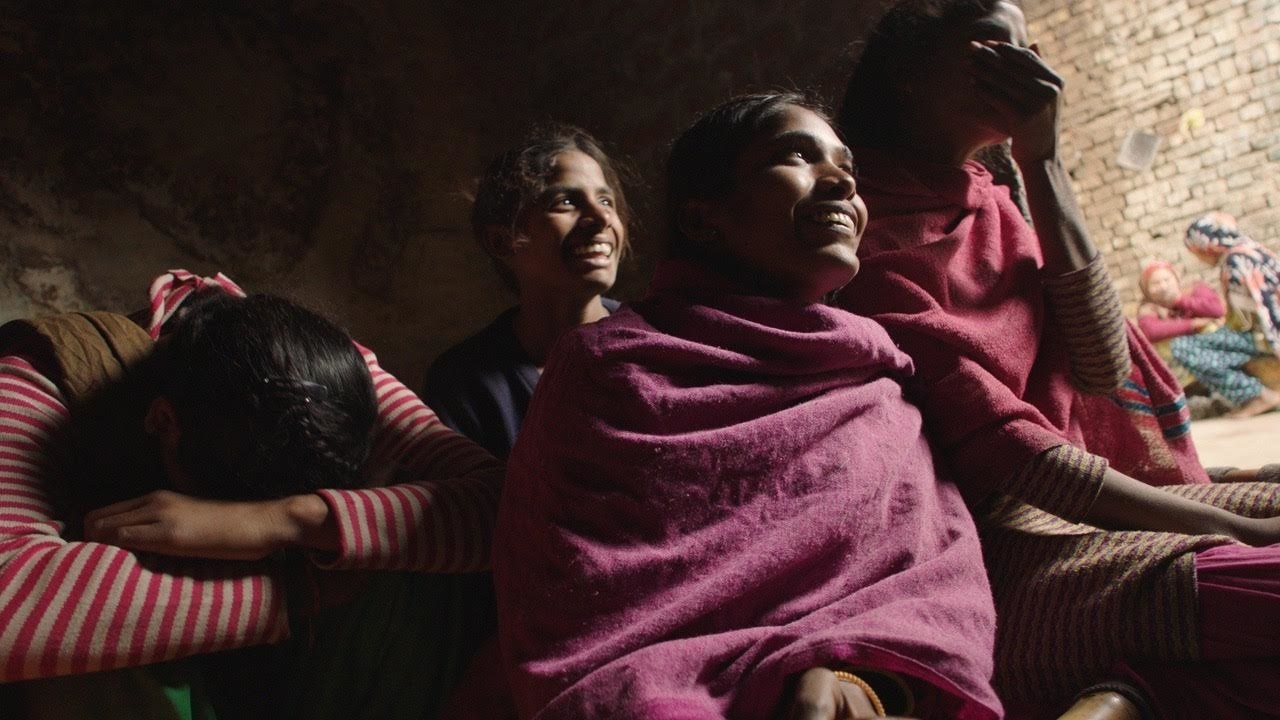
Period. End of Sentence., a documentary that tackles the stigma around menstruation in rural India, is currently available for streaming on Netflix. The 26-minute film follows a group of women who use a new machine to create low-cost sanitary pads to create financial independence while also improving feminine hygiene in their village. Now, according to TIME, their pads are being used in 40 nearby villages. The doc also gives viewers a peek into how taboo menstruation is in these communities, where 23 percent of girls drop out school when they hit puberty due to their periods.

For Zehtabchi, seeing just how ingrained period stigma was for the women was the most life-changing part of making the film. Zehtabchi tells Glamour, “Some of the craziest moments during filming would be when we talked to older women—who had gone their entire lives menstruating and should have been talking to their daughters about menstruation—but couldn’t even tell us why it happened every month, or why they got it. It breaks your heart because if they’re so afraid of the thing that makes them women, then I can’t imagine what else you would be afraid to do or talk about.”

[embedded content]

Zehtabchi was approached to direct the documentary by The Pad Project, the incredible organization that first brought this story to light. In 2012, Los Angeles-based teacher Melissa Burton brought students and staffers together to travel to Kathikhera, India to set up the pad-making machine that is featured in the film. But after their trip, they wanted to do more than just install a machine: They wanted to start a conversation about period stigma around the world. And thus, the documentary was born.

Even though the film has now received such incredible recognition, Zehtabchi and the Pad Project’s mission has stayed the same: to spread as much awareness about this issue as possible. “After seeing the film I hope people understand this period stigma doesn’t just effect those in India, we experience it in the United States and in other cultures as well,” Zehtabchi says. “I also want viewers to realize that empowering women worldwide really starts with beginning with opening up the conversation around menstruation. We can implement feminine hygiene, but first we have to break the taboo. I also want people to realize this isn’t just a film for women, it’s for men too. They’re 50 percent of the population and men need to be having these conversations and championing the film just as much as women are.”

As for being one of a few female directors nominated by the academy, Zehtabchi says, “Why does it have to be so amazing? Why does this have to be shocking that I’m a female director and that I’ve made a film about a women’s issue, in a country we don’t think much, and that the film is getting attention?” We couldn’t agree more.

Samantha Leach is an assistant culture editor at Glamour. Follow her on Twitter @_sleach.


Source link

Categories
Health

A Period Emoji Is Coming and It's About Damn Time


For all the time we spend talking about periods, it’s appalling (appalling!) that not a single emoji can adequately represent that time of the month. A syringe, a germ, and poo have all made the cut but there’s no emoji that can adequately speak to our monthly menstruation? Seriously?! Finally, that’s about to change. A period emoji is being released this moth.

The period emoji, a rather cute little droplet of blood, comes after a campaign by Plan International UK, a charity fighting for girls’ rights around the globe, to help put an end to period stigma. Literally everyone on the planet either has a period or knows someone who does but still, period stigma remains a very real thing. A 2017 survey by Plan International UK found nearly half of girls in the UK between 14 and 21 were embarrassed by their period. But it’s not just about embarrassment over Aunt Flo that matters—around the globe, period stigma keeps women and girls from work and school. In some cultures, period stigma even threatens women’s lives.

The shame needs to stop. “With emoji becoming one of the fastest growing global languages, we realized having a period emoji could help change things,” Plan International UK said. Think about it: if the poop emoji has made it easier to talk about that bodily function, a period emoji can help normalize menstruation. At least it’s a start.

The droplet of blood is admittedly kind of generic (Plan International UK’s first choice period emoji, a pair of period panties, was rejected by the global governing body of emojis) so, may we suggest a combination of the period emoji followed by ?, ? and ? to make sure your point gets across.

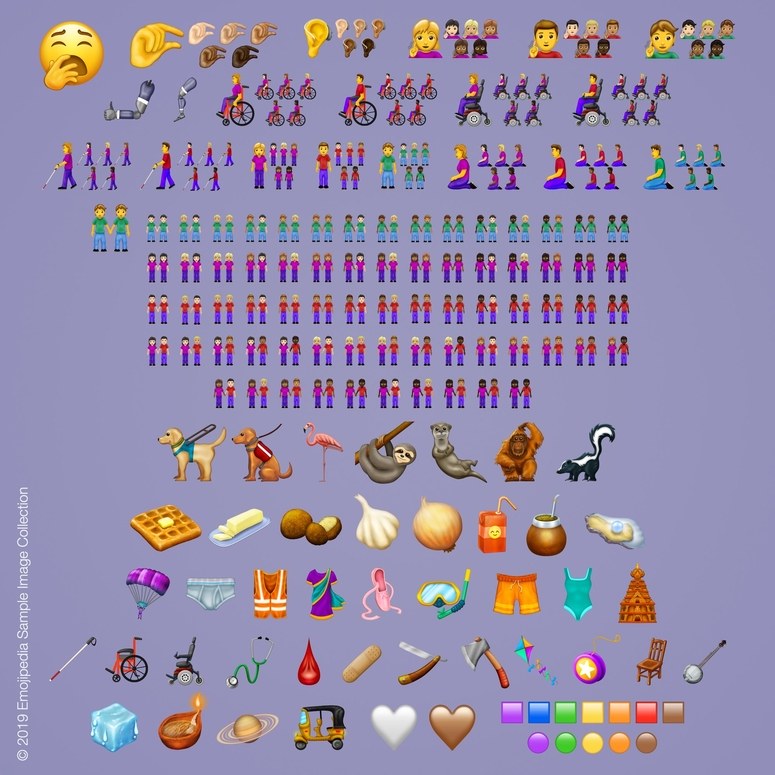
So when can you start getting your menstruation emoji on? The period emoji will be added to your keyboard sometime this year, according to Emojipedia. It’s not the only stigma-reducing emoji on the way—new emojis for 2019 also include people in wheelchairs and people with disabilities.

Credit: Emojipedia

Here’s to ending stigmas one emoji at a time.


Source link

Categories
Health

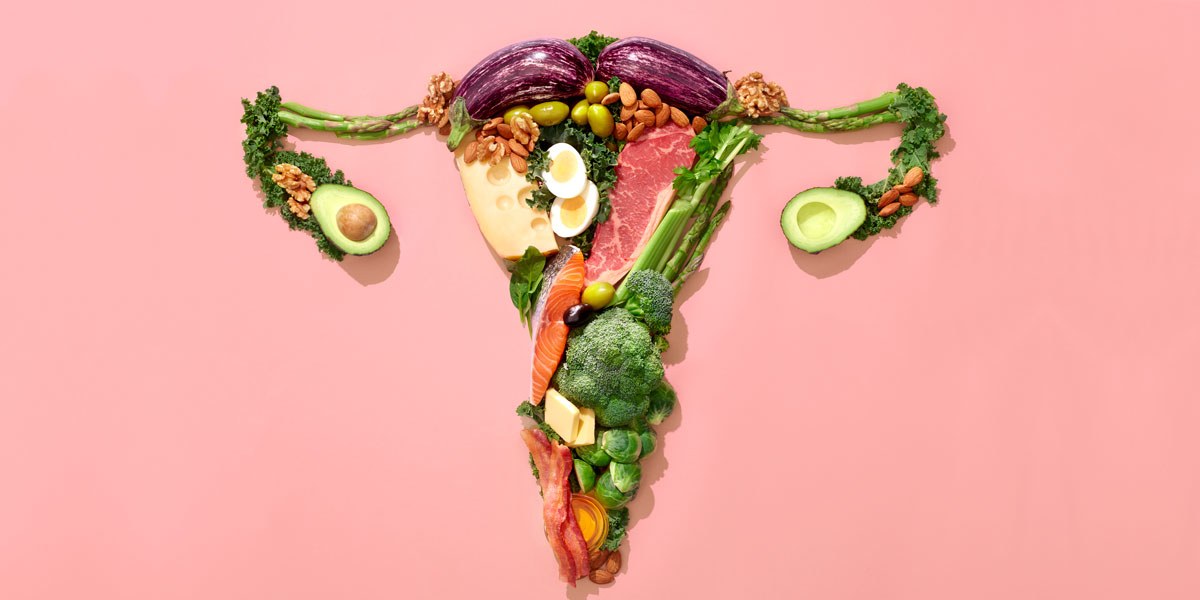
Will a Keto Diet Mess With Your Period?


When it comes to periods, I consider myself lucky—mine shows up each month like clockwork; no need for tracking apps or a flag on my g-cal. But a few months ago, my regularly-scheduled programming went dark. I went through possible reasons for the ghosting: Pregnant? Not a chance. Birth control? Used every time. Meds? Nothing new there. Then it hit me: The only change was my diet.

I’d been test-driving the Ketogenic diet—the trendy but oh-so-restrictive eating plan that has people pumped over its ability to burn through body fat by seriously restricting carbohydrates in favor of meals packed with healthy high-fat foods. By limiting carbs, you drain your body’s main source of fuel, which forces your body to use fuel from fat, or ketones, as a substitute source of energy, says Ariane Hundt, a clinical nutritionist in New York City.

The radical shift can produce crazy results: I lost 11 pounds and three percent body fat in a month. That’s not necessarily a dangerous amount of weight to drop, but it’s certainly more than the recommended one-to-two pounds per week, and that alone could explain why I skipped my period, says Rekha Kumar, M.D., an endocrinologist specializing in weight control at Weill Cornell Medicine in New York City. When you lose weight quickly, your body registers the loss as a threat, and any system deemed unnecessary for survival begins to shut down to conserve resources. For women, the baby-making machine is typically first to go.

But that’s not the only way rapid weight loss might affect your period. “If you do one extreme thing to your body, there’s likely other downstream effects on important hormones,” Dr. Kumar says. Losing weight fast creates a state of stress in your body, which can trigger your adrenal glands to fire out more cortisol. Also known as the stress hormone, extra cortisol coursing through your system can lead to libido and menstrual changes and potentially suppress ovarian function if levels get too high. The potential end result: a disappearing period.

Skipping a period isn’t necessarily a big deal—it’s normal for your cycle to fluctuate every now and again, Dr. Kumar says—but when connected to a change in your diet, it could signal bigger health risks if your period is MIA long-term. In that case, you have to worry about the same things that postmenopausal women worry about, says Zandra Palma, M.D., a functional medicine physician at Parsley Health in New York City. Think: loss of muscle mass and bone mineral density. If you miss Aunt Flo too long, you can also risk potential fertility problems down the line—difficulty with ovulation is the reason about a quarter of all infertile couples can’t conceive, according to the Mayo Clinic.

It’s unclear how many women on Keto have had their periods pull a disappearing act. Forums like Reddit are filled with stories like mine but exact stats are hard to pin down. And many patients may not mention it to a doctor because, like me, a month or two of having a rogue cycle could be enough to scare them back to a well-balanced eating plan ASAP. As soon as that happens, the body starts to recover. (Dr. Palma says it can take up to three months for your period and the rest of your body to rebound.)

Even though your body will bounce back once you return to a balanced eating plan, doctors say it’s important to recognize just how much extreme diets can affect your body beyond the number that shows up on the scale. “It is unfortunate that some young women have placed such an emphasis on being thin that they would sacrifice their long-term health,” Dr. Kumar says.

That’s not to say the keto diet is bad for everyone, she adds. “When someone goes on the keto diet, [the question is], ‘are they an appropriate candidate for it?’” says Dr. Kumar. For someone who has a high body fat percentage, the keto diet may actually help restore an irregular cycle. But for those who just want to lose a couple extra pounds, “that’s where you really see a potential risk in terms of somebody jeopardizing their fertility or menstrual cycle,” Dr. Kumar says. To find a healthy balance, talk to a doctor or nutrition expert who can help you understand how a diet like keto might affect your reproductive health.

In my case, Keto wasn’t the right pick. I’ve found a more balanced diet—higher in protein, a little less fat, and moderate helpings of carbs—that’s allowed my ovulation to return to its regularly scheduled programming while I enjoy cauliflower pizza, tons of leafy greens, and even a slice (or two) out of the bread basket.


Source link