Categories
Health

Megan Markle's Close Friend Might Have Just Revealed the Sussexes' New Brand Name


Ever since Prince Harry and Meghan Markle shared the announcement that they’re be stepping back as senior members of the royal family, there’s been a lot of talk about the Duke and Duchess of Sussex’s use of the word “royal.”

You see, after their wedding, the pair officially registered their website, social media handles, and charity as Sussex Royal. However, as part of the agreement to sever royal ties with the family, Queen Elizabeth forbid the couple from using the word royal on any of their work.

In a statement, the couple wrote that dropping the word royal was just fine with them. “While there is not any jurisdiction by The Monarchy or Cabinet Office over the use of the word ‘Royal’ overseas, The Duke and Duchess of Sussex do not intend to use ‘Sussex Royal’ or any iteration of the word ‘Royal’ in any territory (either within the UK or otherwise) when the transition occurs Spring 2020.”

Though many viewed the response as snarky toward the Queen and the monarchy as a whole, the couple might have just been stating facts. Besides, it appears they already have a new name in the works already.

According to The Daily Mail, stylist Jessica Mulroney, who happens to be Meghan’s closest confidant, registered a new domain in Harry and Meghan’s name sometime last week. As The Daily Mail wrote, she “registered the website sussexglobalcharities.com last Wednesday through her charity the Shoebox Project Foundation, which supports vulnerable women.”

Look at the name again: “Sussex Global Charities.” No “royal” in sight.

“While the duke and duchess are focused on plans to establish a new non-profit organization, given the specific UK government rules surrounding the use of the word ‘royal’ it has been therefore agreed that their non-profit organization when it is announced this spring, will not be named Sussex Royal Foundation,” a spokesperson for the couple told The Guardian. The spokesperson reiterated, “The Duke and Duchess of Sussex do not intend to use ‘SussexRoyal’ in any territory post-spring 2020.”

Though little else is known about just what Harry and Meghan will call their endeavors right now, we likely won’t have to wait long: The couple’s last official day as working members of the royal family is March 31.
Source link

Categories
Health

Everything We Know About Megan Markle and Prince Harry's Royal Departure


As Meghan Markle and Prince Harry prepare to step back from royal duties, there’s been a lot of speculation about what exactly this is going to look like. They’re already in Vancouver, where they’ll mostly be based (although they’ll still be coming back to the U.K. often), and they’re also taking on work outside of the royal family—Prince Harry’s already spoken at a J.P. Morgan event. The latest details, from Friday, February 21, were that the Duke and Duchess of Sussex would no longer be able to use the terms “royal” and “Sussex royal” going forward.

Now, we’re getting the rest straight from the couple themselves: The Sussex Royal website posted the complete game plan for Megan and Harry’s departure on Friday. “We had hoped to be allowed to share these details with you sooner (to mitigate any confusion and subsequent misreporting), but the facts below should help provide some clarification around this transition and the steps for the future,” the website explains.

And wow, it covers a lot. Some of it we knew already (like that they’ll no longer be able to use public funding and will be able to make their own money), but it’s good to have it all laid out. It’s worth keeping in mind that this whole thing is a trial period—the guidelines Meg, Harry, and the royal family established will be revisited next year to make sure it’s working out for everyone.

Here’s a few more details:

  • They’re no longer allowed to “undertake representative duties” on the queen’s behalf. But they get to keep their charitable patronages, which include the Invictus Games that Harry founded, Rhino Conservation Botswana, and quite a few rugby organizations.
  • They get to technically keep their formal HRH Duke and Duchess of Sussex titles—but they’re not allowed to actively use them.
  • Prince Harry remains sixth in line to the throne.
  • They’ll keep a security detail (sadly due to a “shared threat and risk level” that’s been documented over the past couple of years).
  • Harry gets to keep his military rank of Major and honorary ranks of Lieutenant Commander and Squadron Leader, but his “official military appointments” won’t be used for the year-long review period—nor is he allowed to “perform any official duties associated with these roles.” It’s cool if he supports the military in a non-official capacity, though, like through his work with the Invictus Games.
  • Harry and Megan’s Institutional Office, which coordinated their royal activities, is getting shut down because it’s primarily funded by Prince Charles. “Over the last month and a half, The Duke and Duchess have remained actively involved in this process, which has understandably been saddening for The Duke and Duchess and their loyal staff, given the closeness of Their Royal Highnesses and their dedicated team.”

In other news, they’re also not starting a “foundation” (quotes theirs) but they are creating a nonprofit organization. Details on this are still very TBD, but it seems they’re doing this on top of their other charitable work—so they’re definitely staying busy.

And yep, you can expect a social media and website rebranding to coincide with their Spring 2020 departure now that using the R-word is out of the question—RIP @SussexRoyal.


Source link

Categories
Health

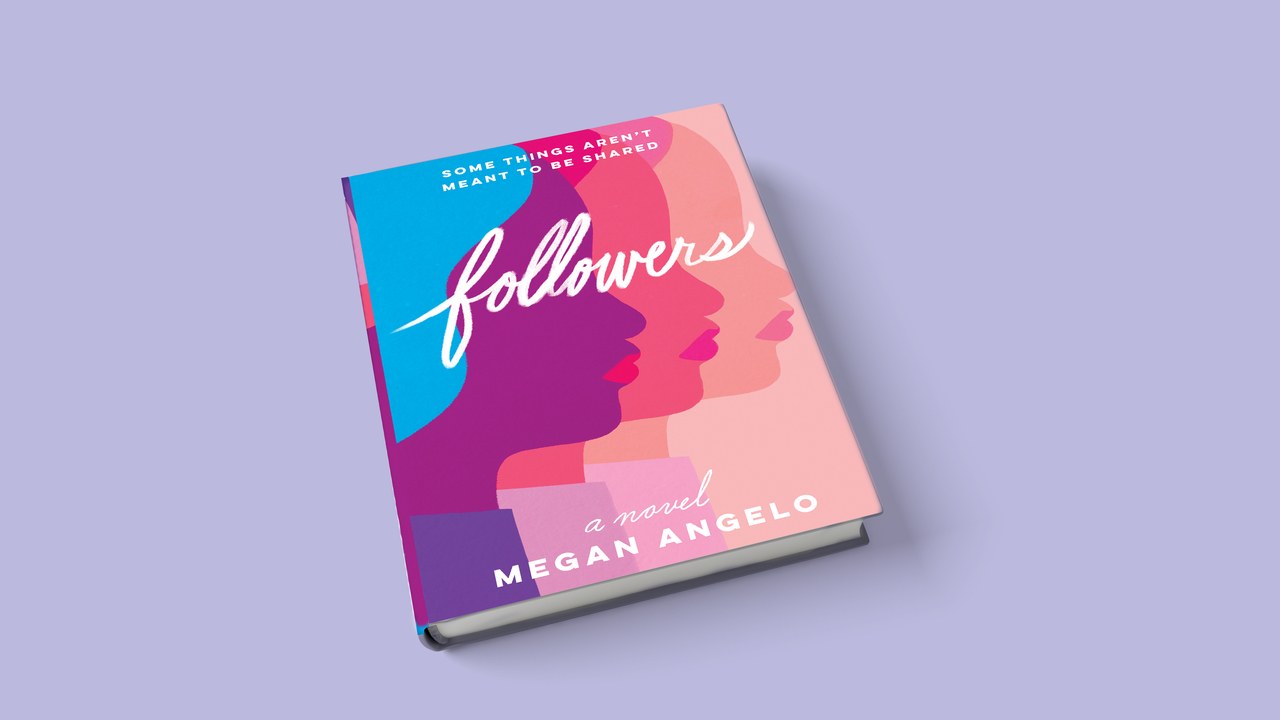
An Exclusive Look at Megan Angelo's Debut Novel, 'Followers'


One night, as Orla killed time out of frame, she looked down the press’s side of the carpet and saw the laminated paper she used to stand on—LADY-ISH.COM. There was a set of delicate, neon-polished toes covering the name that had replaced hers, and Orla followed them up to the rest of a girl who must have just finished college. Only recently had Orla come to accept that there was now a whole class of people living and working in New York who were several years younger than her, that they were not interns who had overstayed their summers—they were here to stay and grow up and compete.

Orla walked toward the girl from Lady-ish. “Hi,” she said, feeling radiant, generous.

The girl looked up from scribbling on her notepad. She had enormous black-rimmed glasses, perfect olive skin, and nude lip gloss, shiny and pearly, the kind Orla would have thought was out of style. Self-consciously, she touched her own lips, which were a thick red Floss had talked her into.

“Huh?” the girl said. She studied Orla. “Oh. Right. You’re on Flosston Public. The bookish one, right? Orla.”

It was her brand, but Orla still flinched at being called bookish. Not knowing what else to do, she trilled, feeling fake, “I love Lady-ish.”

The girl broke into a knowing grin. “I guess you do,” she said. “You worked there a long time.”

Orla bristled. “Right,” she said, reddening. “It’s a great place to start out.”

The girl shrugged. “I went to Yale,” she said, as if this explained multitudes. “I won’t be there that long. I’m writing a play. About— Well, I shouldn’t say too much. My agent wouldn’t want me to. I swear it’s like her full name is Polly ‘Top Secret’ Cummings.”

Orla nodded, teeth frozen. The girl had to be bluffing, she thought. There was no way she was repped by Polly Cummings. Polly was a lioness of literary agents, one whose name Orla had known since high school, when she checked a guide to the industry out of the local library. Her senior year, she had mailed Polly a short story she had written, the same one that now made up most of her manuscript. She remembered the day she got the response from Polly’s office. Gayle had come running out to where Orla floated in their aboveground pool, waving the envelope—Polly’s response came by mail, because it was only 2005—“Polly Cummings wrote back!” “I see promise here. Keep going!!—P,” said the Post-it on top of the packet Orla had mailed. Beneath the Post-it was another sheet, a half page of typed feedback. Now that she knew how these things worked, Orla understood that the letter had been written by an assistant—this was back when people Yale Girl’s age were expected to be assistants, not self ordained playwrights. Yale Girl was full of shit, Orla ruled. But something must have crossed her face, doubt or envy or fear, because Yale Girl smiled suddenly, like she had won a race between them. Just before she turned to see who else was coming down the line, Yale Girl looked at Orla with pity in her eyes. “Anyway, good luck,” she said. “I mean it.”

Orla was already shuffling away when she realized: the bitch hadn’t even bothered asking her a question.

Excerpted from Followers by Megan Angelo. Copyright © 2020 by Megan Angelo. Published by Graydon House.


Source link

Categories
Health

Megan Rapinoe: 'Lending Your Platform to Others Is Cool'


So while I’m enjoying all of this unprecedented—and, frankly, a little bit uncomfortable—attention and personal success, in large part due to my activism off the field, Colin Kaepernick is still effectively banned from the NFL, for kneeling during the national anthem in protest of known and systematic police brutality against people of color, known and systematic racial injustice, and known and systematic white supremacy. I see no clearer example of that system being alive and well than me standing before you right now. It would be a slap in the face to Colin, and to so many other faces not to acknowledge, and for me personally, to work relentlessly to dismantle that system that benefits some over the detriment of others, and frankly is quite literally tearing us apart in this country.

While we all have injustices we are facing—for me personally, a very public fight with our [US Soccer] Federation over why we don’t deserve to be paid equally; some people even say we do our job better. I don’t know! It’s crazy!—I still know in my heart of hearts and my bones that I can do more. And that we can do more. And I know that because we just have to. We must. It’s imperative that we. do more.

My mom, who’s here today, looking stunning, by the way—shout-out to mom—impressed upon me and my twin sister at a very young age, ‘You ain’t shit cause your good at sports. You ain’t shit cause you’re popular. You’re gonna be a good person. You’re gonna be kind. And you’re gonna do the right thing. You’re gonna stand up for yourself, always. You’re gonna stand up for each other, always. And you’re damn sure ‘gonna stand up for other people. Always.

She taught us that in kindness and in caring and in giving a shit and sharing—that’s abundance. That’s the kind of culture we want to live in. I feel like we live in this scarcity type culture; one of my best friends always says that. That’s not the world I wanna live in. I think we can move on from losing alone to the belief in winning together.

With that abundance in mind, I want to re-imagine what it means to be successful, what it means to have influence, what it means to have power, and what that all looks like.

I’ve gained this incredible platform in such a short period of time, but I’m not gonna stand on it alone. I refuse to do that. There’s gonna be ladders on every side, all over the place. And I’m not gonna act like it wasn’t Colin Kaepernick, Tarana Burke and the #MeToo Movement, Patrisse Cullors, Alicia Garza, and Opal Tometi of Black Lives Matter, the women of Time’s Up, Harvey Milk, Gloria Steinem Audre ‪Lorde, Travon Martin, Sandra Bland, and the injustices that so many others face that have put me in this very position. And I’m not gonna act like my whiteness has nothing to do with me standing before you now. I don’t want to live in that kind of world. I don’t think that kind of world is the world that suits everybody and is gonna move us forward in the direction that we need to go.

We’ve gotta switch the game up.

Caring is cool.

Lending your platform to others is cool.

Sharing your knowledge and your success and your influence and you power, is cool.

Giving all the fucks is cool. Doing more is cool.

I don’t need to say that to all the other women who are being honored tonight. Everyone is doing that. But to everyone else in this room, we have such an incredible opportunity to redefine what power and influence and success looks like. From the looks of it, this looks like a room full of powerful and influential and successful people. So share that platform. Throw your ladders down. It’s our time. We’re ready for this. And it needs to happen. This is such a pivotal movement for us. There’s so much momentum, but we have to move forward and we have to be better. So everybody: We have to do more. We’re here. We’re ready. Everyone’s ready to do more? Good!

Thank you so much for this amazing award. Thank you, everyone.

Find out more about Glamour‘s 2019 Women of the Year here.


Source link

Categories
Health

Megan Phelps-Roper on Leaving the Westboro Baptist Church: ‘I Abandoned My Faith’


For this year’s Women of the Year issue, we asked inspiring womenpast honorees, athletes, and more—to reflect on their life and work. At our 2019 Women of the Year Summit, we asked speaker, activist, and author Megan Phelps-Roper to do the same.

Phelps-Roper grew up in the thick of a notorious religious group: her grandfather founded the Westboro Baptist Church, a congregation known for its fire-and-brimstone beliefs and antagonistic picketing lines. As a member church’s founding family, Phelps-Roper didn’t question the rhetoric her the parish espoused during her childhood. The Westboro Baptist Church was right, and everyone else was wrong.

Then, Phelps-Roper joined Twitter at 23 years old—and learned that the beliefs she’d grown up treating as facts were fiction. Onstage at the Glamour Women of the Year Summit, she talked about publicly leaving the Westboro Baptist Church with her sister Grace in 2012. Read her moving speech below.


My life’s unraveling took place on an ordinary, brilliant afternoon in July 2012. A Wednesday. I was painting the walls of a friend’s basement when it suddenly dawned on me: The world was right; my views were wrong. I remember thinking it strange that a mind—an entire world—could shift so drastically and so spontaneously.

But let me back up for a second.

I was born and raised in the Westboro Baptist Church, an infamous congregation started by my grandfather and consisting almost entirely of my extended family.

I’d been protesting gays since the age of five, preaching God’s hatred for sinners on picket lines across the country. In my teens, I joined my family on sidewalks outside of military funerals, spitting on American flags and exultantly singing praises to God for the homemade bombs that were killing service members in Iraq and Afghanistan.

Westboro’s fire-and-brimstone message was the air I breathed all my life. But after joining Twitter at the age of 23, I encountered people who challenged my beliefs and unearthed contradictions my blind faith had missed. Why did we call for the death penalty for gay people when Jesus said only sinless people should “cast stones”? How could we claim to love our neighbor while also praying for God to destroy them? Discussing and dissecting opposing viewpoints with others on Twitter opened up a whole new way of thinking for me. Twitter helped others see me as a human being, and showed me their humanity, too. It would even eventually introduce me to the man I would marry.

And so on that afternoon in 2012, dripping paintbrush in hand, I felt the last traces of my zeal for Westboro extinguish under a pile of mounting doubts. I had come to a series of terrifying conclusions: We were wrong. I had spent my entire life antagonizing vulnerable people for no good reason. I had to leave. I also realized that my refusal to continue as a member of the church would cost me my family, my community, my home, my job at my family’s law firm—everything that had ever been important in my life.

And though I was afraid, I also knew that—in the strangest way—Westboro brought me there. My family taught me to be honest, even when the truth was painful. They taught me to stand up for what I believe in, no matter what it would cost me.

And the church gave me the tools I needed to see hate—even my own—not as an obstacle but as an opportunity to advocate for the kind of empathy that builds bridges, heals divisions, and changes hearts and minds for the better.

Find out more about Glamour‘s 2019 Women of the Year summit and awards ceremony here.


Source link

Categories
Health

The Most Shocking Revelations from Jodi Kantor and Megan Twohey's She Said


When Jodi Kantor and Megan Twohey published their New York Times expose on the decades of Harvey Weinstein’s sexual misconduct and harassment in Hollywood, there was a seismic shift in culture. Women everywhere felt empowered to come forward with their own stories of abuse—and the Me Too movement was reignited. Two years and thousands of stories from women later, Kantor and Twohey have published She Said, their firsthand account of bringing Weinstein down. In it, they detail their reporting process. From knocking on strangers’ doors, texting with key sources like Gwyneth Paltrow, and fighting against Weinstein’s team the whole way through. She Said also offers new revelations about Weinstein with previously undisclosed corporate records, emails and text messages. Here, we’ve compiled some of the most shocking bombshells from their book—but their reflection on the earth shattering investigation is worth reading in full. She Said is now available everywhere books are sold.

Gwyneth Paltrow played a pivotal role in bringing down Weinstein

Gwyneth Paltrow made a name for herself starring in Harvey Weinstein-backed films like Emma and Shakespeare in Love. While she’s already spoken out about Weinstein’s sexual-misconduct, in She Said we learn what a crucial source Paltrow was for Twohey and Kantor’s investigation. “Gwyneth Paltrow is one of Harvey’s biggest stars, and he had really kind of presented himself as kind of a godfather to her over the years,” Twohey said in an appearance on Today. “I think that many people will be surprised to discover that when so many other actresses were reluctant to get on the phone and scared to tell the truth about what they had experienced at his hands, that Gwyneth was actually one of the first people to get on the phone, and that she was determined to help this investigation—even when Harvey Weinstein showed up to a party at her house early and she was sort of forced to hide in the bathroom.” It was after that incident that she reached out to Twohey and Kantor asking what to do. “I think Harvey Weinstein was extremely aware and extremely scared of what the implications would be if his biggest star actually ended up going on the record,” Twohey added.

Lisa Bloom had a plan to make Weinstein a hero

In December 2016, famed victims rights attorney Lisa Bloom sent Weinstein a memo. In it, Bloom, who has represented accusers of Bill Cosby, Bill O’Reilly, Jeffrey Epstein, and Donald Trump, detailed a plan to help rehabilitate Weinstein’s image. She suggested that they go after actress Rose McGowan and call her a “pathological liar.” On McGowan, Bloom wrote, “Clearly she must be stopped in her ridiculous, defamatory attacks on you.” She also added, “She is dangerous.” Other ideas included starting a Weinstein foundation focusing on gender equality in film, and issuing a pre-emptive interview talking about women’s issues. You can read the full memo, published by journalist Yashar Ali on Twitter, here.

Lena Dunham and Jenni Konner connected them to Hollywood

Twohey and Kantor were Hollywood novices, and needed help getting in touch with actresses connected to Weinstein. While at first they were skeptical about reaching out to Dunham (because they were worried she might not be discreet), she and her former producing partner became great resources in the investigation. Dunham and Konner became a “two-woman celebrity switchboard,” and ultimately led them to Paltrow.

It took one line for Kantor and Twohey to earn survivors’ trust

Getting women like Ashley Judd and other actresses to participate in their investigation took an enormous amount of effort, and trust building. But Kantor and Twohey returned to the same line each time they approached a new survivor. “Even if we managed to get Ashley Judd or Gwyneth Paltrow on the phone, which we did, we had to figure out how to say in that first minute: here’s an argument for trusting us, here’s an argument for telling us this really private story,” Kantor said in a Today appearance. Kantor says she and Twohey kept coming back to a line: “we can’t change what happened to you in the past, but if we work together we may be able to take this in some sort of constructive direction.”

All products featured on Glamour are independently selected by our editors. However, when you buy something through our retail links, we may earn an affiliate commission.


Source link