For this year’s Women of the Year issue, we asked inspiring women—past honorees, athletes, and more—to reflect on their life and work. At our 2019 Women of the Year Summit, we asked speaker, activist, and author Megan Phelps-Roper to do the same.
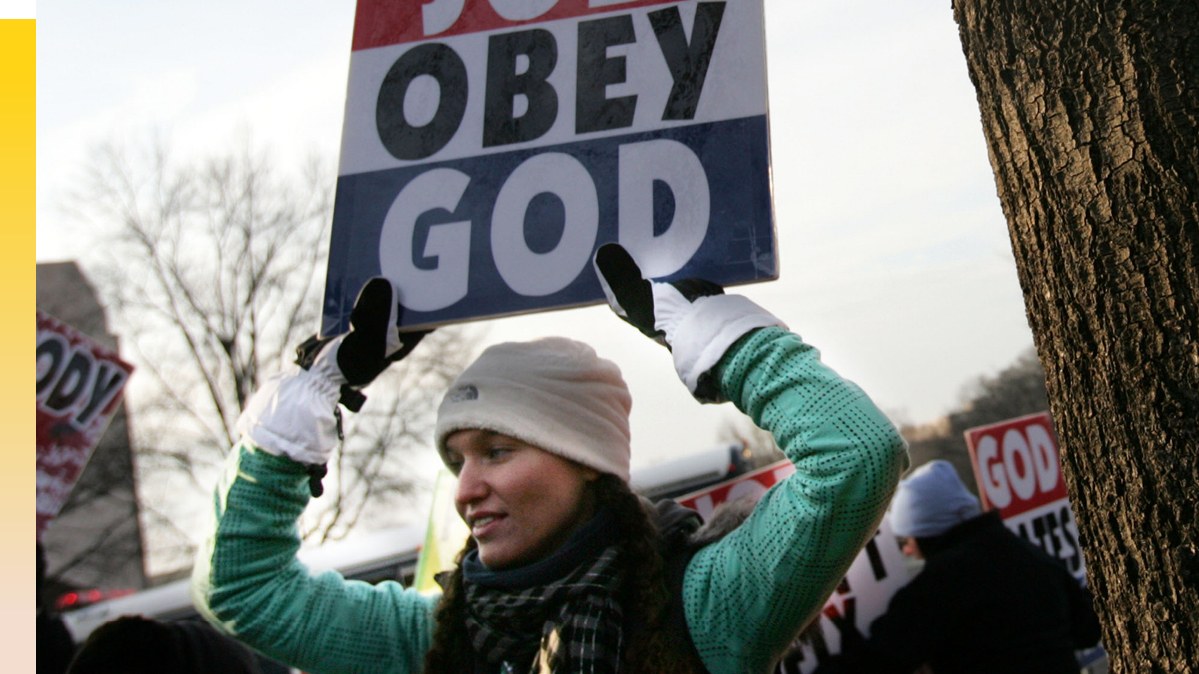
Phelps-Roper grew up in the thick of a notorious religious group: her grandfather founded the Westboro Baptist Church, a congregation known for its fire-and-brimstone beliefs and antagonistic picketing lines. As a member church’s founding family, Phelps-Roper didn’t question the rhetoric her the parish espoused during her childhood. The Westboro Baptist Church was right, and everyone else was wrong.
Then, Phelps-Roper joined Twitter at 23 years old—and learned that the beliefs she’d grown up treating as facts were fiction. Onstage at the Glamour Women of the Year Summit, she talked about publicly leaving the Westboro Baptist Church with her sister Grace in 2012. Read her moving speech below.
My life’s unraveling took place on an ordinary, brilliant afternoon in July 2012. A Wednesday. I was painting the walls of a friend’s basement when it suddenly dawned on me: The world was right; my views were wrong. I remember thinking it strange that a mind—an entire world—could shift so drastically and so spontaneously.
But let me back up for a second.
I was born and raised in the Westboro Baptist Church, an infamous congregation started by my grandfather and consisting almost entirely of my extended family.
I’d been protesting gays since the age of five, preaching God’s hatred for sinners on picket lines across the country. In my teens, I joined my family on sidewalks outside of military funerals, spitting on American flags and exultantly singing praises to God for the homemade bombs that were killing service members in Iraq and Afghanistan.
Westboro’s fire-and-brimstone message was the air I breathed all my life. But after joining Twitter at the age of 23, I encountered people who challenged my beliefs and unearthed contradictions my blind faith had missed. Why did we call for the death penalty for gay people when Jesus said only sinless people should “cast stones”? How could we claim to love our neighbor while also praying for God to destroy them? Discussing and dissecting opposing viewpoints with others on Twitter opened up a whole new way of thinking for me. Twitter helped others see me as a human being, and showed me their humanity, too. It would even eventually introduce me to the man I would marry.
And so on that afternoon in 2012, dripping paintbrush in hand, I felt the last traces of my zeal for Westboro extinguish under a pile of mounting doubts. I had come to a series of terrifying conclusions: We were wrong. I had spent my entire life antagonizing vulnerable people for no good reason. I had to leave. I also realized that my refusal to continue as a member of the church would cost me my family, my community, my home, my job at my family’s law firm—everything that had ever been important in my life.
And though I was afraid, I also knew that—in the strangest way—Westboro brought me there. My family taught me to be honest, even when the truth was painful. They taught me to stand up for what I believe in, no matter what it would cost me.
And the church gave me the tools I needed to see hate—even my own—not as an obstacle but as an opportunity to advocate for the kind of empathy that builds bridges, heals divisions, and changes hearts and minds for the better.
Find out more about Glamour‘s 2019 Women of the Year summit and awards ceremony here.