Categories
Health

Snooki Reflects on the Pouf, GTL'ing, and Her Pop Culture Legacy


Probably bronzer, because I know bronzers aren’t in right now.

Back to that more is more look?

Yeah, I love plastering bronzer on me. Even though I broke out terribly from it. But just the era of bronzer and everyone wanting to be orange was amazing.

Is there a trend you never want to come back again?

No, I feel like I love everything. Well, when it comes to us and our looks, I feel like I loved it all. I think even the high hair and the tan skin, I wouldn’t mind doing that once in a while.

So the pouf isn’t dead? It could come back?

No, the pouf is dead. But high hair, I mean, that’s always OK.

Is reality TV—or being in the public eye in some way—something you want to continue doing now that you’re retiring from Jersey Shore or are you hoping to take a break from it?

I definitely don’t want to quit [being on TV]. It’s my job, and I love it. I just need something that fits me and my lifestyle. Leaving the kids for days on end and doing things I’m not comfortable doing anymore, I can’t do it. But there’s an opportunity where I can do a show that fits me being a mom and still lets me enjoy myself, that’s what I’m looking for right now. Work, have fun, be myself, and then come home to be a mom at the end of the day. I need a balance.

How was it being back on the show? I’m sure that was exciting, but also tough, like you were saying with your kids.

Well, yeah, it was definitely exciting and I loved it. But then I was getting too depressed not being with my kids. The days were dragging, and I was just forcing myself to be in that situation. I hated that feeling.

Was it hard to be back around that lifestyle? I mean, the early Jersey Shore days were all about partying. Get drunk, go to the shore, go out, cabs are here—that was the thing. In your thirties, was it more difficult to be back in that scenario?

No, I still loved it. But doing it every single night? I’d be out at the bar when I’d rather be home snuggling with my kids. I missed them. It was just like, What am I doing? Once in a while I love going out. I love going to a club. I love going to dinner and drinking. It’s not like I’m saying I hate partying. It just needs to be a balance. I need to still be a mother at the same time.

What are you looking forward to most in the next decade?

Oh, God. I hope I’m still alive. I don’t know. Maybe another kid? We’ll see. I just want to be the best mom that I can be to my kids, obviously. And, hopefully find my next career move. I just want it to be a positive environment for me—no drama. I’m not here to fight with people. I just want to have a good time, laugh, and then call it a day.

Lindsay Schallon is the senior beauty editor at Glamour. Follow her on Instagram @lindsayschallon. This interview has been edited and condensed.


Source link

Categories
Health

The ‘Orange Is the New Black’ Cast on the Netflix Series’ Final Season and Legacy


This article contains spoilers about the seventh—and final—season of Orange Is the New Black, now streaming on Netflix.

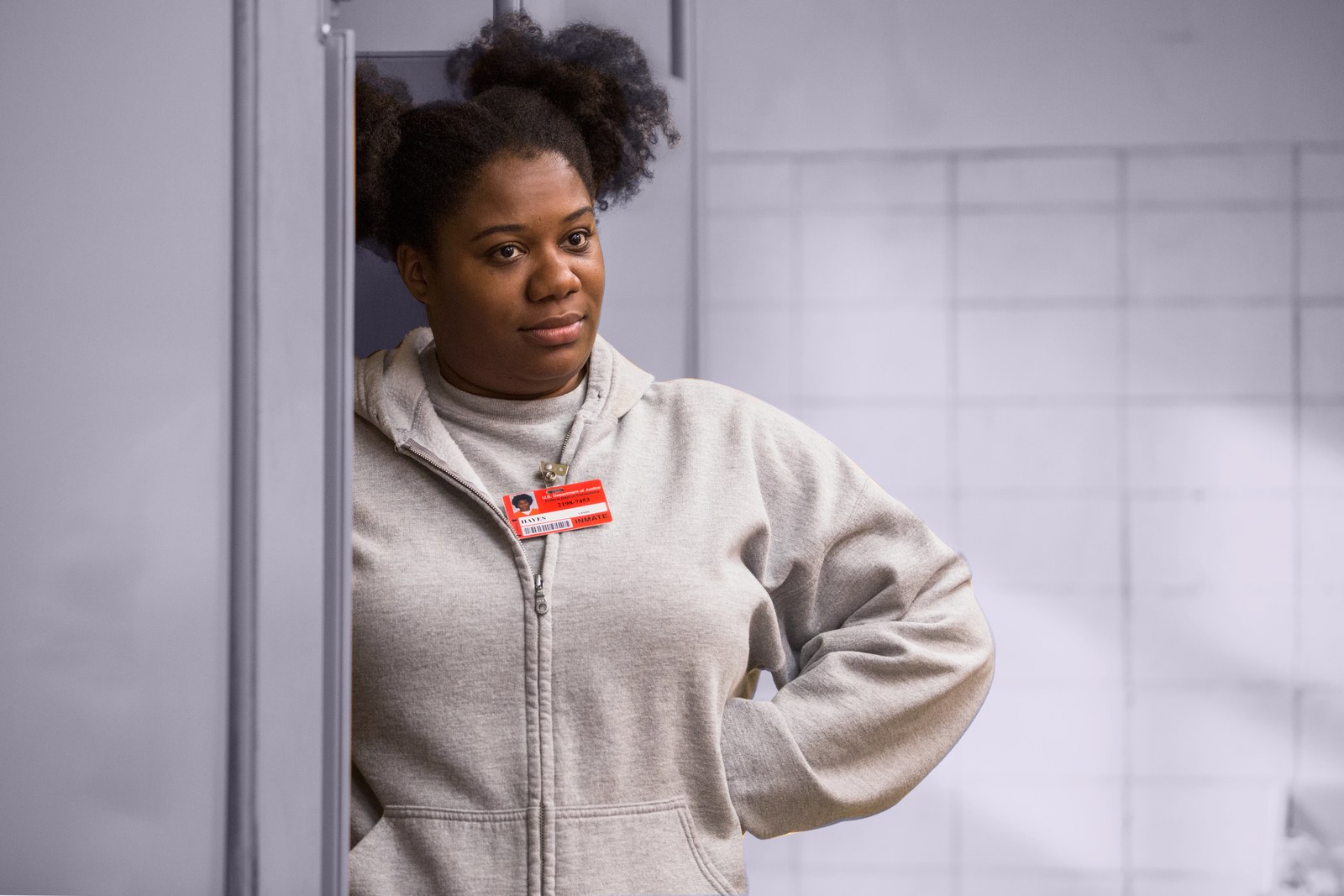
Adrienne C. Moore (Cindy Hayes, the inmate who converts to Judaism in season three) is in Atlanta for her 20-year high school reunion when she calls. “I’ve been to past reunions since the advent of Orange Is the New Black, and one thing I love about my friends is they know Adrienne,” she tells Glamour. They may occasionally blurt out that she’s on a show, she concedes, but “they’re Atlanta folks, and Atlanta folks are very down-to-earth kind of people.”

Like so many members of the sprawling Orange ensemble, Moore was a relative unknown when she was cast on the series. She was booking theater roles, commercials, and guest spots in New York, sure, but breakout opportunities for women, let alone women of color, were rare. Nobody knew who she was.

Adrienne C. Moore as Cindy Hayes

Netflix

“This industry is hard,” says Laura Gómez (Blanca Flores, who thought she was being released from Litchfield only to be sent to an immigration facility). “You’re put in a box.” She auditioned for Orange while she was writing and directing a short film at New York University; by that point, she remembers, “I was considering maybe going to Spain to turn things around. I don’t know that I was about to quit acting, but I was thinking of ways to quit the torture that I was experiencing here.”

Selenis Leyva (Gloria Mendoza, who at times was head cook and the leader of the prison’s Spanish Harlem) shares a similar story. “I started acting at the age of 18,” she says. “I did a lot of guest roles, theater—sometimes it was free and sometimes it was as if it was free. You name it.” She was two decades into her career and on the verge of dropping out when she was tapped to play Gloria. “Literally, I said, ‘I’m done with acting,’” she recalls. “And then Orange popped up.”

“What the show did for so many of us, if not all of us, was open or reopen big doors,” Gómez says. “It put us on the map.”

When Orange premiered in 2013, there was some skepticism about whether it would sugarcoat prison. After all, the series is based on a memoir by Piper Kerman—a white middle-class Smith graduate—and stars Taylor Schilling as the fish-out-of-water inmate. But as creator Jenji Kohan explained from the outset, Piper was her “Trojan horse”: a stock blond that gave entrée into a more expansive world, one where women of all colors, shapes, sexual orientations, and ages coexisted. Orange wasn’t a Pollyanna prison story, and Kohan wasn’t making TV as usual.


Source link

Categories
Health

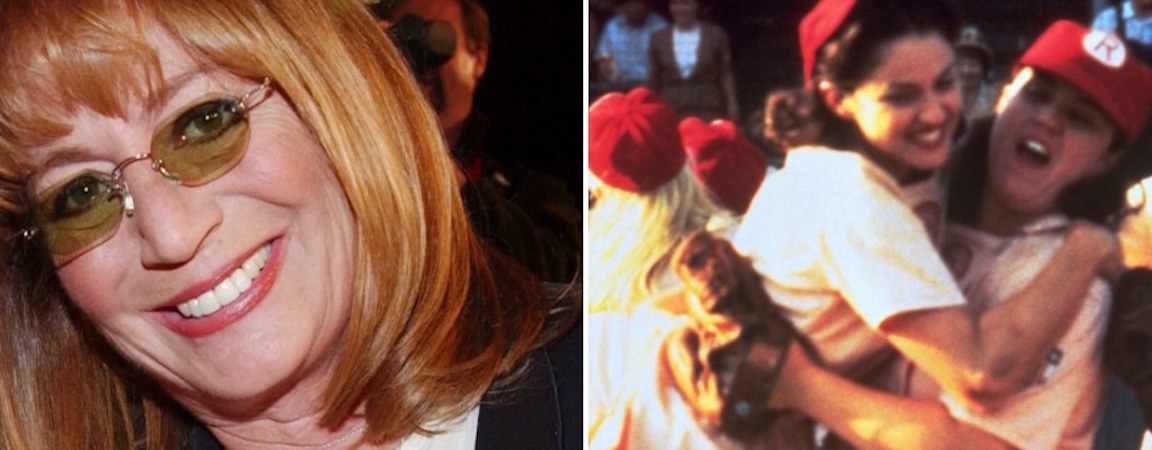
Penny Marshall Has Passed Away at 75 Years Old: A Look Back at Her Legacy


Penny Marshall, the legendary actress and director, has died at the age of 75.

Marshall first became a household name playing Laverne DeFazio on Laverne & Shirley, a show created by her older brother Garry Marshall, and appeared in various television shows and films over the years. But it’s her career as a director that will likely have the longest-lasting impact on not only Hollywood, but all of us who have loved her films.

“Our family is heartbroken over the passing of Penny Marshall,” a statement from her family read. “Penny was a tomboy who loved sports, doing puzzles of any kind, drinking milk and Pepsi together and being with her family. As an actress, her work on Laverne & Shirley broke ground featuring blue-collar women entertaining America in prime time. She was a comedic natural with a photographic memory and an instinct for slapstick. When Penny directed Tom Hanks in the movie Big she became a pioneer as the first woman in history to helm a film that grossed more than $100 million. She did it again with A League of Their Own. She directed many stars including Geena Davis, Robert De Niro, Whoopi Goldberg, Robin Williams, Madonna, Denzel Washington, Rosie O’Donnell and Whitney Houston. She even gave Mark Wahlberg his first acting job. Penny was a girl from the Bronx, who came out West, put a cursive ‘L’on her sweater and transformed herself into a Hollywood success story. We hope her life continues to inspire others to spend time with family, work hard and make all of their dreams come true.”

Below, we’ve rounded up some of the biggest moments in Marshall’s groundbreaking career.


Source link

Categories
Health

John McCain's Legacy of Reaching Across Party Lines Is Something We Should All Remember


Saturday night brought the sad news that Republican senator and Vietnam war hero John McCain died after a battle with brain cancer. “Senator John Sidney McCain III died at 4:28 p.m. on August 25, 2018,” his office said in a statement that evening. It was just on Friday that McCain’s family revealed he was discontinuing treatment for the aggressive form of cancer.

There are no shortage of moments in McCain’s storied career that led him to be affectionately dubbed “The Maverick,” but it’s his lasting legacy as someone who wasn’t afraid to reach across party lines—a nonconformist as his nickname suggests—that his colleagues remarked on the most in his last days. One might not have always agreed with him, but you’d be hard-pressed not to respect him and, in many ways, the principles he chose to live by.

Yes, he is the man who chose Sarah Palin as his running mate in the 2008 presidential election that eventually led to Barack Obama’s first term in office. But he is also the man who staunchly defended Obama when a woman at one of his rallies derided the former President, saying, “I can’t trust Obama. I have read about him, and he’s not, he’s not—he’s an Arab,” both an insult to his opposing candidate and those of Arab descent.

McCain quickly responded with grace: “No ma’am,” he said. “He’s a decent family man, a citizen that I just happen to have disagreements with on fundamental issues, and that’s what this campaign is all about. He is a decent person and a person that you do not have to be scared of as President. If I didn’t think I’d be one heck of a better President I wouldn’t be running, and that’s the point. I admire Sen. Obama and his accomplishments; I will respect him. I want everyone to be respectful, and let’s make sure we are. Because that’s the way politics should be conducted in America.”

[embedded content]

During the past two years, McCain became a beacon of light to those, both conservative and liberal, who opposed President Donald Trump. Take for example, in June, when the president seemingly picked fights with a number of American allies at the G7 conference. McCain tweeted: “To our allies: bipartisan majorities of Americans remain pro-free trade, pro-globalization & supportive of alliances based on 70 years of shared values. Americans stand with you, even if our president doesn’t.”

Trump, himself, famously said in 2015 of the man who spent five-and-a-half years as a POW in Vietnam, “He’s not a war hero. He was a war hero because he was captured. I like people who weren’t captured.”

McCain never shied away from criticizing the president and his administration. He was the lone Republican to vote against Mick Mulvaney, the president’s choice for budget chief. When Trump seemed to equate actions of the United States to those of Russia’s Vladimir Putin, McCain said, “That moral equivalency is a contradiction of everything the United States has ever stood for in the 20th and 21st centuries.”

He also warned that suppressing the press is “how dictators get started.”

Then there was his iconic “thumbs down” during the Senate’s Affordable Care Act vote back in July of 2017. In the days leading up to the vote, it was unclear whether McCain would side with his own party to pass the “skinny” repeal of one of President Obama’s signature pieces of legislation. In the end, he did not.

[embedded content]

“I’ve stated time and time again that one of the major failures of Obamacare was that it was rammed through Congress by Democrats on a strict party-line basis without a single Republican vote,” McCain said in a statement after the vote. “We must now return to the correct way of legislating and send the bill back to committee, hold hearings, receive input from both sides of aisle, heed the recommendations of nation’s governors, and produce a bill that finally delivers affordable health care for the American people,” he said. “We must do the hard work our citizens expect of us and deserve.”

He also called for a return to the regular legislative order that would allow proper debate on the issues. “I hope we can again rely on humility, on our need to cooperate, on our dependence on each other to learn how to trust each other again and by so doing better serve the people who elected us,” he said. “Stop listening to the bombastic loudmouths on the radio and television and the Internet. To hell with them. They don’t want anything done for the public good. Our incapacity is their livelihood.”

“Let’s trust each other. Let’s return to regular order. We’ve been spinning our wheels on too many important issues because we keep trying to find a way to win without help from across the aisle. That’s an approach that’s been employed by both sides, mandating legislation from the top down, without any support from the other side, with all the parliamentary maneuvers that requires.”

Of course, McCain was a Republican, and he voted along party lines more than he did not. But in a time when it feels like the country has never been more divided, and even those on the right in Congress who oppose what Trump stands for seem to do so only in tweets, we’d all do well to remember what a maverick truly is—and how one can make change for the better.

MORE: Meghan McCain Shares Emotional Tribute After Her Father’s Death: ‘Today the Warrior Enters His True and Eternal Life’


Source link

Categories
Health

Optimism Interrupted: Cindi Leive on the Legacy of the Women's March


January 21 marks the one-year anniversary of the Women’s March, the largest single-day protest in U.S. history. All this week, Glamour will be spotlighting the stories, people, and issues that framed the March, as well as where we go from here.

Albert Einstein famously said that the most important thing each of us must decide for ourselves is whether the universe is a friendly or an unfriendly place. I had always believed the former—that despite its horrors, the world tilts, slowly but inexorably, toward progress. I was an optimist. I thought the best of people. It informed everything I did.

The election took that certainty away from me.

The march brought it back—in newer, wiser form.

I was one of those much-mocked idealists crushed on the morning of November 9. After all, I’d blithely told a reporter just a week before that I thought that come mid-November, Donald Trump would be “getting smaller by the second in the rearview mirror.” There was his open courtship of white supremacists and his flagrant misogyny, both denounced even by many in his party. There was his epic ineptness; surely no one who had watched him stumble through the debates could find him presidential. And there was, of course, the overweening cruelty that was his hallmark: mocking people with disabilities, taunting his opponents, ridiculing a Gold Star mom. I had hoped this would be damning: Wasn’t the Golden Rule, or a version of it, the one common shared teaching among all religions? As my family headed to the Javits Center on November 8 for what we were sure would be Hillary Clinton’s victory party, my eleven-year-old son asked me what would happen if Trump won. “He can’t win,” I said confidently. (“Well, Mom, he can,” he pointed out.) Watching the results felt dislocating: like taking a step onto a well-trod stair that suddenly was not there. In the pre-dawn hours the next morning, messaging with a friend who had spent eighteen months working to mobilize the Latino vote, I said in disbelief, “I never believed all that ‘two Americas’ stuff. Even now it is hard to believe this is what half our population wants.”

I know how sheltered it all sounds. In a Saturday Night Live episode that aired the following weekend, one skit featured a group of friends watching the election results. The women, all white, are shocked. “Oh my God,” gasps the actress Cecily Strong, “I think America is racist.”

A white male partygoer is outraged: “This is the most shameful thing America has ever done!” he exclaims—at which point the black actors Dave Chappelle and Chris Rock collapse in uncontrollable hysterics.

“C’mon, get some rest,” Rock, rolling his eyes, tells the crowd. “You’ve got a big day of moping and writing on Facebook tomorrow.”

I didn’t spend the next day moping and writing on Facebook. I spent it grieving for an image of America I started to believe had only existed in my head, where my neighbors—both the ones I agreed with and the ones I didn’t—were fundamentally good-hearted.

January 21 felt like a miracle. I boarded a D.C.-bound bus with fifty of my friends and colleagues, along with my fourteen-year-old daughter and her friends—it was my birthday, and there was no better party.

The highways were crowded with buses crammed full of pink hats; the L’Enfant Plaza Metro station was so jammed that we spent a good hour underground, chanting and patiently inching our way toward the exit.

The woman next to me held a sign that read, “My Husband’s Chemo Costs $10,000 a Month”; she explained that she’d never been to a protest before, but that the health-care issue had compelled her to show up. “And also,” she added, “the misogyny.” The misogyny was what tied all our interests together, but what was magical about the march was that it made visible the fact that we had so many interests. There were grandmothers and grown men, church groups and unions, indigenous women and Black Lives Matter demonstrators.

Years before, at a reproductive-rights march, my husband and I had spotted a sign that read, “We came down on buses to save our uteruses.” We’d found it hilarious, and he’d made me a T-shirt for that January day with the slogan on the front. But as I pressed through the crowd with my daughter, the shirt felt entirely insufficient—a glib remnant of another time. We, women, were not here for our uteruses. We were here for our lives, for other women’s lives, for our souls and the soul of our country.

And there were so, so many of us. The universe felt friendly again.

Or more properly: The universe felt bound together by people willing to work for a friendly planet—by speaking out over and over again, and not just on the issues we call our own. The year since the march has brought regular ugliness: Those were my fellow Americans lighting torches in Charlottesville and cheering the government’s vicious anti-immigrant moves. But I know which vision of our country I choose to believe in, and if the millions of us who showed up on that January day, in big cities and small towns, keep showing up—to protest, to run for office, to vote—I think it can be made real.

I’m still an optimist. After all, Einstein wrote that if we do believe the universe is unfriendly, we’ll spend our lives “creating bigger walls to keep out the unfriendliness and bigger weapons.” We have an administration dedicated to doing just this. “But if we decide that the universe is a friendly place,” he continued, “then we will use our technology, our scientific discoveries and our natural resources to create tools and models for understanding that universe. Because power and safety will come through understanding its workings and its motives.”

The Women’s March helped us understand. The world will continue to spin forward, but only if we push.

Excerpted from Together We Rise: Behind the Scenes at the Protest Heard Around the World, available for purchase now.

More on The Women’s March:
Everything You Need to Know About the 2018 Women’s March


Source link