Categories
Health

‘My Insomnia Almost Killed Me’


I’ve always been a “poor sleeper,” according to my mom. Apparently, I come from a lengthy line of them—a grandfather who was an epic snorer, my parents who are frequent middle of the night wakers. Growing up, I remember many mornings when I’d find my mom on our den couch after a night of tossing and turning. Insomnia is in my blood.

Poor sleep was such a strong norm in my house, I never really thought about it. I’d often toss and turn in bed never ever getting a full night’s rest. With no “good” sleepers to compare myself to, my sleep habits seemed normal. But on my honeymoon, my insomnia came into stark relief. I knew that my husband was a great sleeper, but it didn’t register that he slept soundly all night long—without waking once. He could sleep on planes, on trains, in cars, and pretty much anywhere else he found himself with zero issues.

I was the total opposite—I required a bed, a white noise machine, and a very dark room to have even the slightest prayer of sleep. Even then sleeping was a challenge. Observing my husband night after night triggered a panic that my frequent night awakenings might not be so normal. What was wrong with me?

My insomnia began to take over. By the end of our honeymoon, I was not sleeping at all and feeling like a caged animal. My inability to join him in bed—and sleep—was wrenching. I sat on the floor of our hotel while my new husband slept soundly, spiraling deeper and deeper into my sleep anxieties.

When we got home I read everything I could about insomnia, determined to improve. I saw a sleep specialist who suggested several techniques: getting out of bed if I couldn’t fall asleep within 20-30 minutes to do a quiet activity before trying again, turning over my alarm clock to avoid triggering anxiety as I laid awake, generally trying not to obsess.

She also recommended that I do a sleep study in a lab. My gut told me that a sleep study was something I needed but the mere thought of trying to sleep with others monitoring me triggered massive performance anxiety. I declined.

Despite the lack of sleep—I typically got less than three hours on average and that was with multiple wakings—I somehow kept it together. I made dinner every night, functioned well in a demanding job, never once nodded off during a meeting. I burned through concealer sticks covering the dark circles under my eyes. It was like my internal sleep switch was permanently stuck in overdrive, but somehow, I kept powering through.

But there were signs the insomnia was catching up to me. I started to have heart palpitations and I even started to smell weird despite regular showers—a gross side effect even my husband noticed. My body was clearly crying out for help and nothing—not the herbal teas, or the melatonin, or the breathing exercises, or the warm baths—was working. The emotional toll of chronic sleep deprivation is maddening. No matter how well I seemed to be doing on the outside, inside I was falling apart. Sleep is one of those things you can’t force. No matter how hard I worked, I still laid awake at night. I felt helpless.

After a couple of years, some counseling and soul searching, I realized I had to stop comparing myself to my husband in the bedroom. We weren’t going to sleep like the picture-perfect couple every night, our heads resting peacefully next to each other, our hands intertwined. The truth was, having a bed mate made my insomnia worse. Every time I stirred, I worried I was bothering him, and every time I found myself staring up at the ceiling I beat myself up for not being able to sleep as well as he could. We decided to take breaks from sleeping in the same room—it was no reflection on our relationship emotionally, sexually, or otherwise. I just needed some rest.

Soon after, we started a family and the exhaustion of having newborn twins kept my sleep erratic but at least there was a reason why I was awake at 2 a.m. As I got older, my anxiety around sleep started to fade—I was less worried about comparing myself to my husband or any of the other good sleepers out there, instead focusing on my own situation and what I needed. My sleep was still fractured but I was surviving. That had to be good enough, right?


Source link

Categories
Health

Nancy Drew Killed in New Comic So the Hardy Boys Can Hunt Her Murderer


Pour one out for Nancy Drew—murdered so that men could valiantly investigate her death.

It’s just like Nancy says, in the books: “Ah, gee! There’s no mystery more urgent than how to make men feel needed.”

An upcoming comic book, descriptively titled Nancy Drew & the Hardy Boys: The Death of Nancy Drew, will celebrate the teen girl detective’s 90th anniversary by killing her, Polygon reports. This comic—an installment in the Drew/Hardy Boys reboot that writer Anthony Del Col has been making with Dynamite Entertainment since 2017—will give The Hardy Boys the chance to crack the case.

Weird—it’s almost like the most legendary fictional comic book detective had to die to give her male competitors a chance to shine.

Look, Nancy Drew is a fictional character, and for all we know the “murder” in the story is just an elaborate fake-out, not to mention a smart stunt to get the comic book some press. But there is so much violence against women—and such a fixation in our culture with women’s dead and maimed bodies, from gruesome tabloid headlines to Law and Order: SVU to murder podcasts to thrillers about decapitated rape victims—that one has to wonder whether killing off an iconic children’s character was…essential?

In Del Col’s comic, the brilliant teen sleuth—whom Ruth Bader Ginsburg, Oprah, Sonia Sotomayor, Barbra Streisand, and Hillary Clinton have named as a major inspiration—is older and more sexualized, described as a “femme fatale.”

To be fair, her appearance is a big part of the books—the writers (who used the collective pen name Carolyn Keene) never get more than a page into the story without calling her “attractive, blonde Nancy.” But the classic Nancy books were published in the 1930s. It’s funny that more than 80 years since Nancy Drew and the Hidden Staircase, our girl is being written with even more male gaze and less agency.

Happy birthday, Nancy. You’re making a lot of men a lot of money.

Jenny Singer is a staff writer for Glamour.


Source link

Categories
Health

This You Season 2 Fan Theory Suggests Love Killed Her First Husband, James


This post contains spoilers for You season 2. Consider yourself warned.

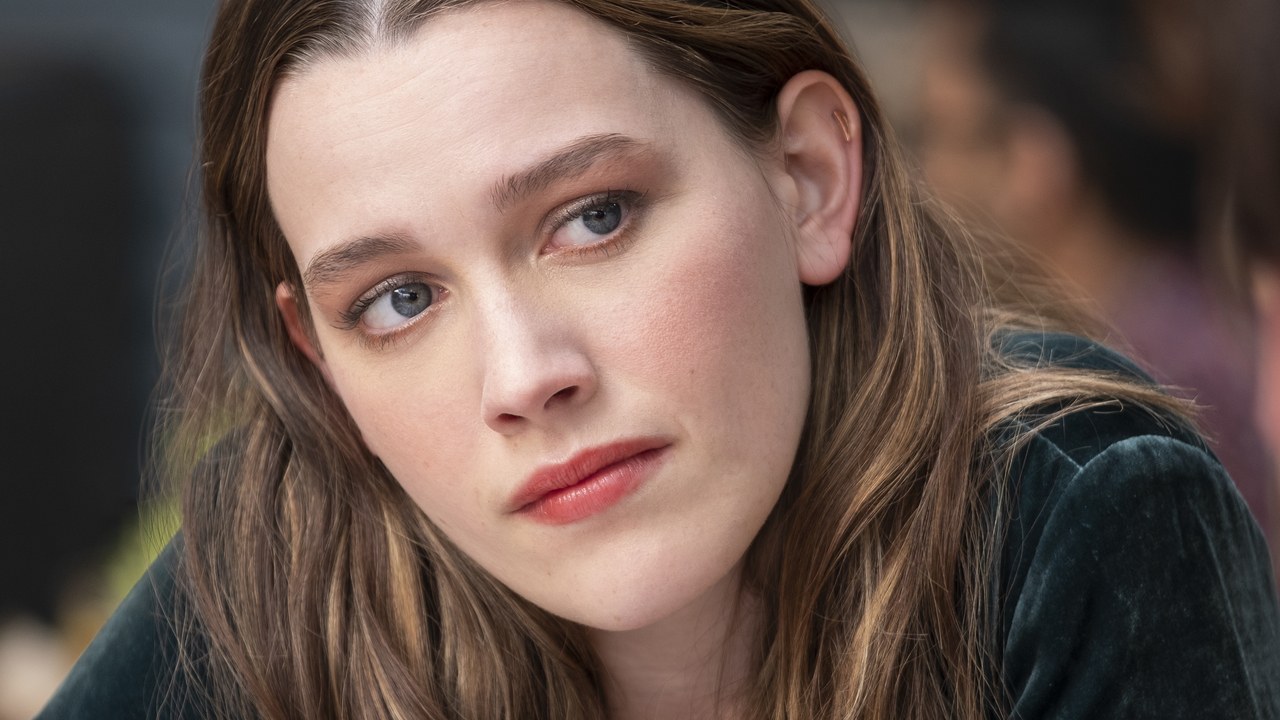
Netflix‘s You is one of those shows where so much happens over the course of a season that you might actually forget key details by the time it’s over. Throughout the duration of You season 2, viewers spend time getting to know Joe/Will’s (Penn Badgley) new obsession, Love Quinn (Victoria Pedretti), a nice Los Angeles (rich) girl who seems surprisingly down-to-Earth.

As the episodes progress, we learn that Love is a young widow. Via flashbacks, we see conversations between her and her late husband, James. By the end of the season, we also realize that Love is fully capable of murder: In a shocking twist toward the end, viewers learn that she killed her au pair back in the day and also slits Candace’s throat in an attempt to protect Joe.

Now, a popular fan theory suggests she killed James, as well. Remember, the show only tells us that he was “sick,” but we don’t get any details about what he had. Was it cancer? Something else? Love says the doctors couldn’t figure out what was wrong. Maybe it was…poison.

“What if Love poisoned her husband… you notice how she’s making treats daily…. they couldn’t figure out why her husband died, but maybe she poisoned him over time…. #YouNetflix,” one fan tweeted. Another wrote, “Started You season 2 on Netflix and I’m finishing up on episode 1… Love poisoned her husband didn’t she? She said ‘he got sick and they couldn’t figure out what was wrong’ so I’m guessing she killed him? ? Here start my theories! I question everything ?.”

Much like the theory that Joe is not the father of Love’s baby, this one pretty much tracks. Can the third season just happen already so we can find out?


Source link

Categories
Health

A Woman Killed in the El Paso Shooting Reportedly Died Trying to Protect Her Two-Month Old Baby


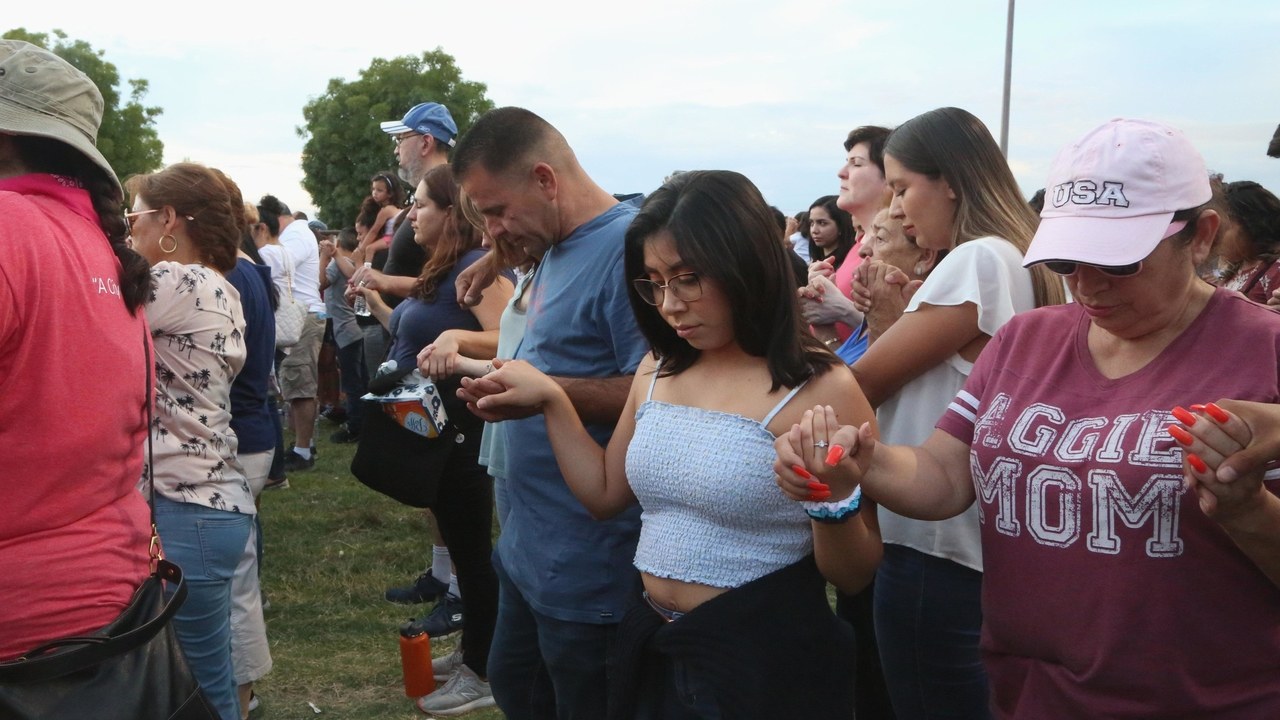
Residents of El Paso, Texas, and Dayton, Ohio, as well as citizens across the country, are still reeling in the wake of two mass shootings over the weekend that left 29 people dead and many more injured in less than 24 hours.

Now, heartbreaking stories of the victims are starting to emerge. Like that of 25-year-old Jordan Anchando who went to the El Paso Walmart with her husband, Andre, and their two-month-old infant to buy school supplies for their older daughter. Anchando’s sister, Leta Jamrowski, told NBC News that she believes her sister died trying to protect her baby boy. “From the baby’s injuries, they said that more than likely my sister was trying to shield him,” she said. “So when she got shot she was holding him and she fell on him, so that’s why he broke some of his bones. So he pretty much lived because she gave her life.”

“She’d give anything for those kids, anything, even her life,” Jamrowski told NBC’s Lester Holt.

Elizabeth Terry told CNN that the couple had just celebrated their first wedding anniversary and stopped at the store after dropping off their five-year-old at cheer practice. Jesse Jamrowski said that Andre jumped in front of his wife who was shielding the baby—he also died from his injuries. (The couple also had a two-year-old.)

“The baby still had her blood on him. You watch these things and see these things and you never think this is going to happen to your family,” Terry told CNN. “How do parents go school shopping and then die shielding their baby from bullets?”

The baby survived with a few fractured fingers, according to CNN, and is now at home with family members.

“She had the most contagious smile and laugh,” Terry told CNN of Jordan. “We lost the light of our family and the light of our heart.”


Source link

Categories
Health

Emilia Clarke's Aneurysms Almost Killed Her—Women Need to Know the Risks


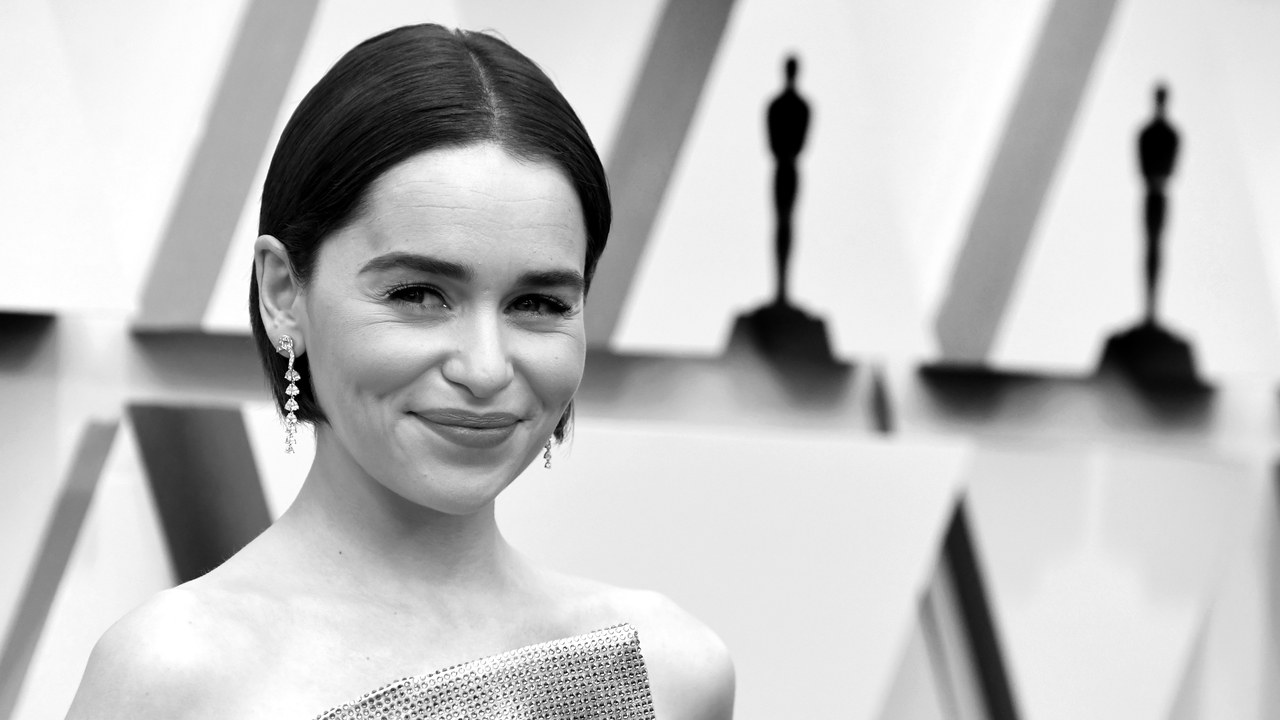
Emilia Clarke revealed earlier this week that while the world was falling at the feet of the ultimate feminist queen she embodies on Game of Thrones, she suffered not one but two brain aneurysms that nearly killed her.

Aneurysms—which are 1.5 times more common in women—are about as scary a diagnosis as you can get. They sound innocuous enough: blood-filled sacs that form on the side of a blood vessel, almost like a berry hanging off a vine. But they’re ticking time bombs.

Aneurysms hide in the brain rarely giving off any warnings that they’re there until it’s too late. If an aneurysm ruptures (which is also 1.5 times more likely to happen in women), it can be catastrophic. “For a patient who has an any rupture like Clarke did, the reality is that 40 percent of those patients don’t survive,” says Jeremy Heit, M.D., Ph.D, assistant professor of radiology and neurosurgery at Stanford University. “Of the people that survive, a third of them will do great like Clarke and make a full recovery but the other two-thirds will be left with some degree of disability.”

In an essay for The New Yorker, Clarke shared that after she’d finished filming season one of GOT, she was in the middle of a workout when suddenly it felt as though her brain was being squeezed inside her skull. “My trainer had me get into the plank position, and I immediately felt as though an elastic band were squeezing my brain. I tried to ignore the pain and push through it, but I just couldn’t,” she wrote. She dragged herself to the bathroom “and proceeded to be violently, voluminously ill. Meanwhile, the pain—shooting, stabbing, constricting pain—was getting worse,” she continued. “At some level, I knew what was happening: my brain was damaged.”

An aneurysm rupture is often described as the “worst headache of my life”—the phrase is so consistent, doctors are taught to immediately investigate a possible aneurysm when they hear it. “The way patients describe it to me, it’s like a light switch. It’s instantaneous, like someone flicked a switch and they just have this horrendous headache,” Dr. Heit says. It’s an entirely different category of pain, he says, worse than any normal headache or even migraine. It’s so remarkable, “the vast majority of people know that there’s a problem,” he says. “If it’s something that’s really quite different or it really is the worst headache of your life, don’t mess around with that,” Dr. Heit says. “You need to get to a hospital and get evaluated.” Other key signs to look for: vomiting, dizziness, loss of consciousness, and stiffness in your neck. Some patients even have seizures.

At the hospital, Clarke was diagnosed with a subarachnoid hemorrhage (SAH)—a type of stroke and the neurological term for a ruptured aneurysm.

Doctors aren’t sure completely sure what causes aneurysms—lifestyle factors like hypertension, smoking, and drug use have all been linked to aneurysms and genetics might also play a role—or why they happen in women as young as Clarke, who was only 24 at the time. (Aneurysms typically happen in women over 35.)

Doctors do know that a nightmare gym scenario like Clarke’s isn’t an uncommon way for an aneurysm to pop. Increased blood pressure from a strenuous activity like working out—or even orgasm—can cause that quietly ticking time bomb to explode. Emotional stress even has the potential to cause an aneurysm to rupture, says Gary Steinberg, M.D., Ph.D., chief of neurosurgery at Stanford Healthcare and chair of the department of neurosurgery at Stanford University.


Source link

Categories
Health

How Tinder Killed the Crush – Ode to the Crush


Your first crush is a rite of passage. The fixations that follow it are just life. Nervous, awkward, sublime. Disasturous. Transcendent. Here, we celebrate infatuations, obsessions, and passions in all their exquisite splendor. Meet our “It’s Just a Little Crush” series. Isn’t she divine?

I’ve decided to delete Tinder from my phone again, again.

To do it I have to hold down the icon of the app, then tap the little X to get it off my iPhone. Like all apps, the square does a little wiggle when the X pops up. The animation is more or less innocuous, but when it comes to Tinder that little wiggle is a taunt. You’ll be back, wiggle wiggle, I won’t stay gone for long, wiggle wiggle, you’ll get lonely and want to see if you can find someone who’s wiggle “fluent in sarcasm” wiggle.

For about five years, my relationship with Tinder has been more on-and-off than any of my (several) less-than-stable romantic relationships. But then, romantic relationships take discipline and commitment and time. The better metaphor for Tinder is addiction. Tinder is accessible when I’m at my lowest and gives me a temporary burst of dopamine and distraction, but never more.

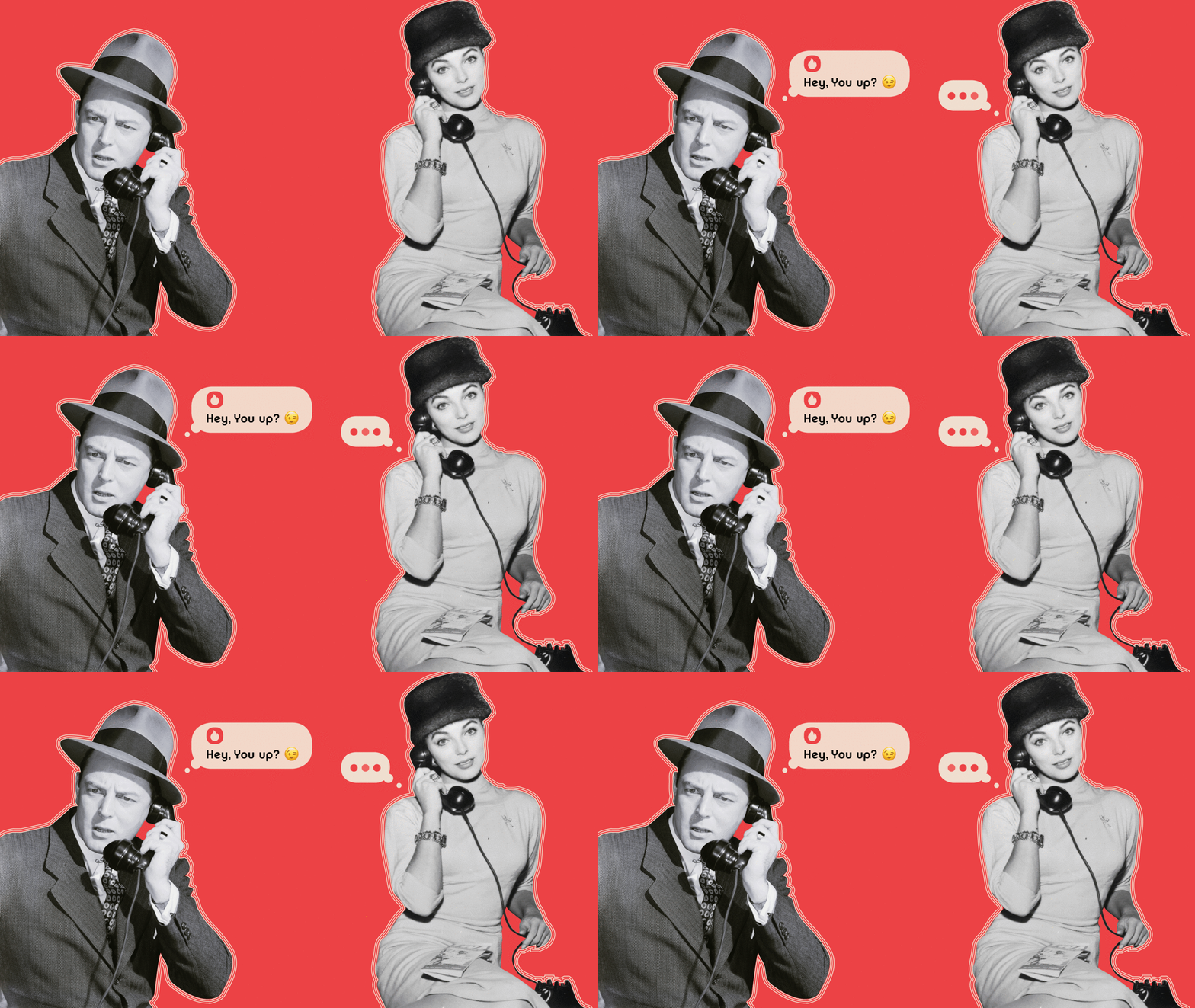
And like an addiction, it’s robbed me of at least one of life’s purest pleasures. A million people and articles can explain how Tinder has ruined courtship—and even hook-up culture. But its truest victim is the single element that makes flirtation fun. Tinder killed the crush.

You might think that Tinder would be a crush paradise. After all, crushes are all about instinctual attraction, and what’s more instinctual than evaluating someone’s picture and swiping left or right based on your gut reaction (plus, learning they’re 6’1”, INTJ, and, from the looks of their picture, were once were on a boat). Tinder should fulfill the smartphone promise, making our lives quicker and easier. I’m able to order a pizza and ride in a stranger’s car at the touch of a button. When I’m lonely and bored, I should be able to materialize a crush—someone to joyfully obsess over with all of the hope of someone who thinks she’s found The One.

But see, that smartphone modus operandi (speed! convenience!) runs counter to how human connection works.

Part of the problem is after swiping on Tinder for a few hours (let alone days or weeks), potential partners become almost interchangeable. To the shrewd, practiced swiper, a mere glance at a profile picture is enough to know whether that person merits a right or left swipe. Glasses, right. Dog, right. Fish, left. Mirror selfie, left. Red hat, left. Even when you’re intrigued enough to click for more information on someone, everyone blurs together into a single amorphous Jim looking for his Pam. Far from being fun, early “getting to know each other” conversations quickly become a chore. Our attraction to a person in the real world is based on their smell, the sound of their voice, the things they laugh at. On Tinder, people are just cardboard cutouts. Every time I succumb to it, I find myself using the same trite questions and giving the same trite answers. It’s rare that I ever give someone my phone number to propel the conversation to text. It was even rarer to feel a connection so undeniable that it’s propelled us into the real world. It’s hard to get butterflies about someone who’s just a two-dimensional face in your screen, one of 25 guys saying “hey, how’s ur weekend looking?”

Now a crush. A crush is magnificent. After the “we’re comfortable enough to finally just wear pajamas and order in” stage, it’s the best part of a relationship, when each text notification sends a shiver of excitement through your entire body and you post selfies to your Instagram story just to see if they’ll see them. Yes, it’s also a stage of paranoia (who is that girl in that Facebook picture from 2011???) and misery in the minutes waiting for the response to a risky text, but that exquisite pain just heightens the euphoria when he does text back and when you find out that girl from 2011 was actually just his sister all along.

The one time I ever remember feeling something akin to a crush on someone I saw on an app, it was because I recognized him from Twitter. Without external context, he would have been completely inscrutable. In all likelihood if I hadn’t known he was hilarious and liked the same movies I did from his tweets, I would have swiped left. (Although, in all fairness, maybe I should have. We went out for three months then he dumped me via text.)

Tinder is transactional and gamified. The swipe is a slot machine. It entices you to go for one more swipe and then one more—just to see what else is out there. But no one can match up against the prospect of all the other single people in the world—plus the ones who exist in your imagination. It’s the same mentality that keeps people glued to the slots in Vegas casinos: The next swipe could be the jackpot!

But perhaps the biggest problem with Tinder is also how it sold itself to us: You only match with people whom you know are interested in you. (Or at least interested enough.)

The pleasure of the crush is in how it starts, the uncertainty of it. A crush is a challenge—and a terrifying risk. The not-knowing part, the time when you have no idea how the other person feels about you is about 80 percent of the sensation we describe as butterflies.

It’s exhilarating, miserable, torturous, and ecstatic, the stuff of sending a flirty text that you outsourced to your entire group chat. That tension doesn’t exist on Tinder—where you only end up in conversation with someone once you’ve established mutual attraction. That other person at least wants to meet up, if only just to hook up. And that happens after you’ve waded through throngs of fuckboys and randos.

If you’re looking to meet someone in real life but still want the expediency of the internet, I recommend a good, old-fashioned Twitter DM slide. A little audacious! Full of anticipation! But same rule applies for bathroom mirror selfies: If that’s their profile pic, metaphorically swipe left.

Dana Schwartz is the author of the memoir Choose Your Own Disaster. Follow her on Twitter @DanaSchwartzzz.


Source link