
Categories
Health

Why More Brides Are Getting Pre-Wedding Filler Injections and Botox


Planning a traditional wedding requires a few key things: a florist, the band or DJ, the cake, and the ability to keep track of finding, hiring, and paying for all of them. (Fun!) Now, you can add visiting a dermatologist to that laundry list. But forget a nice, relaxing facial—these days, more brides to be are springing for cosmetic injectables to smooth crinkles and plump lips before their wedding day.

“We have definitely seen an uptick in consultations with brides-to-be who want to get a skin care game plan even a year before the big day,” says Kristel Polder, M.D., a board-certified dermatologist at Dallas Center for Dermatology and Aesthetics in Dallas, TX. “Brides want to look good for all aspects surrounding a wedding—portraits, bachelorette party, wedding, and honeymoon.”

Cosmetic injectables are a natural fit for this. “Fillers have a longevity that allows you to maintain these results through the process,” Polder says. “Particularly with millennials, we’ve been asked for smaller dosing to test out fillers in their lips, cheeks, and under their eyes.” Meanwhile, neuromodulators (or “wrinkle reducers” as they’re more commonly called) such as Botox and Dysport have become popular among brides for specific areas of the face.

Polder’s clinical experience is reflective of the large-scale trend of pre-wedding injectables. RealSelf, a review site that tracks the popularity of cosmetic treatments, found that in the past year, neuromodulators accounted for 15% of nonsurgical pre-wedding treatments, with injectable fillers close behind at 14.15%. This follows the overall rise in the use of injectables, which are no longer solely within the realm of antiaging. That is, actual aging is no longer a prerequisite for cosmetic injectables.

Instead, contoured cheekbones, preternaturally smooth foreheads, and plump lips have taken over Instagram feeds and celebrity faces alike, underscoring the new role of cosmetic injectables as a way to sculpt and augment in addition to lift and firm—no matter your age. (Unsurprisingly, the look has been been dubbed “Instagram Face.”) And they’ve been embraced accordingly. According to the American Society of Plastic Surgeons, the number of filler procedures among people between 30 and 39 years old has grown by nearly 30% since 2010. (And of those, the number of hyaluronic acid filler injections in particular, such as Juvéderm or Restylane, has almost doubled.) Meanwhile, the number of neuromodulator procedures among patients between 30 and 39 has increased by nearly 35% to 1.3 million.

Source link

Categories
Health

Kourtney Kardashian Got Scalp Injections to Treat a Bald Spot


Ever since she figured out how to manage her relationship with Scott Disick, Kourtney Kardashian‘s storylines on Keeping Up With the Kardashians have been a relatively drama-free. But during the show’s season 17 (!!!) premiere Sunday night, the eldest sister was facing a beauty emergency.

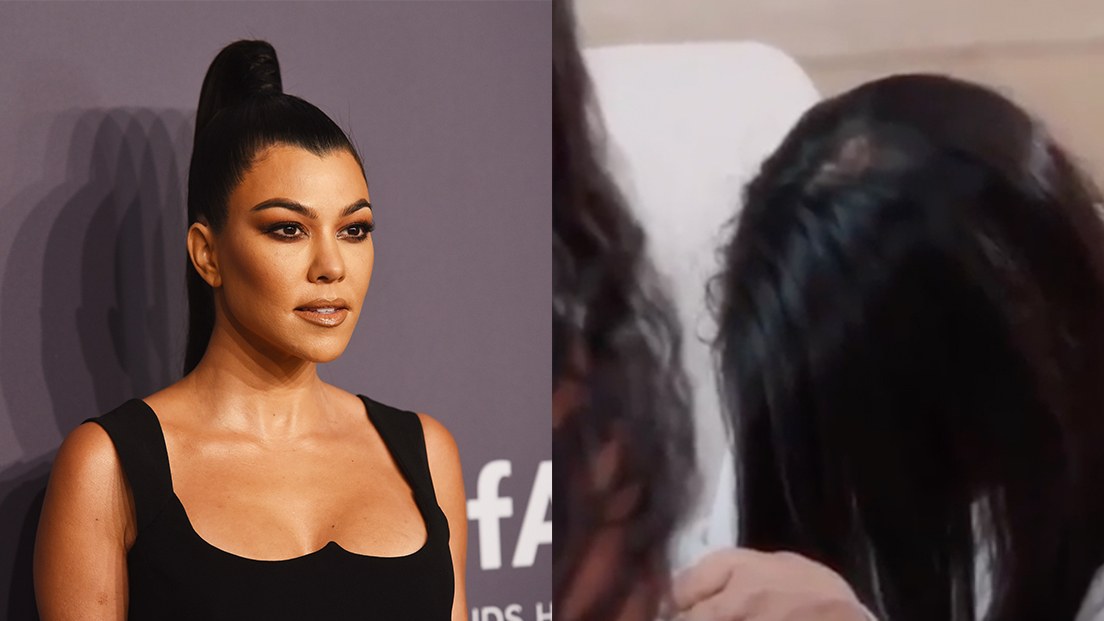
During a scene with Kim, the sisters discuss a not-small bald spot that has formed on the top of Kourt’s head. “Kourtney, you have a really big spot on the top of your head,” Kim said. “Look down, Kourtney. Oh my god, I’m afraid for your life. Have you seen that?” “No, but I feel it,” Kourtney replied. “It’s a hole in my head. I swear it’s from my ponytail, it was so tight that I had a bump on my head like this.” Obviously, Kim is being overly dramatic, but the spot is noticeable in the clip below.

“Hair loss is not always genetic in nature,” Dr. Steve Fallek, plastic surgeon and medical director at BeautyFix Med Spa, tells Glamour. “Physical and mechanical stress can weaken and even damage the hair follicle leading to hair loss. Tight ponytails can certainly pull your hair out of the hair follicle and is a common cause of hair loss. Coloring your hair or treating your hair with harsh chemicals can also contribute to this. Weight loss, nutritional changes, medications, as well as stress are other typical factors for hair loss.”

Of course, when you’re a Kardashian, you have pretty much any beauty treatment available to you at any given moment, so Kourtney heads to see Dr. Jason Diamond later in the episode to address the bald spot with scalp injections. “Today I’m getting PRP [platelet-rich plasma], which is where they take your blood and spin it and they use your plasma and they inject it in my head for my hair to grow back,” she said.

Plasma treatments for conditions like alopecia are becoming more popular, and Kourtney did a pretty good job explaining the basics. Blood is taken from the patient and put into a centrifuge to separate out the plasma that will then be used for the injections. According to the Cleveland Clinic, the plasma “helps repair blood vessels, promote cell growth and wound healing, and stimulate collagen production.”

“Given its name, PRP is rich in platelets which have a large number of multiple growth factors, which help the hair follicles to grow,” Fallek says. “The PRP is then injected into your scalp where there is hair loss. A topical anesthetic is normally applied prior to injections and the treatment takes about five to 10 minutes.” He says that treatment is varied, but that most doctors will inject areas of alopecia monthly for three months initially and then twice a year for maintenance. You can expect to notice improvement after two to three months.”

Here’s hoping Kourt gives us an hair growth update soon.


Source link

Categories
Health

Lip Injections: 9 Things I Wish I'd Known Before Getting Them


One might say I have an obsession with myself, though not in a way that allows me to move through the world feeling especially at ease with what nature has bestowed upon me. Rather, I’m always in a constant state of self-change. Much like a therapist unable to take her own advice, I see others—large noses, small noses, stringy hair, coarse hair, curvy bodies, lanky bodies—and fixate on, and often envy, their striking brand of beauty. When it comes to myself, though, well enough is rarely left alone.

Until a few years ago, my commitment to vanity was purely surface—keratin treatments, at-home dermaplaning, hot tools, serums, supplements, Swiss Kriss laxative facials—I’d never gone under the knife, experimented with dermal fillers, or spent any legit money on one single alteration. Not because I’m opposed (I come from a family of proud plastic-surgery advocates), but because it never occurred to me that I didn’t have to wait until I was 60 to get the full lift, that I could make small tweaks along the way.

I came to focus on my lips because—truthfully—I was hyper-aware of a specific standard of beauty that started to pervade and overtake popular culture, and found myself hoovered right in. With every Insta-girl that upward-scrolled past, the more my face started to seem too pedestrian, too uneventful, too earnestly natural. Big, pillowy, fake-looking lips were everywhere, even on girls almost two decades younger than me, and I wanted in.

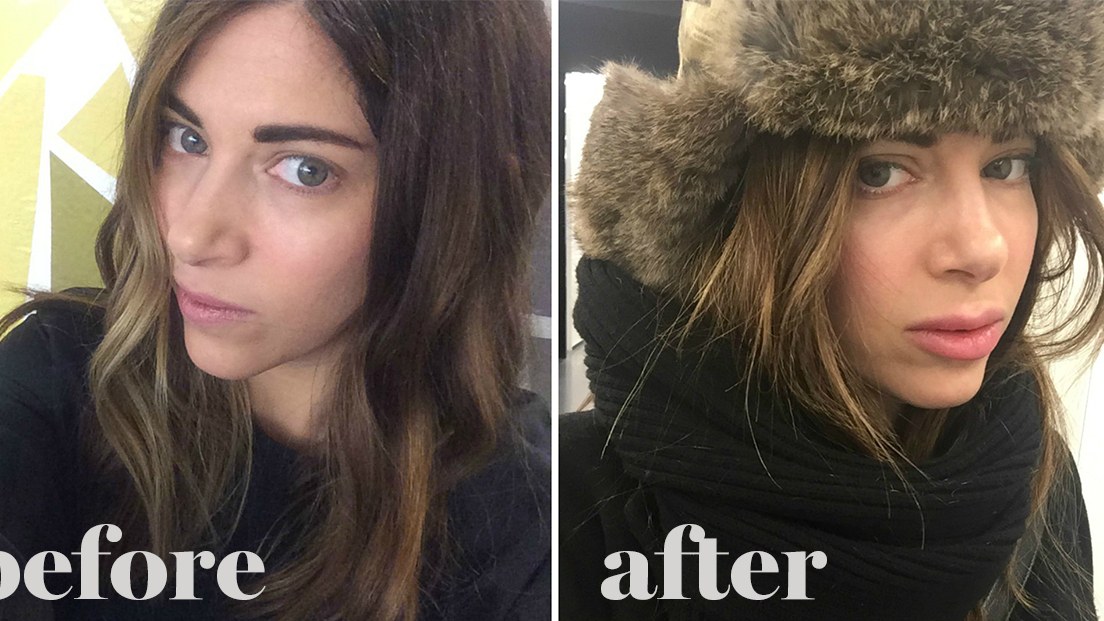
In the year that followed, I got lip injections twice, by two different board-certified physicians. The first time, I was acutely disappointed—I went to a buzzy, fancy practice that some of my beauty-editor friends frequent—and felt as though I’d taken $900 and tossed it to the wind, Samantha Jones–style. The doctor asked me nothing and seemed disengaged, and I left feeling swindled and unhappy. There was no difference, and I was told I could pay for more if I wanted to see one.

By doctor number two—Michele Green, M.D., a New York–based dermatologist and RealSelf contributor—I realized the first round might have been more successful if I’d been assertive about what I wanted. I told Green right away that I wanted to see a noticeable difference, and she spent time both studying my face and asking me questions.

We decided on one syringe of Juvederm, which is what I’d had the year before, although Green concentrated it all in my lips, whereas the previous physician used some in the skin around my mouth. More on that below, as well as some other crucial intel I got from Dr. Green. If you’re thinking about lip filler, read this first so you leave with exactly what you came for.

You need to prep—thoughtfully and physically.

And the first time around, I did not. The first step, according to Dr. Green, is to decide how big you realistically want your lips. Meaning, think long and hard about whether you really want to go from thin-lipped to Lisa Rinna in one fell swoop. It will be obvious. “You really, really don’t want [your lips] to be overfilled, and it’s easier to have too little than too much,” Dr. Green said. But if you know you want to see a real difference right away, it’s on you to voice that—especially since I’ve found that most doctors prefer their work to look hyper-natural.


Source link