1. The release date. No word yet on when new episodes will start streaming.
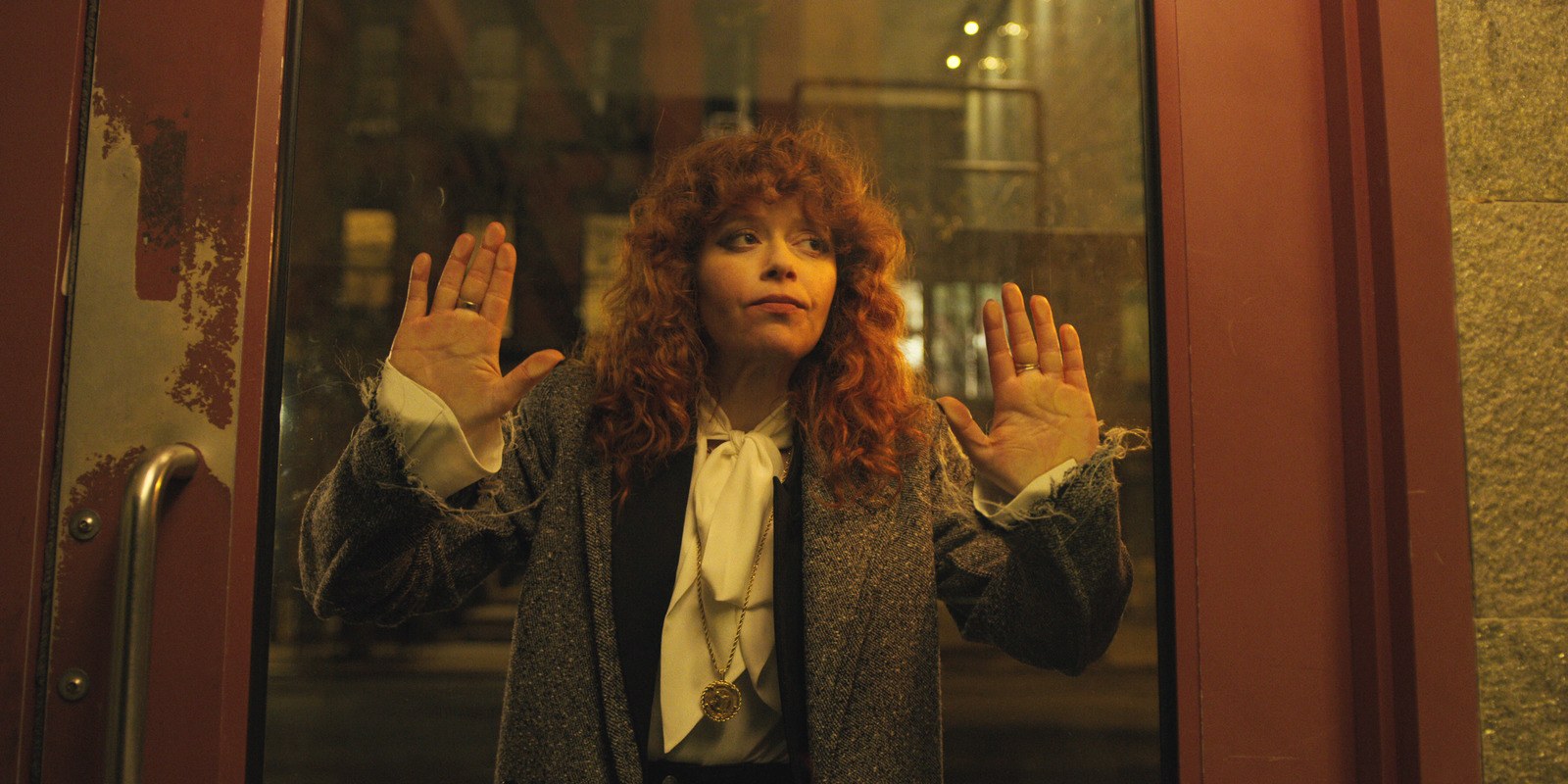
2. The vibe. “Same show, just weirder,” Lyonne said during an appearance at Recode’s Code Conference alongside Netflix executive, Cindy Holland. “The character is a coder, so it would be appropriate to have this be the time and place to say, yes. So very much yes, I would love to do [a second season].”
Courtesy of Netflix
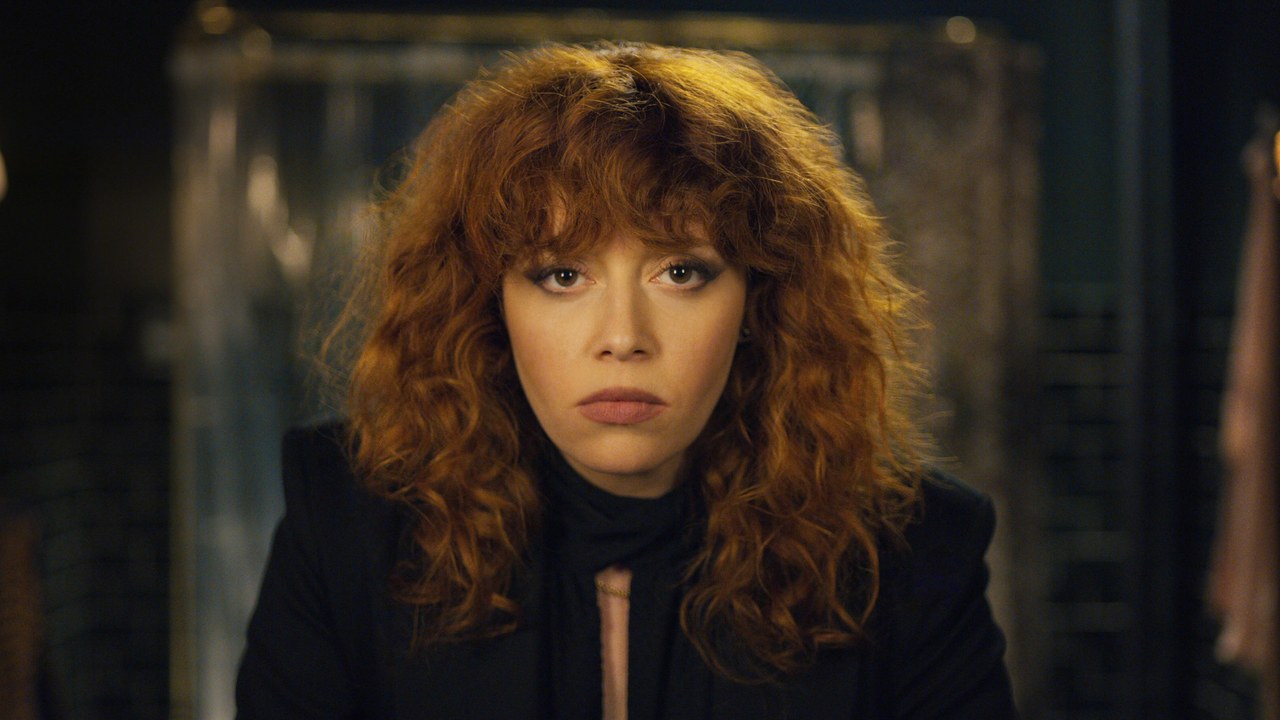
3. The plot. Given the way season one ended, there are some questions about how Nadia will fit into the new season—but Lyonne is definitely in the mix. “When initially pitched, Nadia was a presence throughout all three of them. But it was not in a very conventional way,” Headland previously told The Hollywood Reporter. “She was always a presence as we knew Lyonne would always be the beating heart and soul of this show. Whether she was being haunted or she was haunting the narrative, she would be there. But we have discussed all of those things and more.”
Courtesy of Netflix
“I definitely have ideas ranging from the really kind of out-there anthology to staying on board with our friend Nadia,” Lyonne has said. “And maybe it’s all one idea. Certainly, what we pitched as the heart and soul of Russian Doll, I’d love to continue to get to work in that way. The idea that they would conceivably follow us and on that course, should we jump off that cliff, is pretty fun to even consider the fantasy.”
This post will be updated as new information becomes available.
It was dark, windowless, and cold—almost morguelike. But the cousins and I didn’t care. The chill kept our grandparents upstairs, which meant no witnesses to interrupt our “crimes.” A few hours of euphoric destruction, and then we would pile the carcasses in a plastic weekender bag we shoved behind a rolled-up carpet until the next time, leaving errant limbs to roll around like loose pennies at the bottom.
Some of the happiest childhood memories I have were made in that basement. It was where we mounted drawn-out melodramas. Gave bad haircuts! Applied vulgar tattoos in Sharpie! And sure, it was home to the occasional decapitation.
What I mean is: God, we loved our Barbie dolls.
Like more than 90 percent of American women, I grew up with Barbies. Tons of them. I had a pilot Barbie and a waitress Barbie. I had a swimsuit Barbie, a disco Barbie, and several Barbies that I stripped naked to liberate them from their too-stiff organza gowns. (Truth: I wanted to see their boobs.) I also had a Barbie Dreamhouse—even in 2019, 30 are sold per hour—and a pink convertible that Ken “fell” out of when Barbie floored it. (Truth: He was pushed. I pushed him.)
I can’t remember “the first” Barbie or even the one I liked best. But somehow the collection just expanded, with new Barbies added to the group to make the others jealous like proto-contestants on Bachelor in Paradise. The Barbies in my grandparents’ basement were the most abused, but even the ones I had at home endured hideous bobs and occasional pratfalls.
It doesn’t take a therapist to explain what I understood at six: This world wasn’t built for me. With Barbies, I could act out.
The standard Barbie is 11 and a half inches tall, but her reach is enormous. She has more “brand awareness” than Kim Kardashian and the queen of England. (Mattel ranks it at 99 percent worldwide.) Over 58 million of her are purchased each year, and she’s available in 150 countries.
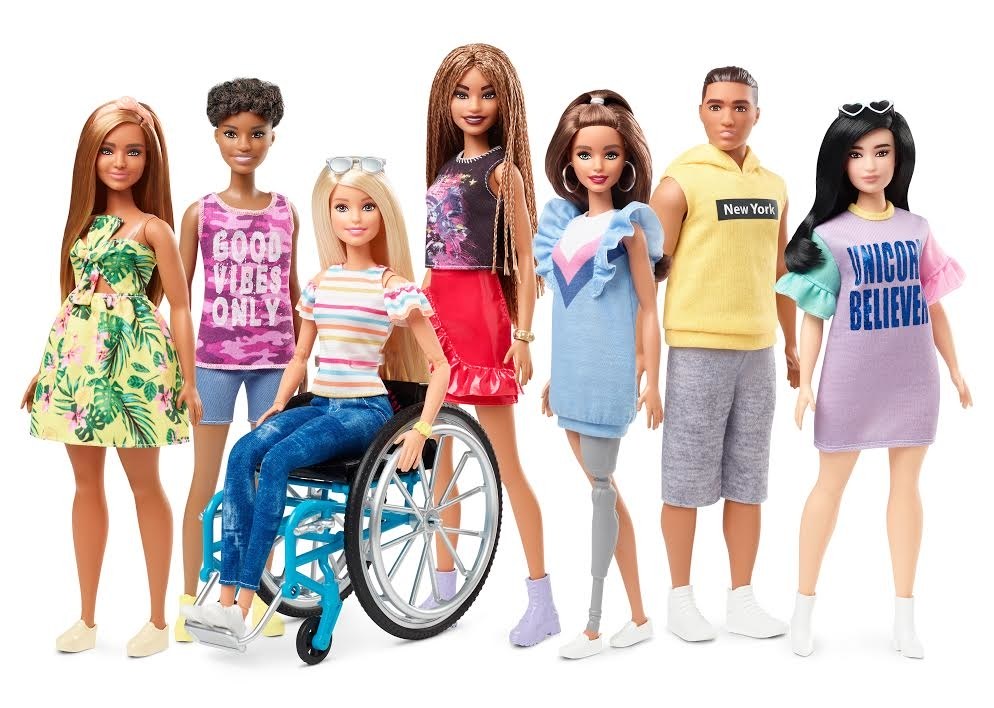
Six decades after her invention, she’s still the number-one fashion doll in the United States and, since Mattel introduced new skin tones and hair textures in 2015 in response to a 20 percent drop in sales between 2012 and 2014, the most diverse. In 2016 the brand also unveiled three new body types—petite, tall, and curvy. Last month it announced it’ll add to the collection: Barbie in a wheelchair, the first with a prosthetic limb, some with a new, braided hair texture, and an entire fourth shape, with a smaller bust, less defined waist, and more defined arms.
New Barbies in 2019 include a wheelchair-bound doll and doll in a fourth new shape, featured second from the left.
Mattel
For a doll who was once programmed to complain that “math class is tough” on command, it’s all quite impressive. But then she didn’t have to do a lot to exceed expectations. Like most women born in 1959, she was underestimated from the start.
Barbie made her first appearance at the New York Toy Fair that March. At the time, she was an unprecedented experiment. But Ruth Handler was sure she would sell. Handler was the daughter of Jewish immigrants from Poland. At 43, she was an executive vice president at Mattel, the behemoth brand she had founded with her husband Elliot Handler and his friend Harold Matson in 1944.
From the moment Mattel was established, Handler decided to be essential to the business, both because she had brilliant ideas and because she couldn’t bear to remain at home. In an interview, Handler said she loved motherhood. But the conventions of it? Well, those repelled her. Or as she put it: “Knowing how to cook and keeping a good house? Oh shit, it was awful.” For all Barbie’s foibles—and the Sleepover Barbie released in 1965 that came with a scale set to 110 pounds and a diet book plastered with the words “Don’t Eat!” is but one example—it’s no surprise that when Handler created Barbie, she made her an independent woman and a wage earner. Fine, she was a teen swimsuit model at first, but then a flight attendant, a teacher, and an astronaut. An afterthought, her husband Ken wasn’t introduced until 1961. And like all of her accessories, he was sold separately.
Nadia’s guilt about leaving her mother drives her to try and save everyone, even before herself. She warns Ruth about a gas leak, but dies falling down the stairs. She brings her friends Maxine (Greta Lee) and Lizzy (Rebecca Henderson) with her to a bodega, convinced that if she leaves them behind at a birthday party they organized for her, they’ll meet the same end as other guests and vanish. She doesn’t want Alan (Charlie Barnett), a relative stranger trapped in a parallel death cycle, to leave his apartment, even if that’s the only way he can break his own trauma cycle. What is living if not taking care of others? I relate to this more than I’d like to admit.
Nadia’s mother’s death is hinted as a suicide; I was there when my mother attempted to take her own life. I was four or five. At my grandmother’s house, where we both were staying, I opened the living room door and it bumped her head. I apologized and squatted beside her. She was wearing a white tank top and dark blue underwear. Her skin was cool and damp. I shook her and she groaned, conscious but barely. I didn’t know what to do, so I laid beside her and waited for my grandmother to come home. Later, I would overhear my grandmother describe it as an overdose. My mother survived—but the anxiety her suicide attempt gave me survived in me too.
Like Nadia, I cycled. Instead of repeating my own death, I checked up on my mother; I Google for jail records, police reports, obituaries.
Adulthood pulled me from my mother, but it was my grandmother—my Ruth—who gave me permission to go. Just after college, I received a job offer in New York. It would be the furthest I’d lived from my mother. Until my last night, I looked up jobs and sublets in my area, wondering, even at the eleventh hour, if I’d end up staying near my mother after all.
The night before I boarded a bus to take me to Manhattan, my mother threw my suitcases out of my grandmother’s house, screaming. I think she broke a window. She definitely shattered her cell phone.
I’m worried she’ll die, I told my grandmother. We were huddled in her living room, whispering. I’m worried she’ll disappear, I said. What if this was the last I ever saw my mother? (It wouldn’t be, but it would be close.) You have to go, my grandmother said. No one is going to let you keep living like this. I went to bed, I woke up, I got on the bus. I don’t know for sure if my mom heard me say goodbye. I ruptured the cycle, and I feel glad and guilty every day.
It’s been seven years since I’ve seen my mom, and I no longer know where to begin looking. I still call all of her old phone numbers and hang up when strangers answer. There are no rules for healing.
What is Russian Doll really about? The show resists an easy answer. Russian Doll can be about whatever you need to understand: It’s about helping others, helping yourself, forgiveness, remembering, getting sober, finding your cat. For me it’s about waking up and recognizing it’s time to go.
Marissa H. is a queer writer and editor. She is working on a book.
For nearly 60 years, Barbie has been telling girls they can be anything they want to be, thanks to the 200-plus careers held by the most famous doll in the world. Now, Mattel is going a step further by not just releasing a new career for the doll, but actually helping young girls take the necessary steps to one day achieving that career. Welcome Robotics Engineer Barbie, which launches today, and is designed to interest girls in a particular STEM job that many might find unfamiliar to them.
It’s not the first time that Barbie has explored a career in science, technology, engineering and mathematics—we’re all familiar with astronaut Barbie—but it is the first time the doll will come with a robot that you can bend and reconfigure (as well as a laptop) as her main accessory. If you’re unfamiliar with the work that a robotics engineer does though, you’re not alone. That’s why Barbie has partnered with Tynker—the gaming platform that helps kids learn to code—to help young girls understand the careers available to them as robotics engineers (like designing robots to explore areas where humans cannot, such as the ocean or planets).
“We wanted to shine a light on this underrepresented career and field for women,” Lisa McKnight, Barbie’s General Manager and Senior Vice President, tells Glamour. “Only 24% of STEM jobs are held by women, and we felt that Barbie, with the platform that we have, was the perfect opportunity to do more in this space.”
[embedded content]
The doll will come in four ethnicities—African American, Asian, Caucasian and Latina—so “as many girls as possible see themselves [in this doll],” McKnight says. Mattel and Barbie are also partnering with Black Girls CODE robotics workshops to reach young girls interested in developing skills in the field. In addition, Barbie is collaborating with information science professor and coder, Casey Fiesler, PhD, to release Code Camp for Barbie and Friends, an e-book available on Amazon that will introduce the concepts of code.
But being that this is Barbie, fashion is an important aspect to the doll’s identity, and one that McKnight is thrilled to debut. “The details of her fashion are all about authenticity,” she says. For example: Barbie’s hair is in a ponytail so she doesn’t have any distractions, and she’s wearing sneakers since the job requires her to be on her feet, constantly working constantly with equipment. “We wanted to make sure her fashion was reflective of what someone in the profession would really be wearing,” McKnight says. In fact, the Barbie design team worked with a female professor at Massachusetts Institute of Technology (MIT) to ensure the doll’s presentation was accurate.
“All [Barbie’s] careers are about inspiring the limitless potential in every girl,” McKnight says. “We have a platform that can be leveraged to do good, and we want to use our voice to have a call to action to inspire the next generation of girls.”
For more than three decades, children have been playing with American Girl dolls as they grow into their own identities, using unique traits to help them define their own. We like our dolls to be a reflection of ourselves, which is why it’s so important that, in recent years, the company has been working to diversify its offerings. There are now dolls in every skin tone, and families can add on accessories like crutches, wheelchairs, diabetes kits, and allergy-free lunches complete with a tiny EpiPen so every girl’s doll can reflect her real life. There’s even a boy doll now.
On Monday Mattel unveiled its latest American Girl doll—a brown-eyed, brown-haired girl of Chilean descent who is sure to be a relatable friend for girls who are passionate about science and technology. Her name: Luciana Vega. Her goal: become the first person to travel to Mars. According to American Girl, Luciana is a “creative, confident 11-year-old girl” who dreams of becoming an astronaut and earns a scholarship to Space Camp (learning, along the way, that she has to learn to be a team player on her own planet in order to make it to Mars).
And just like with its line of historically accurate dolls, American Girl did its research when crafting Luciana’s story. They even teamed up with NASA to make sure her story and merchandise are authentic.
“It is so important to find exciting new ways to inspire our next generation of space explorers,” NASA astronaut Megan McArthur, who helped advise American Girl in the process, said in a statement. “I always want to encourage girls and boys to pursue their dreams, no matter how big, and I think it helps to show how those dreams can become reality for any kid.”
PHOTO: NASA
Megan McArthur is a NASA astronaut who serves on the advisory board for American Girl. Like Luciana, McArthur says she dreamed of becoming an astronaut ever since she was a teenager.
NASA says Luciana’s interests also jive with the agency’s mission, as it works to pave the way for exploration in deep space, including Mars. American Girl is also launching a whole slate of educational science and technology content centered around Luciana in partnership with NASA and Scholastic, and is sponsoring 20 scholarships so girls like Luciana can go to Space Camp.