Categories
Health

Women in Their 20s and 30s Are Embracing Their Gray Hair


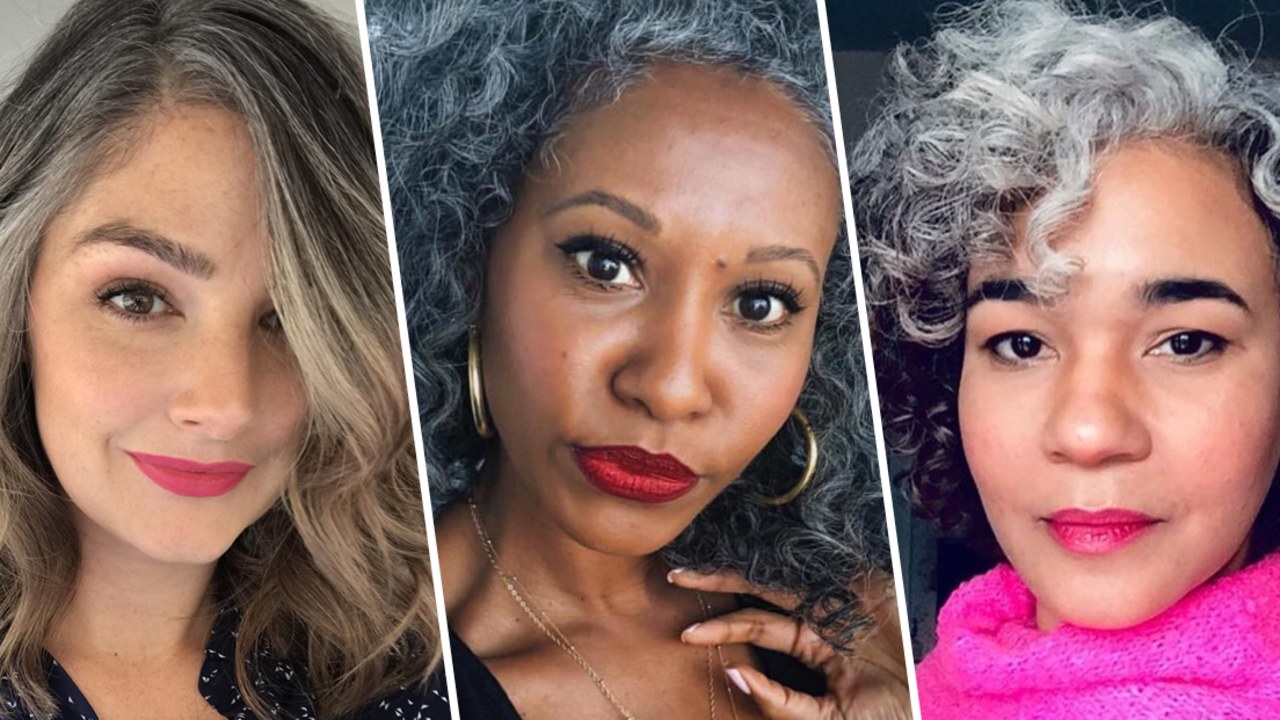
Elizabeth Collins was 13 years old when she started going gray. As any teenager would do, she colored her hair dark brown, sometimes black to cover up her gray hairs, settling into a cycle of coloring it every four weeks. But four years ago, she decided to stop. “I was pregnant with my fourth daughter and knew I wouldn’t have the time to do it myself or get it done,” she says. “I’d been thinking about it for a couple of years, and once I decided to do it, I knew nothing would stop me.” Now, at 31, she’s documenting her transition into gray on an Instagram account she made specifically to track her progress, @young_and_gray29.

She’s not alone. You might have noticed that lately, gray hair is on a redemption tour. You could even call it cool—so much so that women are now seeking it out advice on how to grow it out instead of frantically Googling “does tweezing a gray hair really mean that three grow back in its place?“ (For the record, the answer to this is no.)

The collective embrace of gray hair is inarguably a good thing. After all, chasing away grays can be as futile, time-consuming, and expensive as trying to locate an actual fountain of youth. “Coloring my roots every three weeks was getting expensive,” says Nicole Andrus, who’s in her mid-30s. Plus, the burden to conceal gray hair falls disproportionately on women. “I was really annoyed with the double-standard for men and women when it came to gray hair,” says Collins. “My dad, whom I inherited my premature gray hair from, had never felt the pressure to color his hair. Yet it was expected of me.” Even the language we use when describing men who have gone gray is favorable—salt-and-pepper, Silver Fox, distinguished—far from the “you better cover it up” messaging targeted at women.

That’s slowly starting to change, though, and the effort has been aided in part by style-setters like Vogue UK fashion features director Sarah Harris, who first began going gray in her teens, and Instagram accounts like @grombre, which re-posts and celebrates women who show off their new silver growth (a.k.a. their gray-ombré). What began as a resource to help women feel less embarrassed or ashamed about grays has now grown into a community of 74,000 where its followers share stories about why they decided to transition.

“It just hit me one day. I was done. And I was scared,” wrote one woman on Grombré. “I researched and found that I wasn’t the only one going through this rollercoaster and that I could get off. So I did. Two months dye free. I feel free. The gray no longer disgusts me. I feel powerful. Not everyone gets it, but that’s OK. I may have aged myself, but that’s OK too. I look at myself and I don’t feel like I’m letting myself go. I know that’s what we have been programmed to believe. But it simply isn’t true.”

Celebrities, too, have played a big role in this shift. First, at the 2018 Golden Globes, Jessica Biel, 36, walked the red carpet with a few subtle gray streaks in the front of her updo. Then, at the 2018 Grammys, Katie Holmes (who is 40) had a few silver slivers peeking through parts of her dark hair. Chrissy Teigen even tweeted about her grays (“I have a skunk like streak of grey hair and I’m actually very into it. My Cruella dreams are coming true!”), which women responded with enthusiasm and selfies, showing how they embrace their own gray hair. “I find new grey hairs on my head every day and I LOVE THEM,” one user wrote. “I’m only 24, so I’m not sure why they’re already here but I call them my unicorn hairs.”

What makes this movement feel so revolutionary, though, is that it’s not about 20-something influencers getting ashy, faded, Instagrammable silver-blonds. It’s about women owning what happens to us naturally.

“I was 31 and always coloring my hair—but within a few weeks, would have a silver stripe down my roots,” says Liz Kamarul, now 34, who’s blogged about going gray. “It just so happened at the time that silver hair was very popular and everyone was coloring their hair intentionally that way. I thought to myself, well, I have this naturally, so I might as well go for it.”

But that doesn’t mean the transition is easy. Despite the supportive networks on social media, women say they’re still feeling pressure from friends and family who are stuck in antiquated mindsets. “The biggest challenge is seeing social media memories of when I had dark brown hair,” says Andrus. “And before I went with it, I had so many people try to convince me I was ‘too young’ to go gray.” Janelle Gambino, who stopped coloring her hair at 38 after going gray at 22 and now documents her progress at @nellegreyz, says, shockingly, that it was women who gave her a harder time about her transition than men. In some cases that only strengthened their resolve though. “Once I told family and friends about my decision, I felt like I had to show them I could do it,” says Collins.

And then there are more surprising barriers to make it happen, like finding a colorist who agrees to help. (Really.) “When I talked to my stylist about letting it go [gray], she flat out refused to ‘condone’ it,” says Andrus. “I had to ask three colorists before I found one who would help me transition to gray.” She also found support from her husband (who, she thinks, is happy with the money they’re saving) and the Grombré account on Instagram. The women featured on it helped her stick to it, even though she’s been tempted to color it back. “My own mother still doesn’t have gray hair,” she says. “Every once in a while I’ll come across a gorgeous caramel color on Pinterest and think ‘Oh, I love it!’ But I remember how much upkeep it is. Will I ever color my hair again? I don’t think so. But I’m still working on separating the idea that gray means old.”

Plus, even once you decide to ditch the dye, your new color still needs special care of its own. If anything, gray hair can be trickier to care for than what you’re used to, even if you’ve had a standing appointment with your colorist for a decade.

Plan the Transition

First, know that growing out your grays could take awhile. “Grays seem to take forever to grow when you are actually trying to grow them,” says Collins. “I had moments that I just hated my hair when it was half-grown out and half-dyed hair, but I decided to tough it out.”

It’s almost a rite-of-passage in and of itself. “There are no shortcuts when it comes to Mother Nature and how fast your hair will grow,” says Min Kim, senior color specialist at Butterfly Studio Salon in New York City. Gray hair could grow in unevenly or look patchy if you’re only working with a few inches (in the same way that grown-out roots can look like you skipped a touch-up).

But even those with a game-plan can run into trouble. “I decided to color the majority of my hair bright white-blond and have it blended very close to my roots, so it would be less harsh as it grew out,” says Kamarul. “The hardest part was finding a hairdresser who could lighten my very dark brown hair that much without damaging it.”

Certain hair color formulas can blend or ‘camouflage’ the gray, according to Rebekah Nash, a colorist at Cutler Salon in New York City, who’s a fan of Redken’s Color Camo for Men line. She says she uses it for anyone who wants to add a little more “pepper” to their gray. It’s also ideal if you’re growing out a single-process color, since it’ll soften the line of demarcation. But if you’re looking for more “salt”—i.e. brightening the gray that’s grown in—a colorist can place highlights strategically to make that happen.

And for the more obvious advice: You can also just let it do its thing. That’s what Gambino has been doing. Her last color appointment was in March 2018.

Adjust Your Hair Care Accordingly

Once your grays begin growing in, you might need to tweak your routine to complement both the new color and texture. “Natural gray hair can lose its luster, often turning a slight yellow hue,” says Nash. “To keep hair looking bright, use a shampoo and conditioner containing silver or violet tones.” Try Davines Alchemic Shampoo Silver, which gently cleanses hair without harsh sulfates, or Clairol Shimmer Lights Shampoo – Blonde & Silver (it’s a stylist fave).

A heavier conditioner will also help, since gray hair is inherently dry. “As we get older, our scalp produces less sebum, or oil, which results in a drier and rougher hair texture,” Nash says. “In other words, the hormones that cause us to lose our natural pigments are the same ones that change the oil we produce to nourish new hair growth.” Try a moisturizing conditioner that has brassiness-neutralizing purple tones, like Sachajuan Silver Conditioner. Then, consider blow-drying your hair instead of air-drying it. “The actual gray hair is not shiny, so if you don’t blow-dry it, it can look very dull,” says Nunzio Saviano, hairstylist and owner of Nunzio Saviano Salon in NYC.

Don’t Be Afraid to Experiment

Sure, you might not want to go to the salon every week—but you can still experiment once you’re silver. “A few well-placed highlights, lowlights, or gloss can go a long way to complementing the gray,” Kim says. “So feel free to have fun and try things out.” That’s what Kamarul did a few months ago. She dyed her ends a lighter blond “to keep the bottom brighter” so it looks more intentional.

Despite the challenges, though, women who’ve embraced their gray agree that it’s worth it. For some, it’s a work in progress. “I’m still figuring out how to detach my ideas of youth and beauty from a box of ‘rich caramel brown,'” says Andrus. But across the board, those who’ve done it are happy with it. “My hair has never been so low-maintenance and received so much positive attention,” says Kamarul. Collins agrees. “I’ve had more compliments on my natural gray hair than I ever had on my dyed brown hair,” she says. “I have never been as content with my hair color as I am now.”


Source link

Categories
Health

Adult Acne: The Unfair Reason You Have It in Your 20s and 30s


There are a lot of things I don’t miss about being a teenager: My chemistry teacher’s sarcasm, basketball practice, the challenge of sitting in a school hallway in extra-low-cut Frankie B. jeans (it was 2004, but what was I thinking!?), curfews. There’s another thing, however, that I’d like to add to that list—that’s somehow lingered with me well into adulthood (I’m 28). And that’s acne.

Here’s the thing: I honestly feel like I don’t have an excuse for adult acne. I’ve been working as a beauty editor since I graduated college, and with this job I have access to the best skin care pros in the world. I get regular peels. I do light laser treatments. I’ve been prescribed multiple rounds of antibiotics. I take Spironolactone, a mild blood pressure medication that’s prescribed off-label for acne, as it suppresses androgens. But—aside from the seven blissful years when I took a combined oral contraceptive pill that gave me The Clearest Skin Ever—I’ve always broken out. (The pill also gave me a blood clot, so relying on it for my skin is no longer an option. Cool!)

As a result, I’m always in some way working to prevent a fiasco with my at-home skin care routine. I exfoliate every night with Lancer The Method: Polish Blemish Control, $75, which has purifying tea tree oil, before cleansing; I use Skinceuticals Phyto Corrective Gel, $66, to control breakout-related inflammation; and I alternate between Tammy Fender Purifying Lucent Masque, $215, and Eminence Hungarian Herbal Mud Treatment, $46, once a week to keep my pores clear. I even do this thing where I wash my face after shampooing and conditioning my hair because I’m paranoid the fragrance and ingredients like silicones in hair products is yet another trigger. All of it combined keeps my breakouts mostly under control, but I still deal with more pimples than I’m cool with—on my cheeks, chin, back (as I write this story I have a cute one on my cheek). It’s getting old.

And it turns out, I’m not alone. Adult acne (the kind that occurs in women 25 and above) haunts many of my closest friends—and, to varying degrees, effs up their lives. “I’m the perfect candidate for your story,” my friend Laura joked when I mentioned I was working on a piece about adult acne. She’s taken Accutane twice, and still relies on Spironolactone, like me, to minimize breakouts. “I was getting cystic acne—it wasn’t all over my face but I’d have two or three large cysts at a time. I will never forget when I met my husband’s family and I had two huge zits on my chin and cheek; I was so embarrassed,” she told me on the phone. “I had already been on Accutane once at that point. I was 35 or 36 at the time and I was like, ‘Why am I 35 and still getting acne?’ I assumed that I should have normal clear skin; I wanted that. But even after the second round of Accutane, I still got occasional cysts—they’re just embarrassing and huge—so I started taking Spironolactone. It helps a lot.”

Then there’s my friend Sarah, who is dealing with acne for the first time in her life. “I’m beside myself,” she told me in an email. “I NEVER broke out as a teenager, but now that I’m an adult and experience real stress, I do. I feel like I’m too old to have zits and I get really embarrassed. I’ve definitely canceled plans because of a breakout.” Same, girl.

My college roommate Eve, on the other hand, has more or less accepted zits as a part of life. “As a teenager they made me a bit depressed, but I’m less self-conscious about my skin now,” she explained. “I like to focus on the overall condition of my skin. But it does take longer to get ready if I have to cover pimples up!” Whether you’re cool with your acne or not, spending extra time covering up your zits is yet another thing we don’t need in our lives.

So why are we still breaking out? Truth is, the answer isn’t completely clear. “Unfortunately, we don’t totally understand the difference in the cause of acne in teens versus adult acne,” New York City-based dermatologist Dr. Joshua Zeichner says. “The main causes of acne are skin oil, acne-causing bacteria on the skin, sticky skin cells blocking your pores, and inflammation. Hormonal fluctuations, stress, and diet all likely play a roll as well.” One potential difference: “Where you’re a teenager your hormones are naturally fluctuating and you can’t control it,” Jordana Mattioli, a medical esthetician in NYC says. “But when you’re an adult your hormones are fluctuating because of things like inflammation and stress.” (More on that later).

The good news: We’re constantly discovering new ways to treat acne. There’s a lot of research underway about how the microbiome—the massive colony of bacteria and organisms that live on our skin (gross, I know, but also kind of cool)—might affect skin conditions like acne and rosacea. Differin launched the first ever over-the-counter topical retinoid this January—and it’s less than $13. And we’ve come a long way from the old school method of dehydrating your face and using only “oil free” in an effort to keep skin smooth. Below, Zeichner and Mattioli share their top tips on the best, most up-to-date approaches to dealing with acne as a grown-up. Read them, try them, and know this: You’re not alone!

First, cut the heavy creams.
Indulging in over-the-top skin care is something I’m personally guilty of. I mean, is there anything better than slathering your skin in a rich, yummy cream right before bed and binging on Netflix? Good skin care makes up for lack of sleep, right? “Once women hit 21, they automatically start buying anti-aging products,” Mattioli explains. “But most are too rich for their skin type. They’re designed for mature skin that doesn’t produce as much oil as it used to.” Whoops! Instead, try this ultra-lightweight moisturizer from Belif, $38, that seriously packs a punch.

Spot treat with your products.
Heard of multimasking? You can do the same thing with your skin care products, Mattioli says. In other words, if your skin isn’t dry on your forehead, go ahead and skimp a little on moisturizer there. “I’ve been dealing with acne my entire life and if I don’t keep it under control, I will be a breakout mess,” she says. “I only moisturize where I need it.”

Err on the side of gentle.
Layering a 10-percent benzoyl peroxide acne treatment all over your face may seem like a great idea—and you might actually wake up with clear(er) skin. But you’ll likely also be incredibly inflamed. “More is not always better, especially with acne,” Zeichner says. “Higher concentrations of ingredients like benzoyl peroxide have been shown in studies to be no better, but certainly more irritating, than lower concentrations.” Kate Somerville’s Anti Bac Clearing Lotion, $42, for example, is far more gentle at 5 percent.

Pick the right spot treatment.
Consider what type of acne you have: Do you have scary red bumps? If so, it’s likely bacteria causing the inflammation and you’ll need something that combats it, Mattioli says. “Benzoyl peroxide kills acne-causing bacteria and reduces inflammation,” Zeichner explains. Our pick? Try Clinique Acne Solutions Emergency Gel-Lotion, $19.62. If you have blackheads and whiteheads, on the other hand, you’ll want something with salicylic acid (which comes in 1- to 2-percent formulations), like this super-affordable one from The Ordinary that’s just $5.30. “It helps remove excess oil and exfoliates dead cells from the skin’s surface,” Zeichner says.

Do light therapy.
It used to be that you needed an appointment for an LED light treatment—or you could try the smaller at-home lights that take 45 minutes to treat your face. Neutrogena’s Light Therapy Mask, $34.99, uses a mixture of red and blue LED lights and takes just 10 minutes. Dr. Dennis Gross just launched a futuristic at-home version called DRx SpectraLite FaceWare Pro at a far more luxe $435. “Red light has been shown to be anti-inflammatory while blue light kills acne-causing bacteria,” Zeichner explains. Bonus: It makes for a hilarious selfie.

Simplify, simplify, simplify.
Mae West might have quipped that “too much of a good thing can be wonderful,” but that philosophy shouldn’t apply to your acne treatment game plan. “Applying too many products and washing your face too often causes more harm than good,” Zeichner says.

Check your diet.
“Dietary factors like high glycemic index foods have been shows to aggravate acne in predisposed people,” Zeichner says. “The increased sugar load promotes inflammation that in turn leads to breakouts.” Mattioli recommends cutting back on processed sugary foods in favor of anti-inflammatory options like wild fish, nuts, and fresh fruits and sticking with organic, hormone-free meat and dairy.

Try yoga.
Seriously. Most of my friends listed stress high on the list as the cause of their breakouts, and it’s true: Crazy amounts of stress do indeed affect your hormones. “Stress causes hormonal fluctuation that increases oil production and leads to acne breakouts,” Zeichner says. “Anything you can do to minimize stress—yoga, meditation—can help.”

Don’t pick.
As tempting as it is to try to be your own esthetician in your bathroom, you must fight every single urge to squeeze. “Acne in adult women tends to be angry, underground pimples.” Zeichner says. “They are inflamed and cannot be easily opened by picking. It leads to more harm than good, a disrupted skin barrier, inflammation, and potential scarring.”

If all else fails, see a derm.
If you’ve tried everything and you’re still breaking out, get thee to a dermatologist. Zeichner’s go-to solutions for adult acne in women: Aczone, an anti-inflammatory gel that “clears pimples while causing almost zero irritation” and Spironolactone (my personal favorite).

Related Stories:

8 Things You Should Never Do When You Have a Zit

How to Get Rid of Acne Fast: 11 Breakout Treatments That Actually Work

How Microneedling Treatments Saved My Skin


Source link

Categories
Health

'This Is Us' Season 2 Episode 6 Recap: The Pearson Three Are the Same Hot Messes in Their 20s


Tonight’s This Is Us showed the Pearson Three in a brand-new decade, but spoiler alert: They’re still the same hot messes. Just younger! And with less facial hair! Here’s what happened…

First, we start off with the three in their younger years: Halloween is approaching, and Rebecca is busy making costumes for her ungrateful kids. Well, except Randall. Randall’s not ungrateful. Kate, on other hand, straight-up says she doesn’t want to be a veterinarian after Rebecca spent God knows how long making the costume. She now wants to go as Sandy from Grease, and Jack volunteers Rebecca to make her costume at the last minute.

Naturally, Rebecca’s pissed about this and tells Jack he has to stop saying yes to everything Kate wants. Jack retorts by saying Rebecca is just as easy on Randall. They go back and forth for a few more annoying seconds before Rebecca says Jack is setting Kate up to be miserable in her 20s—which leads us to…

The Pearson kids! In their 20s! Well, their late 20s, which are far less reckless and irresponsible than your early 20s. It’s October 2008, which puts the Pearson Three at 28, if my my math is correct.

20s Kate

Kate has instantly-iconic bangs and is working as a waitress in a restaurant. She’s insanely thirsty for a bearded, plaid-clad patron with a nice smile. Kate asks him if he’s trick-or-treating tonight, which is weird because he’s a grown-ass man. He says he’s going to a bar with friends for Halloween; she has class, so she can’t join him. It’s clear he wants her to, though—or so it seems.

As luck would have it, Kate’s class is canceled that night, so she decides to surprise Plaid Guy at the bar. But things turn awkward: He jumps up from his table immediately and runs over to her before she can meet his friends. He says he’s “just about to leave” the bar and asks if they can go some place more quiet. She agrees, but not before noticing Plaid Guy’s friends smirking in her direction. Oh no.

They go back to Kate’s place, have sex, and Plaid Guy quickly gets out of bed and says he has to leave. It turns out he’s married, which is why he panicked when she came to the bar. Kate says she knew this and slept with him hoping things would “feel right” afterwards. But they didn’t. Plaid Guy sucks and should never return.

20s Randall

Beth is pregnant, and her due date is the next day. Randall has no facial hair and is pissed about a ceiling fan in his nursery not working (in other words, the same but less hair). It seems like Randall had one of his panic attacks a few months ago, because he keeps saying how he doesn’t want Beth to worry about him. But that’s a little hard not to do when he’s having a full-blown conniption over an effing fan.

Rebecca comes to town for Beth’s delivery. She expresses concern that Randall might have another panic attack, which he overhears. It’s sad, sure, but I can’t stop looking at Rebecca’ middle-part wig.

They have a long chat about Randall’s episode from two months before. Rebecca then awkwardly pivots and asks Beth to help her set up a Facebook account because, remember, Facebook was the thing in 2008.

Randall opens up to a random store clerk about the mental breakdown he had. The root of his anxiety is the fact Beth has a baby on the way; he’s completely petrified about being a father, and the store clerk offers some warm but generic advice about how babies have all the answers. It’s sweet—not counting the fact Randall made a racially insensitive remark about the store clerk’s turban. (What the hell was that?)

Surprise, surprise: Beth goes into labor literally right after this. An ambulance can’t get to the house in time, so Randall, after assuring Beth he won’t have another panic attack, delivers the baby on their living room floor. Rebecca says it’s one of the happiest moments of her life, but it’s also somewhat sad because Jack isn’t there. Insert obligatory Randall-and-Beth feels.

Rebecca uploads a photo of Beth and Randall’s newborn to her Facebook account and almost immediately receives a message from Miguel. Yes, that Miguel—the Miguel Rebecca eventually marries. Now we know how their whirlwind romance began: He slid into her DMs.

20s Kevin

Kevin’s washing hair at a salon and permanently “waiting for pilot season to start.” His roommate just booked a Kevin Spacey movie—which is a problematic thing to be excited about, given recent events—and invites our Kevin to a private party with the director and cast. Kevin’s clearly jealous and upset but agrees to go anyway.

I’m immediately over this party. It’s full of pretentious Hollywood cardboard cut-outs drinking and cackling at nothing. Kevin’s roommate introduces him to the director of the Spacey film, who gives him a terse, snub-ish hello and moves on. Rude. Doesn’t he know he’s talking to the future Manny?!

Actually, wait, Kevin’s the one who’s rude here. He backs the Spacey director into a corner and implies he’s a better fit for the role his roommate snagged. He says the character is written as an “all-American handsome” guy and that his roommate is a “character” actor (read: ugly). What a snake! I hate Kevin in every decade! The director walks away and says he’ll never hire Kevin for a project after this encounter. Thank God! Relegate his (fine) behind to The Manny!

Kevin and Kate have an emotional heart to heart after Beth gives birth where they essentially admit to failing their 20s. It’s endearing and relatable and one of the best scenes between Chrissy Metz and Justin Hartley in This Is Us history. It ends with Kate moving to Los Angeles to live with Kevin.

This episode wasn’t just during the kids’ 20s, though. Here’s what happened during the super flashbacks:

The ’90s:

Rebecca and Jack are going as Sonny and Cher for Halloween, which is the second Kardashian parallel to happen on this show. (Kim Kardashian and Jonathan Cheban went as Sonny and Cher this year, too. How the hell does Kris Jenner do this shit?)

Randall’s dressed as Michael Jackson, Kate’s Sandy from Grease, and Kevin’s a random dude with five o’clock shadow. Randall, the genius he is, made a map outlining the best houses to hit for trick-or-treating, which Kate and Kevin (of course) don’t appreciate. They don’t want to use Randall’s map, so Jack takes them trick-or-treating separately while Rebecca takes Randall alone. Jack scolds Rebecca for giving into Randall’s “rigid” demands, but she contends he’s just anxious. This is obviously foreshadowing for Randall’s type-A panic attacks.

Child Kate has a crush on a boy named Billy Palmer, and she wants to ask him to go through the neighborhood haunted house with her. Kevin, as per usual, is a grade-A asshole about this and says Billy is “just as popular” as he is and that there’s “no way” he’ll hold Kate’s hand. He’s so terrible; let’s vote him off the island. Fast-forward a few hours later: Billy does hold Kate’s hand in the haunted house, but only because Kevin gave him all his Halloween candy to do it. Kate doesn’t know this. Damn, I’m crying.

Rebecca tries to get Randall to divert from his map for five seconds, and he has a full meltdown about it. This leads to them having an uncomfortably emotional conversation about why Randall was adopted in the first place. I hate that Randall has to deal with the most trauma despite being the best child. His life should be all candy and rainbows and trick-or-treating maps, but nope: This show makes him sad all the time.

Parting thoughts: I hope Kevin’s roommate is now a huge movie star and hate-watches old episodes of The Manny.

Related Stories:

There Are Several Clues to Jack’s Death in the This Is Us Season Two Premiere


Source link