Categories
Health

How to Sleep Better: The $70 Billion Question


The ideal temperature for sleep is between 60 and 67 degrees fahrenheit, according to the National Sleep Foundation.

9. Drink water, not coffee in the morning

If you typically wake up feeling like coffee is the only thing that will save your poor broken soul, we get it. But according to the sleep experts, it could be contributing to your feeling of ceaseless fatigue if it’s the first thing you drink. “Sleep is a dehydrative event—you lose almost a full liter of water just by the humidity in your breath so you wake up dehydrated,” Breus says. Coffee is a diuretic, so when that’s the first thing you drink, it just ends up making you more dehydrated. “That certainly is going to have an effect on your overall energy level,” Breus says.

10. Try to avoid electronics

Screen time is like kryptonite for a good night’s sleep. “The light that is emitted from any device has a blue frequency. That wavelength hits a specific cell in your eye called a melanopsin cell, and it turns off the melatonin fostered in your brain,” says Breus. Coupled with the brightness of the light itself, it signals your brain to stay awake. But unless you have perfected the whole ditch your devices for a book thing (which, congrats) it’s hard to avoid all screen time before bed. So sleep experts recommend being strategic about it. “There’s a difference between a television, a phone, a tablet, and a laptop. The main difference is proximity,” Breus explains. “If I’m watching television, it’s all the way across the room. But if I’ve got my phone, it’s only probably about 16 inches from my eyeballs. The proximity of the light from your phone, from your tablet, or from your laptop is pretty significant as opposed to light coming from across the room.”

11. Seriously, stay off your phone

Aside from the fact that your phone screen delivers the biggest dose of sleep-disrupting light, using your phone also tends to be more stimulating than watching something on Netflix. “If you’re trying to get your high score on Candy Crush, or you’re watching on your tablet the last episode of Game of Thrones, you’re really not getting yourself set up for sleep, right?” Breus says. “There’s such an emotional valence to things like Facebook and email and game playing. Handheld devices are far more interactive.”

12. Go dark at night

“We are a dark deprived society in this modern era, and we need that darkness at night to release melatonin,” says Walker. “If we’re not getting darkness at night, then that can be problematic.” Luckily, there are some really basic solutions: room darkening curtains or an eye mask. “Another trick is to try to dim down half of the lights in your home in the hour before you go to sleep,” he adds. “You will be surprised at how sleepy that actually makes you.” Consider this your excuse to burn that fancy candle.

13. But maximize natural light during the day

“Every single morning, people should be getting 10 to 15 minutes of direct sunlight to help them reset their circadian clocks,” says Breus. Even on a cloudy day, “the strength of light outside is typically many fold stronger than a bright office inside,” adds Walker. “Some kind of natural light exposure, even if it’s working next to a window, is great. If you don’t have that opportunity, try to take a break during lunchtime to get outside.”

14. Get a white noise machine

“We know noise pollution can wake people up, even if they’re not consciously aware of it,” says Walker. A white noise machine can mask whatever is going on outside your window so you stay in dreamland all night.

15. Spruce up your sheets

“I believe that sleep is a performance activity, and like any performance activity, you need the right equipment in order to perform,” says Breus. Luxe sheets, cozy pillows, a fancy duvet that makes you want to take endless #bedstagrams, all can have an added performance benefit for sleep, Breus says. You don’t have to go out and spend hundreds of dollars for a night of rest but “if you have an uncomfortable bed, there’s no question it’s going to make your situation worse,” Breus says.

16. Pay attention to how quickly you fall asleep

“Anybody who falls asleep in under 10 minutes—like people who fall asleep as their head hits the pillow—that’s not a good sign,” says Breus. It seems counterintuitive, but if you’re passing out the minute you climb into bed, it’s a sign of sleep deprivation, he says.

17. Get the right pillow

Not all pillows are created equal. Depending on whether you sleep on your back, your stomach, or your side, you need different types of support for the best sleep quality. Breus also recommends replacing your pillow every 18 months in order to get the best night’s rest.

18. Choose the right alarm

Why does the default alarm sound always sound like the world is ending? That kind of abrupt jolt out of bed can leave you feeling groggy. For a gentler wake up that mimics a natural rise, try an alarm that incorporates a gentle light and gradual sound, so you can wake up feeling refreshed (rather than panicked).

19. Meditate

“The number one thing that I hear in my office is, ‘Dr. Breus, I can’t turn off my brain at night,’” Breus says. “Sleep requires some runway. It’s not an on/off switch. There’s a process that needs to occur there and we need to let that process happen by giving our body the opportunity to fall asleep.” Meditation is one such way to help quiet your mind to get you in the right headspace for sleep. If you don’t have a meditation practice, try spending five minutes before bed going over what made you happy that day.

20. Do yoga

Yoga can help accomplish that same goal. “I personally and deeply believe in learning how to pull the tension out of our body and I’ve learned to do it through yoga,” says Lisa Sanfilippo, author of Sleep Recovery. “It doesn’t have to be a long series of movements. It can just be your time to actually come back into your body.”

21. Don’t overthink it

The rise of wearables has brought with it a flood of sleep data. You can track your sleep latency, your sleep efficiency and your sleep need. For some, that’s not a good thing. “For the most anxious amongst us that can actually be problematic where it becomes a reinforcing self-fulfilling prophecy where you have this device that’s constantly telling you how poorly that you’ve been sleeping,” says Walker. The quantified-self has actually led to a phenomenon sleep doctors call “orthosomnia.” “Orthosomnia is people obsessed with getting their sleep straight and becoming a little bit perfectionist about it, getting anxious when they can’t,” Walker says.

22. Prioritize it

All these tips add up to one thing: if you want to know how to sleep better, start by prioritizing sleep. We’re working longer hours than ever and “nobody when they come home later wants to sacrifice time with friends, family, their significant other, or Netflix,” says Walker. The first thing to go? Sleep. If you want to get more rest, start by giving yourself the chance to get it.

Sleep is a $70 billion industry—we throw our money at a dreamier night’s rest, promise ourselves we’ll prioritize it, and then gripe when we’re still, inevitably, so tired. Despite our collective obsession with sleep, we seem totally unable to get more of it. In fact, we’re clocking fewer hours than ever. So, this month, we’re taking a look at what’s getting in the way—and what to do about it.

Macaela MacKenzie is a Senior Editor at Glamour.


Source link

Categories
Health

Sleep and Glow Pillow Review: Best Pillow for Preventing Wrinkles


Some people are side sleepers; others are stomach sleepers. I am a smoosh sleeper. That’s not a technical term for a sleep position, but it’s the only way to describe what happens when I reach REM cycle: My body twists at an angle that’s just past side sleeping, but not quite stomach sleeping. My face follows suit, until the bottom half slides into the pillow, and my cheek starts squishing my nose. It makes me snore, it amuses my husband, and it apparently is also giving me wrinkles, according to dermatologists.

“If you consistently sleep on the side of your face, you may see lines develop from the pressure,” Devika Icecreamwala, M.D., a board-certified dermatologist with Icecreamwala Dermatology in San Francisco, tells Glamour. I have no problem with run-of-the-mill wrinkles—I see them as signs of a long life well-lived. I also find crow’s-feet very chic. That being said, I don’t necessarily want to add preventable, pillow-inflicted lines from my own smooshing into the mix. When an Instagram ad for Sleep&Glow—an futuristic pillow—crossed my feed, I knew I needed to try it. (After I got over my fear of Siri watching me sleep, that is. How does the algorithm know?) It was covered in silk, fashioned from memory foam, designed specifically for side sleepers, and promised to be antiaging. In short, I needed it immediately.

My Sleep&Glow arrived a few days later, in all its bizarre-looking glory. It resembles a bubble letter H turned on its side, thanks to the dips and curves of its six “sleeping zones.” It disrupts all previous principles of pillow architecture. It is the Picasso of pillows.

“The side cradles, Zones 1 and 2, are for side sleeping,” says cofounder Tikhon Oleinikov. “Your face should be positioned into the side cradles so that the skin around your lips, eyes, and cheeks floats in the air. This way, your skin won’t get compressed and sleep wrinkles won’t form.” Zone 3, a circular indent at the center, is meant to help train you to sleep on your back—the best way to sleep, according to experts. Zones 4, 5, and 6 provide support for your head, neck, and shoulders. All are ensconced in silk, which Icecreamwala says “glides over your face and reduces the skin-tugging that could contribute to fine lines.” That sounds wonderful, but after running through the intricacies of the six zones, I was skeptical that I could actually sleep in the Sleep&Glow.

Luckily, looks are deceiving, and sinking into this thing feels like diving into a squishy—yet supportive—cloud. The tiered indentations on each side mean I cannot smoosh my face anymore; my jaw and ear are held in place by Zone 2 so that—just like Oleinikov says—my cheeks and nose float, lightly grazing Zone 1. The first night I tried it, I had a lovely dream about being cradled in John Mayer’s arms (obviously a result of how sweetly the Sleep&Glow cradled my head).

I’ve noted a few more benefits over the past month of use. My nostrils are no longer congested, due to all the floating, so I breathe easier and snore less (or so I’ve been told by my husband). I’ve also noticed that some of the acne around my cheeks and chin has cleared up. “The oils on your face transfer to your pillowcase while you are sleeping, and that oil and residue can build up over time and clog your pores,” Icecreamwala says. Because my skin is no longer smooshed against a pillow for eight-ish hours a night, I no longer suffer from pillow-inflicted pore clogging. I haven’t seen a difference in regards to wrinkles yet, but that’s really more of a preventative thing. Ask me again in a decade or so.

As for the price tag, a $159 “antiaging” pillow may be a little (or a lot) indulgent, seeing as regular silk pillowcases reduce the risk of fine lines at a (usually) lower price point. “It is true they may help reduce skin friction,” says Oleinikov. “However, a woman’s head weighs around 11 pounds, and if you sleep on your side or stomach, no pillowcase can stop gravitation and wrinkle formation.” Do with that information what you will. I’ll be over here snuggling my 11-pound head into Zone 2 of a Sleep&Glow and dreaming of John Mayer.

Sleep&Glow Pillow

Sleep&Glow Pillow

$159

Buy Now

Jessica L. Yarbrough is a freelance beauty journalist in Savannah, Georgia. Follow her @jessicalyarbrough_.


Source link

Categories
Health

To Find Insomnia Cures, I Went to a Sleep Boot Camp


My beauty routine may change every time a shiny palette catches my eye, but my morning routine is consistent: I roll out of bed after little to no sleep, trip over my slippers, then blearily scroll through a new batch of unread emails. It’s been like this for eight years. On a recent Monday morning, however, still bleary-eyed and sleep deprived, my morning routine involved a medical assistant attaching electrodes to my chest while thick snow coated the Bavarian Alps outside. This was highly unusual.

The jolt in my routine came courtesy of a stay at Tegernsee’s Lanserhof resort, a wellness retreat known for its high-end detox programs. I checked in to investigate their newly-launched Lans Better Sleep Program 2.0, which promised to diagnose the causes behind my insomnia over the course of a single week. (You can opt for a longer stay, should you so desire.) The clinic attacks sleep woes through just about every possible angle, employing experts specializing in naturopathy, stress reduction, cardiology, psychology, urology, and gastroenterology, to offer sustainable sleep solutions.

Before you pelt me with helpful suggestions of like using night mode on my phone or trying deep breathing exercises, allow me to add this: I’ve had nearly a decade of dealing with insomnia to pit my sleeping problems against various cures. Still, I struggle to get enough Zs. I’ve consulted sleep specialists and relied on supplements and medication to muscle through. I’ve alternated between melatonin, magnesium, lavender pills, L-Theanine, adaptogens, Unisom, NyQuil, Xanax, Lorazepam, CBD, Kratom, therapy, a few acupuncture sessions, some admittedly halfhearted meditation, and even downing a full bottle of wine before bed. (Okay, that last one was not my best effort.) My devices switch to amber-tinted screens at night and I keep them on silent far away from my bed. I also regularly mist my pillow with an assortment of calming sprays, slip on an eye mask, and wear earplugs.

Nothing sticks. Inevitably, everything I try stops working after a month or two, tops. I end up rotating through different supplements and medications, switching back and forth when one ceases to be effective or another starts giving me side effects. (Melatonin taken too many weeks in a row gives me extraordinarily vivid nightmares featuring my own decapitation, while some of the prescription options I’ve tried make me feel foggy and disoriented the rest of the day.) I don’t mind reaching for medication when it’s needed, but I’m tired of taking increasingly high dosages and still feeling my mind stubbornly fight to stay awake. I needed a more sustainable cure.

“There are many different kinds of sleep problems, but you can build two main groups,” says Jan Stritzke, M.D., deputy medical director at Lanserhof Tegernsee. The first is sleep apnea, a nocturnal breathing issue often related to obesity, he explains. For those who have sleep apnea, frequent drops in oxygen during the night disrupt the deep sleep cycle, leading you to feel tired when you wake up the next day. “The other is a stress-related problem, when you can’t switch off and are thinking the whole night,” Dr. Stritzke says. Yep, that’s me.

After being pegged as a stress sleeper by doctors who specialize in this stuff, I was ready for a science-backed solution. Here’s every insomnia cure I tried—and whether or not it actually works.

I loathe meditation. It’s been suggested to me multiple times, but I’m even worse at meditating than I am at falling asleep. At Lanserhof, meditation was an unavoidable part of the deal. My teacher was much better than my last one—who memorably yelled at me for not trying hard enough—which made me feel at least a little hopeful. To start, she encouraged me to identify a feeling of confident calm (for me, this usually happens during one of my favorite workouts: intense contact combat sessions) and call it up when I’m feeling restless. But perhaps more importantly, she adds that I shouldn’t expect to switch my mind off or empty it during these moments—instead, I should to simply allow myself to notice thoughts and noises and let them go.


Source link

Categories
Health

Sex? Yes. Sleep Over? No Thanks.


At 41, I’m a woman who’s been taught since the day I was born to constantly sacrifice my own best interests, comfort, and often safety, to almost bend myself into a goddamn pretzel at times, for the sake of men’s comfort, needs, and feelings. We women are all trained that way, right?

Men, however, have been raised to be selfish, and that’s not necessarily their fault. Obviously, there are no absolutes; there are plenty of men who are nurturing. But in general, most men (especially straight men) are not raised to put the needs of everyone else first, thanks to toxic masculinity’s hold on our culture. They’ve been told again and again that they’re superior to women and that we are here, more or less, solely for them—to satisfy their sexual impulses, to bear their children, cook their supper, applaud them, be their therapist, wash their boxers. All of it! Remember how Eve was made for the sole purpose of keeping Adam from getting bored?

In that moment with Lucas, I pledged to behave more like men do when it comes to asserting my needs.

As Lucas continued to caress me, I thought back to all the times I’d let a man sleep over when I really just wanted him to leave. I mean, I’m a huge fan of morning sex and cuddling, but it’s usually not worth it unless I really like the guy or the sex is just that good. Once, a guy kept me up all night screaming bloody murder during his bear attack dreams. Another one must have had restless leg syndrome, because he kicked me like a donkey until the sun rose. Most of them snore, have untreated sleep apnea, or breathe so wildly inconsistently that I panic over them dying in my bed. They don’t do this on purpose, and most haven’t a clue they’ve kept me up all night, but the point is, it usually sucks for me when men stay over.

For me, letting a man into my vagina has always felt way less intimate than letting him into my bed. Sleeping is when you’re the most vulnerable and doing this—naked—with a stranger is actually a really big deal, especially for women. This guy could do anything to me while I’m unconscious: fart on me, mumble belligerently about his deepest darkest secrets, or sleepwalk to my kitchen, grab a butcher knife, and cut my head off. The decapitation part hasn’t happened before, obviously, but strange things certainly have.

Plus, I’ve been single most of my life, so I’m used to having the whole bed to myself. Even when I’m dating someone, it takes getting used to having a man wrapped around me instead of my 700 pillows. Last year I was living in Spain and my then boyfriend was here in France. We saw each other only once a month, so we never quite got used to sleeping in bed together consistently. Every time we visited each other, the first night was awful for both of us. The second was better, and by the third or fourth we slept all lovey-dovey like they do in the movies. But since those trips were usually only a couple of days long, they absolutely exhausted me.

I loved that guy and every moment we had together, so it was worth the sacrifice of sleep. But for a one-night stand? Nah. I’m over it.

Most of us learn sex advice from various relationships, from other people’s relationships, and from snatches of porn or movies. It’s like Easter eggs in Stranger Things—you start to put them all together to form your theory about how to approach love and life. I learned one gem from my friend Anne, when we went away together on vacation. After she came back from what I assumed was a hot sexy night with a local, she said, shrugging, “Nah. We didn’t hook up. We talked all night instead. He wouldn’t go down on me, so I refused to let him take my clothes off. Those are the conditions,” and winked.


Source link

Categories
Health

This Deep Sleep Pillow Spray Actually Helps Me Fall Asleep


In my dream world I’d be a morning person who wakes up at 5:00 A.M. with a matcha latte in one hand and a lemon water in the other, about to check a gym or yoga session off my list. The real me feels like I’ve been hit by a truck when my alarm goes off, and I have to fight an inner battle to get up out of bed.

It seems silly for someone to say they’re terrible at sleep, but every night I face the uncertainty of not knowing how long it will take me to fall into a slumber or if I’ll even doze off at all. I’ve tried everything short of a prescription at the recommendation of doctors, friends, and—of course—Instagram: no electronics before bed, no napping, yoga, reading, meditation, tea, melatonin, magnesium, essential oils, ear plugs, a sleep app that tracks your sleep and wakes you up at the best time, an eye mask, and even a new mattress.

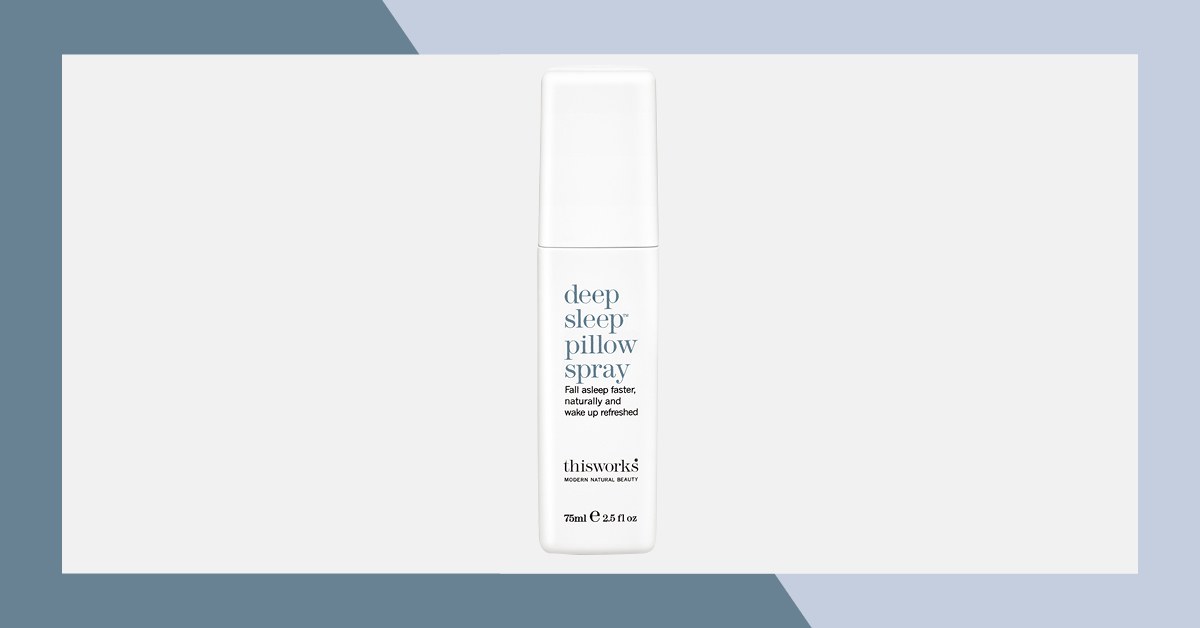
It’s not that they’re all entirely worthless. Most of the time any combination of these methods do help me fall asleep faster and stay asleep, but some nights I’m so lazy I don’t feel like getting up to take my magnesium supplement or plug in my diffuser. The one thing I can always muster up the energy to do, however, is pick up my bottle of This Works Deep Sleep Pillow Spray and spritz a few drops on my pillow and all over my bed.

I first heard about it a year ago during a work event and was immediately drawn to it because of how simple it sounded. It wasn’t a concoction I had to pre-make, a pill I had to swallow, or anything I had to assemble or put thought into. I literally just had to pick it up. So I took home a bottle and made note to try out the next time I was tossing and turning in bed. Spoiler: They didn’t overhype this spray. After my first time using it, I fell asleep quickly and woke up the next morning pleasantly surprised at how refreshed I felt.

The spray contains a blend of lavender, vetiver, and camomile and smells like a warm, soothing, calming hug. Lest that sounds like B.S., there are actually studies that show both lavender and camomile are scientifically proven to aid with insomnia. The fact that it takes almost no effort to use before bedtime makes it a no-brainer in my routine. The bottle never leaves my bedside, and the use of scent to aid in sleep is one of the most effective methods I’ve personally tried. Even though it’s not always a guarantee, I find that I’m able to knock out faster and stay asleep longer than when I don’t use it, and my sleep quality is noticeably better.

Also, because it’s relatively affordable (only $29) and under 3 fluid ounces, I can take it with me whenever I travel—which is especially key when it’s for work and there’s a time difference. Case in point: When I traveled to Paris for Fashion Week last September, it helped me wind down after 15-hour days of shows, showroom appointments, and meetings.

I might never be that girl up and ready to go at dawn, but at least I feel functional by the time I roll into the office. And that seems like a win enough.

This Works Deep Sleep Pillow Spray, $29, dermstore.com

Related Stories:
–I’m Hooked on ‘Sleep Water’
–Even If You Aren’t Expecting, You Should Try Sleeping With This Pregnancy Pillow
–I Can Sleep in This $8 Lipstick, and It Looks Exactly the Same in the Morning


Source link

Categories
Health

The Best Sleep Water to Help You Fall Asleep Naturally


I have a distinct memory from five years ago, when I was fresh out of college and happy to work until 2 a.m. on a deadline, of humble-bragging to my boss that I could get by on merely four hours of sleep. (“I just drink a Red Bull and I’m fine!”) She groaned an ominous warning: “Just wait.”

Now, at 29, I realize my youthful naïveté. Along with a newfound inability to handle the hangover I’ll get after two rosés, I’m now unable to function with any less than seven hours of sleep. As I’ve gotten older and more curmudgeonly about going to bed early, this hasn’t been too much of an issue. But a few months ago, on top of an already chaotic news cycle that’s wreaked havoc on normally sound sleepers, I found myself suffering from insomnia.

Not one to really ever prioritize my health (see: taking pride in sleep deprivation), I didn’t do much to seek out treatment. I caffeinated, I upped my under-eye concealer, and slogged through the day like a yawning zombie. That didn’t quite cut it. (Weird, right?)

But I had tried sleeping pills in the past and felt foggy in the morning, so I didn’t want to go down that road again. I’d heard about melatonin tablets and adaptogens—options normally lauded as solid natural sleep-aids—but already over-tired, the thought of having to road-test these and titrate the right amounts before landing on something that would work for me just exacerbated my agita. So my ill-advised solution was to pop an Ativan (which I’m prescribed, as-needed, for anxiety attacks), hoping it would knock me out. As you can imagine, this went horribly, as going off-label or against doctor’s instructions often does. Not only was this misuse of anxiety meds making me groggy, it was screwing with my mood.

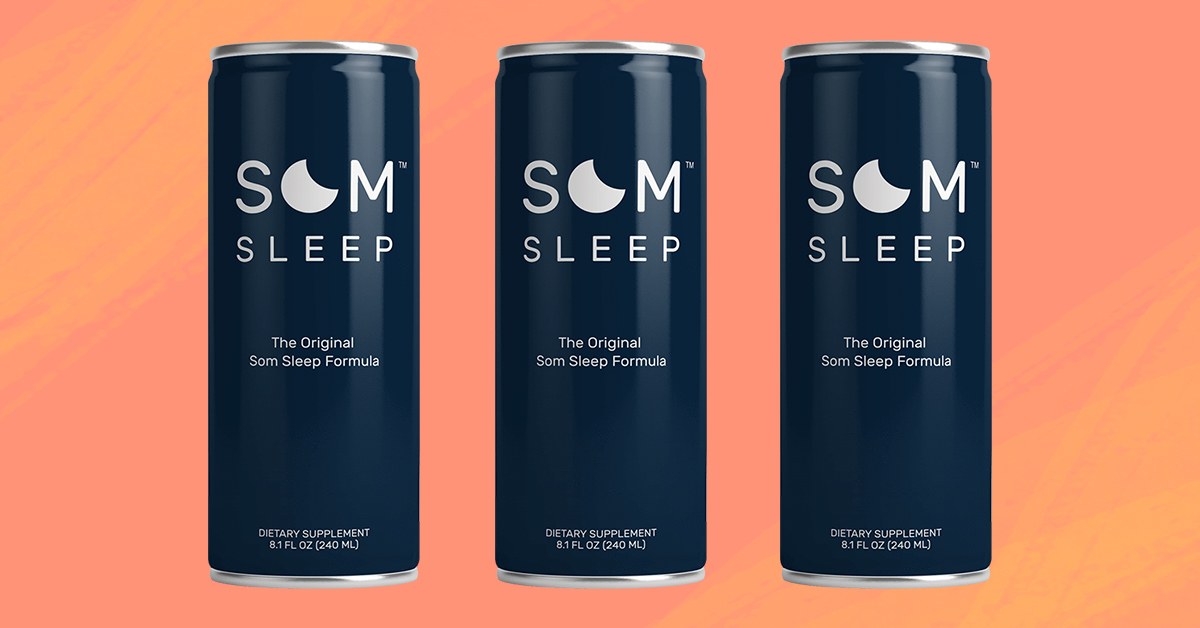
I’d recently attended Goop Fest, Gwyneth Paltrow’s bougie wellness summit, to share an outsider’s view on the convention. For my participation, I walked away with a literal suitcase full of health swag including everything from mushroom matcha mix to collagen protein bars to paleo supplements. I ended up giving away most of it with one intriguing exception: four bottles of Som Sleep’s “Sleep Formula.” A drink that promises to help you doze off, which I promptly placed in my fridge and forgot about for the foreseeable future.

I never heard of a sleep water before, but it wasn’t that hard to figure out. You put it in the fridge, and then drink it 30 minutes before you want to go to bed. From there, magnesium and melatonin (among other ingredients said to promote relaxation) go to work to naturally tell your body that it’s time to turn in. It’s essentially the anti-Red Bull. So, one night when I was having a particularly difficult time winding down, I remembered I had a case of this stuff stashed in my fridge and cracked one open. Fifteen minutes into the show I was watching, I started to yawn. By the time the credits were rolling, I was ready for bed.

I awoke the next the morning surprisingly refreshed. Getting up to my alarm felt a little easier, and come 4 p.m. that day, I wasn’t dragging and in need of another coffee. Since Som claims its formula is non-habit forming, I chugged one again the next night to the same delightful result.

An occupational hazard of working as a beauty editor is that I get access to, and then sample, all kinds of supplements. And something I’ve noticed among them, whether it’s “beauty water” or collagen drinks, is that many have a funky taste. This berry-flavored formula is a little more polite on the palate. There’s a slight aftertaste, but overall it’s actually quite refreshing (the original slightly moreso than the sugar-free version). And like most things that are Goop-approved, it comes with a lot of no‘s: no gluten, no dairy, no preservatives, and no artificial flavors.

As for a different no: By no means am I saying a sleepy-time supplement is a cure for anxiety or insomnia. It’s not. Eventually, I did make the call to loop in my doctor, who helped me land on a better anxiety-med dosage. That, I’m pretty sure, is what has ultimately helped me get better sleep. But at least once or twice a week when I still have trouble unwinding—these days, likely from a too-intense episode of The Handmaid’s Tale—I reach for one of these cans and feel the blissful effects of the sleep water at work. Whether it’s the placebo affect or the real deal, me and my full eight hours are not complaining.

Plus, it’s nice to be able to brag about my sleeping habits again.

Som Sleep The Original Som Sleep Formula, $30 for 12, amazon.com

Related Stories:
–Even If You Aren’t Expecting, You Should Try Sleeping With This Pregnancy Pillow
–16 Sleep Masks That’ll Help You Clock Those 8 Hours
–9 Ways to Bounce Back the Day After a Crappy Night’s Sleep


Source link