Categories
Health

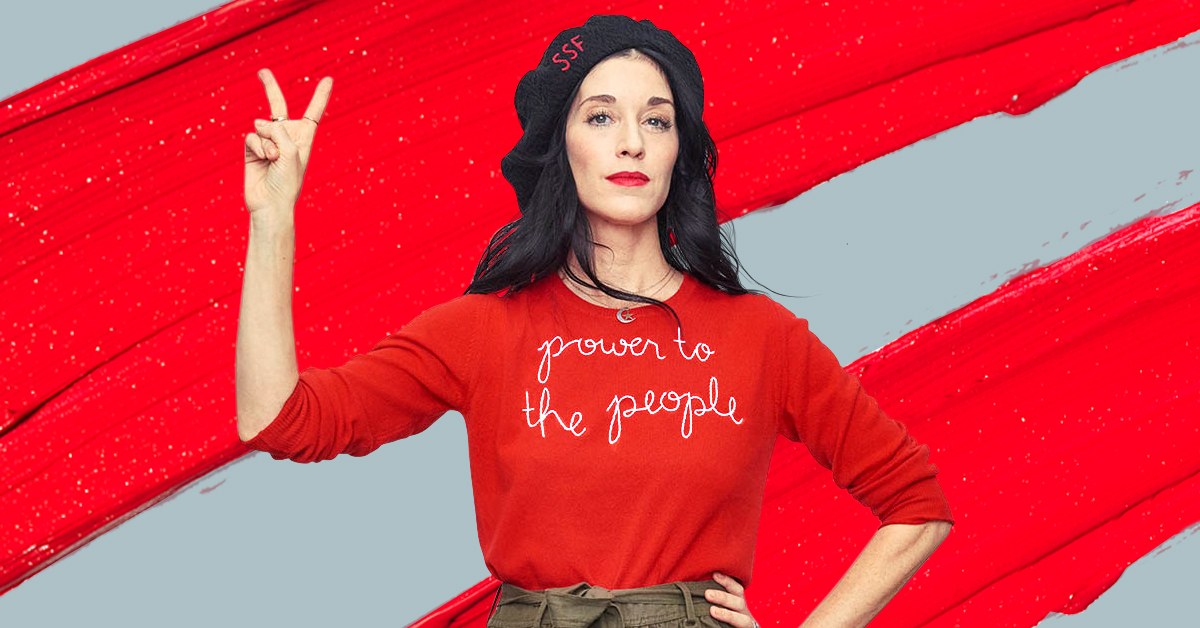
Sarah Sophie Flicker on the Feminist Power of Red Lipstick


Red lipstick has pretty much been my thing since high school. I couldn’t tell you precisely why or when that happened—it’s always represented my most authentic self. It makes me feel like me. And really, isn’t that what’s so empowering about makeup?

Of course, not everyone feels this way. I think there’s a false tension between beauty and feminism. That’s partly because most things that are coded as female are dismissed as frivolous or lacking value. I, however, refuse to believe that. So much of what girls and women are taught about our bodies and the way we look is a reflection of the male gaze. But it’s up to every individual to wade through what that connection—how they feel and look to the world—means for them.

For me, that means being critical of my own instincts and asking, Am I attracted to this because I truly love it, or am I trying to please somebody else? My husband claims that I’m the most beautiful when I’m not wearing a stitch of makeup. That just goes to show that, as much as I love him, I really do wear my red lipstick for me. And that choice is extremely validating.

What I also love about a red lip: There’s something profoundly unifying about how it works on everyone; we can all enjoy how it makes us look and feel together. A perfect example: At the Women’s March in 2017, many of the organizers turned up in Washington at 3:00 A.M. with full makeup, red lipstick included. By the end of the night, after we all marveled in the glorious day, we also marveled at how many of us were (a) still looking fresh 16-plus hours later and (b) wearing MAC Ruby Woo. We were all from different walks of life, with different skin tones, but that red was universal.

My one hang-up with wearing red is that line you can get across the middle of your lips as your lipstick wears. But I have a trick for that: I use a lip stain on the inside of my lips before applying lipstick so there’s no detectable line as the color wears. To make a serious lip last, I alternate between applying thin coats of lipstick and blotting for several rounds. If my lips are feeling dry, I put a coat of Sephora Cream Lip Stain Liquid Lipstick in Flame Red on top.

And while a red lip is my signature, there are plenty of times—say, when I’m out with my kids in the morning, makeup-free—that I feel just as good without it. Whether you’re wearing your “thing” or not shouldn’t determine how you feel about yourself. It should simply be a tool to make you feel like you are on fire.

Watch our tribute to the Women’s March organizers, Glamour‘s 2017 Women of the Year:


Source link

Categories
Health

Olivia Munn Calls for 'Foundational, Systemic Changes' to Put an End to Sexual Assault and Abuses of Power


Last month, among the sexual misconduct allegations that flooded the news after Hollywood producer Harvey Weinstein’s own alleged history of sexual abuse came out, Olivia Munn joined several other women in accusing producer Brett Ratner of sexual assault and harassment. Olivia told the Los Angeles Times that Ratner, after allegedly masturbating in front of her on a film set in the early 2000s, continued to harass her and started spreading rumors that they had consensually slept together. Of her decision to finally speak out against Ratner, Olivia told the Times, “It feels as if I keep going up against the same bully at school who just won’t quit. You just hope that enough people believe the truth and for enough time to pass so that you can’t be connected to him anymore.”

Now, as even more powerful men join the dozens already accused of sexual abuse in the past few months, the X-Men: Apocalypse star is calling for a total overhaul of the system that has allowed for these alleged abuses of power. In a powerful essay she wrote for Entertainment Weekly this week, Olivia advocates for systemic changes, including a zero-tolerance policy for sexual assault, that will, hopefully, prevent any further sexual misconduct by those in charge.

“In our world today—and it’s not just Hollywood, it’s the same for girls and women all over the world who have survived sexual abuse and/or harassment—abusers don’t usually get in trouble unless the victim is broken first, because the violating act alone is not damaging enough to spark society’s outrage. It’s a marathon towards self-destruction in order to gain credibility and a vicious circle of victim-blaming,” she wrote. “When people ask how these men in powerful positions were able to hurt so many people for so many years, I look to the people at the top and ask those questions.”

She continued, “This is not a ‘women’s’ issue, this is an abuse-of-power issue … and until we eradicate the diseased roots of our infrastructure and make foundational, systemic changes, nothing will change. We can use this moment to create a lasting shift. We should create a zero-tolerance policy with actionable consequences for sexual assault and any other forms of abuse. Heads of studios, bosses, and CEOs should enforce equal pay because continuing to pay us less perpetuates a bias that women are inferior.”

Olivia ended on a powerful note, asking for those already in positions of power not to be complacent in the corrupt system that allows for powerful people to take advantage of those below them. “If you’re already at the top or on your way there, please don’t hold us back anymore. Instead, stand with the rest of us—because the glass ceiling that hangs over me is the same glass ceiling that will hang over your daughters, sisters, nieces,” she wrote. “Together, our voices are mighty, powerful, and earth-shaking. We’re strong. We’re not afraid to call each other out—and we’re not afraid to call you out anymore either.”


Source link

Categories
Health

A Quarter of Women Have Faced Sexual Harassment from Someone With Power Over Them at Work


Between the sexual harassment allegations against Hollywood producer Harvey Weinstein and the flood of women sharing similar experiences through the hashtag #MeToo, workplace harassment is receiving more attention than ever (and it’s about time). What so many of these stories share is men using their power over women at work to get away with such behavior—and according to a new ABC News-Washington Post poll, this plays out in far more work environments than just Hollywood.

Of the 740 American women surveyed between October 12 and 15—just after the Weinstein allegations came out—54 percent said they had experienced unwanted sexual advances at some point in their lives. Thirty percent had this experience at work, and 23 percent received these advances from someone with influence over them.

But not all incidents of sexual harassment are getting the kind of attention that Weinstein’s have. In fact, the vast majority are go completely unaddressed. Seventy-five percent of the women surveyed—and 95 percent of those who had been harassed in the workplace—said men usually get away with this kind of behavior without repercussions. Given this pattern, it’s understandable that 58 percent of the women who had been harassed at work didn’t report the harassment. In fact, a recent Women Who Tech survey found that among women in tech who reported sexual harassment in their workplaces, only nine percent said their harassers faced punishment, whereas 35 percent said they themselves faced negative repercussions.

These are by no means the first data to show how disturbingly common and inadequately addressed workplace harassment is. Another 2016 survey found that 60 percent of senior-level women in tech had been sexually harassed at work, and 65 percent said these incidents involved someone in a position of power over them.

Of the 1,010 Americans surveyed for the ABC News-Washington Post poll, 75 percent said workplace sexual harassment was a problem, compared to just 64 percent in 2011. This change shows how powerful it can be for women to speak out through hashtags like #MeToo. In addition to creating an environment where other women feel more comfortable sharing their own stories, they’re letting people know that it’s long past time to take harassment seriously.


Source link

Categories
Health

Lady Gaga on Pop, Politics, and the Power of Women


Not even 24 hours after the presidential election results, Lady Gaga was protesting outside Trump Towers in New York City. Those who have followed the pop singer’s career shouldn’t be surprised by this: She’s always been outspoken about issues she believes in—from LGBTQ+ empowerment (“Born This Way”) to sexual assault awareness (“‘Til It Happens to You”) to the Black Lives Matter movement (see this tweet). Gaga’s transparency about everything—not just her politics—is one of the qualities fans love most about her. They see themselves in her—and she sees herself in them.

It’s why Mother Monster seeks projects and partnerships that “give back” to fans and allows them to see even more of her. She’s always putting them first and offering glimpses into her inner circle—whether it’s through Verizon Up, a new rewards program that gives customers the opportunity to snag VIP tickets and backstages passes to her Joanne world tour, or releasing a new documentary on Netflix, aptly titled Gaga: Five Foot Two, that was created by some of her closest friends.

Nearly 10 years into her illustrious pop music career, Gaga is still finding ways to connect with her fans. In that span of time, Gaga has also redefined what it means to be a pop star—especially a female one. She talks about that—plus politics, her documentary, and so much more—in our refreshingly candid chat, below.

GLAMOUR: You were the first woman to ever headline Wrigley Stadium last week. What did that feel like?

LADY GAGA: It was very special; I was very honored. I didn’t know until that morning when someone told me, so it was a surprise as well. I feel so lucky that I got to be that first woman performer, but I did say to the audience that I was so sorry they had to wait over 100 years for a woman to headline.

[embedded content]

GLAMOUR: You’ve been in pop music for over a decade. How different is the industry for women now versus when you started?

GAGA: It’s so interesting. When I started 10 years ago, things were very much about everybody being super perfect and glammed up [and] everything being clean and beautiful and a sort of very particular perception of a woman. I was always very against that; everybody always thought I was dressed weird or artsy or too creative. And then over the years everyone artistically loosened up in their own ways.

Now I see all kinds of avant-garde visuals and very unique senses of style for a lot of women. I think that’s how we’ve changed, and I don’t think I was the only person to do that. There were many of us, and it’s nice to see. It’s important for women to feel like they can break away from any particular image. Pink talked about that at the MTV [Video Music] Awards. I really like what she said about her daughter.

GLAMOUR: There were a lot of political messages at the VMAs, too. I know you protested Donald Trump’s presidential win the day after the election. How has the current political climate changed the way you approach your live shows?

GAGA: It doesn’t change how I do my live shows. It changes everything. What we’ve all experienced—it’s not just something I apply to when I’m on stage singing. I apply it to my life. These are our morals and our ethics and values on the line, so I carry them with me through my day and then on the stage.

GLAMOUR: This is a very scary time for many women right now. Where do you hope things go over the next couple of years?

GAGA: I hope that we continue a process of healing, as well as a process of continuing to help each other. More education for women. More jobs for women. More equal opportunities for women. More women to be taken seriously. And I think more than anything we wish to be heard and not to be shut down. I think this is a good thing to think about for any community; what is important is that our voices be heard and not swallowed in an abyss of history.

GLAMOUR: Do you have any hopes for women in music over the next couple of years?

GAGA: I hope to see women thriving and happy, loving what they’re doing, and being in control and powerful of what they create. You mentioned earlier what it meant to be a woman in this industry [10 years ago] and what it means [now]; I guess what I would say as much as we all love the fashion and the makeup and the glamour, this isn’t a beauty pageant. It’s about the heart and the drive and the work. Of course, it’s lovely to dress up and compliment one another and feel good—but that shouldn’t be the very first thing.

GLAMOUR: You have a Netflix documentary coming out in September. Why did you decide to do that? And why now?

GAGA: I, in a lot of ways, have not a lot to do with the documentary. I had a lot to do with it because I allowed them access to me. I decided when I allowed them to film and what I’d be OK with them filming. But this was a piece that was created by my friends because they wanted people to see me the way they do and to know me the way they do. It’s really for no other reason other than the sake of art and a documentary of friends who love each other. You know me, it’s not about the money a lot of the time.

GLAMOUR: What can fans expect from the documentary?

GAGA: I actually don’t know what to tell you because I haven’t seen it the whole way through. I’ve only seen little pieces of it. I do not really want to give much of my two-cents because I can’t be objective about watching myself, you know?

GLAMOUR: You also have this new partnership with Verizon Up. What drew you to that?

GAGA: I always like to give back to my fans and get them a little bit closer every time. I’m really excited that Verizon is partaking in that because it means more people get upgraded. We have people that come and do backstage meet-and-greets where I take a picture with them and they see the stage up close.

GLAMOUR: Final question: Next year marks the 10-year anniversary of The Fame. If you could tell your 2008 self one thing, what would it be?

GAGA: “Hold on.” That’s what I would tell myself. I would tell myself to hold on.

Related Stories:

Lady Gaga Messed Up the Lyrics to ‘Bad Romance’ in Concert and Recovered Like a Pro


Source link