Categories
Health

This Girls Soccer Team Was Penalized for Wearing 'Equal Pay' Jerseys


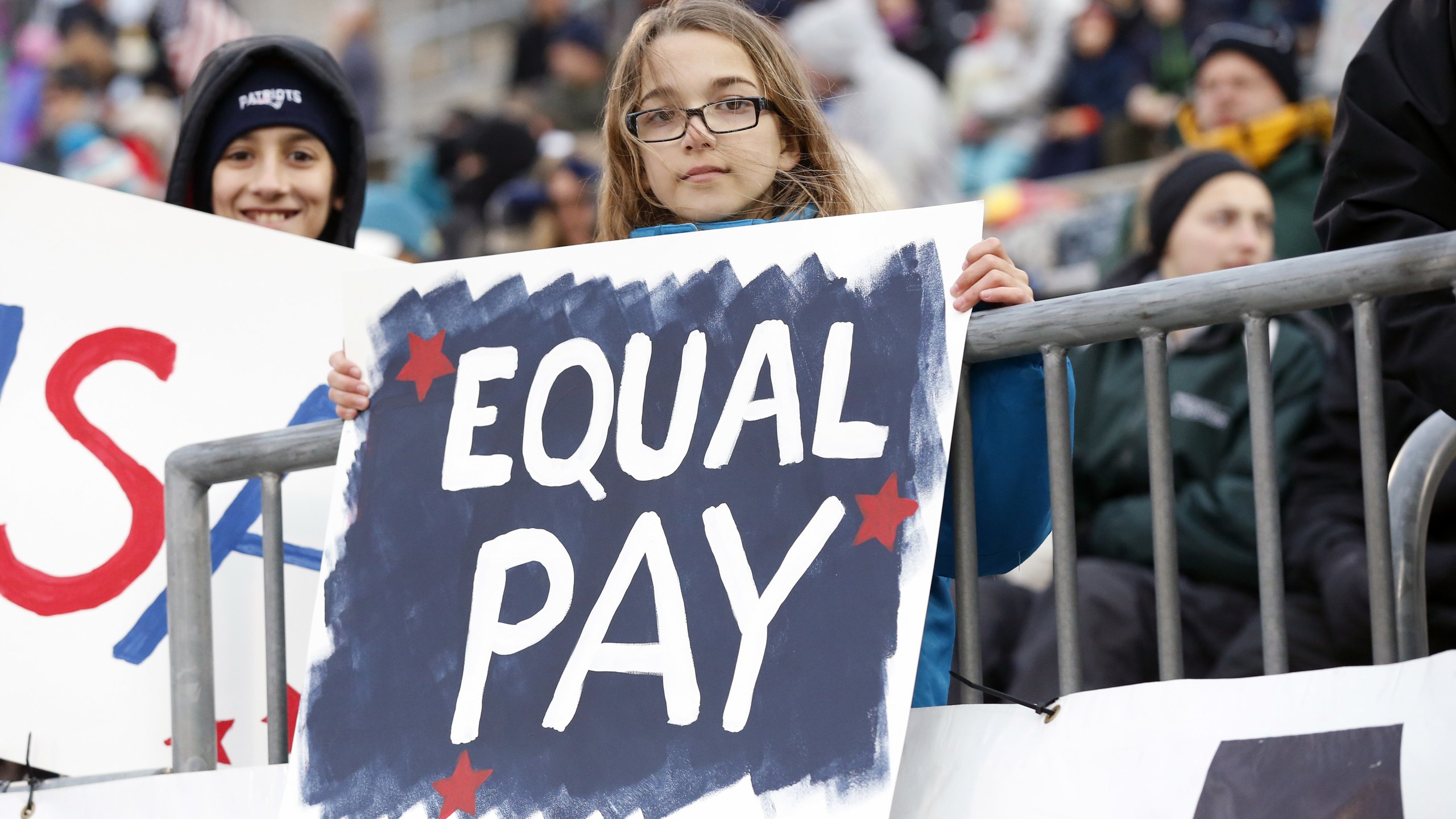
The fight for equal pay reached new heights this summer thanks to the U.S. Women’s National Team, led by Megan Rapinoe and Alex Morgan, who are suing the U.S. Soccer Federation over unequal pay. And girls in sports have been taking notes.

This weekend, a team of high school girls in Vermont took a stand for equal pay by taking off their soccer jerseys on the field to reveal custom t-shirts that read “#EQUALPAY.”

“I was really inspired after watching the U.S. Women’s National Team’s performance in the World Cup and Megan Rapinoe’s whole thing with equal pay,” said Maggie Barlow, a Burlington High School player, in a video. “It got me thinking that we should do a team dress up day where everyone wears shirts that say #EQUALPAY and spreads the message throughout school.” The girls team connected with an organization called Change the Story VT, which works for women’s economic equality in Vermont. “This is something that’s really affecting a huge population in the world and a lot of girls at our school and will effect us later,” added Lydia Sheeser, another player on the team.

To comply with the school district’s bylaws, the players wore the #EQUALPAY jerseys underneath their regular soccer uniforms, according to Good Morning America, but after they scored a goal with just three minutes left in the game, some of the players took off their jerseys—a Brandi Chastain-worthy celebration for the age of equal pay. The fans went wild, chanting “Equal pay!” like the Burlington girls had just won the World Cup.

But the celebration was cut short when refs issued yellow cards—i.e., penalties—to four of the players for “unsportsmanlike conduct.” The penalty was also reminiscent of the USWNT. The women dominated in the World Cup but were repeatedly dragged for their on the field celebrations. (Tea-gate, anyone?)

If anything, the penalty may have only helped to further their message. The girls went viral on Twitter and even earned shoutouts from Billie Jean King and Mia Hamm.

So far, the team has sold hundreds of #EQUALPAY jerseys, the profits of which will help to support girls soccer in Vermont. Men are asked to pay 16 percent more for a jersey—the size of the pay gap between men and women in Vermont.

“It was really empowering to know that we have people behind us that will support us in this,” Sheeser said. “It shows that we can actually make change.”


Source link

Categories
Health

French Tennis Player Alize Cornet Was Penalized for Fixing Her Shirt on the Court at the 2018 U.S. Open


It hasn’t even been a week since the controversy over Serena WilliamsFrench Open attire, and now the tennis world once again finds itself embroiled in a dustup over what is appropriate for women in the sport.

At the 2018 U.S. Open, French player Alizé Cornet was given a code violation by a chair umpire for removing her shirt on the court, after she realized she was wearing it backward. According to the official Women’s Tennis Association rulebook, female players can change their shirts only off-court. There’s no comparable rule for the men—some of whom, like Novak Djokovic, openly sat shirtless with no repercussions multiple times yesterday.

Cornet had just returned from a 10-minute heat break (it’s currently sweltering in New York), during which she changed her shirt. When she got on the court, she realized she had put it on backward, so she quickly took off the shirt and turned it around. The whole switch took about 10 seconds. The chair umpire who issued the code violation was male.

[embedded content]

Social media users were quick to call out the double standard in Cornet’s situation. That includes Billie Jean King, who wrote on Twitter, “This rule is outdated and impractical.”

Shortly after the incident, the U.S Open issued a statement to clarify its position. “Players who do change their shirts will not be assessed a code violation,” US Open director of communications Chris Widmaier said. “We regret that Ms. Cornet was assessed a code violation. However, luckily, she was assessed a warning only and there was no further penalty above a warning.”

“When possible, if a more private location is near a court and is requested, that player will be allowed to go to that private location to change, and they will not be assessed a bathroom break,” the statement continued. “We follow WTA procedures regarding bathroom breaks. A quick change of attire will not considered one of their two bathroom breaks.” Widmaier said no code violations for similar actions will be assessed going forward in the tournament.

While the U.S. Open may have backpedaled on the issue now, it’s all too clear that the powers-that-be in women’s tennis need to take a look at the ways they are policing their female players’ bodies and attire.

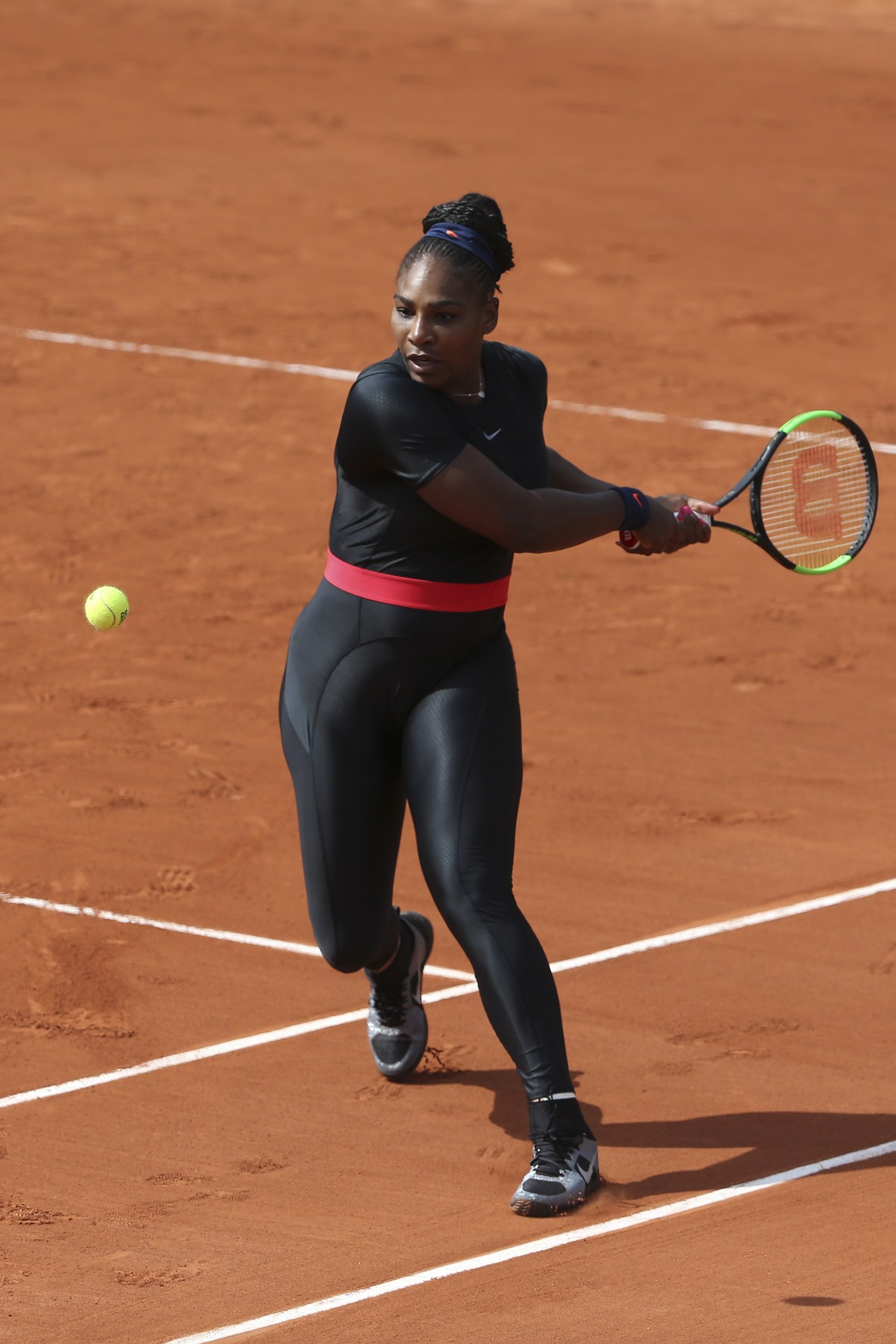
On Friday Bernard Giudicelli of the French Tennis Federation said they would “impose certain limits” on clothing that can be worn during the tournament, beginning with the 2019 French Open. This was in response to Williams’ catsuit (worn back in May), which he said went “too far” and would not be allowed next year.

PHOTO: Jean Catuffe

“It will no longer be accepted,” Giudicelli said. “One must respect the game and the place.”

In an interview with The Cut published today, tennis legend Billie Jean King said of the policing of women’s outfits on the court: “Fashion usually dictates our freedoms. Back in the old days, our wrists and our ankles couldn’t be shown. If you look at the fashion every decade in women’s tennis—which is very small—you can see how things are changing in the world for us: our freedoms, the way we dress, which is good. But I never hear them really talk about how the guys should dress.”

Related Stories:

Serena Williams’ Nike Catsuit Has Been Banned From the French Open

Serena Williams Has the Most Epic Response to the French Open’s Catsuit Ban

Nike Has the Perfect Response to That Serena Williams Catsuit Ban


Source link

Categories
Health

The U.S. Open Announces Female Athletes Will No Longer Get Penalized for Pregnancy Leave


The U.S. Open is making a major change to how it seeds female players for upcoming tennis tournaments: namely, by no longer penalizing female players who return to the sport after having children. It’s an institutional breakthrough and major win for women in tennis—and it comes after backlash surrounding Serena Williams‘ huge drop in ranking after returning to the sport from maternity leave.

After the French Open was widely criticized for their handling of Williams’ return to the tournament last month following her pregnancy—the former No. 1 was ranked No. 453 after her maternity leave—the organization has now spoken out to announce a change in post-maternity protocol, one that will no longer penalize any female player returning to the sport after pregnancy.

The Women’s Tennis Association, which ranked Williams at No. 451 following her maternity leave, also received backlash and mounting criticism for its inability to make seeding allowances specifically for pregnancies—though it does have a protection that grants them “access to eight events, including two Grand Slams, and wildcard entries into tournaments they previously won,” reports Fast Company. The organization has since said it would reconsider its position—but in the meantime, the U.S. Open has taken measures to move the needle forward on this issue by creating a special protection on seedings for women who return to the sport post-pregnancy.

The U.S. Tennis Association oversees the U.S. Open, and in an interview with The New York Times on Friday, USTA president and chairwoman Katrina Adams explained the reasoning behind the Open’s decision for seeding protection: “It’s the right thing to do for these mothers that are coming back. We’ve shown that we have been a leader over the decades, from equal prize money onward to what we are doing today.”

“We are all about social justice and equality, and this is definitely an instance of equality,” she continued. “We think it’s a good message for our current female players and future players: It’s O.K. to go out and be a woman and become a mother and then come back to your job, and I think that’s a bigger message.”

Adams went on to say that forcing a player to come back from pregnancy at a lower position than when she left would be like asking a top executive to return from pregnancy leave at an entry level position in her company.

“I’m a former player and I get it,” she continued. “I would not want to be the No. 32 player in the world who has worked hard in the last year to obtain this ranking. But we’re a Grand Slam, and we have the right and the opportunity to seed the players according to what we feel is justified.”

“Serena Williams is arguably the greatest player to ever play, with 23 Grand Slam titles,” Adams said. “She deserves the respect to be put in that position.”

Related Stories:

Serena Williams Has the Perfect Response for People Who Call Her ‘Manly’

Serena Williams on the Pressure of Motherhood: ‘I’m Not Always Going to Win’

Here’s Why Serena Williams Is Pulling Out of the French Open


Source link