Categories
Health

News Anchor Frances Wang on Being on-Air With Perioral Dermatitis


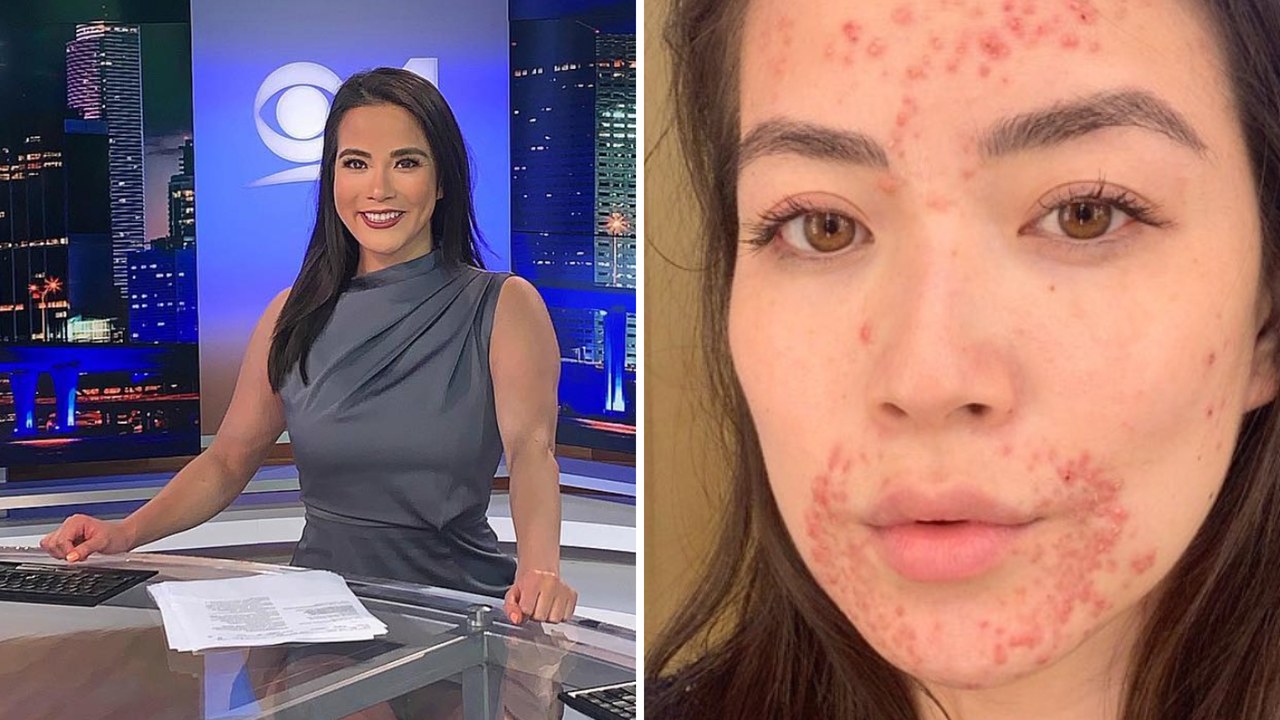
For CBS Miami news anchor Frances Wang, broadcasting her face to thousands of people is just another day at the office. While that might sound terrifying to some, for Wang it’s always felt like second nature. But over the summer she was dealing with a skin condition behind the scenes that made her second guess everything. After months of covering her face in makeup, she shared her experience on Instagram and went viral. In her own words, she opens up about what it was like to be on TV when she wanted to hide, and how going public changed everything.

For the majority of my life, I’ve had clear skin, save for the occasional eczema flare-up—but it was never anything that affected my work or me personally. So when I moved to Florida last December from Los Angeles, I thought it would actually be better for my eczema. A more humid climate would help with dryness and flakes, right? Instead it got worse. Much worse. I went to see a dermatologist for the first time two months later, and was prescribed topical steroids that I used through spring.

After I ran out of my second refill, I started to see my chin break out. At first I thought it was just stress, but then it started spreading—fast. I was diagnosed with perioral dermatitis, which I learned is kind of a general term; it just means inflammation around the mouth. But in some cases, a rash can develop elsewhere on your face—on your eyes, your nose, your forehead, the latter of which happened to me.

I’m someone who tends to make light of everything. I used to post photos on Instagram Stories like, “Oh, look at this pimple!” But once it started spreading, I wanted to hide. When it got bad enough to the point where I couldn’t cover it on-air, I became incredibly self-conscious. Obviously I tried to cover it with makeup, but the more it spread, the harder it was. No matter how much makeup I put on, the redness and bumps still came through. Sure, you can put a filter on a photo and people on social media might not notice. But on TV, in the studio with the lights and 4K HD cameras, you couldn’t miss it. Over the summer I started noticing you could see it when I was anchoring, and in July I went into full-blown panic mode.

At that point, I didn’t only dread going on-air, I didn’t even want to leave my building. I even called a friend and said, “I’m not meant to do this, I need to find a different career.” Whenever the shot was on me (before going to a package or a pre-taped segment), it felt like an eternity. Saying three sentences felt like a whole paragraph, and I was so nervous I found myself messing up on air. My once rock-solid confidence had completely crumbled. I also got a lot messages from viewers. Most were trying to help, but there were a few mean ones that really threw me off and would make me cry.

I think the worst part was waking up in the morning, looking in the mirror, and feeling like it looked painful. I knew I shouldn’t be embarrassed—it’s not something washing my face or slapping on an acne serum could fix—but I was. Doing my makeup was also taking longer because I’d begin tearing up and would have to start over. Sometimes I would just sit there in front of the mirror and feel down. I was in my head a lot. I’d try to give myself pep talks to “suck it up” or reassure myself that people wouldn’t stare or judge. Obviously that wasn’t the case, but I can’t blame people for noticing.


Source link

Categories
Health

CNN Commentator Angela Rye’s On-Air Hair Is an Act of Resistance


When I was growing up, I would always go to my cousin Mia’s beauty salon, A New You, in Seattle. For me it was more than a place to get your hair done; it felt like going to church. You could get your head right and your heart right all at once.

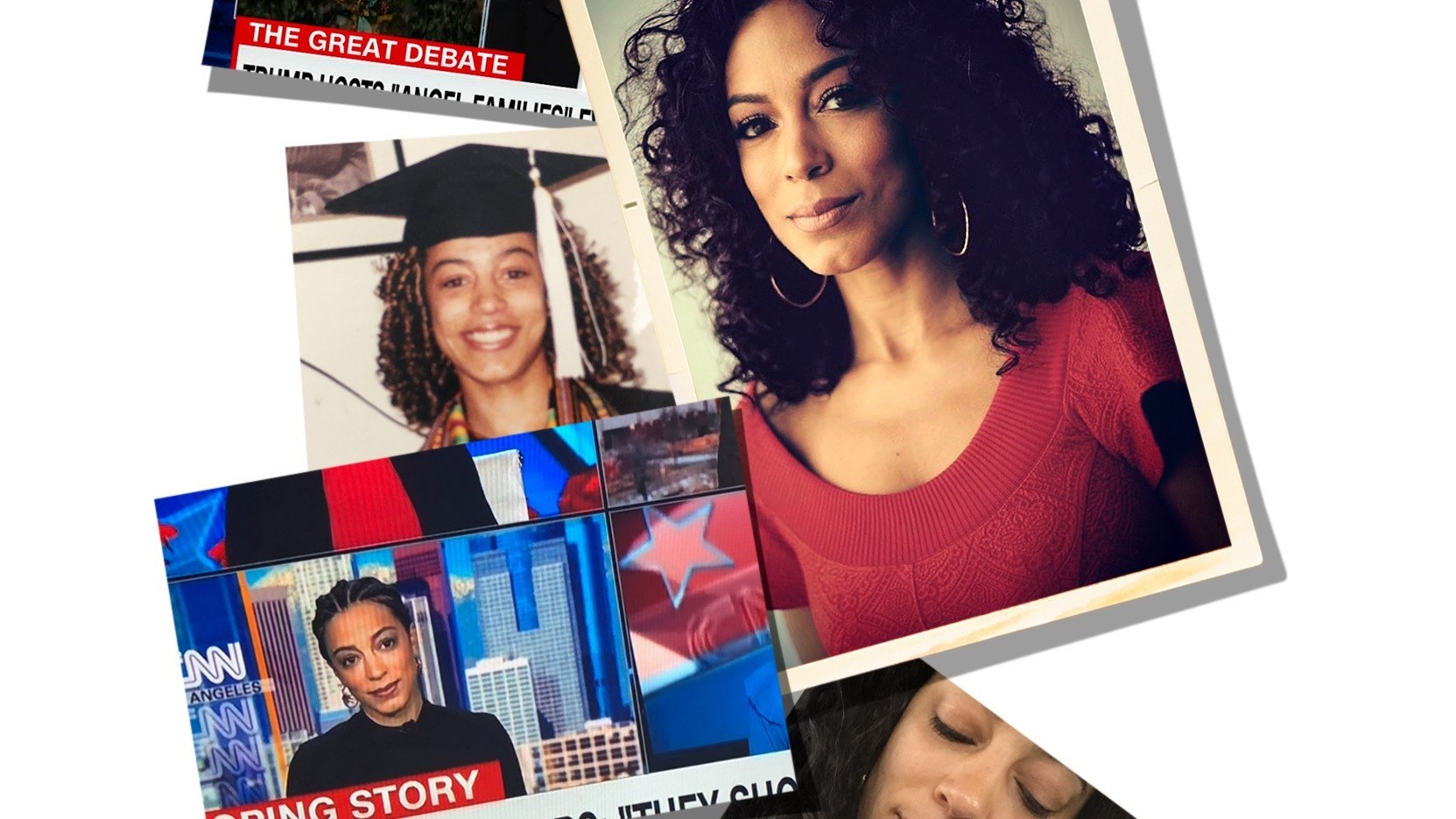
I used no-lye relaxers until I was 19. I remember my mom putting the solution on my bangs, which made them stand straight up. Then my cousin told me that my new hair growth at the roots flatironed better, so I stopped using the relaxer and grew it all out. I’ve been natural ever since. Now there are very few days that I’m not in the public eye, either on CNN or at events. When someone recently suggested that I shouldn’t wear my hair curly on TV, my response was, “For little black girls everywhere, I’m going to wear it curly!”

Here’s what I think people misunderstand about women of color and our hair: It has range—just like us. We don’t have to commit to only one style. Yet we’re typically portrayed a certain way in the media. There are people of color losing their lives in this country because people don’t get us, and you might say, “What does that have to do with hair?” I say: Everything.

Hair is another form of cultural misunderstanding. I thought wearing my hair on CNN in cornrows wasn’t a big deal. I didn’t think twice about it. But a number of black women responded, saying, “Oh my God, thank you so much for doing this. Now I know I can do this in a professional setting.”

A lot of people are just starting to accept that how black women wear their hair is a form of self-expression. I’m not going to do mine the same way every day—that would take away all the creativity and fun. After so much heat styling, though, my curls look more like loose waves. Because of that, I’ve been making an effort to protect them by using a no-suds shampoo by Hair Rules and working with my hairstylist, Johnny Wright (he used to do Michelle Obama’s hair), to occasionally incorporate extensions or wigs so there’s no need for heat-styling or tugging. Johnny is the genius behind the range of looks you see me rock on TV and on Instagram, everything from braids to straight hair to ringlets.

When people ask my advice about wearing their natural hair, my response is always the same: Do you. If someone is not allowing you the space or respect to simply do what you want with your hair, you’re going to be restricted in so many other ways. Don’t be afraid to stick up for yourself. And you know I’ll be doing my part to continue to empower my sisters so that they can wear their hair exactly how they want to.

This story originally ran in the October 2018 issue of Glamour.

Related Stories:
This Meteorologist Had a Powerful Response to a Complaint That Her Hair Wasn’t ‘Normal’
Sanaa Lathan: ‘Natural Hair Is Beautiful, but It Should Be a Choice’
Lupita Nyong’o Says Women Are Still ‘Shunned’ for Their Natural Hair


Source link

Categories
Health

*Bachelorette* Fans Are Divided Over Garrett Yrigoyen's On-Air Apology


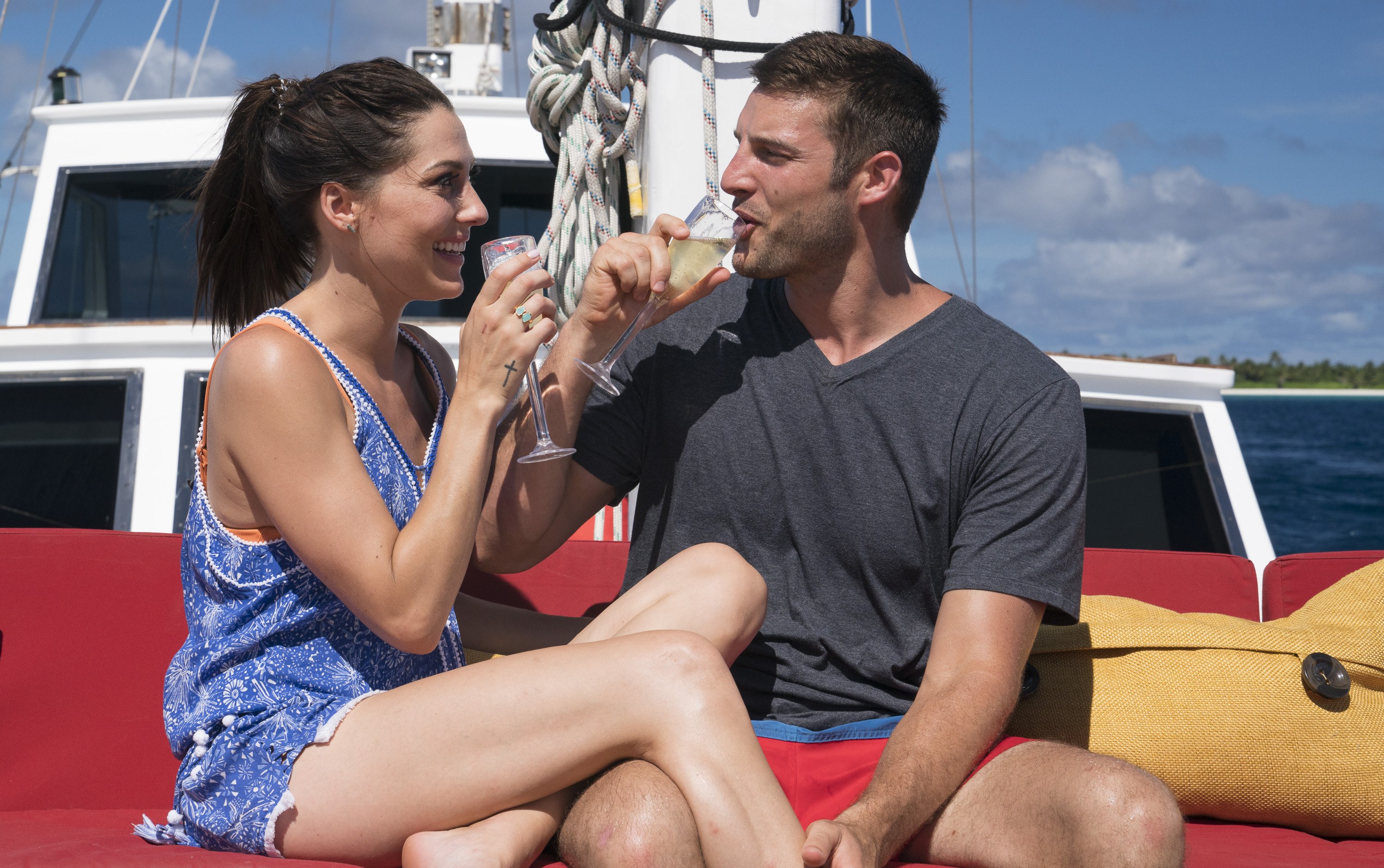
Last night, Becca Kufrin surprised exactly zero people when she picked Garrett Yrigoyen on The Bachelorette season finale. She didn’t even surprise his opponent, Blake Horstmann, who straight-up said at one point during the episode that she’d pick Yrigoyen. Of course, Horstmann’s breakup with Kufrin was still very emotional (and sweaty), and led to a legion of Bachelorette fans taking his side on Twitter.

But Horstmann’s heartbreak isn’t totally dominating The Bachelorette conversation right now. Hundreds of fans are also chattering about Yrigoyen’s on-air apology on After the Final Rose, where he addressed those Instagram likes unearthed a few months ago. If you missed that, here’s a quick breakdown: In May, Bachelor alum Ashley Spivey tweeted out screenshots of Instagram posts Yrigoyen supposedly favorited back in the day. The post topics ranged from alleging a survivor of a school shooting was a “crisis actor” to criticizing young boys who use makeup. Yrigoyen posted a statement shortly after the controversy broke, writing on Instagram, “I sincerely apologize and am sorry for any hurt, damage, or offense I may have caused.”

He doubled-down on this during After the Final Rose last night. Read his on-air apology, in full, below:

“I didn’t realize the effect of a double tap or like on Instagram, so I put out an apology. I didn’t mean to offend anybody. I apologize for that still. I’m very sorry. I didn’t meant to hurt anybody’s feelings or do anything like that. So, I stand by everything that I posted in my apology. I’m just trying to grow as a person, be a better person on a daily basis. She’s helping me through everything. We’ve been honest and open and transparent with one another since the beginning; and when that all came out, we attacked it because I feel like when I was liking things it was going against what she stands for. And that made it really hard on us as a couple. So when we started talking about that we got through that together. We’re growing, we’re progressing, and we’re moving forward.”

Bachelor fans, however, aren’t fully satisfied with his statement. Many took to Twitter and criticized the fact Yrigoyen apologized for offending people but didn’t denounce the actual Instagram posts. Below, check out some responses.

A few came to his defense, though, saying Yrigoyen’s apology seemed sincere and that he’s perfectly capable of change.

Kufrin said on After the Final Rose that she doesn’t “condone” Yrigoyen’s Instagram activity but still thinks he has a good heart. “I know that he stands by his apology,” she said. “He feels so bad for everyone that he did offend, and he didn’t mean it, but I just want to move forward and to learn and to grow and to continue to educate ourselves and that’s all that you can ask for in another person, that somebody who recognizes they made a mistake and did something wrong and want to learn and grow from it and that’s what he showed me.”

Related Stories:

The Bachelorette Season 14, Episode 11 Recap: Becca Kufrin and Garrett Yrigoyen Are Engaged

Looking Back at Becca Kufrin’s Best—And Sparkliest—Bachelorette Looks

A Complete Breakdown of the Garrett Yrigoyen Controversy on The Bachelorette


Source link