Categories
Health

Men Are Pressuring Cardi B to Forgive Offset—and It Needs to Stop


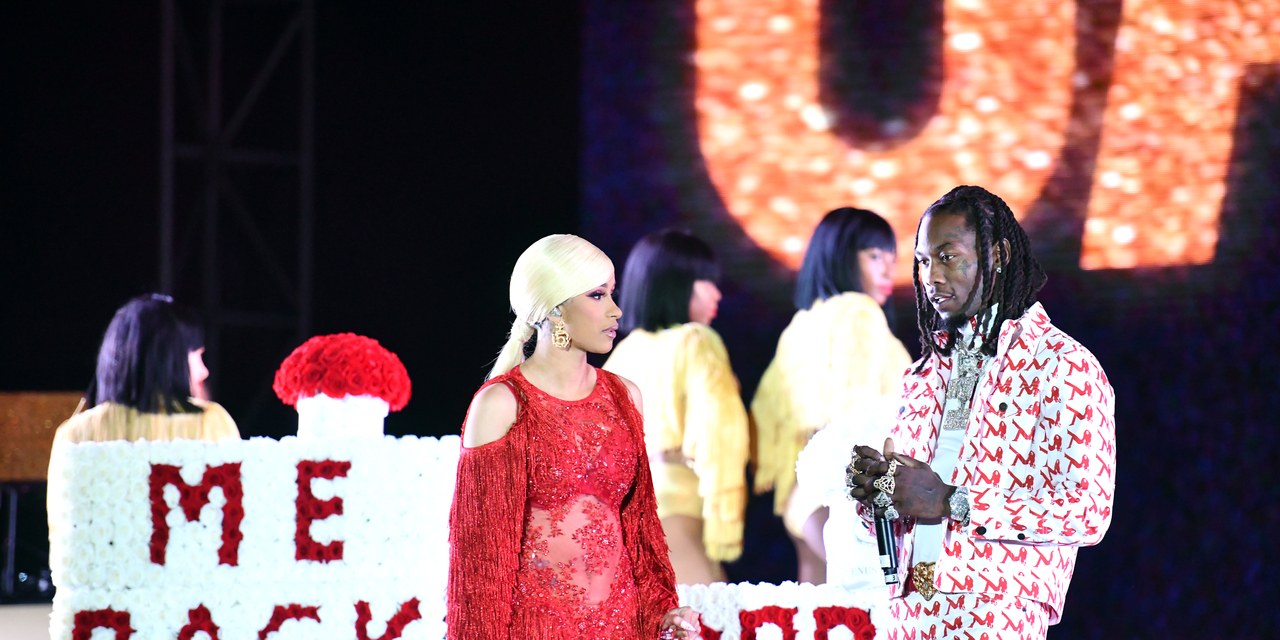
This past weekend, Cardi B should have been celebrating one of the biggest moments of her career: She’s the first woman ever to headline Rolling Loud, the largest hip-hop festival in the world.

Instead, her estranged husband, Offset, crashed her performance and begged her to take him back in front of thousands of people—but this literal public display of affection did not go well. Cardi was clearly uncomfortable in the moment, and later posted on social media to make it clear that she needs time and privacy. (Something Offset did not respect, FWIW.)

It was an understandable response given their relationship has been plagued by rumors of his infidelity since before the couple even married. And yet, rappers like T.I., 21 Savage, 50 Cent, and The Game have all taken it upon themselves to chime in on Cardi and Offset’s relationship, telling Cardi she should forgive her husband.

“Now, I don’t know all the dynamics between you two nor does anyone else on the Internet, but what I do know is you guys look great together,” The Game said on Instagram, according to Rolling Stone. “It’s only right you guys reunite immediately for the good of you guys family unit.”

“Take Offset back Cardi B,” T.I. wrote on social media. “Ain’t nobody perfect.” 50 Cent commented on a post of Cardi’s, telling her to go “home” to her ex. “No Divorce,” he added. “Ok chill out.”

Offset was the one who broke his vows, but somehow it’s up to Cardi to do the emotional labor of putting it back together? I call bullshit. His appearance at Rolling Loud was both unjustified and unwelcomed—and I’d go so far as to call it manipulative and toxic. By trying to publicly pressure Cardi into forgiveness, Offset’s shifted the focus from how he cheated to the extremes he’ll go to win back her love. But not only is this unfair to Cardi—the responsibility of their future now rests squarely on her shoulders—it’s potentially harmful to her career. After all, who will remember Cardi’s Rolling Loud performance as a historic moment for black women now?

I take issue with the (male) celebrities’ support for Offset because it speaks to how black women are often treated in relationships, and it reinforces the belief that we have to suffer if we want to be loved. The “ride or die” trope, which posits that women are supposed to stick by their significant other regardless of their behavior, has been prevalent in our culture for decades. Black women are never afforded to be anything but loyal in romantic relationships, while black men’s cheating is often considered a minor indiscretion or growing pain. Just look at Jay Z and Beyoncé: Lemonade is a powerful album about her anger over his infidelity, but she ultimately stands by her man; meanwhile, on 4:44 Jay Z offers up lyrics like, “I apologize, often womanize. Took for my child to be born [to] see through a woman’s eyes.”

Our entire existence is constantly being assessed by our proximity to men. When we wear too much makeup, we’re trying too hard to attract a partner. But if we don’t wear enough, we’ll never get one. When we want our partner to be ambitious, we’re a gold digger. When we distance ourselves from an unhealthy relationship, we’re selfish and destroying our family. This pattern is not just frustrating—it’s potentially dangerous. Take singer-songwriter Kehlani, who was accused of cheating on her boyfriend Kyrie Irving last year; the subsequent flood of social media was so horrible that she was hospitalized after a suicide attempt. In the U.S., black women face higher rates of domestic violence than white women.

The point is, whatever Cardi decides—whether it’s to leave Offset or to reconcile with him—that’s a decision she needs to make alone. She can’t pacify the court of public opinion, but she can declare her worth as a black woman.

Candace McDuffie is Boston-based writer with bylines in Entertainment Weekly, Vice, Forbes, Glamour, Vibe, and more.


Source link

Categories
Health

Boys Being Boys: Imagine a World Where We Can Forgive a Few High School Indiscretions


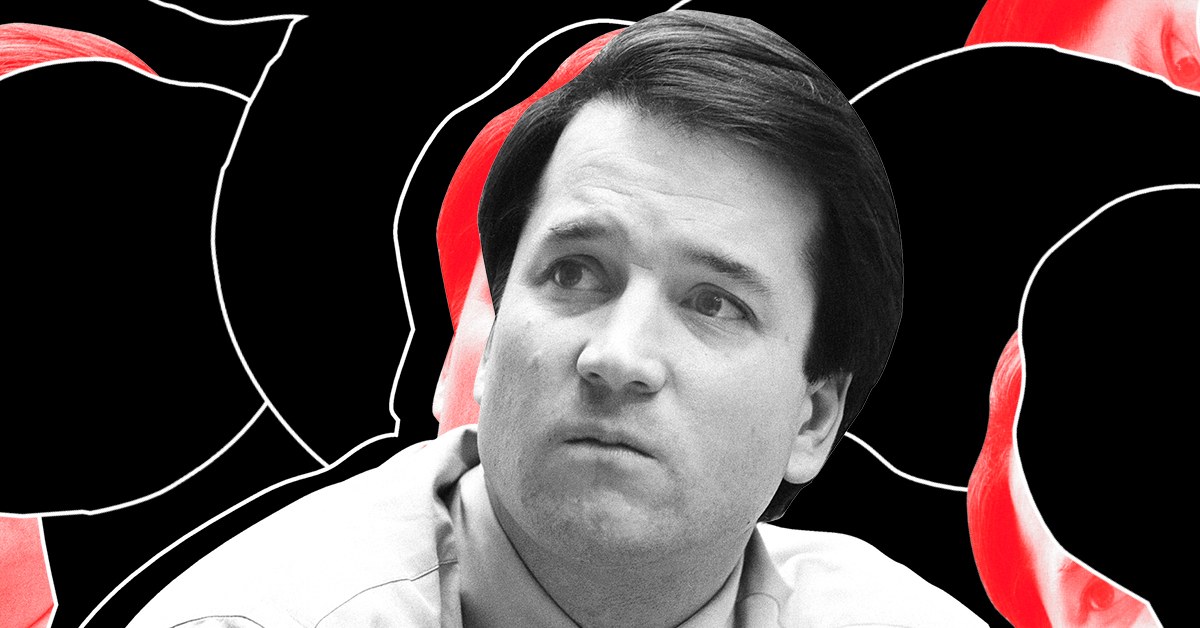
The world exploded with commentary when news broke about Christina Blasey Ford’s accusations that Supreme Court nominee Brett Kavanaugh had attacked her in high school. Soon enough, there it was: Fox News contributor Ari Fleisher, trying to speak “with a lot of sensitivity,” asked, “How much in society should any of us be held liable today” for an “issue that took place in high school? Should that deny us chances later in life? Even for a Supreme Court job, a presidency for the United States, or…you name it?”

It’s the question countless men across America have been asking: Isn’t there a statute of limitations for the dumb shit we did way back when? We know men are pondering it—publicly or privately—because we’ve heard it before. Brock Turner’s father used the same defense when he said his son shouldn’t be incarcerated for “20 minutes of action,” a.k.a. sexually assaulting an unconscious woman behind a dumpster. Listen closely to the clip of Fleisher, and it sounds like someone on the Fox set might be applauding.

To be fair, I think we all made mistakes in high school that we’d rather forget. And behavior that inspires a pseudonymous character—Bart O’Kavanaugh, who pukes in someone’s car—in a friend’s book about high school drunkenness and hookups probably makes that list. I’m sure he’d like some takebacks, just as I’m sure he doesn’t ever want his daughters to feel as terrified as Blasey Ford says she was that night.

That high school “issue”? Blasey Ford has been unable to forget it. There’s been no statute of limitations on her trauma. She told The Washington Post that what happened that night caused her to struggle to have normal relationships with men, led her to spend hours (and presumably thousands of dollars) in therapy. We don’t know what chances all of that might have denied her later in life.

To ask if we can just close the book on teenage antics means normalizing bad behavior. (Even today the tendency is to let guys off the hook or let the past be the past: In a Glamour/GQ survey, only 38 percent of men said #MeToo had made them reevaluate their past sexual experiences; a full 84 percent said they worried accusations of sexual misconduct could harm the reputations of men who don’t deserve it.) We need to ask why we still cannot create a world where Christine Blasey Ford, or the more than 320,000 women who are assaulted each year, feel comfortable coming forward.

I’ve reported on stories of sexual assault and violence for years, and time and again women have told me how no one believed them, or how they were told there wasn’t evidence damning enough to get any attorney to take their case. Imagine if a detective like Andrea Munford, who listened to each and every young woman who had been molested by Larry Nassar, had sat with Blasey Ford, taking down information, phone numbers, and details to build a case. Imagine she interviewed the eyewitness at the party who quoted in his yearbook a line from a Noël Coward play: “Certain women should be struck regularly, like gongs.” Let’s imagine that, instead of the current rate of just one percent of cases being referred to a prosecutor, it was commonplace to send credible cases up the chain, and that a district attorney would have seen no risk to his chances for reelection if he took the case.

In a justice system like that, it’s reasonable that the attorney could have gotten a conviction. That the judge wouldn’t have suggested that she was “flattered by the attention.”

If all that had happened, we wouldn’t be debating why Blasey Ford and so many other sexual assault survivors hesitate to come forward. We wouldn’t be gambling on whether the second nominee by President Trump (a man who hasn’t been denied any chance later in life, even the presidency, for an adult decision, let alone a high school one) would be confirmed; with this evidence in the FBI files, Kavanaugh never would have gotten the nomination. It’s likely that he wouldn’t have gotten the opportunity to work with Kenneth Starr. He probably wouldn’t have been selected for a coveted clerkship in Justice Anthony Kennedy’s office. He might not have been accepted to Yale University or Yale Law. Has Kavanaugh been denied chances? Not a one so far.

(If we want to talk about some other denied chances: Maybe there was another bright young woman who was thisclose to getting into Yale, but got rejected because they needed just one more white guy from a prep school. Maybe another woman studied her ass off, made law review, and was a finalist to clerk at the Supreme Court—but was told, “Nah, not this time, we like this other guy, whose parents both went to law school and whose mom is also a judge.” Opportunities denied? You bet.)

In a world where Blasey Ford felt comfortable coming forward, perhaps the detective and prosecutor of her case might have decided to settle the case in a plea deal. (Only 7 percent of sexual assault cases end in a felony conviction, according to RAINN, the Rape, Abuse, and Incest National Network.) With a lenient 30-day prison sentence, Kavanaugh might have seen firsthand the effects of the school-to-prison pipeline, or realized that our gun policy in America should be based less on “text, history, and tradition” and more on what’s really going on in the streets and in schools. Or maybe in this fantasy world, Kavanaugh and Blasey Ford would have agreed to resolve the case through restorative justice: Kavanaugh listening to how terrified she had been that night, how it haunted her life afterward. Maybe he would have agreed to attend sexual assault prevention training, where he’d learn how to stand up to the grabby drunk guy at the party or a leering CEO in the boardroom, or really anyone who proclaims they like to grab women by the pussy.

And perhaps he never had to check the box. Perhaps he was still able to pursue his lifelong dream of practicing law. His ability to see issues from both sides impressed colleagues. His sensitivity about complex topics even won the attention of a White House that called for his advice on things like prison reform and sexual assault reporting. Maybe, just maybe, that led to a SCOTUS nod. In front of the Senate Judiciary Committee he had to make a case that, despite this flaw in his record 36 years ago, he deserved a spot on the highest court in the land.

A guy who faced his high school indiscretions and mistakes? I think I could get behind someone like that.

Wendy Naugle is the Glamour executive editor.

MORE: Read This Before Asking Why Christine Blasey Ford Waited to Tell Her Brett Kavanaugh Story


Source link