Categories
Health

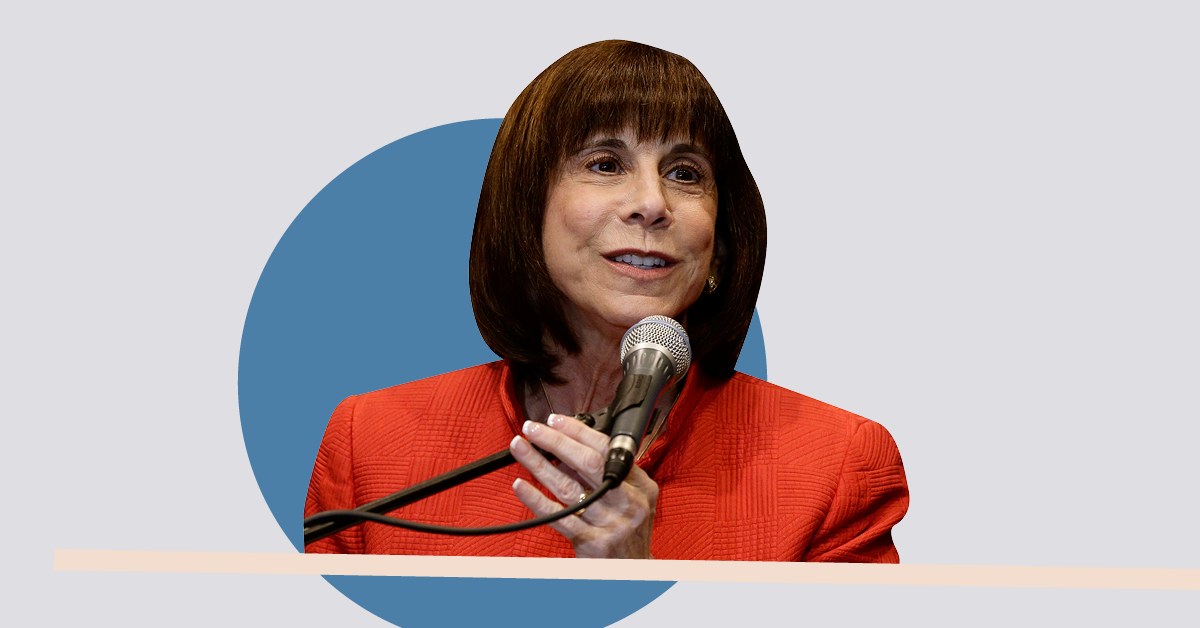
Kathy Manning Lost in the Midterm Elections. Her Daughter Writes about What She Saw Her Mom Win.


Eleven months ago, my mom decided to run for Congress in the 2018 midterm elections. Last night, I felt prouder of her than ever.

Here’s the catch—she lost.

From the beginning, the experience watching my mother run was inspiring. Last December, Kathy Manning decided it was time to step up and take action; she couldn’t just stand by and watch as our country veered down a dark and twisted path.

Her decision to run pushed me to quit my own job to do something I felt was more important, too. I started a new audio-first media company to tell the stories of women like her. Through that work, I realized that my mom was by no means alone in her quest to preserve the values that really urge our country towards greatness. I got to know 12 other women running for the House, each of whom said in one way or another, “If not me, who? If not now, when?” Each of whom felt the personal impact of policy and said, “The arc of the universe may bend towards justice, but we’re going to have to push it.”

As Election Day grew ever closer, I spent afternoons knocking on doors in areas of my home district I had never visited. I met strangers at their homes, at churches, in restaurants, and on streets who were so inspired by Kathy Manning that they beamed at the opportunity to shake my hand.

Through grueling, seemingly never-ending days of work, my mom shined. She listened to the concerns of people throughout the district and nightly reported back stories of the tenacity of the people in our area.

Still, she lost. It would be lying by omission to gloss over the pain and anxiety of last night. The race was an uphill battle from the start—North Carolina’s districts have already been deemed too gerrymandered by the courts. They were cut with “surgical precision” to keep districts, including the 13th, where she ran, red. At the first signs of a loss, I felt both wired and deeply saddened.

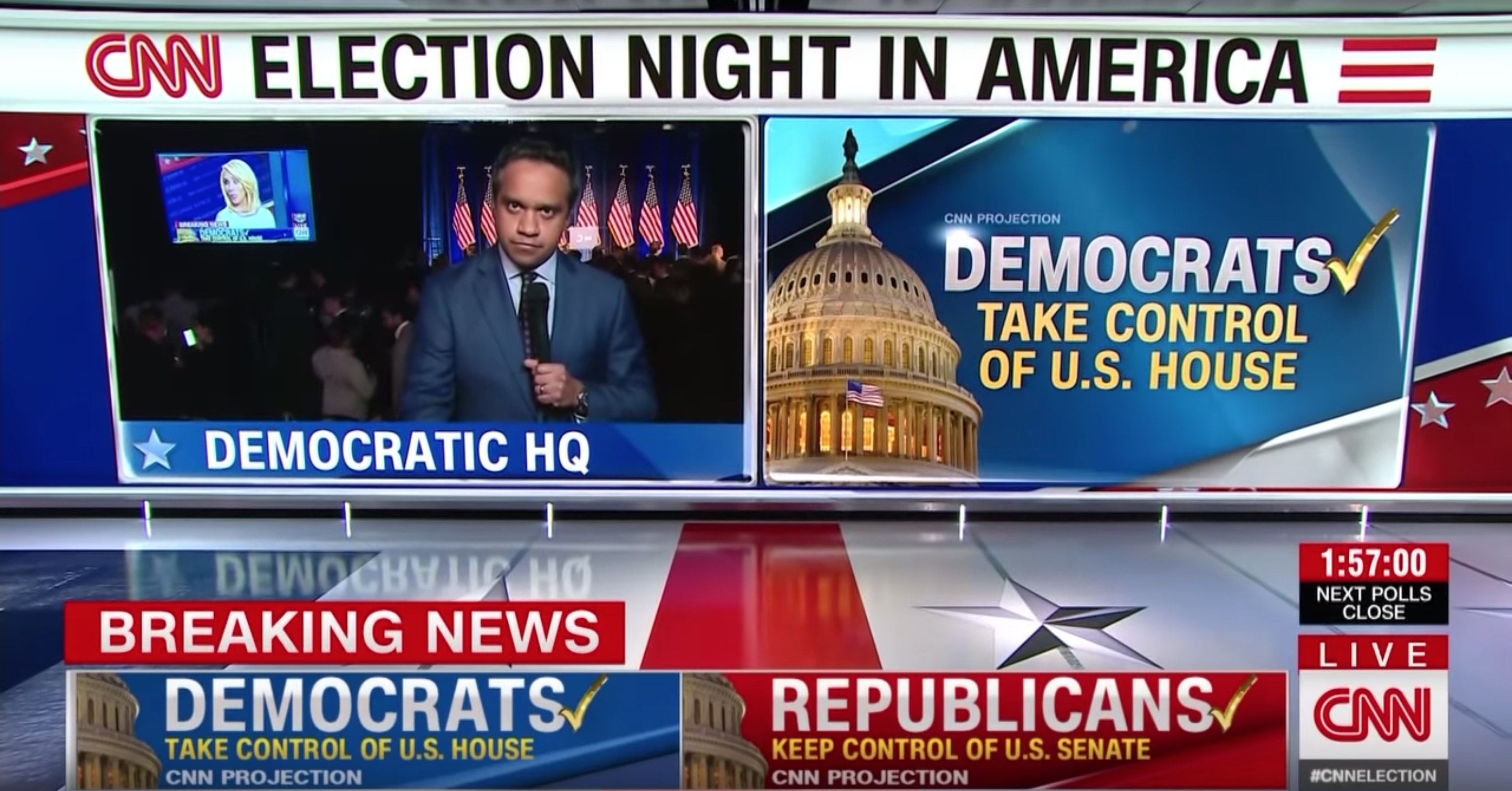
Enter Kathy Manning. She arrived at the watch party without any sign of tears. She embraced person after person with love and gratitude for the hard work done by all. She asked about other women she knew were running throughout the country, and she was happy to hear so many of her peers won. A record number of women will serve in our next House of Representatives and her fellow Democrats retook the chamber.

When my mom took the stage to speak, she proved once and for all, that Kathy Manning is not just the leader we wanted, she’s the leader we need.

As I looked out at the crowd during her speech on election night, I saw the faces of hundreds of people filled with love, propelled by hope, moved to keep on fighting. She said it better than I ever could: “Because what really makes America great is our desire to be a land of opportunity for all. What really makes us great is our history of setting high ideals and striving to meet them. We may stumble along the way, but we must continue to fight for what is right.”

Kathy Manning’s run for Congress was just the beginning. The way she acted when faced with defeat stoked a full-on fire of activism—not just within me, but within people across the North Carolina’s 13th District and across the country.

A better future can be a reality. Some parts of the country felt it last night. Some didn’t. But midterm elections weren’t our last chance. Change is coming. As this chapter comes to a close, it’s time to double-down and charge ahead.

As my mom said last night, “We know change is possible, and we know change is required. We must continue working together to make this country what it can be and what it should be.”


Jenny Kaplan is the co-founder and CEO of Wonder Media Network, an audio-first media company focused on women and politics. She’s also the host of its flagship podcast Women Belong in the House. Kaplan was formerly an award-winning reporter at Bloomberg News.
MORE: A Pep Talk for Democrats: It’s OK. We Won.


Source link

Categories
Health

The 2018 Midterm Elections Were a Huge Win for Democrats—Here's Why


On Wednesday America woke up to a redrawn political map, a divided government, and of course countless tweets, sound bites, and stories that declared the “blue wave” that had been promised in the midterm elections was little more than a trickle. That’s just not true.

For starters, Democrats will now command the House of Representatives, drawing (at last!) to a close 24 months of unmitigated powerlessness in Washington. This, THIS is the result we organized and door-knocked and raised small-dollar donations for. Politicians with a conscience (example: those who think immigrant children shouldn’t be housed in cages) can now function as the legislative branch is supposed to, conducting real oversight on an executive branch that has, until now, faced none. I know we’ve gotten used to that sense that haha #nothingmatters, but the real world isn’t Twitter and this wasn’t a game. Power was divvied up. For the first time in what feels like centuries, we got some of it.

So let’s recap: More than 100 women are now bound for D.C. That happened because thousands of women rallied for them—domestic workers and stay-at-home moms and teachers and nurses. Together those women built a new political infrastructure run by—and accountable to—them.

Also notable is that women of color eked out some of the nail-biter victories that control of the House of Representatives depended on. These are the women whom Democrats have relied on to turn out the vote for decades but have never quite empowered to lead. Well, Lucy McBath, the mother of Jordan Davis, who was shot and killed at 17; Ilhan Omar, a Somali refugee and Muslim woman; and Ayanna Pressley, who will soon become the first black congresswoman ever from Massachusetts, didn’t ask for seat at the table. They demanded it.

In Florida, a state that bitterly disappointed progressives on Tuesday night—with Bill Nelson heading into a recount in the Senate race and Andrew Gillum losing his gubernatorial bid—almost 1.5 million people convicted of felonies will have their right to vote restored. To put that in perspective: Nelson is just 34,000 votes from a dead tie. In 2020, when a Democrat will need Florida to have a shot at the Oval Office, this population, whom Democrats have fought for, could decide the race.

We elected some of the best shots we have to battle evil. We put people in office when we could have thrown up our hands.

Meanwhile, Massachusetts enshrined transgender rights. Three blood-red states voted to expand Medicaid, giving hundreds of thousands of people access to health care that will save their lives. Some in the media like to treat politics like a horserace, but the people who cried out at town halls and protested the NRA knew better. It’s not about a point here or there. It’s about survival.

Each loss is a heartbreak. Of course, we wanted Beto O’Rourke to win in Texas. We wanted a decisive triumph for Stacey Abrams, whose opponent in Georgia expelled close to 700,000 voters from the polls in 2017 and is at the moment ahead by a mere 70,000. Alabama approved a ballot measure that will extend full legal rights to fertilized eggs (and thus rescind them for women).

It’s OK to grieve. Gerrymandering and voter suppression are real, and their costs are greater than we can bear.

But how do we build political power? How does that happen?

It happens when Democrats can help draw district lines. (Hello to the seven legislative chambers nationwide that Democrats flipped, with over 300 seats changing from red to blue. Welcome to people like Gretchen Whitmer and Laura Kelly, new governors in Michigan and Kansas.) It happens when people like Beto O’Rourke convince voters in Texas who’ve never bothered to vote that it’s worth it to come out. Democrats picked up at least two GOP-held congressional seats in the Lone Star State. O’Rourke deserves a serious portion of the credit for that. His exuberance and relentless ground game drove some of the unlikeliest people to the polls.

Blind optimism won’t fuel a revolution. But neither will blind despair. Because of the work that women in particular did, a grassroots movement grows in Texas. A lesbian Native American MMA fighter will represent a district in Kansas. In New York, that supposed “bastion of coastal elitism,” Democrats took control of the state senate, which it hasn’t had for almost two decades, and Andrea Stewart-Cousins will now become the first woman ever to lead a legislative chamber in the state.

It’s fine if this all sounds delusional. I have no doubt that the racism and homophobia and sexism and anti-Semitism and xenophobia that fueled the GOP in these elections (and won them, in several cases) have made their mark. But on Tuesday we elected some of the best shots we have to battle those evils. We put people in office when we could have thrown up our hands. No one knows what impact that’ll have—not The New York Times election needle, not Nate Silver, not Wolf Blitzer. No one.

Here is what I know: 990 miles and a million headlines apart, two 29-year-old women were elected to the House of Representatives last night.

Alexandria Ocasio-Cortez was one of them, a progressive powerhouse who rose to national attention after she beat Democratic incumbent Representative Joe Crowley in June. The political newcomer launched and led a pitch-perfect race over the summer. She’s one of a thousand reasons I’m not just pleased, but (what is this emotion; I hardly remember it?) hopeful in the aftermath of the midterm elections.

But allow me to introduce another cause for celebration, and one with whom some are less familiar: Meet Abby Finkenauer, the other woman under 30 who won last night. Finkenauer was elected in Dubuque, Iowa, defeating Republican incumbent Rep. Rod Blum. She is only the third Democrat since 1973 to hold this seat. And when she decided to run for the Iowa State House of Representatives (a chamber in which she then served two terms), she was just 24, saddled with student debt and up against three men in their forties. She flattened them.

Ocasio-Cortez and Finkenauer have their political differences, but both are about to launch careers in federal politics that could last decades. Both are women who’ve decided to dedicate their considerable skills and political prowess to the creation of better opportunities for more people. When’s the last time it felt like that happened?

These two women triumphed, not to mention the victories of Deb Haaland and Sharice Davids, the first Native American women ever elected to the House, Ilhan Omar and Rashida Tlaib, the first Muslim women ever elected to the House, Lucy McBath, Ayanna Pressley, Abigail Spanberger, Mikie Sherrill, Lauren Underwood…

Should I continue?

Because I could find 10,000 more words. I could quote Pressley, who insisted that representation mattered. I could narrate the ascendant McBath, who poured her sorrow into this race and gained the respect of her constituents. I could go on and on.

And that’s the point. That’s the win. There is so much more of this story to write.


Source link

Categories
Health

Before the Midterm Elections, Five Activists Criss-Crossed the Country to Hear From Women.


We’ve heard a lot ahead of these midterm elections about the historic wave of women jumping into the political process as candidates—and for good reason. With the polls now open, 2018 is not just poised to become another Year of the Woman. It will also be remembered as a decisive moment in which women of color were recognized as more than reliable voters. Thanks to change-making candidates—from Catalina Cruz, a Dreamer headed for the New York Assembly, to Stacey Abrams, who launched an inspiring campaign for governor in Georgia—the face of American politics looks different and more like the people that it has overlooked for centuries.

But focusing on women candidates misses an even bigger phenomenon: Over the past 24 months, women have reinvigorated our democracy, and in the process, they are transforming our country.

No matter the results of this election, every progressive victory this cycle will be the result of women.

Women have been the often-unsung volunteers, staff, and supporters, signing up in record numbers to be part of historic campaigns. Women make up 75 percent of leaders and membership in local chapters of Indivisible, an organization that’s mobilized the resistance nationwide. And women have launched their own grassroots efforts, too. In places like Alabama, Virginia, Pennsylvania, and Wisconsin, women of color—who’ve been the most reliable progressive voters in America—are demanding policies (and candidates) that align with their convictions. In a direct rebuke to voter suppression in the South, Black women are running—not walking—to the polls. Motivated by anti-immigrant candidates, Latinas are running for office, organizing, and speaking out. And white women have come to a realization that they have to do more.

No matter the results of this election, every progressive victory this cycle will be the result of women.

This spring, the five of us came together to better understand how women are organizing and showing up in this unprecedented moment—and what’s driving them. As we crisscrossed the country, we met women who had never marched or picked up a protest sign before and were now doing things they could never have imagined.

The woman in Austin, Texas, who fought for and won maternity coverage at the tech company where she works and said, “But I realized it’s not enough—I need to get involved in politics.”

The women from Nashville, Tennessee, to Wisconsin who shared the multiple barriers they’ve faced in the workplace and in politics, from sexual harassment to racial discrimination, but who’d resolved not to give up or in.

The immigrant women, working-class women, teachers, students, doctors, nurses, candidates, and more. The one thing they all had in common? They were on fire. And they were relieved and energized to be together. As a transgender woman said at the end of one of our gatherings: she was glad to be in a room full of other women and to be included in a movement that fights for all.

Over and over, women told us that our political process as it functions (or doesn’t function) now neither speaks to nor works for women. With a sigh, a longtime activist in Cedar Rapids, Iowa, put it best: “I will run the phone banks again this election, as I have for the last several years, but ultimately, I’m working within a system built by men, for men.” And a single mom in Milwaukee, Wisconsin, broke down in tears as she described how hard it is to work the two jobs it takes to afford daycare and groceries. Still, she showed up for two hours on her only day off—her 4-year-old daughter in tow—to talk about what we can do to make America a better place for all of us.

Once, in Pennsylvania, we asked a group of women to share when over the past 24 months they felt most powerful. A few women talked about standing up for themselves at work or for their students at school or for their neighbors when they went to the airport to protest the Muslim ban. When it was the last woman’s turn, she turned to us and said, “This might sound cheesy, but I feel powerful listening to all of you talk about the things you have done.”

Women are done with zero-sum politics. We know this can and should be a nation that holds us all up, rather than pitting us against each other.

We felt that sentiment wherever we traveled, whether women were listening to immigrant women tell their stories in Arizona or applauding the grassroots efforts of Black women who are changing the electorate in Georgia. In other words: Women are done with zero-sum politics. We know this can and should be a nation that holds us all up, rather than pitting us against each other.

Defending democracy and expanding justice is women’s work; it always has been. But there’s something unique about this moment for women. In the past, our activism has helped change the country; but we’ve never run the country. We’ve changed the rules, but never made them. We’ve influenced the culture, but we’ve never shaped it. We’ve powered everything, but we’ve never truly owned power in this country. It’s time for that to change.

Women want to do more than “resist.” We want to no longer be an afterthought or an accommodation—to move past arguing for an incremental improvement in the gender pay gap, a few more seats in the legislature, or a slight improvement in family leave and access to childcare.

We are rising up together to demand economic, political, and cultural equality. Together, we have the power to make communities and workplace safe for women. We can make every job a job that pays enough to sustain a family, because we’ve been working hard for too little for too long. We can take care of caregivers, support families instead of tearing them apart, and treat everyone with the dignity and respect they deserve. We can champion racial justice. And we can and must build a political system that lifts up and addresses women’s everyday needs, such as good public schools, affordable health care, quality childcare, and a just immigration policy.

The question is not if, but how and when women in America will fully build the political power necessary to ensure that the issues that keep us up at night are not dismissed or marginalized, but front and center in the national debate. To do this, we’re going to support the leadership of trans women, because the same gender norms have oppressed us all. We’re going to follow Black women, Native women, and immigrant women, because we know a hopeful future for our democracy depends on it. That’s why we are building a multi-generational, multi-racial movement.

For women, November 6th is not the end; it’s the beginning.

Alicia Garza, Director of Strategy and Partnerships, National Domestic Workers Alliance; Principal, Black Futures Lab; Co-founder, Black Lives Matter.

Ai-jen Poo, Executive Director, National Domestic Workers Alliance; Co-Director, Caring Across Generations

Cecile Richards, author, labor and women’s rights activist, and former President of Planned Parenthood

Deirdre Schifeling, Executive Director, Planned Parenthood Action Fund

Katherine Grainger, Strategist, Principal, Civitas Public Affairs Group


Source link

Categories
Health

November 2017 Elections Bring Democrats Big Wins


Across the country yesterday, millions of Americans voted in local elections. Some, like the gubernatorial race in Virginia, had garnered major national coverage. But most had not. I felt a little left out of the mix as there were none here in my hometown of Indianapolis, where I’d recently relocated from New York City.

I have loved voting in every election since I turned 18 and have tried to be a pretty involved citizen most of the time. At the very least, I make sure I’m well-informed on the issue. I canvassed for Barack Obama in 2008 and 2012. And 2016 basically broke me, like so many others.

I was not some reluctant supporter of Hillary Clinton’s as a reaction to the horrors of Donald Trump. I truly loved and believed in my candidate. I used my social platforms to push out her message and spent countless hours calling voters in swing states. When she lost, a wave of grief rocked me in a way I hadn’t experienced since the sudden loss of my mom in 2014.

Over the course of this year, I’ve cried a lot and raged even more. I’m usually an avid reader, but I can barely get through a book. Even my move back to the Midwest was not unrelated. I wanted to be on the ground to help support candidates and organizations, like Planned Parenthood, that reflect my values…in a state (though not city, thanks Indy!) that is almost always red.

So it was with great trepidation that I tuned in to the election results last night as I’m pretty sure 2016 left many of us with some kind of electoral PTSD. No, we weren’t electing a president and these were not the all-important 2018 midterms. But these races might give us a clue about what we’re facing when they arrive.

The numbers looked good for Democrat Ralph Northam in Virginia who was up against Ed Gillespie, a candidate in the mold of Trump who used race-baiting and confederate statues as major campaign talking points. Then they started looking even better, ending with the largest margin of victory by a VA Democrat for governor since 1985. Dems also took the governorship in New Jersey and won countless local seats in many states. A trans woman—Danica Roem—took down the man who wrote Virginia’s horrible bathroom bill. Maine voted for Medicaid expansion. New Jersey elected its first-ever female African-American lieutenant governor, Sheila Oliver. Elizabeth Guzman and Haya Ayala became the first two Latina delegates in Virginia’s House of Delegates, defeating Republican incumbents. The list goes on and on.

What was this feeling coming over me? It was wonderful, yet strange. Oh right, that’s hope. Hi hope—I missed you so much! I was seriously fired up.

So were a lot of other people. For one brief moment, Twitter wasn’t a total garbage fire.

I cried again last night, but for different reasons.

I cried with joy for all the women who took Hillary’s defeat as a call to run for office…and won. I cried for all the people in Maine who will now have access to healthcare. I cried with gratitude that women, especially women of color, showed up to vote and made their voices heard loud and clear. I cried because the light at the end of the tunnel got brighter and brighter as the night wore on, just the opposite of what happened one year ago.

Make no mistake, I realize there is much work to be done and further change will not come if we get complacent. I don’t know about you, but I’m more motivated than ever. And for once it’s coming from a place of hope, not fear.


Source link