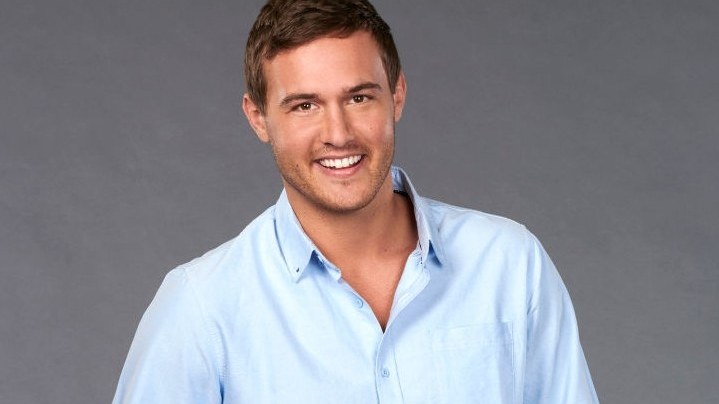
We’ve said it once and we’ll say it again: This has been one dramatic season of The Bachelorette. Guys have abruptly left the show, others have been accused of cheating on their girlfriends back home, and one guy repeatedly slut-shamed Hannah Brown. Even Peter Weber—the pilot and early fan favorite—had to face claims that he’d abruptly dumped his former girlfriend for a chance on the show.
He’s striking back at those rumors, though. He spoke exclusively to People magazine and addressed several comments that his former girlfriend, model Calee Lutes, made. Lutes alleged that the two of them were serious and even thinking about moving in together when he dumped her to go on television.
“There was a lot of truth to what she said in her story, but there is also a lot of truth that wasn’t mentioned,” Weber told People. “The show had absolutely nothing to do with me ending that relationship.”
According to Lutes, she and Weber dated for six months and broke up around Christmas of last year. She was looking on his Instagram for clues about why he dumped her when she noticed that a producer from The Bachelorette had started following him.
“He absolutely betrayed me,” she said. “He interviewed for a reality dating show while simultaneously planning a future with me. I trusted him entirely and he pulled the rug out from under me.”
Weber said that the timing and the reasons behind the breakup were different than what Lutes has stated. “I was very serious in trying to progress that relationship and move it forward,” he explained. “And she wasn’t on the same page as me. That being said, I wasn’t going to waste her time or my time. But the casting process and my first interview was months after we broke up.”
The Spy Who Dumped Me, in theaters now, is an action-packed thriller directed by Susanna Fogel. Here, she breaks down what it’s like to be a female filmmaker right now in Hollywood.
When I was initially asked to write an essay for Glamour about my experience as a female filmmaker in Hollywood and my thoughts on gender parity, I found it challenging to come up with an angle that felt at all fresh. Over the past year, so many people far more articulate than I have written think pieces, done research, and published studies pointing to the vast inequities. It’s such a given that the entertainment industry is sexist, and the public outrage has been so well-documented, that I doubted I could even come up with 1,000 original words. Of course we need equality. Duh. is only six.
It was in the middle of my writer’s block that I had the privilege of participating in a panel of female filmmakers at Comic-Con. Almost immediately, one of the moderators expressed a concern that echoed my thoughts: Are people going to start feeling fatigued by the conversation? Will we all become desensitized and disengaged from the dialogue because—as happens so often with social progress—once it’s been said, we assume someone else is out there handling it?
So, I challenged myself to think about aspects of gender bias that I haven’t heard discussed, observations specific to my (rarified) experience. After decades of struggle, I’m no longer an aspiring filmmaker or a first-time filmmaker. I’m a person who has opportunities now. But how are those opportunities different because I’m a woman? The equality conversation starts with making sure women get the same opportunities as men to become filmmakers, but it can’t end there. That’s because once we are working filmmakers, certain things still feel off.
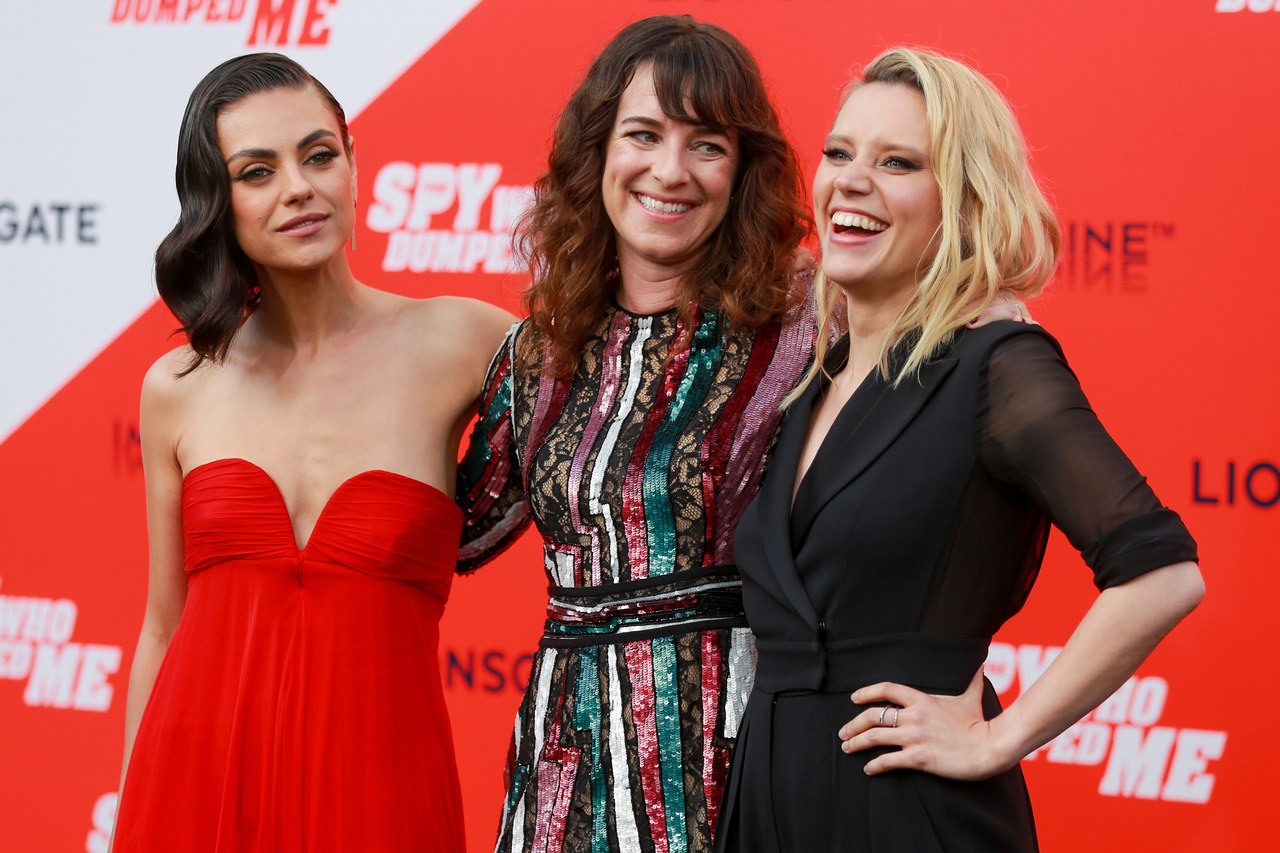
PHOTO: Rich Fury
Mila Kunis, Susanna Fogel, and Kate McKinnon at The Spy Who Dumped Me premiere.
Here are some of them…
Movies Starring Women Are Labeled Differently
I just made an R-rated action comedy (The Spy Who Dumped Me) with the stunt coordinator from the Bond and Bourne franchises. And yet, the statistical analysis and press in the lead up to it groups the film with other female-driven releases, like Blockers and I Feel Pretty (a teen sex comedy and a romantic comedy, respectively). In other words, “female driven” is considered a genre, even though each of the above-mentioned movies would be categorized in three different genres had they starred men. It’s as though Lethal Weapon, Superbad, and Shallow Hal had all been grouped together and called “male-driven movies.”
It’s not just men who are guilty of this. Woke feminist writers do it too. And I get why: female-driven movies are still a minority. But at some point we should stop calling them such because it’s perpetuating our role as The Other and encouraging us to market our work only to other women. In a perfect world, just as women see movies with male protagonists all the time, men would be comfortable seeing movies starring women without feeling embarrassed or apologizing for it.
Those “Female-Driven” Films Are All I’m Asked to Direct
The majority of projects I’ve been submitted in my career are about women dealing with some combination of weddings, fertility, and fashion. Yet I’ve never made a movie about any of these things or otherwise expressed interest in these topics, except occasionally when I’m in Madewell and ask one of my friends if I should buy a striped shirt and they remind me that all my shirts are striped.
Why Do People Assume I Can’t Write an Action Scene?
I co-wrote The Spy Who Dumped Me with a male friend, David Iserson. Many people, including women, assumed David wrote all the action and I wrote all the friendship stuff. Granted, I’d never written any action before this—but neither had he. For the record, we both wrote the kills. We both use words like “kills.” And we both wrote the feelings and friendship stuff.
Interviewers Constantly Undermine My Credentials
I just attended my first studio press junket, where almost every interviewer asked me what it was like directing an action film for the first time after making a low-budget indie. This is a totally fair question. Still, I would be curious to know if Colin Trevorrow, who directed the Jurassic Park reboot (a far bigger leap) after making a low-budget indie movie, was asked it as many times at his first studio press junket. I’m sure some people did ask him—but I bet more people asked me.
Men Direct Movies About Women, but the Reverse Is Rare
Men direct movies about women all the time. Three very good female-driven movies directed by men are Election, Bridesmaids, and Amélie. Those films all resonated widely with a female audience because those directors led with an understanding of humanity that transcends gender. I’m a female director whose work is filled with humanity, but I’ve never been submitted a character-driven movie with a male lead. If offered the opportunity, I’d love to direct a movie like Wonder Boys, The Social Network, or Stand By Me. Doesn’t happen.
Women just aren’t contenders for those jobs, even now when we’re sent female-driven superhero movies. Women are now getting the chance to direct the kind of movies that it’s crazy haven’t been directed by women in the past, like Wonder Woman, but that’s kind of it. There’s still an assumption that we can’t understand a personal movie with a male lead that doesn’t have anything explicitly female about it. Of course we can. We grew up on those movies. Loving movies at all means loving movies that are mostly about men.
The Pay Gap Still Exists
As has been widely documented, female actors and filmmakers are often paid less than their male counterparts. In 2018, this isn’t a matter of evil executives twirling their mustaches and seeing if they can get away with underpaying us for the same exact work. It’s simpler than that: The way a filmmaker raises their fee is to make more movies (and more successful movies), but over half the films that get produced have male protagonists. As discussed above, we don’t have equal access to most of those jobs, which means we have fewer chances to raise our salaries than men do.
Anyway.
I’m going to end on a positive note because, despite all of the above, there are so many of them. I’m now fortunate enough to enjoy certain access and opportunities, and I just had the privilege of making a movie I’m proud of with a production company and studio full of women and men who had my back. Progress for women is happening.
Like that Comic-Con panel. The room was packed, and so many young women were lined up to ask questions that we didn’t have time to get to everyone. The questions were thoughtful and smart, from queries about technical stuff to asking how they can gain enough confidence to be a leader. Clearly, this career path that once seemed so narrow and inhospitable to us is a real option now. And I feel proud of every one of those women for dreaming of it.