Though it was only last September that he introduced size diversity onto his runways, Christian Siriano has long been praised for his inclusive approach to fashion—both in terms of the women he dresses and in how he runs his business. Since his Spring 2017 show, which featured five plus-size models among the lineup, the designer has hired more curvy spokespeople for his brand (on the catwalk and in campaigns), dressed celebrities who have had trouble finding a brand to outfit them, and continued to be an advocate within the industry. And for Spring 2018, Siriano is doubling down on his commitment to represent a variety of folks on the runway during New York Fashion Week by expanding his inclusive casting to include male-bodied, trans, and gender non-conforming models.
After seeing what Siriano estimates to be “over 450 people” through the audition process, the designer put together a cast for his Spring 2018 show that was size-inclusive (“we started with [five] curvy girls—we’re now up to twelve,” he says) as well as gender-inclusive. “This season, I wanted to show that it’s not only about size—it’s also about color, race, and gender,” he tells Glamour. “We have a couple of male models and a beautiful trans model in the show this season. If you’re out shopping and you love a dress, it doesn’t matter if you’re a boy or a girl or whatever.”
It’s the first time the designer, who’s perhaps best known for his evening wear, broadens the scope of his cast to include a range of gender identities. It’s a demographic that has historically been underrepresented on the runway, even as castings become more racially and body diverse. According to The Fashion Spot‘s diversity report for Fall 2017, 12 trans women walked the catwalks throughout Fashion Month—that’s 0.17% of all model bookings for the season.
Siriano says the impetus to diversify on this front came from the customer. “We’re getting requests from around the world, from men asking for wedding dresses—we’re getting everything,” he explains. “People reach out to us every single day—not only directly to us, but to our retailers,” he explains. “I was noticing a change. People, I think, feel comfortable [coming] to me and not feeling turned away. That’s the biggest part of this: I really want anyone who wants to look great in clothes and buy a beautiful suit or dress or whatever to feel good in it. There are no rules for that.”
The Spring 2017 show, with its size-inclusive casting, “changed our entire business,” says Siriano. “I didn’t think it would, but I approach everything that way now. I just want to see different types of people always, whenever we’re booking for any job or for anything—I’m doing a really great beauty project with e.l.f. Cosmetics, and it’s the same process with them: We need a very diverse collection, I’m not interested in making pretty products for ten percent of the world. I love that the retailers are starting to get on board. I love that Moda Operandi is now going up to size 26, and a few seasons ago only went up to a size 12 or 14. I’m trying to, and I know there are other designers doing the same, so it’s awesome that we’re all getting together on this.”
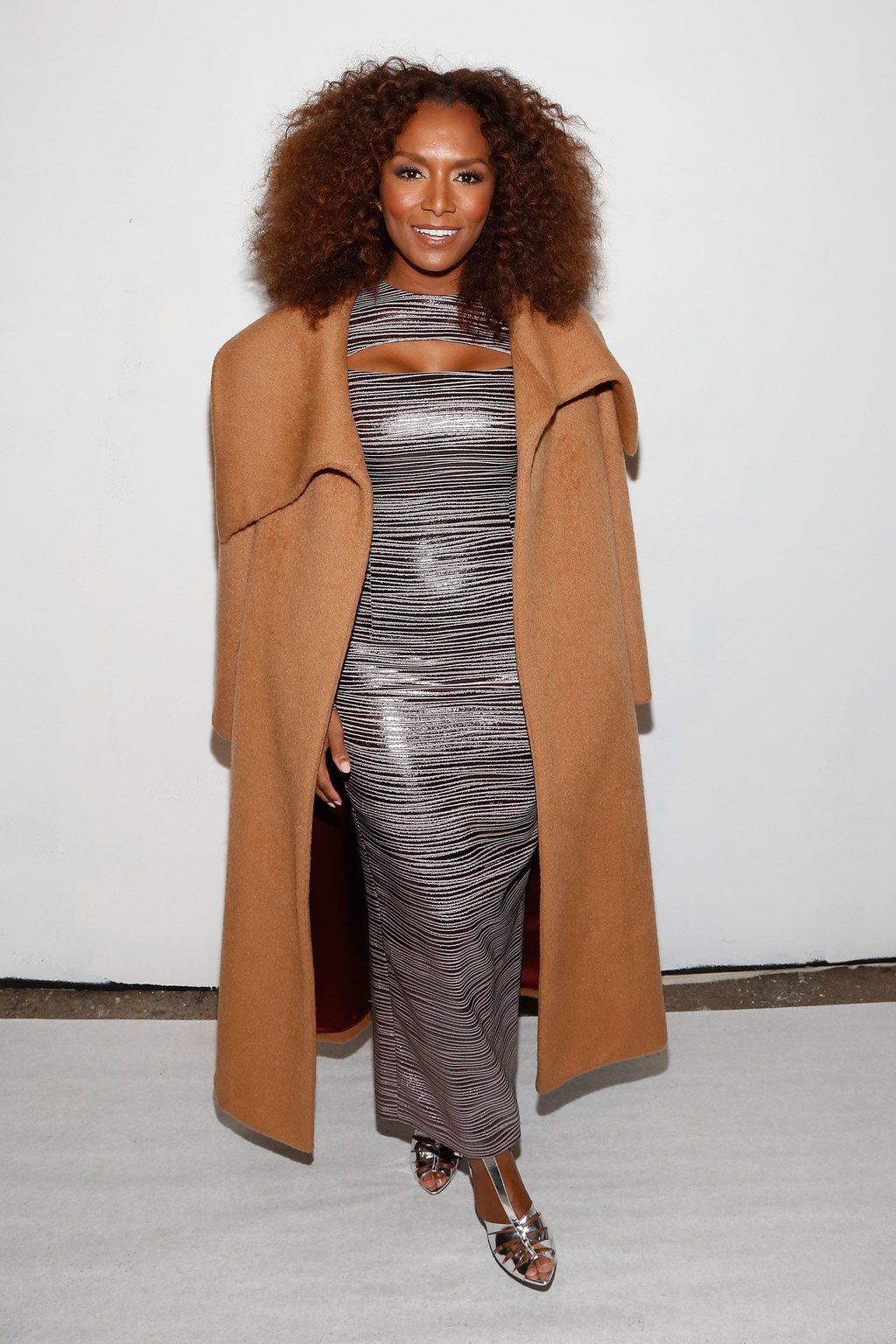
Though these deliberate Fashion Week casting moves certainly draw more eyeballs to his brand, Siriano says it’s his work on the red carpet that brings him a lot of exposure. “I’m dressing so many different types of people—obviously, one of my favorite people to dress is Janet Mock, who’s become such an activist in the trans community, and she’s so amazing,” he explains. “I love creating for her, and that has trickled into a whole other part of the world that I’m super happy and proud of.”
PHOTO: Taylor Hill
Janet Mock at Christian Siriano’s Fall 2016 show during NYFW.
Over the years, he’s dressed celebrities from diverse backgrounds and with different body types—all of which have gotten him a lot of press. (Think Leslie Jones, Laverne Cox, Coco Rocha, Danielle Brooks… The list goes on, and on, and on.) However, this wasn’t a preconceived business strategy from Siriano, but rather the natural evolution of his brand. At this point, though, it’s what the public has come to expect of Siriano— something that the designer actually enjoys, since he’s “up for the challenge” of building upon his own record. He continues: “I want it to just feel normal. It’s great that we’re getting exposure, but I want people to be like, ‘Wow, these girls look great in these clothes.'”
No matter how folks get acquainted with his work, Siriano does stress the value of using the catwalk as a platform. “As a fashion designer, our voice is in the work, like an artist—Fashion Week is kind of our performance of the year, and the clothing is supposed to speak for us,” he says. What you send down the runway, then, is a reflection of your brand and informs how the world sees you. However, he’s well aware that there are bigger fish to fry in 2017—and fashion should be a joyous aspect of a person’s life. “There’s so much hate going on in our world, especially politically, that I think fashion really needs to be the fun part of your day; It shouldn’t be this stressful, horrible thing in the morning, [to not] find something to wear. That’s kind of how I’m approaching it.”
With his Spring 2018 collection, Siriano hopes people will see it as a means “to show how beautiful people are… Everybody obviously has their opinions on what they think is beautiful or what they think is a great look—we’re all subjective, that’s what judging clothing is about. But I think this collection is so bold, vibrant, colorful, and powerful [that what I hope] people take away is, ‘Wow, the women and the men that are on the runway are just beautiful.'” It’s a nice continuation of the phrase Siriano highlighted on the Fall 2017 runway with his slogan T-shirt: People are people.
Related Stories:
Last NYFW, Fashion Got ‘Political’—Now What?
Laverne Cox Stars—Nay, Slays—in Beyoncé’s New Ivy Park Campaign
See Every Look From LC Lauren Conrad’s First Plus-Size Collection
Source link