Categories
Health

Jennifer Lopez Says a Director Once Asked Her, Point-Blank, to See Her Breasts


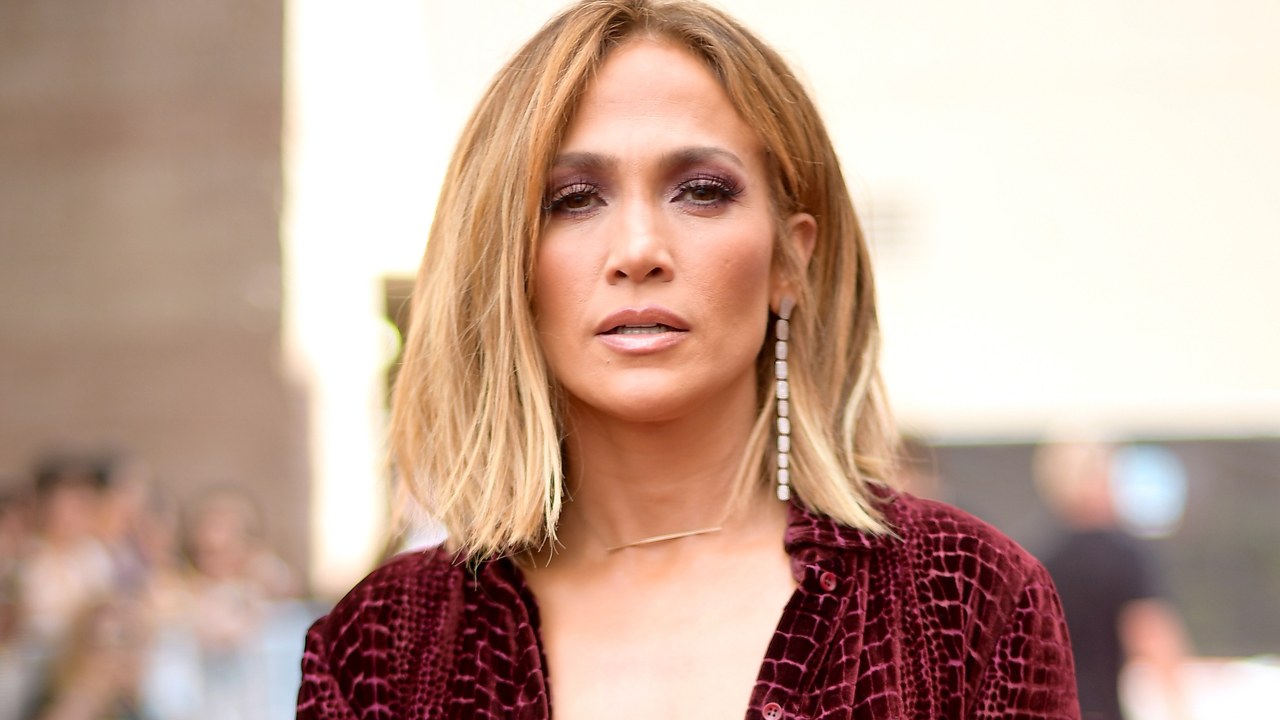
Jennifer Lopez is enjoying a major career high after the success of her movie Hustlers and her upcoming Super Bowl halftime performance with Shaklra. But not that long ago, she was a young actor figuring out the entertainment industry, and that included navigating some uncomfortable moments. This week, she opened up about one specific incident in which she says a director asked her to take her top off during a costume fitting.

“He wanted to see my boobs and I was like, ‘We’re not on set,’” Lopez said during the Hollywood Reporter‘s Drama Actress Roundtable,, which also included Scarlett Johansson, Lupita Nyong’o, Awkwafina, Laura Dern, and Renée Zellweger.

“And I said no; I stood up for myself,” she continued. “But it was so funny because I remember being so panicked in the moment. And by the way, there was a costume designer in the room with me. So there was another woman in the room, and he says this and I said no. Luckily a little bit of the Bronx came out, and I was like, ‘I don’t have to show you my—No. On the set, you see them.’”

Lopez added, “If you give in, in that moment, all of a sudden that person is off and running, thinking they can do whatever they want. And because I put up a little boundary right there and said no, he laid off and then later on apologized. But the minute he walked out of the room, the costume designer was like, ‘I’m so sorry. I’m so sorry that just happened.’”

Now Lopez says she’s made a concerted effort to make the sets she’s a part of as comfortable as possible for women. She shared that for Hustlers, there were comfort coaches around to make sure everyone felt at ease, particularly since the movie involved nudity.

“It was basically somebody who understood that world and said, ‘These things are okay,’ and, ‘These things are not okay’…and made everybody on the set comfortable with what they were doing, because we had a lot of women who were half-dressed or naked, topless,” she said.


Source link

Categories
Health

The 15 Best Bras for Small Breasts | How to Shop for Bras


I can count the number of times in my life that I’ve gone bra shopping on one hand. I’m 31, with two kids—and discounting my early teens, when a lacy and ill-fitting Victoria’s Secret bra was what I thought I needed to impress a boy (judge me if you will, I was 15), I never saw the need for one. I’m as flat as they come, and I’ve never had any success filling out an actual cup. For most of my life, I’ve been going without, and I’ve been mostly OK with that, but there are limitations: Sometimes I just want to be able to wear a thin white tee without feeling exposed when going to meetings at my children’s school or with editors. Up until this point, I’d amassed a collection of horrid stretch bras (basically training bras marketed to girls over the age of 12) to wear in these situations, but I needed something more. I needed a “real” bra.

A friend who owns a lingerie store in Brooklyn opened my eyes to an emerging trend in lingerie: petite sizing. This growing category aims to provide solutions to common fit issues people with smaller busts often experience, such as a need for shape, ill-fitting straps, and gaping cups. And, like we’ve seen in the offerings for DD+, a host of brands have popped up catering to this customer—companies including Lula Lu Petites and The Little Bra Company, which adjust the cuts of their bands and the size of the cups so that they actually support your boobs how you need them to. (They’ve even created smaller cups, such as 28AAA; and some companies, like ThirdLove, offer half sizes.) What that means for us? No more sizing down arbitrarily, or going without simply because you feel there’s no other option.

Glamour polled some of the best petite lingerie experts in the biz for their tips and tricks for finding that long-desired fit. They reminded us of the importance of getting fit regularly and not simply picking out the same size because you’ve worn it before (these can vary among brands!), but also offered some interesting tidbits and suggestions for bra shopping when you have small boobs. Ahead, check out insight from Rachel Klein, owner of Lula Lu Petites; Emily Lau, founder of The Little Bra Company; Mette Iacovou, “amBRAsador” at Bare Necessities; Elma Valerio, founder of Elma Shop; Hannah Casanova, fit specialist at Dana-Co (which manufactures Natori and Skarlett Blue); and Caroline Peaslee, global merchandise manager at Cosabella.

Yes, bra support matters…: I long assumed that because I didn’t have big boobs, a bra didn’t need to offer lift or support (which is a huge consideration when you have a larger bust), but experts say that one could benefit from the design considerations of a bra, such as wide bands and padding, for one simple reason: gravity. According to Lau and Casanova, even the tiniest amount of breast tissue will eventually stretch and sag, and a well-fit bra can help prevent that. This doesn’t necessarily have to translate to underwire: Valerio notes that support should depend on how your breast tissue sits; people whose breasts are bigger on the bottom, for instance, could get ample support from a longline bra or a wider band, while those who are fuller at the sides might find that a bra with a wider back with three sets of hooks provides the optimal fit.

…as does the spacing of the cups on a bra: So much of the bra shopping process hinges on the size (or letter) of the cup—but, according to the experts, the key to getting the best fit might actually be in how the cups are spaced out on a bra. If your breasts are set wider apart, for example (which is often the case for smaller chests, per Valerio and Klein), a bra with touching cups isn’t great; instead seek out a style where the cups have a one-inch gap between them, to ensure that they’re sitting right over the breast instead of toward the center.

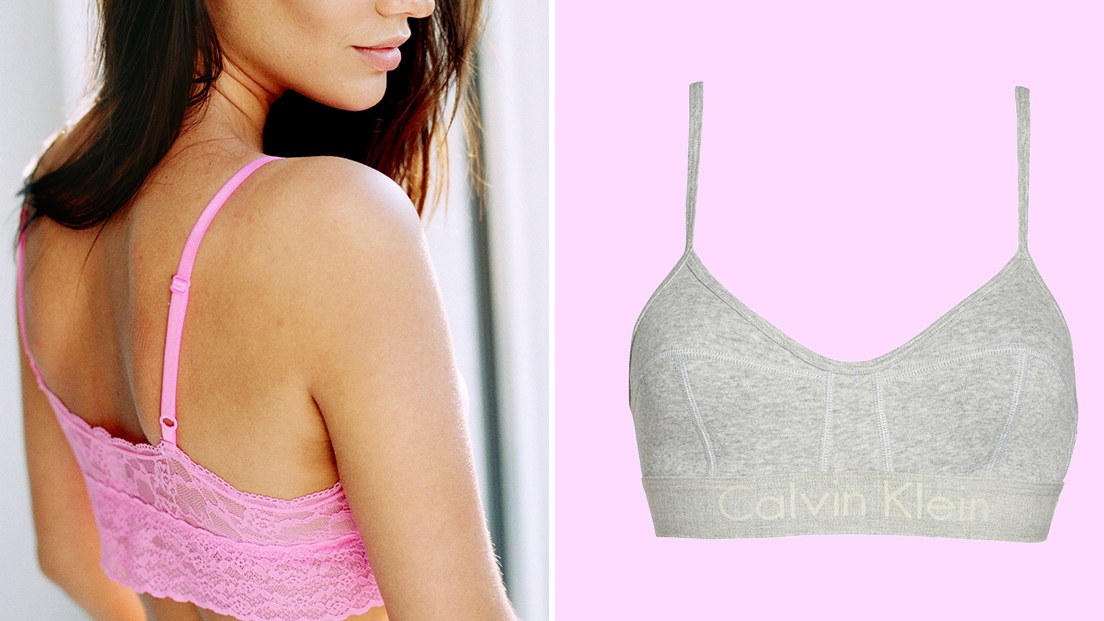
Don’t sleep on the bralette trend: Bralettes are ideal for people with small boobs not only because they’re seriously comfortable and don’t have underwire, but also because the silhouette frames the natural shape of the breast. “The triangle cup tends to be the most flattering for a smaller chest just because it’s the smallest cup type,” Valerio explains. Plus, they just so happen to be trending right now, which makes finding them seriously easy. Stock up on ’em now!

Ahead, a collection of bras, handpicked by the experts for all of your small-chested needs.


Source link

Categories
Health

Cancer Changed My Breasts, Not My Sexuality


When I was diagnosed with breast cancer in May 2014, I was 28 years old, in grad school, living paycheck to paycheck as a part-time sexuality educator, and planning my wedding. I had lost my mom to breast cancer when I was 13, so I had a hunch it was coming for me, but the timing was not ideal—not that it ever is. The universe continues to remind me that life is just going to show up and it’s up to me how I respond.

That statement rang true over and over again: When I decided to cut off my dreadlocs before chemotherapy so I wouldn’t have to wake up and find them loose in my bed; during my wedding dress fitting, as the seamstress situated my gown around surgical drains hanging from each breast; and right before I was put under anesthesia for my double mastectomy that June, when I blurted enthusiastically to the nurses, “I’m having a boob job!” even though I was trying not to cry. I seemed functional to those around me, but I had been grappling for some control over the chaos in my life.

As a black, queer femme, adversity exists for me as normal; breast cancer, hard as it was, wasn’t my first hardship. My family history is rich with a long lineage of black women who’ve not been granted time to heal or address their personal wounds. We are just supposed to do, and when we are unable, hold back tears to appear useful in our stillness. I learned about this secret-keeping from my mom.

I found some lube in my her closet once. It was after my parents had separated a couple of years after her diagnosis, and she was dating again. I was young and didn’t know what it was exactly, but I could piece the clues together—it was suggestively shaped, like a Coke bottle, and had “sex” written on the label. My mom had had a lumpectomy which took a nipple with it, and she never related this as a loss in her sexual self. If anything, being newly single and finished with chemo, baby hairs and all, had her feeling ready to date.

It’s funny how the universe does what it wants regardless of if you are ready or not, and also how it repeats itself.

A year and a half after being married, my wife and I divorced. It wasn’t my breast cancer that undid us, but rather the opportunity of stillness in our relationship. I experienced a great deal of fatigue, so what I preferred to do most of the time was to be still. The adventures that we would take or plan were put on hold, while any arguments we had pushed under the rug had to be buried even farther—and in this stillness they all came tumbling out.

What I found when I began dating again was that something had been missing from “us,” not from me.

The absence of sex created more of a strain. My body was in recovery for most of our marriage. After my double mastectomy, I could not lift my arms above my head for several weeks and needed assistance getting in and out of bed. I suffered painful vaginal dryness and a lowered libido, which I hadn’t known could be side effects of chemo until I went to my doctor wondering if something was wrong with me. I at least knew I didn’t want to be touched, not then.

I had become protective over my body. I wanted to know people’s intentions for coming close—and loving me was not sufficient. With the endless amount of hands on me on a regular basis, my body became a site of constant undesired touch. A year and a half had passed by in my marriage and we had barely grazed one another. I was becoming completely content sleeping with our 40-pound pit bull wedged between us. I thought my illness was wedged between us, too, but what I found when I began dating again was that something had been missing from “us,” not from me.

PHOTO: Nema Etebar

If it’s warm out, I’m contemplating if I can wear a sheer shirt. On this day, it wasn’t warm (hence the coat), but I went for it anyway.


When I moved out, I was thrust into the alien world of online dating. I started with Tinder. Should I add photos of my double mastectomy, so they know what they are signing up for? I wondered. And, Should I include “breast cancer survivor” in the bio?

I went with, “Ericka Hart, M.Ed – Black, queer, Sagittarius, and breast cancer survivor.” I uploaded a picture of myself wearing a head wrap and a T-shirt, at a high enough angle to capture my cheekbones—I didn’t show my body at all, letting the bio be enough of a heads up. I was self-conscious, sure, but my desire to be intimate overrode my nerves. So I hit “save,” and my profile went live.

I started going on dates pretty quickly (like I said, Sagittarius), but being a queer non-binary pansexual femme in New York City meant limited choices (and I live in Brooklyn, I wasn’t about to travel Uptown). But the messages came in, and it wasn’t long before I had my first coy request for nudes. I nearly fell off my bed. Yes, it says “breast cancer survivor” right there on my profile, but that can look so many ways. Who knows what this person might be expecting to receive in a quick sext.

For me, after a double mastectomy and reconstructive surgeries, here’s what it looks like: I still have breast mounds (thanks to silicone implants), but they’re more rectangular shaped than cupped, and there are horizontal scars striped across the center of each one where my nipples used to be. I still felt sexy—and sexual—in my body, but receiving that message, I was confronted with fears that others may not see it that way. Perhaps this person glossed over the “cancer” part of my bio entirely, or assumed the illness was merely a part of my past and not written permanently across my body.

My mind raced for a minute too long for texting etiquette, and I was met with an urgent-feeling, “You still there?”

And so I went for it: I lifted up my shirt, curved my body in a way that I hoped would distract from my breasts to maybe my hips, and hit send.

After a “goodnight” text, I never heard from that person again.

I want to say I was hurt from this experience, but it honestly felt familiar. I’m no stranger to comparison and holding myself up against others who are more often admired for their looks—light-skinned black girls and white girls, for instance. Not being pursued because of my looks was not uncomfortable or weird, it was pretty normal.

Just over a month later, I swiped right on a beautiful person from California visiting Brooklyn for a month. We had a two-hour date which felt like we were just catching up on missed time, and two days later he wrote a poem describing the way that I walk. Perhaps for the first time, my whole self was being worshipped. I had been jumping over hurdles when I was married and then dating. At each intersection of my identity there would be the heavy lift of explaining who I am, the struggle of internalizing some expectation of how the world painted me, and then, after all that, a rejection.

Two years later in a madly juicy off-the-walls love with that poet from California, my double mastectomy scars are not treated as a separate or a confusing part of me. My entire existence is elevated and supported daily, just for its mere presence, not for what it can or can not do. Not for what it’s missing—which, if you ask me, is not a damn thing.


Source link
Categories
Health

Emily Ratajkowski Calls Out a French Magazine for Photoshopping Her Lips and Breasts


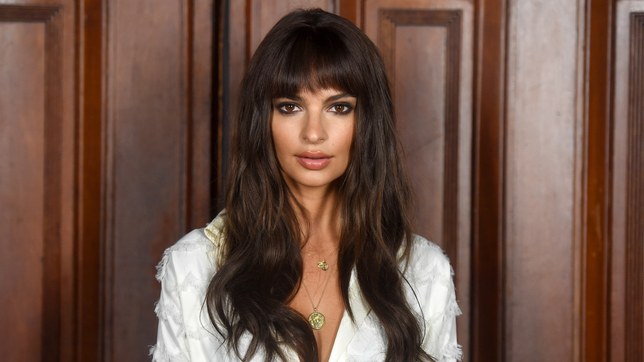
PHOTO: Jamie McCarthy/Marc Jacobs/Getty Images

Most major players in the fashion and beauty industries have been extremely slow to follow in the footsteps of companies like Aerie and Dove in pledging not to airbrush away their models’ so-called “flaws.” Emily Ratajkowski, however, is here to hurry them up.

On Friday, the model and actress called out Madame Figaro, a French magazine, for photoshopping a picture of her that was used on the cover of this week’s issue. Ratajkowski posted both the original, non-retouched photo and the final cover image to Instagram in a side-by-side comparison showing that her breasts were lifted and lips narrowed for the cover photo. In the accompanying caption, EmRata described her frustration with the magazine—and the industry as a whole—for sending the message that her natural beauty is, apparently, not beautiful enough.

“Everyone is uniquely beautiful in their own ways. We all have insecurities about the things that make us different from a typical ideal of beauty. I, like so many of us, try every day to work past those insecurities,” she wrote. “I was extremely disappointed to see my lips and breasts altered in photoshop on this cover. I hope the fashion industry will finally learn to stop trying to stifle the things that make us unique and instead begin to celebrate individuality.”

This is far from the first time the 26-year-old has spoken out against societal standards of beauty. Most recently, in her cover story for the August 2017 issue of Allure, she criticized the societal instinct to censor women’s bodies. “It really bothers me that people are so offended by breasts,” she said. “That’s when I realized how fucked our culture is. When we see breasts, we don’t think of beauty and femininity. We think of vulgar, oversexualized images.” On the topic of allowing women to embrace their own bodies, she added, “To me, any expression that is empowered and is your own as a woman is feminist. If a woman decides to dress sexy, it doesn’t mean she’s not a feminist. [We] should be doing things for ourselves. If that is the woman’s choice, and it makes her feel good, then that’s great. Good for her.”


Source link