Categories
TV & Movies

Preparations to Be Together for an Unknown Period of Time


Aptly matched by its descriptive title, writer/director Lili Horvát’s “Preparations to be Together for an Unknown Period of Time” (Hungary’s submission for this year’s Best International Feature Film Oscar) boasts an intriguing premise. The movie is like a psychological labyrinth with many possible exits, but only one can set its disconcerted heroine free—or so it seems.  

Exemplary neurosurgeon Márta Vizy (Natasa Stork), for whom reality is increasingly becoming elusive, flies back home to Hungary from the U.S. after 20 years. Her return isn’t prompted by a longing for homeland or even family, so much as a love pact she made with a fellow Hungarian doctor named János (Viktor Bodó) after they met and fell in love at a convention in New Jersey. The deal was to meet at Liberty Bridge in Budapest a month later. She kept the promise, he didn’t. 

Instead of coming to terms with the ill-advised impulse behind traveling half the world for a spontaneous rendezvous with a stranger, Márta searches for János, only to learn he doesn’t recognize her. In fact he has no memory of ever meeting her. As if she were haunted by an apparition, Márta starts to see him everywhere and begins to doubt her sanity. The movie’s puzzling plot then bends in ways that could make Christopher Nolan salivate, but which are deployed with a narrative elegance that keeps it grounded.

As it leads us down confounding roads, “Preparations” fashions Stork’s stoic expression, a perpetual poker face, as a barrier protecting her inner world. But rather than generating disinterest, her unemotional state allows the movie to disclose its twists only in small doses as she tries to rationalize them. Obsessed with objectively finding out whether János’ dismissal means a hurtful betrayal on his part or the symptom of a pathology afflicting her, Márta arranges to live and work as close to him as possible.

Márta soon settles into a new job at a local hospital, and it’s obvious she’s not welcomed. However, this puts her in direct contact with János and his colleagues, and she ramps up her efforts to unmask him and unveil what she believes is an attempt at gaslighting her. The position also brings another, younger suitor Alex (Benett Vilmányi), whose attraction seems primarily attached to her profession. He is a med student who aggressively courts her.

As Mara shares with her therapist the possibility she might have built this romantic castle in the sky, Horvát shoots Márta from different angles that perhaps point to a shift in personality, as if implying a rupture in Márta’s psyche. The spaces Márta interacts with further corroborate the director’s wish to bewilder viewers, with endlessly curving spiral staircases and hallways illustrating cinematographer Róbert Maly’s visual representation of the mind’s complex web of thoughts.

“Preparations” is at its most fascinating when it engages the link between our emotions, what we believe is our reality, and the tangible nerve endings that compose the abstraction of who we are. How can we know if anything we feel or do is a manifestation of the personality that we’ve formed cognitively, or the consequence of failure in our wiring? That both of the film’s protagonists are highly trained individuals who literally touch the brains of others to solve their malfunctions provides an even more absorbing angle.

And so we question how Márta, someone so vastly educated in the everything that affects how we behave from a physical standpoint, becomes a victim of her own yearnings. For her, it would be much easier to be able to pinpoint to an illness, to blame it all on a chemical imbalance and not a deeply rooted, unfulfilled desire for companionship. Horvát never debates the validity of medical practices, but notes that maybe certain aspects of the human condition are unexplainable, so much so that even science and those who practice it can completely unroll them in neat, irrefutable terms. 

Though never overtly bizarre, “Preparations” exists in a wavelength uninterested in total realism. Márta and János’ quirky, sidewalk mating ritual surely isn’t meant to reflect everyday interactions, but it’s an exalted way of conveying how close and yet how far they are from the image they have of each other. And while the film loses some of its mesmerizing potency in the climax and subsequent wrap-up, it’s still a beautiful and acute rendering of what could be if some of the most implausible lies we tell ourselves were in fact true. 

Now playing in virtual cinemas.



Source link

Categories
TV & Movies

No Man’s Land


In telling a story of violence along the Texas-Mexico border from a different perspective, “No Man’s Land” clearly has the best of intentions. Director Conor Allyn and his brother, star, and co-writer Jake Allyn, are trying to make us look at this contentious swath of land through fresh and sympathetic eyes, an instinct that’s certainly welcome after the past several years of xenophobic, build-the-wall rhetoric.

But the path to get there is long and slow, and frustratingly filled with thinly drawn characters and on-the-nose dialogue. As our conduit, Jake Allyn has a direct and appealing presence, but seasoned supporting players like Frank Grillo, Andie MacDowell, and George Lopez get far too little to play. For a movie that’s about a character on the run, “No Man’s Land” meanders and takes its time in a way that feels conflicting with the narrative.

The title takes its name from the section of land that’s north of the Rio Grande but south of the border fence. That’s where Allyn’s Jackson Greer and his family have a cattle ranch. A talented pitcher, Jackson is being scouted by the New York Yankees for a possible minor league baseball deal, which his parents (Grillo and MacDowell) see as his ticket to a prosperous future.

A confrontation along the border, however, throws that exciting prospect in jeopardy. While patrolling their property, Jackson, his dad, and his older brother (Alex MacNicoll) discover a group of Mexican immigrants trying to cross into the United States in the middle of the night. Their leader is Gustavo (Jorge A. Jimenez), who functions not as a mercenary coyote but as a kindhearted shepherd trying to help his fellow churchgoers. Tensions flare in the darkness and Jackson accidentally shoots and kills Gustavo’s teenage son, Fernando (Alessio Valentini). While his dad tries to take the blame and the local Texas Ranger (Lopez) grows suspicious, Jackson hops on his horse and rides across the river in a panic.

And so we have a reverse immigration story, which simultaneously feels novel and like the stuff of classic Westerns—tales of desperate men in danger seeking sanctuary south of the border. That’s an intriguing story to tell at this specific point in our nation’s history, when there’s so much bigotry and cruelty inflicted upon families trying to make their way here in search of a better life. But for someone who’s grown up in this region, Jackson is surprisingly ignorant of Mexican culture. Like Liam Neeson’s character in last week’s “The Marksman,” who has a ranch on the Arizona-Mexico border, Jackson somehow has managed to avoid learning any Spanish, which is just bizarre.

Once he makes his way deeper into Mexico, Jackson enjoys the quiet beauty of some striking desert vistas (the work of cinematographer Juan Pablo Ramirez). But he also takes his time going from place to place in search of peace and forgiveness, which saps the movie of the suspense it sorely needs. And with the exception of one coyote character who’s cartoonish in his villainy, every single person he meets is saintly in their kindness and generosity—which is an oversimplification in the opposite direction from the stereotypical way Mexican characters too often are portrayed in films and television. As he ventures toward Fernando’s hometown of Guanajuato, deep in central Mexico, he encounters a poor, elderly couple who share their meal with him and a single mom and her young son on a bus, to whom he reads The Adventures of Huckleberry Finn in the movie’s most awkward and contrived connection. But a brief stop at a fancy horse ranch is compelling, as it allows Jackson to show off his natural ability as a trainer. This stretch gives Allyn a chance to reveal an actual personality to his character, and it finds an engaging rhythm that’s elusive elsewhere, suggests the better movie that might have been.

Instead, “No Man’s Land” wraps up in a jarring burst of violence that comes out of nowhere during a sensitive moment of healing (Jimenez is quite good as the slain boy’s father). And we’re forced to hear Jackson literally say: “Mexico’s not like I thought it was … I was wrong. I was wrong about a lot.” (Allyn co-wrote the script with David Barraza). It’s a lovely sentiment, but more mature filmmakers would have found a more nuanced way to convey it.

Now playing in select theaters and available on digital platforms.


Source link

Categories
TV & Movies

Our Friend


“It was a routine death in every sense. It was ordinary. Common. The only remarkable element was Dane. I had married into this situation, but how had he gotten here? Love is not a big-enough word. He stood and faced the reality of death for my sake. He is my friend.”—Matthew Teague, “The Friend,” Esquire Magazine, May 2015

There’s good reason to be slightly skeptical of films that centralize cancer. Too often cancer is used as a plot-point or a short-cut to emotional engagement. In television series, cancer is used to boost ratings. Cancer patients are portrayed as inspirational, enlightened: they are here to teach us how to live. The worst and most bafflingly common “cancer trope” is the one where a young woman dies of cancer, and her boyfriend becomes a better man in the process. These types of films don’t want to deal with the reality of cancer. In a way, the movies are designed to deny reality. One of the most refreshing things about Gabriela Cowperthwaite’s “Our Friend,” based on Matthew Teague’s devastating 2015 essay about his wife’s death and the friend who helped the couple through it, is the film’s strict interest only in reality. “Our Friend” doesn’t make cancer “mean” anything beyond what it already is, and it doesn’t turn cancer into a symbol of something else. In his essay, Teague wrote, “We don’t tell each other the truth about dying, as a people. Not real dying. Real dying, regular and mundane dying, is so hard and so ugly that it becomes the worst thing of all: It’s grotesque. It’s undignified. No one ever told me the truth about it, not once.”

“Our Friend” tells the truth about it.

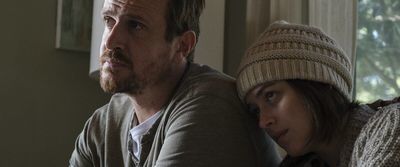
Matt (Casey Affleck) and Nicole (Dakota Johnson) are a relatively happy couple living in Fairhope, Alabama. She’s an actress with a local theatre, he’s a journalist. They have two small daughters. Life has its bumps in the road, but in general all is well until Nicole is diagnosed with ovarian cancer, the “silent killer.” Things go from bad to worse to terrifying. Their mutual friend Dane (Jason Segel) decides to move in with them during the final year of her illness, to help out around the house, help with the girls, play support staff for a grieving overwhelmed family. 

Why would Dane give up his own life like this? As the film makes clear, Dane is at loose ends. He works in a sporting goods store. He says he wants to “start to think about” doing stand-up comedy, not exactly an ambitious choice of words. All of his friends are husbands and fathers now. Dane wants that, too. But after a visit to Matt and Nicole’s house post-cancer-diagnosis, he notices instantly that everyone is overwhelmed. He thinks he could be of use, pick up the slack, do errands, be there for whatever is needed.

Brad Ingelsby’s screenplay sticks fairly closely to Teague’s original essay. When the screenplay deviates, the film loses focus. The tangents feel like tangents, off-shoots of the main narrative. In some cases, these tangents muddy the waters. Teague’s essay jumps around a little bit in chronology, backtracking to explain how he and Nicole met Dane. But Ingelsby goes full-bore into fractured chronology, leaping back 13 years, leaping forward 8 years, back 4 years, and etc. It’s a challenge keeping the timeline straight.

But “Our Friend” is very good where it really counts and that’s on the small details, the everyday life aspect of doing errands, cooking dinner, while your family is going through this harrowing ordeal. Cancer consumes the patient, but it also ravages the family. There’s a beautiful sequence where Matt drives past a playground, seeing happy mothers and children playing on the swings. He is so far away from being able to do that, it’s like he’ll never join that warm carefree circle again. Death makes you self-centered. How can people just keep living their lives when my life is ending? As singer-songwriter Tracy Bonham says: “And the world has the nerve to keep on turning.” “Our Friend” really understands this.

If you don’t believe in Matt, Nicole, and Dane’s friendship, then the film would not work. You believe it. Affleck’s Matt can be a difficult man, prone to gloomy brooding. When he suffers, he suffers mostly in silence, interrupted by explosive impatience or sudden fainting spells. (Yes. He faints. Often.) Nicole is a warm and giving person, and people are drawn to her. She is forgiving, but not a pushover. What is unique here is Dane is friends with both Matt and Nicole. (Teague writes about this dynamic in his essay.) Segel is perfect for this sort of material, with his scruffy kindness, his humorous impulses (his scenes with the children are particularly wonderful), his openness. One can only imagine how awful it would be if Dane were portrayed as some saintly self-sacrificing angel. Segel plays to Dane’s sense of disappointment, his loneliness for a mate, for children of his own. It’s all there. He’s a complicated man, and yet his impulses for friendship are simple and clear. Together, the three actors create a believable sense of shared history.

“Our Friend” is insightful on a lot of things nobody wants to talk about, like caregiver fatigue. To “take a break” consumes the caregiver with guilt. Dane suggests to Matt they go on a short hike. Matt puts up resistance, but Dane wins, and they have a good day out. There’s a quick montage showing neighbors and friends dropping food off on the porch steps. Such a small thing, but so helpful. The film is also truthful about the less positive aspects. Right after Nicole gets diagnosed, friends swarm by the house in support. As Nicole gets sicker and sicker, the friends stop coming by. Only Dane remains.

Teague’s essay is factual about the horrible things cancer did to his wife’s body. “Our Friend” avoids some of the more gruesome elements, but it is honest about the breakdown of Nicole’s personality, her psychosis, as well as her lashing out at Matt in frightening rages. (This is new territory for the gifted Johnson, and she is more than up to it.) Cowperthwaite directed “Blackfish,” a documentary about orcas in captivity. She seems to look at situations without blinking. She doesn’t sugar-coat. She doesn’t sentimentalize. She brought this to bear in 2017’s “Megan Leavey,” a film I reviewed for this site. One could, I suppose, “write off” “Megan Leavey” based on the plot description, but Cowperthwaite’s keen eye for details and empathetic sensibility made it a very powerful film. The same holds true for “Our Friend.”

One critic called Dane’s motives “a mystery.” But it’s not a mystery at all. Segel makes Dane’s actions make sense. It’s not all that complicated, really. Dane recognizes his friends need him, he doesn’t have anything else going on, he moves in. It’s that simple, or at least it’s that simple to Dane. Teague himself described Dane’s choice to move in with them as “ungraspable.” William Butler Yeats’ beautiful lines from The Municipal Gallery Revisited come to mind:

“Think where man’s glory most begins and ends,
and say my glory was I had such friends.”

Being a friend like Dane is a choice. We all have that choice within us. We shouldn’t just wish for a friend like Dane. We should try to be a friend like Dane.

Now playing in theaters and available on demand.


Source link

Categories
TV & Movies

Breaking Fast


“Breaking Fast” is a sweet romantic comedy that shows how it’s possible to observe pretty much every convention of the mainstream romantic comedy yet still deliver something that feels new. 

Written and directed by Mike Mosallam, the movie follows the romantic adventures of Mo (Haaz Sleiman, The Visitor), a thirty-something gastroenterologist from West Hollywood who also happens to be a religiously observant, gay Muslim. Right off the bat, Mosallam establishes that this is going to be a formulaic but earnest rom-com with a unique energy that comes from the characters’ cultural backgrounds. A prologue finds Mo getting dumped by a closeted boyfriend that he adores (Hassan, played by Patrick Sabongui). Hassan has decided to marry a woman to appease his religiously and socially conservative family. The cognitive dissonance of the hero’s identity is a source of observant humor that the movie will return to as the rest of the story unfolds. But note that the movie has sympathy for Hassan, too—Mo is an openly gay Muslim with a supportive and accepting family, a luxury that he takes for granted.

Jumping ahead one year, we find Mo still wounded in the aftermath. At a birthday party for his non-observant Muslim best friend Sam (Amin El Gamal), Mo meets a handsome white actor named Kal (Michael Cassidy) and spends the night walking around the city with him, in a series of relaxed dialogue scenes that might’ve treated Richard Linklater’s “Before” trilogy as partial inspiration. Kal explains that his name comes from Superman’s original Krypton name, Kal-El, a tidbit that thrills Mo because he’s a huge Superman fan. There’s a bit of subtext here that’s more effective for not being spotlit and turned into text: Superman is itself a tale of immigrant assimilation into the mainstream of American life, about an exceptional individual who must keep his specialness under wraps in order to live a “normal” life. 

Mosallam has a good feel for the rhythms of conversations that are filled with expository dialogue and monologues—a tricky balance, not easy to pull off—and the performers are appealing and don’t overdo things. Sleiman doesn’t make the mistake of playing his character as a bland “Everyman” scrubbed clean of eccentricity. The character can be neurotic and a bit manic at times, and when emotions flare, the hero’s delivery has hints of Nicolas Cage kookiness. And the movie doesn’t make the mistake of turning Kal into a pinup for some sort of abstract “all-American” type, even though the hero initially is attracted to him for those reasons. He’s in recovery and has a traumatic family background that comes into play. 

There’s no tour-de-force filmmaking or acting here, just skilled professionals taking a familiar template and doing something fresh with it. This is a movie that proves you don’t have to reinvent the wheel to build a new road. 


Source link

Categories
TV & Movies

Identifying Features


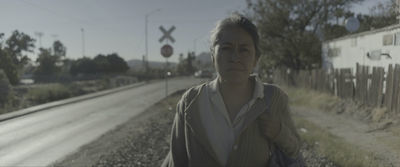
One journey, full of hope, turns into the start of an aching search for answers in Fernanda Valadez’s “Identifying Features.” This artful Mexican drama begins when Jesús (Juan Jesús Varela) tells his mother Magdalena (Mercedes Hernandez) that he is going north to the United States with a friend for a job opportunity. But months pass, and there’s still no word from him. Finally, Magdalena ventures out on her own journey to find out what happened to her son. 

In many movies about immigration, the story often follows those on that journey towards a hopefully better place. The friends or family left behind may have some screen time at the beginning but they soon fade into the background as our hero or heroes move on. In “Identifying Features,” we see the concern and worry of a mother left behind, one forced to leave the comforts and familiarity of home in Guanajuato in search of her son. This was not her journey to make, but it is one she pursues out of love, despite the odds facing her. Did her boy died in the desert? Had one of the drug cartels gotten to him? Is the government pushing Magdalena to accept her son is dead, sight unseen, as a sign of a cover-up or are they an overwhelmed bureaucracy tired of carrying so many unclaimed bodies? Although the film feels subdued—there are no scenes of emotional outbursts and only a brief chase sequence that ends almost as quickly as it begins—the movie propels itself forward through Magdalena’s search. There is a subtle frantic quality, a kind of restraint in bearing witness to the unspeakable horrors facing countless others who must stay silent. 

Valadez, who co-wrote the script with Astrid Rondero, balances this dramatic tension by dabbling with magical realism and otherworldly images. Some scenes look slightly distorted or doctored to make the viewer feel the mother’s unease in a visceral way. For instance, there are scenes set by a fire that look oversaturated in red, an intensity burning through the screen just as one character turns to violence for survival. In another scene, when Magdalena consults an indigenous elder to find out what happened to her son, we see what they see: visions of a horned silhouette, a devilish tail backlit by flames burning backwards. It is not a good omen. One morning, Magdalena relives the moment her son came to her to tell her he was leaving. Half of the color is faded out by dirty windows, but he is shown in sharp detail. She is haunted by a moment that now seems to be fading around the edges, but at its center, her son stands frozen in time and memory. 

Like “Tigers are not Afraid,” the cartel violence that has plagued Mexico in recent years is transformed into a fantastical force of evil. People are afraid to acknowledge it or even speak its crimes aloud. Everyone is taught to accept its forced presence in their lives. There’s a scene at a bus station where Magdalena is trying to get answers when a kind stranger tells her what may have happened to her son through the door of a bathroom stall. It’s as if the ladies’ room was the only safe space away from men and their violence. This force feels almost supernaturally powerful when the woman says the bus company has lost entire buses and passengers, only their luggage arriving at the station. Often, Magdalena is helped by whispers and warnings, guiding her impossible search. This trail of breadcrumb-like hints also layers in a texture of hushed fear to the film. In her travels, she meets Miguel (David Illescas), a recent deportee from the United States who reminds her of her son. On his journey back south, he crosses the militarized border in what looks like an entrancing Emmanuel Lubezki-like one take. The camera follows Miguel’s back as he and others walk towards Mexico through a cold concrete tunnel. After some tight bottlenecks and slight crowding, he looks to be on his own path walking in the dark night air. Then, he looks over his right shoulder at the blurry sea of red taillights lined up to cross the border back to Mexico. It’s a visual reminder that the personal tragedies of Magdalena, and now Miguel, are just one of countless others. In this moment, Miguel is alone, physically separated from the rest and isolated by his situation. 

Growing up as the child of immigrants, I was taught that coming to the States was always a good thing, even if it was tough. It wasn’t until I was older that I fully started to realize the emotional and mental toll it took on a lot of families, and that was if those who left home made it to the other side at all. I noticed the scars between families that were separated by borders, the haunting detachment from everyone you ever loved and everything you ever knew. It is a pain that does not go away easily, if it ever goes away at all. In the hands of Valadez, cinematographer Claudia Becerril Bulos, the film’s sound team and composer Clarice Jensen, “Identifying Features” peels back that feel-good façade of the “coming to America” narrative for a much more painful reality, one that feels freshly steeped in tears, heartache and headlines. It is a striking movie that boldly confronts both uncaring governments on either side of the border and the cartels that have warped these areas into the stuff of nightmares while also mourning the human cost of losing a loved one to uncertainty and the ones who will never make it home again. 


Source link

Categories
TV & Movies

The Nostalgia of Epix’s Bridge and Tunnel is Filled with Wrong Turns


I hope your post-college life wasn’t this insipid. It’s Spring 1980 on Long Island, and six friends have returned to their neighborhood to hammer out their love lives. Hopeless romantic and photographer Jimmy Farrell (Sam Vartholomeos), whose former flame Jill (Caitlin Stasey) returns to respark their relationship, must decide between true love or recording wildlife in Alaska. The territorial Stacey (Isabella Farrell), leaping into her former fling with the buff accounting major Mikey (Jan Luis Castellanos), weighs the idea of friends with benefits against her boyfriend living in the city. The law school-bound Pags (Brian Muller), Jimmy and Mikey’s best friend, is smitten by Jill and Stacey’s girlfriend Tammy (Gigi Zumbado), while Tammy has a crush on Mikey.  

These friends, who have known each other since grammar school, not only reflect upon where they’ve been, but also where they’re going. Their quandaries would elucidate some entertainment a la “That ’70s Show,” if the writing showed any interest in them. In the four episodes provided to press, Edward Burns’ six-episode hangout series “Bridge and Tunnel” is a nostalgic period piece that offers insignificant storylines to mark its meandering journey down memory lane.    

The show’s main focus of Jimmy and Jill’s relationship troubles rushes into view in the premiere’s opening scene—the pair passionately crashing into a bathroom for a very quick quickie. The couple broke up last year because of their divergent career paths: Jimmy is awaiting a six-month photography gig with National Geographic while Jill works as a designer’s assistant, in an office that lampoons her Long Islander accent by calling her “bridge and tunnel” (Burns never defines the meaning behind the insult). While their friends and parents believe their relationship is doomed to fail, neither Jimmy nor Jill are sure whether either can live with or without the other. 

Burns unfurls Stacey and Mikey’s relationship to an equally frustrating measure. Mikey, stuck between pursuing a lackluster accounting career and this true passion for the arts, entangles himself with a taken Stacey. They share very few conversations, so how they came to be in a long-term fling makes zero sense considering their polar opposite temperaments. Both couples occupy a frustrating middle ground between seriousness and no-strings attached, but Burns provides few compelling reasons why we should care. Pangs and Tammy, the two spares to this four wheeler, are ill-defined as well.    

Burns wants to transport audiences back to the 1980s, but his series reeks of cosplay. The set decoration sees bedroom walls plastered over by posters—from “Rocky” to “Styx”—and in the case of Jimmy, his collage of National Geographic covers. Needle drops from Minnie Ripperton, Anne Murray, David Bowie, etc. color the nostalgic fest. Feathered hair, flared jeans, and muscle cars also garnish the set. But nothing in “Bridge and Tunnel” feels lived-in, mostly because we’re missing the small details. Tammy, for instance, waitresses at a diner, but Burns doesn’t provide the establishment’s name. There’s a nondescript body of water the friends hang by with their cars, but neither the name or its importance to them is recalled. The only haunt Burns shows any attachment to is their neighborhood bar, Larry’s Pub. Yet even here, we don’t see the bartender, their favorite spot at the bar, or even their favorite table—the features that say “I was raised here, and I’ll always remember being here.”

Speaking of raised, these friends spent their childhoods on the same block, but you wouldn’t know it by their chemistry. The dialogue is stilted by over explanation—if I have to hear again how Jill broke Jimmy’s heart one more time—and when it comes to building out characters, Burns relies on needless telling, but rarely intuitive showing. And Pags liking Styx doesn’t qualify as a personality (sorry, Cornerstone fans). When Burns does build his characters by showing, it’s by way of flat sex scenes, where two long-time lovers appear alien to each other’s bodies.

These faults glare under the show’s uninspired stories. Are they friends milking their last spring before unknowable adulthood? Or are they already slackers, but they just don’t know it yet? “Bridge and Tunnel” never anchors itself to a theme. Instead, the series wanders from episode to episode to loosely unravel precarious romances, only to double back for another “will they or won’t they” tease. In “Bridge and Tunnel,” Burns has the building blocks for a “That’s ’70s Show” guide through post-college life, but not the laser focus needed to excise those fears, those doubts, those two distinct crossroads. “Bridge and Tunnel” needn’t guide viewers back to their post-college years if all it’ll provide are wrong turns.  

Four episodes screened for review.


Source link