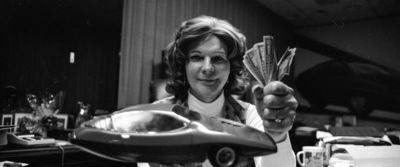
“The Lady and the Dale” tackles its wholly enigmatic subject with a sharp intelligence, down to initially selling it as a true crime story. In the first five minutes, you get a sense that that this is going to be a docuseries about a gas-efficient, three-wheeled car in the 1970s named The Dale—a business plan that barely got off the lot, with millions of dollars taken from investors. The controversial project was spear-headed by a woman named Liz Carmichael, who was revealed by media to be a fugitive from counterfeit charges under her previous identity as a man named Jerry Dean Michael. That’s the salacious angle that the media took with such a story in the 1970s, and this increasingly great docuseries from co-directors Nick Cammilleri and Zackary Drucker works at correcting that. America underestimated her, and this docuseries does not. You will not get just the headlines here, because those were determined by transphobic men. Instead, “The Lady and the Dale” is a richer portrait that never tells you exactly what to think, but it will convince you that you should know all about about Liz Carmichael and all that she represents.
Told over the course of four hour-long episodes, the docuseries wrestles with a complicated life but treats it with a vital balance of awe, humor, and nuance. It includes so much, and in no particular order: a deeply heartfelt depiction of Carmichael’s transition, a murder, an endless amount of getaways, a flower business, Tucker Carlson’s equally poisonous father, the history of transphobia in the American media, Liz’s reputation as a loving mother, a huge court case about whether the car was a scam, an episode of “Unsolved Mysteries,” and many more. To give the direct story here is to mislead when recommending, as the docuseries is about evolving one’s perspective over the course of some wild developments. Its fourth episode is the best, especially for the deeper understanding it seeks to create about Carmichael and her personal politics as a tried-and-true Libertarian, who very might well have been better supported in modern society. At least in the past, she was able to move with her family from state-to-state, eluding authority because there was no such thing as Google.
One of the docuseries’ brilliant ideas is to use paper cutout reenactments in its chronological storytelling—it matches the enigmatic tone of this overall story, and from a practical approach it creates a constant sense of movement. Carmichael’s saga comes to unpredictable life as photos are used with bodies and photographed backgrounds, coupled with select audio clips of her voice in interviews. There’s never the distraction from a docuseries using the same photos, creating a redundancy that leads to an emotional distance. Instead the style here keeps you more engaged, if not hopeful that other documentarians are taking note.
“The Lady and the Dale” is almost more about the people around Carmichael’s life than it is her—she’s represented in voiceover moments (letters read by Gillian Cameron), but it’s greatly informed by the people who were subject to a presence that can easily described as powerful. Her children and grandchildren depict her as a loving mother, but also wrestle with how living with someone constantly on the run from the law gave them their own hazy backgrounds. “I can’t fill out an application,” says her son Michael.
Or there’s the people behind The Dale itself, the three-wheeled car that Carmichael thought would make for tough competition against the “Big Three” in Detroit, Chrysler, GM, and Ford. Instead it leads to a massive trial concerning fraud—and Carmichael had to represent herself, trying to prove her intent to a media circus. She has engineers who swear by the car, and in the series’ interviews (especially in episode two, which is all about The Dale), they talk about it as if they were on the precipice of genius. Sometimes “The Lady and the Dale” has you thinking that it certainly was a con, to some extent, given Carmichael’s previous criminal history and the way she was always on the run from the law. But even if it was, there are so many parts to Carmichael’s life that warrant a deeper understanding.
“The Lady and the Dale” has a great deal of affection for Carmichael, specifically because it does not want to provide easy answers. Instead, it wants to give Carmichael life when so many previous news reports (shown in the docuseries, prepare yourselves for much booing and hissing) dead-name her, or treat her story as the real-life version of a trope about transgender people being deceitful (seen in numerous movies, and analyzed in the Netflix documentary “Disclosure: Trans Lives on Screen,” which also features gender theorist Susan Stryker). Cammilleri and Drucker counter these ideas by giving the audience what feels like every part of Carmichael’s saga, including so many juxtaposing viewpoints on her. The overarching, constant idea is that Liz was indeed brilliant, but you had to live in her world. How powerful to see a docuseries that deeply reminds the viewer just how complicated someone’s honesty and goodness can be, even if they have a long criminal record.
Premieres on HBO on January 31, with a new episode each Sunday.
Almost as if the programmers knew that they needed to set the right tone for the largely virtual Sundance Film Festival in 2021, they launched the event on January 28th, 2021 with a pair of undeniable crowdpleasers, two films that will have loyal, large fan bases when they can be widely seen, and two films that would have absolutely destroyed large premiere audiences in an era without COVID. With that bittersweet taste aside, these are both early delights in a film festival that has weathered its share of drama in even getting off the ground in 2021. They may be formally different as can be, but they’re both movies that are incredibly difficult to dislike, wrapping their empathetic spirits around viewers all over the world, bringing some of that Park City warmth that comes with a rapturous response to a premiere to places far outside of Utah.
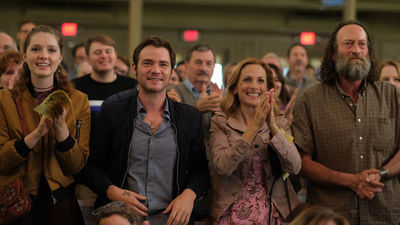
“CODA,” which stands for Child of Deaf Adults, is the story of Ruby Rossi (Emilia Jones, giving a true star-making performance after impressing last year on Netflix’s “Locke & Key”), a hearing daughter of deaf parents and sister to a deaf brother. She works every morning with her father (Troy Kotsur) and brother (Daniel Durant) to help keep their struggling Gloucester fishing business from going under, going to school smelling like fish to keep everyone happy. From early in “CODA,” it’s clear that Ruby has long endeavored to make the people around her happy, often being the sign language interpreter for her family at the expense of her own interests.
Ruby breaks out of her shell in this unusual coming-of-age narrative with two changes—young love with a boy at school named Miles (Ferdia Walsh-Peelo of “Sing Street”) and joining a choir class run by a teacher (Eugenio Derbez) who realizes that this young lady can really sing. Can Ruby find a way to balance her own dreams for the future and stay true to her family? Writer/director Siân Heder tells multiple stories here, placing familiar narratives like teen romance and an introvert coming out of her shell against a backdrop we haven’t really seen before in a deaf family in a fishing community. The contrivances and sitcom elements, particularly in the more traditional parts of the story, are undeniable, but they’re crushed by the massive heart of this movie. You come to care deeply about these characters, especially the members of the Rossi family. Heder is comfortable presenting them in all of their flaws and strengths, allowing all four of them to feel fully formed by the end, making the inevitable emotional moments incredibly powerful.
Heder’s nuance with the Rossi family wouldn’t be as effective without stellar performances from all four actors who play them. Kotsur gets to a lot of broad comedy bits as the dad who lacks a filter, even via sign language, but he also really imbues his role with a deep sense of working-class sadness, watching his business fade away to crushing regulation and realizing things are going to change in every way. Matlin makes a welcome return to features with a natural, lived-in acting turn, and she absolutely destroys a late scene with her daughter about the day she was born that would crack the coldest heart. Even Durant gets more development than one might first think, and he too gets a major scene in the end that he nails. However, this is Jones’ film and she gives one of those young performances that feel like a pronouncement of someone who will be around for years. Think early Emma Stone, Saoirse Ronan, or Kate Winslet. She’s just great.
All of that wonderful stuff in the Rossi family is offset a bit by the other elements of “CODA,” including a pretty broad, familiar turn from Derbez and an underdeveloped love story. It’s not really the fault of either actor that their material just doesn’t resonate as much, feeling much more the product of a familiar Sundance indie. “CODA” comes to life around the Rossi dinner table or on the ship in the morning as they go about their business, and sinks a bit when it’s forced to hit familiar beats. By the end, you won’t care about the latter. You’ll care too much about the Rossis, one of the most three-dimensional, genuine families in a Sundance dramedy in a long time.
A very different kind of joy erupts from every frame of “Summer of Soul (…Or, When the Revolution Could Not Be Televised),” a powerful reclamation of a major cultural event that was lost to history. In 1969, the same summer as Woodstock, a different concert unfolded in a park in Harlem as more than 300,000 people attended something called the Harlem Cultural Festival. It was filmed and then the footage sat in a basement for fifty years, assembled into a documentary here by the insanely talented Ahmir “Questlove” Thompson of The Roots, who brings together many of the performers, attendees, and other cultural icons of the era to discuss what went down that day and how it reflected so much of Black history and Black future. It’s a joyous piece of filmmaking, something that I could have watched for literal hours, and contains quite simply some of the best concert footage ever put on film. It’s stunning to consider what else might be sitting in a basement somewhere.
Questlove alternates interview footage, often accompanied by images of the interview subjects seeing the concert clips for the first time since that day, with lengthy segments of performance. Being an artist himself, he balances the music of the event with its greater meaning well, sometimes feeling like he’s biting off a bit more than the film can chew in terms of capturing so much of the Black experience through the filter of one day, but often justifying that ambition. He presents the Harlem Cultural Festival as a major turning point in New York history, a coming together of various races and cultures, and a reclamation of the word Black. Instead of just giving people a you-are-there sense of the event—and he does that with stunningly restored video and audio—he places the event in the context of history, noting when it happened in relation to events like the assassination of Martin Luther King Jr., Malcolm X, and the Kennedys. The concert even happened on the same day as the moon landing, and interview segments in which Harlem residents wonder why that money couldn’t have been spent on them give the piece added context. It’s not just a concert—it’s an examination of a turning point in culture.
And yet Questlove doesn’t dismiss the power of the music itself. Some of the performances here are breathtaking, including great ones from Gladys Knight and the Pips, Stevie Wonder, Sly and the Family Stone, and, most of all, a performance of “Take My Hand, Precious Lord” by Mavis Staples and Mahalia Jackson that tears the roof off wherever one watches this movie. Introduced by Jesse Jackson himself as one of Martin Luther King Jr’s favorite songs (a request to hear it was reportedly his final words), the performance riches a different level of history and emotion. It’s something else.
The empowerment and inspirational aspect of “Summer of Soul” is tempered by the sense that generations were robbed by not seeing it earlier. Why didn’t this film, gorgeously shot and edited, gain as much cultural traction as “Woodstock,” inspiring viewers decades before now? And how many other life-changing events are waiting to be reclaimed?
Kourosh Ahari’s “The Night,” about a couple confronting their personal demons in a haunted hotel, is a knockout debut feature—so assured that it stands on its own as a filmmaking achievement apart from its historical significance, which is considerable.
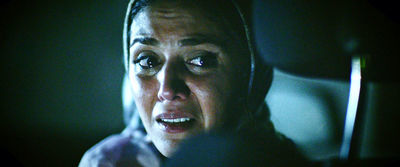
Shot on location in Los Angeles, by a crew in which every department head was Iranian American; steeped in the specific culture of West Coasters of Persian descent; and featuring probably 80% dialogue in Farsi with subtitles, this is the first American-made movie to be invited to screen commercially in Iran. But what’s ultimately most impressive about “The Night” how it manages to feel big despite being a small film, filling up the screen with atmosphere, performance, tension, and a sense of style even though it was shot quickly and cheaply in available locations. Like “The Babadook,” “Reservoir Dogs,” “Blood Simple,” “She’s Gotta Have It” and other memorable debuts that amounted to a promise of future films worth seeing, this movie offers additional proof that you don’t need a lot of money to make a good movie. You just have to understand your material and your craft, and make sure that everyone involved in the production is on the same page, which was obviously the case here.
The story begins with a married couple, Babak Naderi (Shahab Hosseini of “A Separation” and “The Salesman”) and his wife Neda (Niousha Jafarian of “Here and Now”) and their infant daughter hanging out at another married couple’s Los Angeles home. Although it’s a pleasant evening for the most part, it’s clear that there’s unaddressed tension in the marriage, particularly having to do with Neda’s discomfort with Babak’s drinking.
On the way home, they fight in the car—mainly over the question of whether Babak should even be behind the wheel—and get lost near downtown. Their navigation system is messed up for no apparent reason, and there are a few other vaguely dreamlike tells that indicate something is amiss. Running low on gas, they decide to stay in at the Hotel Normandie—one of many plot elements in “The Night,” that doesn’t necessarily stand up to strict logical scrutiny, since the couple lives only 30 minutes away and taxis and rideshares exist, but it’s best to just roll with movie and not go CinemaSins on it—and it’s here that the movie kicks into “The Shining” mode, with Babak, Neda and their baby checking in and hearing and seeing increasingly scary things.
Ahari and cowriter Milad Jarmooz balance the Kubrickian aspects that you’d expect from this setup and a behavior-based, at times almost theatrical component that invests all of the story’s tension in the lead performances. Rooms, hallways, alleys, and streetscapes that would seem unremarkable in real life are photographed (by Maz Makhani) and scored (by Nima Fakhrara, channeling quasi-experimental composers like Ludwig Göransson and Brian Reitzell) in such a way as to suggest that something eerie or possibly deadly could emerge at any time, from any part of the frame.
The filmmaking pays especially close attention to negative space, and what’s in focus and what’s out. There’s a long sequence that plays out in a tight closeup of Babak lying in a bed having a conversation with Neda, who’s out of focus in the background behind him, and eventually things take a turn for the weird, and the fact that you sense that something’s not right long before Babak does gives the scene an edge of black comedy that can only come from every component of filmmaking and performance operating on the same wavelength. I’ve been a horror buff all my life, but (like “Invisible Man” last year) this movie still managed to show me a few things that I’ve never seen before—nothing revolutionary in terms of style of subject matter, but subtle variations on known quantities: the cinematic equivalent of a new turn of phrase, or a word that usually means one thing somehow meaning the opposite, thanks to the context in which it’s used. You’ll know what I mean when you watch the movie.
Once you settle into the vibe of “The Night,” you get to a point where you think you can figure out what’s going on and what’s coming next. That’s when the movie switches things up and goes in a different direction—but a rewarding one. Ahari, who also edited the movie, seems to take his cues not just from certain well-known classics of modern horror (and horror-adjacent hotel films like “Barton Fink“) but from an earlier mode of mid-20th century European art cinema/psychological drama represented by directors like Ingmar Bergman, who made films (particularly early in his career) where realistic situations were presented in terms of metaphor, or vice-versa, in such a deadpan way that you had to accept that you were seeing a story wherein you were supposed to take things seriously but not literally—as in a dream that feels like it’s all actually happening until you figure out that too many things feel “off.”
Hosseini’s hangdog expressions, particularly in silent closeups, have the ragged, carved-from-sheetrock beauty of Benicio del Toro when his characters are struggling towards self-knowledge and not quite getting there. Jafarian matches him, doing a lot with a part that turns out to be a lot deeper and trickier than the film’s opening scenes indicate. There are a lot of secrets being held in deep vaults by both parties, and part of the movie’s delicate balancing act is figuring out how much to give you, and when, and letting you arrive at correct conclusions or jump to incorrect ones.
There’s a sociological or anthropological component happening in the margins: this is also a movie about being foreign born and nonwhite in a white-run, English speaking country, and while this never overwhelms the main story, it informs it, particularly in scenes where the couple interacts with a white police officer (Michael Graham) and a Black homeless man (Elester Latham) whose disheveled appearance and unnerving approach trigger feelings of class anxiety in the couple, and momentarily prevent them from figuring out that he might have something important to tell them.
George Maguire’s performance as the hotel’s night manager is a standout in a cast filled with gems. He has one of those mellifluous voices that seizes control of a movie the instant you hear it—a honeyed tenor verging on baritone, the voice of a narrator in a very old Hollywood movie—and it echoes in your imagination for the rest of its running time even when he’s not onscreen (like Zelda Rubinstein in “Poltergeist,” whose delighted “This house is cleansed,” once heard, never leaves the mind).
There are two or three moments where you might worry that “The Night” is overplaying its hand or overstaying its welcome, but these turn out to be setups for yet another feint, jab, or knockout punch. The final five minutes is assured a finale as any I’ve seen, and the final few shots are bracingly uncompromising, practically a gauntlet thrown down to viewers who treat moviegoing mainly as a chance to outsmart the storytellers.
This is not the kind of movie you try to outsmart. It’s not a puzzle. It’s something else: the kind of movie you see and think about and argue about, knowing that there’s no correct answer to “What happened?” or “What does it mean?” It’s as if “The Night” is constantly playing on what we think we know about this kind of movie and recalibrating its approach in every scene to keep us as unsettled as its lead couple, who checked into the marriage crisis equivalent of the Hotel California and worry that they might never leave.
Given how Sundance is such an of-the-moment festival, we can expect that there will be a great deal of stories being told regarding our current trauma, a saga we are still just starting to understand (you know which one). Let us hope the films are as eye-opening and vital as “In the Same Breath,” the latest documentary from Chinese-born American filmmaker Nanfu Wang (her previous documentary about China’s one child rule, “One Child Nation,” played the festival in 2019). Our understanding of this issue is better for her thoughts, and her dedication to capturing that of many others. The film is both a thorough damnation of how China and America lied to their people about the threat of COVID, and a feat of disarming empathy for those who have been gravely misled.
“In the Same Breath” is Wang’s biggest documentary so far, and yet it has the undeniable guidance of Wang’s approach to storytelling. It is informative about what Wuhan was like during the first days when Coronavirus was spreading unbeknownst to the larger public, and incisive when it comes to government. (A shot of nine state-supported Chinese news channels, reading off a strict script in unison, is particularly chilling.) That sense of disinformation naturally leads to outrage, and a sense of horror. “In the Same Breath” is of course a tough watch, but it’s a must-see for its expansive, heartfeltperspective on this worldwide catastrophe.
What’s particularly amazing about this movie is the scope, and the poignancy that nonetheless defines numerous sequences that could fill separate documentaries. Wang covers both China and America with different experiences of medical workers, and those who have suffered terrible loss. Some passages in the film are lead by pure emotion, documenting the faces of healthcare workers as they share traumatic experiences from their jobs while fighting the virus. “In the Same Breath” can have a cathartic, watching people get things off their chest that has been buried by their duty, or forcefully by the government (in China, and in America). You can easily imagine the four-hour cut of this movie that focuses more on people’s faces finally letting loose of some feelings, and that film would be just as great.
In other passages, Wang shares her outrage—however muted—with a strong dynamic of fact vs. fiction. While one might be aware of both COVID-19’s toll and also the fact people are denying, Wang makes a heavy, tragic statement about this disconnect of information by showing both parts in great detail. She is not a provocative filmmaker, but she does want you to sit with the pain of COVID, showing numerous faces of whose who suffer from something that countless others will write off as “just the flu.”
As in “One Child Nation,” Wang remains a director who is fascinated by propaganda, but not because of its size. Instead, she very clearly sees the individuals in the image, even if it’s one of many Chinese ceremonies with countless bodies in concert. She wonders about why people believe what they believe, and how their sense of patriotism could be so damaging to their own livelihood. By framing the toil of COVID as equally a Chinese and American tragedy of misinformation from authoritarianism, she proves again that she is not only one of the most empathetic documentarians working today, but one of the wisest.
Playing in the festival’s Midnight section, Prano Bailey-Bond’s “Censor” focuses on a unique office job that can have its mundane, tedious days—that of being a film censor in the 1980s, and having to watch horrific acts of violence and then provide exact notes on which nasty things have to go. Enid (Niamh Algar) has such a job and she is no horror fan. Her job is starting to eat away at her, in tandem with the trauma that she has about a sister who went missing decades ago. The mystery has never been solved, and it has made her especially vigilant about what the public sees. She shudders when someone thinks she has a job about entertainment—she sees her full-time job as an act of protection.
Enid does not view horror the same way that you and I might—she sees the gut-ripping and the pouring blood as real acts of violence, something that is just as offensive as the real act. This proves to be a great hook for the story’s character-based horror, and co-writers Bailey-Bond and Anthony Bond slowly develop it. Maybe too slowly, as some scenes of her at work, sitting with the violence as if it were sickening, can hit repetitive notes. There’s also a semi-ineffective subplot in which one of the movies Enid was in charge of censoring inspires a heinous act in real life, making her a target at work, and in the news. It all adds to the pressure in a state of torment one could certainly call in full effect.
But “Censor” and its clever approach to media literacy takes off when it focuses on Enid’s psychosis, especially after Enid thinks she sees something in a ghastly horror movie that is very real. The movie wanders off to some dreamy places, without director Bailey-Bond holding one’s hand to explain why a film set is depicted as just two lights in the woods.With a winning confidence, she instead guides the viewer to a frightening, disorienting, and frankly shocking third act that builds with one strange image after another, breaking our notion of reality (the last few shots are great).
Algar’s performance is a fascinating centerpiece—at first it’s cold, the way that she keeps herself in isolation while hanging out in an otherwise social office, or sits about in a barely populated apartment. She shows the deep fear within that stoicism, especially as Enid is triggered and disturbed by the images she must look at closely for her work. “Censor” is incisive about how overpowering fear can be, and how it can twist how one sees the world. The movie is so good that it even bypasses the conceit that Enid clearly should have quit long ago, as she approaches this job like it were a duty foisted upon her by a dystopian society.
“Forgive my impatience, but I hope you will reveal your plan for me soon. I can’t shake the feeling that you must have saved me for something greater than this.” This is how Maud (Morfydd Clark), a home nurse living in the seashore town of Scarborough, talks to God. Her tone is intimate, practical, chatty, as though He’s sitting in the next room. When things start to go wrong, however, her voice takes on a distinctly irritable tone. God isn’t holding up His end of the bargain. “I can’t help but feel an act of spite has occurred,” Maud scolds God. Maud is a recent convert to Roman Catholicism, and glows with the evangelical zeal of her brand-new faith. She wants everyone to experience the bliss she’s experienced. “Saint Maud,” an eerie and disturbing first film from writer/director Rose Glass, shows Maud’s first attempt to “save” another soul, and the cracks that open up underneath Maud’s feet in the process. Is Maud touched by the divine? Or is she going mad? Is there a difference?
“Saint Maud” stays very close to Maud’s point of view. She is in every scene. We see events through her eyes. The glimpses we get of other people’s sometimes alarmed responses to her are important moments of outside perspectives, but Maud is our only entry into the story. This makes for some very tough but rewarding viewing. Although the film has much in common with other religious-based horror films, and is often quite terrifying in its own right, “Saint Maud” is mostly interested in the experiential realities of its central character, and Clark is so deeply in touch with Maud’s shattered psyche it’s impossible to look away from her. It’s thrilling to meet a character where you have no idea what she will do from one moment to the next.
Maud gets a new gig as home “carer” for Amanda (Jennifer Ehle), a famous dancer and choreographer who has retired to the seashore for the final months of her life. Amanda surrounds herself with evidence of her old glory: posters of her dance recitals, her costumes, makeup, outrageous jewelry. She’s in the midst of one final romantic fling, with Carol, a young woman she met online (Lily Frazer). The ascetic Maud, peeking through doorways and down dark halls, is worried about all of this. Amanda needs to be “saved” immediately.
At first it seems that Amanda might be open to the succor Maud’s preaching has to offer. But maybe Amanda is just playing along, or, worse, making fun of Maud’s fervor. And first “Saint Maud” feels like it is about a power struggle between Maud and Carol for the heart and/or soul of Amanda. But “Saint Maud” takes a turn. This story is not about Maud and Amanda, not really. It is about Maud alone, and what happens to Maud when Amanda rejects conversion in a very public way (i.e. tells Maud to back off). Maud’s deterioration is rapid. With each scene, each moment, more and more of Maud is revealed, who she was pre-conversion, who she is now. The center cannot hold. There is no center.
Maud’s face is serious and intense, and her hair hangs in long curtains on either side of her face. She moves through the busy resort streets like a wraith, existing on another plane, floating above her body in reveries of bliss, transcendence, ecstasy. How to maintain that state is a constant struggle. She puts nails through the soles of her shoes and slowly walks the pier, blood seeping out onto the ground, her face blazing with pain and ecstasy. You’ve heard of the “pebble in the shoe,” but pebbles aren’t enough for Maud: she needs nails! She puts hard corn kernels on the floor and kneels on them to pray. When she senses God’s presence, her face contorts involuntarily into an open-mouthed almost frozen gaze of ecstasy, more like an orgasm than anything else (historically, those lines have always been blurred). Maud’s backstory is mostly obscured. We don’t know how she came to be “saved,” but there is an extremely revealing sequence where Maud “backslides” into her former ways. This still doesn’t provide any easy explanation.
It’s exciting when newcomers like Glass arrive with a fully-fleshed-out and confidently executed vision, particularly when the vision is eccentric, difficult, and strange. This story has been told before. It’s in a continuum of stories of religious mortification, obsession, and torment. But “Saint Maud” comes with the stamp of its creator and shivers with fresh possibilities. By keeping the film a character study—as opposed to a plot-driven story of an avenging angel/demon—”Saint Maud” is less about the religion, and more about Maud’s existential loneliness (alone-ness, more like), her isolation, the dangers of being so cut off from humanity. The film has much in common with “Taxi Driver,” “Carrie,” and “First Reformed,” and it has a similar mood of inevitability and dread. Newcomer Adam Bzowski’s score—aligned with Maud’s subjective experience—is deeply unnerving, as is the sound design by Paul Davies, which further traps us in Maud’s point of view.
This is an independent film with a small budget, and Glass works extremely well within these parameters to create a murky and ominous mood. Glass uses the location of Amanda’s house to great effect, reveling in creepy moments of stillness, where the halls and stairways yawn around the quivering intense young nurse. The wallpaper is Victorian-busy, as are the floor tiles. The color scheme is very controlled, with an almost underwater gleam, greenish and dark, light struggling to make it through the thick mottled windows. Liquid is an ongoing motif, dripping from faucets, rolling in from the ocean, bubbling on the stove—greens and reds, soapy water down the drain, a strange cyclone suddenly erupting in a glass of beer. Reality is unpredictable seen through Maud’s sleep-deprived eyes.
Clark’s performance is central. Maud is most alarming when she is trying to be “normal,” when she attempts to be social. Nothing “comes off” right. People back away. Some of the scenes call to mind Travis Bickle in “Taxi Driver,” trying to talk to Peter Boyle or the other taxi drivers. It is now impossible to hide his true nature from others. Maud is the epitome of “too much.” In one scene, she smiles at people sitting at the next table in a pub, and they recoil a little bit. That girl … why is she staring at us? Why is she smiling like that? What is wrong with her?
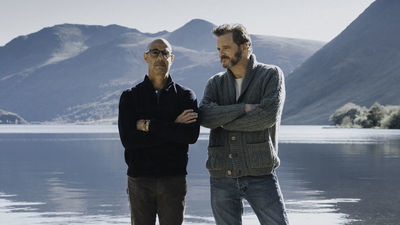
“Supernova,” from actor-turned writer/director Harry Macqueen, is a tender but bittersweet love story about a long-time couple on a road trip to see favorite places and people as one of them struggles with memory loss. In an interview, Macqueen talked about what he learned about making films as an actor reading scripts and observing directors, and what actors Colin Firth and Stanley Tucci brought to his film that was even more than he envisioned.
You’ve written and directed two films so far and both have been about literal journeys, with two characters on the road.
Really the literal journey, mirroring or running alongside at least, an emotional journey is always quite an interesting way of telling a story. And also, the way that you hope to use a landscape within that cinematically can be very powerful. So, those things have always appealed to me about road movies in general. And also, just the sort of originality really, doing one in the UK, because we don’t really make road movies very much here. I think I was aware quite from very early on with the film that I didn’t really want to make this a domestic drama about two people living at home. I thought it was an original and interesting way of telling the story to put it on the road and to offset the sort of the micro and the macro really; because you’ve got this small, intimate journey within this vast landscape, both emotional and literal. So, all of those things really sort of fed into my decision to make another road movie of sorts.
One thing that particularly impressed me about the film is the way it portrays a very long-term, lived-in relationship, with all the affectionate, bantering, and bickering that reveals a long history. How did you work on that in the script and with the actors?
It’s a team effort to get that right and it does extend all the way through to production design, and how you shoot the film, and of course, perform it. But it starts with the script; it has to start with the script. Obviously, a writer knows the characters incredibly well so you sort of form a relationship as solidly as you possibly can in that part of the process. And you want to try and make it as grounded as possible, really, as subtle and nuanced. And that obviously then extends to performance. Colin and Stanley do it just so remarkably. What they bring out of each other in the film it is surprising as it is or seems effortless, really, in a way, and exactly what I hoped it would be, subtle and nuanced and complex. Colin and Stanley definitely were helped by the fact that they have an enormous amount of trust with one another, because they’ve known each other for some time, and they’re so close. So, I think bringing a lot of that sort of natural energy that they have in their relationship into this relationship was a big part of that. But then of course, it was a difficult job for them because they have to step away from their off-screen relationship. You sort of use what is worth using, what is helpful, and then you have to re-contextualize the rest of it in keeping with the character in the situation.
There is such a striking moment in the film early on when Stanley Tucci’s character, Tusker, wanders off, and Colin Firth’s character, Sam, is frantic. And yet the resolution of that scene, when Sam finds him, is shot from the perspective of the driver’s seat in the camper, through the windshield. Tell me about that choice.
Well, I think one of the things that I was really interested in with this film was trying to avoid melodrama. The film comes from a long period of intense research for me. And what I found when I was spending a lot of time with people who are living with this condition is that melodrama, and high drama happen, but it’s actually reasonably rare. The drama for this kind of relationship is constant, actually. It’s constant low-level drama. And so, I think the film reflects that and that is the way I wanted to shoot it.
The atmosphere of the film, in general, was to be as truthful as I could and also be as authentic as I could to that. So, being at times almost voyeuristic with the way we shot it, and certainly removed and restrained, not emotionally removed, I hope, but certainly, cinematically poised, I think seemed to be a really truthful way of telling this story. It’s a very difficult thing to pull off. But you try and you make it look easy and poetic, which is one of the things we were trying to do with the film, certainly. That seems like a good example because a very obvious way of shooting it would be to go into them in tight close-up and see their emotions. But actually sitting back a bit allows them to have a private moment away from the audience, which I think was key at that point.
There’s a long scene near the end where they argue and both of them have good points to make. The big question, though, is who gets to decide? Who casts the deciding vote?
When you’re put in this situation there is no answer to it, really. And I think that’s one of the reasons that I wrote it. Those arguments are strong. The back and forth is as strong on both sides. It’s just an incredibly complex thing to find an answer to. And I think it extends to the sort of the ending of the film itself, really. I always wanted to leave the film poised hanging on a precipice, because that’s what these characters are doing. That felt the most truthful way of presenting this conversation or debate about end of life choices certainly. Because I think there’s no answer sometimes, and I think that’s fine. And it’s important to explore that as much as it is to find an answer within a film. When films or books or piece of theater or anything leave you asking perhaps more questions than you are allowed to answer, I feel like it’s a bit of a gift really from the filmmaker or the writer to you, the audience, to take the story away into your own life and make of it what you will. I’ve always found that quite rewarding as a film watcher. So, something that I was interested in doing here.
What did your experience as an actor teach you about screenwriting? How did that inform the way that you write?
First and foremost, I write for the characters and for the actor, or actress. That’s the first thing that takes place in my process, really. The characters come first, and then other things are informed by that rather than necessarily the other way around. I always want to try and write for actors, the kind of parts that I would like to have myself, maybe is a good way of thinking about it. And I think that this project certainly there’s no question that the exercise was really kind of simplicity of narrative, complexity of character.
As an actor, you’ve had an opportunity to work with some great directors, including one of my favorites, Richard Linklater. What have you learned from them, that you brought to your own directing?
Well, with Rick specifically, I had a very small part in his film, [“Me and Orson Welles“]. But I was there a good month, making it. And so, I spent quite a lot of time hanging out with him and being directed by him, obviously. And I think his style of directing is very reflective of his films. He’s really, really laid back. And he makes everything fun. And I think he wants to have a good time making the film. To be honest, that is as important, the way you make the work is just as important as the outcome of the work itself. And you do have a duty as a filmmaker, to make the experience collaborative and enjoyable for everyone doing it. Because as you know, making a film is really difficult all the time. So, I definitely learned that from him. I was rightly inspired by how relaxed and free he was with his actors and with his direction.
You talked about doing research and clearly, you know something about people with dementia, but apparently, you also studied the caregivers as well.
Yes, exactly. I spent a lot of time learning all sides of the equation, really. So, the medical aspect of it, the sort of biology of it, but also really, really importantly spent an enormous amount of time with families and couples, who are living this life. And if you do that over two or three years, which is what I was doing, and I still do it, you see those relationships change. You obviously see the person change, which is really interesting, and also desperately sad and funny and life-affirming and all of those things. But also you see how relationships change around that person to accommodate for that disintegration of character, and that is what really drew me to making this film.
In a way it’s slightly more a story about the caregiver than it is a story about the person that is suffering with the condition. And I think that the way that relationships have an equal partnership and then become very unequal when one person within that has to become a caregiver. So, you go from being a lover to a caretaker. I think that what was really interesting to me. And that actually was one of the things that affected me emotionally more than anything else when I was doing my research. Because I think ultimately having any form of dementia is, of course, an incredibly challenging thing for anyone to go through. But you can’t ignore the fact that at some point in that dementia journey, you will not know you are ill anymore, you won’t know who you are any more. So, what you’re then left with is the collateral damage for the people around that person. And that’s very interesting. And watching a loved one unravel and losing a loved one almost piece by piece, week by week for a long, long time is a really quite incredible thing to go through.
Colin Firth and Stanley Tucci give gorgeous performances in the film. What did they show you about your characters that you hadn’t quite realized when you wrote it?
Oh, so many things. I would be here all day talking about that. But I think the honest answer really is the nuance that they imbued each character with. Because the script is naturally very subtle, and it’s short, and there’s not a lot of exposition, and you’re actually throwing the audience straight into a situation that they absolutely have to believe in right from the start because there’s nothing to help you really; it’s the actors and that’s it. So, I think that what they brought to both roles was an enormous amount of compassion. And I think they always do that as actors. That was one of the things that appealed to me about working with them in the first place before I even met them. They have such a big, well of empathy that they draw from, and that they give to their characters. And I think that’s kind of amazing.
The film was inspired by some really important experiences that I had and a lot of time that I’d spent with people that are living through this sort of experience, and that was life-changing thing for me. It was just so important to make sure that the characters were played with integrity and complexity. Stanley also taught me how to make cocktails, so there’s that!