Categories
TV & Movies

Sundance 2021: In the Earth, I Was a Simple Man, John and the Hole


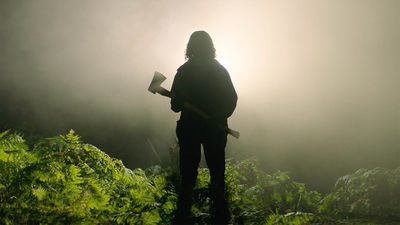
We are going to see a lot of movies about the pandemic. Major world events always influence art, and we can expect issues related to COVID to work their way into every genre. One of the first pieces of filmmaking clearly inspired by what went down in 2020 was written last March and produced last Summer in Ben Wheatley’s return to form, “In the Earth.” A horror movie about isolation, paranoia, and dread, it’s a work that cribs from Tarkovsky and Wheatley’s own film history with echoes of the work he made before he started working with MCU stars like “Kill List” and “A Field in England.” It’s a sensory experience, designed to unravel and unsettle viewers with a visual and sonic assault. It may not all come together in the end, but it’s certainly going to be one of the most unforgettable experiences of 2021. (Neon has already picked it up for release.)

A deadly virus has ravaged the world and sent a doctor named Martin Lowery (a great Joel Fry) to a remote forest in search of a doctor in a research hub there who may have some answers. The hub is only reachable on foot, and Martin begins the journey with a park scout named Alma (Ellora Torchia), but the two encounter a man who appears to be living well off the grid named Zach (Reece Shearsmith). The  travelers soon discover that Zach’s dangerous, convinced he’s found a way to communicate with the forest and the earth and all the things the mundanity of human existence has shrouded. Things get  much weirder from there. Think “Annihilation” with more aggressive design and outright gore.

Working with cinematographer Nick Gillespie and composer Clint Mansell, Wheatley has made a film that becomes more and more unsettling with each scene while also maintaining a playful sense of twisted humor. It feels almost like they’re trying to mirror the panic of the world and the impact of forced isolation as the film spirals into its more surreal and psychedelic episodes—warning to anyone who needs it that this may set a record for flashing strobe imagery. It’s an aggressive, unsettling experience that will leave viewers shaken and trying to unpack what it’s all about.

So what’s the answer to that? For me, “In the Earth” is about four people trying to put the world back together, to figure out what’s wrong and how to fix it, no matter what that takes, including new kinds of thinking and even sacrifice. It mixes science, religion, and the supernatural into a nightmare vision that recalls everything from “Annihilation” to “Event Horizon.” And Wheatley keenly understands that this kind of quest to figure out the impossible only gets better if it gets more and more confusing. I’m not sure yet what it all adds up to but the same could be said about where we are in January 2021. This isn’t just a pandemic movie, it’s a MID-pandemic movie. We all learned that the impact of isolation and an unknowable future can drive people insane and now Ben Wheatley has made a movie about that. It won’t be the last.

If Wheatley is cribbing from Tarkovsky, Christopher Makoto Yogi is heavily influenced by other masters in his feature “I Was a Simple Man,” an elegiac drama that echoes Apichatpong Weerasethakul and Yasujiro Ozu in its look at man’s final days on this Earth. Cinematographer Eunsoo Cho produces some lovely shots of the Hawaiian landscape and Yogi has some interesting things to say about the process of dying, but his film is too often languid when it’s reaching for profound. It’s a near-miss, a work that’s easy to admire in terms of its narrative ambition and compassionate craftsmanship, but that further proves how hard this kind of somber cinema can be to pull off well.

Masao (Steve Iwamoto) is a Japanese American living in Hawaii, where he’s relatively off the grid, removed from family on the mainland and with few resources. He receives a mortality diagnosis and Yogi’s film unfolds as a meditation on how ghosts can haunt us even before we die. Masao’s long-deceased wife (Constance Wu) comes to him as if to accompany him to the other side, and Yogi’s story jumps back to key events throughout the man’s life, but this is not your typical death melodrama. What will we think about when we die? What will we feel? Whose faces will haunt us last?

Yogi clearly sees death as a natural process, presenting the final days of Masao as a lyrical, spiritual communion of sorts with the entire history of his setting. The film weaves back and forth in time, presenting long shots of the world around Masao, almost as if he’s returning to his natural form. There’s a deep empathy in Yogi’s work that’s admirable, but there’s also too often a sense of self-importance that makes the film feel like it’s meandering instead of finding deeper meaning. It takes a fine calibration of tone to make a film like this register as more than an experiment in style. There’s poetry here, but there are also long sections that feel hollow.
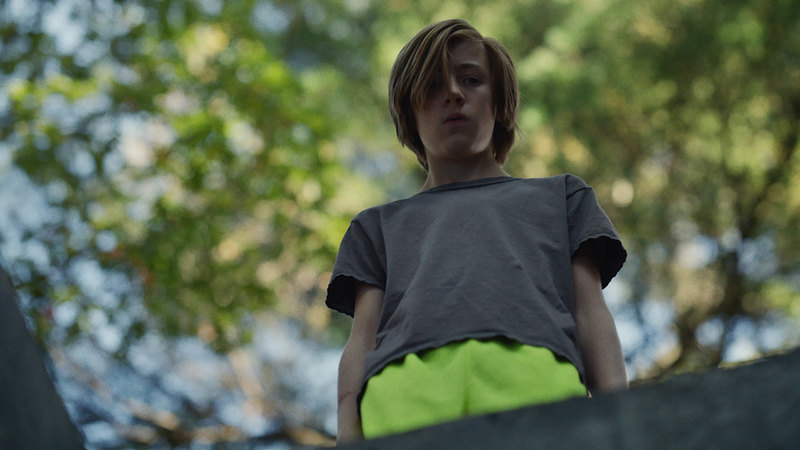
Hollow is a word I would also use to describe Pascual Sisto’s frustrating “John and the Hole,” and it’s another film from the second day of Sundance 2021 that feels heavily inspired by acknowledged masters. In this case, the influences are clearly Yorgos Lanthimos and Michael Haneke, but Sisto’s work lacks the dark humor of the former and the bloody teeth of the latter. The result is an experiment in blank affect and fractured domesticity that drags itself to a disappointing ending that only confirms it never really had anything on its mind.

John (Charlie Shotwell) is a relatively average 13-year-old. He plays video games with a buddy online and is training for a tennis qualifier. The repetitive nature of his life is amplified by Sisto’s boxed-in aspect ratio and Shotwell’s dead affect. This kid feels trapped before he makes the decision that changes his life forever. That comes when he finds an unfinished bunker deep on his family’s property. He drugs his family, including parents played by Michael C. Hall & Jennifer Ehle and a sister played by Taissa Farmiga, and he dumps them in that cement hole in the ground. As they wait for him to return, he goes about normal life, driving a car and even having a friend over to visit. As his family is stuck in the present, unable to figure out what happened to get them here and with no knowledge of what happens next, John tries to become an adult.

An unusual coming-of-age drama, “John and the Hole” is a heavily stylized piece of work that too often feels like it doesn’t exist in the real world and yet doesn’t have much to say as allegory either. I’m fine with the logical jumps in a film like “John and the Hole” if they feel like they’re adding up to something or even producing some kind of audience response as in the Wheatley film, but Sisto’s movie is defiantly removed from emotion and recognizable human behavior. It’s a thought experiment, punctuated with even more bizarre scenes involving a mother and daughter unrelated to John’s family who may be telling the story of the hole and may be going through some similar parent/child detachment. Who knows. There are effective scenes—a tense pool encounter with John’s friend is wonderfully drawn out—but it’s a film that grows more frustrating with the sense that it has nowhere to go. Maybe that’s the point? Domesticity can be hollow and aimless? Tell me something new.



Source link

Categories
TV & Movies

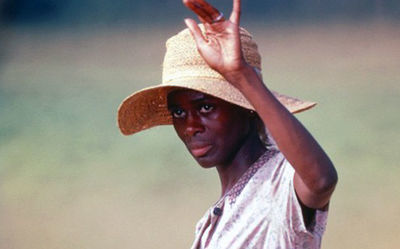
Cicely Tyson: 1924-2021


It seemed as if Cicely Tyson would go on forever. With the news of her passing yesterday at the remarkable age of 96, we all have to come to terms with what we have lost. She saw nearly a century of extraordinary change and progress, but also of ongoing struggle and resistance. Yet she always maintained her dignity, class and resolute determination.

What Ms. Tyson wanted to be more than anything else was to be a working actress, and she was that for seven decades. A record like that would be any actor’s lifelong dream, and it’s one that very few in the business actually achieve. And in this unpredictable business it could not have been easy to continue a career with some 95 film and TV roles, not to mention her prolific work on the stage. It came as a result of hard work, a strong belief in one’s considerable talents, nerves of steel and the confidence that by being a Black woman all things were possible.

As with so many who have achieved so much, she came from humble beginnings. Born in Harlem in December 1924 to West Indian immigrant parents, she started off as a model for Ebony Magazine during the early 1950s, making her film debut in the just recently rediscovered low-budget independent B-movie “Carib Gold” with Ethel Waters and Geoffrey Holder. Within a few years came her first two breakout performances. First, a major role in French writer/playwright/political activist and ex-con Jean Genet’s controversial satirical play about racism and stereotypes The Blacks in a cast including Maya Angelou, James Earl Jones, the still overlooked groundbreaking comedian Geoffrey Cambridge, Roscoe Lee Browne, and Louis Gossett Jr. The play was such a smash that for the better part of the decade it was the longest running off-Broadway play in New York.

But it was the second breakthrough which bought Ms. Tyson into much wider public attention on the 1963-’64 CBS drama “East Side/West Side,” starring George C Scott as a dedicated but cynical New York City social worker dealing with urban turmoil and strife. The show pushed the boundaries of what the network censors would allow on the air during that period, as episodes dealt with topics such as racism, prostitution and sexual assault. Tyson played the role of Scott’s secretary, but her character evolved and became a social worker herself. However, her character was written out of the show before the end of the season when Scott’s character became a congressman’s aide in a desperate effort to boost the low ratings of the show. Ms. Tyson had made TV history. It was the first time that a Black woman had a non-stereotyped regular role in a TV drama series. There had been black women as regulars in TV comedies such as “Amos and Andy” and “Beulah,” but never before in a dramatic show.

However, there was another groundbreaking controversy in regard to Tyson’s role, and that was her hair. She wore a short Afro on the show, and keep in mind that back in 1963 that was about as radical and subversive as one could imagine. Very few black women had the audacity to wear their hair natural back then and let alone on an important primetime TV series on a major network. She was protected by the show’s progressive producer David Susskind, but the backlash was fierce, and not including just white viewers but from black women who took particular offense. It was simply not the thing to do. How were they going to be accepted into the white mainstream society without straightening their hair? The controversy even made the cover of Ebony Magazine. But that was her. Fearless, honest and being who she was without artifice. She made her own path and either you were along with her or you weren’t. She could not be concerned. She had to be true to herself. Naysayers be damned.

After Tyson was dropped from the show, she continued her work on television doing “galley years” guest spots on numerous series such as “Mission Impossible,” “The F.B.I.,” “Gunsmoke” and a beautifully nuanced performance on an episode of now forgotten “The Bill Cosby Show” (decades before he became persona non grata) a 1970 CBS half hour dramedy in which Cosby played a high school coach. In the episode, Tyson played a current girlfriend of Cosby whom he eventually falls head over heels in love with and proposes to her only to have her turn him down devastating him. The breakup scene is so emotionally charged in subtle ways thanks to Tyson’s committed portrayal.

There were some astonishing film performances too during this time such as her haunting work in Leo Penn’s intense and risk taking 1966 film “A Man Called Adam,” in which she played the love interest (a rarity itself for most Black actresses during the 1960s) of Sammy Davis Jr., a tortured self-destructive jazz trumpeter. Tyson is no wallflower. She deeply loves and supports Davis, but she knows that he can only help himself when he wants to help himself. (A new 4K restoration Blu-ray of the film will be released next week by Kino Lorber with an extra commentary track by the author of this piece.)

Tyson moved on to Robert Ellis Miller’s moving tearjerker “The Heart Is A Lonely Hunter,” based on the Carson McCullers’ novel, with Alan Arkin as a deaf mute in a small Southern town isolated, alone, looking for companionship and reaching out to other people broken in spirit. In the film, Tyson plays the bitter daughter of a local doctor with “daddy issues” until Arkin helps to reunite the pair after Tyson’s father finds himself at his most vulnerable point.

But then, of course, there was yet another breakout role to come in 1973, for which she was nominated for a Best Actress Oscar. In Martin Ritt’s “Sounder,” Tyson played Rebecca, the wife of a sharecropper played by Paul Winfield, who struggles to keep her 1930s Louisiana family and little farm together when he unjustly serves time in prison for stealing food for his family to eat. The emotional core of the film is their reunion when Winfield returns home to his family and her unbridled emotional joy of being together with him again never fails to move viewers. What makes the movie and that scene even more powerful is the raw honesty of the moment. Tyson wasn’t just playing a character but transformed herself into so many Black women through the ages who have endured and remain a tower of strength for so many Black men and young boys who have been punished, vilified and oppressed just for the act of being Black men in America. It is a performance that transcends acting to real human emotion.

“Sounder” was the film that not only skyrocketed her career, but also changed the course and purpose of her life. As she just recently said in a television interview just last week promoting her newly released and long-awaited autobiography, Just As I Am, she recalled an ugly incident during the publicity tour for the film, when an interviewer told her that watching the film made him realize his own racism and said, I was uncomfortable with your older son in the film referring to his father as Daddy. I said, ‘Do you have children and what do they call you?’ And he said ‘They call me Daddy’ And I said My God! This man is thinking that we’re not human beings and I made up my mind right there that I could not afford the luxury of just being an actress and that I would use my career as my platform. To have Black people be seen as human beings.” 

What she is talking about is the belief, though unfair it may sound to some today, that Black performers and artists of her generation knew that they were faced with the responsibility of representing the greatness of Black people to the world. Centuries of negative stereotypes, lies, and distortions have distorted our humanity, and it was their mission to correct that narrative. It was a burden that would make most people crack under pressure, but she felt it as a calling. To show and explore the full range, dimensions, humanity, and pride of Black folk. And it was something that she took on with her characteristic enthusiasm.

She was always careful in what roles she played, and it was never for the sake of just to be on the screen. As she also said in that recent interview: “Whenever I’m offered a script what I’m interested in, who was that character and why did they want me to play it? And when I get to that point where I feel like her skin has fitted my arm or my mind, then I know that there’s something about her.”

And that could not me more true for her perhaps greatest film transformation in her tour-de-force performance in the CBS 1974 movie “The Autobiography of Miss Jane Pittman,” directed by John Korty and based on the novel by Ernest J. Gaines, which chronicles the life of a Black woman from her years as a young slave woman in the South until her old age during the Civil Rights movement in the early 1960s. Tyson gave one of the finest performances of her entire career, both gentle yet filled with a steely resolve. The final, emotionally wrenching scene in which Miss Pittman, after a lifetime of hardship and heartbreak, with some small victories along the way, makes an act of defiance against the hard wall of oppression shakes the very foundations to its core. After the premiere broadcast it was reported that many viewers found the final scene so emotionally overwhelming that they left their living rooms to cry. It was never about big showy scenes but reaching inside to the inner soul of the person she was portraying. 

As the decades continued, Ms. Tyson kept working, adding that touch of class that elevated everything she was in with countless film and TV roles, including going toe to toe with the great comic genius Richard Pryor in “Bustin’ Loose”; as the pioneering Chicago teacher Marva Collins in “The Marva Collins Story”; in an NBC legal drama series in the mid-‘90s called “Sweet Justice”; and more recently in a recurring role for five seasons on Shonda Rhimes’ ABC hit drama “How To Get Away with Murder,” playing Viola Davis’ mother. And she worked with a wide array of directors from the aforementioned (and seriously still underrated) Martin Ritt, Peter Grenville, the late Michael Apted, and even the Hollywood Golden Age legend George Cukor, along with several Black directors from Michael Schulz to Bill Duke to Tyler Perry.

With all the awards and tributes in her life, one thing for sure is that she took pride in being a working actor, always looking for the next opportunity to reveal another dimension of herself. There was always that sense of mystery about her. It was not anyone’s business. It was all about her dedication to her art. That was the most important thing. She kept her private life very private. In fact, it wasn’t until a few years ago that anyone knew her actual age. And perhaps it was somewhat bittersweet that her book of memoirs was released literally just a few days before her death. It was perfect timing, keeping her secrets until the end.


Source link

Categories
TV & Movies

Sundance 2021: President, The Most Beautiful Boy in the World, Flee


Fairness has been long delayed and denied in Zimbabwe. Following a military-backed coup of the country’s president-dictator Robert Mugabe after a 38-year reign, his former Vice President and successor President E.D. Mnangagwa is running for reelection against an upstart challenger, the young MDC (Movement for Democratic Change) leader Nelson Chamisa. Camilla Nielsson’s “President” retells the battle for the soul of a nation through the prism of Zimbabwe’s controversial 2018 presidential election. 

Nielsson immersed herself in Chamisa’s camp, four weeks prior to the contest, to juxtapose Chamisa’s passionate campaign from his larger, richer rivals. For decades under President Mugabe, the country held rigged election after rigged election. Now, the younger generation, which includes the 40-year old Chamisa, believe this is their opportunity to reshape the nation. In fact, the candidate makes several references to “the Obama effect” to describe how they should campaign. And when one sees his fervent rallies, where he plays the raucous rally with a maestro’s precision, the comparison seems apt. But problems abound: The MDC hold significantly less money than President Zanu’s PF party, as evident by Mnangagwa’s building-sized pristine billboards. The ruling party also controls the police and military. They use the food aid provided by the UN as means to buy people’s votes. Most of all, they command those tasked with overseeing the contest—the Zimbabwe Election Commission.

When the enrapturing images of the inspired multitudes jubilantly supporting Chamisa fade into election night, these factors collide for a damning combustion. Ballot stuffing. Voter data manipulation. Fabrication of polling stations. The police deployed in riot gear dispensing live ammunition. The eviction of journalists from press conferences. These are the levers of unprincipled power employed by Mnangagwa. Chamisa, his deputies, and supporters—ignoring death threats and the real chance of violent political retribution—fight to the country’s supreme court to prove the justness of their cause, only to see justice denied. Measured and methodical, Nielsson’s “President” is a devastating, heartened report of democracy in peril against a dictator, a report that suddenly feels all-too familiar to Americans. 

Cinephiles will remember him from Luchino Visconti’s queer classic “Death in Venice,” others, from his brief appearance in “Midsommar;” and even more, from his swooning likeness in the manga “The Rose of Versailles.” Decades later the shadow of Björn Andresen’s visage, once boasted by Visconti as the most beautiful boy in the world, still casts itself not only across the world, but onto man himself, as well. Co-directors Kristina Lindström and Kristian Petri’s “The Most Beautiful Boy in the World” recounts the travails of a child destined for stardom, yet born for tragedy. 

In 1970, the legendary Italian auteur Visconti traveled to Stockholm to cast his cinematic adaptation of Thomas Mann’s novella “Death in Venice,” a film concerning an aging composer pining for an adolescent boy. The long-gestating project forced the director to travel to Hungary, Poland, Finland, and Russia in search of a teen to play the boy Tadzio. In the footage from Andersen’s audition, one can see Visconti’s leering countenance toward the feather-haired 15-year old, and the surprise on the teen’s angelic fair-skin face when the director asks him to remove his shirt. Andresen wins the part, becoming a kind of Timothee Chalamet—an idol of male beauty to women and men alike.  

Seeing Andresen today, however, his face obscured by cigarette smoke, his mouth enveloped by his lengthy grey beard, one recognizes the spiritual scars wrought by a child star left unprotected by the adults around him. Andresen intimates accusations of sexual assault on “Death in Venice,” illicit drugging in Japan, and sexualt assault in Paris—and recounts his mother’s probable suicide. For a time, “The Most Beautiful Boy in the World” is an agonizing watch, not just because of the anguish Andresen suffered, but how he recalls these miseries from a distance. We feel for Andresen’s depression, his reclusion, his emotional barriers from loved ones, but we’re not totally sure of the filmmakers’ connective thesis. That is, until Andresen pours forth one more unthinkable family calamity. 

In the final minutes of Lindström and Petri’s distressing film, Andresen, graced in a black leather trench coat, his slender frail body sashaying through the cracked-painted hallways of the past, becomes akin to the elegiac gent in Caspar David Friedrich’s romantic painting “Wanderer above the Sea of Fog.” He exists outside himself, barely traceable to family and friends, yet somewhat at peace. “The Most Beautiful in the World” is a haunting, gut-wrenching exploration of a timeless idol and the weight of his success.  

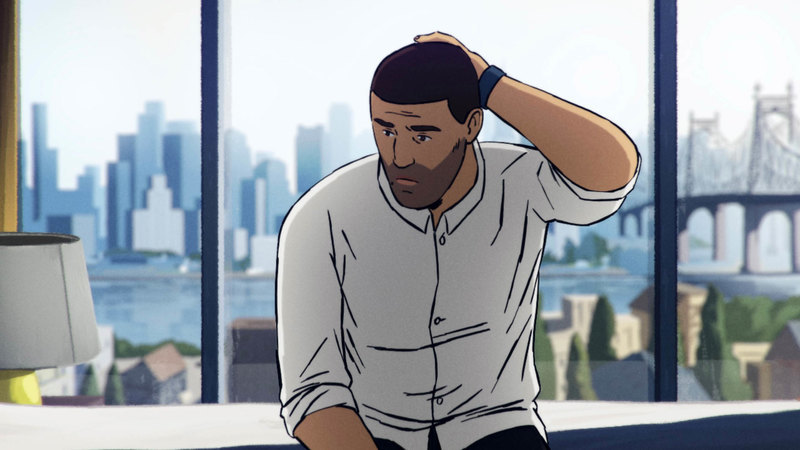
Produced by Nikolaj Coster-Waldau and Riz Ahmed, and based on a true story, Jonas Poher Rasmussen’s “Flee” follows in the footsteps of Ari Folman’s “Waltz with Bashir” to bring a unique Middle Eastern refugee story to the screen in the shape of an animated documentary. “Flee” unfolds by way of Amin’s hybrid interview-therapy session. He recounts the string of events that led his family to escape to Europe at the start of Afghanistan’s 1978 Civil War. Now living in Copenhagen, separated from his family, Amin is on the verge of marriage to his partner Jasper, but a few anxieties leave him reticent: his shaky immigrant status, his acceptance into Princeton’s postdoc program, and most importantly, his haunting childhood memories.     

The animation in “Flee” is as much a practical choice, as an aesthetic one. Like the pseudonyms that Rasmussen gives these characters, the animation allows Anim, living in Sweden illegally, to tell his unthinkable story. For instance, the present-day sequences—his impending marriage to his partner and the interview sessions—along with his most vivid childhood memories in Afghanistan and Russia, use conventional 2D animation, while the gruesome recollections—him enduring dangers of human trafficking—as well as memories that aren’t his own, the abduction of his father, are drawn in abstract terms. Both narrative tracks are massaged by way of Amin recalling his gay sexual awakening, told by way of A-Ha needle drops and steamy references to Jean-Claude Van Damme

As a final element, jolting us back to the conventional documentary form, Rasmussen also avails historical footage of the Afghan Civil War and the fall of communism in Russia. The blended visuals transcend the temporal constraints of documentary storytelling to translate Amin’s myth and memory into his present-fractured yet forged identity.      

Though Rasmussen often leverages this hybrid form to ingenious and intimate effect, the potential to fully excavate Amin’s psychological fears through the same abstract representation feels untapped. That is, if we can enter inside his mind, then why not totally submerge ourselves rather than feeling at a distance? That’s probably a minor quibble, however, in a story as powerful as Amin’s, but a criticism nonetheless. Rasmussen’s “Flee” covers its difficult topics—the immigrant-refugee experience, a sexual awakening, and long-term romantic commitment—in sometimes overlong strides. But its ambition is as challenging as it is gorgeous. The images in “Flee” will remain seared in the mind long after they depart from the screen, even if their departure leaves us at a loss.      


Source link

Categories
TV & Movies

The Dig


In May 1939, as Europe lurched towards war, amateur excavator/archaeologist Basil Brown, hired to dig up the huge mounds on Edith Pretty’s property in Suffolk, struck gold (literally). First, he came across the skeleton of an 88-foot ship dating to the Anglo-Saxon period. This was the first phase of what Sue Brunning, curator at the British Museum, has called “one of the most important archaeological discoveries of all time, certainly in British archeology but I would argue in the world.” The next phase was discovering the burial chamber within the ship, filled with a treasure trove of almost perfectly-preserved artifacts, made from gold and garnet: a stunning helmet, shoulder clasps, a golden belt buckle. Pretty donated the artifacts to the British Museum, where they sit to this day, known as the “Sutton Hoo find.” This fascinating story is the subject of Netflix’s new film “The Dig,” directed by Simon Stone, with Moira Buffini adapting John Preston’s novel for the screenplay.

Basil Brown (Ralph Fiennes) is a humble man, of working-class origins, who was taught how to excavate archaeological sites by his father and his grandfather before him. Edith Pretty (Carey Mulligan), a widowed woman living on a huge estate with her small son Robert (Archie Barnes), hires Basil away from the Ipswich Museum to dig up the mounds on her property. Basil doesn’t have high hopes. These sites have been picked over by people for centuries, he informs her. She offers him more money than the museum, so he gets to work. Young Robert latches on to Basil as a new father-figure, and cavorts around on the mound as Basil digs. At first Basil utilizes just a small ad-hoc team, but after the ship is revealed, throngs of people descend onto Suffolk, wanting a piece of the action.

Told with simplicity and grace, and a sensitivity to the pastoral Suffolk landscape of wide fields and wider skies, “The Dig” is often quite thrilling, particularly in the dig’s initial phases, when it’s just Basil and Edith discussing how to proceed. Edith had a youthful interest in archaeology, and was accepted to university. Her father nixed those plans. She took care of her father through his long illness, and only got married after he died. This sad backstory is described in just one or two lines, but it’s all over Mulligan’s pinched determined face, dogged by loss and disappointment. Father-dominated her whole life, now widowed, in very poor health herself, she makes the decision to dig up those mounds, even though war is imminent.

The first half of the film is mostly Mulligan and Fiennes, and there’s an interesting dynamic at work. They come from two totally different worlds and classes. But they intersect in important ways. They share a passion for knowledge, for discoveries of the linkages between eras and peoples. Tutankhamun’s tomb was excavated in 1922 by British Egyptologist Harold Carter, whom Edith name-drops at one point. Edith would have been a teenager in 1922. One can imagine how that world-changing event—and seeing those artifacts for the first time—would have filled her with wonder and awe. She has a feeling about those mounds in her yard. She has a feeling something is down there. When Basil discovers the ship, he declares it sixth/seventh century Anglo-Saxon, and this is at first scoffed at by the “experts.” But he’s right.

The plot thickens when people descend onto the land, to continue the dig, and jostle for credit. Ken Stott plays Charles Phillips, a famous archaeologist, who declares the site far too important to be in the hands of Basil, an amateur with no formal education. Part of the new excavation team is Stuart Piggot (Ben Chaplin) and his budding-archaeologist wife Peggy (Lily James). Edith’s cousin Rory (Johnny Flynn, charming as always) takes photographs of the dig. “The Dig” loses a little steam during this section, when it gets side-tracked by Peggy’s dissatisfaction in her marriage. Stuart seems just a little bit too into one of his male colleagues (Eamon Farren), and Rory is so friendly and gentle and makes Peggy feel things she’s never felt in her marriage. These complicated emotional matters arrive over an hour into the film, far too late to have any real staying power. Basil mostly disappears during this section, and the film really misses him.

But this larger ensemble is eventually shuffled into the overall mix. What matters is the dig itself. Stone’s attention to detail is crucial: he shows how a dig must proceed, the dangers of a dig, how the artifacts are discovered and then removed from the dirt—the way this is presented helps non-archaeologically-minded audience members understand what is happening and how. You believe in Fiennes’ expertise. You believe in Peggy’s too. The other element is the approach of war. RAF planes roar over the field with increasing regularity. Everyone knows that once war is declared the digging will have to cease. They’re all fired up with a sense of urgency.

There are moments of emotion and triumph, especially during the sequences of discovery, but the mood overall is understated, quiet, thoughtful. Phillips makes an impassioned speech about what the “Sutton Hoo find” means, and it’s an important thematic element. Common wisdom assumed the Anglo-Saxons were violent savage marauders, but the exquisite artifacts discovered showed “they had art. They had culture.” The Sutton Hoo find represented a shift in consciousness around shared ancestry and legacy, and a sense of ownership over the collective past. These themes are all present in “The Dig” but nothing is underlined or punched up to amplify significance.

Instead, you get Edith and Basil locking eyes across the hole in the ground, speechless, two misfit outsiders realizing they were right, there is something down there, and it is beyond their wildest dreams.

Now on Netflix.


Source link

Categories
TV & Movies

Supernova


“Supernova” is a moving story of two men who are deeply in love but will soon not know each other. One of them is aware that he’s at the precipice of the final stage of dementia, losing many of his abilities to comprehend the world around him. He won’t recognize his husband’s face or name. The other man won’t have the same problem but the man he knew and loved will be, at least in a sense, gone. They will never stop loving each other. And it’s a testament to the performances given by the excellent actors Colin Firth and Stanley Tucci that we believe this final statement to our core. They convey a truly loving relationship, and they do so largely through silence. It’s a look or a touch. Sadly, when they’re forced to talk, the dialogue sometimes sounds like it’s coming from a writer instead of a character, but there’s so much truth and compassion embedded in this entire production that the places in which it stumbles can be forgiven.

Harry Macqueen wrote and directed the tender story of Sam (Colin Firth) and Tusker (Stanley Tucci), partners for two decades who we meet on a road trip across England (shot with luscious beauty by the great Dick Pope). They bicker a bit about directions and other simple things, but there’s something heavy in the air early in the film. Tusker is fading, and he knows he’s only going to get worse. From the very beginning of the film, Tucci and Firth imbue Sam and Tusker with what so many of these cinematic partnerships lack: history. We believe Sam and Tusker didn’t just meet and aren’t just actors in a scene. They feel like people who know each other’s body language; people who can sense change and emotional unrest in one another in ways that no one else can.

It turns out that the road trip has a few purposes, including reuniting with old friends and family of Sam’s in England. This leads the film to open up to other characters, but it’s Firth and Tucci’s show from the beginning to the end. It also leads to an unforgettable centerpiece scene in which Tusker is supposed to read a speech at a dinner, but he can’t because of his condition, and so Sam reads the words his lover has written, many of them about him. Sam communicates Tusker’s feelings for him. Tucci does some of the best work of his notable career in this scene, conveying the pride in what he’s written about Sam—in many ways, the last time he will be able to express these thoughts about the most important in his life—but also lacing it with the sadness of the moment. They’re both phenomenal in the movie, finding so many grace notes that elevate a story that could have been maudlin into something that feels truly empathetic. The film ranks among career-best work from both actors.

As “Supernova” reached its emotional crescendos, some of the dialogue struck me as overwritten, with fragments of thoughts and emotions that felt more crafted than organic. But when I think back on this film, I think of the faces and the body language and the quiet moments more than the words spoken or the main argument that dominates its closing act. It’s a movie that finds most of its power through silence—the proud and yet pained look Tucci gives to Firth during that speech will stick with me for a long time. It’s a closing of the eyes, a lessening of tension in the body during a hug that lingers. And the issues I had with the film’s script are fading with memory. It’s the the people of “Supernova” that I’ll remember, not the details. And perhaps that’s perfect for a movie about memory. I’d like to think it’s the faces of those we love that will go last.


Source link

Categories
TV & Movies

Palmer


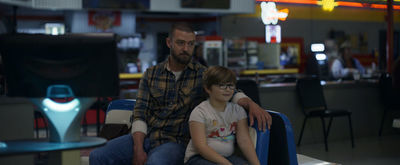
After twelve years away in jail, Eddie Palmer (Justin Timberlake) is finally free. But like many who leave the criminal justice system, homecoming can be a bittersweet experience. There’s the anger over the years of his life lost and countless relationships that have strained or faded away. Does home even feel the same after so long – when neighbors are more likely to whisper behind your back than greet you? Where can he find work if no one in town wants to give him a second chance? It’s the harsh reality Palmer navigates while reconnecting with old childhood friends and living with his gracious grandmother, Vivian (June Squibb). Next door to his grandmother’s house lives Shelly (Juno Temple) and her young son, Sam (Ryder Allen), and they become a part of Palmer’s new life, too. Shelly’s a troubled woman struggling with addiction, and soon exits the scene without any word on when (or if) she would be back. 

Now, Palmer’s story is no longer just his. When Sam comes to live with Vivian after his mother’s latest disappearance, Palmer first reluctantly accepts the new roommate sleeping in their living room. He’s also trying to figure out the little boy’s fascination with princesses and fairies, something a tough guy like him doesn’t seem to understand. But then what first looks like macho posturing eventually becomes concern. He doesn’t want Sam to be picked on, as he so often is at school. Soon, Palmer even begins defending Sam against bullies of all sizes and sorts. His short temper and willingness to turn to reckless actions does bring about some consequences, but it’s nothing this tender-hearted drama can’t cope with by the end. 

Despite its rough edges, Fisher Stevens’ “Palmer” is a gentle drama. It doesn’t go as deep into Palmer’s emotions or mindset, but instead keeps them closely guarded in Timberlake’s gruff performance. He’s perhaps almost too tight-lipped, trying on a Clint Eastwood-esque poker face against the world, suspiciously eyeing most people in town except Vivian. It’s sometimes tough to stay onboard with such a distant character. And that’s where Sam comes in. He’s an absolute joy in the movie’s sadder notes. Through Stevens’ direction and Tobias A. Schliessler’s cinematography, the movie feels brightest when Sam, his pink dresses and fairy toys fight against Palmer’s drab perspective. Everything at the beginning of the movie feels colorless and forlorn. Even Vivian’s house feels darkened at times. But Sam is a counterbalance, both in spirit and in presence.  

Despite the many tensions at play in Cheryl Guerriero’s script, something about the movie doesn’t quite leap off the page. Perhaps it’s Palmer’s sweet but slightly stilted romance with Sam’s teacher, Maggie Hayes (Alisha Wainwright). Maybe it’s Vivian’s all-to-brief role, which deprives the audience of Squibb’s righteous character who chides her grandson for making them late to church but refuses to apologize at first when she’s in the wrong. Her dedication to her congregation plays a major role in the film, yet feels like an afterthought. 

In a way, “Palmer” feels like a riff on Charlie Chaplin’s “The Kid,” in which a reluctant father figure assumes the mantle out of a sympathy that eventually turns to love. It’s a successful pattern that Adam Sandler also followed in “Big Daddy.” But while many movies have played this premise for laughs, in “Palmer,” the set-up is played for sentiment, and an effective one at that. It’s an exploration of one generation’s masculine ideals learning to accept and support the next generation’s wishes to play outside gender binaries. The movie is at its most moving when it’s just Palmer and Sam. The drama surrounding Palmer’s past seems to just melt away, his present-day problems now revolve around keeping the little boy safe and sound, away from bullies and a neglectful mother. While not perfect, it works because of the father-son bond that forms between the two. 


Source link