The unsettling mood and creeping pace of the Indonesian horror movie “The Queen of Black Magic” take some getting used to. For starters, this remake of the 1981 chiller of the same name has more supporting characters, and attendant backstory, than you might expect from such an atmosphere-reliant horror movie. “The Queen of Black Magic” is also punctuated by the sort of gory violence that’s more about sheer bruising impact than emotionally upsetting thrills (I hope you like millipedes and other creepy crawlies).
The movie’s whodunit-style story is thankfully compelling enough to keep things moving along: a group of adult orphans reckon with a decades-old trauma involving their orphanage’s patriarch Mr. Bandi (Yayu A.W. Unru), and the mysterious disappearance of young Murni (Putri Ayudya) and guardian caretaker Ms. Mirah (Ruth Marini). But there’s also a variable quality to the movie’s storytelling that stops “The Queen of Black Magic” from settling into a dreadful groove.
Don’t get me wrong, there’s more to like about “The Queen of Black Magic” than there is to sniff at. Scripted by Joko Anwar (“Impetigore”) and directed by Kimo Stamboel (“Headshot”), this remake has enough painstakingly recreated period and location-specific details to make it a better-than-average throwback, especially during its table-setting opening scenes. Anwar wastes no time in introducing us to an extended (surrogate) family of characters, focusing mostly on three estranged and now grown-up orphans: Anton (Tanta Ginting), Hanif (Ario Bayu), and Jefri (Miller Khan). There are some other protagonists—the three men’s spouses and children, as well as orphanage caretakers Maman (Ade Firman Hakim) and his wife Siti (Sheila Dara Aisha)—but they’re usually of secondary importance.
Supporting characters like Maman and Hanif’s inquisitive son Haqi (Muzakki Ramdhan) push the plot along just by feeling their way around the orphanage, which forces Hanif and his friends to focus on protecting their families from supernatural threats that even they don’t fully understand (not until later on anyway). And while the four male leads don’t have much of an inner life, their spouses are defined by a sentence-fragment-worth of personality, like Lina (Salvita Decorte), who is on a diet, or Eva (Imelda Therinne), a germaphobe. These characters maybe don’t need a substantial backstory given how much emphasis is put on discovering what’s wrong at the orphanage, but it’s often frustrating to see likable cast members presented as means to an effects-driven end.
I wish there was more about Maman and Siti’s bittersweet relationship, especially when they, washing the dishes after a big group meal, exchange subtle smiles when he tells her, “I married you because nobody else would marry either of us.” That line characterizes the musty air of resignation that hangs over the orphanage, which is predictably located two hours away from the nearest police station. Still, I would have loved to know more about Siti given that so much of the “The Queen of Black Magic” is inevitably the sins of various fathers and how they burden their loved ones. That’s a built-in limitation of Anwar’s faithfully reproduced story since Maman and Siti both keep watch over a location that represents a prematurely buried past that Hanif and his friends aren’t ready to exhume.
It’s hard not to be frustrated when so much of “The Queen of Black Magic” revolves around violence that’s initially upsetting because it’s impossible to understand. The movie’s computer-graphics-enhanced violence also puts a damper on its prevailing ickiness, but really, the main thing about this movie’s scare scenes is that they’re not extreme or original enough to burrow deep into your subconscious. Damp spirits, goosed as they are by Hiro Ishizaka’s evocative sound design, only linger in the mind for a few moments after they’re on-screen. The rest of Anwar and Stomboel’s movie boils down to plot twists and ambience.
Thankfully, that should be enough to keep most horror buffs intrigued throughout (the movie is being exclusively distributed by Shudder). I prefer “Satan’s Slaves,” Anwar’s 2017 remake (which he directed) of the formative 1982 Indonesian horror movie, but even that isn’t as compelling as “Impetigore,” Anwar’s other recent movie about the haunted, half-remembered past. “Impetigore” is so narratively propulsive and visually compelling that it’s hard to embrace a decent, but slack retread like “The Queen of Black Magic.” And while Anwar and Stomboel’s remake is probably a victim of bad timing, it’s also not strong enough to overcome its generic set pieces and belabored set-up.
Then again, while “The Queen of Black Magic” might be a fans-only proposition, it could be a good gateway into Indonesian horror, too. Either way, if this movie sounds interesting to you, you should probably see it, if only to decide for yourself what’s worth remembering, and what’s best left underground.
Perhaps it was fated that Ramin Bahrani would direct an adaptation of Aravind Adiga’s Man Booker Prize-winning novel, The White Tiger—the book is dedicated to him, after all. As friends and former classmates at Columbia University, Bahrani read drafts of Adiga’s novel four years before it was published and became a New York Times bestseller. In the years since, Bahrani was hailed by Roger Ebert as a “new great American director” after the release of his films “Man Push Cart,” “Chop Shop,” and “Goodbye Solo.” Those movies demonstrated an affinity toward those struggling on society’s margins, and Bahrani’s career has continued in that mode. More mainstream fare like “At Any Price” and “99 Homes” considered the failings of the American dream, while Bahrani’s adaptation of Ray Bradbury’s classic “Fahrenheit 451” updated the sci-fi text for our world of social media, real-time streaming, and fake news.
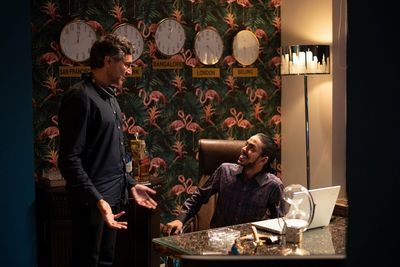
With “The White Tiger,” Bahrani is thinking broader. His first film set outside of the United States and filmed in India over two months, “The White Tiger,” released on Netflix on January 22, follows servant-turned-entrepreneur Balram Halwai (a magnetic Adarsh Gourav). In 2010, Balram is a successful businessman with a gorgeous office and an army of employees; years before, he was the driver for the wealthy married couple Ashok (Rajkummar Rao) and Pinky (Priyanka Chopra Jonas), whom he considers with a mixture of love and loathing. Balram’s criticism of the lower and upper classes, and his frustration with the harsh disparity in India’s socioeconomic environment, are a natural fit for Bahrani’s style.
In an interview—done twice thanks to some technical difficulties the first time around—Bahrani spoke about partnering with Netflix for the first time, the combative power of “The White Tiger’s” final shot, and his reaction to now being part of the Criterion Collection.
Now that we’re on the other side of “The White Tiger” being released on Netflix, what is your feeling since the movie is out?
I guess this is what they mean by the reach of Netflix. It’s pretty incredible. I found out yesterday it was the No. 2 most watched film in the world on Netflix. That’s totally incredible and crazy to think about. Other than I never imagined it for any of my movies, it’s an entirely South Asian cast, it takes place in India, but it’s somehow impacting people not just in that part of the world, but even in the Western world, they seem to relate to it. Maybe, as you asked the other day about what makes it universal, there is something universal in it then, if this many people are seeing it.
There has been this subgenre coming to the forefront, these movies about class—I don’t want to say class warfare, but they’re about friction between the haves and the have-nots. That friction has been motivating you for a long time. What has kept you engaged with that kind of material, and what drew you to it in the first place?
It’s always hard to say exactly what draws you to things. But yeah, I guess it’s been 15 years now since I started making films. “The White Tiger” was the seventh one and the majority of them, probably except for one, have been about the underclass, underdogs, working class, immigrants often. Those unseen, unheard voices in movies—characters not a lot of people want to spend time filming. Maybe it’s because my parents are Iranian. We share that, right? I think that probably has something to do with it. My dad comes from a village very similar to Balram’s. He told us about that growing up in North Carolina. I went and lived in Iran for three years as an adult after finishing college. I’ve been in that village, I lived in that village. Being in Iran somehow I think really was transformational to how I saw myself as a filmmaker, what my vision was going to be, or what I was striving toward, searching for. And it seemed to be about those kind of characters that we don’t normally see, that actually are living like most people, right? I don’t know. It’s just always what I’ve been drawn to.
I remember one time I asked my dad what was the thing that blew his mind most about America, and he had told me grocery stores, because he grew up in Mashad, Iran, and they had bazaars but not the organization of a grocery store. One thing he always said was that doesn’t necessarily make it better, it just makes it different. That was an idea I’ve found in your films too: to be wealthy isn’t to be better. There are obvious advantages to having more money and more power, but that doesn’t make you any less of a human when you don’t have those things.
That’s very well-said, and it sounds very Iranian. Again, it goes back to some of the roots, right? As I say, my dad came from a village like Balram. They didn’t have running water or electricity until he was six. He wore the same pair of shoes—like all the stories you hear—he put newspaper in his shoes to cover up the holes in the winter. You grow up hearing that, but I think hearing it was important, and seeing how my parents chose to live their life was important. What they emphasized was important. But then living [in Iran] for three years makes it more viscerally real, or more immediate, more impactful. When I came back to America, it was just about turning my head and my eyes in directions that I didn’t think a lot of other people were focused on. Because I was interested in those subjects and stories and wanted to learn about things I didn’t know about. At the same time also, I didn’t want to see the same kind of movie got made. I didn’t know how to make that other kind of movie, the more mainstream one. I just didn’t know how to do that.
“The White Tiger” was so much larger in scale and scope, but it still feels very much like your movie tonally—it’s very empathetic, but also very angry. There’s some resentment there. What did you really enjoy about going larger in scale? Was there something difficult you hadn’t encountered before?
It is larger in scale, but a lot of that was just because there were so many scenes and so many locations. The movie was shot over the course of 60 days, but for example, there’s no crane shot in the movie. There’s no crane, really. The resources allow you to bring awesome people. You get to hire the people who are the best in India. You get to bring one DP and one production designer with you from the West; the crew was 99 percent Indian. But you know, when the gaffer Rubb [Bhungdawala], he was an awesome Indian gaffer, when him and the cinematographer [were working on the car accident scene], which was on a very long street when Pinky was driving drunk, when they said they want to change every single street light going all up and down this road, which is a lot, there were the resources to do that and to make it look good and to make it work. Mainly it turned out to be that the creative team had the resources to just accomplish their vision. It wasn’t that we ended up doing anything extraordinary, or took an extraordinary trip or anything. We didn’t build any sets. We might have enhanced some of them. So that was awesome. And probably I felt the impact of the scale of the budget most in post, because we were able to afford some pretty cool songs that you normally can’t get in a movie. Panjabi MC featuring Jay-Z wasn’t cheap. So that was cool.
Hearing that definitely took me back to my college years and that being the hottest jam.
Yeah! Yeah. And everyone knows that, you know?
Something I heard you say recently that really resonated with me was when you talked about how with the advent of the cellphone, it is like you have a sweatshop in your pocket. And I thought about that when the film discusses the idea of America being so “yesterday,” and the future of the world being with the “yellow man and the brown man.” Especially now that the movie is getting high viewership numbers internationally—do you think that’s an idea that people are somewhat responding to, to the failures of globalism?
100 percent. I always felt that way, and I know when we showed the first cut to Scott Stuber, the head of Netflix. He called me, he liked it a lot, the first cut, and he said—I’ll never forget this—he said, “My God, I thought it was going to have global appeal when we greenlit the movie, but in the tragic time of COVID”—this was just April, COVID was just getting its reaches around the whole world—he said, “Now, it’s even more relevant to the world.” And I thought, “My God, he’s right,” because the fault lines of wealth inequality were exposed and the fissures were widened since COVID has started, right? We saw the gap even more, and the pressures became unbearable, untenable. I think people are starting to realize increasingly that the middle class means you barely make it, and if there’s a problem you’re basically in that month-to-month, where if something happens in one month, you collapse in the next month. You’re suddenly being evicted, like we saw in “99 Homes,” or worse. We’re clapping for our health care workers, who many of them have no health insurance, at least in America. Other countries have some more civilized form of health care. So I think that in some tragic way made it more relevant.
You have movies like this, which probe at these ideas and really make you think about them, and you do sometimes get viewers that ask, “What is this movie telling me to do? What’s the directive?” But characters are not always expressing the director’s point of view. In “The White Tiger,” they’re meant to make you question what you accept as the norm, question the status quo, rather than just accept the idea that hard work equals success, and that’s all it takes.
The one thing I don’t want to do with any of my films is preach or deliver a message. First and foremost, you’re just trying to tell an entertaining story with great characters, and in this case, I had Aravind Adiga’s brilliant book. As we talked last time, it was so propulsive, and the main character was so funny and so complex and witty and sarcastic, and in the end of the film you don’t really know what to make of the characters. His immediate masters, Ashok and Pinky, are not horrible people. They’re sometimes good to him, they’re well-intentioned, they’re woke in a way, right? They come from New York. They have some woke liberal ideas. But when push comes to shove, they don’t do the right thing—but the main character also doesn’t do the right thing. He commits some acts that are questionable. Even as we say, “do the right thing,” that makes me think of Spike Lee’s brilliant movie “Do the Right Thing,” where things reach a pressure point that you don’t really know what the right thing to do is exactly. It’s so complex. You don’t want to give an easy answer. You hope the audience will think about it, you hope they’ll talk about it.
The film challenges you to reassess and think for yourself, and the final shot cements that for me—how combative it felt, the breaking of the fourth wall and staring directly into the camera. Can you talk about how that came about, and what inspired that idea?
That’s Aravind’s amazing text from the novel, which totally upended everything. He and I had talked about Crime and Punishment a lot from our days in Columbia and onward as a novel we both admired because it’s unbelievably compelling storytelling. Each chapter is a cliffhanger, you can’t wait to read the next chapter, it’s a fast read. It’s so character-driven, but it’s got this incredible plot. And in the end of Crime and Punishment, of course [protagonist Rodion Raskolnikov] not only confesses his crime, but he asks Sonya for forgiveness and he asks God for forgiveness. And Aravind totally turns all these traditions of narrative and storytelling upside down when the character says what he says, which is that the only nightmare he has is that he didn’t do it, that he didn’t kill his master, that he’s still a servant to another man. And that’s so amazing, that idea. I wanted to go with this risk that suddenly Balram is just talking to his other drivers instead of narrating it to us. So it’s not voiceover, it’s not him just talking to the fourth wall, meaning the audience—he’s talking to the drivers as if they’re the audience. Whether or not he’s actually talking to them or it’s just in his head, I couldn’t really tell you the answer to that. I don’t know.
I thought it was going to require more shots to do because it’s long, it’s a minute-and-a-half scene or something, and it’s the end of the movie. I didn’t want to mess it up. But as we started blocking it out and turning on a camera to see what it would look like, I thought, “My God, this is a oner. This is one shot. If Balram just exists the camera here, and if the camera backs up a little bit, I would have a wall of drivers.” So the conception of it honestly came during the shoot of it. It just seemed to appear there, like I don’t know, some beautiful flower that you happen to notice and then you ask somebody to film it because there it was.
And I like it for all the reasons you said. I like this wall of drivers, or servants, or underclass, or Uber drivers, or Seamless deliverymen. They’re all Balram, basically. They’re all those people. I like them just staring at the audience. Kind of confrontational and a little bit punk or whatever, in a way. And we got this awesome Indian rap artist Divine, I like his music a lot. There’s some really cool Iranian rap; Divine has some similar feeling to that. It’s really edgy and it’s political and social the way that rap originated here in America, at least in Brooklyn and Queens and the West Coast too. We got him to do the track [“Jungle Mantra”]. He comes from the, in his own words, from the slums. So he knows that background of Balram, he knew it, he felt it, and when he sent me the first chorus and the first verses, even without knowing what they meant—of course, I saw the translation one moment later—it felt like the movie. He totally got it, and that was cool to have him. He brought in Pusha T and Vince Staples to be a part of that, and it feels like the end of the movie. It feels like that confrontation, but it’s also kind of fun. My mom dances to it, but so do my younger friends, and my brother’s kids want to dance to it. There was something cool about that music that came into it way later in the process. It had kind of a punk vibe to it.
As soon as you get Pusha T involved, it’s going to be inherently political.
Right? Exactly! And Divine too, he’s that way too.
I will definitely check him out. I haven’t heard him before.
I know you say that, but if you click on any of his videos, it’s like 40 million views. He’s awesome.
That’s such a good reminder of the fact that I live in an incredibly small bubble, in the bubble that is America.
Me too, me too.
We spoke last time about how you realized you were recreating a shot from Abbas Kiarostami’s “The Wind Will Carry Us,” right?
Oh, yes. When Balram is brushing his teeth, which is one of my favorite scenes. It was not planned for him to look into the camera, to look at his teeth, but as I was standing there, I remembered that shot from “The Wind Will Carry Us.” It’s not a special shot; we’ve seen it in many movies. I just never expected it in a Kiarostami movie. And when it came in “The Wind Will Carry Us,” I just liked it; I said, “Wow.” He has experimental films too, but in that style of movie, it felt bold somehow, and memorable. It got me into the character and suddenly onset I just thought of it because the scene involved him brushing his teeth like in “The Wind Will Carry Us.”
Does that happen often as a filmmaker? When you’re onset and when you’re doing your own work, how much do you feel like your own work ends up being in conversation with other films that you admire or enjoy?
It happens sometimes. I don’t think it happens that often because you’re really just trying to be alive to the moment and what you’re seeing. But of course it happens, and sometimes you’re not even remembering the movie or the shot as much as you’re remembering your memory of it, which ends up being some kind of shadow of it. Which is also in a way good because it helps you distill it to the emotion that you got, and you can do it your own way, if that makes any sense.
I’m going to ask you the question that made you laugh a little bit last time. Now that you’re part of the Criterion Collection with “Man Push Cart” and “Chop Shop,” what’s that feeling like?
Oh God. Man. That was awesome. I was so excited. Peter [Becker, Criterion president] and Fumiko [Takagi, Criterion executive producer] had called me—my God, two years ago now—about it. And then early last year, they said, “OK, we would like to get this to now, we have the opening.” And so it was awesome. I hadn’t looked at either film honestly in 15 years, and I got to watch them again, which was very emotional and a weird experience to see them again. But it was great. I had a chance to remix those films, which I was very happy about, and we did some color work on them again. It was awesome to be with a couple of the actors again, Ahmad [Razvi, of “Man Push Cart”] and Alejandro [Polanco, of “Chop Shop”], and we were able to do an interview with them. The place I watch most movies is Criterion Channel, and God knows how many Criterion DVDs I have. I mean, I have a lot of them. It’s kind of awesome, I confess. I was really thrilled with that.
Did they let you into the Criterion Closet?
… Yes. Yes. And when I got embarrassed, they just kept putting more and more into my bag. It was pretty cool.
There’s so many of those subjects and so many of those stories. There’s never going to be an end to them and they’re only going to be exacerbated now by the way the world is going, honestly.
“The White Tiger” is now on Netflix. To read Roxana Hadadi’s review of the film, click here.
For most of video game history, adaptations of major feature films for consoles have been atrocious. They’re almost always cheaply designed and developed, often having little to do with the film itself. The market has since dried up for the most part, but I can still remember playing video game adaptations of “Monsters vs. Aliens,” “Megamind,” and “Up” that were about as creative as Happy Meal tie-in toys. Luckily, modern games based on blockbusters have been allowed to spin off into their development process, like the recent release of “Marvel’s The Avengers,” which blends comic and MCU imagery into an entirely new product. The point is that a good game based on a film, especially one not made for kids, is almost unheard of, and that’s one of the reasons the legend of “Scott Pilgrim vs. The World: The Game” grew in the last decade.
Based on the graphic novels of the same name by Bryan Lee O’Malley and released in conjunction with the Edgar Wright film of the same name back in August 2010, “Scott Pilgrim vs. the World: The Game” was available for Xbox Live Arcade and PlayStation Network gamers but was delisted in December of 2014, gaining something of a mythical status before its return this month for PlayStation 4, Xbox One, Nintendo Switch, Microsoft Windows, Amazon Luna, and Stadia in a complete edition from Ubisoft. The game grew in cult status in part because of its unavailability but also because of the people behind it: O’Malley and Wright were involved in the development with the source writer even consulting on how its story should unfold. A punk band (of course) named Anamanaguchi performed the truly excellent soundtrack.
The game is a side-scrolling brawler that recalls arcade games of a couple generations ago. It follows the story of the graphic novels in its own way but allows players to step into the shoes of Scott Pilgrim, Ramona Flowers, Kim Pine, or Stephen Stills (and other characters like NegaScott, Knives Chau, and Wallace Wells can be unlocked later). There are seven levels to battle through to defeat Ramona’s seven evil exes, and each character has different move sets that can be unlocked. It’s a simple game in which waves of bad guys have to be defeated, often using weapons in the environment, and it’s interrupted by larger enemies and sections of the game wherein people can buy items to regain health or boost abilities. That’s really it. But it’s an addictive game in that its old-fashioned simplicity hides a deeper challenge, given the number of moves and characters that can be combined. It’s also tough. In “Scott Pilgrim,” moves have to be mastered and characters have to be upgraded to really get anywhere.
The game’s return is a fun story in a different way. As the tenth anniversary of the unavailable game approached, Bryan Lee O’Malley and Edgar Wright tweeted at Ubisoft and asked them to bring the game back in May 2020. Three months later, O’Malley tweeted that they had reached out to him, and a remaster of the game with all DLC was announced the next month. It’s possible that Ubisoft was working on it behind the scenes, but it’s better to think that the two men who started the cult of “Scott Pilgrim” brought this game back to life for its loyal fans.
And here we are, experiencing this simple, addictive beat-’em-up yet again across multiple consoles. On Switch, which I played on, it’s a really fun game to pick up and play for a little bit when time is limited. I imagine I’ll be doing so for some time to come.
WarnerMedia will be presenting imaginative and immersive experiences through a virtual WarnerMedia Lounge at the Sundance Film Festival starting today, Thursday, January 28th, 2021. Their virtual experiences will feature interactive elements such as watch parties, thought-provoking conversations, organic interactive networking, chat rooms and bespoke hospitality events, as well as inclusive programming that reflects WarnerMedia’s commitment to diversity, equity, and inclusion.
Below is a sample of the corporate panels featuring topics around Equity & Inclusion:
3pm CT on Friday, January 29th: “Who Tells the Story”
As the industry and society at large become more aware of the value that diversity brings to us all, new conversations have sprouted around both access and representation. In this new frontier, cultural competency and responsibility have become interwoven within the creative process itself. Questions that are being raised include when, where and how these objectives can be met. What is the responsibility of both diverse and non-diverse filmmakers when it comes to representing diverse communities? Who has that responsibility and why? Gil Robertson, co-founder & CEO, African American Film Critics Association, will host a conversation with Angel Manuel Soto (“Charm City Kings“), Christina Kim (“Kung Fu”), Mickey Down (“Industry”), Nkechi Okoro Carroll (“All American”) and Shaka King (“Judas and the Black Messiah”) to discuss these questions and more.
1pm CT on Saturday, January 30th: “ARRAY Crew – A Mission and an Opportunity”
WarnerMedia is a founding partner of ARRAY Crew, award-winning filmmaker Ava DuVernay’s new initiative to support systemic changes in the below-the-line hiring practices of the film and television industry. Launching in February, ARRAY Crew aims to connect underrepresented crew members to hiring managers who practice inclusive outreach. Join DuVernay plus Karen Horne (SVP, Equity & Inclusion, WarnerMedia), Tilane Jones (President, ARRAY), Regina Miller (Executive Director, ARRAY Alliance) and Tammy Garnes (Director of Education & Understanding, ARRAY) for a conversation about ARRAY’s game-changing effort to foster more opportunity and inclusion in Hollywood.
1pm CT on Sunday, January 31st: “Learning Out Loud: Cultivating an Equity Mindset and Creating Safe Spaces”
WarnerMedia is leading the charge in creating strategies to boost equity and amplify underrepresented voices. Through its signature Equity Mindset for Creative Leaders series and other key workforce and pipeline initiatives, the industry’s top brass are engaging in meaningful conversations on equity, inclusion and culture in an effort to build a safe, supportive and accessible environment for content creators. Join Sarah Aubrey, HBO Max Head of Original Content, along with Karen Horne, Samata Narra and MyKhanh Shelton from WarnerMedia’s Equity & Inclusion leadership team for a powerful dialogue on the state of race in Hollywood and where we go from here.
To register or to learn more information, visit the official site of the Warner Media Lodge.
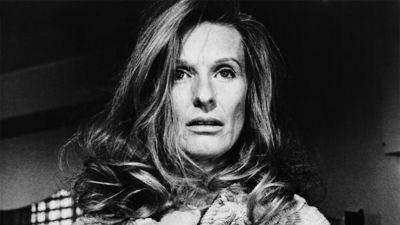
Robert Aldrich’s brutal, rough and unapologetically bleak 1955 Mike Hammer film “Kiss Me Deadly” opens with a frantic woman running down a dark highway while wearing nothing but a trenchcoat. The soundtrack fills with her terrified grunts and the sound of her bare feet slapping the asphalt. After attempting to flag down several cars, she is almost run over by the film’s hero, who begrudgingly picks her up. As the credits roll down the screen rather than up, the frightened woman’s labored pants and groans uneasily mix with the Nat King Cole song playing on Mike Hammer’s car radio. The juxtaposition sounds obscene, and the ultimate fate of this doomed dame is beyond horrific. But what an opening scene this is, marking the unforgettable big screen debut of Cloris Leachman.
Since 1947, Leachman amassed 285 credits on stage and screen, some comedic, some dramatic and many of them brilliant. There’s a very good chance she appeared in some of your favorite movies and television shows. In her illustrious career, she earned 8 Emmy Awards, one Oscar, immeasurable amounts of laughter and more than a few tears. She did sitcoms, dramas, exploitation pictures, comedies both broad and subtle, and the occasional cartoon. Like the Method trouper she was, she worked until the very end which, sadly, occurred on January 27, 2021. She was 94.
Cloris Leachman played characters who were always convincing, which is no easy feat when appearing in one of the most memorably disturbing episodes of the “The Twilight Zone.” In 1961’s “It’s A Good Life,” Leachman is once again impeccable at projecting fear and worry, this time as the mother of the episode’s horrible brat of a villain played by Bill Mumy. TV Guide voted this number 31 on their Top 100 Most Memorable TV episodes list, and its popularity eventually led to Leachman and Mumy reuniting in 2002 for a sequel.
Being convincing is also no easy feat when your director is Mel Brooks at his zaniest and most parodic. Leachman created a trio of deranged and determined characters for him, using masterful comic timing, extreme physical appearances and exaggerated accents for each. The zaniness began with 1974’s “Young Frankenstein,” where she played Frau Blücher, the strict and imposing German whose name strikes fear into the hearts and whinnies of horses within earshot. Frau Blücher’s job is to welcome Gene Wilder’s “Dr. Frederick Fronkensteen” to his grandfather’s estate, the site of those experiments Mary Shelley wrote about in her book. Frau Blücher hilariously gives him fashion advice (“I suggest you put on a tie”), does product placements for Ovaltine and, in the film’s greatest line reading, drops the salacious bombshell about Frederick’s grandpa, Victor: “yes! Say it! He…vuz…my…BOYFRIEND!!” Leachman digs into that accent, too, turning the word “treacherous” into a threat more ominous than the actual staircase she’s describing.
Next, there’s Nurse Diesel, the Nurse Ratched-like villain of Brooks’ 1977 homage to Hitchcock, “High Anxiety.” On a 1 to 10 scale, Leachman’s clothing, hairstyle, facial expressions and accent are all ratcheted up to 11. Her nurse hats are gigantic, her visage an eternal scowl and she’s not below catering to the BDSM whims of her colleague, Harvey Korman. Though she’s incredibly funny, Nurse Diesel is also a monster who doesn’t like when her rules are violated. “Dinner is at 8pm,” she tells Brooks’ hapless, anxiety prone protagonist. “Those who are tardy do not get fruit cup.” And she means it! While trying to keep Brooks from solving the film’s asylum-set mystery, Leachman uses her accent to commit line readings that sear themselves into your brain. In a nod to “The Cobweb,” Nurse Diesel mentions an argument about curtains, saying “Oh yes, Dr. Ashley felt that color…has a great deal to do with the well-being…of the emotionally disturbed.” The way she says those last four words is indescribably delectable.
Last but not least, there’s “History of the World Part I”’s Madame Defarge, whose inn has served the scum of Paris for over 300 years. “Hello scum!” she says when greeting the folks who will bring about the French Revolution. Leachman’s costume and voice here are a bit less extreme, but she’s armed with a great prop of knitting needles that she uses to knit imaginary wool (and to accidentally deflate her ample cleavage). “We are so poor,” declares Mme. Defarge, “that we do not even have a language! Just this stupid accent!” She also sells one of Brooks’ most obvious jokes: “Let’s end this on a high note,” she tells her constituents before, you guessed it, hitting a high note.
A different Brooks offered her one of the most memorable characters of 70’s era sitcoms. As part of “The Mary Tyler Moore Show,” James L. Brooks created Phyllis Lindstrom, the neurotic and often naïve friend of Moore’s Mary Richards. Phyllis is at times intensely unlikable, yet Leachman finds the heart beating under her character’s many layers of self-protection and social awkwardness. In Phyllis, one can find the origins of later cringe sitcoms like “Curb Your Enthusiasm,” which might explain why her MTM spinoff only lasted two seasons. But the role proved fruitful for Leachman, earning her two Emmys and several nominations.
Though Phyllis is off-putting, she’s still quite funny and, at times, even touching. For example, in “The Lars Affair,” Mary Richards learns that Phyllis’ never-seen dermatologist husband, Lars, is having an affair with Betty White’s Sue Ann Nivens. Ed. Weinberger’s script gives Phyllis a variety of beats to hit: denial, comedic attempts at reinvention to save her marriage, rage, anxiety and vengeance. Leachman plays them all to the hilt, culminating in an inspired bit of soufflé-flattening slapstick. On the aforementioned TV Guide Top 100 Episodes list, this one came in at number 27.
I could go on and on, mentioning Leachman’s work in “Malcolm In The Middle” and “Raising Hope” on TV and in animated features like “The Iron Giant” or the one that traumatized me for life, “The Mouse and His Child.” And my trash-loving heart would love to wax poetic about “Crazy Mama,” the 1975 Jonathan Demme movie she made with Ann Sothern, Mr. Magoo and Ralph Malph from “Happy Days.” You owe it to yourself to see that. Even “Bad Santa” warrants some consideration.
However, I’ll end this tribute with the role that showed just how versatile Leachman was as an actor, her Oscar-winning performance as Ruth Popper in Larry McMurtry and Peter Bogdanovich’s “The Last Picture Show.” Neglected by her football coach husband, Popper enters into an affair with one of his players, Sonny Crawford (Timothy Bottoms). She knows it’s a bad idea, and so does he, but really, what else is there to do in this town? The film is frank in its sexuality, showing how carnal acts can stave off an unbearable sense of hopelessness for a little while. Bogdanovich loves Leachman’s face, letting his camera drink it in as it speaks volumes of hurt or relief. You can see little sparks of joy dancing in her eyes while the rest of her physical being telegraphs cautious reservation and restraint. We feel her pain when she is thrown over by Crawford for his crush, Jacy Farrow.
Yet Popper’s story arc refuses to make her an object of pity or tragedy. Instead, in the last scene of the film, she becomes an avenging angel wielding white-hot rage and soothing mercy in equal measure. Leachman strikes an amazing balance here, cycling through her emotions with impunity, ending on a note of cathartic grace. Watch how she takes Bottoms’ hand in the last scene, and listen to the way she utters her final line of dialogue. The emotional complexity is astonishing enough to move one to tears. It’s as fine a piece of acting as I have ever seen, a testament to what I’ll miss most about her.
Rather than say “Rest In Peace,” I’ll scare the horses by simply saying “Good night, Frau Blücher.”
I am proud to announce that the Roger and Chaz Ebert Foundation is joining the Abraham Lincoln Presidential Library and Museum and the Abraham Lincoln Presidential Library Foundation in presenting the inaugural No Malice Film Contest for Illinois youth and young adults. Young filmmakers between the ages of 11 and 21 are invited to create short films that explore and promote racial healing. The Roger and Chaz Ebert Foundation will help run the contest and select winners in three age groups. The project is funded through the Abraham Lincoln Presidential Library Foundation with a grant from Healing Illinois, a racial healing initiative of the Illinois Department of Human Services in partnership with The Chicago Community Trust.
The name of the contest is inspired by President Lincoln’s Second Inaugural Address in which he called for Americans to end slavery, rebuild the nation and bind up the nation’s wounds “with malice toward none, with charity for all.” But as we learned during 2020 following the death of George Floyd and the social justice protests across the globe, the wounds still sting. To heal, we must first listen to the expression of people’s pain and lived experiences. Storytelling through film has the power to change hearts and minds. My late husband Roger Ebert said that movies are a machine that generates empathy allowing us to put ourselves in the shoes and emotions of another. It’s essential that the next generation who will lead us to a better place has a chance to be heard. Perhaps they can help forge a path toward unity and harmony through their art.
The emerging filmmakers will get advice from professional filmmakers in Zoom workshops held on Saturdays in February and March. To promote justice and a better world by highlighting important voices in film and supporting young artists, I have arranged for virtual presentations by Pamela Sherrod Anderson, founder of Graceworks Theater and Film Productions and an award-winning writer, filmmaker and playwright; Rita Coburn, a Peabody and Emmy Award-winning writer, and producer and co-director of “Maya Angelou: And Still I Rise,”; Oscar-nominated documentarian Steve James, who directed the famed movie “Hoop Dreams” and “Life Itself,” about Roger Ebert; Troy Osborne Pryor, a Chicago-based producer, host, and actor and founder of Creative Cypher; and T. Shawn Taylor, a writer, journalist, consultant and documentary filmmaker. You can find their full bios as well as links to register for their workshops below.
We will award cash prizes at a red-carpet debut to be held at the Abraham Lincoln Presidential Library and Museum in Springfield, Illinois on July 31 of this year. First place winners in each age bracket will receive $2,000; second place winners in each age bracket will receive $1,000; and third place winners in each age bracket will receive $500. The winning films will also be shown at the Ebertfest Film Festival at the University of Illinois in Urbana-Champaign. Illinois schools will use the films, and supplemental curriculum created by educators, to talk about race and the harmful impact of bias and injustice.
Students will compete as individuals or in groups in three age brackets: 11-14, 15-18, and 19-21. Entries are due by Friday, April 30th. Live action films must be between three minutes and seven minutes long. The minimum length for animated films is 45 seconds. For more information on the No Malice Film Contest, visit the official site of the Abraham Lincoln Presidential Library and Museum. Below you will find the full line-up of virtual events scheduled for the next two months, complete with the bios of each esteemed participant…
SATURDAY, FEBRUARY 6TH, 2021
TROY OSBORNE PRYOR PRESENTS “CREATING YOUR OWN CONTENT”
Troy Osborne Pryor is an American producer, host, and actor. His stage, on-camera, and voice over work has led to award-winning content on multiple platforms including collaborations with ABC, Warner Brothers, HGTV, DIY Network, TV One, and Aspire TV. A Chicago native, Troy is an advocate for connecting local, undiscovered diverse talent to mainstream content and media platforms through his production network, Creative Cypher. Pryor established Pryor Holdings in 2012 to include the brands: Troy Pryor Studios, Creative Cypher, Cypher Foundation, BLACC, and Dark Berry Productions. This ecosystem aggregates hundreds of artists, connecting them to the resources and tools that enable new content production for major brands. Through these production deals, Troy aims to support the expansion of Chicago’s multi-million-dollar creative community footprint, globally.
An eloquent poet, writer and performer, Maya Angelou’s life intersected with the civil rights struggle, the Harlem Writers Guild, the New Africa movement, the women’s movement, and the cultural and political realignments of the 1970s and ’80s. Her first book, I Know Why the Caged Bird Sings, catapulted Dr. Angelou onto the literary stage and became an international best-seller. She appeared in numerous documentaries, talk shows and feature films, was awarded the Presidential Medal of Freedom, and was nominated for the Pulitzer Prize, yet shockingly, has never been the subject of her own feature documentary.
Having lived such a rich, passionate life and been a witness, as well as a participant, in some of the most profound periods of the last century, her full biography is extraordinarily rich and varied. Dr. Angelou lived not one life, but half a dozen, and yet parts of her story have fallen into obscurity. “Maya Angelou And Still I Rise” reflects on how the events of history, culture and the arts shaped her life and how she, in turn, helped shape our own worldview through her autobiographical literature and activism. This screening is offered courtesy of American Masters, The People’s Poet Media Group, ITVS and Artemis Rising.
Rita Coburn is a Peabody and Emmy Award winning Director, Writer, and Producer with nearly four decades in radio, television and film. Coburn primarily focuses on the stories of women by uniquely addressing topics from a multi-generational lens through the untold stories of prominent figures and key ideals relevant to our culture. Coburn co-directed and co-produced “Maya Angelou: And Still I Rise for American Masters” which premiered at the 2016 Sundance Film Festival and garnered a Peabody Award in 2017. It also earned the first Ebert Icon Award at the Roger Ebert Film Festival (Ebertfest) in 2019. Coburn’s notable credits include historical documentaries on black culture, the Oprah Winfrey Show, Oprah Radio, and BET/Centric. Her current project in production is “Marian Anderson: The Whole World in Her Hands.” The documentary is a Co-Production of Coburn’s company RCW Media Productions, Inc and American Masters.
STEVE JAMES PRESENTS “THE PEOPLE IN MY FILMS: PORTRAYAL AND RELATIONSHIPS”
Steve James previous work includes Academy Award nominated films “Hoop Dreams” and “Abacus: Small Enough to Jail.”Other award-winning work includes “Stevie”, “The Interrupters“, “No Crossover: The Trial of Allen Iverson”, and “Life Itself”.
His Starz docuseries, “America to Me“, was one of the most acclaimed TV shows of 2018.His most recent docuseries, “City So Real“, premiered to rave reviews on National Geographic and Hulu.
PAMELA SHERROD ANDERSON PRESENTS “SEEDS FOR STORY”
Pamela Sherrod Anderson, founder of Graceworks Theater and Film Productions LLC, is an award-winning writer, filmmaker, playwright, educator and journalist. She is currently Board Chair of Kartemquin Films, which celebrates its 55th anniversary in 2021 and remains even more committed to social justice and democracy through documentary. Her films have been shown in national and international film festivals and are available on streaming services.
She has taught in film and journalism departments at DePaul University and Columbia College of Chicago. Her illustrious journalism career includes editor, reporter and columnist at Chicago Tribune newspaper and United Press International. Pamela is a proud product of Chicago’s South Side and proud of her family’s Alabama, Louisiana and Mississippi roots.
T. SHAWN TAYLOR PRESENTS “TRUST YOUR GUT: THE STORIES YOU WERE BORN TO TELL”
A self-described nerd who wrote short stories and poems in grammar school and charged kids on the playground a quarter apiece to read them, in 2006, Shawn tapped into that entrepreneurial spirit to found Treetop Consulting, a boutique communications firm, following a successful career in newspapers that spanned the Midwest. Still a journalist at heart, Shawn has employed her interviewing and research prowess to examine the social, emotional and economic impact the early deaths of Black men have on families and communities in the documentary in progress “Gone Too Soon: America’s Missing Black Men.” In October 2019, she graduated from Kartemquin Films’ Diverse Voices in Docs program for aspiring filmmakers.
Shawn has built a reputation as a skilled writer and master storyteller, developing content on a range of topics including social justice; gender and racial equality; equal pay; equity in education; and entrepreneurship, among others. A trained flutist and master Hoola Hooper, Shawn’s motto is, “Whenever possible, start at the top.”