Categories
Health

This Woman Spilled Red Wine on Her White Jumpsuit—And Her Friends Came Up With Quite the Solution


While there’s no doubt a head-to-toe white outfit is the epitome of summer, it can also an incredibly hazardous look for the accident-prone among us. Social media helped us figure out how to clean white sneakers—and now, it’s brought us the story of a woman in England who found a clever solution to an all-too-common summer problem: spilling wine on your white dress.

A Twitter user named Mia Williamson shared that she was at the Ripon Races in Leeds, England when someone splashed red wine on her friend Eleanor Walton’s crisp white Pretty Little Thing jumpsuit. Instead of panicking, Walton, Williamson, and the rest of their group came up with a genius hack: pouring more wine all over the outfit. Of course, they documented the whole ordeal and shared it on social media.

“Would you believe someone spilt red wine all down my white outfit so my work girls SOAKED my jumpsuit in the sink so it’s now red,” Walton tweeted.

Williamson added visuals: an image of Walton in her white jumpsuit with the initial stain, and an image of her after deciding to just add more red wine.

The result of their in-the-moment was a pink tie-dye print—which is actually very on-trend for summer. In fact, the finished product was good, Pretty Little Thing, the brand that made Walton’s white jumpsuit, even jokingly replied to the photos on Twitter: “Safe to say that wasn’t a ‘pour’ decision,” it tweeted.

Walton told The Cut that she was “quite drunk” when they decided to dye the entire outfit with more wine. “Part of me wanted to go home and change, but I was having too much fun and didn’t want to let a spill ruin my day,” she said, adding that the entire process took about half an hour and four glasses of wine. She also reveled on Twitter that she sat entirely naked in a bathroom stall while her friends worked on the outfit, and calmed those concerned by the waste of money by clarifying they had an open bar.

Walton also shared a photo of herself drying her new outfit under a hand dryer, and told The Cut “I got used to how it felt quite quickly. I wasn’t really thinking about it ‘cause I was having a good time.”

The look has incited a lot of conversation on social media, with many on Twitter commenting on how clever and cute it is, even going as far to ask for a tutorial.

This just goes to show: When in doubt, add more wine.


Source link

Categories
Health

Matching Sets Are Your No-Fail Solution to Lazy-Day Dressing


There are better ways to spend your daylight hours than by overthinking your outfit. Yes, you want to be all easy, breezy and seasonal—but you also want to make sure you’re making moves on that summer checklist, hitting up every rooftop, beach, and other warm-weather activity along the way. That’s where Instagram’s favorite outfit formula comes in.

The matching set is by no means a new invention—Taylor Swift made it her signature look of 2014—but it has endured in a way many trends don’t. And that’s because, time and time again, it’s proven to be a reliable solution for when you need a Good Outfit in a pinch. There are two-pieces that work for summer barbecues, for Summer Fridays, for summer weddings… pretty much any summer scenario.

Save yourself some precious time this season and add a matching set to your rotation—we’ve found 25 formidable contenders, ahead.

We bring you the trends. You make them your own. Sign up for our daily newsletter to find the best fashion for YOU.


Source link

Categories
Health

'Heroin(e)' Filmmaker Elaine McMillion Sheldon On Trump's Solution to the Opioid Crisis.


Donald Trump declared a public health emergency last week over the nation’s overdose crisis. And just yesterday, the President’s Commission on Combating Drug Addiction and the Opioid Crisis, led by New Jersey Governor Chris Christie, released its recommendations to address America’s growing problem.

“Mr. President, the reason behind the urgent recommendations presented to you today by this Commission is that the leading cause of unintentional death in the United States is now drug overdose,” explains Gov. Christie in his introduction to the report. “The time to wait is over. The time for talk is passed. 175 deaths a day can no longer be tolerated. We know that you will not stand by; we believe you will force action.”

The epidemic contributed to the United States’ record 64,000 drug overdose deaths in 2016, and the recommendations outlined include everything from streamlining federal funds for drug addiction and expanding drug courts to new training requirements for doctors who prescribe painkillers and eliminating barriers to treatment.

What’s missing, though, is how much funding will be necessary to address the crisis, which left many wondering how these recommendations will realistically be implemented. To learn more about the opioid epidemic, we spoke to Peabody Award-winning documentary filmmaker Elaine McMillion Sheldon after the Obama Summit this week. Her critically-acclaimed film “Heroin(e),” streaming now on Netflix, follows three real-life heroines in Appalachian city Huntington, West Virginia (the “overdose capital of America” with an overdose rate 10x the national average) as they work to change the town’s narrative and to break the cycle of drug abuse.
Exclusively with us, Sheldon shares her thoughts on Trump’s plan to combat the crisis, the role of women in the epidemic, and hope for the future.

GLAMOUR: President Trump recently declared the crisis a public health emergency and shared a strategy to address it. How do you feel about the plan?

ES: I think it’s kind of offensive that the President is coming up with ideas to fix our problem when people on the ground have the best ideas to fix it. Presidential declarations are important for bringing attention, but it’s not going to come from the Oval Office. It goes a bit deeper than a single vote and one president and speaks to the larger American dream. I appreciate the attention, though. It’s just frustrating – we can talk about it all day, but we have to see some sort of investment.

GLAMOUR: One of the common themes at the Summit was the idea of community. You moved to be closer to the stories in this film. How do you think this helped you understand the perspectives?

ES: Most people call Huntington the overdose capital of America, but it’s also home to these three women [the film’s heroines: Jan Rader, Patricia Keller and Necia Freeman]. They somehow find the resilience to do this work, and community is a huge part of that.

PHOTO: Amanda Edwards

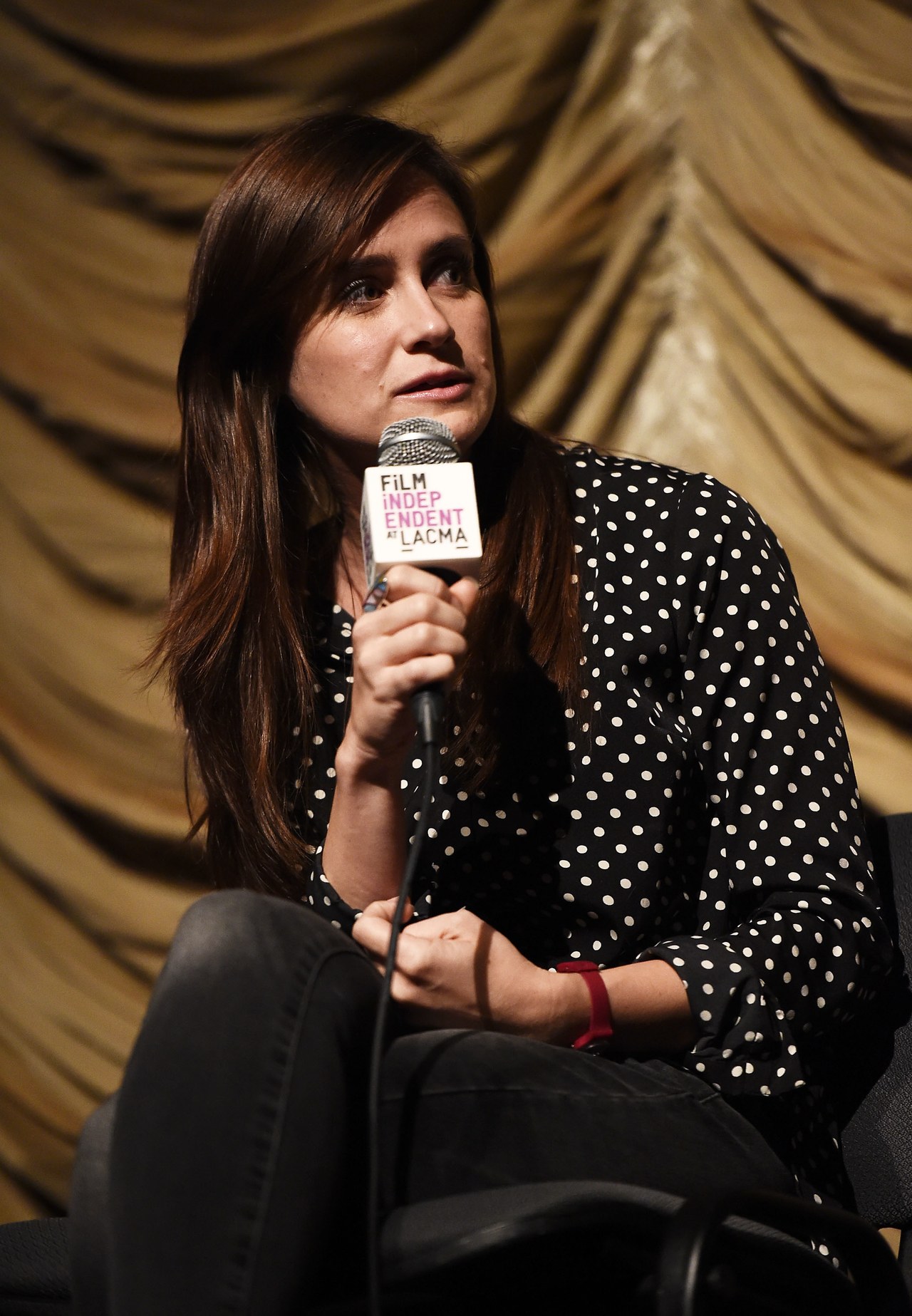
Elaine McMillion Sheldon

GLAMOUR: Jan is the first-ever female chief of the fire department in West Virginia. In some ways, are women better equipped to deal with these issues than men?

ES: I think it’s more socially acceptable for women. We live in a very macho society and are reverting to some strange time that I didn’t grow up in. You see men soften when it hits their family or when it’s their wife. They find the empathy then.

GLAMOUR: Necia of the Brown Bag Ministry talks about the double standard in Huntington, specifically in prostitution, which is affected by the opioid epidemic. How do you feel about men being held accountable for their actions?

ES: There’s another person in this equation. The people picking up the girls? They’re businessmen, they’re well-known in the community, and they have an ‘in’ with the cops. Because these women are using, they could be sharing needles and spreading disease to a guy, who then spreads it to his wife. Men need to be held accountable. It’s not a radical statement. If two people are involved in the crime, then why is one being slipped out the back door? It doesn’t make sense.

GLAMOUR: The film says the only qualification for long-term recovery is being alive. Do you think there’s hope?

ES: Yes, there absolutely is. It’s not so much about stopping the supply of drugs because you will still have a huge population of people who are addicted and then what are they doing going to turn to? We need to give people something to live for that’s not getting high. But this is the new norm, and we are going to be fighting for a few decades.

MORE: Women and Opioids: Inside the Deadliest Drug Epidemic in U.S. History


Source link