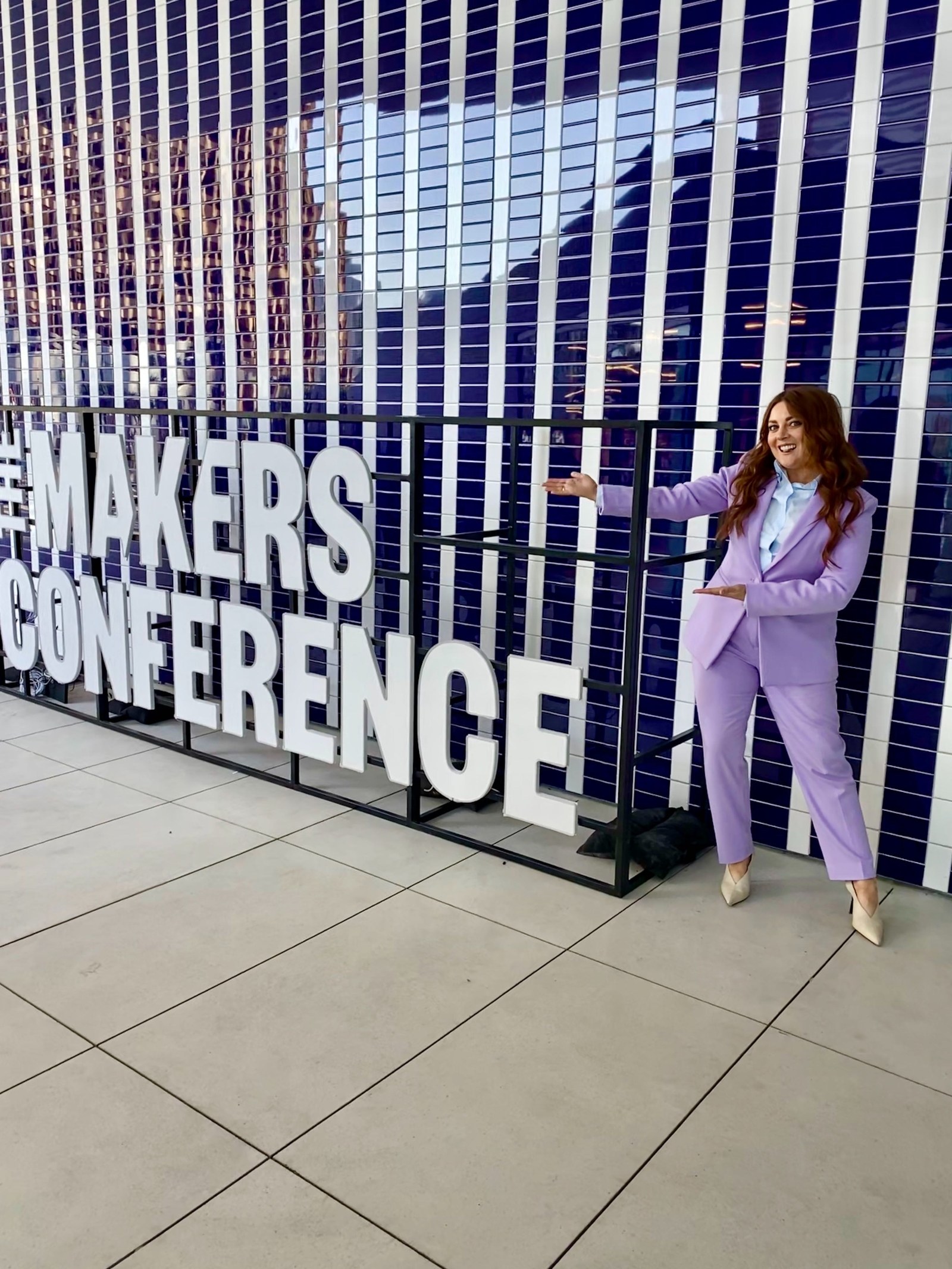
Last week international beauty brand SK-II* invited me to attend the 2020 Makers Conference in California as a guest at their expense. I was delighted to accept—not just because I was excited to hear from the incredible women (and men) that Makers, a yearly event highlighting female change makers, had lined up as speakers, but because I was also intrigued by a new campaign that SK-II had just launched called #NoCompetition. Looking ahead to the 2020 Olympic Games in Tokyo, SK-II has enlisted up-and-coming athletes and sports legends (including 2016 Glamour Woman of the Year Simone Biles) to celebrate competition on the field, the floor, in the pool, and more—but take competition out of the equation when it comes to how we look, act, and feel.
In SK-II’s estimation, beauty shouldn’t be a competitive sport. That makes perfect sense when we’re thinking about who has the longest eyelashes, the clearest complexion, or the shiniest hair; that kind of competition is toxic and dated. But I hadn’t thought about how beauty competition affects athletes—yet it does. There’s the way the press embraces certain athletes but ignores others. Or when female athletes vie for endorsement deals and might be chosen based on their physical appearance rather than their performance.
Today SK-II has enlisted Biles, swimmer Liu Xiang, surfer Mahina Maeda, and others to continue the fight. As YoeGin Chang, the brand leader of SK-II Japan, explained in her talk at Makers: “Our mission is to help women change destiny by standing up against pressures and expectations that are pushed on us every day. We are saying no to competition in beauty, because it will be all the more beautiful when beauty is no competition.”
In addition to hanging with Chang and the SK-II crew, I spent a lot of time at Makers enthralled with speakers who spoke to this year’s conference theme: Not Done. The fight for true equality isn’t over, is it? The journalist in me was enraptured by Meredith Levien, COO of the New York Times. She led the insurgency in the Times newsroom and is looking closely at the way we get news in today’s culture. Megan Smith, the former chief technology officer of the U.S. and current CEO of Shift7, gave a call to action about using the power of community to lift up innovators. One of those innovators is Bernice Dapaah, founder and CEO of the Ghana Bamboo Bikes Initiative, which uses local, sustainable bamboo to build bikes. Dapaah was one of many speakers who focused on sustainability and environmental issues. All of the environmental activists on stage encouraged every generation to be part of the fight against climate change and to take action in innovative ways.
I’m kind of addicted to forceful female business leaders, and I found one in the CEO of the Dallas Mavericks, Cynt Marshall. What an amazing speaker! As a woman who faced no shortage of misogyny in the corporate world, Marshall spoke about owning her authentic self and the ways all of us can help transform corporate cultures. Her focus at Makers was on her first 100 days with the Mavs, which included physically walking her team out of the building and back into a new values-based culture that prioritized diversity and inclusion.
Another speaker focused on change in the corporate workplace was Erica Chidi Cohen, CEO and cofounder of the well-being brand Loom. She’s an expert on body literacy, which is basically understanding our own sexual and reproductive health, and emphasizes that we need to integrate it into our workplaces and our schedules: She encourages women to make room to talk about periods, fertility challenges, and menopause at work—and to schedule big events, like board meetings and presentations, when they’re at the most energized point in their menstrual cycle. She made it clear that we need to bring men as allies into the conversation, and that we have to drop any shame we feel about our physiology and emotional state when it connects to functioning well as working women.
It wasn’t just the action on stage that inspired me—it was the connectivity I felt with the attendees seated around me. In this safe space, we were able to take a couple of days to envision what we wanted to do and how we were going to do it, examine the places where our work was not yet done and where we have the opportunity to make the greatest impact. SK-II got me started by talking about eradicating competition in the beauty space, but I realized that there should also be #NoCompetition when it comes to the opportunity to excel. We’ve moved away from thinking that there’s only room for one woman to run a company, launch a brand, or win a medal. By the time I walked out of Makers, I really did believe that when we’re playing the game together, we all win.
*SK-II is a Glamour and Condé Nast advertiser. The company underwrote this trip, but the story is my own.