
Categories
Health

Julia Stiles on Playing the Only “Hustlers” Character Not Stripping or Scamming


Besides, not playing a dancer isn‘t a big loss for Stiles. “I don’t want to say that I’d be too shy [to play a stripper], because I feel like that’s shaming the women that do it,” she says. “But it would’ve taken a lot for me to have the guts to do that—and balance on those stiletto platform heels. It would have taken a lot of training.”

That doesn’t mean she didn‘t prep for the movie, of course. Stiles met with Pressler ahead of filming after reaching out to her on Instagram. Both women were working in New York at the time, but they had young kids and finding childcare was difficult. So, they arranged a play date. “I brought my son over to her apartment, and he proceeded to destroy her living room while we talked about everything that led to this point.” Stiles asked Pressler every question she could think of—how she found out about the story, how she got in touch with the women, the process of turning it all into a film.

“There were so many interesting anecdotes I took away from our meeting,” Stiles says, “but I also really learned that she’s got a lot of compassion for the people she writes about. She showed up at Rosie’s—the woman the Constance Wu character is based on—with a box of cannoli as a sort of peace offering to say, ‘I’m not here to trash you, and I’m not here to take advantage of you. I want to know more about you, the person. I’m on your side.’” Stiles says she’d also text Pressler during filming with questions like, “How much do you use a notepad?”

The goal was to not do an imitation of Pressler but rather learn about her process. “I told her we were going to take liberties,” Stiles says. “We took a lot of them, with my wardrobe in particular. I think Lorene wanted me to wear a Chanel jacket to represent privilege, that Elizabeth is somebody who had a lot more options growing up than probably Ramona or Destiny did.”

Stiles with costar Keke Palmer

Stefanie Keenan/Getty Images for AT&T

Stiles found other ways to channel Pressler. “I thought there was something so great about being the only person that has compassion for these women,” she explains. “The dancers run in a world where they’re constantly being exploited and taken advantage of. My character develops a close relationship to them, and it’s the only person who’s not trying to get something from them. She’s actually looking at them going, ‘Who are you, and what’s your version of the story?’”

This did, of course, mean she wasn’t in the movie’s biggest set pieces. “I wasn’t at the club, which looked like it’s a lot of fun to film,” she says. “My scenes were a lot quieter.” Because of that, Stiles didn’t have a full view of how Scafaria’s vision would come together. “Once I saw the movie, I was happy to be the character in the film that grounds it and brings it back to a bit more of a serious note.”


Source link

Categories
Health

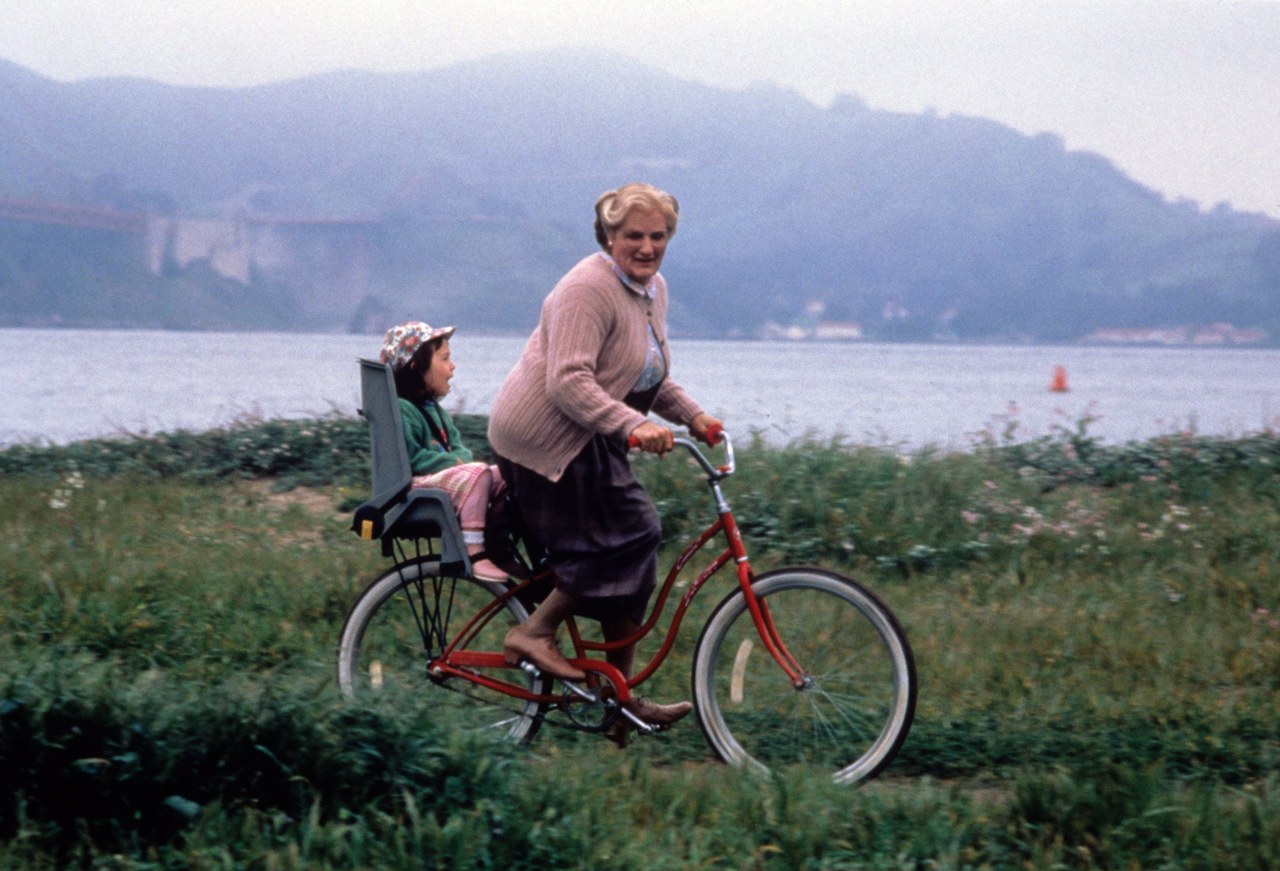
Mrs. Doubtfire Is About a Man Financially Scamming His Ex-Wife


When I became a parent two years ago, my life changed in all the ways you would expect. Suddenly, I was responsible for another human being, I forgot what sleep felt like, I stopped using a mirror for about six months straight…the usual. But what I didn’t expect to happen was for my brain to start playing a brand-new game called “Adulting All Over My Favorite Movies and TV Shows.”

Case in point: Mrs. Doubtfire, the charming 1993 Robin Williams vehicle in which the late Academy Award winner played a divorcee who impersonated an elderly Scottish nanny in order to see his children. The movie is classic Williams family-friendly fare—manic, hilarious streams of improv interspersed with heartwarming moments of drama.

“Daniel Hillard essentially scammed his ex-wife Miranda out of $300 a week so he could look after his own kids.”

But as Mrs. Doubtfire celebrates its 25th anniversary today, not even sentimental reunions (taken from an upcoming Today interview in honor of the movie’s milestone) have softened my post-mommyhood take on a fundamentally messed-up element of the film’s plot: Daniel Hillard (Williams) essentially scammed his ex-wife Miranda (Sally Field) out of $300 a week so he could look after his own kids.

For all that time “Mrs. Doubtfire” worked for the Hillard family, “she” was definitely paid; Daniel even mentions it as one of his jobs to the visiting court liaison, Mrs. Sellner, claiming to have picked up a gig “cleaning houses.” Yes, “Mrs. Doubtfire” does cook and clean, for which I agree payment is acceptable, but the real issue here is “she” was primarily hired to look after the three children—Lydia (Lisa Jakub; whose reunion tweets featuring her movie siblings and “Stepdad Stu,” Pierce Brosnan, went viral in October), Chris (Matthew Lawrence) and Natalie (Mara Wilson).

[embedded content]

At the end of the film, when Miranda agrees to let Daniel watch their kids in the afternoons in lieu of a housekeeper, she also ostensibly does away with the cooking/cleaning hired help element as well. This leads me to believe that the only “help” she was willing to pay for was child care; the cooking/cleaning part was just a bonus. And when it turns out the person who was watching your kids all along was their own father, well, on the one hand, that’s pretty damn brilliant on Daniel’s part. But on the other, given the exorbitant cost of child care in this country, that’s the real fraud of this movie.

“As someone who struggles to pay for child care herself, it seems to me that Miranda’s bitterness toward Daniel is misguided.”

I would think that what infuriated Miranda the most over being duped by her ex-husband was the fact that she paid to have her kids looked after by their father—not that he dressed up as an old lady. Here is someone who was quickly established in the movie’s opening scenes to be the Hillard family’s breadwinner, picking up the slack for her perpetually out-of-work husband (who, I might add, under the guise of “Mrs. Doubtfire,” gets out his post-divorce aggression by regularly slut-shaming Miranda once she upgrades to Brosnan’s character. Ew).

Looking back on the film now as someone who struggles to pay for child care herself, it seems to me that Miranda’s bitterness toward Daniel is misguided: No, it was not cool for him to pretend to be Mary Poppins, but it does bother me that Miranda doesn’t have at least one line of dialogue where she demands that Daniel return all the money she paid him—especially once he turned “Mrs. Doubtfire” into the host of San Francisco’s version of Mister Rogers’ Neighborhood and became (I hope) financially solvent.

PHOTO: Collection Christophel / Alamy Stock Photo

I get that none of this happened because it’s a movie, and Mrs. Doubtfire does deserve credit for helping to normalize divorce in movies. I’ll give it that. And I’ll even forgive the judge for not mentioning this potential financial fraud problem in Mrs. Doubtfire’s climactic courtroom scene (even though he had to have known about it) because then we get into a much more complicated issue, which is the likelihood that Miranda paid “Mrs. Doubtfire” under the table to begin with.

But for all of us out there for whom child care is a daily challenge, the preferred happy ending for Mrs. Doubtfire would’ve had Daniel picking up his kids—and handing Miranda a check refunding her money for baby-sitting services rendered.


Source link