Categories
Health

How I Prepared Myself to Have a Preventative Double Mastectomy


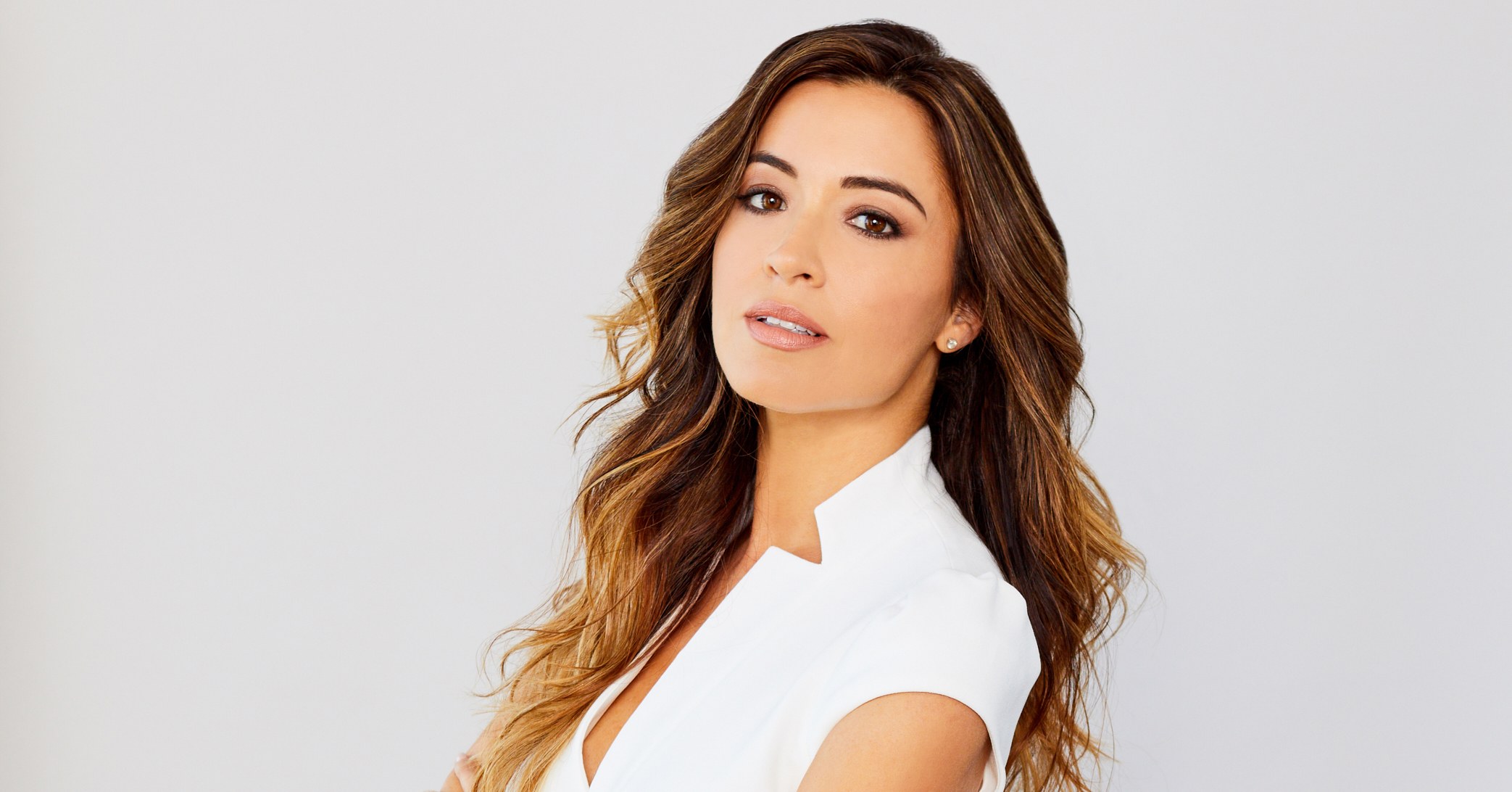
Alejandra Campoverdi is the former Director of Hispanic Media for the Obama Administration, a previous congressional candidate for California’s 34th District, founder of the Well Woman Coalition, registered holistic cancer specialist, and a BRCA-2 previvor. Just this month, she underwent a preventative double mastectomy to remove her healthy breasts. This is her story, as told to Glamour‘s Macaela Mackenzie.

My breasts have been getting a lot of attention lately. To be clear, this is a totally new and strange thing for me. I was flat-chested until I was in my early twenties and after my breasts finally did show up, they were never really a topic of conversation. So, what’s changed? For the past few years, I’ve been planning to have a preventative double mastectomy. Last week, I had my perfectly healthy breasts removed.

I have never known a time in my family without the presence of breast cancer. When I was a baby, my great-grandmother died of metastatic breast cancer (breast cancer that has spread beyond the breast to other organs in the body). When I was 16, my abuelita, who was like a second mother to me, died of metastatic breast cancer. In my early 20s, my mother developed breast cancer, though luckily, she survived. Since then, two of my aunts have also been diagnosed with the deadly disease. (This year alone, it’s estimated that over 40,000 women will die from breast cancer.)

With each diagnosis, it became clear that there was something hereditary going on. But it wasn’t until recently, with genetic tests for risk factors like mutations in the BRCA1 and BRCA2 genes becoming more accessible, I realized I might actually be able to do something about it. So in 2013, I decided to find out for sure—I tested positive for a BRCA2 gene mutation, meaning I had an 85 percent chance of developing breast cancer in my lifetime. (For women without BCRA1 or BCRA2 gene mutations, the risk of developing breast cancer is less than 4 percent.)

Now I have battle scars—almost like a badge of honor. I actually think they’re kind of beautiful.

When I found out, I didn’t tell anyone, not even my mom, for months. I wanted to make a decision about what to do on my own. I was the one that would have to deal with the ramifications for the rest of my life—I didn’t want anyone else’s fears or judgments getting in my head.

In the end, I listened to my gut: The chance to reduce my risk of developing breast cancer from 85 percent to under 4 percent was a no-brainer. I knew I would have a preventative double mastectomy—it was just a question of when.

Since 2013, the surgery has never been far from my mind. To prepare myself, I started a relationship with a breast surgeon a few years ago. I wanted to make sure that I knew the person, and that they knew me—and my breasts—very, very well. My surgeon told me I should aim to have my mastectomy when I was 10 years younger than my mom had been when she was diagnosed with breast cancer. So, we set a date for 2018.

In the meantime, I had to keep up with a grueling yearly regimen of screening tests—breast MRIs, mammograms, ultrasounds, monthly self-exams, and blood tests. Thankfully, I was able to get insurance coverage for the care I needed but navigating the convoluted system made the political firestorm around healthcare—especially for women and people of color—personal.

When my mother was fighting her own battle with breast cancer, I became her primary caregiver, chasing down HMO doctors and persuading them to prioritize her care. She felt like a number. That experience was one of the main reasons that I went to work unpaid on then-Senator Obama’s campaign in 2008. It is why one of my proudest moments serving as a White House aide to President Obama was the passage of the Affordable Care Act and why its potential repeal in 2017 led me to run for Congress. Unfortunately, when it comes to debates over the quality, access, and affordability of medical care, women are standing directly in the crossfire.

Breast cancer has been present in my family since the day I was born, in one way or another. Coupled with the challenges that women of color face when it comes to getting screenings and medical care, that’s why I’ve founded the Well Woman Coalition, a resource to help empower women to have agency over their health by arming ourselves with information and making intentional, empowered choices. There is no right or wrong answer—whether you choose increased screening or to have a preventive surgery, that’s very personal—being informed and engaged with your health is the important piece.

Six years after I first found out about my BCRA 2 mutation, I finally had my preventative double mastectomy—a life altering surgery to remove my breasts that were still healthy—earlier this month.

Now I have battle scars—almost like a badge of honor. Personally, I actually think they’re kind of beautiful. After seeing so many women in my family go through tough battles with cancer and some of them lose their lives, my scars are a symbol to me of empowerment and progress and choice.

Follow Alejandra’s journey on Instagram and at Well Women Coalition.


Source link

Categories
Health

What It's Really Like to Bra Shop After a Double Mastectomy


Four months after having a double mastectomy because I tested positive for the BRCA gene, I was going to take my new boobs out and buy them presents. I was a new woman, liberated and braless. My new boobies were built behind my pectoral muscles, so they looked cute and perky at all times. I am braless as you are reading this, and I haven’t worn one all week. I repeat: I never have to wear a bra.

Before my surgery, the last time I had gone anywhere without a bra, I was seven and was obsessed with giving my Barbies supershort haircuts. When my boobs came in, there was no way they could be untethered. So this bra-free sensation was something of a revelation to me.

I love not wearing a bra! But sometimes I miss the girlie ritual, and after I healed, I wanted to buy me some hotsy-totsy bras.

Victoria’s Secret has always been intimidating to me. It’s like the cool girls’ table, and I was an outsider. Sure, I wore bras, but they weren’t fun and trendy. They had to be specially ordered online from London, because they were the only ones that offered bras for narrow backs with huge cups. I had cute bras with ample amounts of sexy lace, but it was much harder to hunt them down, and they weren’t cheap. I accepted it, with bitter acceptance, like never getting a seat at the cool girls’ table.

This time, it was different. Maybe I could be part of the club of infamous sexy angels, running around and laughing in yoga pants? The doors were open to me now, and the overpriced thongs weren’t the only thing I could purchase.

I walked in and smelled the supersweet perfume I knew well. I touched every piece of satin like I did when I was little. But now I actually had the money and the power to buy whatever unrealistic piece I wanted. I looked at the shiny neon-orange-lace demi-cups with matching garter belts, touching them, lovingly aware that finally, I was one of the average-size masses, picking out an average-size bra.

A woman in all black immediately approached me. “Hi! Can I help you?” Without waiting for an answer, she began flipping through stacks of bras as she proclaimed, ever so casually, “You’re probably 32D.”

A 32D? Did she just say I was a 32D? Oh, no, she didn’t just try to take away my hard-earned C. Not happening. I didn’t just go through two surgeries and twenty-nine pints of recovery ice cream to be called a D! I had an average C-cup, lady, and the hospital bills to prove it.

“Nope. That is incorrect,” I informed her with a surprisingly serious expression, and I marched upstairs to the dressing rooms with bras I chose on my own. High and mighty on my own determination, I stood in line for a curtained hot-pink room to try on my new bras. I could hardly wait, and I wasn’t going to let that oblivious woman ruin my outing. Finally, a dressing room opened up, and I entered it, ready for my transformation. And then . . .

As if no time had passed, as if I were still that teenage girl with an ill-proportioned body and G-sized boobs that couldn’t be properly contained with any bras made in America, I couldn’t find a bra that fit. I tried on eighteen bras! This was not supposed to happen! I designed my perfect breasts, and I had the scars to show for it. How could it still be this difficult to find a bra that fits?

My boobs were finally average, normal, run-of-the-mill. They were not deluxe or designer; they were off-the-rack, everyday boobies, and I just wanted a pretty bra to wear over them! Victoria, you are still so high maintenance!

I tried on all eighteen again. One bra had a cup that would cut in too much under my implant. One bra gaped too much in the front. One bra was padded and made me look like I had a huge underboob. One had a cup that was too long and went up under my armpit, and another was too small and pinched where my nipples would be if I had them.

Something wasn’t right here. This was supposed to my own little infomercial moment. Where was my “After” reveal celebration? Where was the confetti cannon? I finally asked for help.

I’d been sitting in the dressing room regrouping (read: sweating and tired) when I heard a very nice sales associate outside my curtain, trying to help a family of Italian tourists, a woman who was really pissed the hip-hugger panty in large wasn’t on sale, and a very overwhelmed man nervously shopping for his girlfriend. She was sweet to each one of them, and I thought she might be kind to me, too. I flagged her down and explained my whole saga. I told her about my surgeries and comforted her when she told me about her aunt’s diagnosis.

Her name was Christina, and I was right: She was one of the kindest people in the world. She asked helpful questions and gave me as much time as I needed. We looked for a bra that wasn’t too tight, eliminating all underwire bras because there was no need for a supportive band, though I could buy one with an underwire and cut the wire out of the cups, so there would be no risk of getting poked by a rogue wire and not being able to feel it. We didn’t want a cup that was too small and would cut into my implant or possibly rub me during the day. We also ruled out anything that was overly structured—I would need a soft cup shape that could gently mold to my body.

In the end, we picked a very comfortable T-shirt bra. This bra rested gently on my chest without any pulling or gaping. She totally understood when I told her, “Think more ‘picture frame’ and less ‘pulley system.’”

As I tried on a new batch of bras, Christina would run back and check on me while she tended to the other shoppers and tried to aid the man with the girlfriend who was clearly relying on lingerie to save his relationship. She made me feel special and completely ordinary at the same time, which was exactly what I wanted. When it was all over, I took a few selfies and sent them to my mom, to share the exciting news.

Even with perfect woman-made boobies, the whole process took about an hour. I was ready to hand over my credit card like a trust-fund kid with a solid 401k, but the checkout line was filled with Swedish tourists and I started to get a perfume headache. So I did what all savvy women do: I went back home and ordered the bras online with a promo code.

The bra-shopping experience was just as frustrating as it ever was. As if I never had the surgery, as if my body was like it had always been. But you know what?! It also felt wonderful! I had gone through all of this surgery convinced that I would be a different woman afterward, and I wasn’t;

I was still me. Everything was just like it always was and totally different, too. It felt good.

Excerpted from Dangerous Boobies: Breaking Up with My Time-Bomb Breasts by Caitlin Brodnick (Seal Press, September 12). Brodnick is the blogger behind Glamour’s award-winning Screw You, Cancer video series.


Source link