Categories
Health

I’m Tired of Feeling Bad About Genuinely Liking Anal Sex


I was in high school when Sex and the City premiered and, like many women of my generation and the generations that followed, that show taught me a lot about sex. Like, a lot: Things I didn’t even know existed were introduced to me every Sunday night—and one of those things was anal sex.

At the time, anal between straight couples wasn’t even on my radar. I knew that gay men engaged in it, but I held on to some pretty old-school notions when it came to why straight women would do it. Namely, as Charlotte put it so eloquently in Sex and the City’s “Valley of the Twenty-Something Guys” episode, “Men don’t marry Up-The-Butt Girl. Whoever heard of Mrs. Up-The-Butt?” Back in 1998, I agreed—and that statement was the first thing that came to mind when my college boyfriend suggested we do the deed a few years later.

Even though I was determined never to become Up-The-Butt Girl, I was in love for the first time and figured one encounter with anal wouldn’t put me in whatever category a future Mrs. Up-The-Butt might reside. The experience was, for lack of a better word, awful. It was painful, uncomfortable, and as I would tell my boyfriend afterward, it felt like I was “taking a backward shit,” if that were even anatomically possible. But on top of the physical discomfort, I also felt ashamed. It was humiliating that this was what he wanted and humiliating that I consented. What did this say about me? What other so-called “deviant” things would I consent to in the name of love? I didn’t even want to imagine.

Even throughout my 20s, when I stopped taking such a hard line on what sex said about my character, I still didn’t really enjoy the few times I had anal sex and figured it just wasn’t really my scene. But then something happened in my early 30s. Perhaps it was the confidence that came with age and sexual experience, but I found myself having anal sex with someone I was dating and loving it. Really loving it. Though there was still shame—this time about enjoying it, rather than just engaging in it. It went back to what liking anal sex said about me as a woman. Was I dirty? Deranged? Had I been dropped on my head as a child and this was the outcome of it, manifested decades later? It didn’t matter how many times I watched that Sex and the City episode in which Samantha praised anal—I couldn’t come to terms with it.

Though up to 25 percent of heterosexual men and women have tried anal sex, the taboo around it is often louder than the praise. It doesn’t matter how many stats come out on the topic, like how women who have anal sex have more orgasms (it comes with an orgasm rate of 94 percent, compared to the 65 percent from vaginal sex). It also doesn’t seem to matter that the majority of women who do engage in anal sex are well-educated with higher levels of income—information one might think would nix some of the negative stereotypes associated with women who enjoy anal sex. But, sadly, it does not.

There are plenty of reasons a woman might feel guilty about enjoying it. Just this summer, when Teen Vogue published a piece titled “Anal Sex: What You Need To Know,” the backlash was swift. Although writer and NYC-based sex educator, Gigi Engle (who, full disclosure, is a Glamour contributor), wasn’t suggesting girls run out and have anal sex—merely introducing it as an option, with information on how to do it safely—there were some alarmingly conservative, potentially homophobia-tinged responses. It didn’t take long for the hashtag #pullteenvogue to make its way onto Twitter, or for articles and videos to pop up condemning the magazine for what ultimately should have been a conversation-starter and a healthy eye-opener.

Despite the alarmism, women who have anal sex are making their way into mainstream narratives.

“Much stigma exists around anal sex, but for some women it is their arousal and favored erogenous zone,” explains Clarissa Silva, behavioral scientist and author of relationship blog You’re Just A Dumbass. “For women who know that they like anal and express it, we should [remind her] why she shouldn’t be shamed. She is simply making a decision for herself that she is interested in having better sex.”

And despite the alarmism, women who have anal are slowly but surely making their way into mainstream narratives. Lars von Trier’s 2012 film Nymphomaniac was the rare theatrical release that included anal sex (actually, there wasn’t much it didn’t include, sexually speaking), which seemed like a small but important step. Then, in 2014, both The Mindy Project and Broad City had episodes about the act. In 2015’s I Smile Back, Sarah Silverman’s character has anal while cheating on her husband. This kind of exposure just solidifies that this is a sex move that people are engaging in, even if it’s still hard to talk about it sometimes.

With this in mind, I have been suggesting it more on my own accord to get more comfortable with the fact that I like it. My partner and I did it the third time we slept together, in fact, because it was important to me that I fully embrace my sexuality—especially the parts I was once ashamed of, and which still remain taboo by society’s standards. I wanted to be the one who initiated it, thereby owning it and the fact that I enjoyed it. I’m starting to understand now that I shouldn’t allow archaic thoughts about how a woman should have sex (which typically means vaginal only), or the narrow-minded thinking of people who condemn it to take up space in my mind.

While I don’t need other people or pop culture to validate my feelings on the matter, it does help in some ways to feel a sense of solidarity. It forces us to realize that human sexuality is complicated and there’s no “right” way to be aroused or to get off. Similarly, not being into anal sex doesn’t make you a prude or somehow less sexually adventurous.

It’s definitely not for everyone, but for those of us who do enjoy it, for far too long, it felt like it needed to be a secret. Now I know how ridiculous a notion that is. A woman’s sexual proclivities don’t define her—knowing what you want is all that really matters.

More:

Glamour’s 2017 Sex Toy Awards

How Do I Help My Partner Understand What Gets Me Off?

Fidget Spinner Butt Plugs Are Here for Some Seriously Twisted Anal Play


Source link

Categories
Health

Kim Kardashian's Body Insecurities Are So Bad That Kourtney Tried Deleting Her Social Media


Kim Kardashian has been quite open about her body-image issues this season on Keeping Up With the Kardashians. Last week, we saw her get visibly upset when a tabloid ran candid bikini shots of her from a vacation in Mexico. “You take pictures and people just body-shame you,” she said. “It’s like literally giving me body dysmorphia.”

And she opened up more about her insecurities during last night’s episode. “When will they stop with this story? You definitely get a thick skin once you have been through it a lot, but pictures just keep coming up every day and they just won’t let it go. I know I can handle anything and everything, and if I can’t handle it…who can?” she said. “I just am in the house so much that I get so freaked out if anyone like, looks at me. [It’s a] full phobia—I freak out about everything. Why do I subject myself to being seen? Why don’t I just stay at home?”

Kim’s sisters, Kourtney and Khloé, blame social media for a lot of her insecurities. “It consumes you and it affects you,” Kourtney told Kim in the episode last night. “You just need to live your life. Why do you need to see this nonsense?”

But the sisters did more than just confront Kim about the issue. They straight-up tried to delete apps off her phone. In a clip from the episode, which we included below, Kourtney and Khloé set up a plan to distract Kim so they can wipe her phone clean of what they call “the bullshit.”

“Kim is normally not this insecure,” Khloé says before Kourtney adds, “If she just didn’t have access to social media or stopped looking at the blogs, I think that she would start to feel better.”

“I feel like one of the best things [Kim did for herself] after her Paris incident was she really detached herself from the Internet and social media,” Khloé said. “We really need to step in.”

So do they succeed in their plan? Watch to find out:

[embedded content]

Related Stories:

Kim Kardashian Shut Down Some Rumors About Herself With the Help of Her Grandma MJ

Kim Kardashian Says Selfies Are Over, so I Guess the Internet’s Canceled


Source link

Categories
Health

Riverdale's Veronica Lodge Was Supposed to Be Another Brunette Bad Girl—Now She's Something Greater


Much has been made of the many changes Riverdale made to the original “Archie” comics mythology. In 2017, Archie isn’t a blithe doofus who lucked into the affections of not one, but two gorgeous women—now he’s a varsity football player with washboard abs and a budding songwriting career. Meanwhile, Miss Grundy is a sexy librarian of a music teacher, Josie and the Pussycats are a woke neo-soul group, Jughead is a brooding, budding-writer cutie with a way less-lame hat, and, of course, Riverdale is the epicenter of a Twin Peaks-style murder mystery that seems to involve every citizen in the whole damn town. (I also don’t remember the comics featuring so much way-obvious Cover Girl product placement, but that’s a topic for another essay.)

While most of these changes are welcome in that they diversify the formerly white-bread town, humanize formerly two-dimensional characters—and hell, just make them hotter—there was one change that gave me very conflicted feels: the decision to de-villainize Veronica Lodge.

Years of exposure to formulaic TV means that even if you never touched an Archie comic, you still knew exactly what to expect the moment Veronica first stepped on screen. She was the mysterious new girl in town, a raven-haired siren with a dark past, sophisticated enough to casually drop Capote quotes in the middle of Pop’s Chok’Lit Shoppe, beautiful enough to captivate Archie at the precise moment when sweet, pining Betty Cooper is trying to stammer out the old “What are we?” speech.

I’m not ashamed to admit that I had a near-Pavlovian reaction to Veronica’s appearance. When a girl like that steps out of a limo and into a suburban burger joint, you know it’s about to get real. Clearly, she was there to sprinkle some much-needed spice on bland old Riverdale, be Betty Cooper’s arch nemesis, seduce Archie with her HBIC charisma, and entertain us with endless scheming and catfighting. Veronica Lodge had arrived—and I wanted her to get her bitch on in the baddest way.

Only, this Veronica is a lot more complicated than that.

This Veronica sweeps into town in a swirl of rumors about her not-so-well-kept secret: her father, Hiram Lodge, was arrested in a high-profile fraud case that turned Veronica from—in her own words—“a shallow, toxic rich bitch who ruins everything in her path” into a laughingstock. Now, she’s thoroughly “humbled” and determined to shed her bad-girl rep in Riverdale.

Dear reader, if you could have seen my face the moment Veronica announces her bad-girl-gone-good intentions, it would have looked exactly like this gif.

How could this shady queen we had only just met be on the path of good? Why could there not be a Riverdale prequel set in 2015, in which we savor the sight of Veronica Lodge running her private New York prep school with an iron fist? This girl wears a sheath dress, stilettos, and pearls to high school—you know she can serve Georgina Sparks realness when she needs to. But if Veronica Lodge’s good-girl aspirations were almost a dealbreaker, it’s only because of my lifelong love for a very specific archetype: the Bad Girl Brunette (we’ll call her BGB for short).

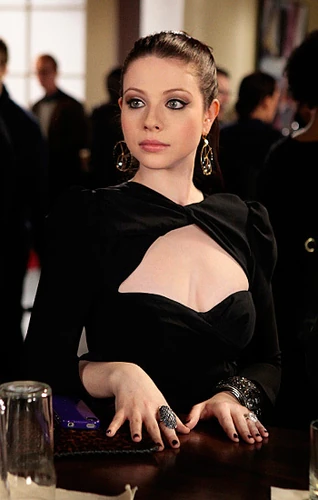
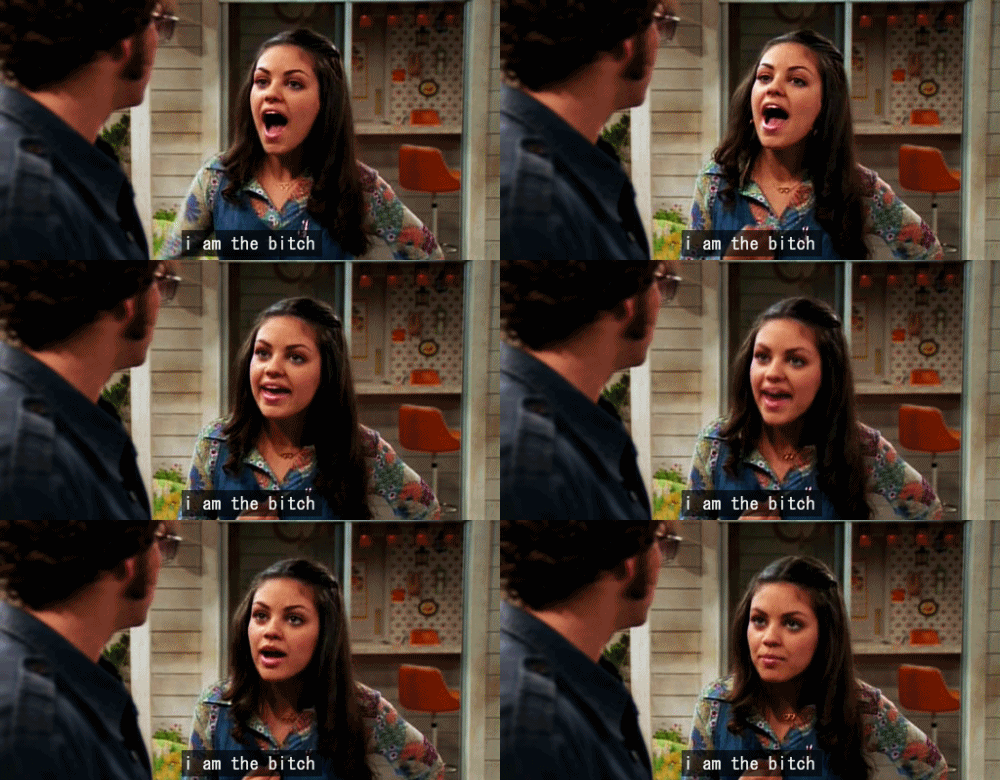
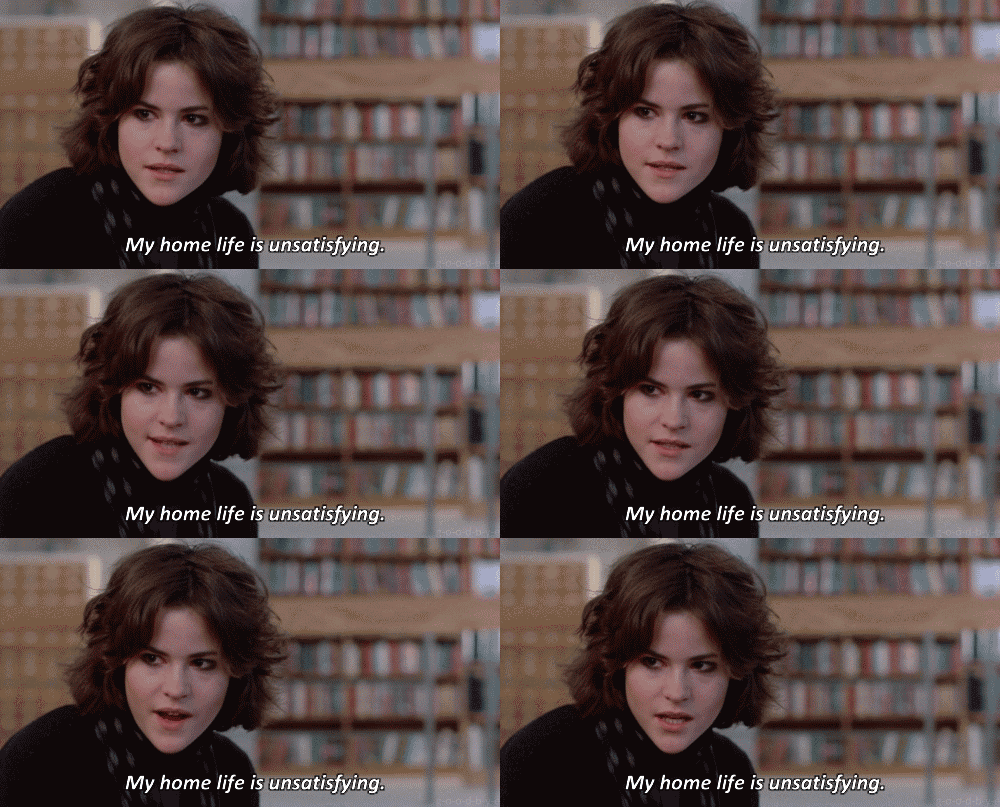
What is a BGB? She’s self-assured, headstrong, maybe a bit domineering (think Jackie on That 70s Show). Sometimes she’s troubled and weird (Allison Reynolds in The Breakfast Club), sometimes she’s rich, sophisticated, and wise beyond her years, making her a one-liner dispenser par excellence (Buffy’s Cordelia Chase). At her worst, she’s a scheming, unapologetically selfish alpha-bitch (Courtney Shayne in Jawbreaker or Dynasty’s Alexis Carrington). She’s often—and this is key—unapologetically sexy. Even more terrifying, she’s fully aware of her power over men (think Twin Peaks’ seductive schoolgirl Audrey Horne).

In short, the BGB knows what she wants and is not afraid to demand it. In a pop-culture landscape often lacking in complex depictions of women, it can be totally, vicariously thrilling to see a female character own her power and sexuality. And, OK, I’ll lay it out on the table: I’m a moody brunette weirdo myself and not ashamed to admit I get my life watching BGBs own the room. I’ve always found these characters easy to root for, even (or especially) when they’re a little bit evil.

Of course, not everyone feels that way about BGBs. For every person like me who eagerly breaks out the popcorn every time a ball-busting brunette steps on screen, just as many people hiss. That’s because BGBs are often asked to play another, less glorious role—that of the rival to a perky blonde lead.

Examples of the blonde vs. brunette trope abound in every form of pop culture, from TV and movies to teen lit. Think Beverly Hills, 90210’s drama-queen Brenda competing with poor little rich girl Kelly over Dylan’s affections. Cordelia Chase’s mean-girl wisecracks at Buffy Summers, who’s literally trying to save the world. Vivienne Kensington scheming to humiliate Elle Woods in Legally Blonde (like Reese Witherspoon in a Playboy Bunny costume is ever not winning). Haughty rich girl Lila Fowler stealing boys from Cali-queen twins Elizabeth and Jessica Wakefield in “Sweet Valley High.”

But the fact that the BGB’s selfishness and scheming makes them hated by some has always struck me as hypocritical. After all, the last 20 years of television have been defined by men exhibiting antisocial behavior that puts almost any raven-haired temptress to shame. Think Tony Soprano, a neurotic teddy bear with a body count to rival Jason Voorhees. Don Draper, who slept with and/or lied to 98% of the women in Manhattan. Or Walter White, who cut a ruthless path of destruction as he built an international drug empire. Next to these genuinely disturbed dudes, even the bitchiest, most backbiting BGB looks downright quaint. If we cut female characters the same slack we did men, these women—powerful, sexual, funny, and yes, sometimes even selfish or sadistic—would be celebrated anti-heroes, not villainesses you love to hate.

PHOTO: Maarten de Boer

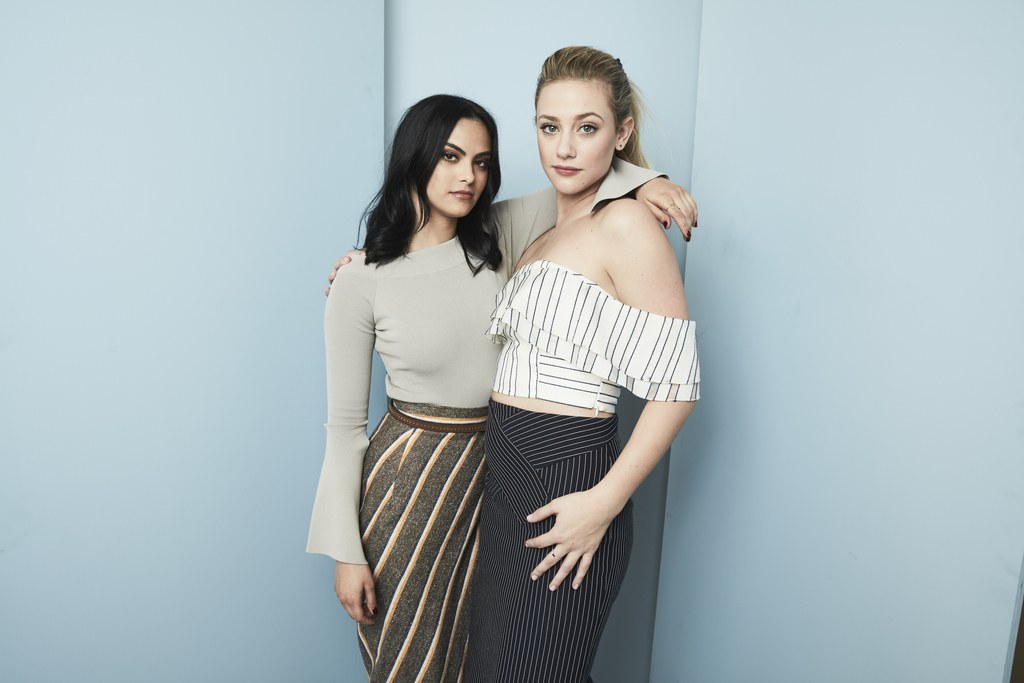
But back to the whole blonde vs. brunette thing. It’s as tired and misogynist as tropes get, which is why I’m glad Riverdale lives to upend it at every chance. Yes, Betty and Veronica circa 2017 have their ups and downs and petty jealousies over Seven Minutes in Heaven. And Veronica does want and (spoiler alert) eventually gets Archie. But beyond an early misstep, Veronica also takes pains to be respectful of Betty at every point, even swearing allegiance to her over Archie because, as V puts it, she feels like they “were meant to be best friends, like, it’s my destiny.” Betty eventually gets over Archie, starts dating Jughead (who’s hotter in my book anyway), and the four sip milkshakes in Pop’s like best buds. It’s all so heartwarming. Meanwhile, because Veronica and Betty aren’t wasting energy competing against each other for a dude’s attention, they can join forces to avenge actual injustices—from solving the murder that’s at the heart of season one to getting revenge on a bunch of sexist jocks slut-shaming girls at school.

So, if Riverdale deprived me of a bitchy brunette antagonist, it gave me something much cooler and even kind of revolutionary. It dares to imagine a world beyond female competition, where women consciously decide to value each other, and to stomp all over the false good-girl/bad-girl dichotomy that holds us all down.

Season One ended with a new mystery and a slightly re-sparked rivalry, when Veronica notices Archie suddenly pining for Betty now that she’s with Jughead (ugh, dudes). But I’m pretty sure they’ll get over it and get on with the business of being badass, crime-fighting, injustice-exposing best friends. These girls prove that blonde or brunette, heroine or villainess, girl next door or new girl in town, when women get along, they get shit done.


Source link