
Categories
Health

13 Best Bed Pillows 2020: Helix, Purple, Casper, & Brooklinen


You can splurge on the softest bedsheets or the most-hyped sleeping products, but if you skimp on the best bed pillows, you’ll feel it in the morning. A full night’s sleep goes hand in hand with proper sleeping posture and the secret to that lies in your pillow. Like most things out there, there’s no such thing as a “universal best pillow” so we talked to the experts about how to find the right pillow for all types of sleepers.

Square one is understanding how your mattress affects the kind of pillow you choose. “You can have a comfortable mattress but if your pillow isn’t a good fit for you, then your sleep quality will be compromised,” says Terry Cralle, R.N., and certified clinical sleep educator. “A mattress that is plusher on top may affect the height of the pillow that is the most comfortable for you,” she says. Meaning, a soft pillow may be better for a firm mattress while a medium-to-hard one could be better for a soft mattress to keep your head and neck in perfect alignment.

Does it matter how you sleep?

Yes—and here comes the big but—remember that we toss and turn throughout the night so you want to choose a pillow that works for you in all of your sleeping positions. Michael Breus, Ph.D., a Los Angeles clinical psychologist and sleep specialist, tells us side sleepers may need a firmer, thicker pillow than stomach sleepers (who can get away with a soft pillow—or not using one at all).” As far as thickness goes, he recommends choosing one that’s the same distance between your ear and outside shoulder, which allows your nose to be in line with the middle of your chest. Back sleepers, on the other hand, need a flatter pillow to keep their head and neck in alignment. A soft pillow works, “but if you have neck pain and sleep on your back, look for a pillow that provides additional support, while maintaining the softness that’s comfortable for you,” he says.

How long does a bed pillow last?

“If you’re sleeping on a worn-out pillow, scrunching and folding it up every night to get comfortable, that’s a red flag that it’s time to update,” says Breus. Usually, this means replacing it every 18 months. “If you’re using [a] pillow that’s five or six years old, you’re not getting the support you need—and you’re not sleeping as comfortably as you could,” he says. Can’t tell whether your pillow needs a refresh? Check for yellow sweat stains, rips, and funky smells, which are all signs that your pillow (and pillowcase) have reached the end.

What fill should you pick?

If you like the slow, sinking feeling of a Four Seasons hotel pillow, a down pillow may be for you. Some people have allergic reactions to the goose or duck fibers, so if that’s the case, you can opt for a down alternative pillow or one made from wool or cotton, which are both naturally hypo-allergenic materials (that also resist dust mites). Like puffer coats, real down pillows are more expensive than their synthetic and polyester counterparts. “[Synthetic and polyester fill pillows] will flatten with time, and typically need replacing more frequently than other types of pillows,” Breus says. Two other materials you may be familiar with are latex and memory foam. Latex pillows are firmer than down, and they tend to hold their shape better over time. (A solid choice if you need extra head and neck support.) Memory foam is pretty popular too since it’s all about conforming to your individual shape, however, it retains heat (and can be the reason why you keep waking up with crazy, sweaty bed head).

Now that you know a Goldilocks pillow doesn’t exist, you can begin your journey to the perfect night’s sleep. If you’re looking for a place to start shopping, here are 13 contenders for the best bed pillows of 2020.

Sleep is a $70 billion industry—we throw our money at a dreamier night’s rest, promise ourselves we’ll prioritize it, and then gripe when we’re still, inevitably, so tired. Despite our collective obsession with sleep, we seem totally unable to get more of it. In fact, we’re clocking fewer hours than ever. So, this month, we’re taking a look at what’s getting in the way—and what to do about it.


Source link

Categories
Health

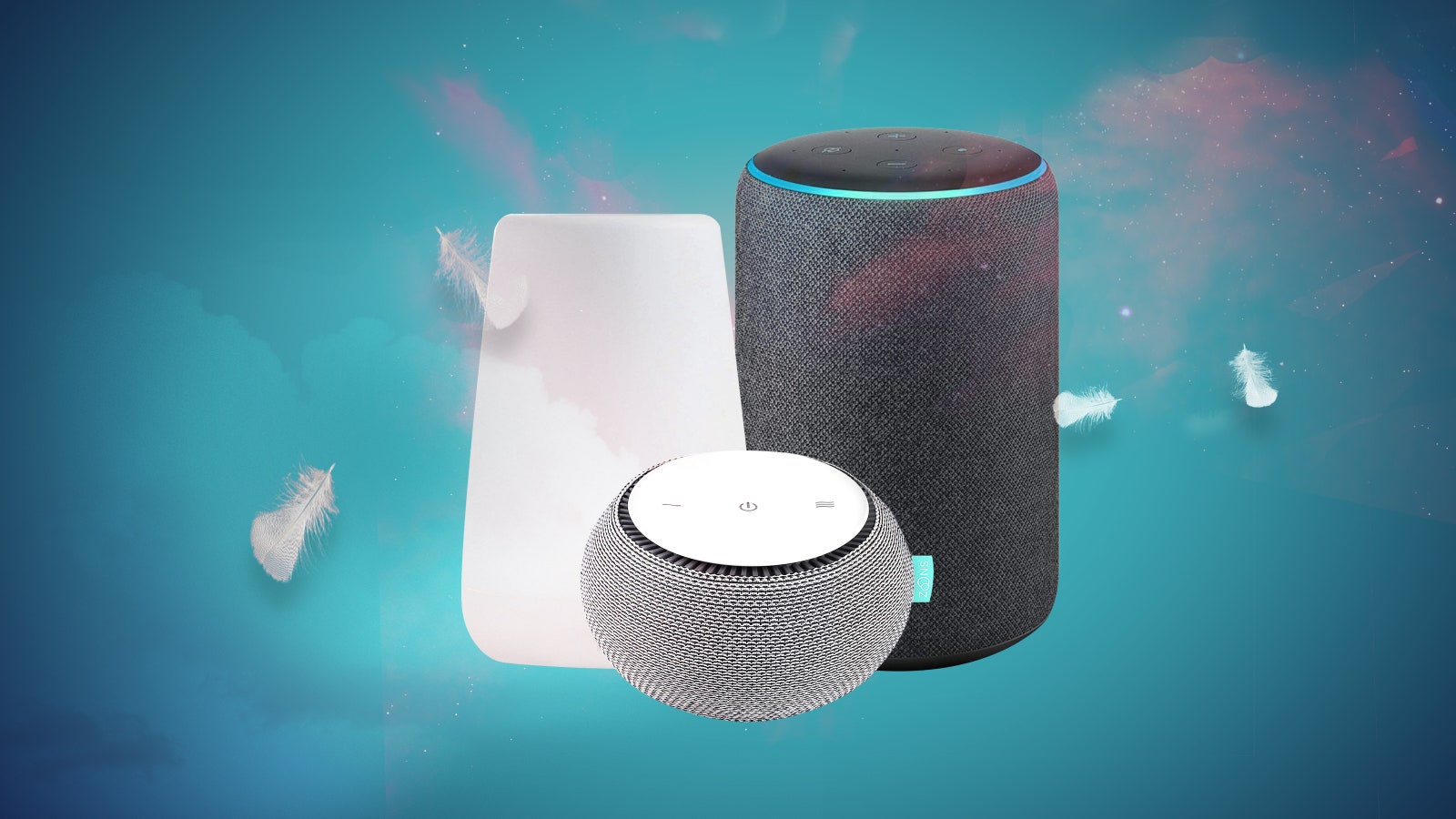
8 Best White Noise Machines in 2020: Snooz, YogaSleep, & More


So you’ve secured the best sheets in all the land, your cozy pajamas are on deck, and your mattress is top-notch—but you still can’t manage to doze off peacefully. Bringing the best white noise machine into the mix might be the fix you’ve been searching for. Whether the wall clock in your living room seems to grow exponentially louder the second you lie down, or dead silence magnifies that internal voice spewing off your mental to-do list—a white noise machine has the potential to finally bring on some solid shut-eye. With so many options on the market, Glamour editors wanted to figure out which ones deserve a spot on your nightstand—so for Sleep Month, we put them to the test. From portable devices to free apps, these are the eight best white noise machines of 2020—along with expert answers to your burning questions around the popular technological sleep aids.

What is a white noise machine?

A white noise machine is a device designed to drown out unwanted sounds that might keep you up at night, or trigger distraction during a deep sleep session. Sometimes they mimic nature sounds like waterfalls or wind, but the most popular sounds are uninterrupted white, pink, and brown noise—which vary in frequency, and allow “unwanted noises that do occur to become less noticeable and thus less disturbing,” explains Sam Nicolino, President and CEO of Adaptive Sound Technologies. “As an analogy, a tiny ink spot on a blank sheet of paper grabs your attention, but the same ink spot on a speckled sheet is not even seen.” So while you can’t control whether a horn honks or your partner starts snoring to high heavens, a white noise machine can help drown out surprise sounds and keep you snoozing through the night.

How do white noise machines work?

Back in the day, your family may have used a good ol’ fashioned fan to get to sleep, but these days there’s a range of white noise machines to consider—from new-age devices with electrically-generated sounds, to command-able smart speakers, to decades-old classics with tiny fans inside. “There are two types of white-noise machines–electronic and electromechanical,” says Steve Cummings of YogaSleep. “The former produces sounds with electronics (most are circuit boards), and electromechanical options have real physical parts, driven by electricity, that make the sound. In our case, there’s a real fan inside which resonates out of a dome-shaped shell.”

The plethora of machines on the market deliver a range of repeating or non-repeating sounds, and are available in different sizes, volumes, and price points. “The general theory is that sound machines, essentially, fill in the troughs of silence and minimize the startling effect by reducing the arousal effect of abrupt sounds,” says Cummings.

Where to buy white noise machines

Amazon has a wide selection of top-rated white noise machines, with thousands of impassioned reviewers detailing their best features (and shortcomings), and Bed Bath and Beyond is a good option if you’re looking to shop in-person.

Is a white noise machine good for babies?

Being a new parent comes with countless challenges, but getting your baby to fall (and stay) asleep might be the biggest one of all. A 1990 study on white noise and sleep induction found white noise can get babies to fall asleep faster, and some devices are designed with little ones in mind, such as the Hatch Baby Rest Sound Machine and Night Light. Check with your pediatrician on recommended volumes for your child, and be prepared to keep the machine around for the long haul. “If you want to introduce a white noise machine into your baby’s bedtime routine, prepare to keep it around for 3-5 years,” pHd board certified sleep specialist Michael Breus advises. “Kids do not adapt well to change, so if you use a noise machine and they get used to it, you will need to bring it on trips, etc. It’s no different than a teddy bear.”

So, you’re ready to experience white noise for yourself. We tested and narrowed down the eight best options to shop now, based on various needs. Read Glamour editors’ takes on why these machines worked for them, and get ready for game-changing snoozes ahead.

Sleep is a $70 billion industry—we throw our money at a dreamier night’s rest, promise ourselves we’ll prioritize it, and then gripe when we’re still, inevitably, so tired. Despite our collective obsession with sleep, we seem totally unable to get more of it. In fact, we’re clocking fewer hours than ever. So, this month, we’re taking a look at what’s getting in the way—and what to do about it.



Source link

Categories
Health

The 13 Best Mattress Brands to Buy in 2020: Casper, Helix & More


Nothing gets the Zzz’s going quite like sinking into five layers of plush memory foam—but buying a mattress is easier when you know what the best mattress brands are (or, for Millennials, what the best mattress-in-a-box brands are) before making your decision. Once you’ve got one, you’re just a linen bedsheet set and giant tropical houseplant short of a dreamy, Insta-ready bedroom.

For Sleep Month, Glamour is honing in on everything you need to manifest those eight hours of shut-eye—your mattress being square one. A big-ticket purchase requires research, so we talked to experts to help us answer some of the most Googled questions (like, what on earth do we do the old one?). Then we compared all the top-rated mattress brands to come up with this list. Whether you’re a budget-savvy shopper or a self-proclaimed mattress connoisseur, here are the 13 best mattress brands worth your money.

Where should I buy a mattress?

Once upon a time, you’d drive up to a store, flop down on the $3,000 mattresses on display, then pick the one that was a third of the price and have it shipped to your home. Nowadays, buying a mattress is considerably easier—you could simply add one to your Amazon cart along with a book and some toilet paper—but it also means you’re grappling with open-ended questions you have to answer for yourself. How thick should my mattress be? Do I even need a new one? Without face-to-face interaction with an expert (or squishing the edges of your new mattress), it can be hard to commit to the first well-packaged mattress in a box that comes with free, two-day shipping. Since you really won’t know until it’s sitting in your bedroom, when shopping for a mattress online, “it’s important to focus on customer service reviews, return policies and warranties rather than individuals’ comfort reviews,” says Terry Cralle, R.N., and certified clinical sleep educator.

How do I pick a mattress?

A mattress is the most important thing in your bedroom—and it’s typically characterized in terms of comfort (i.e., whether it relieves pressure) and support (i.e, whether it keeps your spine in a neutral position), says Cralle. “A good mattress should provide comfort, relaxation, and tension relief.”

But don’t let the marketing fool you—there’s no such thing as a “universal” mattress. It’s all about what works for you, which “depends on height, weight, medical conditions, sleep positions, temperature, and comfort preference,” Cralle tells us. Mattresses are available in a range of thicknesses between 6″ and 16″, and the general rule of thumb is that the higher the BMI, the thicker the mattress should be. “People weighing between 250 and 400 lbs will probably be most comfortable on a mattress 10 inches thick or greater. For people weighing over 400 lbs, a 14-inch thick or greater mattress is recommended, ” she adds.

Another thing to do when buying a mattress is to familiarize yourself with the different features offered (like innerspring, air, or foam—which you can delve into here) and certifications like CertiPUR-US certified (non-toxic foam) and Oeko-tex Standard 100 label (free of harmful chemicals). Cralle says it’s also worth researching the latest technologies—like adjustable bases and temperature manipulation—and to sleep track for anything that might improve the quality of your sleep if you’re able to do trial-runs.

How long should you keep your mattress?

Well…it depends. Experts say mattresses should be generally be replaced at least every seven to eight years, but according to Michael Breus, a.k.a. The Sleep Doctor, “your body will “tell” you when you need a new bed.” He says that “if you wake up stiff or sore (not from exercise or effort) more than two times a week for more than two to three weeks, you probably need a new bed.” And just as our bodies change with age, so do our mattresses. Over time, they lose both support and comfort, so replacing it is necessary to maintain continuous sleep quality. Most manufacturer warranties typically cover manufacturing defects for 10 years—and some offer 25 years or lifetime warranties.

How to get rid of an older mattress?

You’ve probably seen a stained mattress wrapped in plastic and dumped on the side of a curb, but “if you’re getting rid of an older mattress, it’s best to dispose of it in an environmentally responsible way like recycling,” says Jeff Chapin, co-founder and chief product officer at Casper. According to The Mattress Recycling Council, about 80% of a mattress’ parts can be repurposed, however, mattress recycling is only mandatory in three states: California, Connecticut, and Rhode Island. Still, that shouldn’t be an excuse to toss it outside and forget its existence. Even if you don’t live in a state that requires mattress recycling, the MRC operates a recycling program known as Bye Bye Mattress, which helps you find a recycling center near you.

Some mattress brands also do the work for you (albeit for a recycling fee), or they have helpful FAQ sections you can consult on what to do with your old mattress. Another alternative would be to look into your local charities or churches to see if they’ll take your old mattresses. Goodwill and Habitat for Humanity are popular donation centers, but you should always call ahead to make sure they have space for it. And if you are hoping to give away your mattress, make sure to check the condition beforehand. (Just saying, no one needs bed bugs in their lives).

Sleep is a $70 billion industry—we throw our money at a dreamier night’s rest, promise ourselves we’ll prioritize it, and then gripe when we’re still, inevitably, so tired. Despite our collective obsession with sleep, we seem totally unable to get more of it. In fact, we’re clocking fewer hours than ever. So, this month, we’re taking a look at what’s getting in the way—and what to do about it.

Note: prices below reflect Queen sizes.


Source link

Categories
Health

12 Best Weighted Blankets in 2020: Gravity Blanket, Bearaby, & Casper


Just like parents (and plant moms) can’t stop gushing over their precious little ones, anyone who’s ever tried the best weighted blankets can’t stop talking about how wonderfully life-changing they are. We’ve heard everything from: “I’m so comfortable and so relaxed” to “I’m having the most bizarre, deep dreams—and waking up feeling incredible.” But it’s hard to judge a weighted blanket’s sleep-inducing powers without ever having cozied up under one. Can you be a hot sleeper and not sweat to death with a weighted blanket? Are these dense, grey contraptions going to ruin your bedroom’s Scandi-cool vibes? Is a weighted blanket nothing but hype?

So. Many. Questions. So we went to the experts to answer them. Then, we put the blankets to the test ourselves. For weeks, Glamour staffers tossed and turned under weighted blankets to find the ones actually worth your money. Ahead, the 12 best weighted blankets to shop in 2020—and answers to questions flooding the Internet about them.

What is a weighted blanket?

“Weighted blankets are essentially heavy blankets initially designed for therapeutic uses,” says Eddie Huai, CEO and co-founder of Luna Wellness. He explains that most weighted blankets get their weight through a fill of small glass beads or tiny plastic pellets that are distributed evenly across tiny squares. It basically means you’ll never have a saggy corner—or limp edges hanging off the side of your bed.

Can weighted blankets help with anxiety?

The jury’s out on whether a weighted blanket actually works but the gist is that it can be a calming strategy for anxiety, stress, and sleepless nights. The blanket’s evenly-distributed weight is a form of “deep pressure stimulation,” which Dr. Michael Breus, a.k.a. The Sleep Doctor says is the same gentle feeling you get when you’re being hugged or massaged. (If you ask us, it’s the next best thing to a big fluffy cat sinking into your lap.)

“As research shows, deep pressure stimulation decreases the activity of the body’s sympathetic nervous system—that’s the system that promotes alertness and vigilance and responds to stressful stimuli. It’s the “fight or flight” division of the nervous system,” Breus says. “At the same time, deep pressure stimulation increases activity of the parasympathetic nervous system, which is sometimes called the “rest and digest” system. When it’s activated, it lowers heart rate and blood pressure and increases relaxation and feelings of calm.”

Do weighted blankets work?

The science is limited, but the most quoted study is one from 2015, which examined the effects of deep pressure stimulation from weighted blankets. “[The study] found a 33% reduction in stress, as measured by a test of physiological signs of arousal,” says Breus. “Among the participants, 63% reported feeling a decrease in anxiety, and 78% said they found using a weighted blanket a preferable way to increase their level of calm.”

Are weighted blankets hot?

They can be—but if you tend to wake up dripping in sweat, there are cooling ones. “People who sleep hot should choose a weighted blanket made with glass beads, which do not retain heat (as opposed to plastic beads),” says Adam Tishman, co-founder of Helix Sleep. He also recommends getting a blanket that has an outer cover made of breathable fabric (i.e., organic cotton or cooling bamboo) as they’re lighter and more breathable than polyester.

How do you choose a weighted blanket?

The blanket should feel snug or cozy, like a teddy coat. Tishman recommends selecting a weight that’s around 8 to 12% of your body weight. So if you’re less 125 pounds, you’d pick a weighted blanket that’s 10 pounds. If you’re between 125-200 pounds, you’d go for one that’s 15 pounds—you get it. “If you’re in-between sizes, we recommend selecting the lower of the two weights,” Tishman adds.

How do you wash a weighted blanket?

Try as you might, you’re going to have to wash your weighted blanket at some point. So if you want it to stay as fresh as the day you first slipped under it, consult the care tag. Some have removable covers that you can easily toss into the machine, but how you go about washing it really depends on the weight and filling.

Weighted blankets with glass microbeads and plastic poly pellets can be washed on a gentle cycle with cold water, but anything over 20 pounds is probably better off at the cleaners. Avoid using fabric softeners and bleach since that’ll make your blanket itchy. When all is said and done, you can dry your beloved weighted blanket on low heat because the fill doesn’t absorb a lot of water.

Where do you buy weighted blankets?

Online. Some of the best weighted blankets are sold on Amazon (hi, two-day, free shipping), but you can also check out individual brand websites, like the ones below. These things can weigh up to 35 pounds, so unless you’re trying to get in two workouts a day, just have it delivered to your doorstep.

Whether you want a weighted throw blanket for binge-watching Love Is Blind on the couch or a weighted duvet that’ll turn your bed into cozy headquarters, shop the 12 best weighted blankets Glamour staffers have ever tired.

Sleep is a $70 billion industry—we throw our money at a dreamier night’s rest, promise ourselves we’ll prioritize it, and then gripe when we’re still, inevitably, so tired. Despite our collective obsession with sleep, we seem totally unable to get more of it. In fact, we’re clocking fewer hours than ever. So, this month, we’re taking a look at what’s getting in the way—and what to do about it.


Source link

Categories
Health

13 Brands Giving Back on International Women's Day 2020: Shop Outdoor Voices, L’occitane, & More


The weekend is best time to fall into a leisurely online shopping hole with little-to-no shame. But this Sunday isn’t just any old Sunday. It’s International Women’s Day 2020—a day dedicated to celebrating the social, economic, cultural, and political achievements of women worldwide. International Women’s Day was recognized for the first time in 1911—and now, over a century later, brands worldwide are using their platforms to give back to organizations that uplift the women who need it most.

From the Malala Fund to the ACLU Women’s Rights Project, the brands on this list are partnering with organizations making a major impact—and so can you, by simply supporting their efforts through a little retail therapy. Whether you’re looking to fill out your beauty bag or upgrade your workout wardrobe, you’re bound to find something worth shopping on this list. Discover all the best beauty, style, and home buys for International Women’s Day, ahead.

All products featured on Glamour are independently selected by our editors. However, when you buy something through our retail links, we may earn an affiliate commission.


Source link

Categories
Health

13 Tiny Bags for Spring 2020: Shop Beaded, Pearls, Feathers & More


Leave your baggage at the door, because the tiny bag trend is still going strong in 2020. Ever since French luxury brand Jacquemus sent the meme-worthy Le Chiquito Mini Leather Tote down the runway for its Spring/Summer 2018 show, handbags have gotten smaller and smaller—and celebrities and the Internet can’t get enough.

Insta-famous brands like By Far and Cult Gaia have followed suit, designing too-cute takes on the accessory trend—and Lizzo took it to new heights with a borderline microscopic Valentino bag (or coin purse?) on the AMAs red carpet. But trendsetters like Kendall Jenner, Shay Mitchell, and Zoë Kravitz have incorporated micro bags into their street style looks in a more approachable way, pairing them with ribbed tanks, boxy blazers, and chunky sneakers to offset the extreme cuteness.

Raymond Hall/Getty Images
 Shay Mitchell is seen in Gramercy on February 19 2020 in New York City.
 Gotham/GC Images
Image may contain Handbag Accessories Accessory Bag Sunglasses Human Person Purse Clothing and Apparel
Gotham/Getty Images

The tiny bags bring charm (and a little humor) to any look, and now, they’ve gotten the spring treatment, with pastels, feathery textures, and fruity beads. Shop 13 micro purses so sweet we wish they had cheeks for us to pinch.

All products featured on Glamour are independently selected by our editors. However, when you buy something through our retail links, we may earn an affiliate commission.


Source link