Categories
Health

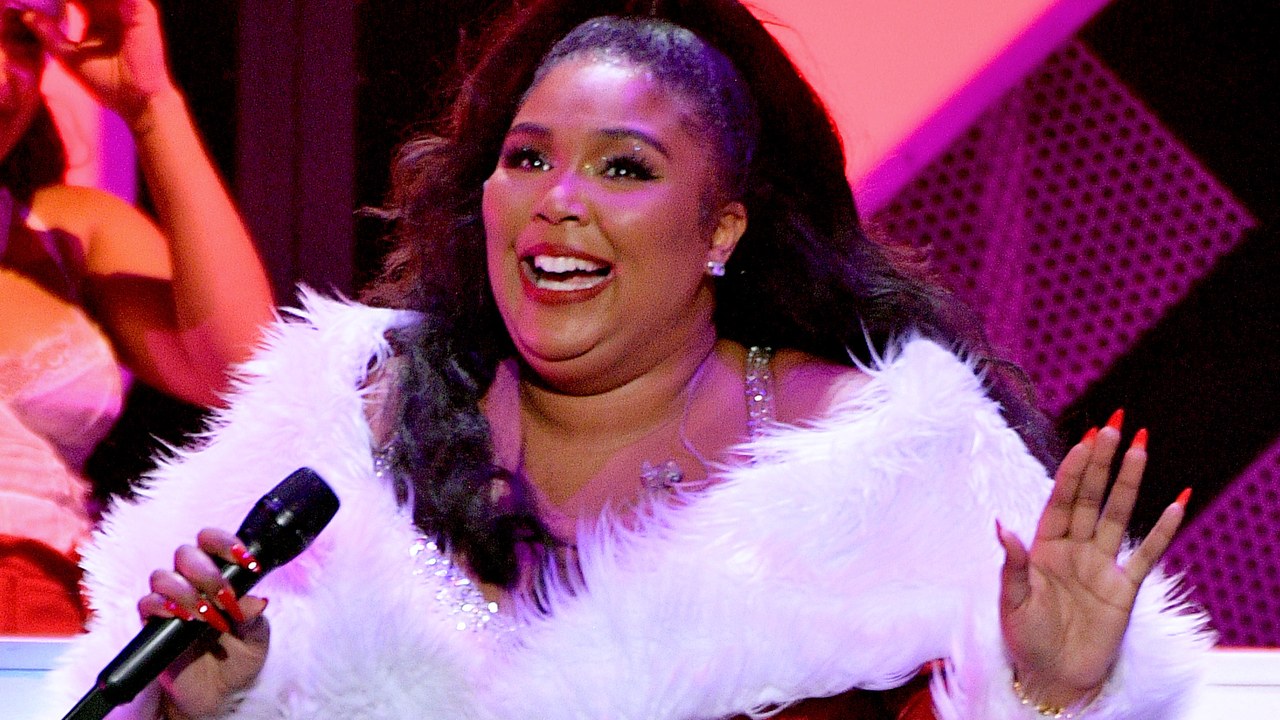
Lizzo Shuts Down 'SNL' With Performances of 'Truth Hurts' and 'Good as Hell'


Lizzo made her debut on Saturday Night Live on December 21, and it left the entire Internet feeling good as hell.

For the show’s midseason finale—which also featured comedian Eddie Murphy hosting the NBC series for the first time in 35 years—the singer took the stage to first perform her chart-topping hit, “Truth Hurts”. The inspiring and energetic performance showed off her impressive vocals, but the Internet couldn’t help also obsessing over her outfit: a custom-made creation by black designer Dapper Dan.

The Dapper Dan x Gucci button-down trench coat featured a matching bralette and boots. And as Buzzfeed notes, Lizzo also had an all-black and all-female band performing alongside her, who also repped the designer in custom Gucci jumpsuits.

Check out Lizzo’s SNL performance for yourself, below:

[embedded content]

For her second performance, the singer transformed the stage into a winter wonderland complete with candy cane poles and gift-wrapped backup dancers to sing “Good as Hell.” As for Lizzo’s outfit, she brought her A-game once again, wearing a formal black tuxedo ensemble.


Source link

Categories
Health

Embracing My Latina Roots Redefined What 'Good Hair' Meant to Me


When I was a kid, Saturdays held so much promise. The no-school thing was cool, but doing my hair was what I looked forward to the most. Transforming my dense, frizzy curls into what my Latin culture casually referred to as pelo bueno (“good hair,” as in shiny and straight) was the goal. Time-consuming and frustratingly temporary, yes, but I understood that the “Dominican blow-dry,” as it would eventually be dubbed, and “good hair” were synonymous with beauty. It was the 1980s, and I was Dominican, which meant one thing: I yearned for pelo bueno. I wanted a swinging mane, like those flaunted by my mother’s favorite novela stars, Lucía Méndez and Daniela Romo, and supermodels Brooke Shields and Paulina Porizkova, whose pictures covered my bedroom walls.

So every Saturday morning Mami summoned me into our makeshift kitchen salon. She spared no styling tool and skipped no steps: jumbo plastic rollers, bobby pins, a rat-tail comb, a boar-bristle brush, leave-in conditioner. Once my head was covered in rollers, off to the secador (bonnet dryer) I’d go. After I emerged, red-faced, my hair would be wound and pinned into a doobie set encircling my head; then, hours later, I had smooth, cascading waves of my own. Eventually my mom lost interest in being my hairstylist, but I was a busy teen who needed pelo bueno more than ever. Could I maybe, just maybe, work with my natural texture? My open-mindedness was soon quashed. There were no styling tools or how-tos to help me, no role models to show me what to do. Going curly meant dealing with greasy curling lotions and crunchy mousses. My magazines catered to one definition of beautiful hair, dispensing beauty tips that were useless to me. (“Wash and go!” was especially confusing.)

Thankfully, views are changing: Today curls are leading the Latina-pride conversation. Online, on Instagram, on the subway, Latinas have set their hair free and defined their own pelo bueno. I’m humbled by—and proud of—my Latina sisters who’ve resisted our culture’s long-standing obsession with straight hair. The avalanche of curl resources and products is helping me master my own natural look. I’m still seduced by a silky blowout, but recently I left my house with a head of wet curls—to go to work! I kept stealing glances at my hair, waiting for a frizz explosion. No one blinked at my ringlets, not even my husband, who’s all too familiar with my straight-hair devotion. That evening I called my mother to share the news.

I expected her to sigh and not-so-subtly suggest that I go comb my hair. But instead she admitted to experimenting with her own natural texture. “That’s super in fashion right now,” she said nonchalantly. Yes, Mami, it is.

Patricia Reynoso (@latintale) is a writer in Ridgewood, New Jersey. Share your #pelobueno story @glamourmag.


Source link

Categories
Health

Caitlin Fitzgerald: No One Can Tell Us What 'Good Sex' Looks Like


When Glamour asked me to write an article about sexual empowerment, my first thought was, Oh, holy God—I have no idea. I mean, I have had some really bad sex in my life. Mostly because the cultural message I received as I grew up, both explicitly and implicitly, was that sex was a pleasure and prerogative reserved for men. I crafted my bedroom behavior around what I had seen women do on television: lots of excessive moaning and hair tossing but very little personal satisfaction.

Funny, then, that my first big TV job was on a show called Masters of Sex. My character, Libby Masters, began the series entirely under her husband’s thumb—she literally called him Daddy. He didn’t view her as a sexual creature at all. Libby goes on to have an emotional and physical affair and, through that experience, begins the journey toward self-­discovery. At the end of season four, we find her loudly fucking her new boyfriend in the back of a VW van right before telling him she’s moving to California to pursue her dream of going to law school. “But I love you!” he says. Her response? “I’m no longer organizing my life around a man.”

At first blush, my newest character, Simone in Sweetbitter (Starz’s adaptation of Stephanie Danler’s best-selling 2016 novel), begins where Libby left off. As a seasoned waitress at an iconic modern-day New York City restaurant, Simone appears to be living a life of bohemian splendor. Instead of finding a man to marry her and whisk her away to a big house in Connecticut, she’s chosen a life of poetry and art, good food, and better wine. She appears to be a master of the sensual and therefore, we assume, the sexual. But as you dig deeper, it becomes increasingly clear that Simone uses the people around her—especially Jake, a much younger coworker with whom she shares a murky sexual history—to reinforce the mysterious, alluring image she’s built for herself. If Libby Masters found freedom from her “safe” life through her sexuality, Si­mone longs to find a sense of control with hers, by seducing everyone but never letting anyone get close.

I relate to both Libby and Simone; they are complex, flawed, interesting women. But they’re also a bit problematic. Why is it that, in order for a female character to appear empowered, she must always choose herself over a relationship? Why can’t there be room for stories about empowered heterosexual women who also experience love and intimacy with a man? And during this moment of cultural upheaval, how do we crack the whole thing open to make more room for all kinds of sexual narratives? All kinds of pleasures and preferences, all kinds of bodies?

The truth is, I don’t know what makes a sexually empowered woman, and I would be a little suspicious of anyone who can outline it in under 800 words. What I do believe is that sexuality and empowerment have to be defined by each of us, on our own terms. No one else, on TV or elsewhere, has the power to tell us what good sex feels or looks like.

I remember, in one of my first naked scenes as Libby Masters, I had to drop my robe and stare at my bare body in a bathroom mirror. All alone. No co-star there to sexualize the moment, no moaning, no hair tossing. Just me and my body and the mirror. Sweating about it beforehand, I made some comment to my co-star Lizzy Caplan about how I wished I had hit the gym a little harder, maybe laid off the breakfast burritos. She replied, “Oh, please. There’s never, ever enough time to prepare for a naked scene.” She was right: No matter what I did, I was never going to feel “perfect” enough for TV nakedness, for TV “sexiness.” I would have to be good enough exactly as I was. When I rewatch the scene now, it seems as if Libby is seeing herself for the first time, and in many ways I was too. Oh, I thought, as the robe hit the floor, we are all just bodies. How fun.

Caitlin FitzGerald is a New York City–based actress. Sweetbitter premieres on Starz this month. This essay originally appeared in the May 2018 issue of Glamour.


Source link