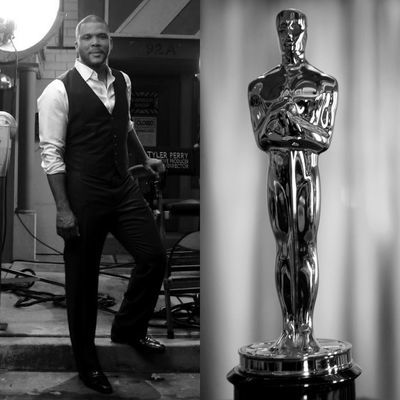
The Academy of Motion Picture Arts & Sciences announced this month that its Board of Governors voted to present its annual Jean Hersholt Humanitarian Awards to filmmaker TylerPerry and to the Motion Picture & Television Fund (MPTF). The Oscar statuettes will be presented at the 93rd Oscars, which airs live on ABC and broadcast outlets worldwide on Sunday, April 25th, 2021.
“There has been such widespread generosity in our industry that limiting the Hersholt Humanitarian Award to one recipient, this year in particular, was impossible,” said Academy President David Rubin. “So, we are breaking with tradition and giving two awards to honor that spirit. Tyler’s cultural influence extends far beyond his work as a filmmaker. He has quietly and steadily focused on humanitarian and social justice causes from the beginning of his career, caring for people who are most often ignored. The work of the MPTF is more vital than ever, and the organization has gone above and beyond to help our community. The sheer number of individuals and families—from every corner of our industry’s workforce—aided during the pandemic and over the last 100 years is nothing short of extraordinary.”
Perry is a prolific producer, director, actor, writer, entrepreneur and philanthropist, whose commitment to a wide spectrum of charitable and social justice causes has been particularly impactful during the challenges of the past year, addressing economic distress caused by the pandemic, racial reckoning and homelessness in his community. In 2019, he opened his privately owned motion picture studio on the site of a former Confederate Army base in Atlanta, Georgia. TylerPerry Studios now occupies more than 330 acres and is home to a state-of-the-art production facility with 12 soundstages that provides hundreds of job opportunities in film and television production in the local area. Perry was instrumental in quickly creating a safe way to return to production during the worldwide health crisis. His credits as writer, director and/or producer include “A Fall from Grace,” “Acrimony,” “Madea Goes to Jail,” “Madea’s Family Reunion” and “Diary of a Mad Black Woman.” His television credits include such series as “Sistas,” “The Haves and the Have Nots,” “The Oval” and “House of Payne,” and he has written numerous stage plays.
Tyler Perry on the set of “Tyler Perry’s Boo! A Madea Halloween.” Courtesy of Lionsgate.
Now in its 100th year, the Motion Picture & Television Fund (MPTF) offers a variety of services to provide emotional and financial relief to entertainment industry members and their families during times of need, including case management, financial assistance for basic living expenses, palliative care, and senior and childcare services. The organization’s contribution during the pandemic has made a significant impact on the entertainment community, providing social services support to nearly 9,000 industry members in 2020. MPTF also offers a wide range of housing accommodations from independent and assisted living to nursing and memory care. Jean Hersholt, for whom the Academy’s humanitarian award is named, served as president of the Fund for 18 years, from 1938 until his death in 1956.
The Board of Governors voted to amend the rules for the Governors Awards: “For this year only, the Jean Hersholt Humanitarian Award may be given not just to an individual, but also to a group of individuals or an organization in the motion picture arts and sciences whose humanitarian efforts have brought credit to the industry. The Board may bestow up to two Jean Hersholt Humanitarian Awards.” This is the first time an organization will be recognized with this award.
The awards will be presented during the Oscars in lieu of the Academy’s Governors Awards, an annual ceremony in the fall, where the Jean Hersholt Humanitarian Award is customarily presented. The 93rd Oscars will be held on Sunday, April 25, 2021, and will be televised live on ABC and in more than 225 countries and territories worldwide.
Click here to read our 2016 interview with Tyler Perry, conducted by Nick Allen.
It sounds painfully mawkish if not downright implausible on the page: a woman, paralyzed from the chest down in a freak accident, finds hope and determination in caring for an injured bird. The parallels would be too forced; the symbolism, too obvious.
But despite its feel-good formula, “Penguin Bloom” still manages to inspire and impress, thanks to some striking visuals and strong performances, namely from star Naomi Watts. And though the premise of director Glendyn Ivin’s film may seem impossibly cutesy, this story actually happened, as detailed in the book of the same name by Cameron Bloom and Bradley Trevor Greive.
While the script from Harry Cripps and Shaun Grant too often features on-the-nose dialogue—with characters literally spelling out the film’s themes—and it all wraps up in safe and predictable fashion, “Penguin Bloom” offers just enough moments of authentic emotion and poignancy to make it compelling.
Watts stars as Sam Bloom, an avid outdoorswoman and surfer living a peaceful existence in an airy, modern house overlooking the beach in New South Wales, Australia. She and her photographer husband, Cameron (Andrew Lincoln), enjoy an adventurous life of sports and travel with their three rambunctious boys: tween Noah (Griffin Murray-Johnston), Reuben (Felix Cameron) and Oli (Abe Clifford-Barr). Or at least they did, before Sam’s accident: “Everything was pretty much perfect. But then last year happened,” says Noah, the film’s narrator.
Working with cinematographer Sam Chiplin, Ivin sets the scene of the family’s fateful Thailand holiday with imagery that’s both vivid and impressionistic: pool plunges, marketplace strolls, nighttime fireworks. But as they climb the steps to a rooftop to enjoy a scenic view, Sam leans against a wooden railing that gives way, sending her plummeting to the ground below. We see her fall several times over the course of the film, providing different perspectives as we delve deeper into the family’s dynamic.
Having been so independent and active for so long, Sam is understandably depressed, spending long days in bed with the curtains drawn. She feels detached from the mundane sounds of her younger kids playing in the living room, and when she attempts basic parenting tasks like fixing their lunches for school, she drops the knife and bread on the kitchen floor, magnifying her sense of helplessness. Small details like these make her daily struggle feel specific and real, and Watts finds subtlety in moments of frustration that could have been melodramatic. Her mom (a perfectly cast but underused Jacki Weaver) visits to cheer her up and help out around the house, but she’s more inclined to nag than sympathize.
Instead, Sam finds purpose in an unexpected place: a magpie chick that’s fallen from her nest, which the boys discovered at the beach and brought home. Noah names her Penguin for her black-and-white coloring, and while she provides a welcome distraction at first, she’s also a destructive little thing. Adorable but annoying, Penguin cheeps and chirps all day in her basket. She hops out and bops around the house, causing mischief wherever she goes: pecking at a sock monkey, knocking over vases, nicking a teabag from mum’s mug. And of course, Penguin leaves poop wherever she goes. It’s all way too wacky, but the multiple birds credited as playing Penguin clearly had thorough training.
While Sam initially isn’t thrilled by this the presence of this new pet, she eventually recognizes in Penguin a kindred spirit: “She’s a wild bird, which means she can’t stay here forever,” she says, clearly commenting on her own state, as well. Later, she asks rhetorically: “She doesn’t want to be stuck inside, does she?” Noah also relates to her, wondering “Do you miss your mum?” since he feels such a distance from his own. (Newcomer Murray-Johnston has an unusually wise and direct screen presence for a child actor, which is appealing.) Again, there’s a lot of hand-holding going on here, when simply watching Sam care for the bird and seeing how that elevates her mood should speak for itself. It makes her feel like a mother again, when so much of the parenting duty has fallen to Cameron out of sheer necessity.
So when Sam senses that Penguin wants to go outside, she ventures onto the patio, too, basking in the sunshine in her wheelchair. Conversely, when something is wrong with Sam, Penguin is the first to notice it and alert the rest of the family. The bird actually looks at her as if she understands her pain; either you’ll go with this bit of anthropomorphism, or you won’t. A lot of it depends on how transfixing you find the story at this point. Watts’ performance, however, is so visceral and nuanced that she makes you want to believe all this magpie magic is possible.
But eventually, Sam agrees to Cameron’s suggestion that she take kayaking lessons, which gives us the opportunity to enjoy the delightful Rachel House as her no-nonsense instructor. Penguin might just regain its ability to fly around the same time. While the journey there is never in doubt, “Penguin Bloom” still finds occasional opportunities to soar.
This year’s Sundance Film Festival (running January 28 – February 3) is a little bittersweet, as you might imagine. The good: Bathrooms have never been more accessible during festival time, and every viewer has a better shot at getting a good seat, instead of scurrying for the ones on the aisle inside the festival’s “cozy” Library Theater (sigh, I already miss it). The sad: The movies will not be premiering to eager crowds of film-lovers in Park City. Instead this new class of selected movies (following last year’s “The 40-Year-Old Version,” “Kajillionaire,” “Minari,” “Palm Springs,” “Promising Young Woman,” “Relic,” and “Shirley,” among other celebrated alumni) will be experienced via home theaters, computer screens and the like, thanks to the festival’s efficient scheduling and viewing system. One big upside to all this is that more people will get to view the movies, which also means more writers will have access for coverage. And sites like this one right here will be reviewing practically every feature that premieres.
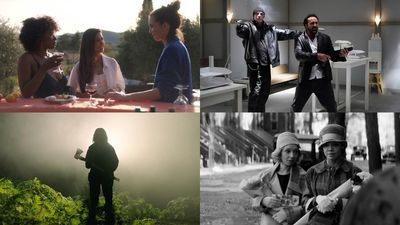
But while this Sundance is smaller than usual years, the promise of discovering great talent, or a new favorite movie, is no less pertinent. As Sundance veterans, we’re still just as excited for what lays ahead during the festival’s run from January 28 – February 3, and below is only the beginning for all the films we’re eager to see (with descriptions taken from the program). Be sure to check back here throughout the weekend for reviews by myself, Brian Tallerico, Kristy Puchko, Carlos Aguilar, and Robert Daniels.
Ruby (Emilia Jones) is the only hearing member of a deaf family. At 17, she works mornings before school to help her parents (Marlee Matlin and Troy Kotsur) and brother (Daniel Durant) keep their Gloucester fishing business afloat. But in joining her high school’s choir club, Ruby finds herself drawn to both her duet partner (Ferdia Walsh-Peelo) and her latent passion for singing. Her enthusiastic, tough-love choirmaster (Eugenio Derbez) hears something special and encourages Ruby to consider music school and a future beyond fishing, leaving her torn between obligation to family and pursuit of her dream.
Cryptids are creatures whose existence is disputed or unsubstantiated. When Amber and Matt get lost in the woods during a sex date, they stumble upon a high-security fence. On the other side, they find a cryptid—a unicorn—that would change their lives.
Military brat Lauren spent her childhood nights in a nightmarish state, until a mythical baku came to eat her dreams, releasing her from nocturnal torment. Lauren decides to dedicate her life to rescuing and sheltering cryptids from those who seek to exploit them, so she becomes a cryptozookeeper. But when Lauren’s and Amber’s paths cross, Lauren begins to wonder if displaying these rare beasts in confinement is better than enabling these mythical creatures to remain hidden and unknown.
As a deadly virus ravages the world, Dr. Martin Lowery embarks on a mission to reach test site ATU327A, a research hub deep in the Arboreal Forest. The arduous journey, guided by park scout Alma, is set back by a nighttime attack that leaves the two bruised and shoeless. When they run into Zach, a man living off the grid, they gratefully accept his help. Zach’s intentions aren’t exactly what they seem, however, and a path out of the forest and into safety quickly fades as the line between myth and science blurs.
“Knocking” Starring: Cecilia Milocco, Krister Hern, Albin Grenholm, Ville Virtanen Directed by Frida Kempff Written by Emma Brostöm Category: Midnight
What. Is. That. Noise. When Molly hears knocking coming from the ceiling in her new apartment, she naturally searches for the source. The upstairs neighbors don’t know what she’s talking about and dismiss her with cool indifference. Is this all in her mind? After all, she’s still processing a traumatic event that left her mentally unwell, and the unprecedented heat wave isn’t helping her think clearly. As the knocking intensifies and gives way to a woman’s cries, Molly becomes consumed with finding out the truth. Could it be Morse code? Is someone trapped? And more importantly, why doesn’t anyone care?
“Ma Belle, My Beauty” Starring: Idella Johnson, Hannah Pepper, Lucien Guignard, Sivan Noam Shimon Written and Directed by Marion Hill Category: NEXT
Newlywed musicians Bertie and Fred are adjusting to their new life in the beautiful countryside of France. It’s an easy transition for Fred, the son of French and Spanish parents, but New Orleans native Bertie grapples with a nagging depression that is affecting her singing. Lane—the quirky ex who disappeared from their three-way relationship years ago—suddenly shows up for a surprise visit, bringing new energy and baggage of her own.
“Marvelous and the Black Hole“ Starring: Miya Cech, Rhea Perlman, Leonardo Nam, Kannon Omachi Written and Directed by Kate Tsang Category: Premieres
Thirteen-year-old Sammy is struggling to cope with the death of her mother. After she is caught vandalizing one of her school’s restrooms, her father, fed up with her wild behavior, enrolls her in a summer course—if she fails, she’ll be sent to a boot camp for delinquent youth. After storming out of her first class, Sammy meets Margot, a surly magician. Margot forces Sammy to be her assistant for a performance, and although Sammy seems uninterested, she seeks Margot out after the show and asks to become Margot’s pupil. Margot agrees, and as their unlikely friendship grows, we learn that she and Sammy understand each other more than they expected.
Val (Jerrod Carmichael) has reached a place where he feels the only way out is to end things. But he considers himself a bit of a failure—his effectiveness lacking—so he figures he could use some help. As luck would have it, Val’s best friend, Kevin (Christopher Abbott), is recovering from a failed suicide attempt, so he seems like the perfect partner for executing this double suicide plan. But before they go, they have some unfinished business to attend to.
Irene Redfield (Tessa Thompson), a refined, upper-class 1920s woman, finds breezy refuge from a hot summer day in the grand tearoom of New York City’s Drayton Hotel. Across the room, she spots a blond woman staring her down. Irene wants to steal away, but before she can, Clare Kendry (Ruth Negga) rushes over to stop her. It turns out the two were in high school together, and while both are African American women who can “pass” as white, they have chosen to live on opposite sides of the color line. Now, their renewed acquaintance threatens them both.
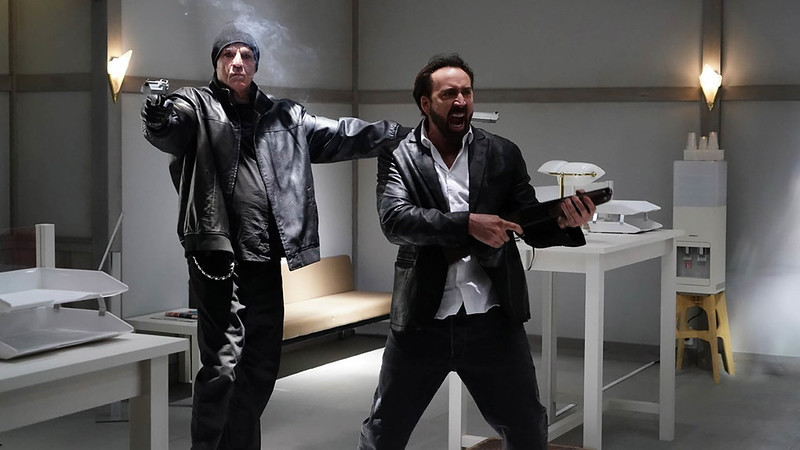
In the treacherous frontier city of Samurai Town, a ruthless bank robber (Nicolas Cage) is sprung from jail by wealthy warlord The Governor (Bill Moseley), whose adopted granddaughter Bernice (Sofia Boutella) has gone missing. The Governor offers the prisoner his freedom in exchange for retrieving the runaway. Strapped into a leather suit that will self-destruct within five days, the bandit sets off on a journey to find the young woman—and his own path to redemption.
“R#J” Starring: Camaron Engels, Francesca Noel, David Zayas, Diego Tinoco, Siddiq Saunderson, Russell Hornsby Directed by Carey Williams Written by Carey Williams, Rickie Castaneda, Alex Sobolev
In fair Verona, a war as old as time is brewing between rival houses—but it’s being captured in a new way. Montague and Capulet Gen Zers are using their cell phones to document the eruptions of violence plaguing their communities. In the middle of it all, Romeo discovers Juliet’s artwork at a party, and the two inevitably fall in love. As tensions between their families escalate, the two plead for peace and desperately search for a way to escape their star-crossed destiny.
“We’re All Going to the World’s Fair” Starring: Anna Cobb, Michael J. Rogers Written and Directed by Jane Schoenbrun
Late on a cold night somewhere in the U.S., teenage Casey sits alone in her attic bedroom, scrolling the internet under the glow-in-the-dark stars and black-light posters that blanket the ceiling. She has finally decided to take the World’s Fair Challenge, an online role-playing horror game, and embrace the uncertainty it promises. After the initiation, she documents the changes that may or may not be happening to her, adding her experiences to the shuffle of online clips available for the world to see. As she begins to lose herself between dream and reality, a mysterious figure reaches out, claiming to see something special in her uploads.
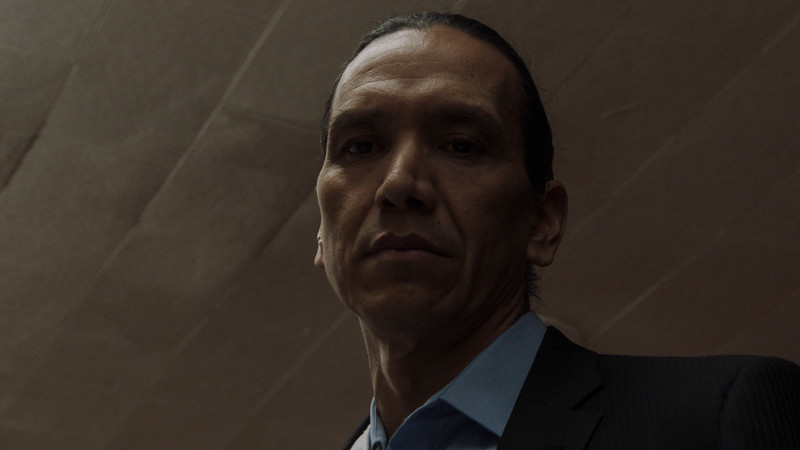
Makwa, a young Anishinaabe boy, has a rough life. He often appears at school with bruises he says he got falling down, but no one believes him. He and his only friend, Ted-O, like to escape by playing in the woods, until the day Makwa shockingly murders a schoolmate. After covering up the crime, the two boys go on to live very different lives. Now, as adult men, they must face the truth of what they have done and what they have become.
Movies like “The Little Things” feel like a vanishing breed. In the wake of the success of “The Silence of the Lambs,” there seemed to be a dark, brooding thriller adaptation every week with titles like “Kiss the Girls” and “The Bone Collector,” and it felt like half of them starred Denzel Washington. In recent years, this genre has largely become the product of television, as shows like “True Detective” and “Mindhunter” have taken on stories of men haunted by the crimes they investigate. That’s part of what makes “The Little Things” feel dated, although the way it recalls better films with similar themes, particularly David Fincher’s “Seven,” does it no favors too. It’s a movie that’s constantly on the verge of developing into something as intense and haunting as writer/director John Lee Hancock wants it to be, but it never achieves its goals, especially in its final half-hour. Some of the major stuff here works, including a performance from Washington that’s better than the movie around it (yet again), some striking L.A. cinematography, and an effective score, but one could say that it’s the little things that hold it back. A few big things too.
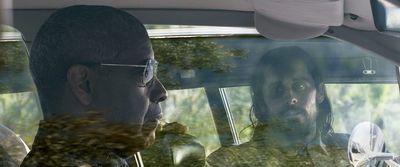
Joe Deacon (Washington) is a disgraced former L.A. cop who now works in Bakersfield, living alone on the edge of society. Our story unfolds in 1990 for little reason other than proximity to The Night Stalker case, which still hangs in the air when a new serial killer emerges in the City of Angels (and “The Little Things” was reportedly initially written a quarter-century ago, which could explain why it feels so much like the potboilers of that era). It’s revealed that ‘Deke’ lost his marriage, had a heart attack, and had to leave town because of a particularly brutal case that he couldn’t solve. He’s haunted and unwanted by his former colleagues, including Captain Carl Farris (Terry Kinney) and Detective Sal Rizoli (Chris Bauer), but Deke gets sucked back into that which nearly destroyed him when he ends up helping his replacement, Jim Baxter (Rami Malek) with the serial killer case that’s terrifying the city. It’s not long before they discover that a loner named Albert Sparma (Jared Leto) is their likely suspect, and “The Little Things” becomes a cat and mouse game between the two detectives and the creepiest guy in L.A., a disturbing character who appears to get off on playing games with the cops.
The first third of “The Little Things” has an effective procedural quality as Baxter feels out whether or not the legendary Joe Deacon can help him solve the case of his life. Of course, there’s an inherent new school vs. old school component to the storytelling that recalls “Seven” as well as providing a vision of Baxter’s future in the emotionally devastated Deacon. The older cop is quite literally haunted by the victims, seeing them in the middle of the night in his dingy hotel room. The idea that a cop can get so invested in a case that it destroys them gives Washington a lot to work with but it’s ultimately shallow here because of how little we get to know the victims—they’re just ghosts and nothing more. Other than the underutilized Natalie Morales as an officer and Michael Hyatt as a coroner, women are largely just victims or spouses in the background in this story.
The midsection of “The Little Things” gets by on the immediacy of Washington’s performance. As Leto over-acts around him, Washington grounds everything he does, making an interrogation scene and even a bit wherein Sparma taunts him on a road more effective than they would have been in a lesser actor’s hands. Washington has an incredible skill when it comes to being in the moment. We believe he’s listening, reacting, and responding in a way that doesn’t sound like rehearsed lines or blocked behavior. The opposite is true of Leto, who seems incapable lately of doing anything that doesn’t seem exaggerated, and leans into all of his worst tendencies here. Malek falls somewhere in the middle, feeling too broadly eccentric at first, but he either improved as the film went along or I just got used to his mannerisms. Still, it’s hard to shake the feeling that Washington is in a more grounded movie than his co-stars. He’s trying to do “Zodiac” while they’re doing “Along Came a Spider.”
Hancock’s film later unravels when its lack of urgency isn’t replaced by tension. The new guy starts to succumb to the same obsession that destroyed the old one, like clockwork, and then the movie twists a few times in ways that truly defy logic, and lead to a dissatisfying ending. It feels like Hancock is trying to tell a very “True Detective” story—one about how a case can pull the people investigating it apart from the inside in a way that breaks them forever—but he can’t figure out how to shape that into an intriguing mystery simultaneously. By the time it’s over, it’s hard to shake the feeling that it’s added up to, well, nothing.
“The Little Things” is in theaters on January 29, 2021, and also available on HBO Max that day for 31 days.
The claustrophobic prison movie “Caged” begins with its most original and upsetting scene: wrongfully convicted prisoner Harlow Reid (Edi Gathegi) calls and fails to get through to his lawyer right before he’s forced into solitary confinement. The camera pushes in on Harlow slowly as he, standing between two sets of guard doors, learns that his lawyers have just dropped his case. An anxious secretary (Jessa Zarubica) informs him that his assets have been seized, so his appeal for a new trial must be re-submitted with a public defender. Unfortunately, Harlow doesn’t have access to any of his belongings while he’s in solitary, not even a sharpened pencil, so filing an appeal will take some doing.
The emotional weight of this scene is devastating because there’s literally nowhere for Harlow to go except his cell. “Why do you keep apologizing to me?” he asks Zarubica’s voice, not realizing what writer/director Aaron Fjellman’s restricting camerawork and blocking have already shown us: nobody outside of Harlow’s cell is coming for him.
“Caged” is pulpier, and therefore thinner than its opening scene, especially given how generic Harlow’s ghosts often are. Still, his story is often disturbing in spite of Fjellman and co-writer James ‘Doc’ Mason’s over-reliance on cheesy flashbacks and canned confrontations with Officer Sacks (Melora Hardin), a vicious prison guard. “Caged” is as promising as it is because Fjellman and Mason are mostly committed to making us feel as disoriented and desperate as Harlow.
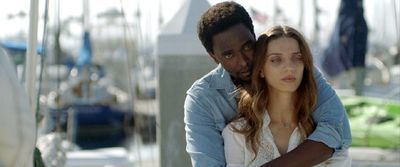
The film’s focus on Harlow’s subjective experiences is a risk that doesn’t always pay off, especially during the movie’s concluding half hour, but for the most part, “Caged” is thankfully more focused on his hellish living conditions than his personal problems. Watching Harlow struggle to write his appeal—or get a full portion of food, or collect his belongings—is far more compelling than slogging through flashbacks to his final moments with his uncaring wife Amber (Angela Sarafyan), who died in a mysterious yacht-related incident following an argument about her rich parents and a recent affair (she cheated on him, of course).
“Caged” ironically only turns more impersonal once Harlow’s story becomes less about how prison degrades him, and more about what he discovers about himself once he’s almost completely dehumanized. Harlow’s a typical prison movie underdog in that he’s more compelling as a problem-solving cypher than he is as a two-dimensional effigy, defined mostly by the voices in his head—“They don’t know what you’re capable of, but I do,” he tells his reflection—and his weak backstory.
It’s not surprising, then, that there’s not much to Gathegi’s character once he starts thinking about his imprisonment as a reflection of his personal identity. Harlow’s faith, masculinity, and race are all briefly considered, but never long enough to flesh out insinuating dialogue, like when a prisoner in an adjacent cell growls at Harlow: “Hey, black man: you believe in God?”
Thankfully, Sacks’ contempt for Harlow is believable enough to make “Caged” seem tense enough throughout. Hardin digs into her over-ripe lines with unseemly relish, which is only appropriate since she has to say stuff like, “I can’t wait to see you swinging from your bedsheet. For me, that’s justice done.” Fjellmann’s also makes Hardin’s face seem genuinely monstrous using distorting camera lenses and filters, and Gathegi keeps his scenes emotionally grounded, except for when Harlow starts to yell at his reflection in an unconvincing tough guy voice (“’If you keep letting her treat you like a b***h, I’m gonna have to take care of her myself!”).
I was also impressed by a handful of incidental details that open up “Caged” and make it (a little) more than a monotonous series of conflicts between Harlow and Sacks. Like how pious Warden Perez (Tony Amendola) is often more threatening because he seems to genuinely believe that “the road to rehabilitation starts with” confessing to a crime that he didn’t commit. Or when Officer Ganser (Robert R. Shafer), Sacks’ fellow guard, completely ignores Harlow, and he, with apparent sincerity, re-assures Sacks that he’ll “be right back,” as if she needs back-up.
“Caged” is most effective when it’s focused on Harlow’s paranoiac certainty that nobody on the outside of his cell cares for, or even really sees what he’s going through. There’s a few too many melodramatic clichés thrown in at the last minute—yikes, those yacht flashbacks—but Harlow’s plight is as disturbing as it is because of the reflexively cruel nature of his punishment. Watching Harlow struggle with the simultaneously impersonal and obviously prejudiced nature of his imprisonment is often enough to make “Caged” seem like more than the sum of its parts.
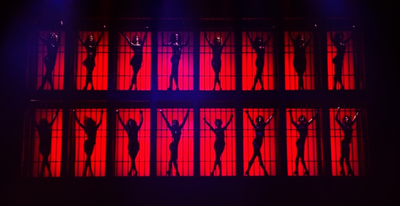
The women behind the murderesses of the Cook County Jail are both strikingly nondescript and yet embody an easily recognizable archetype. Almost costumes of femininity, exaggerated like a drag queen, a siren-like light illuminating them from behind, outlining the bars behind which they stand and pose, these ladies’ aesthetics of gender are heightened despite the fact that they have no name, no face, and beyond the blackness of the outline, no identity. During the “Cell Block Tango,” they are there to intensify the sensuality of the primary women in the number, whose dysfunctional and abusive relationships are performed and rewritten as vaudeville dance and striptease. Their heels are ludicrously large, and there’s an implication of nudity, clearly suggesting that these light fixtures in the background of this musical number in Rob Marshall‘s “Chicago” are movie musical versions of window prostitution, articulating an uneasy relationship that the film itself has with its women; that its women, and their lives, occupy a complex and fraught relationship in a broader society, as they do outside of the film. And we queers, especially queer men, love a complicated, “difficult” woman. We are hungry for them, to consume them. Maybe, in these paradoxically flat yet fluid images, we can identify with them too. These outlines offer space in the darkness to play with our own identities.
That friction is amplified by a queerness within the film, and otherness in the characters, a sidestepping of traditional and heteronormative values and instinctual trust in socially dominant ideas of production and reproduction, or sex and the continuation of family lines: Roxie Hart (Renee Zellweger) and Velma Kelly (Catherine Zeta-Jones), as do the other women of the “Cell Block Tango,” do away with their spouses and partners, intent on self-fulfillment no longer based on marriage or making a family. And both, not so much different sides of the same coin so much as pairs, or dyads, in visual and aesthetic approaches to the same goal (fame, spectacle, performance), become instantly recognizable within the world of the film. Their image and persona become what we are buying and selling, in our seats and out in the world. This seems to be particularly of interest in a queer cinematic history in that their persona, the language of why they are famous in the first place, is an avoidance of heterosexual dynamics that are created from social pressure and expectation. But as compelling as Roxie’s blonde kewpie pie looks are (certainly director Rob Marshall’s own adaptation of blonde starlet looks, not so far off from Fay Wray), turning to Zeta-Jones’ Velma finds fertile ground for queer identification. No, dis-identification.
And what are we looking at when we just look at these silhouettes? Not the person, certainly; an idea, a construction that’s also natural, a shadow that somehow shimmers with substance. You can reach out to a silhouette and only grab what’s most elemental, like a trick of the light that continues to seduce. When queerness is introduced to shadows, a space that queer people themselves have found a home in, they find power in what José Esteban Muñoz calls “disidentifcation,” meaning “to read oneself and one’s own life narrative in a moment, object, or subject that is not culturally coded to ‘connect.’” We dare to question them, but shadows are unanswerable, and queer people will fill in those blanks to find parts of themselves. With certain performers, like Catherine Zeta-Jones, Marlene Dietrich, and Liza Minnelli, their shadows melt into something more illusory and complex; they become a triad of duplicity that has become its own visual grammar within gay and queer culture.
Velma’s severe bob, as precise and sharp as her dancing, nods to Louise Brooks’ Earth-shattering naughtiness—a siren ringing the alarm bell for timeless sexual power, transcending the era of film in which she left a scalding burn—and Zeta-Jones’ embrace of the costume creates its own self-aware wink. At the beginning of “And All That Jazz,” the platform raises her, the blue light and white flame of the spotlight creating shadows around her body, outlining not only Velma the performer (now alone, her sister gone), but Velma the nightclub act in dialogue with Brooks. She wears a flapper dress to establish her own theatrical and performative presence (as well as independence), and that murder becomes an added element to the persona of Velma Kelly as public figure, so do the parallels between her silhouette as itself an extension of her persona and its relationship to Brooks in a film like “Pandora’s Box,” another story (with Sapphic flavors) of a woman subverting and transgressing her role, the bob adding androgyny and ambiguity that is especially accentuated when reduced to its most elemental features and flattened in silhouette. In short, the bob in silhouette makes Velma’s (and Louise’s) gender walk a fine line between what we understand as male and female, aesthetically. And yet, in the aftermath of “Chicago”’s original release, Zeta-Jones as Velma has become iconic, on its own terms as well as itself paying homage to an older performance. (And it’s clear also given that “Chicago” is both an adaptation and a remix of Fosse.)
Silhouettes become a trick and illusion, perhaps outlining the way gender is imitated and yet impermanent as a form of public (and personal) performance. Gender might be fundamentally misleading, and the performances we practice to ensure its stability, that our understanding and grasp of gender does not change, are the most deceitful trick of all. How else would Marlene Dietrich—a halo of smoke around her top hat, with Josef von Sternberg striking a key light so that the light and the dark both harden the borders of her cheekbones and jawline and yet ironically mystify her gender and her identity—be the most immaculate of tricksters? In von Sternberg’s “Morocco,” as Amy Jolly (another club singer), she smirks with a cigarette whose length is a tease. Who she is as an image and myth of an actor, how we know her, is undermined by the lights and by the silhouette, making the physical body (as it is supposed to tell “the truth” about itself, including her gender) less stable by its cleanest, most uncomplicated form, the lies that the body telling less elaborate yet bigger in scale. Dietrich’s legacy is hinged upon a lack of clarity, a smokiness that begs for illusion and its artifice to be sustained, even in its instability.
But while Dietrich relies on that instability as the foundation of her persona, the failure of that balancing act becomes a language of iconography on its own terms, becoming fundamental to a queer cultural vocabulary. That very failure, and perhaps lack of self-awareness, is key to another form of relating to characters for queer people (men especially), with a comfort in failure in fiction and failure in a real world. That appears to be the case with Sally Bowles (Liza Minnelli) in Bob Fosse’s “Cabaret,” who, despite a decade or so after “the events” of “Chicago,” also adopts a similar personal aesthetic as Velma’s. But Sally’s search for stardom is consistently interrupted by her own follies and mistakes herself as some kind of greatest roadblock. The joke of Bob Fosse’s “Cabaret” is an irony, the sensibility itself often connected to queer aesthetics, and an meta joke of Minnelli’s own actual talent in opposition to Sally’s supposed skills, and then Minnelli’s star family tree. That she’s talented and is unable to escape the rise of fascism, which has been permissible so long as it doesn’t affect her, is its own kind of tragedy.
When we see the side of her face up close in profile during “Maybe This Time,” the light’s diffuse, she wants this (some confident relationship) as much as she wants “this,” the audience’s gaze and attention, that she’s captured by performing both kinds of wanting. She holds us on a string, the in-movie audience and the real world one, a funhouse mirror of desire and persona, that, when flattened by profile and silhouette (which is referenced in the title number at the end of the film, as we see her looking deep into the blazing spotlight), who are we to know if she’s actually famous? She’s not famous and she’s famous at once, she’s Liza Minnelli with the intricate Hollywood backstory and she’s Sally Bowles, a nobody who craves that (self-)mythology.
The image of Liza as Sally Bowles, even in silhouette or outline, bending around a chair, bowler hat perched like a peekaboo joke on her head, in “Mein Herr,” or in faux-flapper garb in “Money, Money,” joins with Zeta-Jones as Velma Kelly and Dietrich as Amy Jolly as silhouettes that are magic tricks, both by the characters they’re playing and the gay and queer audiences engaging with them, entranced by their lies and deception. That very instability of identity is the base on which drag is built, both as exaggeration and excess as well as subtle reduction. That these films take place within an environment or context where fame and celebrity do exist suggests a dizzying infinity mirror or Russian doll of identity and celebrity, a self-reflexivity that the image of their image has become an artifact of iconography, an awareness of the artifice becoming viral commodity. The point is, these people, these women, these performers as silhouettes, aren’t there; nothing about them is fixed in place or permanent, especially not how we interact with their gender or their identity, except their spell. They’re the smoke unfurling from a cigarette. If you grab it, it’s gone.