What’s the story of Tiger Woods? Two things probably spring to mind—a rise to the top of his field and a drastic fall from grace on a very public stage. HBO’s “Tiger,” which runs over two weeks and about three hours total, attempts but struggles to blend these two halves of the legend of Tiger Woods. One of the main things that distinguish this docuseries from 2020 hits like “The Last Dance” and “Lance” is the fact that Woods himself is almost entirely absent other than in archival footage. And so his story is told by friends, colleagues, and lovers. The sense that Tiger Woods was always a little hard to read and decipher remains at the end of “Tiger,” a series with a professional sheen, a few interesting stories that fans will want to hear, but too little depth and insight to make the green.
Pressure made Tiger Woods. Pressure broke Tiger Woods. The best elements of Matthew Hamachek and Matthew Heineman’s docuseries paint a portrait of someone who literally always responded to intense pressure. The idea that the same pressure that shaped Woods would bring him down both physically and in the tabloids is clearly the thrust of Hamachek and Heineman’s approach, and they do connect some interesting dots along their trip through the life of one of the most famous athletes in history. “Tiger” is never boring because Woods himself is an interesting figure, even if the filmmakers are unable to dig below that surface with enough force.
Tiger’s father Earl Woods is the main throughline of “Tiger,” and he’s introduced speaking about his young son as the savior of not just golf but something greater to his people. Earl Woods was everything to Tiger Woods. He not only shaped his golf skills but became more like a friend or brother to Tiger, arguably to the young man’s detriment. One of the most interesting chapters of “Tiger” draws a line between Earl’s constant infidelity, often with Tiger nearby, to the issues that led to his son’s downfall. The picture of Tiger Woods that emerges is one of a man always trying to impress his father—on the golf course, with his relationships, and even with adventures in military exercises. Feeling like you’re constantly coming up short is not an easy way to live.
And yet “Tiger” struggles to really teach us anything about its subject because Hamachek and Matthew Heineman are content to turn this into a chronological mix of archival footage and interview segments. Way too many of the interview subjects offer an outsider impression of the young man, either from sports journalists or people who knew Woods. It’s one thing for the Woods estate to clearly be as private as they were with this production, but the glimpses we do get of personal Woods hint at a deeper, more insightful project than this blend of previously seen material with outsider commentary. For example, there’s a clip early in the series of young Tiger partying with friends, and it’s a looser, more relaxed version of Woods than we’re used to seeing. “Tiger” needed way more of that kind of material and significantly less highlight reel footage from major places like ESPN or his talk show appearances.
It doesn’t help that the current interview subjects are somewhat unable to rise to the occasion when it comes to discussing Woods. Maybe those truly closest to him were asked by Tiger not to participate? Sure, we hear from his longtime caddie, teenage ex-girlfriend, and even Rachel Uchitel, but major players outside of just Tiger are missing here, including even a surprising dearth of golf experts or contemporaries. What’s it like to play with Tiger? What’s he like behind the scenes? Some of “Tiger” hints at this with interviews with people like Sir Nick Faldo and Rocco Mediate (and Bryant Gumbel is typically fantastic in terms of analysis and context), but too many aspects, even the golf ones, feels at a distance in “Tiger.” It’s like hearing someone’s life story only from their neighbors.
Maybe that’s part of the point of “Tiger”? Maybe all of this seeking to understand Tiger Woods comes up short because it’s really not that complicated: He’s a competitor who constantly wants to impress his dad and changed the face of his sport to do so. It’s possible, but that seems a little easy. I went into “Tiger” thinking that here was a fascinating subject for a docuseries because it feels like we don’t really know what it feels like to be Tiger Woods. I still feel that way.
Parts one and two will stream on HBO Max on January 10; parts three and four will stream on January 17.
Sandra (Clare Dunne) has a code word with her daughter Emma (Ruby Rose O’Hara). If Sandra whispers “black widow,” then Emma knows to run for help, as happens in the harrowing first scene of “Herself,” an Irish film written by Dunne, and directed by Phyllida Lloyd. Sandra takes one look at her husband (played with frightening immediacy by Ian Lloyd Anderson) and whispers the code word. Emma runs to a nearby store and tells the clerk to call the “garda.” Meanwhile, Gary beats Sandra to a pulp. This first scene does some very heavy-lifting, establishing the close relationship between Sandra and her two daughters (O’Hara and Molly McCann), as well as Sandra’s terrifying marriage, beset by financial woes. Fleeing the marriage means fleeing security, searching for a new place to live, under increasingly dire circumstances, in an overcrowded housing market. Sandra then has a revelation: What if she built her own house?
Leading up to Sandra’s revelation is a harried and fragmented sequence of scenes, showing Sandra’s desperate struggle to keep her family afloat. Squatting in a hotel room, she searches for housing, works two jobs, and drops the kids off at her ex-husband’s every weekend for court-ordered visitation. She cleans house for Peggy, an elderly woman (Harriet Walter) who had employed Sandra’s mother before her. All is chaos for Sandra. Initial help comes from an unexpected source.
Finding people to build the house with her makes up the majority of “Herself.” Sometimes help comes by accident and/or chance, and sometimes by Sandra making a direct “ask.” In line at the hardware store, disoriented by the clerk’s rude manner when she asks a simple question about supplies, Sandra meets Aido (Conleth Hill), retired former contractor. Sandra asks if he would help her. He turns her down. But he knew Gary, and has a horrible opinion of Gary, so he can’t help but feel for Sandra. (These scenes highlight a common aspect of Irish life: Talk to someone for 10 minutes, and you’ll find out you have a couple people in common.) Sandra must be persistent in the face of towering odds. She has to ask people to help her for free. All the while, Gary looms as an ever-present menace, protective restraining order or no.
Phyllida Lloyd, who helmed “Mamma Mia!,” is not afraid of reaching for big emotions, utilizing inspirational needle-drops and montages that show the house coming into existence. But there’s something else going on here, something that makes all of this a deeper and more powerful story. Part of it is about teamwork: this is not a professional construction crew and nobody knows what they’re doing. But they figure it out. With this, comes intense pleasure of building something with your own hands, of doing something nobody thinks you can do, or nobody wants you to do. For various reasons, Sandra has to keep the house a secret: from her ex-husband, from social services, from everyone.
“Herself” has embedded within it a biting commentary about how bureaucracies—such as welfare and/or social services—tend to keep people in the cycle, as opposed to helping them rise out of it. Bureaucracies drift towards the gigantic, the overly-complicated, requiring endless confusing forms and a baffling maze of hoops to jump through in order to get one tiny thing accomplished. No wonder people give up. Dystopian films like “Brazil,” or dystopian novels like 1984 and The Trial show the end result of bureaucracy run amok. You are punished if you want to make things better for yourself. Sandra buckles under the weight of this.
Even with the inspiring sequences of people coming together, the darkness of that critique is ever-present. “Herself” is not a character study. Sandra is persistent, but only because the situation has forced her to be so. Suffering from PTSD and nerve damage in her wrist from when Gary stomped on it, she can barely make it through any given day.
And here is where Dunne really shines. Sandra struggles with shame that she has fallen so low. “Herself” is excellent with how difficult and shameful it can be to ask for help. Shame is such a terrible experience people will do literally anything to avoid it, and Sandra’s battle with that shame spiral is the most insightful aspect of the film. It’s profound on a deeper level than seeing a group coming together to build something. Not only is asking for help hard, but saying “Thank you” is harder, because the shame is still present, particularly if you can’t pay anyone back, at least not right away. When you’re in that state, other people’s generosity can feel like a rebuke. This, too, is a cycle, but an emotional one. It’s designed to keep you stuck.
In the year after my father died, I was so disoriented by grief I was unable to unpack the boxes into my new apartment. One night, a group of friends showed up and unpacked everything. They put away my hundreds of books, hung all my pictures, and made a party out of it. I felt ashamed at my incompetence and helplessness. I was in tears when I said goodbye to my friend Mike, who spent the day building bookshelves for me. I felt a mix of gratitude and shame, which he saw all over my face. He said to me, breezily, “Listen, baby, what we did today was a barn-raising.”
Including insightful elements like shame-spirals, fear, and helplessness, “Herself” shows an unexpectedly realistic barn-raising.
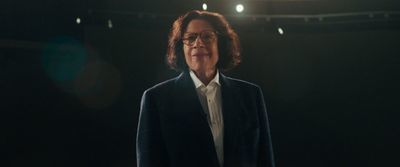
Ten years ago, Martin Scorsese and Fran Lebowitz collaborated on “Public Speaking,” a documentary film where the author espoused her philosophies. The Netflix series “Pretend It’s A City” reunites the New York duo for more of the same. Across its seven episodes, the director converses with the author about all manner of things that irritate and inspire her. Scorsese sets the jumping off points and Lebowitz leaps with often hilarious, reckless abandon. Each installment runs around 30 minutes, offering up just enough to leave you looking forward to the next. The end credits also provide a closing zinger surrounded by an appropriately chosen piece of music.
The title comes from the advice Lebowitz says she’d give people coming to New York City, a place she moved to from Morristown, New Jersey in 1969. Scorsese grew up in Manhattan, of course, and for much of the film, the two hold court in a few standard locations. The primary one is the Players, a Gramercy Park social club founded in the 19th century by actor (and brother of John Wilkes Booth) Edwin Booth. Another is inside the Queens Museum’s Panorama of the City of New York, the gigantic geographical model commissioned by Robert Moses for the 1964 World’s Fair. Wearing protective shoe coverings, Lebowitz towers over this massive representation of NYC like Gulliver in Lilliput. Offscreen, Scorsese asks questions while warning her to watch out for the bridges spanning the East River.
Editor Ellen Kuras mixes these one on ones with clips from audience Q&A’s, prior Lebowitz interviews with people like David Letterman and scenes of the humorist walking down the street. Occasionally, the film cuts to a still picture or a bit of historical footage of people like former NYC Mayor Abraham Beame, whose time in office coincided with the infamous NY Daily News headline “Ford to City: Drop Dead.” It’s during this time that Lebowitz plied her trade, writing pieces for Interview Magazine including a review of her co-star’s second feature film, 1972’s “Boxcar Bertha.” “I loved to write,” she tells Scorsese, “until the first time I had to write an assignment for money.”
Toni Morrison, to whom the series is dedicated, appears in interview footage as does Spike Lee, who grills Lebowitz on her dislike of sports. Seems she loves Muhammad Ali and was at Ali-Frazier I, a fight Lee reveres. Yet despite all this, she’s still a sports agnostic. Lee presses her on this, becoming animated as he goes on about Jordan and Lebron and Kobe. While he does, the film shows Lee at that memorable Knicks game where he heckled an unstoppable Reggie Miller from courtside. “You are the only person who argues with me more than my family,” Lebowitz tells Lee. Their spirited interplay is a highlight of the series.
Scorsese is the recipient of many of his leading lady’s stories and monologues. “I knew what talent was because I saw the lack of it in myself,” she says about her childhood days of playing cello poorly. “I could get better, but I’d never be good.” We also hear about being voted “class wit” before ultimately getting kicked out of high school. That last event facilitated the move to Manhattan, where Lebowitz lived in a crappy apartment in a more expensive neighborhood than the people she hung out with back then. “Everyone had the idea that New York was cheap,” she says in Episode 3, correcting that mistake.
“Pretend It’s A City” is full of memorable stories and snapshots of a New York City long past. There’s the tale of music legend, Charles Mingus stopping mid-performance to chase Lebowitz down 7th Avenue over a perceived infraction. The punchline there is almost as amusing as her brutal takedown of the most evil of all MTA subway lines, the L train. After hearing that the train line had been shut down for hours due to “a bad smell,” Lebowitz asks how much worse could it smell than usual. Health and the wellness racket take a beating in Episode 5 where Lebowitz, a lifelong smoker, points out that everything that is good for you feels or tastes terrible. She’s not going to ditch Joe Camel because her main goals in life are “smoking and plotting revenge.”
Scorsese is a very amusing co-conspirator, oftentimes letting his visuals serve as humorous accompaniment. When Lebowitz recounts her time as a taxi driver in a profession full of men with cigars who hated her inclusion, the screen cuts to footage of the cab ride in “After Hours.” After a story about Leonardo DiCaprio giving Lebowitz a vape pen as a cigarette substitute, Scorsese cuts to an onscreen disclaimer he reads about Leo not endorsing vaping. And there’s a great shot of the two stars of this film simultaneously looking through the round windows of two old-fashioned doors, cautious expressions on their faces.
At times, Scorsese laughs so hard at Lebowitz’s commentary that I feared he would literally collapse. I thought I was going to pass out from giggling myself. This is a very funny production, though I suspect it will play best amongst the denizens of the city Lebowitz loves. No matter how many pet peeves she has—and there are many—I never tired of hearing them. Your mileage may vary, but one thing that I think will grab everyone’s attention is the pre-pandemic world of “Pretend It’s A City.” People are out and about, and that normalcy struck a very poignant chord. Whether pointing out the irony of art auctions (“people applauded the price” but not the painting) or mocking her horrific luck with real estate, Fran Lebowitz’s delivery is masterful. So, if the first episode hooks you, this is worth binge-watching.
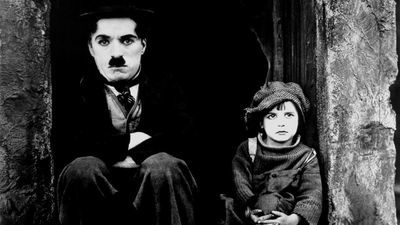
A bowler hat, enormous shoes whose toes point in opposite directions from one another, and a comically ill-fitting suit that seems at once baggy and far too small: these are the trademarks of the Tramp, Charlie Chaplin’s most famous character and the ultimate outsider. In this farcical interpretation of a wealthy man’s attire, he mimics the behavior of an ordinary member of society while somehow remaining intrinsically separate. But his most profound moments come when his clownish interactions with the world lead to a genuine human connection, as they do in “The Kid,” Chaplin’s feature length directorial debut, turning 100 this year. Here, the Tramp is tasked with the raising of an abandoned child, and they develop a bond so powerful that we see echoes of it reverberate through cinema, delicately deconstructing traditional notions of fatherhood and, by extension, masculinity. The work that Chaplin does in “The Kid” provides a template for innumerable stories that confront what it means to belong to someone, taking characters who have intentionally detached themselves from a community and reconnecting them with humanity as they are faced with an unconventional version of fatherhood. With its loving depiction of an adoptive father-child dynamic, Chaplin’s century-old film has its fingerprints all over modern entertainment, especially as the familiar storyline had new life breathed into it with the release of “The Mandalorian,” “News of the World,” and “The Midnight Sky.”
“The Kid” is a natural successor to “A Dog’s Life,” a Chaplin comedy from three years earlier which originally posits the question: what would happen if a stray adopted a stray? Our hero is well-defined: he’s a vagabond who lives on the margins of society. His lack of wealth and social cache prevent him from establishing a stable foothold in the world, but they also grant him a measure of independence. He is allowed his comical misadventures because he has no one relying on him as a provider, no real reason to commit to an existence that is more firmly entrenched within society. That is, until the Tramp stumbles upon his ward in a random alley of “The Kid,” a seemingly abandoned baby whom he feels compelled to protect. Unable to foist the child off on any passersby, the Tramp reluctantly takes him home to his barebones hovel, where he quickly rigs up a series of contraptions that will help him better care for his new companion. They spend the next five years together, and his young adopted son (Jackie Coogan), armed with a few carefully deployed rocks, quickly becomes an asset in his window repair scam.
It’s crucial to the impact of the story that the Tramp’s way to earn a living lies outside the law: it further highlights how removed he is from a traditional community and creates a natural conflict within the narrative. The life he can provide for his child is loving, but is that enough? This is the case in “The Mandalorian” as well, where an orphaned bounty hunter raised in an extremely isolating and depersonalizing religion finds himself escorting a Jedi toddler across the galaxy. His life is dangerous, and through each life-or-death scenario he grapples with whether the child is better off safe with the Jedi, or imperiled but with the man it has come to regard as a father figure.
Captain Jefferson Kyle Kidd (Tom Hanks) in “News of the World” is not himself a criminal, but inhabits a tenuous position as a man who travels from town to town throughout the sparsely populated and lawless Old West performing dramatic recitations of the news. He lacks even the connection to civilization that the Tramp’s unassuming shanty provides; Kidd has only a small wagon and a pair of horses to his name, having left his house and business connections behind in San Antonio. Hardly a home for a child, Kidd reasons, even one like Johanna (Helena Zengel), whose life among the Kiowa tribe has made her a particularly suitable candidate for a nomadic existence.
“The Midnight Sky” takes this sense of uninhabitability a step further. Augustine Lofthouse (George Clooney) is a scientist in failing health, whose career and personality have isolated him from not just the concept of a family or a community, but humanity itself. After a cataclysmic event rapidly threatens to extinguish life on Earth, rather than fleeing with his colleagues, he chooses to stay behind at his Arctic research base alone. His plans are diverted when he comes across a young girl, apparently left behind in the rush to evacuate. This child has perhaps drawn the worst straw of all: the Earth itself is hostile to her, and despite Augustine’s best efforts he will likely find himself powerless to offer her protection.
The concept of a vagabond who has purposefully rejected the trappings of a family unit but is then suddenly thrust into the role of the caretaker is an inherently compelling one, and the deep connection they have with one another is no less powerful for its ephemerality. A sense of impermanence is a common thread throughout many of the films that explore this dynamic. As close as ersatz father and child will grow, the specter of their ultimate separation looms large over the proceedings. The Kid may have been raised by Chaplin’s Tramp, but his mother is still alive and mourning his loss, to say nothing of the law enforcement officers who are determined to remove the child from what they consider to be an unsuitable home. Chaplin’s best acting is reserved for their parting, his haunting eyes devastated and helpless as he struggles in vain to break free from the policemen holding him back and rescue the Kid from a paddy wagon. No matter how much he loves his would-be son, the Kid is not the Tramp’s to keep.
Similarly, both the Mandalorian and Captain Kidd’s encounters with their respective children come with a clear expiration date. The Mandalorian is tasked with escorting the Child safely to the Jedi at which time, presumably, their relationship will come to an end. It’s only with a certain reluctance and growing dread that he acknowledges that his time with the Child is perhaps not infinite. Captain Kidd discovers Johanna alone in the forest, a young girl who has been uprooted twice, first from her German immigrant family in a Kiowa raid, and second when her Kiowa family were killed by Union soldiers. She is to be returned to her only remaining relations, an aunt and uncle some several hundred miles away, and Captain Kidd finds himself the only person willing to undertake this journey with her. Their trip through the Texan frontier takes many turns, but it nevertheless has a clear destination in mind. There’s little point in getting attached; Kidd’s role in all of this, as it is with his profession as newsreader, is to serve as an emissary, nothing more. Augustine’s situation is a bit different. He has no real mission to complete other than protecting his young companion, once it becomes clear that no one will be coming back for her. But still, it’s difficult to think of a more definitive ending point to their relationship than a mass extinction event already in progress.
Yet there’s a sense of ambiguity to all these conclusions: hope springs eternal that they won’t be torn apart after all. When the Kid is reunited with his mother, there’s an uncertain space left for the Tramp in their lives. She makes the choice not to shut the door on him, but to invite him in, although it’s unclear what that will mean for the three of them going forward. Captain Kidd seems committed to reuniting Johanna with her extended family, but his growing affection for her creates a lingering question of whether or not he’ll actually turn her over to her stern German relations. And as for the Mandalorian, it’s obvious that he’s struggling with the idea of giving the Child to the Jedi. The bigger question is if he’ll be able to keep the Child with him along the way, with the dying Empire trying to separate them at every turn, and if he does unite the Child with the Jedi, if that actually means their relationship will end. In each case, their relationships are nebulous but potent, their parting no less sorrowful for being seemingly inevitable.
These stories are enduring because they take the ruggedly individualistic male hero who is stubbornly determined to live alone and on his own terms, and create an obstacle in the form of a helpless child. This isn’t his child, and he’s under no obligation or biological imperative to protect it. The Tramp could keep walking down the alley, just as the Mandalorian could hand the Child over to bounty hunters eager to collect it, or Captain Kidd could leave Johanna with her aunt and uncle. Each makes the choice instead to take responsibility for the vulnerable youth, and not only keeps it safe but gently nurtures a deep emotional bond that ties him to the child forever, regardless of where each ultimately ends up. It’s a tremendously optimistic view of humanity, that a reclusive and antisocial person who is perhaps least likely to seek to protect the herd would nonetheless make the choice to care for a small, helpless child for no other reason than instinctual compassion. This raw empathy is why “The Kid” remains Chaplin’s most emotionally complex film, and how his simple story of would-be father and son has maintained its relevance for a century.
“Mr. Mayor” has a Ted Danson problem. Just now, you perhaps shouted “THERE IS NO SUCH THING AS A TED DANSON PROBLEM” at your screen. You are not wrong to shout, reader. To imply that Ted Danson is the source of any sitcom’s problems should be enough to have me immediately struck from the membership rolls of the swank TV critic clubhouse, inside which we all gather to watch old episodes of “Frasier” and quote “Mad Men” at each other while rolling around in the cash Disney throws at us in exchange for lukewarm reviews of Marvel movies. Let me begin again, before things get intense.
The problem with NBC’s “Mr. Mayor,” the new sitcom from Tina Fey and Robert Carlock, is not Ted Danson himself. It’s the nearly overpowering temptation to imagine that the new mayor of Los Angeles is secretly Sam Malone, or Michael the Architect, or the fictional Ted Danson from “Curb Your Enthusiasm,” or whoever the hell he played on all those seasons of “C.S.I.” As it stands now, neither Danson’s impeccable timing nor his internal vat of charisma can compensate for the teeth-grinding sameness of “Mr. Mayor,” nor its bland central figure. Swap in any of those other guys, however, and as “Arrested Development’s” fictional Carl Weathers might opine, “You’ve got a stew going.”
All that is to say that, in the two episodes provided for critics at least, there’s a decided lack of meat to “Mr. Mayor,” a sitcom with staggering levels of unfulfilled potential. Its shortcomings are most apparent on a character level, a circumstance that renders its top-tier cast as much a blessing as a liability and which underlines the formulaic nature of the premise. There’s nothing wrong with a formula. That’s especially true in the land of sitcoms. Formulas become familiar because they work, and that familiarity becomes fertile ground for experimentation, innovation, and meta-humor. “Mr. Mayor” will likely bring other sitcoms to mind as you watch, and that’s a feature, not a bug; I imagine the phrase “30 Rock meets Parks & Rec” got tossed around a lot while the series was in development. The issue is not the formulaic nature of the series, but that it feels like a formula and little else, and the presence of actors like Danson and Holly Hunter only makes its hollowness all the more apparent. It’s an experience that leads to musings like this: I bet “Mr. Mayor” would be great, if it were actually “The Good Place.”
That said, two episodes — and these two episodes will air back-to-back, making them essentially one long pilot — aren’t much to go on, so it’s possible, even probable, that the show will live up to its crackerjack premise. Billboard mogul Neil Bremer (Danson), a retired billionaire, decides to run for Mayor of Los Angeles after the madness of 2020 drives the previous mayor to melt down, quit, jump in the nearest taxi, and ask the cabbie to drive straight into the ocean. His daughter Orly (Kyla Kenedy of “Speechless”) has also entered the political fray, running for sophomore class president, and while her father’s position complicates things, her frustration is nothing compared to that of Arpi Meskimen (Hunter), a longtime progressive City Council member whose fury at the success of an inexperienced billionaire drives her to immediately appoint herself as a full-time thorn in his side. That also makes her a problem for Bremer’s staff: Chief of Staff Mikaela Shaw (Vella Lovell of “Crazy Ex-Girlfriend”), a social media wunderkind who can’t quite believe she got this rich buffoon elected; bemused strategist Tommy Tomás (Mike Cabellon); and Jayden Kwapis, a holdover from the last administration and a Kenneth the Page/Jerry Gergich hybrid played with a marvelously casual air by Bobby Moynihan. Hijinks ensue.
One hopes that hijinks won’t be the only things that ensue, however. While there are glimmers of something more substantial and engaging beneath the surface—more on those below—the series does little to distinguish itself in these first two episodes. How hard do you have to work to make almost no impression with a cast led by Ted Danson and Holly Hunter? Yet in Danson’s case in particular, there’s a sense that he’s biding waiting for the real show to start, playing a sort of general amiability in the interim. (That said, he can still toss off a punchline like no one in the business; Neil denies swimming in a pool filled with champagne because it “would ruin the grout,” and it’s right up there with “what am I, a farmer?” In the pantheon of rich guy jokes.) Hunter doesn’t fare much better, but she, at least, benefits from playing with an antagonist’s momentum; she also gets the sole satisfying storyline, when Arpi and Mikaela go on a City Hall-wide quest for double-sided tape. It’s not the destination, it’s the journey. The real double-sided tape is the connections they forge along the way, and Lovell and Hunter are expertly matched.
It would be foolish to write off any sitcom with such a pedigree. Frankly, the presence of series regulars like Danson and Hunter is enough to buy this one a long runway, and Fey and Carlock are no slouches themselves. But blue blood alone isn’t enough to make any series a must-watch, just like being rich and/or famous doesn’t automatically make you a great public servant. There’s got to be a there there, a core that’s bright, warm, clever, or even comfortable. Right now, “Mr. Mayor” is just a stuffed shirt. But hey, what if he was a bartender instead?
Befitting its subject matter, “Coyote” has already had an unusual journey. Once planned as a weekly, ten-episode series for the Paramount Network, it was shut down for the pandemic at six episodes, which will now premiere on CBS All Access in one bingeworthy drop. As if that’s not enough, the program itself is an unusually bumpy road in terms of quality. Just when you think it’s working, a hackneyed line of dialogue throws off the rhythm. Just when you’re about to give up on it, a clever piece of plotting brings you back. Rarely have I gone back and forth more on a show over only six episodes. The craftsmanship, plotting, and performances are top notch. But the broad stereotypes early in the season, the lack of female characters who feel three-dimensional, and the inconsistent dialogue constantly pull it away from its potential. The truth is that the remaining four episodes of this season may have brought it all together but could just have easily succumbed to the weaknesses as well. It could be a long time before we really know if “Coyote” is any good, but there’s enough potential in this run that I’m curious to see where it ends up.
One of the interesting things about what is basically a two-part premiere duo from the great Michelle MacLaren is how much it feels like other shows. Of course, MacLaren is a master TV director, and some of her best work was done on another show that loved the desert, “Breaking Bad.” Like that show, “Coyote” is the story of a man who gets increasingly in over his head with a series of tough decisions. And that’s not the only familiar feeling, as any show that puts Michael Chiklis in a uniform is going to bring back echoes of “The Shield,” especially if they give him a few questionable ethics (he literally drops a “f*ck protocol” before the 30-minute mark). Now, Ben Clemens is no Vic Mackey on the moral spectrum, but he does have an awfully black and white view of his job as a border agent, which is coming to a close after 32 years. Luckily, the creators of “Coyote” don’t lean too hard into their clichés before subverting them, sending the man who spent his life pushing people back into Mexico below the border himself.
It turns out that Ben’s former partner, now deceased, was working on a house in Mexico, and Ben goes down there to complete the project. Before he knows it, he’s stumbled into a very bad scene, including a pregnant girl who Ben ferries across the border to safety. Through the desert, of course. The border agent who is now forced to help a girl find sanctuary when he barely listened to the stories of those he sent back into dangerous situations for over three decades feels a little cheap and underdeveloped at times, but the writers of “Coyote” pretty quickly move on from making their show into either a White Savior narrative or even a Racist Learns a Lesson story. Instead, they basically drop Ben into a criminal organization. You see, the baby daddy for the girl was a figure in a large Mexican crime ring, and now Ben owes them a favor or two.
MacLaren shows her skills with pacing and visual language in the first pair of episodes, making the questionable plotting and dialogue easy to take. But then things slide back a bit in the next pair, sinking into tropes and stereotypes in disappointing ways. The writing just isn’t there in episodes three and four, as if the team can’t figure out how to get to the meat of their story without using a few cliché handbooks along the way. Without MacLaren’s craftsmanship, it’s easier to notice things like how every female character is a plot device and lines like “You aren’t getting cuffed cuz you’re brown, you’re getting cuffed cuz we’re blue” get harder to swallow.
Against all odds, “Coyote” bounces back. Perhaps because it’s so focused, the fifth episode gives much needed depth and urgency to the show. Without spoiling anything, it basically takes place in one location and gives Clemens’ partner Garrett (George Pullar) more of a character while also allowing Daniel Mora to basically steal the show as a villain who becomes significant later on. Overall, it broadens the canvas of the program and gives it more immediate stakes. And then the finale reaches a place that you might expect to the show to get much later, setting up what could have been a great four-episode final run of this year or potentially a much stronger second season. We’ll have to wait and see if “Coyote” ever gets there.