Categories
TV & Movies

Meet the Writers: Carlos Aguilar


Editor’s note: To give you a chance to get to know our writers better, we’ve asked them to respond to some questions. Here’s Carlos Aguilar. Read his work here.

THE MOVIE LOVE QUESTIONNAIRE

1. Where did you grow up, and what was it like?

I was born and grew up in Mexico City, a massive metropolis brimming with contrasts. Its relentless chaos and majestic beauty are always at odds. Throughout my childhood my parents and I (and later my younger brother) lived in a small room in my paternal grandmother’s house located in a working class neighborhood in the northern part of the city near the Basilica of Our Lady of Guadalupe. My elementary school was around the corner from home. I didn’t have many friends, but I excelled academically. Not because my parents demanded it, but because I was an annoying little overachiever. I was also a voracious reader thanks to a teacher who lent countless books and who was kind enough to read the short stories I wrote on my free time. Unfortunately, at home we were dealing with economic hardship and domestic violence tied to my father’s alcoholism. But while it wasn’t always a happy upbringing, my mother’s efforts to expose my brother and I to culture made a difference. We had no money, but she would find free events, museums, or discounted reading materials, so that we wouldn’t feel completely trapped by our circumstances. In my early teens, knowing that they wouldn’t be able to continue to support two kids and much less provide an education, my parents agreed for my aunt in the U.S. to take me in. Today I look back at those formative years in Mexico City with a bittersweet lens.

2. Was anyone else in your family into movies? If so, what effect did they have on your moviegoing tastes?

I owe my passion for film to my mom. She has been an avid cinephile her whole life. Her taste ranges from a profound love for James Bond flicks to a great appreciation for Akira Kurosawa and Ingmar Bergman. Her curiosity for learning has always astonished me. Though she was only afforded a grade school education, she’s read all the classics and always sought out movies from around the world. As a kid, we couldn’t afford to go on vacation or to have video games; so going to the cinema with her was the biggest treat for me. Beyond influencing my taste, her respect and love for the arts validated me. Even if objectively there was no real path for me to ever work in the film industry, she never told me it wasn’t feasible. She let me believe there was a chance, somehow, somewhere. Coming from where I come from, if she hadn’t allowed me to dream, I wouldn’t be writing this today.

3. What’s the first movie you remember seeing, and what impression did it make on you?

Disney’s “The Little Mermaid” on a bootleg Betamax tape my parents bought for me at a street market. I’d watch it obsessively, so much that at some point they had to get a replacement copy. While the amazing songs (in their Latin American Spanish dubs) and the score were a big part of the appeal, it was the magic of the animation that bewitched me. The first movie I remember watching in a theater was “Aladdin” when I was around three years old. Soon after, I told my mom one day I would work for Walt Disney. Sad to report that never happened. But unlike some people that believe animated works are only for children, I never grew out of my love for the medium.

4. What’s the first movie that made you think, “Hey, some people made this. It didn’t just exist. There’s a human personality behind it.”

Probably “Who Framed Roger Rabbit?” As a child watching it on television I was perplexed by the notion that flesh-and-blood individuals could interact with cartoons so seamlessly. Although from an early age I was aware that animation was created through a series of drawings, what Robert Zemeckis and his team achieved blew my young mind away. It wasn’t until years later that I would become fully conscious of how they did it.

5. What’s the first movie you ever walked out of?

Seventh Son,” that awful fantasy epic starring Julianne Moore and Jeff Bridges. It’s so recent because I’m a completist. Even if what’s on screen is bad, I usually fight the urge to leave and stick around till the end. As a film critic I’ve sat through terrible movies with the purpose of reviewing them, but on this occasion I was casually watching with friends. After about 15 minutes of that dreadful tale, we collectively decided we couldn’t endure it any longer. We headed to the ticket booth and asked if we could watch “The SpongeBob Movie: Sponge Out of Water” instead. That was a much better choice.

6. What’s the funniest film you’ve ever seen?

Stephen Chow’s “Kung Fu Hustle” is definitely a laugh-out-loud marvel that comes at you fast with the gags. But there’s also the Norwegian film “Kitchen Stories,” which is delightfully quirky and insightfully hilarious. Both of these, for distinct reasons, really put a smile on my face.

7. What’s the saddest film you’ve ever seen?

I’m sure there is many movies that have made me cry, but if I think of a single moment in a film that’s uniquely devastating it’d be the scene in “Dumbo” when his mother, Mrs. Jumbo, caresses him and sings to him through the bars of the place where she is being kept captive. 

8. What’s the scariest film you’ve ever seen?

Michael Haneke’s “Funny Games” (the 1997 original to be precise) without a doubt. It’s not only that the murderers are so deceitfully unremarkable in their appearance but the casual and nonchalant calmness with which they carry out their evil acts. The element of randomness in picking their victims and, of course, how by breaking the fourth wall Haneke eviscerates the viewer’s hope for the characters’ salvation, is bone chilling.

9. What’s the most romantic film you’ve ever seen?

Easily Todd Hayne’s “Carol,” which brims with melancholia as the two women at the center of the love story fall for each other in secret. The winter setting and the gorgeous color palette soothe us as we witness the soft-spoken exchanges in an incandescent connection that 1950s American society rejects. Rooney Mara and Cate Blanchett grace the film with some of their finest work to date.

10. What’s the first television show you ever saw that made you think television could be more than entertainment?

As a kid I watched tons of anime, and, like for many children growing up in Latin America at the same time, “Saint Seiya” was a favorite. It was admittedly a violent show, but it blended high-stakes drama with Greek mythology, astronomy and astrology in a tale of friendship. It was impressive visually, considered it was first released in Japan in the ’80s before becoming popular abroad in the ’90s, and from a narrative standpoint it dealt with serious themes beginning with all the major characters being orphans. Even as a young viewer I knew that “Saint Seiya” or “Los Caballeros del Zodiaco” was operating on a different and much more sophisticated wavelength than American cartoons.

11. What book do you think about or revisit the most?

Hanif Kureishi’s The Buddha of Suburbia, which I read as a teen based on a teacher’s recommendation and completely enthralled me with its candor and approach to the notion of youth from the point of view of a perceived outsider.

12. What album or recording artist have you listened to the most, and why?

It’ll always be The Killers. They became popular just as I starting high school, so in a way their first two albums (Hot Fuzz and Sam’s Town) feel like the soundtrack of my teenage years. I’m fascinated by Brandon Flowers’ lyrical storytelling and the epic quality of the band’s stadium-ready anthems. It also doesn’t hurt that some of their music videos cinematic quality such as “When You Were Young” (filmed in Mexico) or “Bones” (directed by Tim Burton).

13. Is there a movie that you think is great, or powerful, or perfect, but that you never especially want to see again, and why?

Pasolini’s “Salò, or the 120 Days of Sodom.” It’s a film I admire and truly believe is a daring and masterful achievement, but I might need a very good reason to ever stomach it again.  

14. What movie have you seen more times than any other?

Jean-Pierre Jeunet’s “Amelie.” It was the movie that introduced me to cinema beyond Disney animation and the Hollywood mainstream, and I find every aspect of it wondrous, from the dreamlike cinematography to Yann Tiersen’s magnificent score. Watching it brings me instant joy. I even went to see the short-lived and not particularly great stage adaptation.

15. What was your first R-rated movie, and did you like it?

Every Saturday, one of Mexico’s local channels, Canal 5, would program American movies, from action flicks to horror. One of those nights when I was very young my parents and I watched “The Exorcist.” And though films that showed there were heavily edited for broadcast television, I was terrified. My Catholic upbringing was certainly to blame. I probably watched many bits and pieces of R-rated movies on that channel growing up, but “The Exorcist” and “Child’s Play” remained vivid for a long time. I clearly didn’t enjoy them, but they were for sure effective in scaring me. 

16. What’s the most visually beautiful film you’ve ever seen?

Spirited Away.” Hayao Miyazaki’s masterpiece left me speechless when I was finally able to see it at a theater in Mexico City after having read about it for a long time. The world he built by hand and the set pieces that miraculously unfold will never stop stunning me. I’m always shocked when anyone dares choosing anything else as the greatest animated film of all time in the ever-present best-of lists.

17. Who are your favorite leading men, past and present?

Pedro Infante, Gael García Bernal, Jean-Paul Belmondo, Antonio Banderas, Mads Mikkelsen, Ryan Gosling, Joaquin Phoenix, Danny Glover.

18. Who are your favorite leading ladies, past and present?

Isabelle Huppert, María Felix, Nicole Kidman, Emmanuelle Riva, Sonia Braga, Juliette Binoche, Catherine Deneuve, Penélope Cruz, Marion Cotillard, Salma Hayek.

19. Who’s your favorite modern filmmaker?

A tie between Asghar Farhadi and Pedro Almodóvar

20. Who’s your least favorite modern filmmaker?

Andrew and Jon Erwin

21. What film do you love that most people seem to hate?

Disney’s “Treasure Planet” is truly an underrated and unloved gem. Watching it now as an adult I continue to be impressed by the layered relationship between these versions of Jim Hawkins and John Silver amidst gorgeous space landscapes. Let’s also not forget that Morph is among the most adorable Disney sidekicks.

22. What film do you hate that most people love?

A hateful tie between Denis Villeneuve’s “Arrival” and Christopher Nolan’s “Interstellar.” 

23. Tell me about a moviegoing experience you will never forget—not just because of the movie, but because of the circumstances in which you saw it.

A couple year’s ago, the opening night screening of the Los Angeles Latino International Film Festival (LALIFF) took place at the iconic Grauman’s Chinese Theatre in Hollywood and it was the documentary “The Sentence.” The film follows director Rudy Valdez’s journey documenting the years his sister was imprisoned and away from her daughters. As the heartbreaking conclusion approached, the entire, sold-out theater was audibly crying. Some people were so loud in their uncontrollable outburst of emotion that others around had to calm them down. Such a spontaneous and collective release of pain has stuck with me.

24. What aspect of modern theatrical moviegoing do you like least?

By far the lack of respect and consideration some moviegoers have towards others trying to enjoy the film up on the screen, namely texting, talking, or even worse, taking photos of the screen or taking phone calls. This behavior has become so pervasive that when you politely ask someone to put their phone away they often react aggressively as if you are in the wrong. The entitlement of some people ruins the collective experience. 

25. What aspect of moviegoing during your childhood do you miss the most?

Growing up in the ’90s in Mexico there were movie theaters were you could watch more than one movie for the price of one, with an intermission between shows. One in particular catered to young kids and had its walls decorated with animated characters.

26. Have you ever damaged a friendship, or thought twice about a relationship, because you disagreed about whether a movie was good or bad?

Not damaged a friendship, but my friends know that if they use their phone or talk excessively while we are watching a movie in a theater, I probably won’t ever ask them to go to the movies with me again. We can still be friends, but I’ll think twice about asking them.  

27. What movies have you dreamed about?

Definitely those set in Mexico City, like “Güeros,” “Museo,” or even “Roma,” as I’m reminded of the city I used to know. It recently happened to me with the movie “I Carry You With Me,” which is not set in my hometown but speaks about how sometimes we confuse memories with dreams in relation to the people or places we long for.

28. What concession stand item can you not live without?

Peanut M&Ms


Source link

Categories
TV & Movies

START TV Continues My Start Story Campaign Amidst Pandemic


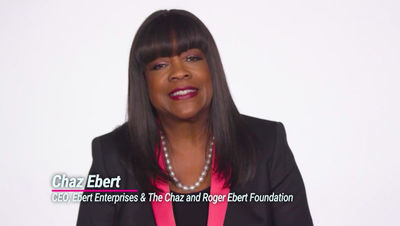
“My Start Story,” an original campaign featured throughout the day on the national digital broadcast network, START TV, showcases the stories of strong women. A different voice is featured every day, accompanying the network’s programming, and those who have been filmed thus far can be found here. The prestigious interview subjects include trailblazing comedian Carol Burnett, Olympic gold medalist Kendall Coyne, RogerEbert.com publisher Chaz Ebert, “Sneak Previews” executive producer Thea Flaum, Tony Award-winner Nancy Opel and iconic singer Dionne Warwick

Chaz Ebert’s interview will be re-aired on Sunday, January 10th, at 11:30am, 2:30pm, 5:30pm, 7pm and 10pm CT (an excerpt of it can be viewed below).

<span id=”selection-marker-1″ class=”redactor-selection-marker”></span>

During the COVID-19 pandemic, the “My Start Story” campaign has continued. Many women have been featured talking from home about how to stay safe and how to keep connected with family and friends. The segments have honored front-line workers and interviewed various people directly impacted by COVID 19. On Father’s Day, a special “My Start Story” was aired that honored dads, and in August, a campaign celebrating the 100th anniversary of women’s right to vote was featured. 

START TV was launched in September 2018 as a joint initiative of the CBS Station Group and Weigel Broadcasting. The network serves as a one–stop shop for strong female character driven programming, and is also available on multiple platforms on a market by market basis. START TV operates on a seven-day-a-week strip schedule, with episodes airing every day at the same time, Monday through Sunday. They say this is a convenient format that allows viewers to tune in and “Start” watching any day or time they choose. Headliner programs are showcased with multiple episodes airing each day in multi-hour blocks. The primary offerings of START TV are procedurals such as “The Closer,” “Cold Case,” “Crossing Jordan,” “The Division,” “The Good Wife,” “Medium,” “Profiler,” “Strong Medicine” and “Unforgettable.”

For more information on START TV and its new campaign, visit the network’s official site.


Source link

Categories
TV & Movies

Redemption Day


Time may feel like a flat circle, but the calendar says it’s January, so that means we get shoddy, dumping-ground dreck like the generically titled “Redemption Day.”

This would-be action thriller offers awkward action and no real thrills. The feature debut from director and co-writer Hicham Hajji boasts an impressive cast but then strands these performers in thinly drawn roles. The dialogue is clunky, the pacing drags, and the production values are so inconsistent that they’re often laughably cheap.

But perhaps the most baffling element of all is the superficial and retrograde way Morocco native Hajji depicts the Islamic terrorists in the film’s kidnapping plot. They are cartoonish in their villainy and overly simplistic in their demeanor and demands. One would think Hajji might be interested in presenting a more nuanced portrayal of the complexities that exist within the region; instead, he and co-screenwriters Sam Chouia and Lemore Syvan offer some title cards off the top about the significance of oil as well as a few cursory conversations between opportunistic American diplomats.

A pretty American woman is held captive for $10 million ransom. Only her badass husband, a decorated U.S. Marine captain, can save her—but he must confront his regrets and demons in the process. It’s a trite premise told in uninspired fashion, with dull, overlong tracking shots and an increasingly pushy score in place of actual drama.

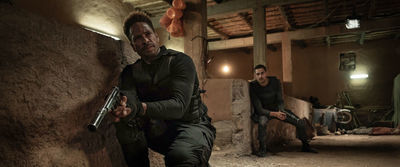
The one thing that makes “Redemption Day” watchable on any level is the presence of Gary Dourdan as Brad Paxton. The longtime “CSI: Crime Scene Investigation” actor gets a rare shot at a leading role, but his compelling screen persona is sadly in the service of a barely-there character. He broods and shows off his brawn, and gives you the sense that he’s trying to imbue the performance with the kind of depth that simply isn’t there on the page. This is his version of a late-career Liam Neeson action vehicle—or it would be, if it were any good.

We know Brad is tormented, though, from a lengthy flashback at the film’s start. A mission to protect the transport of medical supplies across the Syrian desert comes under attack, and goes horribly awry. The memory of this ambush haunts him and awakens him in the middle of the night, and the comfort of his loving wife, Kate (Serinda Swan), provides little solace. Neither do boxing workouts and tough-love chats with his dad, played by an underused Ernie Hudson.

But then Kate, an archaeologist, travels from New York to Morocco to investigate the discovery of an underground city—and promptly gets kidnapped within minutes of arriving at the dig site, supposedly for crossing into Algeria by accident. (First, she’s stuck with insipid lines like: “Thank you so much for the hospitality.”)

When he finds out his wife has been taken, Brad springs into action, which provides him with the opportunity for the redemption of the film’s title … maybe? As in, he couldn’t save one of his fellow Marines, but he can save his wife, so that will help him sleep at night? The logic is fuzzy but that’s what we’re expected to hold onto as “Redemption Day” stumbles toward its climactic conclusion. Along the way, we’re subjected to endless drone shots of vehicle caravans and several shootouts, one of which is staged and filmed in such a cheesy way, it looks as if the character slipped and fell rather than taking a bullet to the head. We also see shadowy characters having scheming conversations, including Andy Garcia as the cigar-chomping U.S. ambassador to Morocco, Martin Donovan as some other duplicitous diplomat, and an unnamed character who can best be described as Colonel Sanders as deus ex machina. (Literally, the dude has a white suit, goatee, and walking stick and a comically thick Southern accent. It’s as if he sauntered into the wrong movie after having one too many mint juleps on the veranda.)

This is not the only unintentionally hilarious moment in “Redemption Day,” however. There’s also the conference call that takes place in the cramped and flatly lighted White House situation room, where the wooden United States president (Jay Footlik) says inane things like: “Bring me all the tactical options.” Meanwhile, back in North Africa, the lead kidnapper (Samy Naceri) screams at Kate in both French and badly dubbed English.

There is never any doubt as to how this crisis will turn out, nor is there any suspense or substance. There’s just Dourdan in a series of tight T-shirts and tank tops, saving the day from terrorists in a movie that’s even less welcome than it would have been under ordinary circumstances.

Now available in theaters, and available on demand and on digital January 12. 


Source link

Categories
TV & Movies

Beautiful Something Left Behind


A dear friend once compared grief to an abyss that we all fall into at one point or another. He said it’s all the same abyss. We stay in it until we either decide to climb out or die in there. Most people do climb out, fortunately. But it’s difficult—especially when the loss is catastrophic and sudden. It’s even harder when you’re a kid who doesn’t fully understand what death is. 

Adults don’t fully understand it, either. Even when you have theology, philosophy, poetry, and art helping you out, and even if you’ve been through it numerous times and know other people who’ve gone through it, there’s still a black spot at the center of your mental image—a part of the canvas that can never be filled in, only acknowledged. That’s what you have to make peace with.

And that’s the focus of “Beautiful Something Left Behind.” Directed by Katrine Philp, who undertook this project partly to understand her own feelings about losing her father, the movie is set in and near Good Grief, a facility in suburban New Jersey that serves children who lost a parent, or both parents, all of a sudden, and are struggling to process their emotions. 

How to even describe the movie without collapsing and never finishing this review? 

I needed this. I think you might need it, too.

There is no narration. No talking heads telling you what the facility exactly is, when it was founded, who runs it. Most of the main characters are children under 10. The movie takes its time introducing them. You learn a little bit about one of them, spend some quality time with them and their guardians (could be a mother, an uncle, a grandparent, anyone up to the job) while the other kids are supporting players, and at a certain point of of those other kids becomes the focus; but it’s always democratic, a continuum of experience, arranged so that we intuit, without needing any narrative handholding, that this is all the same experience, only the details change, that somehow, it’s us up there on the screen. It’s us.

The kids understand more than you think and yet they also don’t understand anything, really. Again: it’s us. It’s you.

The mundane always coexists with the tragic, the twisted, the awful, but the juxtaposition hits home here because of the way the camera parks on young kids talking about their grieving experience—profundity mingling with innocence and sometimes with mundane, even unintentionally funny/naive wordings. 

A little girl in a grief circle says she’s still sad about losing a parent, then follows this up by complaining that her sister got a cell phone and she doesn’t have one yet. A little boy named Nolan, 9, sits with his sister Nora, 10, and talks about losing their father, and refers to “when he died and we had that party,” meaning the memorial. Then their mother makes dinner for them, discussing the possibility of getting a pet, maybe a hamster or a lemur. 

“Did you know the earth moves slowly?” a boy says. “That’s why we don’t jiggle.”

Peter, 10, lost his father and mother. His father, he says, “tooken the bad medicine”—those last two words are never explained by the film—and then his mother died in a car accident—also never detailed for us, even though Peter and his uncle C.J. often visit the site of the wreck where mourners have placed a small marker, including a wooden crucifix. 

“That’s where the tree was,” Peter says, pointing to an empty spot on the grass. 

It’s Christmas during one of their visits. 

“I love you, Mommy, and I wish you haven’t died,” the boy tells his mother, speaking to the memorial. “Merry Christmas.” 

“I don’t want you by the street,” uncle C.J. warns. 

The child scoots a few paces to the left. 

There’s one little boy in this film whose face is so contorted by the pain of his loss that I could hardly bear to look at it. But I looked anyway, because I needed to see it. We all need to see it. 

This is the black spot on the canvas, the void. This is what suffering is, on the faces of others. 

We don’t talk about death in this country—in a lot of countries. Not if we can help it. It’s still considered impolite. It makes people uncomfortable. And so many of the rituals surrounding the non-discussion feel mechanical, obligatory. The well-wishes come across like boilerplate, cut-and-paste nonsense, even when we repeat them with sincere feeling. “I’m sorry for your loss.” “She’s in a better place.” “At least he didn’t suffer.” Nora and Nolan read from the memorial book, taking turns. All well-meaning word salad. How can you capture the magnitude of such a horrible event in a way that will illuminate it for a child?

“We only got these because,” Nolan begins the sentence, and Nora finishes it: “…because they felt bad for us.”

A child says that adults are constantly checking in on him in his room, asking if he’s okay. “I say ‘I’m fine.’ What would they say if I said no?”

As filmed by director of photography Adam Morris Philp, and edited by Signe Rebekka Kaufmann, the movie has a bit of a Terrence Malick feeling—by which I mean that it has a knack for finding metaphors and symbols in everyday activities and images, and it presents these in a manner that suggests there’s a world beyond the one that we can process with our brains and our senses, while stopping short of hanging labels or explanations on the film’s moments of lyricism. 

Whether that “world beyond” is heaven, an alternate dimension, another timeline, a void, or something yet-to-be-described is immaterial. We all feel it, that mysterious something, even when we deny its existence, and that’s why we have elaborate belief systems articulated through religious texts and philosophical tomes and “Elegy Written in a Country Churchyard”: 

Here rests his head upon the lap of Earth 

A youth to Fortune and to Fame unknown. 

Fair Science frown’d not on his humble birth, 

And Melancholy mark’d him for her own.

You feel this, you feel it, as you watch this movie. It’s all here. 

Loss, death, the void: that quiet absent presence dwells between the cuts, beyond the frame line. The unresolved mystery; the unresolvedness, period: the question with no answer. 

There are no answers in this movie. It’s just showing us something real and saying, “Here, look. Think about this. Feel it.” In looking and listening, in watching, really watching, this movie, you feel that tingle of energy, that cool electricity, Freud’s uncanny; the trigger in us all that that says, “Pay attention—there’s something else out there. There’s something else to all of this.” 

And so you see a low-angled shot of leafy boughs against blue sky, the sun peeking through. And helium balloons and lantern balloons rising up to the sky. What’s beyond the clouds? Space. Or heaven. A gust of wind whips leaves around the grounds of Good Grief while Peter and C.J. release balloons in honor of Peter’s dead father and mother. The wind seems to follow these two. Wind repeatedly snuffs a flame out as C.J. tries to light a candle at the roadside memorial. (“That was probably mommy blowing it out,” C.J. tells the boy, “because it’s her candle.”)

You believe there are larger forces at work, things we’ll have scientific equations for in another hundred thousand years but that we’re not evolved enough to grasp right now: presences, energies, forces; perhaps not intervening directly in human affairs, though that’s not beyond the realm of the possible; but surely, at the least, commenting on this earthbound life, upon our sadness and our struggles; speaking to the souls who are down here still, we beautiful somethings left behind.

Now playing in virtual cinemas.


Source link

Categories
TV & Movies

The Reason I Jump


The makers of the autism advocacy doc “The Reason I Jump” often struggle with a challenge that every documentary filmmaker (or film journalist) implicitly accepts whenever they set out to translate other artists’ work: recreate as much of the original work’s personality in their own adaptation. You have to “paint a picture,” to borrow a phrase from former Village Voice film editor (and current friend) Alan Scherstuhl: describe events or concepts with enough details so that your audience can independently reach the same emotional or intellectual conclusions based on what you’re showing them. Unfortunately, the movie version of “The Reason I Jump” provides general and therefore only ostensibly universal concepts found in the book The Reason I Jump, Japanese author Naoki Higashida’s poetic memoir about his experiences as a mute autistic teenager.

The movie version of “The Reason I Jump” often uses soundbite-friendly quotes from Higashida’s book as a conceptual clothesline in order to connect Higashida’s story with the experiences of five other autistic children, as well as their parents and David Mitchell, one of Higashida’s two translators (the other being K.A. Yoshida). Autistic children’s mundane experiences are too often reduced to sentimental, canned, and/or trite examples of how far neuro-atypical children and their loved ones have already come, and still hope to go. The movie version of “The Reason I Jump” does not, in other words, successfully illustrate what its title promises, but rather generalizes about a sensitive topic to the point of inadvertently making it seem more unapproachable.

Director Jerry Rothwell (“How to Change the World”) presents a distractingly aestheticized version of the sensory overload that autistic children experience. Amrit, from Noida, India, talks about how she sometimes has to “scan my memory to find an experience closest to what’s happening now” while producer Jeremy Dear, father to autistic teen Joss, likens his son’s thought process to “an out of control slide show.” Soon, voice actor Jordan O’Donegan reads a passage from Higashida’s book while Jim Fujiwara, a non-speaking Japanese-British autistic boy, explores a field of tall grass under an overcast sky. “Time is a continuous thing with no clear boundaries, which is why it’s so confusing,” O’Donegan, as Higashida, explains. Fujiwara stumbles upon a backhoe loader while unsettling ambient music plays.

O’Donegan continues: “Inside my head, there isn’t really such a big difference between what I was told just now and what I heard a long, long time ago.” We then jump to an anecdotal scene where Joss Dear panics in his family’s car while waiting for Jeremy to return with pizza. “There’s no more pizza” Joss inexplicably cries—we never know why he thinks this, but we do see Jeremy return with pizza and soda—while his mother, co-producer Stevie Lee, tries to calm down her son. These scenes encourage an immediate sort of sympathy, but ultimately only establish a superficial understanding of autistic children’s experiences.

Director Jerry Rothwell hardly presses his on-camera subjects about the specific challenges facing autistic kids or their understandably frustrated parents. Aarti Khurana, Amrit’s mother, talks vaguely about stopping her child from pursuing her “obsessions” because of “my fear” of things that could be “socially awkward for her”; Mary Penn-Timity talks generally at a town-hall-style forum in Freetown, Sierra Leone about “centuries of misunderstanding” that her daughter Jestina faces on a daily basis: “Everyone wants me to get rid of this child.” Fujiwara is then shown wandering through a forest while unidentified voices, representing outdated and just plain wrong scientific thinking, describe autistic children as “psychotic,” suffering from a “birth defect,” and substantiating “eugenics” concepts.

At this point, the voiceover narration shifts into a non-English language for the first time in the movie—German: “We call upon a merciful destiny to liberate these regrettable creatures from their existence without life.” It’s easy to tut-tut this barrage of misinformation, but “The Reason I Jump” doesn’t ever really consider its subjects in a way that illustrates what Higashida means when he says that “Every single thing has its own unique beauty.” I would much rather be able to look at Amrit’s paintings than try to understand what motivates their creation through abstract, pseudo-poetic footage of a spinning pottery wheel, explained primarily by more voiceover narration: “A person who is looking at a mountain far away doesn’t notice the prettiness of the dandelion in front of them.”

Towards the end of the movie, O’Donegan, speaking as Higashida, provides an ironically apologetic disclaimer: “I don’t pretend for a moment that everything I’ve written applies to all autistic people.” This line is especially unfortunate given that it’s said right after Ben, a non-speaking autistic boy from Arlington, Virginia, says (through a speaking board) that, “I think we can change the conversation around autism by being part of the conversation.” I wish the movie of “The Reason I Jump” were as personal as that quote suggests that it should have been.

Now playing in virtual cinemas.


Source link

Categories
TV & Movies

Blizzard of Souls


Early 20th century Latvian history is far from common knowledge for most stateside viewers, but rather a topic best suited for an expert-level “Jeopardy” category. Enter “Blizzard of Souls,” a Latvian box office hit and also the country’s submission for the Best International Feature Film Oscar—the movie ambushes our ignorance with its intense introduction to what was at stake for the Baltic state during World War I. 

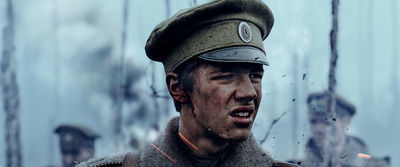
In his first foray into fiction—and a large-scale one at that—documentary filmmaker Dzintars Dreibergs worked from writer Boris Frumin’s adaptation of Aleksandrs Grins’ novel based on his first-hand recollections as a rifleman in a Latvian regiment. Opening in 1915, this historical epic with a coming-of-age narrative engine uses 16-year-old rural boy Arturs Vanags (Oto Brantevics) as our emotional vehicle. Forced to vacate their farm under Russian orders and with the Germans approaching, he and his father (Martins Vilsons), a commended shooter, join the army. Arturs’ older brother Edgars (Raimonds Celms) has already been deployed.

Thought the choice rarely makes much of an impact, the film tries to ground Arturs’ impetus to overachieve during training and in combat in his desire to measure up to his father’s legacy. As his superior, dad offers no preferential treatment, but regrets submitting his youngest to the wreckage of war. Sadly, this parent-child relationship goes mostly unexplored beyond a handful of moments, detracting from the characters’ development and removing the actors’ ability to show off whatever dramatic range they have. 

Still, Dreibergs excels with his measured but immersive set pieces—like one that unravels in a snowy landscape at night, best exemplifying his directorial brawn. Far from the bombastic action in Sam Mendes’ “1917,” the shootouts and explosive-heavy sequences here keep the focus on the Latvian side, hiding the enemy behind fog or darkness as to have more control of the camera’s field of vision. Cinematographer Valdis Celmins only captures what’s crucial to convey the impending danger without the production having to spend the resources to show a fully fleshed out scene with numerous extras or artillery. From a technical standpoint, it is a grand achievement. 

As we shift from one battle to the next, and the Latvians’ role in the war becomes less clear in terms of who they are fighting for or against, the only clear notion amidst a bit of a convoluted structure is that they want to be a sovereign people and stop fighting on behalf of others. This becomes more relevant in the plot’s final strokes, but it seems almost secondary before that. If Frumin’s screenplay had leaned more into the contentious geopolitical dynamics and rise of a national identity as key themes, the overall piece would resonate louder.

Yet even if defense of the homeland is the men’s key motivation, “Blizzard of Souls” doesn’t uphold empty heroism in its depiction of warfare without critique. The loss of human life left in the wake of each armed confrontation weights heavy on all the surviving participants. Their reactions to the carnage are marked with an emotional unpreparedness expected from teens and young men plucked from civilian life and thrown into the deadly trenches.

When not in active combat, the signs that the story doesn’t want to fully give into nationalism feel slightly more pronounced. Briefly away from the chaos near the film’s climax, Arturs burns two pieces of propaganda, one Soviet and one German, asserting that his loyalties lie with the hopes of an independent Latvia. But later when his bravery is publicly recognized, a doubtful glance at a mother whose son died in the battlefield hints that there’s uncertainty within him about whether it was all worth it.

Clean-shaven and wide-eyed, Brantevics’ youthful appearance reaffirms Arturs’ boyish mental state that comes through even when violence surrounds him. From the playful moment where his sibling paints a mustache on him to the two of them stuffing their mouths with candy while in full uniform, Arturs’ childlike innocence endures despite being forced to kill others to save himself. In that sense, there’s not really a strong transition from kid to man in spite of the injuries and painful tragedies he withstands. We witness his arc but we are not affected by it. 

Every character in “Blizzard of Souls,” including the soldier Arturs befriends and his romantic interest, suffers from a similarly limited construction of their innermost aspirations, patriotic convictions, or even a back-story. This yields a movie with plenty of small portions that communicate thought-provoking ideas and gripping melees but without a substantial human anchor. “Blizzard of Souls” is instead at its most moving when the title manifests in a dreamlike manner, departing momentarily from realism. At least then we can spiritually connect with Arturs’ oppressive, self-imposed sense of duty. 


Source link