Categories
TV & Movies

Skyfire


As you may recall, last month saw the release of “Greenland,” a film that dared to take the standard over-the-top disaster movie template and present it in more human terms while nonetheless using Gerard Butler. Though the end result was successful enough in doing something different with one of the most rigid of film genres, but I suspect that those who who watched it expecting the usual orgy of destruction may have been disappointed. Those people may derive more satisfaction from “Skyfire,” a Chinese disaster film that deploys all of the standard tropes of the genre but fails to do anything new or interesting with them.

The setting is Tianhuo, a volcanic island off the Chinese coast. In a prologue set 20 years ago, we see an unexpected and shockingly fast eruption wreak havoc on the place. Among those in jeopardy is volcanologist Li Wentao (Wang Xueqi), who can only watch helplessly as his wife becomes one of the victims, a loss that drives a wedge between Wentao and his young daughter, Xiaomeng (Hannah Quinlivan). In the present day, the now-adult Xiaomeng is herself working as a vulcanologist, leading a team monitoring the volcano for Jack Harris (Jason Issacs), a brash Australian tycoon who has transformed the island into a luxury resort and theme park designed to give them the full volcanic experience. Now you might think that building an enormously expensive resort on the site where a volcano went off the same year “Gladiator” came out—hell, I was trapped on a malfunctioning ride at Six Flags Great America once more than 40 years ago and I still have not set foot there since—but he ensures visiting potential investors that there’s no chance that it will become active again for at least 150 years. (“We’ve conquered it for our own entertainment!”)

Of course, when Xiaomeng comes to Jack with her concerns that the volcano is about to erupt, he ignores her warnings—he’s currently cash-strapped and doesn’t want to scare the investors. Xiaomeng, along with supervisor Jiang (Shi Liang) and Wentao, who also knows what’s about to happen and has come to get his daughter to safety, goes out into the field for more data and that is the moment where things go higgledy-piggledy. As fireballs start cascading through the air, instantly obliterating anyone who didn’t make it into the opening credits (those who did tend to get one final moment of business before their demises), Xiaomeng, Wentao and the investors try to make it to safety while Jack watches all of his dreams literally going up in smoke. And if you thought that Taylor Swift’s “Champagne Problems” was the last word on elaborate marriage proposals gone wrong, spare a thought for Zhengman (Dou Xiao), who arranges an underwater proposal to his girlfriend (An Bai) at what proves to be both the wrong place and the wrong time.

At this point, some of you may have already dismissed “Skyfire” as a clone of “Dante’s Peak” and “Volcano” (both 1997) with a smidgen of the “Jurassic Park” films tossed in for good measure. Those with longer memories and a taste for disaster cinema, on the other hand, will dismiss it as a knockoff of the long-forgotten “When Time Ran Out…” (1980), disaster maven Irwin Allen’s swan song which also featured a resort under attack from an active volcano. That particular film was terrible—one of the worst in a genre not exactly flush with high-water marks—but the sheer desperation that it displayed in its attempts to thrill jaded moviegoers (as I recall, it is the precise moment that embarrassed co-stars Paul Newman and Jacqueline Bisset first kiss when the volcano goes off) gives it a certain goofy charm.

“Skyfire,” on the other hand, has all of the questionable elements one might find in such movies—cardboard characters, faulty plotting, risible dialogue (“This is a consequence of your arrogance!”) and such—but little of the fun. Director Simon West was imported to helm this one, presumably to lend his magic touch from past expensive action productions. Unfortunately, his films were only okay at best from an action standpoint—he tended to get the job when Jan De Bont and Renny Harlin were busy—and were more memorable for the star turns he got from Angelina Jolie as “Lara Croft: Tomb Raider” (2001) and the jumbo casts jostling for screen time in “Con Air” (1997) and “The Expendables 2” (2012). Here, on the other hand, the performers are as forgettable as their characters (only Issacs stands out, and not in a good way) and since we have no interest in them, it is hard to work up any concern about whether they live or die. As for the carnage, the visuals range from some decent practical effects work to some dubious-looking green-screen and CGI effects, but the only set piece that really works is a reasonably thrilling one in which people are forced to leap between two speeding monorails in a desperate bid for safety.

“Skyfire” is not a very good movie, but it isn’t the kind of bad movie that I feel compelled to come down on too hard. It’s dumb and cartoonish as can be and there’s never a single moment in which you care at all about anything going on, not even when they drag in an endangered child in order to tug on the heartstrings. On the other hand, “Skyfire” moves quickly enough and those looking for a way to shut off their brains and ignore the outside world for 90-odd minutes could do worse. As a full-ticket theatrical experience, “Skyfire” would not be worth the asking price. At home, for the price of a mere rental and with decidedly lowered expectations, there is a possibility that more forgiving viewers might observe all the scenes of things blazing away, sip their coffee, and maybe think “This is fine.”


Source link

Categories
TV & Movies

Entertaining 30 Coins Examines Depths of Evil with Style


There’s an argument to be made that there is no one who knows the power of a memorable opening quite like Álex de la Iglesia. His 1995 film “The Day of the Beast” opens with a priest going on a spree of petty sins: stealing a dying man’s wallet, knocking over a street performer and stealing from a beggar. His 1997 Barry Gifford adaptation “Perdita Durango” opens with a leopard undressing Rosie Perez. “The Last Circus,” perhaps his best work, opens with a clown pressed into fighting in the Spanish Civil War. His 2013 comedy “Witching and Bitching” opens with an armed robbery, in which a man dressed like Jesus gets away with thousands while his accomplice, SpongeBob Squarepants, is gunned down in cold blood. “30 Coins,” now premiering episodes weekly on HBO Max, has three opening scenes and they’re so fantastically tasteless and loaded you might burst out laughing or put your head between your knees. 

The first has a man robbing a Swiss bank, getting filled with bullets by security but not dying until he’s in the getaway car when an intense priest in sunglasses removes a charmed necklace from the culprit. Then the magnificently depraved opening credits depict the crucifixion of Jesus Christ while cackling Romans laugh at his torment and a guilty Judas flees the scene to go hang himself. And finally a cow gives birth to a human fetus in a little town deep in the Spanish hinterland. Most storytellers like to play God. Álex de la Iglesia exalts in playing the Devil.

“30 Coins” is the kind of thing I can imagine de la Iglesia and his longtime co-writer Jorge Guerricaechevarría having dreamt of making from the time of their feature debut, 1993’s “Mutant Action.” Over the years they’ve created a world recognizably and uniquely theirs, ruled by secret societies and beset by biblical chaos; their style a crispy plait of Luis Buñuel and Alex Cox. They peddle a Catholic version of the Cosmic Horrors of William Hope Hodgson and H.P. Lovecraft. As in the work of those authors, the universe occasionally opens up and swallows a few mortals, but it’s usually got something to do with the God of the New Testament than inter-dimensional octopi. It often feels like Vatican II was a cover-up to make it seem as though religious order was loosening its restrictions on the world while behind closed doors more nefarious things were transpiring in secret. In this specific regard “30 Coins” is sort of the crowning work of their theological texts, a dense and ebulliently blasphemous mystery, and it’s stuffed with more incident than the entire run of some telenovelas.

The three openings of “30 Coins” quickly come into sharper focus as the baby born of a cow matures in the series premiere. The man who robbed the Swiss bank? A patsy for a religious sect with a single-minded goal: collecting the 30 coins paid to Judas to betray Jesus, as depicted in the deliciously vulgar credits. Elena the veterinarian (Megan Montaner) goes looking for help after delivering the baby, first from Paco (Miguel Ángel Silvestre), the Himbo mayor of her small town, then from newly appointed priest Father Vergara (Eduard Fernández). He’s quick to dismiss the events as the product of overactive imaginations, but Elena can sense he’s lying. Something weirder is afoot. Elena leaves the child in the care of a recently bereft older couple but only two days later they’ve become disturbed by the child, which grows four or five feet in height overnight. Vergara will only reveal his knowledge of the plague upon them in small doses as sights so strange they can only be the product of a web of supernatural malevolence begin popping up with shocking regularity. They include but are no means limited to: men returning from the dead, possessed little girls, gigantic John Carpenter-esque man-spiders, haunted mirrors, and satanic witches.

Iglesia’s best work is ruled by suggestive images, rather than necessarily exacting compositions. He’s been more of a motion and momentum-defined filmmaker, which is why his most memorable images are a blur of action, simulating the turning of a pulp paperback’s page at lightning speed to get to the next trespass. That nimble delivery helps drill through the mountain of incident he and Guerricaechevarría have dreamt up; each episode contains something so profound and weird it alone could be the plot of a single movie. Fittingly, the writers have managed to create a number of different kinds of television show at once, from a “Twin Peaks”/“Andy Griffith Show”-derived study of a town in crisis, to a Shonda Rhymes-style political soap opera, and finally a fountain of supernatural goings-on as in monster-of-the-week offerings like “Buffy the Vampire Slayer” or “The Venture Brothers.” 

The creators are well aware that they’re dipping their quills in well-used ink and that knowing attitude becomes part of the fun of “30 Coins.” Take the character of Vergara. The idea of a priest-with-a-past is itself such a tremendous cliche that they go hog wild in the retreading. He’s not just a holy man who smokes cigarettes like Constantine, he’s also a former heavy weight boxer with a closet full of machine guns. The whole show is like that. It’s not just that there’s a religious conspiracy, it goes so deep it would upend the whole of the faith if it were unearthed. Lingering beneath the extramarital passions, misbehaving teens, corrupt cops and clergymen, the world might just be on the brink of destruction, but nothing’s inherently more important than anything else. It would be flippant in anyone else’s show to suddenly get dropped in Aleppo, Syria for an episode. Here it makes perfect sense.

I’ve heard complaints lobbed at the show that it isn’t as thoughtful as some of Guerricaechevarría and de la Iglesia’s previous work, and I have to disagree. “30 Coins” is predicated on a clever and cunning idea I wish was more frequently explored in more self-consciously cool “religious” art. This might constitute a minor spoiler, but it doesn’t concern any character in the show so much as it does the ideas underpinning the whole endeavor: the villains here are dark clerics trying to collect items possessed of the lingering power of the betrayal of god. In one scene it’s explained that they want to prove that Judas was part of the plan for Jesus to be crucified, making him just as integral a figure to the resurrection and thus the whole of the gospels as Jesus Christ himself. It’s explained in such a way to make it sound as though the whole idea of Evil in the world is something that is also then just as divine as an act of charity. In short: can anything be good without evil? It’s the kind of thing that preoccupies so much of the national discourse, albeit in bowdlerized and distractingly byzantine form. Do we need there to be horrifying things in the world to prove the true value and power of empathy and selflessness? 

It’s a question that cuts to the heart of human nature. It’s buried under sex, violence, and conspiracies, but “30 Coins” is interested in what degree of malice that people should be allowed to exhibit. Everyone in the little town where Elena, Vergara, and Paco live has a dreadful secret waiting to be exposed, which makes them all highly susceptible to the satanic goings-on. They hope to save everyone from a web of apocalyptic danger but the fight for everyone’s souls was over before it started. Guerricaechevarría and de la Iglesia have made some of the most memorably outré films of the last 30 years, but they make just as much sense on the small screen, where they can lob crazy incidents like a pitching machine. “30 Coins” is hardcore appointment television. Even at a run-time in excess of eight hours this season races by and leaves you desperate for the devil’s next move. 

Seven episodes screened for review.


Source link

Categories
TV & Movies

The Joke’s On Him: Tom Cruise and Eyes Wide Shut


The New York of “Eyes Wide Shut” is a dream of New York—a sex dream about an emotionally and carnally wound-up young man who denies his animal essence, his wife’s, and almost everyone’s. It’s a comedy. Stanley Kubrick’s movies are comedies more often than not—coal-black; a tad goofy even when bloody and cruel; the kind where you aren’t sure if it’s appropriate to be laughing, because the situations depicted are horrible and sad, the characters deluded. 

To make a film like this work, you need one of two types of lead actors: the kind that is plausible as a brilliant and insightful person who trips on his own arrogance (like Malcolm McDowell’s Alex in “A Clockwork Orange,” Matthew Modine’s Pvt. Joker in “Full Metal Jacket,” and Humbert Humbert in “Lolita”); or the kind that reads as a bit of a dope to start with, and never stops being one. The latter category encompasses most of the human characters in “2001: A Space Odyssey”—first cavemen, then cavemen in spaceships, that legendary bone-to-orbit cut preparing us for the end sequence in which astronaut Dave Bowman evolves while gazing up in awe at the re-appeared monolith—and Ryan O’Neal as the title character of “Barry Lyndon,” a tragedy about a ridiculous and limited man who bleeds and suffers just like everyone, and is moving despite it all. 

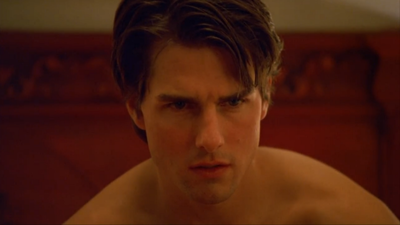
Tom Cruise’s Dr. Bill Harford in “Eyes Wide Shut” is the second kind of Kubrick hero. He’s is a bit of a dope but takes himself absolutely seriously, never looking inward, at least not as deeply as he should. An undercurrent of film noir runs through most if not all of Kubrick’s films. His first two features, the war fable “Fear and Desire” and the boxing potboiler “Killer’s Kiss,” were stylistically rooted in noir—“Fear and Desire,” like “Paths of Glory” and “Full Metal Jacket,” has terse, hardboiled narration, linking it to the most overtly noir-ish Kubrick film, his breakthrough “The Killing.” The film noir hero tends to be a smart, ambitious, horny guy who lets his horniness overwhelm his judgement. Dr. Bill is a cuckolded noir hero, cheated upon not in fact, but in his own imagination. And, in noir hero fashion, he gets drawn into a sexual/criminal conspiracy, this one involving the procurement of young women for  anonymous orgies with rich older men. He’s always one step behind the architects of the plan, whatever it is, and he’s never quite smart enough or observant enough to prove he saw what he saw. 

That’s Bill, a cinematic cousin of somebody like Fred MacMurray in “Double Indemnity” or William Hurt in “Body Heat”, but with blueballs, prowling city streets on on the knife-edge of Christmas, constantly being taunted and humiliated, his heterosexuality and masculinity, indeed his essential sexuality, questioned at every turn.

The doctor’s nighttime odyssey (like “2001,” this film is indebted to Homer) kicks off after he smokes pot with his gorgeous young wife Alice (Nicole Kidman) and she confesses a momentary craving for a sailor so powerful that she briefly considered throwing away her stable life just to have him. The revelation of the intensity of his wife’s sexual craving for soebody other than him (fear and desire indeed) knocks him loose from the moorings of his comfortable existence, and sends him careening around the city, where he encounters women who all seem to represent aspects of his wife, or his reductive view of her; they even have similar hair color, and if there are men in their lives (like Sidney Pollack’s Victor Ziegler, who calls Bill to deal with a young woman who overdosed on a speedball while in his company; or Millich (Rade Serbedjia), the pathologically controlling and jealous costume shop proprietor who accuses Bill of wanting to have sex with his teenage daughter (Leelee Sobieski). 

It still seems amazing that Cruise, among the most controlling of modern stars, gave himself to Kubrick so completely, letting himself be cast in such a sexually fumbling, baseline-schmucky part, almost like the sort of thing Matthew Broderick might’ve played for more obvious laughs (Kubrick originally wanted Steve Martin as Bill). Cruise built his star image playing handsome, fearless, cocky, ultra-heterosexual young men who mastered whatever skill or job they’d decided to practice, be it piloting fighter jets, driving race cars, playing pool, bartending, practicing law, representing pro athletes, or being a secret agent. Offscreen, the actor was long suspected of being closeted—a rumor amplified by his hyper-controlling relationships with a succession of public-facing spouses who read, from afar, less as wives than wife-symbols—and he sued media outlets that implied he was anything other than a 100% USDA-inspected slab of lady-loving, corn-fed American beefcake (thus the infamous 2006 “South Park” “Tom won’t come out of the closet” scene). 

So it was doubly startling for 1999 audiences to watch Cruise being swatted across the screen from one cringe-inducing psychosexual horror setpiece to the next, each enjoying its own version of a hearty pirate’s laugh at the idea of Cruise playing a butch straight man who dominates every room he’s in, and to witness his public humiliation by a pack of homophobic frat boys. That same year, Cruse got an Oscar nomination as Best Supporting Actor in “Magnolia,” playing a motivational speaker whose admonishes his audience of sexually insecure young men to “respect the cock, tame the cunt.”

Cruise is a smart actor with often-excellent taste in material and collaborators; it’s inconcievable that he and his then-wife Kidman would submit themselves to over a year’s worth of grueling, repetitive shoots on Kubrick’s meticulously recreated New York sets in London without understanding what they were in for, at least partially. But what’s really important from the standpoint of Cruise’s sensationally effective performance is that he never seems as if he knows that the joke is on Bill. This doesn’t seem like the performance of an actor who has decided not to seem self-aware (like, say, Daniel Day-Lewis in “The Last of the Mohicans,” playing a character that Entertainment Weekly’s Owen Gleiberman described as seeming completely free of 20th century neuroses) but rather a not-too-self-aware actor throwing himself into every scene as if bound and determined to somehow “win” them. This is surely a vestigial leftover of the way Cruise acts in most Tom Cruise movies, strutting and bobbing through scenes, getting into trouble, then smiling or talking or flying or running or acrobatting his way out. It’s a mode he can’t entirely turn off, but can only tamp down or allow to be subverted (which is what I think is happening in this movie, and in a few other against-the-grain Cruise performances). It’s as if Cruise travels the full narrative length of “Eyes Wide Shut” dream trail encrusted by scholarly and journalistic and critical footnotes that have accumulated on his filmography since “Risky Business.” He’s the leading man as Christmas tree, festooned with lights and baubles. 

What perfect casting/what a great performance/what’s the difference? Is there any? Maybe not. Sometimes great casting is what allows for a great performance. Oliver Stone pulled off something similar when he cast Cruise as Ron Kovic in “Born on the Fourth of July,” a part that Stone later said might’ve hurt the film at the American box office because nobody wanted to see the smirking flyboy from “Top Gun” castrated by a bullet, wheeling around with a catheter in his hand, cursing his mom and Richard Nixon. The star seeming not-entirely-in on—well, not the “joke,” exactly, but the vision of the film—made Kovic’s dawning self-awareness of his participation in macho right-wing propaganda all the more effective. He wanted to be like the guys on the recruiting poster, and now he couldn’t stand up and salute the lies anymore, and a lot of his friends were dead, along with untold numbers of Vietnamese. Al Pacino, who was cast in an aborted version “Born” a decade earlier, might not have been as effective as Cruise overall, because while Pacino is an altogether deeper actor, he’s so closely associated with men who have no illusions about how brutal and soul-draining American life and institutions can be. (Marvelous as his performance in “Serpico” is, it doesn’t start to take off until he’s in undercover cop mode, with that beard and long hair and beatnik/hippie energy. In the early scenes where he’s clean-shaven and idealistic, you just have to take Serpico’s innocence on faith, because Al Pacino would never be that naive.)

Kubrick, no slouch at casting for affect, was especially good at filling lead male roles with actors who seemed to grasp the general outline of what the director was up to without radiating profound appreciation of the philosophical and cultural nuances. Ryan O’Neal in “Barry Lyndon” somehow works despite, or because of, seeming a bit stiff and anachronistic—out of his element in a lot of ways. His anxiety-verging-on-panic at not knowing whether he’s doing a good enough job for Kubrick fits perfectly with the character’s persistent insecurity and imposter syndrome. So does the shoddy Irish accent. 

Decades later, Ben Affleck in “Gone Girl” pulled an “Eyes Wide Shut”—or maybe it’s more accurate to say that director David Fincher pulled it by casting him. “The baggage he comes with is most useful to this movie,” Fincher told Film Comment. “I was interested in him primarily because I needed someone who understood the stakes of the kind of public scrutiny that Nick is subjected to and the absurdity of trying to resist public opinion. Ben knows that, not conceptually, but by experience. When I first met with him, I said this is about a guy who gets his nuts in a vise in reel one and then the movie continues to tighten that vise for the next eight reels. And he was ready to play. It’s an easy thing for someone to say, ‘Yeah, yeah, I’d love to be a part of that,’ and then, on a daily basis, to ask: ‘Really? Do I have to be that foolish? Do I have to step in it up to my knees?’ Actors don’t like to be made the brunt of the joke. They go into acting to avoid that. Unlike comics, who are used to going face first into the ground.” 

Fincher subsequently poked fun at Affleck, in DVD narration and interview comments delivered in such a deadpan-vicious way that you couldn’t tell if Fincher was venting in the guise of a put-on or doing an elaborate comedic bit. Either way, the gist was that Affleck was convincing as an untrustworthy person because he was himself untrustworthy. “He has to do these things in the foreground where he takes out his phone and looks at it and he puts it away so his sister doesn’t see it,” Fincher said. “There are people who do that and it’s too pointed. But Ben is very very subtle, and there’s a kind of indirectness to the way he can do those things. Probably because he’s so duplicitous.” Thus does the inherent untrustworthiness of Ben Affleck as both actor and person (according to Fincher, whether he’s kidding or serious) become the framework for the entire performance’s believability. This is a guy whose performance as an innocent man is judged by the media and public and immediately found lacking, and the character proves to be so much dumber than his conniving, vengeful wife that when the final scene arrives, we laugh at how inevitable it was. A more subtle, likable, deep leading man might’ve have ruined everything. Fincher needed a meathead who was funny and had read a few books, and who seemed to have a sixth sense for how to hide a cell phone from his sister.

This is similar to the idea of Kubrick cuckolding Cruise with an anecdote and sending him all over New York in search of satisfaction and insight that never quite, er, comes (although there’s a hint of hope in that final scene). On top of that, Affleck is an actor who is effective within a narrow range but will never be thought of as a chameleonic or particularly delicate performer—somebody who can play the subtext without overwhelming the text, or who can seamlessly integrate the two so that you can’t tell where one ends and the other begins. 

That might be why Affleck disliked working with Terrence Malick, a highly improvisational filmmaker who deals in archetypes and symbols, and expects actors to devise a character while he’s devising the film that they’re in. Ryan Gosling and Brad Pitt can do that; Affleck really can’t. The difference between Affleck and somebody like Pitt (or DiCaprio) is the difference between an old-fashioned square-jawed leading man-type, like Rock Hudson or Gary Cooper or Alan Ladd, who tried to stick to the words and hit the marks and color within the lines, and somebody like James Dean or Marlon Brando or Dennis Hopper, who treated every page as potential raw material for a collage they hadn’t thought up yet. That’s why Dean and Hudson played off each other so beautifully in “Giant”—Dean with his tormented Method affectations and odd expressions and voices, and Hudson playing the guy he’d been told to play, while often seeming puzzled or horrified by whatever Dean was doing opposite him, as if he’d been placed in the same room with a badger or wild boar and told “Now the two of you sit down and have a nice lunch while we film it.” 

I like to think of Cruise in “Eyes Wide Shut” as Rock Hudson turned loose in a Stanley Kubrick neo-noir dream, and not just for the obvious reasons. He’s in there angrily and desperately trying to win something that cannot be won, explain things that can’t be explained, and regain dignity that was lost a long time ago and will never come back. He keeps flashing his doctor’s ID as if he’s a detective (another film noir staple) working a case, and people indulge him not because they truly regard the ID as authority but because Bill’s intensity is just so damned odd that they aren’t sure how else to react. It’s hilarious because Bill doesn’t know how ridiculous it all is, and how ridiculous he is. He’s a movie star who lacks the movie star’s prerogative. Only by surrendering to the flow and accepting defeat can he survive. Only his wife, an awesome force unlocked in one moment, can save him. 


Source link

Categories
TV & Movies

Servant Returns to Clean Up the Chaos of Season One


The first season of Apple TV+’s “Servant” was an underrated mindf*ck, featuring some of M. Night Shyamalan’s tightest and most intriguing storytelling ever. Confined almost entirely to a haunting, darkly lit Philadelphia brownstone, it was a fascinating season of television that balanced relatable human behavior with WTF plot twists around every corner. It also ended in a flurry of insane revelations that made viewers question what came before and what could possibly come next. Imagine having to clean up and continue a story after a Shyamalan-esque twist like those at the end of “The Sixth Sense” or “The Village” and you have some idea of where “Servant” is at the start of season two, which premieres on Apple TV+ on January 15th. While enough of the craft of the first season remains, the storytelling feels less confident in the seven episodes sent for press (of ten total). It’s almost as if the writers, led by creator Tony Basgallop, aren’t quite sure where to go next with their story, although I have to admit that this is an incredibly hard show to judge without seeing the last 90 minutes as it could all come together in a way I’m not expecting—that’s certainly what happened with season one.

The premise of “Servant” is pretty clever. Dorothy Turner (Lauren Ambrose) lost her 13-week-old son Jericho, and it led to what could be called a mental break wherein she takes care of a doll as if it’s her biological child. The doll was the only thing that could pull Dorothy from her catatonic grief, and so everyone around her has to play along as much as possible, including going as far as hiring a nanny named Leanne (Nell Tiger Free) to care for Jericho. Dorothy’s husband Sean (Toby Kebbell) and brother Julian (Rupert Grint) hope that she will come back to reality but then Jericho the doll suddenly becomes Jericho the breathing child. Did Leanne kidnap another infant? Did she really bring Jericho back to life? The action of season one dug into not only why Leanne was really there but some of the secrets of Dorothy and Sean’s past. And then it ended by revealing a connection between Leanne and Dorothy in that the girl was a part of a cult that mom reported on back when she was working. Leanne disappeared with Jericho at the end of season one, leaving everyone in the Turner house adrift and confused.

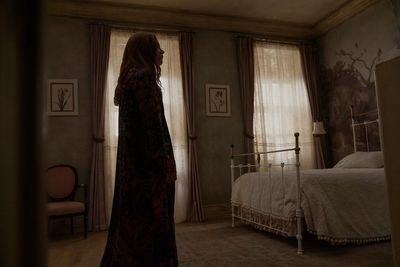
And that’s where season two opens. Dorothy is desperate to find Jericho, but it’s hard to search for a missing child that’s technically already dead. Sean and Julian struggle to figure out how to manage what happened at the end of season one, and the writing on “Servant” struggles to find momentum. Once again, the show creatively constricts itself to the Turner brownstone, showing glimpses of the outside world only through televised reports and things like FaceTime. A show that locks its characters into one place plays a little differently during the pandemic than the writers could have ever imagined, but that formal choice remains one of the its greatest strengths. Dorothy and Sean feel trapped in their own excess. They’re unbelievably wealthy but there’s a cold, imposing, dark nature to their house that amplifies the tension of “Servant.”

Sadly, the plotting gets a little slack for the first time. It seems like they’re building to major events in those final three episodes but too little happens in the 3.5 hours leading up to them. Without spoiling how, Leanne ends up back in the house, and there’s a “what do we do now” aesthetic to the storytelling that gets a little flat and repetitive. It’s a season in which the characters often act panicked, but it’s too content to meander in its oddity instead of pushing its characters forward. “Servant” circles themes without really sinking its teeth into them, too often feeling like its simply biding time.

There are still elements to admire in these seven episodes like the top-notch craft, including tense, sweaty direction from Julia Ducournau (“Raw”) on the first two episodes, the best of the seven sent for press. And the performances remain strong throughout, particularly how much Ambrose is willing to make Dorothy unlikable. She takes the grieving mom archetype and melds it with an upper-class narcissist in a fascinating way. Everyone is good to great here, but I wish they were servants of something that felt more narratively sound. Given the end of season one and Shyamalan’s sensibility, I expect the episodes I haven’t seen to blow everything up again and send these characters back into a tizzy for the already greenlit season three (Shyamalan has said he expects the story to last six seasons). Seven episodes into the second season, I still have no real answers to some of the questions I had over a year ago when the first season ended. And while that’s a little frustrating, I’m willing to keep playing the game until Shyamalan and Basgallop’s next unpredictable move. 

Seven episodes screened for review.


Source link

Categories
TV & Movies

Michael Apted: 1941-2021


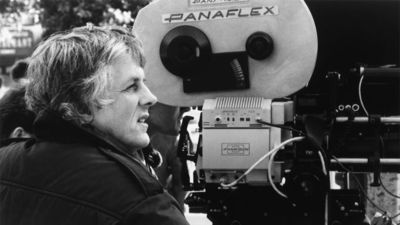
Michael Apted, the English filmmaker who died last week at 79, was thought of as a good fit for anything. Most of the time he was. That’s why he had such a long and varied career, encompassing everything from the long-running “Up” series of documentaries through the biographical dramas “Coal Miner’s Daughter” and “Gorillas in the Mist,” the comedies “Continental Divide” and “Critical Condition,” the fable-tinged stage adaptation “Nell,” the James Bond picture “The World is Not Enough,” the thrillers “Extreme Measures,” “Blink” and “Class Action,” and the fantasy franchise entry “The Chronicles of Narnia: The Voyage of the Dawn Treader.” 

He had an affinity for stories about women that’s rare among critically acclaimed straight auteurs today. “Coal Miner’s Daughter” won Sissy Spacek an Oscar as Best Actress; “Gorillas in the Mist” and “Nell” got nominations for Sigourney Weaver and Jodie Foster in that same category, and many of his other features centered women as well, notably the legal drama “Class Action” and the underappreciated “Blink” (starring Madeline Stowe, written by Apted’s future wife Dana Stevens). His filmography was a broad as that old school Hollywood craftsmen like George Stevens (“Shane,” “Giant”) and William Wyler (“The Best Years of Our Lives,” “The Heiress”). But it’s hard to imagine them moving between fiction and nonfiction as seamlessly and often as Apted did, much less keeping in touch with on-the-ground, in-the-moment documentary values even when directing Hollywood blockbusters. 

Revisiting Apted’s work for this appreciation drove home not just how versatile he was, but how consistent. That consistency was rooted in the idea that every movie is a documentary, if only of its own making. Apted could always be relied upon to capture a degree of physical and emotional realism in a project, no matter what it was about or what genre he happened to be working in. 

“Coal Miner’s Daughter,” a recent inductee into the Library of Congress’ registry of historically and artistically significant films, captures the life of country singer Loretta Lynn (Sissy Spacek) with the vividness of the great documentaries about labor struggles in rural America being released in the 1970s and ‘80s (notably Barbara Kopple’s “Harlan County, USA” and “American Dream”). There’s an awesome you-are-there feeling to the panoramic shots of the characters moving and speaking against misty green mountains in Kentucky and Virginia (with Lynn’s childhood home being replicated precisely in a Virginia warehouse), and a refreshing lack of condescension in the portrayals of poor Appalachians. 

“Gorillas in the Mist” starred Weaver as the primatologist and activist Diane Fossey, who was murdered in Rwanda. Much of the film was shot on location in Rwanda, putting real gorillas in the same frame with actors whenever possible. According to a New York Times piece about the making of the film, “…crew members hiked through mud slides, dense underbrush, bamboo thickets and clumps of wild nettle to search for and film the gorillas roaming the extinct volcanoes that form one of Africa’s most spectacular borders. Because of Rwandan government restrictions on the number of people who can visit the gorillas at a time, Miss Weaver was accompanied by only a five-member film crew.” 

The movie is filled with moments that blur the line between documentary and fiction, none more arresting than the scene where Weaver-as-Fossey is charged by a lumbering silverback and twists into the “submissive” position that she’d been taught by a tracker. That moment and others in the film are shot with the intent of capturing what’s happening, not worrying about whether it’s framed beautifully and flatters the star. You don’t see Weaver’s face in the wide shot of her turning away from the silverback, nor do you see it in an earlier shot of a trusting baby gorilla climbing on her shoulders to play. ”We had to choose the crew very carefully,” Apted told the Times. “We needed people with a great deal of strength. We didn’t want people who preferred the studio life. I didn’t want the movie to be Hollywood, sentimental, unreal and soft-centered.” 

You can see a similar philosophy at work in other Apted features. The behaviorist’s fascination that drove the “Up” series also fueled much of his work in fiction. He treated places as places, not as sets or backdrops. The scenes in “Blink” that show Stowe’s character, a once-blind fiddle player, living alone in a converted industrial building and traveling the city by herself at night capture the way women must stay attuned to every movement and sound, decoding them for signs of men on the hunt. “Continental Divide” puts across the realities of being a 1980s newspaper columnist (John Belushi) as well as a naturalist (Blair Brown’s bald eagle researcher), and gives equal visual weight to the concrete canyons of Chicago and the ancient ones in the Rocky Mountains. 

That most of these films have sentimental, contrived, or flat-out silly plots goes without saying. Apted’s sense of rootedness makes you believe the unbelievable, and inspires the actors to join in the illusion. And even at their most Hollywood-ish, Apted’s movies have secondary agendas that you can tell are probably the reason he said yes to the project. “Class Action” was sold as a father-daughter reconciliation movie and a high-powered acting showcase, starring Gene Hackman as a class action litigator who takes on powerful companies and institutions, and Mary Elizabeth Mastroantonio as his attorney daughter, who has gone over to the other side. Any guess as to whether the daughter comes around by the end? Scratch the surface, though, and you find a plot that’s essentially a populist retelling of the story of the Ford motor company learning that their Pinto cars had a faulty, sometimes explosive fuel tanks, and deciding not to pay for a redesign because it was more cost-effective to settle with survivors of people whose loved ones had been maimed or killed.

“Extreme Measures”—adapted from the same-named novel by screenwriter Tony Gilroy, future writer-director of “Michael Clayton”—is another Apted film that uses Hollywood packaging to get at real problems. It stars Hugh Grant as a New York emergency room doctor who discovers that homeless people are being used as experimental spinal treatment subjects against their will (Hackman returned to play the ethically challenged surgeon). The plot stirs in a lot of standard-issue thriller shenanigans, and peaks with the intrepid hero visiting an underground city of homeless people (based on mostly apocryphal tales of “mole people”); but along with Terry Gillliam’s 1991 film “The Fisher King,” “Extreme Measures” was one of but a handful of big-budget Hollywood movies to not just address the epidemic of American homelessness, but tie it into the country’s long history of using marginalized people as guinea pigs (see also the Tuskegee experiment). 

Apted’s knack for fitting his sensibility to any project did not always serve him well. The creative problems seemed to increase along with the budgets. His “Narnia” sequel has an assembly line feeling uncharacteristic of him. Ditto “The World is Not Enough,” which briefly threatens to become the most interesting of all of the Pierce Brosnan Bond films, possibly a tragic love story (and the only one with a female villain, Sophie Marceau’s Elektra Renard), then derails itself with some of the most weightless silliness this side of “Diamonds are Foreer” and “A View to a Kill.” 

But the longer Apted’s career went on, the more obviously he seemed to be enacting a “one for me, one for them” strategy. The “one for me” projects were often documentaries. He made two very good, general science documentaries, 1997’s “Inspirations” and 1999’s “Me & Isaac Newon” (released the same year as the Bond film). “Nell” was one of two features Apted released in 1994; the other was “Moving the Mountain,” an account of events leading up to the 1989 Tiannemen Square protests. Two of the interviews with student leaders were conducted in secret locations because the Chinese government still had them on “Most Wanted” lists. In 1992, Apted told two stories about Native Americans, one nonfiction, the other fiction. “Incident at Oglala,” about the 1975 murder of two FBI agents on the Pine Ridge Indian Reservation in South Dakota, came out a few months after “Thunderheart,” a fictionalized thriller version of the story of a part-Sioux FBI agent (Val Kilmer) investigating the killing of a tribal elder and wandering in to a “Chinatown”-like labyrinth of corruption and shady real estate dealings. 

The key to Apted’s longevity was his understanding of behavior, which came out of his early success as a documentary filmmaker. Apted began his career as a trainee at Granada Television in Manchester. It was there that he worked on “Seven Up!” (1964), a film by Canadian filmmaker Paul Compton profiling 14 English schoolchildren from a variety of backgrounds. Apted was involved in selecting the children and jumped at the chance to continue the series with new installments every seven years. Apted’s first entry as director was the immediate follow-up, “7 Plus Seven.” He would go on to direct every entry up until his death, a total of eight nonfiction features stretching through 2019’s “63 Up.” Blurring the line between cinema and television long before this became a fashionable topic of conversation among cinephiles, the series works equally well when viewed in discrete units and sequentially, from start to finish or in bundles of installments. 

Apted had a different, more critical idea of what the project should be about than its initiators did. And in the end, it was his vision that defined it. “It was Paul’s film,”  he told Radio Times in 2012, “but he was more interested in making a beautiful film about being seven, whereas I wanted to make a nasty piece of work about these kids who have it all, and these other kids who have nothing.” Apted’s political orientation provides a framework for observations that could have become shapeless in other hands: he was initially interested in the British version of a caste system, and how it replicates itself over time despite whatever individual triumphs and tragedies an individual might suffer. 

But over the decade, the series inevitably became a meditation on the relationship between story and storyteller, and on the pressures that regular folks unconnected to the film industry feel when they become famous, or sem-famous. As the series unfolds, some subjects drop out and reappear again, and retell the same stories with newfound insight (or honesty), with Apted’s archives always ready to juxtapose the distant past, the recent past and the present. And of course, the series is about time: what it does to our relationship to the movie image, what it does to our memories, what it does to us period. 

This site’s founder considered Apted’s “Up” documentaries to be among the greatest achievements in motion picture history, and put “28 Up” on his 1991 list of the greatest film of all time. It seems fitting to let Roger Ebert, one of Apted’s greatest champions, have the final word here. 

“No other film I have ever seen does a better job of illustrating the mysterious and haunting way in which the cinema bridges time,” he wrote. “The movies themselves play with time, condensing days or years into minutes or hours. Then going to old movies defies time, because we see and hear people who are now dead, sounding and looking exactly the same. Then the movies toy with our personal time, when we revisit them, by recreating for us precisely the same experience we had before. Then look what Michael Apted does with time in this documentary, which he began more than 30 years ago…The miracle of the film is that it shows us that the seeds of the man are indeed in the child. In a sense, the destinies of all of these people can be guessed in their eyes, the first time we see them. Some do better than we expect, some worse, one seems completely bewildered. But the secret and mystery of human personality is there from the first. This ongoing film is an experiment unlike anything else in film history.”


Source link

Categories
TV & Movies

If Not Now, When?


Four friends in high school seem inseparable. They stick together through a failed over-the-top prom invitation and in a moment of crisis when one of them goes into labor and becomes a single mom just before college. But over the years, life takes its course. Tyra (Meagan Good) managed to graduate at the top of her class and her daughter, Jillian (Lexi Underwood) is already 15 years old. However, a car accident has led Tyra to an opioid addiction, and her friends rally to get her help. But they too are facing their own struggles. Patrice (Tamara LaSeon Bass) works in healthcare and is dating a doctor, however she’s reluctant to continue with a relationship that sees kids in her future. Deidre (Meagan Holder), is a divorced dancer whose career has taken unexpected turns after she became a divorced mother. Now, her ex-husband wants a second chance. Suzanne (Mekia Cox) looks like she has it all, but in reality, she’s hiding the pain of a cheating husband, an affair of her own, and an upcoming baby she’s not sure she wants. 

All of this backstory sets the stage for an understated story about enduring friendships in “If Not Now, When?” The friends clash, they make up. They experience highs and lows in their romantic relationships. Unfortunately, the drama never comes to life. It’s on a strange middle ground where there’s no surprises even when there are life-changing revelations. There’s a lack of connection even when the friends have supposedly let bygones be bygones. Between its amateurish direction, pedestrian cinematography, and overly plotted script, the narrative and visuals don’t coalesce into a story that feels restorative, cathartic or even joyful. 

“If Not Now, When?” is the feature directorial debut of two of its stars, LeSeon Bass and Good. (LeSeon Bass also holds the writing credit.) And while their intention to bring a well-meaning story about Black women and friendships to the screen is admirable, there’s just something missing in the final result. The movie borrows a fair amount from “Waiting to Exhale,” which also follows four Black career women, their friendships and their romantic lives, as well as other films about a group of women who don’t always get along but love each other anyway. Central to each of these movies is that tension within strained friendships that come together by the end. The friendships in “If Not Now, When?” are so strained that even the reconciliations don’t feel all that much more different from when we first meet them on the outs. 

It’s strange too that Tyra, Good’s character, is essentially isolated from the others for long periods of time while in rehab. Her road to recovery has the look and feel of a made-for-TV movie about opioid addiction—it’s fairly surface level without getting into too much detail. It’s as if it made for a convenient source of conflict, enough to build out around without digging into it. You expect her to rejoin the group by the film’s end, but she misses the healing process the other three go through. It doesn’t feel like she’s back to being part of the group even when they’re celebrating together. 

For much of “If Not Now, When?”, I couldn’t find why it wasn’t working for me. It took a second watch before I made peace with the narrative’s convoluted structure. It was one of the film’s most emotional scenes, when Suzanne finally tells Deidre her problems, that revealed why the visual style was even more alienating. In this emotional moment, the first few shots of the women sitting down feature more of the room to their side than each other. Suzanne sits in front of a door with a large window that quite literally steals her spotlight. It creates an imbalance between the two as Deidre looks evenly lit, almost glowing in that moment. The camera finally closes in on their faces and expressions during their conversation, but then distractingly moves along a dolly track, which adds a lot more movement and distraction to a scene that needed to let the actors shine. I’m not sure if this was cinematographer Craig Dean Devine’s call or a misstep from the movie’s first-time directors, but there are many of these small distractions throughout the film that kept leading my attention away from the story. 

Although “If Not Now, When?” may not be the smoothest movie, its core cast—Good, LeSeon Bass, Holder and Cox—is fun to watch. Cox is excellent at playing prim and tightlipped until she reaches her breaking point. Her restraint as Suzanne in those scenes is matched by the fight-or-flight spirit of LeSeon Bass’ character, Patrice. She creates a tough exterior much like Suzanne and Tyra’s, all of whom as we learn, develop those shields to protect themselves from being too vulnerable. Holder’s Deirdre is the kindhearted one who holds them together. Their dynamics don’t always work out, but they are the highlight of the movie, which is fittingly more about these four women than everything else going on in their lives. 

Now available in theaters, on demand, and on digital.


Source link