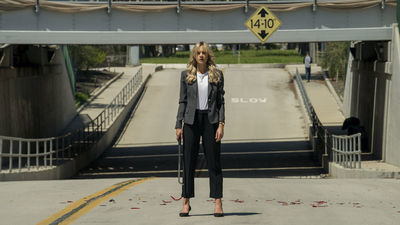
“The company of wolves is better than that of men.” So says a woman to her son in the effective prologue to “Hunted,” the latest original horror film to land on Shudder today. One of the best streaming services in the world, Shudder endeavors to elevate genre films that might otherwise get lost in the increasingly large shuffle of never-ending content. Highlights include “Blood Quantum,” “Z,” and “Anything for Jackson.” I can’t wait to see what they do in 2021, but “Hunted” is a misstep.
That early line is key to understanding the approach to survival horror taken here by director Vincent Paronnaud, in a much different gear than his Oscar-nominated co-directorial work on “Persepolis.” With echoes of vengeance films like “Revenge” or “I Spit on Your Grave,” “Hunted” is the relatively simple story of a woman forced to fight for her life after being kidnapped by a couple of sociopaths. Paronnaud and co-writer Léa Pernollet attempt to elevate their narrative by framing it all in the context of mythology and fables. The red outfit worn by the heroine here is not accidental, and there are wolves of both the animal and human nature.
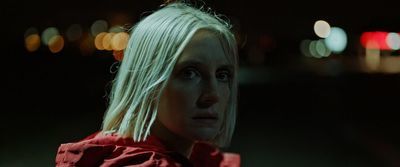
Eve (Lucie Debay), the only character in “Hunted” with a name, is working on a construction project in an unnamed country, but she seems like an outsider in early scenes. The work isn’t going well, and neither is a relationship. She decides to blow off steam by going to a bar, where she’s hit on by a true asshole within minutes. A man (Arieh Worthalter) rushes her to rescue and the two hit it off. They dance. They kiss. They go to the man’s car. And then things go very wrong. An accomplice (Ciaran O’Brien) gets in the front seat and begins driving. Eve is being kidnapped, and she’s in for the worst night of her life.
After a truly surreal car accident involving a kiss and a wild boar, Eve finds herself freed from her captors and fleeing through the woods. The bulk of “Hunted” consists of the increasingly terrified Eve trying to evade being captured again, but Paronnaud spends a truly unusual amount of time with his villains instead of his hero. “Hunted” falters because of this POV. Paronnaud seems enraptured by his sociopath as he watches recordings of his previous crimes and pokes his finger in the bloody wound of his partner in awfulness. Worthalter gives an unhinged, broad performance, which is fine, but it sometimes feels like it’s from a different movie than the one that Debay is in. She’s going for gritty survivalism—everyone else is doing a bad riff on Quentin Tarantino or Eli Roth. It creates a disconnect in the storytelling that pervades the whole piece, keeping it from finding a consistent tone. “Hunted” may look better than a lot of “hunting horror” movies—a genre often typified by cheap filmmaking since it doesn’t require much more than a cast, camera, and nearby woods—but it’s ultimately no smarter. And even its clever twists, like with the opening story and the Red Riding Hood allusions, start to feel like window dressing for a shallow piece of filmmaking.
“Hunted” kind of comes together in its final scenes as it unleashes Eve on her tormentor, providing that catharsis this genre typically reaches. And Debay is solid throughout, selling the believability of Eve’s nightmare in a way that the rest of the film often fights against. There’s a better version of “Hunted” that either leans more into its surreal flights of fancy or settles into gritty, tense realism. “Hunted” gets caught in the middle.
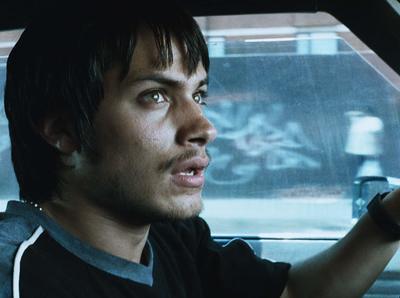
The feature debut of Alejandro G. Iñárritu was a stunner, a film that earned raves and tons of attention on the international arthouse scene. With a crosscutting structure that recalled the work of Quentin Tarantino but a voice that felt like none other in the world at that moment, it hit like a ton of bricks. It’s the story of three strangers whose lives are changed by how exactly their paths cross. What’s so wonderful about this Criterion release is the treasure trove of new material, including new insight from Adriana Barraza, Vanessa Bauche, Gael Garcia Bernal, Gustavo Santaolalla, and Iñárritu himself, who appears in a conversation with Pawel Pawlikowski (“Cold War“). Music videos, deleted scenes, rehearsal footage, and a new 4K restoration make this one of the most impressive Criterion releases in months.
Special Features New 4K digital restoration, supervised by director Alejandro G. Iñárritu and director of photography Rodrigo Prieto, with new 5.1 surround DTS-HD Master Audio Soundtrack on the Blu-ray, supervised by Iñárritu New conversation between Iñárritu and filmmaker Paweł Pawlikowski New conversation among Iñárritu and actors Adriana Barraza, Vanessa Bauche, and Gael García Bernal Perros, amores, accidentes, a new documentary on the making of the film featuring behind-the-scenes footage Rehearsal footage with reflections by Iñárritu New interview with composer Gustavo Santaolalla New video essay by film scholar Paul Julian Smith Deleted scenes, with optional commentary by Iñárritu and Prieto Music videos for songs from the film’s soundtrack by Control Machete, Café Tacvba, and Julieta Venegas Trailer New English subtitle translation PLUS: Essays by critic Fernanda Solórzano and author Juan Villoro
More David Cronenberg in the Criterion Collection is always a good thing. Completely unavailable on streaming as of this writing, the only way you can see one of the master’s most controversial films is to buy last month’s Criterion release of “Crash.” Adapting J.H. Ballard’s novel, Cronenberg tells the story of sadomasochistic car-crash fetishists, people who get turned on by twisted metal and near-death experiences. It won a Special Jury Prize at Cannes “for originality, for daring, and for audacity” and shocked audiences when it was released. It feels like a film growing a deeper following and appreciation with each passing year, making it a perfect fit for Criterion. Sadly, almost all of the supplemental material is archival, which is neat but it would have been nice to have something new to dissect other than a great essay by Jessica Kiang.
Special Features New 4K digital restoration supervised by cinematographer Peter Suschitzky, and 5.1 surround DTS-HD Master Audio soundtrack on the Blu-ray, both approved by director David Cronenberg Audio commentary from 1997 featuring Cronenberg Press conference from the 1996 Cannes Film Festival featuring Cronenberg; Suschitzky; author J. G. Ballard; producers Robert Lantos and Jeremy Thomas; and actors Rosanna Arquette, Holly Hunter, Elias Koteas, James Spader, and Deborah Kara Unger Q&A from 1996 with Cronenberg and Ballard at the National Film Theatre in London Behind-the-scenes footage and press interviews from 1996 Trailers English subtitles for the deaf and hard of hearing PLUS: An essay by film critic Jessica Kiang
“Dreamland”
Miles Joris-Peyrafitte directed this period piece about a young man (Finn Cole) who ends up finding a gorgeous criminal in his barn. The film is a bit too flat in terms of storytelling, too reliant on overcooked narration and languid compositions, but there’s something this movie has that every movie could use: Margot Robbie. As the Bonnie on the run in this story, she steals every single scene, reminding people what it’s like to watch a true movie star walk away with a project. She’s just on another level compared to what everyone else is doing. It’s like Cole or the rest of the cast are bad, but they can’t reach her level. Sadly, she’s not quite enough to save it, but I thought I’d include this for her most loyal fans.
What’s the future for movies like “Jungleland”? Max Winkler’s character study is the kind of film that feels increasingly rare in the world of theatrical releases. Even this one barely got out, waiting 14 months between its TIFF premiere and a VOD release. I hope people find it because it’s a smart, well-acted piece of filmmaking, starring Charlie Hunnam and Jack O'Connell as two brothers caught up in a bad deal after agreeing to transport a young woman (Jessica Barden) to Reno. Jonathan Majors fills out a very accomplished cast, all of whom really sink their teeth into these parts. As Sheila O’Malley said a couple months ago, “With a script by Theodore Bressman, David Branson Smith, and Winkler, and featuring three very strong central performances and eye-catching poetic visuals, ‘Jungleland’ is more of a mood-piece than anything else, and on that level it works beautifully. The mood is strange, sad, and hypnotic.” Sadly, this one is available DVD only for now, perhaps another sign that this kind of filmmaking is disappearing.
Bing Liu‘s Sundance darling became one of the biggest documentary stories of 2018 after its Park City premiere. A bidding war resulted, with Hulu landing the rights to an audience hit that would find such success that it landed an Oscar nomination for Best Documentary just over a year later (losing to “Free Solo“). Criterion has a strong documentary presence in its collection, but their non-fiction releases are typically older than this recent hit, which allowed the company to bring in the major players for fascinating new special features. Without spoiling anything, there are questions about the relationships in “Minding the Gap” that linger after it’s over, and Liu, Keire Johnson, Zack Mulligan, and the people who made the film (including the legendary Gordon Quinn of Kartemquin) address some of those here. There are also outtakes and a short film. This is a special movie and a great addition to the Criterion catalog.
Special Features New high-definition digital master, approved by director Bing Liu, with 5.1 surround DTS-HD Master Audio soundtrack on the Blu-ray New audio commentary featuring Liu and documentary subjects Keire Johnson and Zack Mulligan New follow-up conversation between Liu and documentary subject Nina Bowgren New programs featuring interviews with professional skateboarder Tony Hawk and with Liu, Minding the Gap executive producer Gordon Quinn, and producer Diane Quon Four outtake scenes with introductions by Liu Nước (2010), a short film by Liu about two Vietnamese immigrants growing up American Trailer New English subtitles for the deaf and hard of hearing PLUS: An essay by critic Jay Caspian Kang
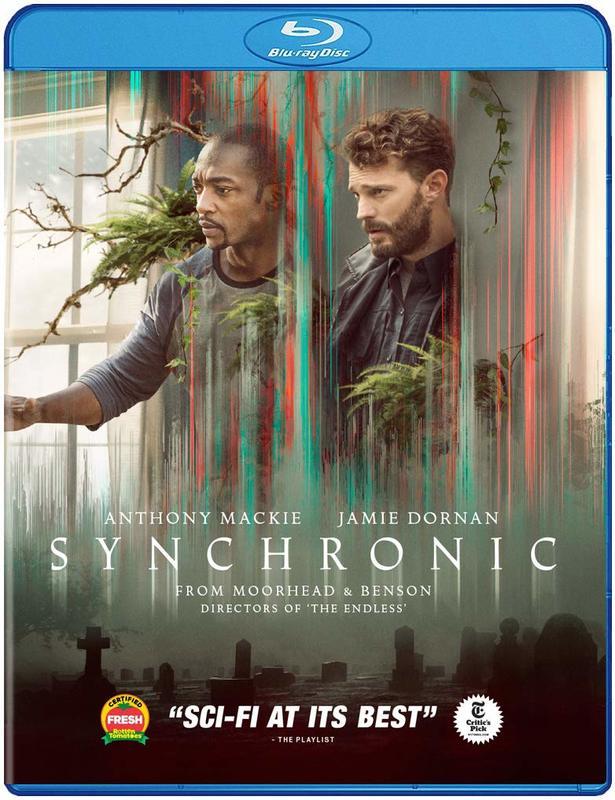
Justin Benson and Aaron Moorhead are two of the most important direcors in genre filmmaking. Their movies, including “Spring” and “The Endless,” don’t conform to typical audience expectations, and they have built a following by taking risks. The recent news that they would be collaborating with Marvel on their series for “Moon Knight,” starring Oscar Isaac, was great for Marvel and the clout the guys can carry into future projects, but I really hope they don’t leave behind their brand of personal filmmaking for good. Their latest is their biggest, the story of a drug that can basically produce time travel. It’s kind of like “Bringing Out the Dead” meets “Inception,” and you know you need to see that. It’s not quite as successful overall as their last two films, but it’s another ambitious, unique piece of storytelling that seems likely to find an audience at home. Marvel was lucky to get these guys.
Special Features Audio Commentary with Directors and Producer Making of – Fetaurette Previsualization – Featurette VFX Breakdown – Featurette Deleted Scene Alternate Ending Trailers
There are only four reviews by Roger Ebert of works of Luis Buñuel on our site and all four are perfect scores. And that’s just the tip of the iceberg when it comes to this influential and remarkable career. While it’s in no way comprehensive, one of Criterion’s most recent releases is a wonderful sampler of the legendary filmmaker, including his final three films: “The Discreet Charm of the Bourgeoisie,” “The Phantom of Liberty,” and “That Obscure Object of Desire.” It captures a filmmaker completely freed from restrictions, able to bring his crazy visions to life. And the special features are typically wonderful, including archival and new material.
Special Features New high-definition digital restorations of all three films, with uncompressed monaural soundtracks The Castaway of Providence Street, a 1971 homage to Luis Buñuel made by his longtime friends and fellow filmmakers Arturo Ripstein and Rafael Castanedo Speaking of Buñuel, a documentary from 2000 on Buñuel’s life and work Once Upon a Time: “The Discreet Charm of the Bourgeoisie,” a 2011 television program about the making of the film Interviews from 2000 with screenwriter Jean-Claude Carrière on The Phantom of Liberty and That Obscure Object of Desire Archival interviews on all three films featuring Carrière; actors Stéphane Audran, Muni, Michel Piccoli, and Fernando Rey; and other key collaborators Documentary from 1985 about producer Serge Silberman, who worked with Buñuel on five of his final seven films Analysis of The Phantom of Liberty from 2017 by film scholar Peter William Evans Lady Doubles, a 2017 documentary featuring actors Carole Bouquet and Ángela Molina, who share the role of Conchita in That Obscure Object of Desire Portrait of an Impatient Filmmaker, Luis Buñuel, a 2012 short documentary featuring director of photography Edmond Richard and assistant director Pierre Lary Excerpts from Jacques de Baroncelli’s 1929 silent film La femme et le pantin, an adaptation of Pierre Louÿs’s 1898 novel of the same name, on which That Obscure Object of Desire is also based Alternate English-dubbed soundtrack for That Obscure Object of Desire Trailers New English subtitle translations PLUS: Essays by critic Adrian Martin and novelist and critic Gary Indiana, along with interviews with Buñuel by critics José de la Colina and Tomás Pérez Turrent
“The Trip: Four-Course Meal”
In 2010, BBC broadcast a TV series called “The Trip,” which was then edited down to a feature film version that earned rave reviews and led to an unexpected franchise. Steve Coogan and Rob Brydon play loosely adapted versions of themselves in the story of two actors who go on a restaurant tour of Northern England, using the heavily improvised structure to examine celebrity, ego, friendship, and midlife crises. Three more films would follow: 2014’s “The Trip to Italy,” 2017’s “The Trip to Spain,” and 2020’s “The Trip to Greece,” which will reportedly be the final chapter in this story. Own all four films in one reasonably priced DVD collection and read our reviews (all 3-3.5 stars) at the links above.
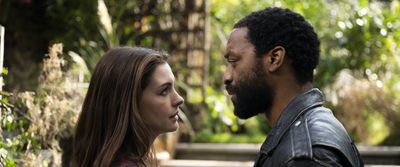
2020 might have been the year of permanently tempering expectations, but movies like “Locked Down,” at least from the onset, make it hard to not get your hopes up. Its stars, Anne Hathaway and Chiwetel Ejiofor, are the type of actors whose energy could hold your attention in the most mundane of scenarios, even quarantine. So to be trapped in a lockdown with them, to watch them embody relatable circumstances through feverish monologues, and then join them on a story that promises a department store heist sounds like the escapist dreams Hollywood is made of. And then factor in screenwriter Steven Knight, because if anyone could make these restrictions work, it would be the writer/director of the incredible “Locke,” in which Tom Hardy sat in a car seat and navigated the worst day of his life phone call after phone call.
But in spite of the available chemistry and charisma from Hathaway and Ejiofor, “Locked Down” proves to be a bewildering mess, in part because of choices made in how to tell a story that mixes two-hander drama with a heist. The creative limits aren’t even due to the pandemic, but from Knight and director Doug Liman who make this story more stagnant than it has to be.
“Locked Down” begins in cloudy, tense circumstances, expressing the bitter mix of introspection and grief that we now know to be part of quarantine. Linda (Hathaway) and Paxton (Ejiofor) are bound to break up once this hellish lockdown is over; two more weeks and the London-based couple will get off of each other’s nerves. Their relationship started with wild motorcycle rides years ago, and was put on an emotional downward slope when the well-read and aggressive Paxton was arrested for beating up someone in self-defense. Since then, their relationship has become a collection of spite conversations and sad, private actions. Paxton wants to sell the motorcycle, and Linda hasn’t even told her co-workers about the relationship. The lockdown has made them even more tense, especially as Linda deals with ugly work drama over Zoom calls, realizing how much her corporate job is a total soul-suck.
For the movie’s first two acts, Hathaway and Ejiofor both give manic performances that are befitting of the period. As Linda and Paxton clash, they basically volley wild monologues that detail their neuroses about their growing distaste for themselves and each other, indirectly showing how these estranged lovers would be perfect for one another if they could just see eye to eye once again. The acting is over the top, as if Liman is letting the pandemic inspire the blocking, having them pace around and end their anxious rants on a fever pitch. It can be a compelling however campy display, like when Hathaway vents at warp speed, with self-effacing murmurs in between, about a pre-COVID business trip where she had to face herself in the mirror and did not like what she saw. The monologues can be so stagey that you half expect the two to burst into song—to do something so equally high-energy—so you feel the sinking weight even more when the film reverts back to Zoom calls that drag out the already convoluted plot.
Ejiofor goes against his type of usually holding a kind of wisdom—it’s striking to see him so antsy, so disheveled, so willfully annoying. There’s a compelling smallness to him as well, especially in playing this character who blames his actions from ten years ago to damning who he is now, a subplot that Ejiofor can only do so much with. But he has bursts of freedom, running outside and reading poems by T.S. Eliot and D.H. Lawrence off his phone to his neighbors, his “fellow inmates.” Sometimes the film’s non-Zoom handheld cinematography simply beholds him as he does this, looking up at this quarantined madman as if the words were his own interior monologue.
Knight has to give his “Scenes from a Quarantine” script a third act, so a heist plot comes to fruition mixing their two jobs. She works for the company who oversees the diamond on display at Harrod’s, and he has found a gig as a driver hired to transport it, albeit with a new name because of his criminal past. Paxton and Linda remark about this overlap, saying it’s like an intervention of God, fate, chance, etc. But really it’s just gibberish plotting, leading to one of the more weaker heists in movie history, and not in disarming, sly fashion. You wish that Knight and Liman had tried harder with everything, or at least with the jokes, like a quagmire that arises when Paxton’s new name is revealed to be “Edgar Allen Poe.” Even calling it a heist makes it sound more thrilling than it is, and to even share the scheme would be to take away what few thrills “Locked Down” has. It’s a real test of what you want from your heists, and the people behind them.
Knight takes the opportunity of a lockdown heist to charm with some subversiveness, and it hardly works. Usually when there’s a heist, it comes with blood-pumping anxiety of getting caught, a thrill directly eschewed here with a shrug. And usually a heist is more about craftiness, from the thieves and even more cunning storytellers guiding them, but this is more about a stroll through a massive department store. The one interesting subversion is about chemistry—plotting it as one last intimate act between separating partners is a different approach, basing the tension between two thieves not in a “Thomas Crown Affair”-like lust, but a degree of disgust that could just maybe revert them back to the thrills that originally bonded them. Credit to Hathaway’s performance in particular, she constantly challenges our certainty about what she wants in the end, while keeping on Linda’s emotional armor.
The heist becomes like an extension of the movie’s cynical allotment for entertainment—that the movie for some reason has to be almost two hours, so here’s some character-padding over the course of some Zoom sessions, with brief cameos from Ben Stiller and Mindy Kaling as Linda’s co-workers to make you think this is more of a party than the actions reveal it to be. “Locked Down” in turn exemplifies this new era of Zoom-based acting can be a raw deal between actors and audience—we get to see faces that we like, talents who make us laugh, and they just have to Zoom in with characters who feel like mere impressions. Like how the growing business of Cameos works, the actors get paid for popping in with their personas, and we get the simple novelty of getting to feel like we’re sharing screen-time with Ben Stiller (“Ooh, maybe that’s his real living room!”). Even Ben Kingsley appears as the man who helps get Paxton his new name, and the funniest detail might be how he always holds his device so that you only see half of his bald head.
Take out the film’s star presence, brief and not so brief, and you barely have a worthwhile movie, and one that seems like it’s already outdated. It has hallmarks that are major spring 2020 energy: jokes about making bread, the beginnings of mask-wearing, the dread of learning that you’re in lockdown for another blob of time. “Locked Down” is a wannabe pioneer of COVID-era filmmaking, but it feels old hat compared to other movies that have already come out and used Zoom performances and select outdoor scenes. It’s like a time capsule that’s been opened too early, the movie’s simple references to real anxieties not providing any comfort but an easy recognition.
“Locked Down” proves to have a warped idea of escapism, its easygoing approach undermining all of the good things going for it. Under such restrictions, the film is certainly of the lockdown mentality of making do with what is physically available. But when sharing the screen with the promise from such grandiose talent, the little things we are meant to savor feel especially small.
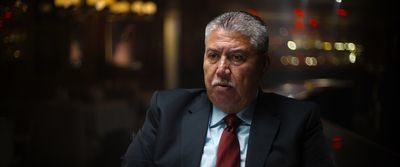
The Night Stalker is one of the most terrifying serial killers in American history. Most of the time, these monsters follow a pattern that can make them relatively predictable, but Richard Ramirez, who would become dubbed the Night Stalker in the press, was a tornado of random violence. Murders, assaults, rapes, kidnappings—he terrorized the West Coast in 1984 and 1985, and was ultimately convicted of 13 counts of murder, 5 counts of attempted murder, 11 counts of sexual assault, and 14 counts of burglary, although those are probably only a fraction of his actual crimes. His rampage became known around the world but the new Netflix series “Night Stalker: The Hunt for a Serial Killer” reframes the story of Richard Ramirez from the POV of the people most impacted by his crimes, including victims, reporters, and, most of all, the cops who caught him. Recentering an awful story from the perpetrator to the victims and heroes is undeniably valuable, but the production here misses a bit more often than true crime fans would hope. Often feeling tabloid-esque in its craft and failing to dig into some of the bigger issues here like how law enforcement communicates (or doesn’t), “Night Stalker” is an interesting true crime series that still feels a little disappointing when compared to other major event series like it in the last few years.
“Night Stalker” starts with a montage that sets the tone for Los Angeles in the 1980s, painting it as one of the most vibrant and growing communities in the world, but noting that it also had a growing dark side that wasn’t getting the same kind of press. The star of the docuseries is Detective Gil Carrillo, who was basically an unexperienced kid when he led the investigation into the Night Stalker crimes with the legendary Frank Salerno, also an eloquent interview here. The best elements of “Night Stalker” humanize both Carrillo and Salerno, two men who focused every element of their intellect and energy on this case, so much so that Carrillo’s family had to go into hiding for their own safety. These men couldn’t sleep until the Night Stalker was caught, and how they dissected patterns, evidence, and ultimately got to Ramirez makes for riveting television.
It’s everywhere else that “Night Stalker” comes up a little short. The shots of dripping blood and stabbing knives that lead into interview segments with survivors seem exploitative more than tone-setting or illuminating. Yes, it’s important to not soften the hideousness of Ramirez’s crimes, and “Night Stalker” absolutely details his depravity in a way we haven’t really seen before, but it’s another one of those series that’s too overly reliant on clichéd “true crime evil” stock footage like shiny knives and ominous shots of windows and backyards. It doesn’t add to the human stories in “Night Stalker” to frame them like nightmares seen on dozens of other shows on Investigation Discovery or “Dateline NBC.”
And yet the real people at the center of “Night Stalker” push through the weaknesses of the production to make an impact. Survivors tell stories that will haunt your nightmares. Reporters speak interestingly about chasing the case, and there’s a whole documentary to be made about how journalism impacts major serial killer investigations in terms of released information and what’s held back in the name of justice. But it’s Carrillo and Salerno who are the beating heart of this series, one that, despite its flaws, successfully takes a story of evil from Los Angeles in the mid-‘80s and reframes it as a story of undeniably good men.
I sit staring at my laptop, and let my eyes go out of focus. I have just received a message from a dear friend. By message, I mean an apology about never believing that I was raped. I read phrases like “I can’t believe I did this to you” and “I should have listened” and “I shouldn’t have taken his side,” all focused on how they felt. I’m put into the position of needing to comfort them, falsely letting them know all is forgiven. My heart stops, my vision blurs. I lose sensation in my fingers. I don’t know what to say. So all I do is cry.
This is just one of the memories that came flooding back to me as I watched Emerald Fennell’s directorial debut, “Promising Young Woman.” The movie transported me to some of the worst moments of my life when I tried to pick up the pieces after my abuser, and ex-boyfriend, turned my friends against me as I accused him of rape. I saw myself in a victim named Nina, despite the fact that she’s never shown in the film. And in Cassie, Nina’s friend and the film’s main character, I saw my friend who so desperately needed my forgiveness. “Promising Young Woman” left this sexual assault survivor feeling empty and hopeless, as if I would never be whole again.
Much of the film speaks truth to what it means to be a survivor of sexual assault and the lack of punishment for abusers; Fennell does not hold back in her critique of rape culture and how it permeates every inch of society. Yet “Promising Young Woman” hits two major stumbling blocks in its desire to interrogate justice and create an empowering narrative: its portrayal of Cassie and Nina’s relationship, and its jaw-dropping ending.
Carey Mulligan plays Cassie, a woman who spends her days slinging coffee and her nights pretending to be drunk in order to lure men into taking advantage of her and then showing them their true colors. Cassie is on a mission to avenge her best friend, Nina, who was raped and subsequently committed suicide seven years ago. A man ruined Nina’s life and wasn’t punished because he was deemed a promising young man. Since those in power wouldn’t deliver justice, Cassie takes it upon herself to punish those responsible.
“Promising Young Woman” is steeped in a neon pink high-femme aesthetic not unlike what’s seen in Coralie Fargeat’s rape-revenge film “Revenge” (2017). But unlike Fargeat, Fennell has this imagery persist throughout, painting a bright picture of a woman scorned who weaponizes her femininity instead of shedding it. The pigtails and pink that make women seem vulnerable is worn like armor, a reminder that nothing here is what it seems.
Every move Cassie makes is in memory of Nina. Every punishment is enacted because of Nina. Everything is about Nina. But Nina’s voice is never heard. She’s a ghost, silently floating at the periphery, talked about, not to. Yes, this is a film about Cassie’s grieving process, but that comes at the price of a sexual assault survivor being stripped of her personhood. There is a statement to be made about how that was already done by the entire patriarchal system; no one remembers her name, a man was prioritized over her well-being, the list goes on. But without any further introspection from the film about that idea, the construction of Nina becomes flimsy. She becomes an idea that Cassie has based her entire identity around rather than a full human being.
Even Nina’s mother (Molly Shannon) tells Cassie to move on “for all of us,” which can be interpreted for both the living and the dead. While Cassie’s grief shouldn’t be dismissed, it should be examined as something harmful to the sexual assault victim herself. “Promising Young Woman” doesn’t grapple with the ramifications of Cassie deeming herself the avenging angel without Nina’s explicit consent, and in fact doesn’t even consider the concept of consent outside of the world of sex. With Nina disappearing into the narrative, Cassie centers Nina’s trauma on herself and how she has dealt with not only Nina’s death, but her rape. In turn, this is a violation of their friendship as Cassie claims to be acting for Nina when she is really acting for herself. Nina has no say in if this is what she wants and her agency is again stripped away. It is by no means as egregious as rape, but still deserves to be discussed, especially as “Promising Young Woman” works to address the slippery slope of revenge.
“M.F.A.”
A film that does question what it means to declare oneself an avenging angel is Natalia Leite’s 2017 film “M.F.A.” After Leite’s protagonist Noelle (Francesca Eastwood) kills her rapist, she decides to kill her best friend Skye’s rapist as well, similar to Cassie assuming responsibility for revenge against Nina’s rapist. Not because Skye (writer Leah McKendrick) asked, but because Noelle simply assumes that’s what Skye would want, again like Cassie. But after his death, Noelle realizes such an assumption has done more harm than good. Skye is now being questioned about his death which is triggering her memories of hopelessness and fear. This flood of memory pushes Skye to suicide, with Noelle then discovering her body. In that moment, Noelle faces the consequences of assuming justice means the same thing for every rape survivor; not every survivor wants to kill their rapist.
There is a very clear and direct recognition here of how Noelle’s actions impact other survivors. Yet in “Promising Young Woman,” while Cassie does suffer consequences for her actions, there is no dialogue about the specific consequences of assuming what Nina wants. Leite grapples with proclaiming oneself an avenging angel and what it means to take someone else’s revenge into your own hands, but Fennell skirts over such issues to make Cassie seem like Nina’s hero.
Midway through “Promising Young Woman,” Cassie begins to move on. She realizes how she has let this tragedy consume her and that she needs to move on with her life. But, just as she’s starting over, trauma comes back to consume her when she learns about a bachelor party being thrown for Al (Chris Lowell), Nina’s rapist. Cassie’s plan: dress up as a sexy nurse, infiltrate the party, and enact justice on the source of her and Nina’s pain. This dangerous act leads to her death at the hands of Al. Her body is set ablaze and Cassie is reduced to nothing but ash. There is no moment of catharsis or empowerment. It is just a bleak reminder that even the ultimate self-sacrifice does not guarantee justice.
This ending, which has become the focus of conversation around “Promising Young Woman,” left a nasty taste in my mouth that too closely reminds me of the hopelessness I deal with everyday in the wake of my trauma. Cassie’s death is a punch to the gut that says there is no hope for survivors. This plot point does highlight the bleak and disturbing reality in which survivors are mocked and abusers continue to live normal lives with no consequences. But it’s Cassie’s last words that skew this reality and fail to candy coat tragedy into something empowering.
In anticipation of her own death, Cassie schedules several texts to be sent to her ex-boyfriend, Ryan (Bo Burnham), explaining the situation and who is responsible for her death. In line with the film’s cutesy and high-femme aesthetic, she ends her final words with a winky face. Those two punctuation marks try to make her murder a moment of autonomy. Yes, she was brutally murdered, but she anticipated it so therefore she was in control, right? However: even if she was empowered in sending that text, she’s still dead. Two women had to die for a man just to get arrested. It hits too close to home and Fennell tries too hard to make it funny for it to mean anything.
“Ms. 45”
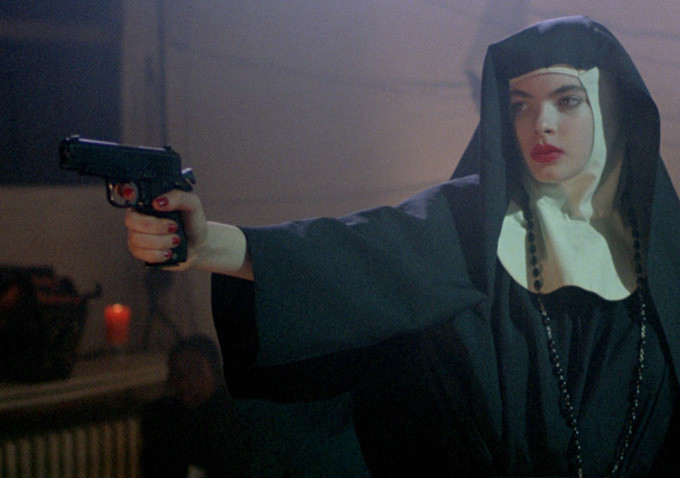
Rape-revenge films are known for their moments of catharsis, releases of violent energy that feel emotional exorcisms (as seen in films such as “I Spit On Your Grave” [1978], “Ms. 45” [1981], and “Holiday” [2018] as well as the aforementioned “Revenge” and “MFA.”) Their climactic moments involve screaming, bloody messes, and the desire to slump over in relief. The woman achieves vengeance, and she will live to see another day. But “Promising Young Woman” doesn’t provide that catharsis, even if Cassie’s last words seem to connote some sort of release. Instead, the woman is murdered at the hands of men and all of the frustration that has been building since the film’s beginning just sits in the viewer’s chest like an agonizing gas bubble.
In subverting that need for catharsis, Fennell does express how for those who experience sexual assault outside of the cinematic world, there’s no fantasy or escape. But with that subversion Fennell tells a very different story than intended. Fennell undermines any semblance of empowerment she built up for Cassie by brutally murdering her. All the film does is remind the audience that women’s trauma is nothing and that trying to heal from trauma can only end with death and a winky face.
I don’t want to smile and cheer for Cassie. I want to lay on the floor and cry as I remember that I mean nothing in the eyes of my abuser and his friends. I am as insignificant as Cassie’s ashes blowing in the wind. The feeling that there is no hope for a new beginning, no way for me to move on from my trauma. All that lies ahead is suffering.
But I don’t want to live a life like that. I want to flaunt my success in the face of my rapist and live my life to the fullest. I want to feel as if I can accomplish that somehow.
A tale about a woman fighting for justice after her best friend’s assault sounds like the middle finger to the patriarchy that audiences want and crave. But in execution, Fennell only undercuts her own desired message of empowerment both through Cassie’s death and her friendship with Nina. And while she spits quite a bit of truth about rape culture, Fennell fails to interrogate the deeper issues of what it means to portray a woman taking revenge for a sexual assault survivor and in turn what it means to have her brutally murdered. In the context of “Promising Young Woman,” Cassie’s death is a hollow exhibit, a moment played primarily for shock value. The message feels like one big shrug, displaying that searching for empowerment is useless, the system is in fact broken, and there’s not much to do about it. There is no glimmer of hope or meditation on consequences for your actions. It is merely a tragedy punctuated with two keystrokes on a glowing screen.
Sometimes a film’s trajectory from inception to viewers can impact expectations. Let’s just say that the list of worthwhile movies that sat on the shelf for years and were the dumped into theaters with almost no promotion and no critics screenings is incredibly short. So while it’s nice to say that we approach all films with the same blank slate of critical thought, I have to admit that I wasn’t expecting much from “The Empty Man,” now finally available on VOD after so much struggle to get here. While it’s clear as to what scared studio heads about this adaptation of the graphic novel of the same name, those same issues are almost certain to build a cult following around this sometimes striking and memorable studio oddity. Advertised, however slightly, as a traditional horror film, this is a truly surreal and strange piece of work, anchored by some top-notch craft elements, but weakened a bit by a bloated running time and a conclusion that likely left the few people who saw it in theaters more annoyed than thrilled (hence the startling D+ on CinemaScore). “The Empty Man” draws comparisons to junky studio fare like “The Bye Bye Man” and “Slender Man” but this is a far more ambitious and accomplished piece of work than its reputation.
David Prior’s film sets itself apart from the typically rushed Hollywood genre flick by allowing itself a 22-minute prologue that’s remarkably effective (even if it does add to the bloated 137 minutes total). Four friends are hiking in Bhutan in 1995 when one of them hears a sound in the distance that only he can hear. He wanders off, only to fall into a crevice. A friend hurriedly rappels down to find the young man seated and staring at a terrifying skeleton. He gives him one warning that’s not heeded—“If you touch me, you’ll die”—before he goes catatonic. His three buddies take him back to a nearby cabin, and then things get really weird. The prologue to “The Empty Man” is an effective short film on its own, arguably more so than the rest of the film, and it sets the stage nicely in terms of tone even if it’s indulgent for a movie that’s already pretty long.
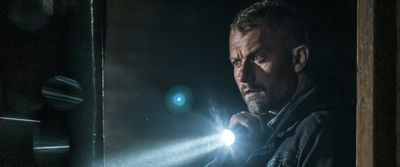
Cut to the meat of the story in Missouri in 2018. Enter James Lasombra (James Badge Dale), who is celebrating his birthday alone. Flashes of memory and conversation detail the trauma that James now lives with after the loss of his wife and child in a car accident. His only friend seems to be a neighbor named Nora (Marin Ireland), who comes to James when her daughter Amanda (Sasha Frolova) goes missing. The investigation seems half-hearted because Amanda is over 18 and can do what she wants, but James can tell there’s something more to it, and not just because there’s a message in blood that says “The Empty Man made me do it.”
James finds a friend of Amanda’s named Davara (Samantha Logan), who tells him that their group tried to summon The Empty Man recently. The story goes that if you blow into an empty bottle on an empty bridge, the Empty Man will come to you. The first night, you’ll hear him. The second night, you’ll see him. The third night, you’ll feel him. Of course, the legend of The Empty Man owes a great deal to other stories like Bloody Mary, Candyman, and Slender Man, but Prior’s film quickly moves on from a traditional boogeyman story to become something much stranger as James discovers a cult of people may be involved in all of this (including a leader played by Stephen Root). And then he learns that he really has no idea what’s going on as “The Empty Man” avoids a traditional jump scare structure by getting more and more surreal, eventually tying back into that prologue in an unexpected way, and reaching a crazy conclusion that I’m not sure makes a lick of sense but give me a movie that goes off the rails more than one that neatly wraps up in a predictable way every time.
If it sounds like a lot of movie, even for 137 minutes, that’s because it is. While it has felt like a lot of mini-series lately would have worked better as feature films, “The Empty Man” is the rare movie adaptation that feels like it should have been a Netflix Original Series. Imagine the effective prologue as an entire first episode. And an episodic structure would allow some of the film’s many themes to build in a manner that the rushed final third of this film just doesn’t allow. At a certain point, “The Empty Man” loses too much of its atmosphere and dread because it has to barrel to a conclusion. Yes, it’s long in a counterproductive way because maintaining a horror tone for 137 minutes is almost impossible, but it’s also too short for this story. It becomes cluttered in the final third as revelations pile up and detract from the overall tone of impending doom.
And yet there’s more than enough to like for genre fans. Cinematographer Anastas N. Michos uses space and light well, somehow making the bright snow of the prologue just as imposing as the dark shadows of the final act. Prior avoids jump scares in favor of atmosphere and feels like a very promising director. He’s got the skills in terms of composition and structure, even if his dialogue is sometimes a little thin. He also works well with actors, as this is the umpteenth reminder that James Badge Dale should work more. He’s an effective everyman who adds unexpected depth every time out.
Most often, studios bury projects like “The Empty Man” because they’re legitimately horrible and they’re trying to figure out exactly how to write off their investment in a way that doesn’t embarrass them too badly. However, every once in a while, a studio buries a project because they don’t get it. How do you sell a film as surreal and unsettling as “The Empty Man”? You don’t even try. If you’re lucky, the audience finds it on their own. Will that happen with “The Empty Man”? It’s too soon to tell how people will respond, but I suspect horror fans will be surprised by a movie experience far fuller than I was expecting.