Categories
TV & Movies

Some Kind of Heaven


Robert Browning promised that old age would be “the last of life for which the first is made.” But in “Some Kind of Heaven,” a documentary about a retirement community with a population the size of New Haven, we see that for better and worse and despite the best efforts of all involved, the last of life is filled with many of the same uncertainties, conflicts, loneliness, and fears of all the other ages. 

Sometimes referred to as “God’s waiting room,” The Villages in Florida is designed to create a problem-free world for financially comfortable over-55 residents who want to live in a gentle fantasy of perpetual fun and companionship. The over 3,000 group activities include belly dancing (to Dean Martin singing “Let it Snow,” not the obvious choice for more than one reason), a marching band, water ballet, Parrothead meetings (for fans of Jimmy Buffett and margaritas), and the Golf Cart Precision Drill Team. There seems to be a group made up exclusively of women named Elaine. Over 20,000 70- and 80-something singles go clubbing every night. “Blurred Lines” takes on a second meaning when the dancing couples wear bifocals.  

Even the “news” comes from a Villages-only television station and newspaper. A front-page story might be about a resident’s new red sports car. “I don’t see slums. I don’t see death and destruction,” a resident says with relief. Like a perpetual luxury cruise ship or a residential all-inclusive resort, The Villages have everything the community could ever want or need within its gates. Indeed, everything is designed to make sure they never want or need to leave. “Everything here is just so positive I’m at a loss for words,” one resident says cheerfully. Like the lotus eaters who forget everything but the pleasures of the present moment described in Tennyson’s poem, it is “a land in which it seemed always afternoon.” Everything is designed to keep the residents free from worry. Even a sales pitch about pre-paid funerals glosses over the icky part—death—to focus on the relief from having to worry about rising costs. 

One of the most intriguing revelations in the film comes from the son of the community’s founder. Like Disneyland’s iconic Main Street, the look of The Villages was specifically created to inspire a comforting sense of nostalgia, created for aging baby boomers to represent an idealized past. It was so idealized that early visitors insisted on knowing “the story.” They did not mean the real story of how the idea for The Villages was envisioned. They wanted a pretend story, a kind of bedtime story. And so, the buildings in the town center have mythic and completely imaginary backstories. We see a close-up of an artistic fake crack in the fake adobe facade of one storefront.

There are a dozen different movies you could make about The Villages. The recent feature films “Poms” and “Just Getting Started” have used a setting like it for dramedies starring aging Oscar winners, and the horror movie “Vivarium” has a young couple in a similarly idyllic-seeming housing development. I would like to see a documentary that focuses on the staff that keeps everything looking so pristine and seamless. Or one based on the New York Times articles referring to The Villages as a “nation-state” and analyzing the shift away from the residents’ overwhelming support of Donald Trump’s candidacy in 2016 toward Biden in 2020. Or a look at the kind of self-selection that characterizes the people who want to live in a place like this, all of whom appear to be white, and whether freedom from everyday worries makes for a happier life. This film, though, made in partnership with the New York Times and executive produced by Darren Aronofsky, and the first full-length documentary by writer/director (and Florida native) Lance Oppenheim, is more interested in a few of the individuals than in the larger story.

That includes Reggie, who has decided to spend his final years a bit buzzed but whose lack of filters and communion with the spirits may be the result of a series of small strokes in addition to the weed and cocaine. A dapper 81-year-old lives in a van and sneaks in to The Villages pools to try to meet a rich woman willing to take him in. A recent widow makes her first tentative efforts at a new romance with a friendly golf cart salesman known for his potent margaritas at the Parrothead gatherings. The film can get fractured and lose momentum, but the way it cuts back and forth between her description of their conversation and the conversation itself is charming. 

It is also a reminder that even in the paradise of The Villages, starting a new relationship can be scary and painful. As can being alone, even in the world of fake cracked adobe and senior citizen water ballet.

Now playing in theaters and available on demand.


Source link

Categories
TV & Movies

The Marksman


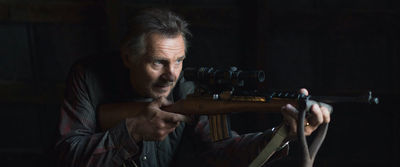
It’s time for your annual Liam Neesoning: that cinematic tradition in which the seasoned star plays a grizzled character with a particular set of skills, which come in handy to dispatch bad guys and rescue good ones. But this year’s entry in the subgenre, “The Marksman,” is particularly mediocre.

There’s not much to the character Neeson plays, or anyone else in the film, for that matter. The story is thin, the suspense is wan, and the action sequences are uninspired. Director Robert Lorenz seems to be aiming for the kind of cranky-old-man-on-a-mission movies Clint Eastwood has directed and stars in of late—which makes sense, given that Lorenz has produced several Eastwood films over the past two decades including “Million Dollar Baby” and “Gran Torino” and directed him in “Trouble With the Curve.” But while the sheen of such movies exists here—perhaps too much, given the subject matter—the substance is sorely missing. And despite his ever-formidable presence, Neeson seems to be going through the motions, even as he’s kicking ass.

Neeson stars as rancher Jim Hanson, a Marine and decorated Vietnam War veteran living a quiet life in southern Arizona along the Mexico border. It’s been a year since his wife died of cancer, and he spends his days with his trusty dog, Jackson, patrolling the property he’s in danger of losing to the bank. At the film’s start, we see him driving along dusty roads in his pickup with his pooch riding shotgun as the setting sun bathes the desert landscape in a warm glow. An American flag waves in the foreground as he approaches his modest house. Cinematographer Mark Patten shoots this patriotic imagery as if it were a commercial for Chevy trucks—all that’s missing is Bob Seger singing “Like a Rock.”

But Jim’s peace is shattered when a mother and son cross into the United States from Mexico through a section of fence that borders his land. They’re on the run from vicious cartel members, and when the mom is shot, Jim agrees to her dying wish that he take care of her tween boy, Miguel (Jacob Perez). Interestingly, Jim takes no political stance on whether they should have entered the country in this manner; ever the pragmatist, he’s more concerned about the prospect of dealing with dead bodies on his property when immigrants succumb to this arduous trek.

The kid is understandably shaken into stunned silence, but a Chicago address scribbled on a strip of paper dictates where Jim must take him to reunite him with his family. Somehow, Jim still speaks no Spanish after years of living along the Mexican border—literally, the extent of his vocabulary is “familia” and “comida”—which seems both unlikely and irresponsible. Instead, he talks to the boy in frustrated, exaggerated English and reluctantly agrees to this journey, thinking that the backpack full of cash the mother gave him could help him pay off his debts.

In contrast with the “Taken” films, this time he’s the one doing the taking, albeit for a good cause. The bulk of “The Marksman” finds Jim, Miguel, and Jackson making their way from Arizona to Illinois, the cartel villains on their tail, led by an especially over-the-top Juan Pablo Raba. Then again, all these characters are flat stereotypes of violent, Mexican thugs; the script from Lorenz, Chris Charles, and Danny Kravitz isn’t interested in exploring them any further. Even Miguel, who’s on screen nearly the entire time, isn’t developed beyond a few simple traits including sweetness, fear and a love of Pop Tarts. (He is thoughtful enough, however, to take Jackson for an early-morning walk while Jim is still sleeping off the whiskey from the night before. But be warned: A later scene involving the dog is the most stressful in the whole movie, and the most unnecessary, given that we’re already fully aware of how dangerous the pursuers are.)  

There aren’t many surprises on this journey, and the fact that the old-school Jim proudly carries no cell phone allows for the few hiccups that do occur along the way. (Somehow he manages to pull into a small town in the Texas panhandle and find the gun store on Main Street without the help of Yelp.) Katheryn Winnick has a barely-there supporting role as his stepdaughter, a border patrol agent who shows up every once in a while to track down his whereabouts and try to talk him into turning himself in to authorities. As for the title, Jim doesn’t really get to use his sharpshooting skills until nearly the end, right around the time his gruff demeanor softens, just like we knew it would.


Source link

Categories
TV & Movies

Outside the Wire


It is the year 2036. (If this review had a soundtrack, it would play a Hans-Zimmer-inflected variant of a dramatic “dum-DUM” musical bit right now.) Eastern Europe is engulfed in civil war—the sort of civil war that enables filmmakers to keep the ideologies vague and the names sinister-sounding. (“No need to ask, he’s a”) drone operator Lieutenant Harp (Damson Idris) disobeys a direct order to take out a deadly truck. He saves about three dozen soldier but two fighting men perish. There is bad feeling all around.

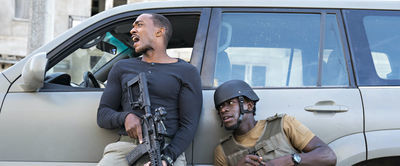
He’s sent back to training, but he’s really on a secret mission, working with one Captain Leo (Anthony Mackie). Like Harp, he’s Black, and like Harp, he cusses a bit. Unlike Harp, he’s a cyborg—“fourth generation biotech and I’m giving you 60 seconds to deal with it.”

Leaving base, they witness some soldiers heaping abuse on a more obvious robot soldier—these dumb guys are called “Gumps,” get it?—and Leo looks on ruefully. Once back in Eastern Europe, and on the hunt for a madman named Victor Koval (what did I tell you about the names) who’s after some nuclear codes (plus ça change in semi-hacky war/espionage movies), Leo demonstrates some advantages of not being human. He operates with a kind of realpolitik—doesn’t act out of sentiment, stays focused on the immediate. Or so it seems. “I have the ability to break the rules,” he tells Hart. He likes Hart because of his drone decision by the way—says he needs someone who can “think outside the box.” Paradoxically, though, he tells Hart, “Maybe humans aren’t emotional enough, Lieutenant.”

Directed with a brisk not-quite chaos cinema style by Mikael Håfström from a script by Rowan Athale and Rob Yescombe, the movie waits a good 50 minutes before showing Leo as a real fighting machine but doesn’t take it too far. Yeah, he can kick multiple asses with haste but he doesn’t run like a Robert Patrick model Terminator or anything. (Glenn Close in “Hillbilly Elegy” would be unimpressed.) As for cerebral endowments, despite being in Eastern Europe Leo doesn’t have to be as much of a super linguist as you’d expect from a robot because in THIS Eastern Europe all but a very few speak perfect English as a default.

The fact that the two characters are black is a red herring; race doesn’t really figure here even as a metaphor. Instead, the movie’s plot and the interaction of the two characters focuses on the robot’s true mission, and the conclusions to which his autonomous robot-though has brought him. When Leo introduces Hart to an Irish “resistance” fighter, the Lieutenant begins to suspect that, while a product of American ingenuity, Leo might have intentions very contrary to American orders. And indeed, it turns out that Leo, like Hebrew National, is set on answering to a higher authority, one with which fans of “Star Trek: The Wrath of Khan” will be quite familiar.

And so we are treated to almost every cliché in the book, complete with dialogue like “Sometimes you gotta get dirty to see the real change” and “Humans could learn to do better” and a countdown readout in big red letters at the movie’s climax. The visual effects are decent, the cast is better than decent, and that’s all, folks.

Now playing on Netflix. 


Source link

Categories
TV & Movies

MLK/FBI


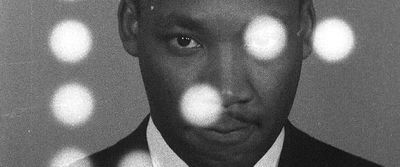
In Sam Pollard’s superb, infuriating documentary, “MLK/FBI,” Andrew Young quotes comedian and activist Dick Gregory: “If you’re Black and not slightly paranoid, you’re sick.” It’s a fitting line for a film about J. Edgar Hoover’s widespread surveillance of Dr. Martin Luther King, Jr. from 1963 to April 4, 1968. Tapes of these wiretaps and bugs were turned over to the National Archives in 1972, and will be available for public consumption in 2027. In the meantime, we have this powerful, upsetting record of events based on The FBI and Martin Luther King: From ‘Solo’ to Memphis by David J. Garrow. Pollard and editor Laura Tomaselli stitch together an incriminating mix of real-life footage and scenes from movies that served as law enforcement propaganda. Those images are supplemented by onscreen selections from FBI documents that paint a salacious picture of the civil rights leader they surveyed. Myth and legend are pushed aside, creating a human portrait of a great leader, warts and all.

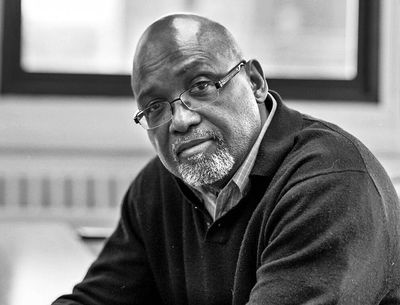
Garrow is one of the talking heads here, none of whom are seen until the closing minutes. He is joined by fellow author and Hoover chronicler, Beverly Gage, King’s contemporaries Young and Clarence Jones, and former FBI employees Charles Knox and James Comey. Comey’s appearance would be jarring if it didn’t so effectively tie the past to the present; so much of “MLK/FBI” feels like a rerun of recent events rather than a predecessor. “The FBI was a part of the mainstream political order,” says Garrow near the end of the film, and he’s backed up by Gage, who points out that the FBI’s actions were not only not-so-secretive but were also popular. This is backed up by an earlier detail showing that, at the height of the battle between the FBI and Dr. King, the FBI had a 50% popularity rating compared to King’s 17%.

“MLK/FBI” accomplishes many things, starting with reminding audiences just how dangerous and militant King was perceived to be by White America in the 1960s. Gone is the “Santafication” of Dr. King, to use that line from “The Black Power Mixtape.” The guy whose “I Have a Dream” speech has been bastardized by liberals and conservatives who dishonestly used it as a Kumbaya excuse to ignore racism is seen making other speeches, ones that aren’t so easily distilled of their anger and disappointment. In fact, a few weeks after The March on Washington, Hoover sent a memo saying, “It’s clear that Martin Luther King is the most dangerous Negro in America.” The FBI head’s “fear of a Black Messiah” may have been the impetus for tailing King in the first place.

Pollard shows the dirty hands of several beloved figures. We learn that the FBI needed Attorney General approval for wiretaps, which was granted by Bobby Kennedy. And the film critics and pundits who complained that Ava DuVernay’s “Selma” didn’t kiss LBJ’s ass enough will be put in their place by some of the audio and the details here. But the primary focus is on Hoover, who felt that the “moral leader of the Negroes” should be without sin, and King, who like every other human being besides Jesus’ Mom, often found sinning irresistible. Those aforementioned tapes collected by the FBI contained instances of King in adulterous situations, with the goal of exposing his sexual habits to destroy his reputation. The mere mention of adultery alone could have done this, but the FBI wanted to ensure the details were so graphic that they would shame the Devil. This is in large part why “MLK/FBI” is so infuriating; imagine all the carnal pleasures you’re into being broadcast to the world in an attempt to discredit you. If this doesn’t terrify you, your freaky-deaky needs more seasoning.

“MLK/FBI” doesn’t give a pass to King’s indiscretions, but it does interrogate the reasons why Hoover thought this tactic was necessary. Through his confidant, Sam Levison, King had already been linked to the “–ism Boogeyman” America accuses Black folks of playing footsie with whenever we demand equal rights (communism then, socialism now). Using clips and narration, Pollard and his subjects break down how Black men were constantly seen as a sexual threat, especially to White women. D.W. Griffith does his part to promote this in the expected clips from “The Birth of a Nation,” but this film delves deeper, pointing out that Hoover’s perception of Black sexuality was filtered through that same viewpoint. Whatever King was doing in those tapes (and like Charles Knox says in the film, I’ve no desire to find out), it was considered beyond hypersexual and deranged by the supposedly strait-laced Hoover. The head of the G-men was furious that most newspapers and journalists wouldn’t take the bait, so he had his team cut together an audio sex tape and sent it, along with a threatening letter, to Coretta Scott King.

“As humans, we are best at convincing ourselves of our own righteousness,” Gage tells us. This type of delusion is heightened and exploited by propaganda. While Hoover saw his nemesis as Sweet Sweetback, he saw his FBI as a bastion of good, a line of bullshit Hollywood directly injected into the veins of numerous movies and TV shows. This aided and abetted the FBI’s public persona, one that Hoover ably cast from his own ideal vision. When someone said “G-man,” you knew exactly what they looked like: stern, White, buffed and wearing a suit and tie. This spreading of a brand is no different than Twitter today; what’s impressive is how well these notions took root in the days before smartphones and social media.

Meanwhile, Dr. King is being tarred by the FBI as “the most notorious liar,” a story the Washington Post and the New York Times are happy to splash across their front pages. This gets more coverage than King’s Nobel Peace Prize and leads to the one meeting between King and Hoover. Since the press was not allowed, there’s no footage to show. Instead, we see the post-meeting press conference, where King navigates the minefield set for him by reporters. Pollard shows this as a bit of a bookend to an earlier clip where a White woman from UPI makes absurd, gaslighting statements that sound like what we heard from GOP politicians last week: “If you offend your oppressors, you’ll ruin unity by making them hurt you more.”

Since “MLK/FBI” unfolds in chronological order, we eventually get to King’s objections to the Vietnam War, including the same April 4, 1967 speech Spike Lee opened “Da 5 Bloods” with last year. King’s “no-war” policy, coupled with his “Poor People’s Campaign,” severed the ties between him and LBJ. “It’s a cruel jest to say to a bootless man he ought to lift himself up by his bootstraps,” King says, expressing that money for the war should go to the homeland’s war on poverty. Hoover exploits this rift with LBJ’s blessing, upping the surveillance and even adding details that may or may not be true. It all ends on April 4, 1968, we’re told, and the film suddenly cuts to black because we know what happened on that day.

I watched “MLK/FBI” for the second time on the same day my television filled with images of the Capitol being overrun by the kind of violent insurrectionists Hoover and his minions said the Civil Rights movement would incite. The film played no differently than when I saw it back in September at the New York Film Festival, which is truly sad. The archival footage Pollard uses has people saying the same things they’re saying today, and the same negative ideas are being thrown around in regard to the rights of Black and brown people. It feels like “Groundhog Day,” with no end to the cycle in sight. There’s a line in this film that sticks with me. It implies that nothing will change unless America deals with “the fear of Black people forcing a reckoning with the American past.” That reckoning is past due.

Now available in select theaters and on demand.


Source link

Categories
TV & Movies

America Has to Come to a Reckoning: Director Sam Pollard on MLK/FBI


Sam Pollard’s documentary “MLK/FBI” addresses what the FBI’s former director James Comey calls “the darkest chapter in the bureau’s history”: the deliberate and systematic surveillance and harassment of Dr. Martin Luther King, Jr. Based in part on newly-declassified files, “MLK/FBI” has generated potent Oscar buzz in one of the Academy’s most fickle categories. For Pollard, 70, King was a towering figure when he grew up in East Harlem. “In my home, we had three pictures on our wall,” he said in a Zoom interview, with RogerEbert.com. “Dr. Martin Luther King, John F. Kennedy and Jesus Christ.”

Four pivotal events changed his youthful conception of America as a country in which distinguishing the good guys from the bad guys was as simple as the white or black hats they wore in old movies or TV shows. The first was Nov. 22, 1963, when his middle school teacher informed the class that school was going to close because John F. Kennedy had been shot in Dallas. Pollard was 13. The second was April 2, 1968, when Pollard turned 18. The third was two days later, when he watched America’s most trusted anchorman, Walter Cronkite, report that Dr. King had been assassinated in Memphis on the balcony of the Lorraine Hotel. A few months later, Robert Kennedy was assassinated.

“Those were my teen years,” Pollard ruefully said.

And the FBI? “They were heroes,” Pollard said he believed at the time, based in part on positive portrayals in such films as “Big Jim McLain” starring John Wayne and “The FBI Story” starring James Stewart (clips of both are featured in “MLK/FBI”) and the Quinn-Martin TV series, “The FBI.” “Every Sunday night, I would be in front of my television,” Pollard said with a laugh, intoning the cast: Efrem Zimbalist, Jr., William Reynolds and Philip Abbott.

Which is why Pollard, editor of Spike Lee’s “Clockers” and “Bamboozled,” and whose directing credits include episodes of the Peabody Award-winning series, “Eyes on the Prize” and documentaries about Marvin Gaye, Sammy Davis, Jr. and August Wilson for “American Masters,” would not have made “MLK/FBI” 20 years ago, he said. “I was still holding on to the notion that in America the good people were out there to thwart the bad people. The good guys wore the white hats and the bad guys wore the black hats.”

Pointedly, he begins “MLK/FBI” with a clip of Ronald Reagan introducing a television program with the advisory that “In the traditional motion picture story, the villains are defeated, the ending is a happy one. I can make no such promise for the picture you’re about to watch. The story isn’t over.”

How familiar were you with the extent of the FBI’s surveillance of Dr. King, and what new information did you learn that compelled you to make “MLK/FBI”?

I didn’t know the depth of the surveillance. My producer, Benjamin Hedin, read The F.B.I. and Martin Luther King, Jr. by David Garrow. We had already worked together on “Two Trains Runnin’,” and he said, “I think I found our next film.” I happen to know Garrow because he was a major consultant on “Eyes on the Prize.” I read the book, and I said, “You’re right, this is our next film.”

Did you consult with the King family or seek their blessing, as the documentary does address his personal life and extramarital affairs.

We knew from past history that the King family is very intent about holding on to Dr. King’s image, so I thought we should stay away from them, knowing full well that when the film came out, we would hear from them or the King estate. But there has not been a peep.

A key question posed in the film is the responsibility of historians. What responsibilities did you feel as a filmmaker in presenting this story?

I feel my responsibility is to look at the subject in a nuanced way, flaws and all. I used to want to look at Dr. King in one way: He was the great leader of the Civil Rights movement, he took us from a world of segregation to a world of integration, he had this phenomenal “I have a dream” speech, he was there when the Voting Rights Act and the Civil Rights Act were passed. He was on the front lines all the time. But I also wanted to shape the narrative to show that he was also a human being. He was, like many of us, dealing with many things. He was constantly being monitored by the FBI, he knew (that at any time) he could be shot and assassinated, he was probably stupefied that he got the Nobel Peace Prize, a man who by 1967 said he felt very strongly that we should not be in Vietnam, knowing full well the pushback he would get from Lyndon Johnson, who had been a great supporter of his. So you see him in our film in moments when he looks weary and burdensome. It’s because he had a lot on his mind, plus dealing with his own personal life, which was very complicated.

The F.B.I. surveillance tapes, which were created to tarnish Dr. King’s reputation as “the moral leader of our nation,” will be released in 2027. Are you concerned about bad actors using the scandalous material to tarnish his image? Do you see this film as a way to get ahead of the story?

They will, and not really. What you said is very important. Those who have never felt the same kind of love and respect that I have for Dr. King, will feel the same way when those tapes come out. That will give them the fodder to say, “See, I told you he was a horrible man; he was worse than even J. Edgar Hoover said.” We live in a country where there is freedom of speech, and even though I may disagree what some people say at times, they have a right to say it. The question I and my producer had to ask ourselves was were we doing the job of the FBI? if we had been more tawdry in our approach I would have said yes. But we were much more responsible and even-handed in how we dealt with things. I wasn’t trying to create any gotcha moments.

I was struck watching the man-on-the-street news footage of people waving pamphlets and insisting they had proof that Dr. King went to so-called Communist school. I immediately thought of all those who say the same thing about Joe Biden and Democrats.

Not much has changed. That’s what was so bad what we saw about January 6 at the Capitol. On one level, I’m horrified and disgusted, but on the other level, I’m thinking, Damn, our country is still the same. You look at the run-up to the election and listen to Donald Trump’s speeches about if you elect Democrats they will come destroy the suburbs and your community. This is insanity. Have we not learned any lessons in America?

“MLK/FBI” is striking in the absence of talking heads. Your interviewees’ commentary is heard on the soundtrack.

I had seen a documentary in 2011 called “The Black Power Mix Tape 1967-1975” (directed by Horan Hugo Olsson) with all these wonderful images of the Black Panther Party, Angela Davis, Eldridge Cleaver, and others, and there was nobody on camera; you just heard their voices. It really kept me engaged with the footage. So when we were thinking of doing this film, I felt we should keep everybody off camera so the audience will be pulled into the material, watching the March on Washington, the Montgomery bus boycott, watching who the FBI was. That was the strategy. A lot of documentaries are doing it now. If you see “Belushi,” the commentary is all off-camera.

Was there something new you learned about Dr. King in the making of this film that impacted your appreciation of him?

Looking through the archives, there are images of Dr. King as a family man; footage with his young children, his wife, his parents; him at home at the dinner table. All that was really interesting stuff and footage I hadn’t seen in a long time. It humanizes him in a positive way.

What do you hope viewers get from “MLK/FBI”?

America has to come to a reckoning. I hope (viewers) will be able to see that, my god, what happened on January 6th was not an anomaly. It’s part of the American DNA. If America is ever to find its real footing, it has to deal with its history. This is a divided country and it seems like it’s becoming more so every day. I’ve seen this country go through many changes. Sometimes it’s frightening. I happen to be absolutely disgusted and angry over what I saw at the Capitol building.

Now playing in select theaters and available on demand.


Source link

Categories
TV & Movies

The TV Homages of WandaVision are an Amusing, Unfulfilling Distraction


Cleverness is a welcome thing, but it can’t be the only thing. “WandaVision,” the first collaboration between Marvel Studios and Disney+ that begins airing on the streaming service on January 15, has a strong grasp of sitcom tropes, is deft at subverting them with a wink to the audience, and finally lets Paul Bettany be funny again. (“A Knight’s Tale” fans, rejoice, for Bettany returns to the same kind of zaniness that made his Chaucer so fun.) But it’s difficult to tell where “WandaVision” is going to go based on the series’ first three episodes provided for review. Each half-hour installment is so defined by allusions to classic TV like “I Dream of Jeannie,” “The Dick Van Dyke Show,” “Bewitched,” “I Love Lucy,” and “The Brady Bunch” that its titular characters seem sidelined in their own series. The show-within-a-show format makes for cheeky diversions—like a series of commercials that reference other elements of the Marvel Cinematic Universe, including Stark Industries and Hydra—but ultimately feels somewhat shallow. “WandaVision” makes an initial commitment to playfulness, but the realization that this experimentation remains in service of a larger, continued narrative rather than fully standing on its own removes (at least in these first 90 or so minutes) any real sense of narrative stakes.

Set after the events of 2018’s “Avengers: Infinity War” and 2019’s “Avengers: Endgame” and influenced by various Marvel Comics runs (including the 1980s series The Vision and the Scarlet Witch and 2005’s House of M), “WandaVision” imagines a reality in which Vision (Bettany) didn’t die in “Infinity War” so that villain Thanos could retrieve the Mind Stone. Vision’s romantic partner Wanda Maximoff (Elizabeth Olsen) also died in “Infinity War” but was brought back to life in “Endgame,” nearly defeating Thanos single handedly through her combination of mutant powers, including telekinesis and telepathy. Still, Wanda (also known as Scarlet Witch) couldn’t restore Vision at the end of “Endgame” because of some time-travel hijinks with the Mind Stone, and so when “WandaVision” begins with the two of them reunited, it’s already starting off with a mystery.

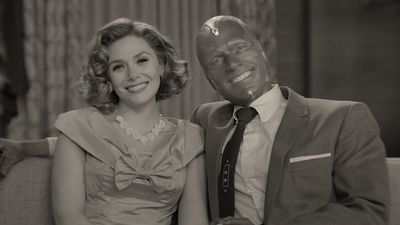
The premiere sets the stage: Wanda and Vision are newlyweds who settle into a new home in the suburb of Westview, but there’s a twist: The characters also happen to be starring in a 1950s-style sitcom about their own lives. A cheery theme song wonders “How will this duo fit in?”, and the first episode focuses on the complications of domestic life: Wanda’s burgeoning friendship with their pushily friendly neighbor Agnes (a wonderfully hammy Kathryn Hahn); Vision struggling to understand his job in “computational services”; a miscommunication about a meal with Vision’s boss. With Olsen’s Wanda as the straight woman and Bettany’s Vision as her goofy foil, the two have excellent chemistry. A scene where they both struggle to figure out the importance of a certain date marked on their calendar is strengthened by the chummy relationship these two actors have built over various films together, and the pair does all they can to elevate a fairly recognizable plot about a dinner party gone wrong.

But the premiere’s final few minutes clue us into something else amiss: When Vision’s boss’s wife (a welcome Debra Jo Rupp) asks how Wanda and Vision met and where they lived before moving to Westview, neither can answer the question. The laugh track fades out. The camera stays still first on Wanda’s stricken face, centered in the frame, and then Vision’s. What are they not remembering? And when the episode of the show-within-a-show ends and it’s revealed that someone is watching all this on one monitor among many, “WandaVision” tips its hand. Each of the two subsequent episodes provided for review follows a similar format. Wanda and Vision jump into a new decade to recreate another recognizable sitcom; reflect the social mores of the 1960s, 1970s, or whatever time in their characterizations, their relationship, and their status in the suburbs (with nods to “The Stepford Wives” and even more modern fare like “Pleasantville”); and incrementally realize that their reality is not really their reality. The disappointing thing, though, is how quickly we realize that too, and how “WandaVision” is more interested in maintaining fawning mimicry than furthering its own storytelling.

Director Matt Shakman, head writer Jac Schaeffer, and production designer Mark Worthington clearly have oodles of affection for these TV classics, and practically every detail here serves as a kind of homage. There’s unchallenging comfort to be found in these recognizable scenarios and in the clear delight from Olsen, Bettany, and the supporting cast, in particular the sassily mugging Hahn as the nosy neighbor (her delivery of “How is anybody doing this sober?” during a particularly painful women’s committee meeting is fantastic) and the reliably warm Teyonah Parris as Wanda’s fast friend Geraldine. But there are only so many ways to make jokes about Vision not eating food, and about the couple using Wanda’s Sarkovian ancestry to explain their strangeness, and about Vision not understanding the details of human sex. And once “WandaVision” starts recycling the same content in each episode, it becomes difficult to ignore that the show’s primary interest is playing with form rather than propelling its story forward.

To be fair, the series is comparatively quite different from the rest of the Marvel Cinematic Universe’s films, which grew darker as the franchise’s Phase Three came to an end, and from Marvel’s series on Netflix, like “Daredevil,” “Jessica Jones,” and “Luke Cage,” which were interconnected within themselves but didn’t really link up with the films at large. In “WandaVision,” though, characters actually laugh! Wanda and Vision are able to be in love! Vision makes a joke about mistaking “mastication” for “masturbation”! On those low-stakes pleasures alone, “WandaVision” delivers. But the question remains: What do we learn about Wanda and Vision by recreating the aspect ratios, costume design, and special effects of the past? What is the benefit of placing them in the suburbia of yesteryears, and what singular insights are really provided from these times and this place? “WandaVision” doesn’t explain why its titular characters would retreat into this nostalgia, and without that core knowledge, its recreations feel increasingly hollow. Perhaps the series will explore that in the remaining six episodes that were not provided for review. But until then, “WandaVision” asks the question “What exactly is your story?” of its titular characters, but doesn’t have an answer for it.

“WandaVision” premieres on Disney+ on Friday, January 15. Three episodes of nine screened for review.


Source link