Categories
Health

The Leopard Bikini I Swore I’d Never Wear Again


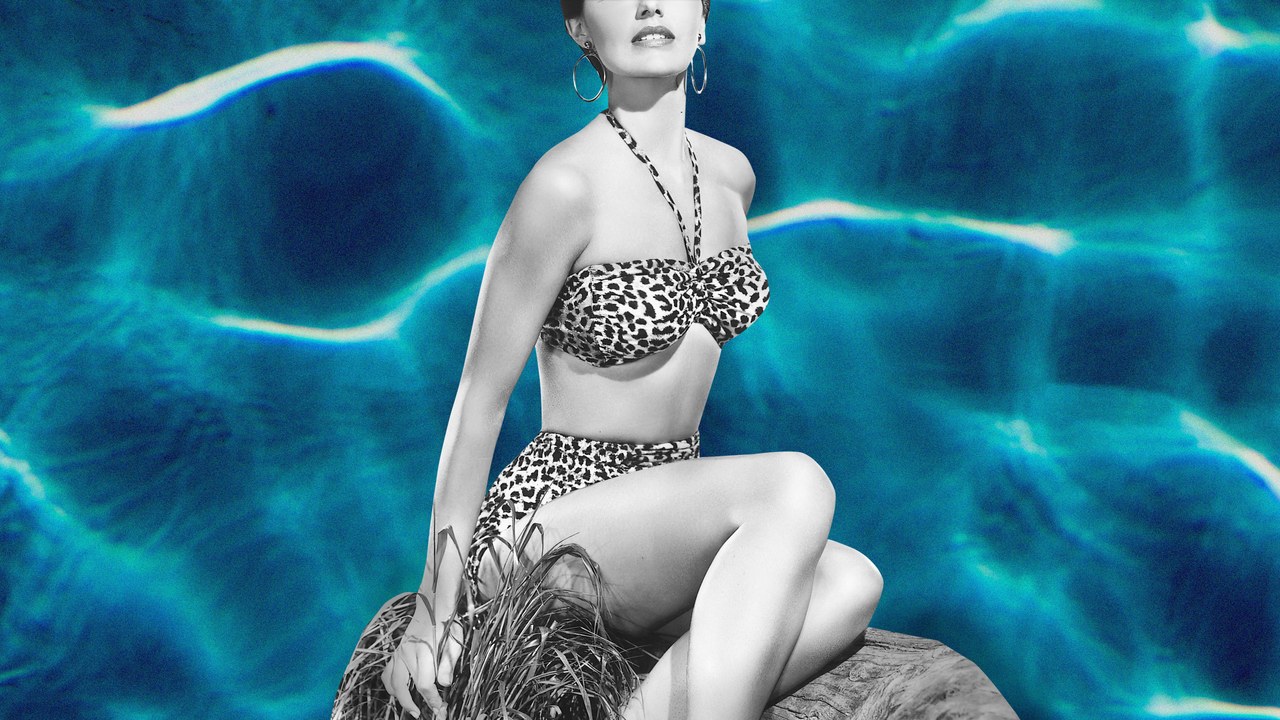
When I broke up with my high school boyfriend at age 16, he joined a group of boys in calling me a name I’d never expected people would ever think to call me. Once he learned that I’d fallen in love with my best friend, though, shots were fired; an ego likely diminished. During a group beach day in July, I was caught off guard by words that cut deep, like cross-stitch scissors snipping into the seams of the leopard bikini I was wearing. As I got up from my towel to approach a friend, I turned around to find him and a few other guys from my class snickering. “Look at her with her tatas hanging out,” one boy mocked. “Slut!” they said while laughing.

I turned around, half-expecting there to be another girl standing there. My face grew hot, and embarrassment permeated my body, a body that I was told long ago to keep sacred. Because I came from a tight-knit religious community, my reputation, above anything else, meant everything. Before I started high school, my mother sat me down and told me that my name should never be passed from the lips of gossipers and my body shouldn’t be passed around in the hands of teenage boys. After hearing the word I was called on the beach that day, I felt cheated because I thought I’d played by the rules my mother laid out. Still, I shoved that leopard bathing suit to the back of my drawer.

Not long after, those boys doubled down: They took to Twitter to declare their opinion of me with a derogative hashtag coined on my behalf. When our senior year began, they gathered like sheep in the hallways.

Because I was lucky enough to have female friends and even some strangers in my corner at the time—some tried clearing my name on Twitter and sent me private messages condemning the injustices of slut shaming—I felt confident enough to continue wearing what I wanted. It also helped tremendously having a boyfriend who stood up for me when trolls tried tearing me down.

I tried a tough-girl approach when I faced the boys in the hallway by flipping my middle finger here and there, but sometimes I couldn’t even make it into a bathroom stall before the tears came. One time a teacher checked in while in the elevator because he said he kept hearing my name whispered in one of his classrooms. I even went to great lengths to apologize to my ex because I thought the way in which he was handling our breakup and my new relationship was my fault.

A part of me thought I deserved to be called names; I deserved to feel guilty for moving on so quickly with someone I’d known almost all my life—especially given the backlash pop culture bestows upon women who move frequently from one relationship to the next (see: Taylor Swift).

But another part of me felt that the only reason they thought it was OK to belittle me was because I was wearing a leopard bikini. That somehow a stereotypically “slutty” item gave them permission. Although it’s come full circle and is often used in even modest clothing, leopard or cheetah print, historically, tends to carry a stigma that casts women wearing it in a promiscuous light, much like the color red or fishnet tights. Not that its definition is particularly scholarly, but even Urban Dictionary—in 2019!—describes cheetah print as what’s “most often worn by women who provide certain services to a man for pay.” (The “dictionary” entry only gets more offensive from there, FYI.)


Source link

Categories
Health

I Went to a Weed Retreat for Women and Swore I'd Never Smoke Again


“Make yourself at home and always puff, puff, pass!”

That’s the first—and only—”rule” you’ll read under the FAQ section of the Ganja Goddess Getaway’s pink brochure. Inside, you’ll get an intro to the female-only, cannabis-focused retreat that suggests the weekend is a time for women to “renew by connecting to the cannabis plant and each other.” You’ll also learn about the preferred hashtags (#SisterSesh and #GanjaGoddessGetaway), directions to the nearest bathroom (“Port-o-pot-ties”), and a notice that all the “fixins” for s’mores will be available. There’s also a full run-of-show, which includes options such as a discussion entitled “The Goddess and Cannasexuality” and a belly-dancing class.

The language was friendly and the promises of female empowerment worthy, but the material was as intimidating to me as a pamphlet about brain surgery. That’s because my relationship with weed is more “friend of a friend” than Abbi and Ilana. Weed and I have lots of people in common but we don’t hang out that much, outside the occasional communal bowl.

Still, I’ve always wondered if I was missing out—maybe if I just spent a little more time smoking I’d see all the benefits my friends have been praising: heightened creativity, instant stress relief … OK, well, those are the only two benefits I ever hear. But those are areas I’d like to improve, so off to Coachella Valley I went, one ticket to weed camp in hand.

Also, I’ll admit my curiosity about marijuana stems from the cannabis industry’s recent—and aggressive—marketing push toward millennial women. Much like SoulCycle (biking, basically) and Lululemon (leggings), more and more brands are taking a thing that’s been around forever and repackaging it as an essential, attractive, Instagrammable lifestyle. Publications like Gossamer and Broccoli, with their modern design and cool-girl subjects, feel aspirational, not crunchy. Kush Queen is capitalizing on the internet’s collective, if confusing, fascination with bath bombs. Foria’s massage oil is packaged like a Glossier disciple.

$420 buys you two nights at a beautiful private estate, a gift bag filled with cannabis products, and all the edibles and nuggets you could possibly want

Which brings me to the Ganja Goddess Getaway, whose amenities were so attractive, I couldn’t not go. (That and, full disclosure, I was offered a gratis ticket.) The cost varies depending on how many nights you stay, but $420 buys you two nights at a beautiful private estate. That includes a group tent (bring your own bedroll), a gift bag filled with cannabis products, and all the food, snacks, non-alcoholic drinks, and—yes—edibles and nuggets you could possibly want. For $600 you can score “deluxe accommodations,” which means your own private bedroom in the main house.

This is not what I expected.

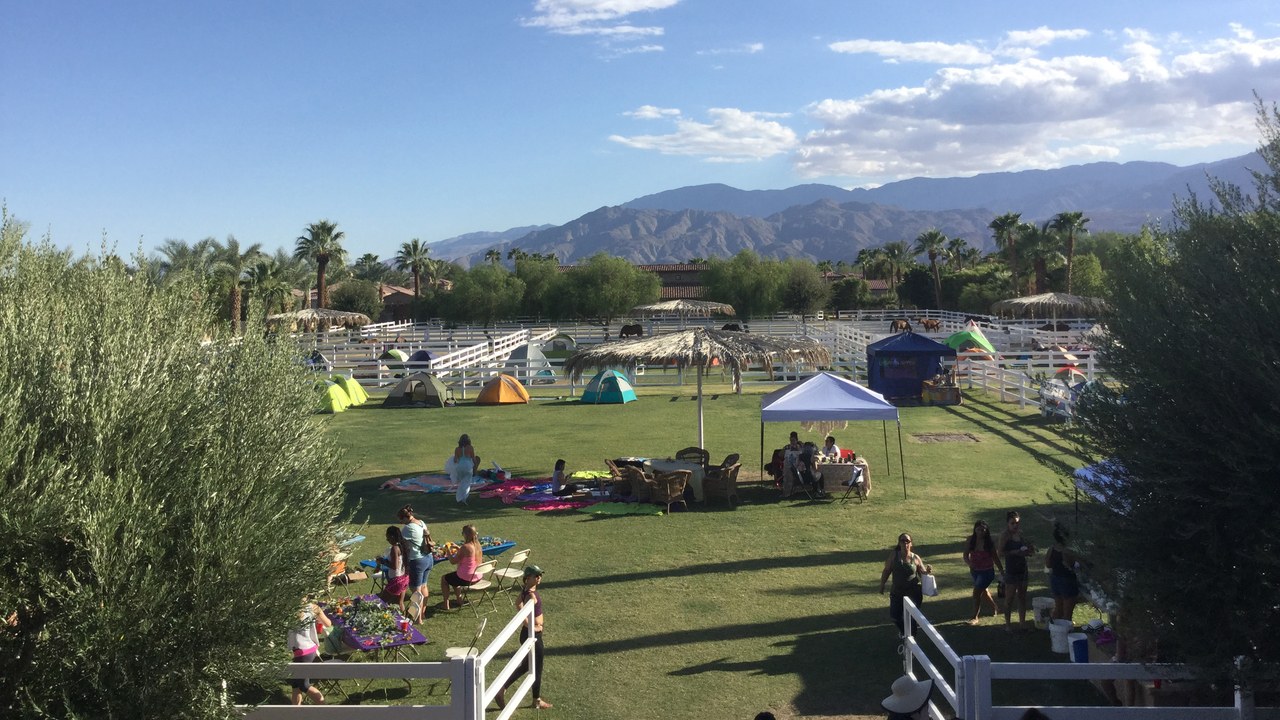
As I entered the grounds, I noticed a group of women doing yoga on a sunny lawn. Ahead was a crystal-clear pool with lounge chairs. The buffet was filled with treats like crudité, chilled lemonade, pastries, and hummus. I was asked if, for an extra $40, I wanted a massage. Sign me up!

Any remaining reservations floated away as soon as Miss Bliss—a.k.a. Ganja Goddess Getaway Founder and CEO Deidra Bagdasarian—gave her opening remarks. The weekend was to be structured however we wanted, she promised. Hang out by the pool, learn how to make flower crowns, network with other like-minded women. Unlike regimented summer camp, this experience was our choice. Do whatever makes you happy because that’s rooted in love, she explained. “This is your gentle awakening, your time to shift. It’s time to recognize your motivation is either coming from love or fear.”

[embedded content]

OK, I thought, I can do this. I can discover myself and my motivations. I walked around the estate, debating the best way to enter this new world of Me as Ganja Goddess. Should I start with one of the joints I found in my gift bag? What about one of the cute and delicious-looking edible cupcakes? Or what if I made friends with the chill women smoking by the pool? Do I go big and head straight to the dab bar, the complicated-looking contraption that works by heating sticky oil made of concentrated doses of cannabis. A staffer named Alexis told me it’s “awesome.”

I didn’t travel across the country to eat a cupcake alone. Dab bar, here I come.

As I exhaled the thick smoke, my body felt lighter. Though my brain still felt clear and alert, there was an edge taken off. Instantly, I got what all the fuss was about. This must be what a Disney princess feels like—light and airy and pleased with the world. Is that a songbird on my shoulder? I bounced over to a booth with cannabis-infused cotton candy manned by a woman named Vanessa who had, of course, cotton candy-colored hair. “There’s really no fast way to do it,” she warned me as she slowly prepped my treat. “I have to put all the love in it—and glitter, of course.” I was more than happy to wait.

Once the dab-edible combo fully took effect, I fixed myself a large, large plate of snacks before falling asleep with my feet in the cool pool water. When I woke up from the nap, I felt refreshed and amused that munchies are a very real side effect for me. Ready to keep the good times going, I went to a panel titled “Edibles Fit For a Goddess” by cannabis chef Deliciously Dee. There, she served samples of edible gummies. They were delicious. And made me hungry again. Why am I always hungry?

Oh, just a little something I found in my gift bag.

Feeling relatively invincible, I stopped by the dab bar again, now considering myself something of a connoisseur. The hit felt different this time, thicker somehow. Soon after that, my memories of the evening start to blur: I remember sitting slack-jawed in amazement as a woman walked around with a Tibetan singing bowl. I remember picking up a meat kebab for dinner. I remember shivering as day turned to night and all I had on was my bathing suit and a pair of shorts. I remember sleeping by a fire as women around me told stories and sang.

As the night wore on, I was deeply exhausted. Tired of eating. Tired of being high. Tired of being tired. I couldn’t engage with any of the activities because moving felt too hard. I couldn’t bond, or hold a conversation even, with any of the women there because apparently being high makes me even more inward than I already am. I came to the desert to be a breezy free spirit and instead ended up a loner who can’t stop eating hummus. Frustrated, I crawled into bed—I think at 10 p.m.—and made a mental note to never, ever go near cannabis again.

The next day though, everything felt bright again. I’d had a dreamless sleep and felt well rested. My breakfast tasted better. By 10 a.m., I found myself sitting on a pillow, smiling, as The Craft actress Rachel True taught a session on how to read Tarot cards. Now sober, I realized the problem wasn’t the edibles or the Getaway. I’m just a newbie who didn’t pace herself correctly. Like a 19-year-old drunk on Burnett’s Blueberry Vodka, I didn’t know my limits or where to draw the line. Simple as that. In this new light, I was able to look around and see the camaraderie of the women there. This was a place for females of all ages, of all body types, and of all backgrounds who came from all over—Canada, California, New York, Tennessee—to learn more about themselves, and others, and, yes, to be 4-20 friendly.

“We want you to feel like you have a community,” Miss Bliss explained during her closing statements. “A place where you have space for you to learn and grow. To organically become the best version of yourself and to use cannabis as that tool along the way.”

A point of view I respect but, honestly, I’m not sure the best version of myself needs weed. I’ll take that community, though—and the snacks.


Source link

Categories
Health

NBC's Katy Tur Swore She'd Never Follow Her Parents Into Journalism


My mom likes to say I’ve been covering news since the day I was born—longer if you count my time in utero. The day she went into labor, my parents were in Hollywood covering a shooting, a mugging gone wrong. There was no question my mom would join my dad at the scene, even if she was nine days overdue. They were a husband-and-wife reporting team, the founders of the Los Angeles News Service, so she grabbed her 17-pound tape deck, and off we went. Eighteen hours later the Tur family had another journalist in the world, though it would be more than 18 years before I knew it.

Looking back after more than a decade in live television, I suppose my career choice was inevitable. The sound of the police and fire scanner, which my parents relied on for stories, was my music box and my bedtime story. My mom says it’s the reason my first word was hot and, only half-jokingly, that my second and third were smoke and showing.

My parents got ahead in the news business with wits, guts, and a ­crea­tive interpretation of “fair game.” They leased their first helicopter in 1985, when KTLA news crews were on strike. Maybe the crews had good grievances, maybe not. Either way, my parents ignored the strike and went to work. They had a one-year-old at home (me) and another kid on the way.

After a few months with KTLA, they also had $30,000. With that down payment, plus a good sales pitch, my dad convinced Bell Helicopters to lease him a $250,000 chopper. TV news would never be the same.

Bob and Marika Tur were not the first to use a helicopter, but they were the first to do something memorable with one. My dad didn’t have his license yet when they got their first big scoop: Sean Penn and Madonna’s 1985 wedding on the coast of Malibu. He hired a pilot to hover 150 feet off the bluff, so close that Madonna flipped him the finger. He sold the pictures for six figures.

Soon they had settled into a routine: Dad flying, Mom on camera. She was fearless. She’d hang out over the skids, hundreds of feet in the air, a 30-pound Betacam on her shoulder. They couldn’t send the videos live, so they flew tapes from station to station, dropping them from the copter down to the roof where a producer waited. To keep the tapes from breaking on impact, my mom wrapped them in anything she had on hand, usually clothing. On busy days it wasn’t unusual for her to get back to the hangar in her underwear.

Meanwhile, my dad filed live radio reports, his hands on the controls and his eyes on the news unfolding below him. When I was five, he started asking me to work up my own live reports. In one, I tell the story of an imaginary fire in San Diego that ended with all my friends and me having a party at McDonald’s. And you know what? I wasn’t so bad. (See for yourself at glamour.com!) My mom and dad were “helicopter parents,” literally. Meaning, I didn’t have a nanny, so I went up in the helicopter. My entire early childhood education consisted of tagging along while they reported on car accidents, multiple-alarm fires, and shootouts.

[embedded content]

In elementary school I spent weekends in the air over Los Angeles. On a slow news day, my dad would fly us down to Catalina Island for lunch, or we’d fly low over the beach. Once, during the Rose Parade, I unbuckled my seat belt and opened the chopper door so I could get a better look at the floats. (Later, my dad said I almost gave him a heart attack. I wouldn’t have known—he was that cool under pressure.)

It was fun in retrospect. Kids are kids, though, and before long I thought our Christmas cards—me and my brother, with our dog, in flight headphones (see left)—were boring. Getting picked up from sleepaway camp in a helicopter was mortifying; so was the overhead cheering section during my softball games. By middle school I wanted nothing to do with the news.

I maintained that point of view even when a truck driver named Reginald Denny stopped in the wrong intersection at the wrong time at the outbreak of the 1992 L.A. riots. Bob and Marika were on the scene. When Denny got pulled from the driver’s seat by a group of gang members, they flew lower. When the mob pulled him to the ground and started kicking him, they got lower again—as low as 70 feet, close enough for bullets to damage the engine. It wasn’t about getting the shot anymore; it was about trying to save the man’s life by scaring off the crowd. But the crowd closed in, and the cops were nowhere in sight. With millions tuned in live, my dad declared that the LAPD had abandoned the city.

My brother and I watched from our grandparents’ house and then lived through the aftermath—not only of the riot but of the journalism. Gangs were angry about my parents’ coverage. We started getting death threats. My dad got his first concealed weapons permit. For years he wore a gun on his belt every day and slept with it under his pillow. Those were scary times.
Not even O.J. Simpson’s strange, slow-speed car chase was enough to reignite my interest in my parents’ job. In fact, when I saw their helicopter hovering over my school one day, I was convinced they were trying to spy on me and my friends. They were not. Simpson had led cops to his house, which happened to be nearby. My parents got the footage, made some serious money, and burnished their reputation.

Then, in 1998, when I was 14, it all fell apart. The main station my parents worked with got its own helicopter. It didn’t need my parents anymore, and didn’t want to need them. My dad had a temper and was tough to work with. In the months that followed, he had heart surgery, my grandmother died, and my parents lost their bearings, both professionally and personally. The bills piled up. The fancy vacations disappeared. The rent was late. And we stopped answering the phone because it was always a bill collector. Our dwindling bank account wasn’t the worst of it; for me, it was the loss of my role models. My parents were depressed and angry. Instead of looking to find a new path, something they were always so good at, they froze like a watch in an explosion. There was no more future, only the past. The news business broke us apart.

I went off to the University of California, Santa Barbara, on a boatload of loans, sights set on becoming a doctor or a ­lawyer. Stable. Predictable. Then a funny thing happened during my senior year. I was driving back to Santa Barbara from Los Angeles with my college boyfriend, when we ran into a roadblock—nothing major, a brushfire in Malibu. Instead of taking the detour, I wanted to drive straight—toward the flames—to see the action. So I reached into my wallet and grabbed the press pass my dad had made for me. What the hell, I thought. Let’s see if we can get in. I pulled up to the officer guarding the road and flashed my pass.

“Who do you work for?” he asked suspiciously.

“Los Angeles News Service,” I said.

He looked down, back at me, then down again. “Where’s your gear?”

“My crew is up ahead. They have the cameras.”

“All right,” he said. “Be careful.”

My boyfriend was awestruck. “I’ve never seen you more confident than you were just now, lying to that officer,” he said.

A couple of weeks later, a school counselor was telling me what LSAT score I’d need to get into UCLA when something clicked—or unclicked. I didn’t want to be a lawyer. I wanted to chase the news. I couldn’t say why, exactly. I still hated the camera. But suddenly journalism seemed like a lot more fun than pushing paper behind a desk in a faceless office building.
I told my dad about my decision over lunch. I thought he’d be excited; instead he was furious and condescending. “You might want to practice, ‘Do you want fries with that?’ because you’re never going to make it,” he said. He was convinced our name would get me blacklisted; I thought he was treating me like a child. The fight continued all the way to my front door, which I slammed in his face. We didn’t talk for a week.

I graduated in June 2005. In July of that year, I walked into my first job as a journalist—in, of all places, the KTLA newsroom. It smelled like must, dust, and videotape. Exactly as it did when I was little. I was home.

Katy Tur is a correspondent for NBC News. This piece is adapted from her book, Unbelievable: My Front-Row Seat to the Craziest Campaign in American History.


Source link