Categories
Health

9 Soothing Rosacea Treatments That Don't Require a Prescription


“Are you wearing blush?” is a question I’ve received since I was old enough to understand English. My answer has always been an automatic, “No, that’s just my face.”

As skin conditions go, I know that I can’t really complain about mine. I have a case of rosacea so mild that it passes for makeup most days. Exceptions occur only when I exercise, drink alcohol, eat spicy food, or overheat, which is when my face becomes noticeably more flushed. In these instances, the question typically changes to the somewhat less flattering, “Are you okay? Your face…” Still, I’ve never had a flare-up so extreme that it called for an urgent visit to a dermatologist. A regimen of products labeled “soothing” and “hydrating” is the only change I ever bothered making.

A recent meeting with dermatologist Dr. Timm Golueke alerted me that I might want to rethink that attitude. “You have rosacea,” he informed me mid-conversation (in the kindest way possible). I considered it a welcome reminder to start assembling a more tailored skin care routine.

A very important point to remember when it comes to rosacea is that the chronic condition gets worse over time. According to dermatologist Dr. Joshua Zeichner, it’s best to prevent progression in the earlier stages. “Rosacea is in your genes and while we cannot change our genetic make up, we can change the way that our genes are expressed,” he says. Dr. Golueke notes that a milder version will manifest as facial redness (although having facial redness doesn’t necessarily indicate that you have rosacea), while more aggressive versions cause pimple-like bumps on your cheeks and nose. Triggers include spicy foods, the sun, and irritating skin care ingredients (particularly retinols, exfoliants, and anything acid-based).

As for treatments, there are common prescription options that are both topical and oral. I’m currently using Soolantra on Dr. Golueke’s suggestion, which contains the active ingredient, ivermectin. Ivermectin helps reduce the level of mites living on your skin, which is increased (thereby causing inflammation) in those with rosacea. Your dermatologist may also prescribe Mirvaso or Rhofade, which constrict blood vessels in your face, reducing the appearance of redness for hours.

Then, there’s Oracea, a medication taken by mouth that reduces inflammation from the inside out. “While it’s technically considered an antibiotic, the dose is so low that it doesn’t kill any bacteria,” says Dr. Zeichner. “It really works as an anti-inflammatory treatment, and because of this, it can be taken for extended periods of time without the risk of bacterial resistance.”

In the realm of beauty tech, LED light therapy also scores points for reducing redness. This is an option celebrity esthetician Joanna Vargas often recommends. “It thickens your skin and helps eliminate that persistent redness,” she says. “LED light has been proven to increase the energy in living tissue, which is why it stimulates collagen production, reduces inflammation, and speeds healing.” In her practice, she often administers the treatment with her RevitaLight Bed.

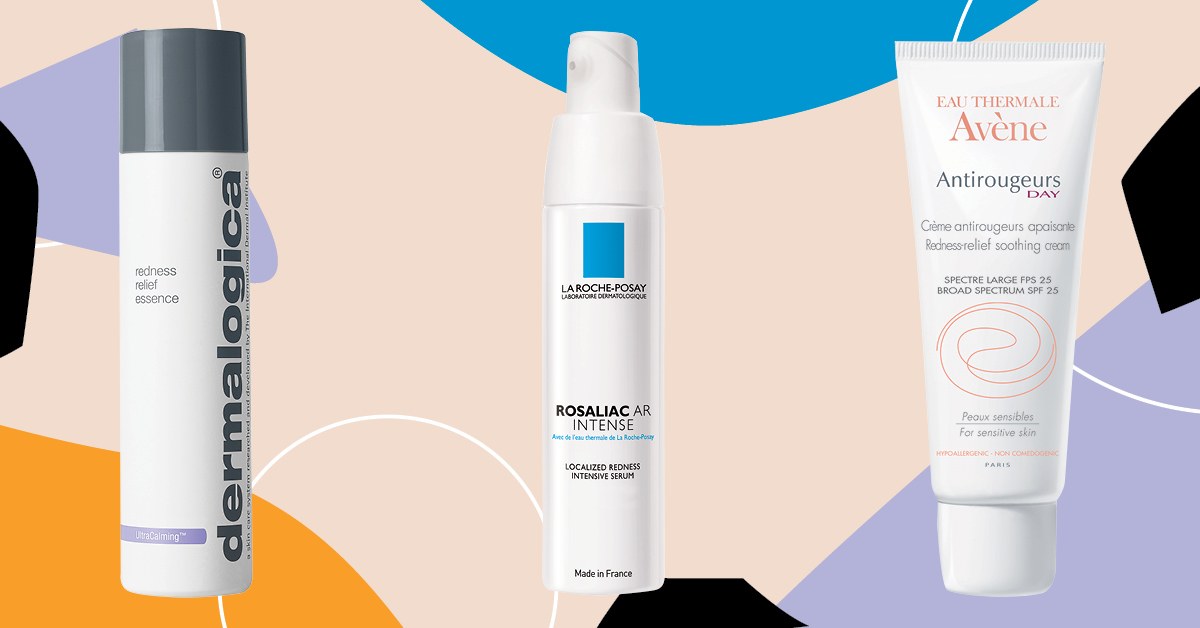
While LED facials and derm appointments are highly recommended if you want to effectively treat your rosacea, they don’t cover everything else you do at home. So to make sure your top shelf is fully expert-approved, I asked the pros to also weigh in on effective over-the-counter products for rosacea. Below, an everyday routine that will keep your face cool and calm—no prescription needed.



Source link

Categories
Health

Lena Dunham's Powerful Essay About Her Struggles With Rosacea Is Deeply Relatable


PHOTO: Ben Gabbe/Getty Images

This probably goes without saying, but Lena Dunham has made a welcome habit of getting real. The actress and activist is refreshingly open about everything from her political opinions and feminist philosophy to the chronic endometriosis she’s struggled with for years. And in this week’s issue of her newsletter, Lenny Letter, the Girls creator and star reveals the latest health issue that has her grappling with a familiar insecurity: uneven skin.

In a powerful essay, Dunham details how, unknowingly at the time, her complexion was keeping her self-esteem together as she struggled with endometriosis in her late 20s. But when she recently contracted rosacea, that last vestige of confidence went out the window and caused her to reconsider the worth she’d placed in her skin.

“Chronic illness—endometriosis, along with an accompanying autoimmune disease that gives me chronic joint pain and fatigue—has made my body far less predictable to me, and in far more frightening ways than whether I’ll wake up able to fit into my high-waisted jeans. And a few weeks ago, a course of steroids to treat a massive flare of joint pain and instability led to rosacea’s appearing overnight, making me look like a scary Victorian doll, two perfect pink circles painted on her porcelain face,” Dunham wrote. “Then, after a long, sweaty night shoot in which I was covered in strange makeup, I washed my face to reveal that the rosacea had become hundreds of tiny pimple-blisters that covered me from forehead to neck…My face burned, but not as badly as my pride.”

She continued: “I found myself [age] 31 and hysterical, in the dermatologist’s chair as she extracted infected areas, applied an antibiotic cream, and explained that rosacea is another chronic condition: once the cat’s out of the bag, there’s no guarantee she’s headed back in. The acne on my shoulders and back was also steroid induced, she explained. (I hadn’t even noticed the bacne yet. FML.)”

This sudden hit to her health wasn’t just an annoyance, she explains, rather, it made her realize how intrinsic her appearance was to her identity. Even as she’d been vocal about her love and pride for her body, it struck her that her normally clear complexion had been the one thing buoying her self-image—its loss became a catalyst for self-doubt.

“Seven years of being treated in the public eye like a punch line about female imperfection may not have felt like it was wearing me down, but it had actually forced me to rely emotionally on my one area of fully conventional beauty: my perfect f-cking skin,” she wrote. “They could tag me in a picture of a beached whale. They could call me a bag of cottage cheese. But they couldn’t take away the fact that I was able to eat seven slices of pizza, a wine spritzer, and three quarters of a chocolate cake and still look like my face was kissed by sweet, sweet angels when I woke up. I wasn’t just mourning my easy skin-care routine or my ‘No filter? No problem’ lifestyle. I was mourning a life raft that had kept me, silly as it was, bobbing above the fray.”

Dunham went on to write that she’s still coming to terms with her return to the skin of her teenage years. “I have been forced to finally mourn the long, slow hit on my self-image. I thought my adolescent attitude, the take-no-prisoners approach to my own look and form, could carry me through the onslaught of critical attention. I thought I could intellectualize it away. But I can’t.”

There is a silver lining to her story, though, and it’s the kind of real and honest advice you can only get from someone who’s been through the same emotionally exhausting situation. “I’m starting to believe that speaking this pain aloud isn’t just good for my own healing: it allows any young woman who might be watching to understand that nobody is immune from feeling bad about hateful attention. If it took spelling my pain across my face to admit it, then so be it. I’m oddly grateful. ‘I don’t give a shit’ only translates into isolation; it prevents the people who love you from reaching out their hand to remind you of what’s real.”

You can read the essay in full here. Trust, it’s worth the click.

Related Stories:
The Totally and Completely Unfair Reason You’re Still Breaking Out in Your 20s and 30s
I Didn’t Stop Partying Until My Face Told Me To
Chrissy Teigen’s Snapchat of Her ‘Period Skin’ Is So Relatable It Hurts


Source link