The claims made against Harvey Weinstein alleging the decades-long abuse of women put the spotlight on the #MeToo movement, and opened up a conversation around sexual harassment which has ricocheted across industries, from entertainment to media. It certainly has touched the fashion world, too, as new light is shed on the lack of protections for the young and vulnerable, particularly models, who operate within it. And while there has been awareness and small steps for reform in the past year—notably by luxury conglomerates Kering and LVMH, who jointly established a code of standards to protect the well-being of models—not much has changed in the larger picture.
Now the question is: What comes next?
The Model Alliance, a group founded in 2012 by Sara Ziff, founder and executive director, that advocates for models’ rights by supporting legislation (such as the Child Model Labor Bill, passed in New York in 2013) and strategic partnerships (such as one with the Council of Fashion Designers of America (CFDA) to create private changing areas during New York Fashion Week earlier this year), is seeking to address just that with its newly-unveiled RESPECT Program. It’s a legally-binding contract between models, agencies, designers, and publishing companies to hold people accountable at every level of the industry hierarchy for the mistreatment of models; companies who sign on and don’t follow through with the terms outlined in the document would be in breach of contract and subject to legal action, the thought being that the suggested codes of conducts that have been considered the norm haven’t worked.
The RESPECT Program was unveiled last week in an open letter. More than one hundred models showed public support for it, including Karen Elson, Doutzen Kroes, and Edie Campbell. It reads in part:
RESPECT will go beyond addressing specific acts of sexual harassment,and also seek to foster a work environment that is no longer fertileground for abuse.
Every company in our industry says it abhors sexual harassment andwants to protect those at risk of abuse. We believe that if a companyis serious about protecting us, it will be willing to go beyond merepromises to do better and embrace enforceable standards, with realteeth.
“It’s become abundantly clear that sexual harassment doesn’t exist in a vacuum and that the power imbalance between models and agencies and their clients needs to be addressed,” Ziff told Glamour.
To figure out exactly how to do that, Ziff and the Model Alliance held listening sessions with models. “We heard things like, ‘How can we say no to inappropriate demands when we are waiting three to ten months to get paid for a job? What if I’m pressured to pose nude, or to lose weight by my agency or get dropped?’”
The RESPECT Program’s stipulations stem from Ziff’s own experiences, having worked as a model herself.
PHOTO: Patrick McMullan
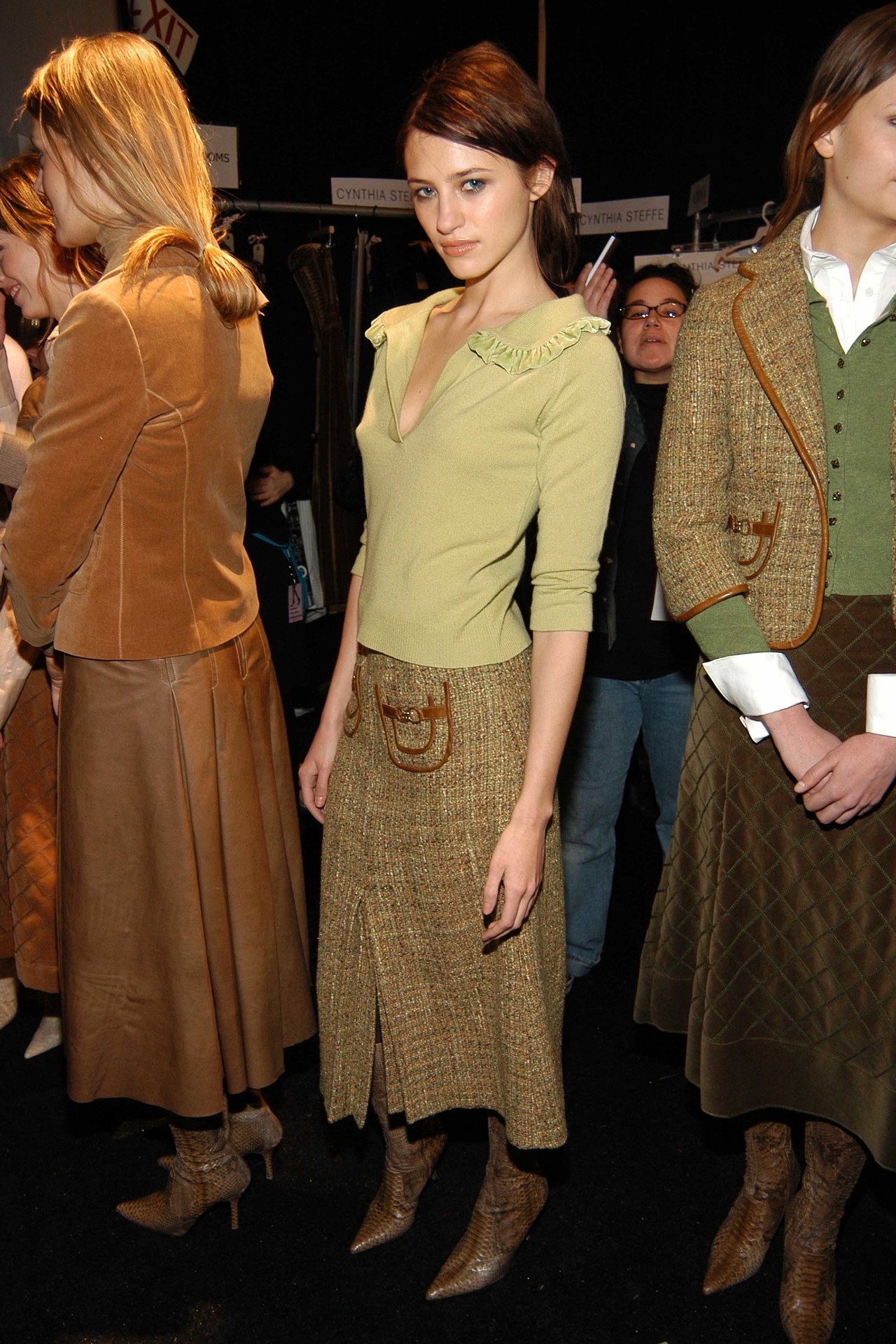
Ziff backstage at a Cynthia Steffe fashion show in February 2004.
“About a decade ago I brought forward concerns about [photographer] Terry Richardson [after I worked with him] and it fell on deaf ears for the most part,” she tells Glamour. “I didn’t want this to just be a Band-Aid, I wanted this to be meaningful.” Ziff’s story is familiar: Models had accused Richardson, a photographer, of sexual assault and harassment for years, but many brands and publications continued to work with him on high-profile projects. (This includes some work for titles within Condé Nast, which publishes Glamour.) In the wake of Weinstein, though, companies began to distance themselves from him, pledging to stop commissioning his work. In recent months, models have come forward with sexual harassment allegations against other famous photographers, including Mario Testino and Bruce Weber, as well.
Central to the RESPECT Program is that signatories would be required to enlist some kind of independent third party to file complaints, so models wouldn’t feel forced to report bad behavior to the exact people who sign their paychecks. It also would require that models get paid on time for their work, so they don’t become increasingly indebted to their agency (and because of that, ultimately feel unable to report abuses). There would also be a comprehensive training on rights and responsibilities for participants. And, if someone is reported to be a serial sexual predator, anyone who’s signed the RESPECT Program contract would have to stop working with them altogether.
PHOTO: Victor VIRGILE
Ultimately, what would make this program such a big step in the industry is the fact that it’s a legally binding agreement. “[People who sign it] are sending the message, this is not just about platitudes, this is not just a PR move,” she explains. “We’re going to stand by this.”
Ziff has already presented the program to Condé Nast and several modeling agencies. She hopes to see companies ranging from publishers to fashion brands participate, because there’s still a lot of work to be done to prevent sexual harassment in the industry.
“Karl Lagerfeld made those disappointing comments a few weeks ago and a lot of prominent people didn’t take issue with it. It’s more important than ever to draw a line that we are not going to tolerate sexual harassers or enablers.”
Related Stories:
Ashley Graham Just Opened Up About Her Own Horrible #MeToo Story
A Shocking Number of People Think Women Are Making False #MeToo Claims, New Study Finds