Categories
Health

This Woman Is Inspiring People to Donate to Harvey Relief—By Sending Them Cat Photos


The Hurricane Harvey relief effort just got a boost thanks to a very unlikely source: a cat named Jerry in Brooklyn, NY.

Rachel Millman, who’s 29 and also happens to Jerry’s owner, was out for a walk in her Brooklyn neighborhood, thinking about how she’d wanted to help storm-ravaged Texas but didn’t have the funds for a substantial financial contribution. So she came up with an alternative plan: Offer to send people photos of her roommate’s goofy cat in exchange for proof that they donated to Harvey aid.

“@ me with proof of donating to a charity for south Texas and I will dm you a photo of Jerry behaving badly,” Millman tweeted, hoping her out-of-the-box approach might inspire people to donate—at most—a collective $1,000. But Jerry, an exceptionally large feline with a penchant for peeing just outside his litter box, proved to be a pretty big incentive: Within three hours—between midnight and 3 a.m., no less—she’d received images of donation receipts totaling double her initial hope.

“I was shocked,” Millman told Glamour.

Seeing Millman’s success, some of her friends tried their hand at a similar type of fundraising: Branson Reese, an artist, launched a spin-off campaign that allowed people see a special comic he’d created in exchange for proof of donations. Another offered up tarot card readings.

As the various campaigns gained momentum throughout the week, donation receipts rolled in from people who’d given to food banks, diaper banks, animal shelters, and various hurricane relief funds. Mara Wilson, author and Matilda actress, sent Millman proof of a contribution to the Texas Diaper Bank. Of course, some people sent proof of donations they’d made prior to Monday night—but many others were inspired by Millman’s campaign to step up and donate for the first time.

Take this donor, who wrote “I want to see the Jerry photo” when he contributed to the Hurricane Harvey Relief Fund:

As far as why people were incentivized by Millman and her pals, she chalks it up to the intense “social aspect”—donors were motivated by seeing other people get celebrated on social media, and from there, it was a snowball effect. “My dad was making fun of me earlier for this being the most millennial fundraising,” she said.

“Millennial” it may be, but as the numbers climbed and Millman starting adding, she was stunned: As of Thursday morning, She and Reese had accumulated receipts totaling $21, 249.15, a sum Millman calls “surreal.” “I did not think this would work to the extent that it did, she said.

Still, Millman wouldn’t accept all the credit for her genius fundraising initiative. “The people who deserve celebrating are the ones who donated,” she added. “I’m super fortunate to be first witness to such an outpouring of good.”

Texas is in need of serious help in the aftermath of Hurricane Harvey. The storm pelted Houston and the surrounding area with record-breaking rainfall and ushered in disastrous flooding, leaving thousands stranded in their homes. Experts say the Harvey recovery process could take years

And Jerry? He doesn’t seem to know what a difference he’s making. According to Millman, “He’s been getting slightly annoyed by me grabbing him for thank-you videos for bigger donors.”


Source link

Categories
Health

Heather Heyer's Cousin Asks Why It Took the Death of a White Woman for People to Talk About Racism


PHOTO: Chip Somodevilla/Getty Images

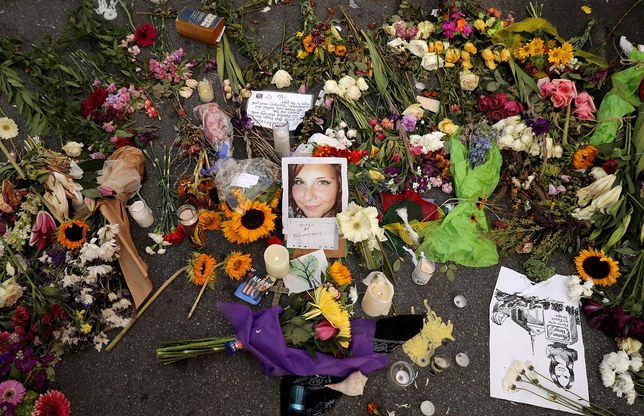
At a memorial service for her daughter Heather Heyer—the 32-year-old woman who was killed earlier this month while protesting a white supremacist rally in Charlottesville, Virginia—her mother Susan Bro made clear that the best way to remember her daughter was to take “righteous action.”

“I’d rather have my child, but by golly, if I’ve got to give her up, we’re going to make it count,” she told the crowd at Heyer’s memorial service last week.

Already, Bro and other members of Heyer’s families are putting these words into actions and taking a stand against injustice and racism. Last week, Bro said she’s refused to speak with Donald Trump following a press conference in which he equated counter-protesters like Heyer to the neo-Nazis, white supremacists, and alt-right groups that had flocked to the Virginia city to keep a Confederate monument from being taken down. And over the weekend, Heyers cousin Diana Ratcliff wrote a powerful op-ed for CNN examining her family’s white privilege in the context of what happened in Charlottesville—and questioning why it took the death of a white woman to open many American’s eyes the country’s ongoing racial conflict that millions have experienced their entire lives.

“We never had to worry someone wouldn’t hire us because of the way we look,” Ratcliff wrote. “We never have to worry that our children might become victims of someone else’s prejudice. We’ve never been told we can’t live in a certain neighborhood or attend a certain school because of the color of our skin. Until last week, we had no idea what it feels like to lose someone to hate.”

Ratcliff then reflected on the poignant memorial service but recounted the one thing that struck her the most. “The moment that will forever be burnt in my memory was when a speaker asked the uncomfortable question,” she said. “While she hailed Heather’s courage, she asked something to this effect: ‘Why does a white woman have to get killed for you all to become outraged?’ All I could think was, ‘Heather is sitting in heaven right now, shaking her head in agreement.'”

“Why is it that the death of a white woman at the hands of a white supremacist group has finally gotten the attention of white folk? Why have we been turning our heads the other way for so long?” she added. “How many black families, Latino families, Asian families, Native-American families before us have been left broken from this ugly vein of hatred in our country? Too many. And to my non-white brothers and sisters, I am so sorry that many of us weren’t paying attention before Charlottesville.”

She continued, speaking critically of those who refuse to acknowledge racism and have grown complacent, saying:

“How did America go from a black President to white supremacist
neo-Nazis marching in the street? That is the question we need to be
asking ourselves. And if we take a long hard look at ourselves, we’ll
find out that it’s because we went into denial. We elected a black
person, we made friends with some minorities, and we patted ourselves
on our backs, saying, ‘Well done self, we have eliminated racism.’
Clearly, we have not. It’s been lurking in the shadows, waiting in the
spaces of the words we say and the words we don’t say. The actions we
take and the actions we don’t take.”

Ratcliff then condemned the idea of this tragedy being a result of violence “on many sides.”

“The majority of the counter-protesters were concerned residents of Charlottesville, not a fringe political group,” she wrote. “The so-called “alt-right,” or the white nationalists, have no place in America, and they don’t deserve a place on our political spectrum. There is no space at the political table for them. There is no common ground, and there is no compromise.”

But as a Ratcliff concluded her op-ed she reinforced the same message that Heyer’s mother relayed to the nation: That the country should look to what happened in Charlottesville as a call to action.

“If there is one positive I have taken away from the loss of Heather, it is that it isn’t the length of your life that is important, it’s what you do with your life that matters,” Ratcliff said. “If you truly believe all lives are equally important, then make your life matter.”


Source link