Categories
Health

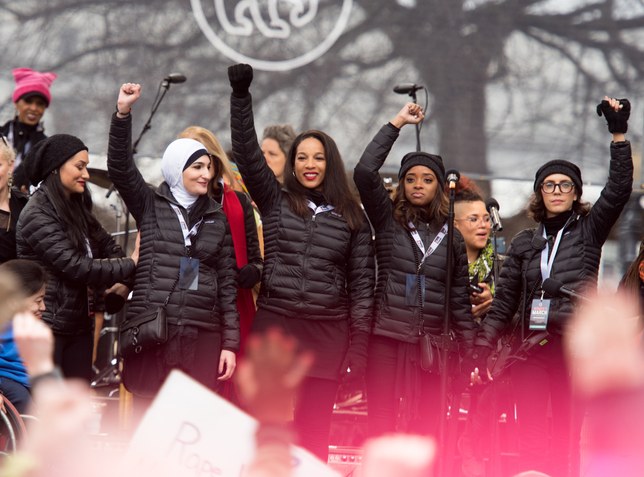
Optimism Interrupted: Cindi Leive on the Legacy of the Women's March


January 21 marks the one-year anniversary of the Women’s March, the largest single-day protest in U.S. history. All this week, Glamour will be spotlighting the stories, people, and issues that framed the March, as well as where we go from here.

Albert Einstein famously said that the most important thing each of us must decide for ourselves is whether the universe is a friendly or an unfriendly place. I had always believed the former—that despite its horrors, the world tilts, slowly but inexorably, toward progress. I was an optimist. I thought the best of people. It informed everything I did.

The election took that certainty away from me.

The march brought it back—in newer, wiser form.

I was one of those much-mocked idealists crushed on the morning of November 9. After all, I’d blithely told a reporter just a week before that I thought that come mid-November, Donald Trump would be “getting smaller by the second in the rearview mirror.” There was his open courtship of white supremacists and his flagrant misogyny, both denounced even by many in his party. There was his epic ineptness; surely no one who had watched him stumble through the debates could find him presidential. And there was, of course, the overweening cruelty that was his hallmark: mocking people with disabilities, taunting his opponents, ridiculing a Gold Star mom. I had hoped this would be damning: Wasn’t the Golden Rule, or a version of it, the one common shared teaching among all religions? As my family headed to the Javits Center on November 8 for what we were sure would be Hillary Clinton’s victory party, my eleven-year-old son asked me what would happen if Trump won. “He can’t win,” I said confidently. (“Well, Mom, he can,” he pointed out.) Watching the results felt dislocating: like taking a step onto a well-trod stair that suddenly was not there. In the pre-dawn hours the next morning, messaging with a friend who had spent eighteen months working to mobilize the Latino vote, I said in disbelief, “I never believed all that ‘two Americas’ stuff. Even now it is hard to believe this is what half our population wants.”

I know how sheltered it all sounds. In a Saturday Night Live episode that aired the following weekend, one skit featured a group of friends watching the election results. The women, all white, are shocked. “Oh my God,” gasps the actress Cecily Strong, “I think America is racist.”

A white male partygoer is outraged: “This is the most shameful thing America has ever done!” he exclaims—at which point the black actors Dave Chappelle and Chris Rock collapse in uncontrollable hysterics.

“C’mon, get some rest,” Rock, rolling his eyes, tells the crowd. “You’ve got a big day of moping and writing on Facebook tomorrow.”

I didn’t spend the next day moping and writing on Facebook. I spent it grieving for an image of America I started to believe had only existed in my head, where my neighbors—both the ones I agreed with and the ones I didn’t—were fundamentally good-hearted.

January 21 felt like a miracle. I boarded a D.C.-bound bus with fifty of my friends and colleagues, along with my fourteen-year-old daughter and her friends—it was my birthday, and there was no better party.

The highways were crowded with buses crammed full of pink hats; the L’Enfant Plaza Metro station was so jammed that we spent a good hour underground, chanting and patiently inching our way toward the exit.

The woman next to me held a sign that read, “My Husband’s Chemo Costs $10,000 a Month”; she explained that she’d never been to a protest before, but that the health-care issue had compelled her to show up. “And also,” she added, “the misogyny.” The misogyny was what tied all our interests together, but what was magical about the march was that it made visible the fact that we had so many interests. There were grandmothers and grown men, church groups and unions, indigenous women and Black Lives Matter demonstrators.

Years before, at a reproductive-rights march, my husband and I had spotted a sign that read, “We came down on buses to save our uteruses.” We’d found it hilarious, and he’d made me a T-shirt for that January day with the slogan on the front. But as I pressed through the crowd with my daughter, the shirt felt entirely insufficient—a glib remnant of another time. We, women, were not here for our uteruses. We were here for our lives, for other women’s lives, for our souls and the soul of our country.

And there were so, so many of us. The universe felt friendly again.

Or more properly: The universe felt bound together by people willing to work for a friendly planet—by speaking out over and over again, and not just on the issues we call our own. The year since the march has brought regular ugliness: Those were my fellow Americans lighting torches in Charlottesville and cheering the government’s vicious anti-immigrant moves. But I know which vision of our country I choose to believe in, and if the millions of us who showed up on that January day, in big cities and small towns, keep showing up—to protest, to run for office, to vote—I think it can be made real.

I’m still an optimist. After all, Einstein wrote that if we do believe the universe is unfriendly, we’ll spend our lives “creating bigger walls to keep out the unfriendliness and bigger weapons.” We have an administration dedicated to doing just this. “But if we decide that the universe is a friendly place,” he continued, “then we will use our technology, our scientific discoveries and our natural resources to create tools and models for understanding that universe. Because power and safety will come through understanding its workings and its motives.”

The Women’s March helped us understand. The world will continue to spin forward, but only if we push.

Excerpted from Together We Rise: Behind the Scenes at the Protest Heard Around the World, available for purchase now.

More on The Women’s March:
Everything You Need to Know About the 2018 Women’s March


Source link

Categories
Health

Everything You Need To Know About the Women's March 2018


It has been a year, hasn’t it ladies? In some ways, that inspirational day of the first Women’s March feels like it was 400 million years ago and at times, it feels like just yesterday. It was January 20, 2017 when millions of women across the country (and around the world) took their anger, their sadness, and their power to the streets in protest. We marched, chanted, laughed, and cried all while carrying signs and wearing pussyhats.

It’s pretty incredible that 2017 started with women organizing for change and it ended that way, too—with the creation of Time’s Up. But the momentum must continue and that’s why another Women’s March is coming our way on January 20, 2018.

Here’s everything we know so far:

Women’s March: Power to the Polls in Las Vegas
The original organizers of the Women’s March are holding an event in Las Vegas, Women’s March: Power to the Polls which will launch a one year national voter registration tour. According to their website “the national voter registration tour will target swing states to register new voters, engage impacted communities, harness our collective energy to advocate for policies and candidates that reflect our values, and collaborate with our partners to elect more women and progressives candidates to office. The coordinated campaign will build upon Women’s March’s ongoing work uplifting the voices and campaigns of the nation’s most marginalized communities to create transformative social and political change.”

Why Nevada?
According to the organization’s website: The state “was rocked by the deadliest mass shooting in modern U.S. history, recent sexual assault allegations against elected officials, and has become a battleground state that will shape the Senate in 2018. The kick-off event in Las Vegas will bring together talent, musicians, grassroots activists, and elected officials to a key swing state for a large-scale gathering to celebrate the work of the past year and launch a collective 2018 Women’s March agenda.”

Not in Nevada? Here’s How You Can Join In:
Along with the meeting in Vegas, anniversary events and marches will be taking place across the country the weekend of January 20. You can enter your zip code to find events near you or the Women’s March Alliance has full list on Facebook. There are marches scheduled in most major American cities and even a few international locations.

What to Wear/Bring:
Of course, you’ll want to check your local weather and dress appropriately, but remember that if turnout is anything like last year you may be standing still for long periods of time…so plan accordingly with gloves, hats, scarves, water and snacks. You’ve also had another year of inspiration from the Trump administration for you kickass protest signs. Just remember that some cities have rules about using wooden/metal sticks to hold signs, so you may want to sub in wrapping paper or paper towel rolls.


Source link

Categories
Health

A 10-Day March Against White Supremacy from Charlottesville to D.C. Starts Today


Calling all civil activists: Just weeks after a “Unite the Right” rally left one woman dead and more than a dozen wounded in Charlottesville, a bloc of several activist groups are marching from the Virginia city to Washington, D.C. to protest white supremacy.

Starting Monday (August 28) groups like Working Families, the Action Group Network, United We Dream, Color of Change, and the Women’s March will assemble in Charlottesville and begin heading North as part of a 10-day nonviolent demonstration that will concluded in Washington on September 6. As the event organizers detailed on the official website, the march is meant “to demonstrate our commitment to confronting white supremacy wherever it is found.”

“It’s clear that we can no longer wait for Donald Trump or any elected official to face reality and lead,” the organizers continued. “We are coming together to reckon with America’s long history of white supremacy, so that we can begin to heal the wounds of our nation.”

Basic meals, water, and snacks will be offered to the marchers, and housing will be provided primarily through churches along the planned route. A charted course can be found on the official website, but a rundown of the scheduled trajectory appears as follows:

Monday, August 28th – Charlottesville to Commonwealth, 3.5 mi.
Tuesday, August 29th – Commonwealth to Ruckersville, 13.2 mi.
Wednesday, August 30th – Ruckersville to Madison, 12.0 mi.
Thursday, August 31st – Madison to Culpeper, 17.6 mi.
Friday, September 1st – Culpeper to Remington, 11.6 mi.
Saturday, September 2nd – Remington to Calverton, 11.0 mi.
Sunday, September 3rd – Calverton to Manassas, 14.6 mi.
Monday, September 4th – Manassas to Fairfax, 13.7 mi.
Tuesday, September 5th – Fairfax to Falls Church, 8.2 mi.
Wednesday, September 6th – Falls Church to D.C., 8.0 mi.

Once the marchers make it to D.C., the plan isn’t to pack up their things a head home. Instead, they intend to remain in Washington for a sustained period of time until their overarching demands are met.

“This is the time for us to stand up for justice and equality. This is the time to confront white supremacy in our government and throughout our history,” the organizers explained. “We demand that President Trump be removed from office for allying himself with this ideology of hate and we demand an agenda that repairs the damage it’s done to our country and its people.”

Related: Raising Our Daughters After Charlottesville: An Open Letter to Ivanka Trump


Source link

Categories
Health

The Women's March Is Hosting a Women's Convention in Detroit This Fall


PHOTO: Noam Galai/Getty Images

After millions of women gathered throughout the U.S. just one day after Donald Trump‘s inauguration—in what was the largest single-day protest in the country’s history—the organizers of the Women’s March tried to keep up the momentum in the following months. Now they’re doing so in a major way: This fall, this team of activists will be bringing fellow organizers and progressive leaders together for the Women’s Convention, an event designed to energize and mobilize the resistance ahead of the 2018 midterm elections.

Scheduled for the weekend of October 27-29 at the Cobo Center in Detroit, the convention doesn’t have a concrete agenda yet but will include a series of “workshops, strategy sessions, inspiring forums and intersectional movement building,” according to the official website. And as the leaders explained, “Tapping into the power of women in leadership as the fundamental, grassroots force for change, participants will leave inspired and motivated, with new connections, skills and strategies for working towards collective liberation for women of all races, ethnicities, ages, abilities, sexual identities, gender expressions, immigration statuses, religious faiths, and economic statuses.”

“A lot of us are just waking up to how horrible it is for the rest of the country, and that it really is unbearable for us to continue benefitting from a system that oppresses everybody else,” Bob Bland, one of the Women’s March co-organizers, told the Huffington Post. “We can’t let this happen and we can’t continue. We need to build an America that we can be proud of. And I know with women in leadership we can do that.”

For the organizers, the decision to host the convention in Detroit was a deliberate one. “Detroit is a beautiful city, full of historical and political significance, and a multitude of lived experiences—a perfect setting for women, femmes and our allies seeking to strengthen our growing, intersectional movement,” they wrote. “Many of the issues that led us to march in January 2017 are starkly visible in Detroit and its surrounding areas: economic inequality, environmental injustice, de facto segregation, ICE raids, violent policing, and overall unequal access and opportunity. At the same time, Detroit is home to a rich musical history, a vibrant art scene and a long and radical history of grassroots activism—something that continues today.”

The attendance fee for the Women’s Convention currently runs $295 a person, but the organizers are working to raise funds so they can offer discounted admission to people who can’t pay the full price. How many women will attend in October is still TBD, but assistant treasurer of the Women’s March board Linda Sarsour expects about 5,000 people.


Source link