Categories
Health

U.S. Soccer Argued Biological Differences Justify Paying the Women's Team Less, According to Court Filings


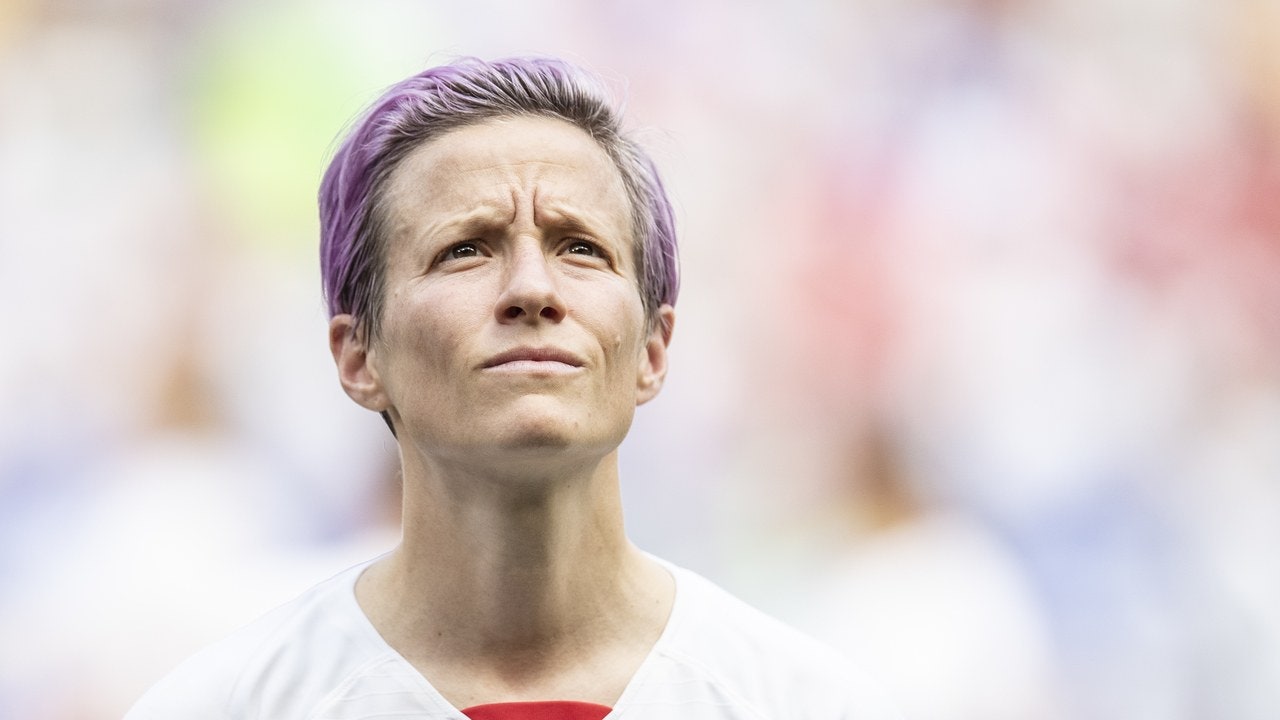
Last summer when the U.S. Women’s National Soccer Team won the World Cup (their fourth) in France, the stadium erupted into chants of “Equal pay!” Despite the women’s team’s total dominance, they’re paid less than their male counterparts, an issue that came to a head in March 2019 when the players sued U.S. Soccer for gender discrimination.

Back in August 2019, we learned talks between the two parties had broken down—and a new court filing this week gives us insight, perhaps, into why.

Per Buzzfeed, the documents show one of the arguments against equal pay being made by U.S. Soccer lawyers is that, under the Equal Pay Act, “The job of a [men’s national team player] carries more responsibility within U.S. Soccer than the job of a [women’s national team] player.” Excuse me?!?

You remember the USWNT, of course, as the winners of last year’s World Cup which turned stars like Megan Rapinoe, Alex Morgan, and Ashlyn Harris into household names for people who’d never even watched a game before then. Unless you’re a big soccer fan, you’re probably less familiar with the men’s team who have had, well, a lot less success in recent years as the women’s team dominates.

But, wait, the court documents get worse. U.S. Soccer also argued that indisputable “science” and biological differences prove that women should be paid less because the men’s team “requires a higher level of skill.” We’re not sure anyone has argued that there aren’t biological differences between men and women—just that those shouldn’t matter when determining how much to pay someone for the same job.

Buzzfeed also accessed court documents which showed U.S. Soccer’s questioning of some of the women’s teams stars. “Do you think that the team could be competitive against the senior men’s national team?” one asked Carli Lloyd. “I’m not sure,” she said. “Shall we fight it out to see who wins and then we get paid more?” Another asked Morgan, “Do you think it requires more skill to play for the U.S. Men’s National Team than the U.S. Women’s National Team?” She replied, “No,” Morgan replied. “It’s a different skill.”

It’s quite infuriating to see the national governing body of a sport be so dismissive (and regressive) in defense of their antiquated position that women deserve to be paid less for a job where they have proved they are quite literally the best in the world. But it’s not unsurprising, especially to any woman who has been faced with a similar situation in her own job where she has to be better and fight harder for the same rights and money automatically afforded a man.

We have no doubt the USWNT will keep pushing for what’s right—and that’s just one of the many reasons to celebrate them.


Source link

Categories
Health

No, You Don’t Have to ‘Justify’ Your Anxiety


“I have a question for the ‘Anxiety Girl.’”

This is how I was referred to at a recent well-being event. While not exactly what I imagined, being defined by anxiety—how very sexy—is how my career has transpired. I have no degree in psychology. I am no doctor. I have not unearthed a magical cure for stress and anxiety (if only). But I do have heaps of firsthand experience with the crippling shit show that anxiety can be. It’s made me kind of an expert in learning how to own it.

When I was in my twenties, I went through what I now describe as a mental breakdown (still such scary words to put together). I seemingly had everything going for me—great friends, great boyfriend, great job, great life. I didn’t have a “reason” to be anxious. Why couldn’t I just snap out of it? Why couldn’t I get my shit together? Sure, I had stress, but who doesn’t? Everyone else was handling it, or so it seemed on Instagram; why couldn’t I?

Despite having a lot going for me, for which I was both lucky and grateful, I fell apart. There was no majorly obvious trigger: I made the move from a job that I loved into a new one that didn’t suit me on many levels, and as such, I began to experience stress. So what, right? We’ve all been there. But the little ball of stress in my stomach quickly grew arms and legs. What started as containable anxiety about a new job gathered at an avalanche-like pace. It became anxiety about what this would mean for my career. Anxiety about what this would mean for my relationship, anxiety about paying my bills. Ultimately, though, it became anxiety about what people would think about me: I had everything going for me—what reason did I have to break down?

When I did broach the subject, people told me to get some perspective, to remember it could always be worse, to buck up, as if my adrenal glands could simply be convinced to switch off with the right attitude adjustment. I felt that, compared with those who go through really hard times like the loss of a loved one or another life-altering trauma, I had no right to fall apart.

At first, I thought—as is characteristic of anxiety—that I was completely alone in my struggle, but I soon learned more women feel this way than I could possibly count. Two years ago I published my first book, Owning It: Your Bullsh*t-Free Guide to Living With Anxiety, and I started talking about my anxiety a lot. When Owning It became an international best-seller, I heard from scores of women dealing with the same shame cycle I was in. They had objectively good lives and didn’t feel like they were “allowed” to have anxiety.

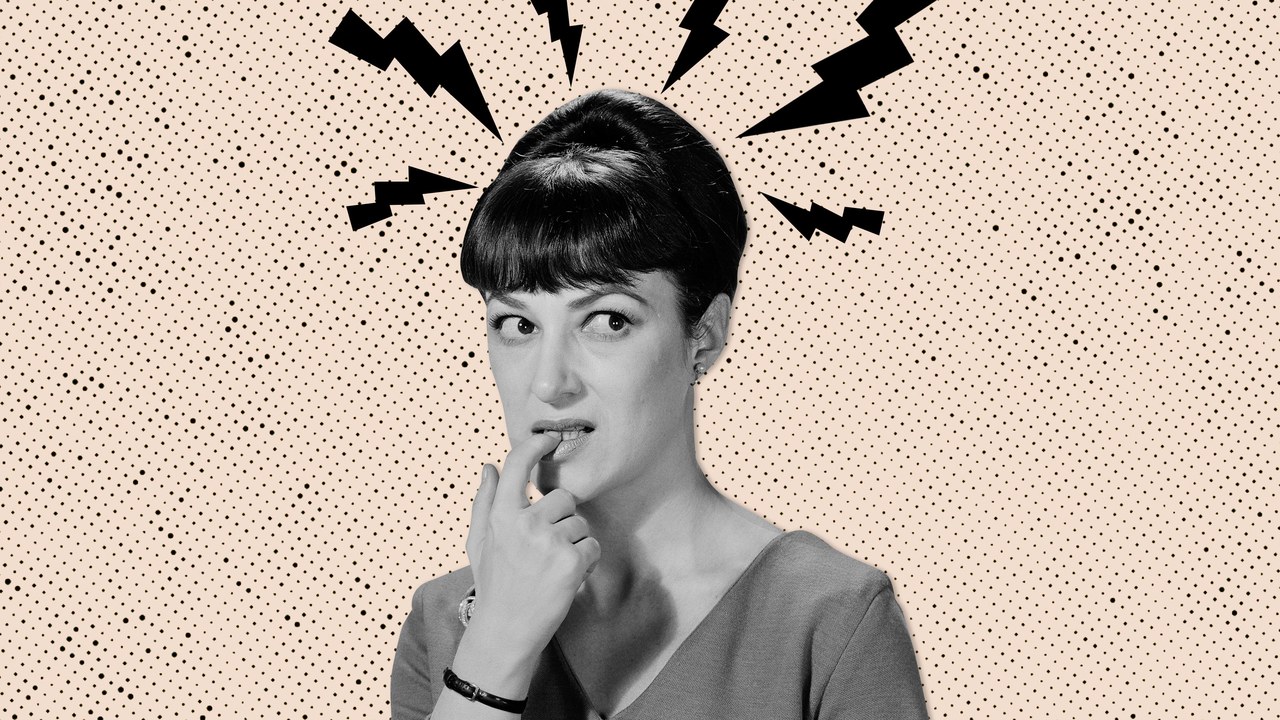
It’s an anxiety-shame cycle that goes a little like this: We don’t feel that we have a good enough reason to “justify” our feelings of anxiety, which just creates more anxiety. Anxiety about our anxiety! As a result, we continue to self-stigmatize, serving only to increase the anxiety we’re feeling, and so the cycle repeats. Not ideal.

What I now realize is that is bullshit. Bullshit for me, bullshit for you, bullshit for anybody else experiencing anxiety for “no good reason.” The reality is that anxiety doesn’t simply discriminate based on life circumstances—it’s not a members-only club for which you have to have been dragged through the emotional trenches—but I didn’t understand that until I began to peel back the layers of the brain to understand how stress and anxiety actually work.


Source link