
Categories
Health

Prince Harry and Prince William Are Reportedly Splitting Up the Royal Household Soon


It looks like the Royal Fab Four are officially splitting up—professionally, that is. The Sunday Times reported on Saturday that Prince Harry and Prince William are set to split their royal household very soon—as in, right before the arrival of Prince Harry and Meghan Markle’s baby in the spring.

The Duke of Cambridge, a.k.a. Prince William, and the Duke of Sussex, a.k.a. Prince Harry, have shared a household for 10 years, but since they’re both married now and have different royal responsibilities, the brothers will create separate courts, offices, and staff to handle their affairs. It makes sense, honestly—that’s a lot going on for each of them, not to mention the work that Kate Middleton and Meghan Markle each do too.

Admittedly, the division comes amid rumors that Middleton and Markle have a tense relationship—but the royals’ plan to separate has reportedly been in the works since before the royal wedding in May. It makes sense: Each couple has a growing family, and it makes sense each would need their own space to carry out their duties.

“William and Harry are working to make sure the Sussexes have an office that can support their family when they move to Frogmore this spring. This work has been underway since before last year’s wedding,” a source told The Sunday Times.

Plus, Prince Will will eventually become Prince of Wales, which will make managing both royals a complicated task. “When William becomes the Prince of Wales, he will take on a lot of extra responsibility, including the Duchy of Cornwall,” the source added. “Harry and Meghan have none of that and seem ambitious about forging their own paths.”

Prince Harry and Markle have been living in Nottingham Cottage—next door to Prince William and Middleton—on the grounds of Kensington Palace, but will soon be moving to Frogmore Cottage in Windsor. In November, Kensington Palace confirmed the news and revealed the move would happen sometime in 2019 as the house was undergoing extensive renovations. It has special meaning for the couple, too: Frogmore Cottage faces the grounds of Frogmore House, where Prince Harry and Markle had their wedding reception and where their engagement pictures were taken.

There’s good news, though: The Fab Four will definitely still be out and about together. Though some of their royal duties differ, both families will continue to work with the Royal Foundation, which supports charities that focus on veterans, mental health, and more. New year, new royal households—can’t argue with it, honestly.


Source link

Categories
Health

Do Household Products Really Impact Your Fertility?


PHOTO: Aliyev Alexei Sergeevich

Fertility is a delicate thing. Research says a ton of things—from how stressed out you are to how much TV your partner watches—can affect your chances of getting pregnant. Another item to add to that list? Maybe the products around your house, according to a new study in Environmental Health Perspectives.

The authors tested urine samples of 211 women who had gone through IVF for organophosphate flame retardants (also known as PFRs)—chemicals found in baby products, cleaning products, upholstered furniture, car seats, mattress pads, some carpets, some nail polishes, building insulation, and other household products containing polyurethane foam. Those whose samples contained higher concentrations of PFRs were 10 percent less likely to undergo a successful fertilization. In addition, they were 31 percent less likely to have embryos implant, 41 percent less likely to have pregnancies confirmed by a heartbeat on an ultrasound, and 38 percent less likely to have live births, according to a press release.

The study’s lead author Courtney Carignan, an assistant professor at Michigan State University, told Glamour that PRFs can decrease fertility by interfering with your thyroid and sex hormones. There’s also some research suggesting that PRFs can lower sperm count, says Eric Levens, MD, a physician at Shady Grove Fertility. “The problem is that they are ubiquitous—and as a result difficult to avoid,” he says.

Carignan agrees: “PFRs and other flame retardants are very difficult to avoid because they are used in so many products in our homes, cars, and work/school environments,” she says. Many products that contain PFRs don’t have labels disclosing the ingredients, so you can’t always know when you’re being exposed to them.

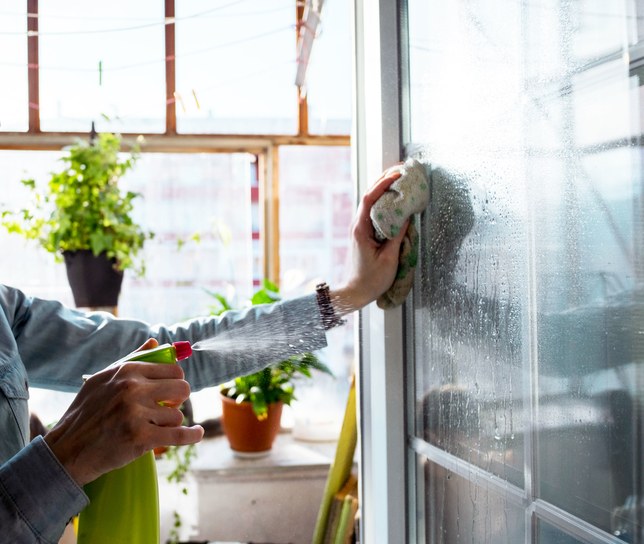
But there are some ways to come in contact with fewer of them. They often get into your body through dust ingestion, which you can reduce by washing your hands. Cleaning your house with baking soda and vinegar could also help you avoid PFRs that may be in cleaning products, says Levens. Unfortunately, sticking to organic household products probably won’t do much. “Some of the solvents that cause a problem are technically ‘organic,'” says Dr. Daniel Shapiro, M.D., Reproductive Endocrinologist at Prelude Fertility.

Despite what some news outlets have reported, there isn’t any evidence that flame retardants are used in yoga mats, says Carignan, so there’s no need to avoid those.

Bottom line: if you’re trying to get pregnant, do what you can to avoid PFRs, but you can’t avoid them entirely, and that’s nothing to worry about. “The problem with PFRs is probably real, but the effect is probably not profound,” says Shapiro. “Good idea to give this point some consideration, but no need to modify one’s living habits to eliminate PFRs entirely.”


Source link