Categories
Health

James Scully Is Aware His You Character's Name Is Ridiculous


On the flip side: What is the biggest romantic fail you’ve experienced?

I went on this first date once, and the guy was really cool. He was so handsome and very articulate. We went to this really nice dinner, and then afterwards he was like, “We’re going to go to this acrobatic cabaret show in this club downtown.” He wanted to take these weed brownies before we went, and I was like, “I’m a happening young man in New York City! I can hang!” So we ate the brownies, and then it was just a disaster. It was so bad. I was violently high. He was very pushy. We got to the club and then the show didn’t start for, like, seven hours. I was like, “I can’t, we have to go. I can’t do this.”

So how did you get out of it? How did you make your exit?

I was so stoned that I kept trying to wander away from him. Like, when he was in line outside and then in the club. And he kept being like “Stop walking away.” He got real pushy real quick. I ended up going home with him because I don’t know why. I don’t know why. I guess because I was that stoned. And nothing happened. He tried so hard for, like, an hour, and I just rolled over and faced the wall and was like, “Let me pretend to be asleep.”

What’s the most inappropriate thing a fan or a stranger or someone who knows you from your work has said to you?

Nothing terrible, really. I mean you get the occasional requests for pictures of your feet, to which I’m just like, “Very flattered by your interest, not going to happen.” I guess it’s become a thing, especially for the younger generation, that they just—especially fans of a show like You—but they’ll say things like, “kill me” or “choke me” or “run me over.” Part of me thinks it’s hysterical, and then another part of me is like, “Do you need somebody to talk to? Can I refer you to a service or maybe get your parents involved?”

You season 2 is now streaming on Netflix.

This interview has been edited and condensed for clarity.

Christopher Rosa is the staff entertainment writer at Glamour. Follow him on Instagram @chris.rosa92.


Source link

Categories
Health

The Breast Cancer Sign You’re Probably Not Aware of—But Should Be


While most of us get a breast checkup at our yearly ob-gyn appointment (and might even do those monthly breast checks at home), the truth remains that we may not always know what breast cancer can look and feel like.

Breast cancer is incredibly common—it affects one in eight women—so it’s vital to know the signs so you can spot any breast changes ASAP. When you check for a lump (which is what many of us think we should be checking for), you might miss one of the signs of breast cancer: skin dimpling.

What are typical signs of breast cancer?

You probably already know the most common sign of breast cancer: a lump in the breast.

These lumps are often caught by physically feeling them, but cancer screening technologies are catching lumps earlier than ever. “Since many breast cancers are now detected by screening mammograms, most women do not notice any changes in the breast with early breast cancer,” says Sharon S. Lum, M.D., medical director at Loma Linda University Breast Health Center.

But lumps aren’t the only breast changes that could signal cancer. Breast cancer can also show up as changes in skin texture, changes in breast color, peeling or flaking of the nipple skin or surrounding area, changes in the size or shape of one or both breasts, changes in appearance of one or both nipples, nipple discharge (other than breast milk), swelling or tenderness of the breast or breasts, redness, or persistently irritated or itchy breasts, says dermatologist Keira L. Barr, M.D., founder of Resilient Health Institute.

What is skin dimpling, exactly?

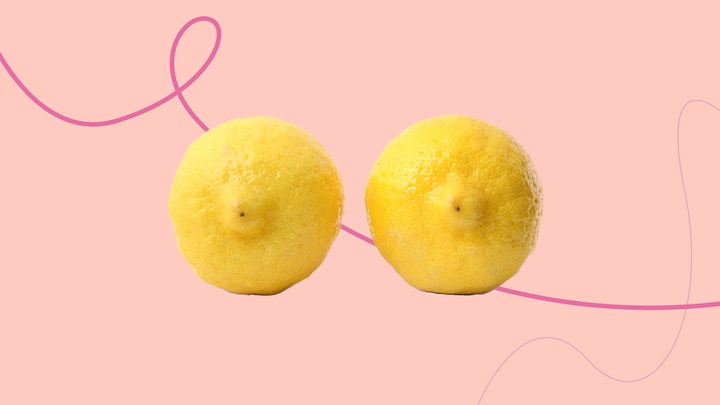
Skin dimpling is a less common sign of breast cancer but still one that women need to be aware of. The easiest way to recognize it, according to Barr, is to think of an orange peel.

In cases of skin dimpling, “the skin of the breast is commonly red, swollen, and thickened or pitted, and often accompanied by changes in the nipple—either retraction or inversion,” says Barr. “This finding is most commonly associated with inflammatory breast cancer, which is a more rare type. In this type, the cancer cells block lymph vessels in the skin, causing the textural changes.”

How should women check for breast cancer signs?

One of the best things you can do to detect breast cancer early is to know your breasts. “Just as we recommend that people get familiar with their moles and skin so they can detect any skin cancer early, I would also recommend that women become familiar with their breasts in order to identify early breast cancer,” says Lynne Haven, M.D., a board-certified cosmetic dermatologist. “Sudden or unexplained changes in the breast tissue or surrounding skin should prompt an evaluation.”

You don’t necessarily have to perform monthly self-exams to stay up-to-date on any changes. “The American Cancer Society and other guidelines do not recommend that women perform breast self-exams on a routine basis, but they do recommend that women are aware of their breast health and how their breasts feel,” says Lum.

When it comes to how often you should get a checkup, though, that may depend on your personal health history. “Once a year at a minimum,” says Adeeti Gupta, M.D., founder of Walk in GYN Care, “and every six months or sooner if you have a strong family history, history of breast cysts, fibrocystic disease, or very dense breasts.”

What should I do if I suspect an issue?

The bottom line: If you think something is off, have your doctor check it out. “If you notice something strange or unusual, you should call your doctor ASAP to schedule an appointment,” says Gupta.


Source link